Tag Archives: tuberculosis

Private Wilfred Bridger

Private Wilfred Bridger

Wilfred Percival Bridger was born on 20th January 1885, the middle of three children to William and Emma. William was a groom from Albourne in Sussex, but, after a spell in Newmarket, the family had settled in Findon near Worthing.

William passed away just two years after Wilfred’s birth, and Emma remarried. The 1891 census found her and her new husband, George Lish, living with William and his siblings in a house on Findon Street.

When he completed his schooling, William found work as a shepherd: the next census return, taken in 1901, found the extended family living at 1 Brazil Cottages, next to the Black Horse Inn in Findon Village. George and Emma now had three children of their own, and Emma’s widowed mother, Martha, completed the household.

Shepherding was not a permanent career option for Wilfred and, on 28th April 1902, he enlisted in the army. He gave his occupation as groom, and his medical report confirmed he was 5ft 7ins (1.7m) tall and 120lbs (54.4kg) in weight. He was noted as having brown hair, grey eyes and a fresh complexion.

The Royal Sussex Regiment would definitely provide Private Bridger with the globe-trotting adventures that he may have wished for. After two years on home soil, his unit – the 2nd Battalion – moved to Malta, where he would spend close to twelve months. In May 1905 he moved to Crete, and from there to India in January 1907.

By the start of 1910 Wilfred had returned to Britain, and he was stood down to reserve status when his contract came to an end that April. He returned to Sussex, and the family home. 1 Brazil Cottages was crowded by this point, with Wilfred sharing the five-roomed house with his mother, stepfather, half-brother, niece. There were also two lodgers, widowed farm labourer Alfred Newman and his son, William.

Things were to change for Wilfred, however. In September 1911 he married Florence Herrington, a carter’s daughter from Henfield, Sussex. When the couple wed, she was working as a servant in a boarding house in Ambrose Place, Worthing. The young couple set up home in Nepcote, near Findon, and went on to have four children – William, Albert, Henry and Lilian.

When war broke out, Wilfred was called upon to play his part again. He re-joined the Royal Sussex Regiment on 31st August 1914, but when his medical was carried out the following March, he was found to have tuberculosis, and deemed not fit for service. After further tests, Private Bridger was medically discharged on 28th May 1915.

At this point, Wilfred’s trail goes cold. He returned to Findon and, it seems this is where he passed away on 13th September 1918. He was 33 years of age.

Wilfred Percival Bridger was laid to rest in the quiet surroundings of Findon’s St John the Baptist Churchyard.


Private Wilfred Bridger
(from ancestry.co.uk)

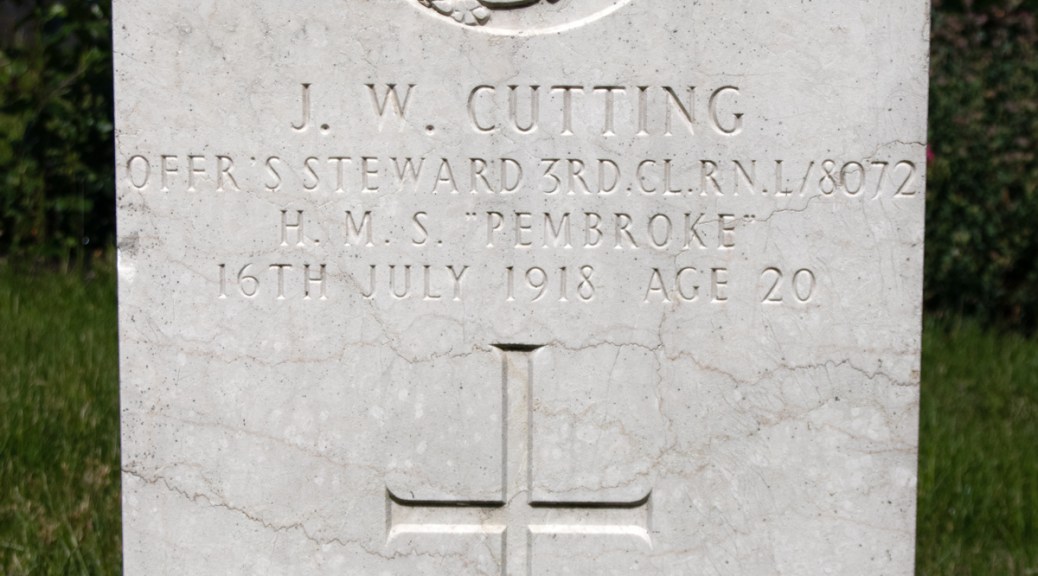
Officer’s Steward 3rd Class Joseph Cutting

Officer’s Steward 3rd Class Joseph Cutting

Joseph William Cutting was born on 10th September 1897 in Stratford, Essex. The middle of three children, his parents were Alfred and Clara. Alfred was a stoker in a carpenter’s workshop, but when he completed his schooling, his son found work as a clerk.

When war broke out, Joseph stepped up to play his part. He enlisted in the Royal Navy on 22nd September 1915, joining as an Officer’s Steward 3rd Class. His service records show that he was 5ft 8ins (1.72m) tall, with dark brown hair, blue eyes and a fresh complexion. He was also noted as having a scar in the middle of his forehead.

Officer’s Steward Cutting was based at HMS Pembroke, the Royal Naval Dockyard in Chatham, Kent, and would continue in his role for the next two and a half years. His annual review recorded a very good character, and moderate to satisfactory ability, which may be why he did not rise above his junior rank.

In the summer of 1918, Joseph was admitted to the Royal Naval Hospital in Chatham, suffering from tuberculosis. The lung condition was to prove his undoing, and he succumbed to it on 16th July 1918. He was just 20 years of age.

Joseph William Cutting was laid to rest in the naval section of Woodlands Cemetery in Gillingham, Kent, not far from the base he had called home for so long.


Private Nicholas Paice

Private Nicholas Paice

Nicholas John Paice was born in the spring of 1867, the second of five children to John and Olive Paice. John was a railway policeman from Aldermaston in Berkshire, but his oldest son, Nicholas, was born in Poole, Dorset where Olive came from.

The Paice family seemed to move to wherever John’s work took him. The 1871 census found them living back in the Berkshire village of Shrivenham, while a decade later they were to be found in Longfleet, to the north of Poole. By this point, John was employed as a groom, and Olive a laundress.

When he completed his schooling, Nicholas found work as a butcher. He had also enlisted in the local militia, joining the 3rd Dorset Regiment. The army life seemed to suit him and, on 12th July 1886, he enlisted in the Rifle Brigade. His service records show that he was 5ft 7ins (1.7m) tall and weighed 148lbs (67.1kg). At 19 years and three months old, he was noted as having a fresh complexion, grey eyes and brown hair. The papers show that he had a scar on his left eyebrow, and tattoos on his forearms and the middle finger of his left hand.

Joining up for a period of twelve years, Private Paice would spend nearly seven of those in India and Burma. His time in the army was not without incident, however. Just three weeks after enlisting he deserted, and remained at loose for nearly a month. When he was captured, he was imprisoned for desertion for four weeks, his term of service extended to reflect the time he was AWOL.

In August 1896, having been back on home soil for just over two years, Nicholas was arrested again. Convicted of ‘begging’, he was confined for a week, before being released back to duty.

On 16th September 1898, Nicholas completed his contract, and was formally discharged from the army.

The next few years are a mystery for Nicholas. He had married Maria Andrews in 1896, and the couple would go on to have eight children, of which five would survive childhood. By the time of the 1911 census – the next document where we can pick him up – Nicholas and the family were living in two rooms at 2 New Corn Street, Bath, Somerset. Nicholas was working as a cattle drover, along with Maria, the household included her daughter Annie, and granddaughter Lily, and John and Maria’s son, Earnest.

When war came to Europe, Nicholas stepped up to play his part. He enlisted in the Somerset Light Infantry on 26th October 1915 but, with his age against him, he was transferred to the 263rd Coy. of the Royal Defence Corps the following April.

It seems that Private Paice’s health was also being impacted and he spend a month in the Red Cross Hospital in Portishead, having contracted influenza. Released to duty on 16th May 1916, just a month later he was re-admitted for three weeks, this time suffering from bronchial catarrh. On 10th September he was admitted to the hospital for a third time. This time it was identified that he had come down with pulmonary tuberculosis, and on 12th October 1916, he was formally discharged on medical grounds.

It is unclear what happened to Nicholas next. His service records suggest that he wasn’t immediately discharged from the Portishead hospital, and it seems likely that he would have returned home to Bath at some point. The next record for him is that of his passing, from tuberculosis, on 20th December 1919. He was 52 years of age.

Nicholas John Paice was laid to rest in the sweeping Locksbrook Cemetery in his adopted home town of Bath, Somerset.


Lance Corporal William Bence

Lance Corporal William Bence

Arthur William Bence was born in the village of Box, Wiltshire, in the spring of 1887. The oldest of eight children, his parents were James and Sarah. James was an engineer from Bathampton, Somerset, and by the time of the 1901 census, the young family had moved to 14 Hampton Row in nearby Bathwick.

Ten years later, and the Bence family had relocated again, this time to the northern outskirts of Bath, in a terraced cottage at 6 Brooklyn Road. By this point, Arthur had finished his schooling, and had found employment, working as a baker and bread maker. This was not to be a permanent career, however, and he sought out more of a career.

Arthur had long been a volunteer in the local militia, and on 14th November 1905 he enlisted in the army. Now known by his middle name, William Bence joined the Coldstream Guards as a Private. His service records show that he was 5ft 11ins (1.82m) tall, and weighed 148lbs (67.1kg). He was noted as having brown hair, brown eyes and a fresh complexion. Hs also had several tattoos on his left forearm, including a heart, cross, anchor, man’s face, crown and crossed flags.

Private Bence spent the first two years of his military career on home soil in Windsor, Berkshire, and London. In January 1908, his unit – the 3rd Battalion – transferred to Africa, and William would remain in Egypt and Sudan for more than three years. In March 1911 he returned to home soil, and that year’s census record noted his address as the Tower of London.

By the end of 1913 Private Bence had been formally stood down to reserve status. During his eight years on active service, he had been hospitalised a couple of times: for a sprained wrist in 1906, and for a bout of pneumonia in July 1910.

War was a matter of months away, however, and in the summer of 1914, William was to be mobilised again. By 12th August he was sent to France, and his battalion would be caught up at Marne and Aisne before the end of the year.

On 27th September 1914, William rose to the rank of Lance Corporal. This was not to last, however, and within six weeks the promotion was retracted for misconduct. He remained on the Western Front for nearly two and a half years, and had a mixed time of it. In April 1915, he Private Bence was confined to barracks for 14 days for being drunk on duty. In November that year, he was promoted to Lance Corporal for a second time.

This advancement coincided with William’s marriage. He had wed Amelia Oakley at St Saviour’s Church in Bath on 3rd November. There is little information available about her, other than that she had been born in Bath in 1888.

Back in France, and Lance Corporal Bence’s battalion fought at Loos and was heavily involved at the Somme. William would remain on the Western Front until December 1916, at which point his health forced him back to Britain. He had contracted tuberculosis, and this would lead to his ultimate discharge from military duty on 9th January 1917. William returned home, but his condition was to get worse. He passed away on 1st April 1917: he was 30 years of age.

The body of Arthur William Bence was laid to rest in the sweeping grounds of Bath’s Locksbrook Cemetery, in the city that was his home.


Lance Corporal John Channing

Lance Corporal John Channing

John Samuel Channing was born in Axminster, Devon, in 1884, the oldest of four children to John and Elizabeth. John Sr was a bricklayer’s labourer, and, when Elizabeth died in the late 1890s, he struggled to look after the whole family.

The 1901 census found John Sr and his two youngest children living with his widowed mother, while John Jr and his sister Sarah were sent to live with their maternal grandmother, widow Mary Telford. Both were of age to leave school, and both were employed: Sarah as a lace mender, John Jr as a nail brush finisher.

John Jr married a woman called Elizabeth in 1910. There is little additional information available about her, but by the time of the following year’s census, the young couple were boarding with an Eliza Banks in Silver Street, close to the centre of the town. John was employed as a toilet brush maker, adding that they were bone nailbrushes. Within the year, Elizabeth gave birth to their only child, son Leslie.

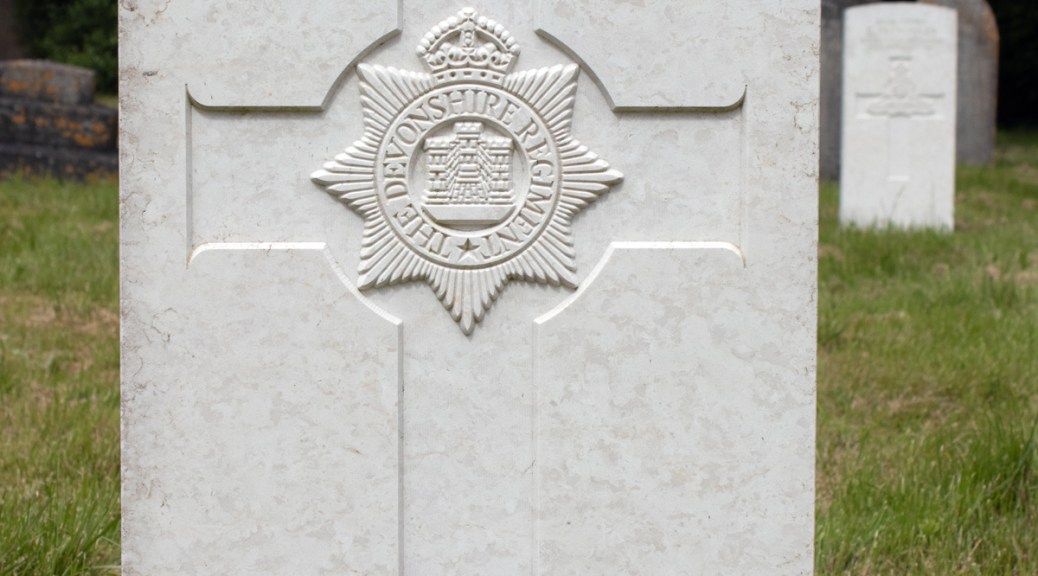
In addition to his brushwork, John had also enlisted in the local militia. He joined the Devonshire Regiment on 1st April 1908, although his service details are lost to time. Private Channing’s unit – the 4th Battalion – were based around Exeter, but, when war was declared, they moved to India. There is no evidence, however, that John went with them: promoted to the rank of Lance Corporal, it is likely that his experience was better used on the Home Front, training new recruits.

John’s wartime experience was not to be a lengthy one, however. By 1st April 1915, he had been medically discharged from service, having contracted tuberculosis. At this point, Lance Corporal Channing’s trail goes cold, but it is likely that he returned home to Elizabeth and Leslie.

The next record for John is that of his passing. He died from tuberculosis at home on 29th December 1918: he was 34 years of age.

John Samuel Channing was laid to rest in Axminster Cemetery, a short walk from where his widow and son still lived.


Leading Seaman Sidney Crabb

Leading Seaman Sidney Crabb

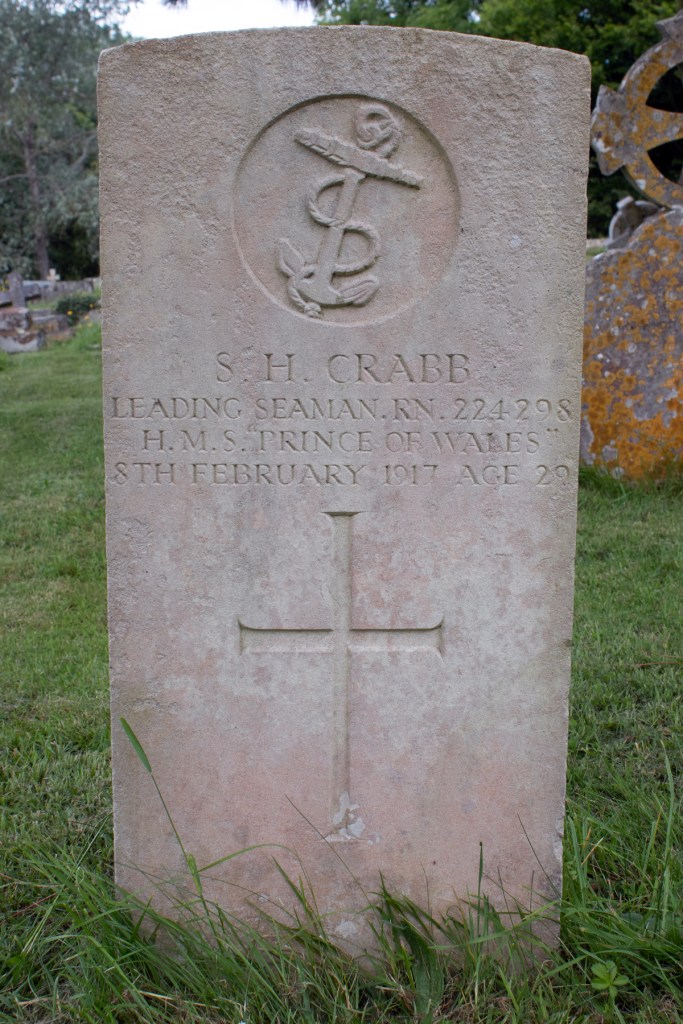
Sidney Harry Crabb was born in the seaside town of Lyme Regis, Dorset on 6th September 1888. One of nine children, his parents were Albert and Mary Crabb. Albert was a Trinity pilot, working on ships, and his son was destined to follow in his stead.

On 16th January 1903, Sidney enlisted in the Royal Navy. He lied about his age to be taken in, adding two years to his date of birth. That was still below the full enlistment age for the military, and he was taken on with the rank of Boy 2nd Class.

Sidney was sent to HMS Boscawen, a training ship, for his initial instruction. He remained there until mid-November 1903, by which time he had been promoted to Boy 1st Class. He then moved to the training battleship HMS Minotaur (which became HMS Boscawen II shortly afterwards), and remained on board for the next nine months.

On 7th September 1904, Sidney “came of age” (albeit he was two years younger than he had said), and was formally inducted into the Royal Navy. He was given the rank of Ordinary Seaman and, within a matter of days, was assigned to his first vessel, the tender HMS Fire Queen.

On 19th November 1904, Ordinary Seaman Crabb was reassigned, to the armoured cruiser HMS Sutlej. She was to remain his home for the next eighteen months, during which time Sidney was promoted again, to the rank of Able Seaman.

Over the next nine years, Sidney was to serve on six more vessels. On 9th December 1912, while back in Dorset, he married Lily Froom in the parish church of their home town, Lyme Regis. The couple would go on to have a son, Stanley, who was born in September 1914.

By this point, Able Seaman Crabb’s health was faltering. He was serving on board the battleship HMS Prince of Wales when war was declared, and had been promoted again, to Leading Seaman. By early October 1914, however, he was medically dismissed from service, having contracted pulmonary tuberculosis.

At this point, Sidney’s trail goes cold. He seems to have returned home, but it is unclear how much his failing health impacted on his daily life. The lung condition was ultimately to get the better of him: he passed away in Axminster, Devon, on 8th February 1917, at the age of 28 years of age.

Sidney Harry Crabb was taken the short distance back to Lyme Regis for burial. He was laid to rest in the town’s cemetery, overlooking the sea to which he and he late father had dedicated much of their lives.


Private Ernest Patterson

Private Ernest Patterson

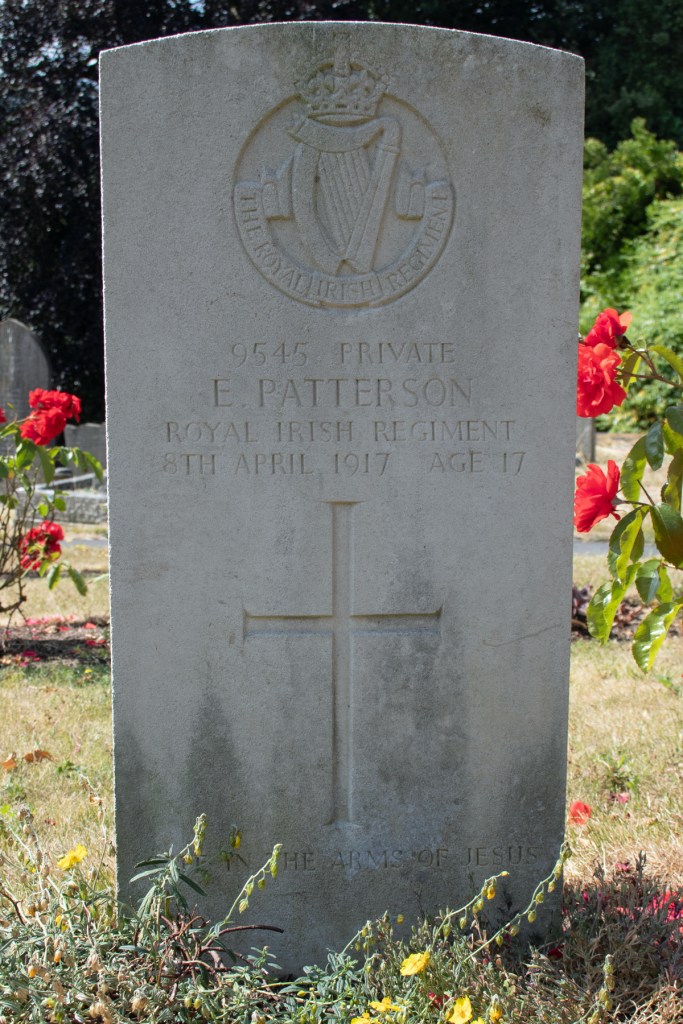
Ernest Patterson was born in Roscrea, Co. Tipperary, Ireland, in 1900. He was the oldest of six children to Robert and Matilda Patterson. Robert was a boot machinist when his son was born but, by the time of the 1911 census, he had turned his hand to farming.

When war came, Ernest stepped up to serve his King and Country and, in his eagerness to do so, he lied about his age. He enlisted in the Royal Irish Regiment on 1st September 1915, and stated that he was 19 years old. Given that his service records show that he was 5ft 8.5ins (1.64m) tall and that he weighed 130lbs (59kg), it is not surprising that the military were willing to take him on his word.

Private Patterson was initially posted to the 3rd (Reserve) Battalion in Dublin. While there, he contracted German measles, and was hospitalised for two weeks. When he recovered, Ernest was moved to the 2nd Battalion, and shipped off to France with his new unit.

His time overseas was cut short, however, and he was medically evacuated to Britain for treatment on 9th March. He was noted as suffering from ‘debility’, and admitted to the Royal Surrey County Hospital for a week.

Out of hospital again, Ernest was re-assigned to the 3rd (Reserve) Battalion. As summer came and went and winter moved in, his health wavered again. On 19th December 1916, he was admitted to the Bath War Hospital in Somerset, suffering from pulmonary tuberculosis. He remained in hospital for the next three months, the condition finally leading to his medical discharge from the army on 29th March 1917.

Private Patterson’s discharge from the army did not mean a discharge from hospital, however, and he remained there for the next week or so. His health was deteriorating by this point, and his body finally succumbed to tuberculosis on 8th April 1917. He was just 17 years of age.

It was not practical to return Ernest Patterson’s body to his family in Ireland. Instead, he was laid to rest in Locksbrook Cemetery in Bath, not far from the hospital in which he had died.


Private George Hansford

Private George Hansford

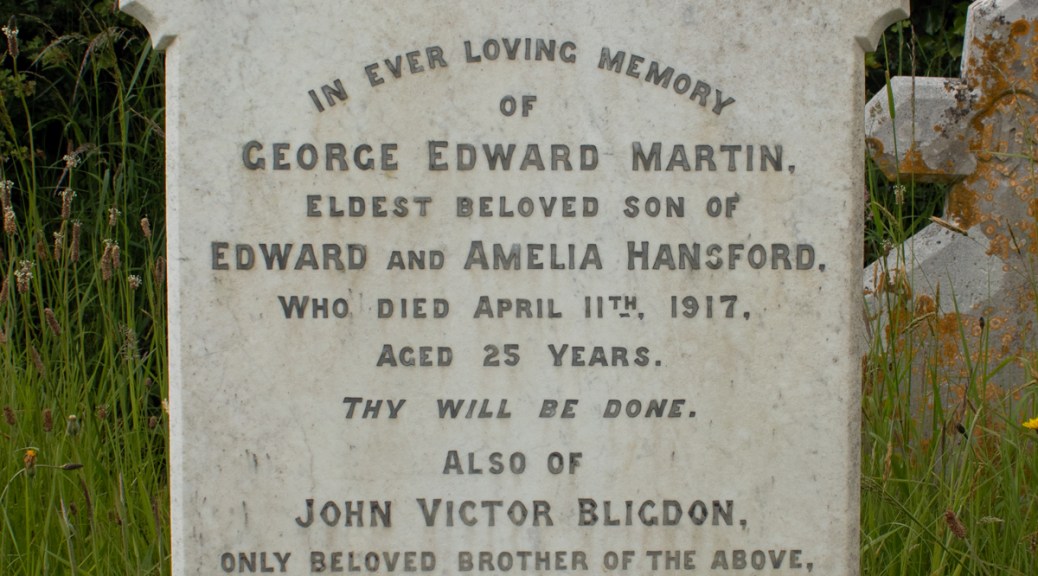
George Edward Martin Hansford was born on 25th March 1892, the second of five children – and the eldest son – to Edward and Amelia Hansford. Edward was a farmer from Netherbury in Dorset, and this is where the family were born and raised.

By the time of the 1911 census, Lower Ford Farm had become a family affair, with George and his older sister, Susannah both supporting their father in running things. War was on the horizon, however, and things were to change.

George was called upon to serve his country on 15th February 1916. He joined the Dorsetshire Regiment, and was assigned to the 2nd Battalion. He wasn’t formally mobilised until 19th January 1917, but his medical identified an underlying health condition.

Private Hansford had suffered a bout tuberculosis in 1914, and this left to his medical report confirming that his health was impacted to the point that he was medically unfit to serve in the army. Unfortunately, while awaiting the results of the report, George, who was back at home had a recurrence of the condition, and succumbed to it. He passed away on 11th April 1917, at the age of just 25 years old.

George Edward Martin Hansford was laid to rest in the graveyard of Holy Trinity Church in Salwayash, a few miles from the family home in Netherbury.


Sub-Lieutenant Denys Puttock

Sub-Lieutenant Denys Puttock

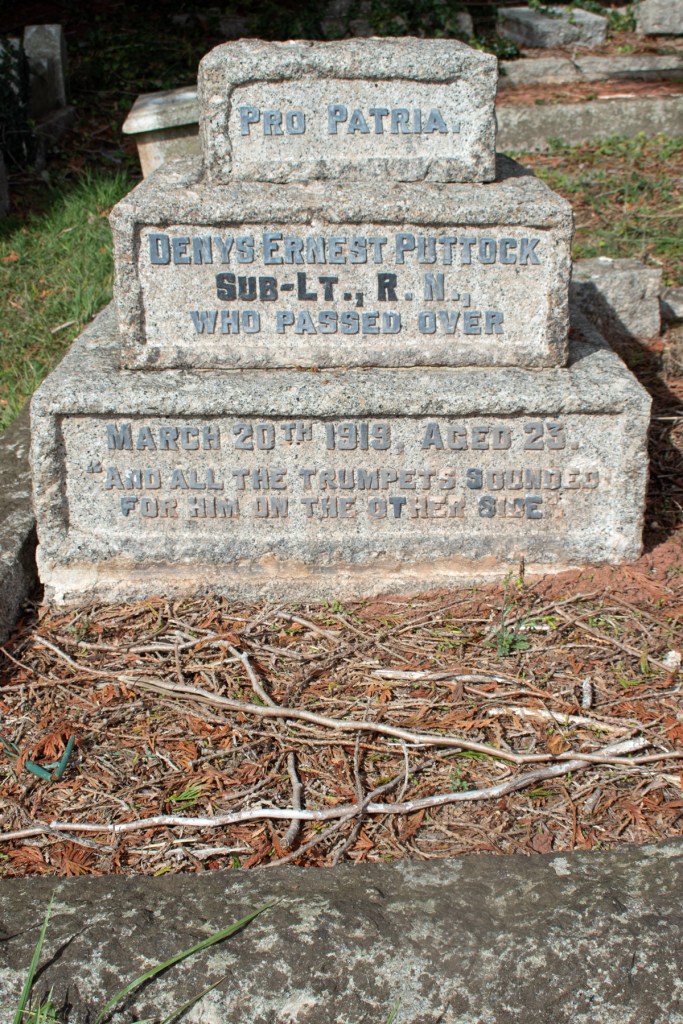
Denys Ernest Puttock was born on 14th September 1895 in the Devon village of Halwill. The middle of three children, his parents were Edward and Alice Puttock. Edward was a vicar of the village’s St Peter & St James’ Church, but died tragically early:

The Red. E Puttock, Rector of Hallwill died on Wednesday, after a brief illness… Mr Puttock had been in charge… for six and a half years. He was much beloved by those among whom he labourer and universally respected. His devotion to the due performance of all his sacred duties was unceasing and his visitations among the poor and afflicted were much appreciated by the whole parish. He was fond of all manly sports, and under his captaincy the Cricket Club at Halwill attained considerable success. Up to the day of his death he could hardly believe that he was ill, and up to the last it was hoped that his wonderful constitution might have carried him through the illness. About a fortnight since he contracted a chill. He would not be deterred from carrying out his duties, and against the advice of his friends, he persisted in taking every service at the church long after he was fit for it. On Sunday, the 24th January, although then in a high fever, he took both the morning and evening services at Halwill Church unassisted, and also the Sunday School in the afternoon. Pneumonia set in at the end of last week, and on Tuesday evening, the 2nd February, the action of the heart failed. He leaves a widow and three young children to mourn their loss.

[Exeter and Plymouth Gazette: Friday 5th February 1897]

After Edward’s death, Alice moved the children to Okehampton. The 1901 census found the family living at 4 Brondage Park, Alice by this time living off her own means. She felt that learning was important, and Denys was sent to Twyford School and St Edmund’s School in Canterbury, Kent. From here he took up a career in the Royal Navy, enlisting in September 1913.

He served in the Highflyer as a Cadet, and was Midshipman in HMS Conqueror, and later Sub-Lieutenant in the destroyers Patriot and Valorous. Long exposure to the rough weather in the North Sea during the winters of 1916 and 1917 brought on tuberculosis, which incapacitated him for further war service. He was invalided our of the Navy and spent many months in a Sanitorium.

[Exeter and Plymouth Gazette: Friday 4th April 1919]

Denys Ernest Puttock’s health was failing him, and he passed away on 20th March 1919, while still admitted. He was 23 years of age. The report of his funeral included comments from those who knew him:

His Headmaster writes: “He has not lived in vain, for he has exercised the power of unconscious influence on all those around him. He knew the secret of happiness – purity of soul and unselfishness of heart.” His Commanding Officer has written: “He was a zealous and capable young officer. Possessed of great charm of manner, he was popular with both officers and men.”

[Exeter and Plymouth Gazette: Friday 4th April 1919]

Alice, having moved to Paignton by this point, laid her son to rest in the town’s cemetery. When she passed away in 1932, she was buried alongside him.


Officer’s Steward Thomas Ounan

Officer’s Steward Thomas Ounan

Thomas Peter Ounan was born on 21st July 1894 in St Helier, Jersey. The oldest of three children, his parents were Thomas and Augustine Ounan. Thomas Sr was a groom from England, who had married his Jersey-born wife and settled on the island to raise their family.

There is, in fact, little documented information about young Thomas’ life. From his military service records, it would seem that he found employment as a steward when he left school. When war broke out, he was called upon to play his part and, on 10th June 1916, he enlisted in the Royal Navy as an Officer’s Steward 3rd Class.

Thomas was initially sent to HMS Victory – the Royal Naval Dockyard in Portsmouth, Hampshire – for training. After a month he was assigned to the steam ship HMS Lucia, spending the next few months on board. At this point, he became unwell, having contracted tuberculosis. and was admitted to hospital in Portsmouth for treatment.

On 30th August 1916, Officer’s Steward Ounan was medically discharge from naval duty due to the condition. He returned to Jersey, remaining in the family home for the next year.

Thomas’ condition was to get the better of him, though. He passed away from tuberculosis at home on 6th October 1917: he was 23 years of age.

Thomas Peter Ounan was laid to rest in the peaceful La Croix Cemetery in Grouville.