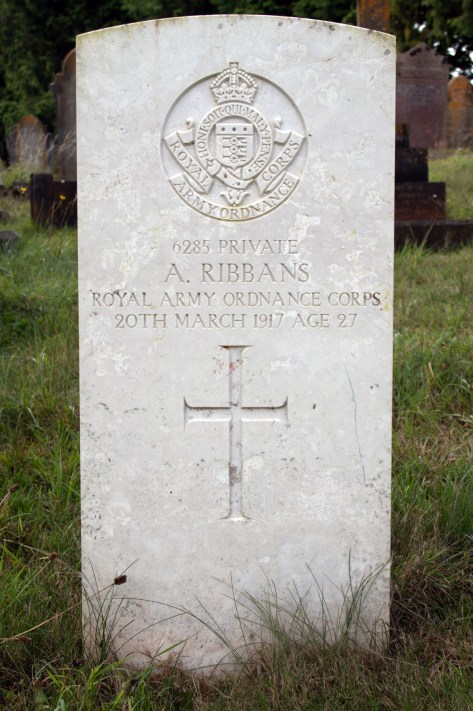
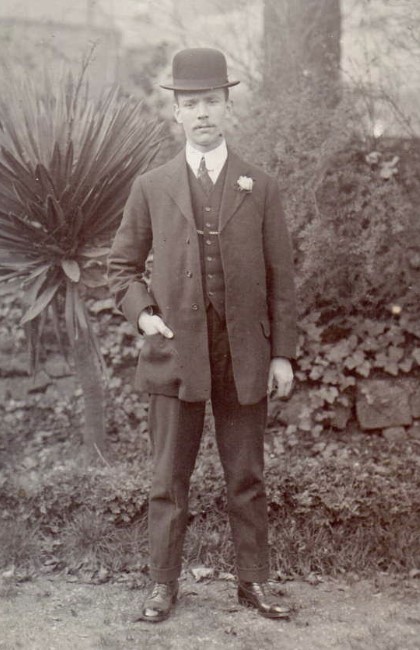
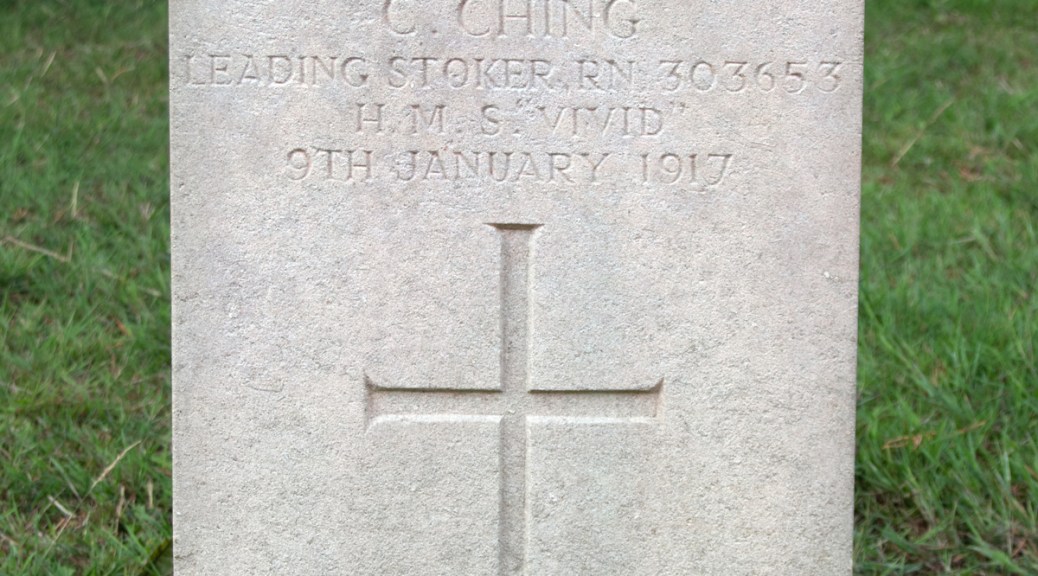
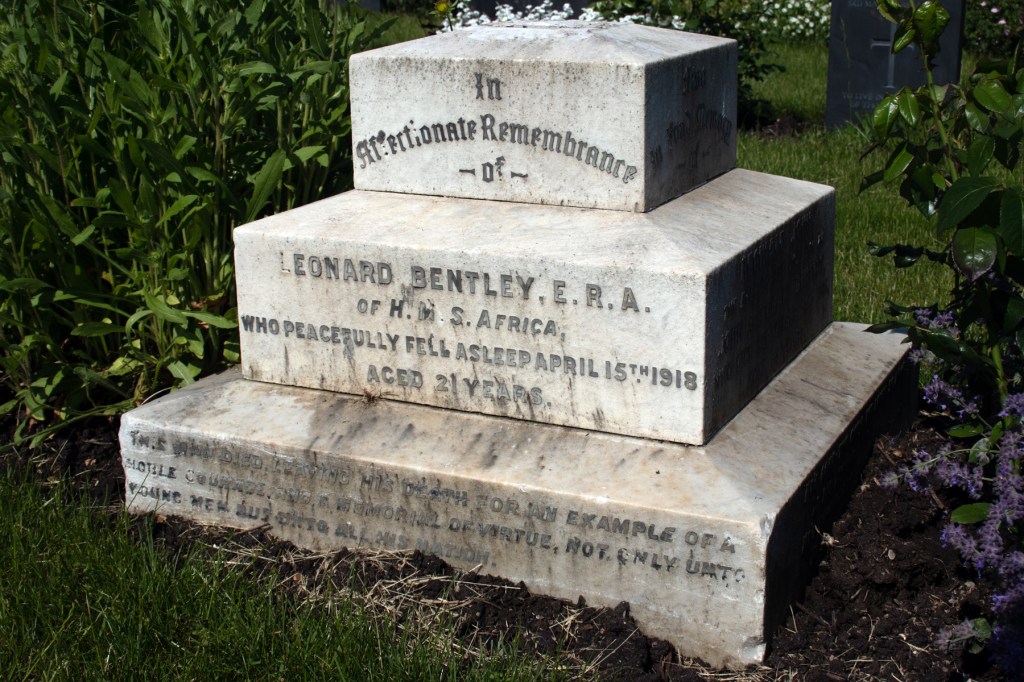
George Edward Martin Hansford was born on 25th March 1892, the second of five children – and the eldest son – to Edward and Amelia Hansford. Edward was a farmer from Netherbury in Dorset, and this is where the family were born and raised.
By the time of the 1911 census, Lower Ford Farm had become a family affair, with George and his older sister, Susannah both supporting their father in running things. War was on the horizon, however, and things were to change.
George was called upon to serve his country on 15th February 1916. He joined the Dorsetshire Regiment, and was assigned to the 2nd Battalion. He wasn’t formally mobilised until 19th January 1917, but his medical identified an underlying health condition.
Private Hansford had suffered a bout tuberculosis in 1914, and this left to his medical report confirming that his health was impacted to the point that he was medically unfit to serve in the army. Unfortunately, while awaiting the results of the report, George, who was back at home had a recurrence of the condition, and succumbed to it. He passed away on 11th April 1917, at the age of just 25 years old.
George Edward Martin Hansford was laid to rest in the graveyard of Holy Trinity Church in Salwayash, a few miles from the family home in Netherbury.
Denys Ernest Puttock was born on 14th September 1895 in the Devon village of Halwill. The middle of three children, his parents were Edward and Alice Puttock. Edward was a vicar of the village’s St Peter & St James’ Church, but died tragically early:
The Red. E Puttock, Rector of Hallwill died on Wednesday, after a brief illness… Mr Puttock had been in charge… for six and a half years. He was much beloved by those among whom he labourer and universally respected. His devotion to the due performance of all his sacred duties was unceasing and his visitations among the poor and afflicted were much appreciated by the whole parish. He was fond of all manly sports, and under his captaincy the Cricket Club at Halwill attained considerable success. Up to the day of his death he could hardly believe that he was ill, and up to the last it was hoped that his wonderful constitution might have carried him through the illness. About a fortnight since he contracted a chill. He would not be deterred from carrying out his duties, and against the advice of his friends, he persisted in taking every service at the church long after he was fit for it. On Sunday, the 24th January, although then in a high fever, he took both the morning and evening services at Halwill Church unassisted, and also the Sunday School in the afternoon. Pneumonia set in at the end of last week, and on Tuesday evening, the 2nd February, the action of the heart failed. He leaves a widow and three young children to mourn their loss.
[Exeter and Plymouth Gazette: Friday 5th February 1897]
After Edward’s death, Alice moved the children to Okehampton. The 1901 census found the family living at 4 Brondage Park, Alice by this time living off her own means. She felt that learning was important, and Denys was sent to Twyford School and St Edmund’s School in Canterbury, Kent. From here he took up a career in the Royal Navy, enlisting in September 1913.
He served in the Highflyer as a Cadet, and was Midshipman in HMS Conqueror, and later Sub-Lieutenant in the destroyers Patriot and Valorous. Long exposure to the rough weather in the North Sea during the winters of 1916 and 1917 brought on tuberculosis, which incapacitated him for further war service. He was invalided our of the Navy and spent many months in a Sanitorium.
[Exeter and Plymouth Gazette: Friday 4th April 1919]
Denys Ernest Puttock’s health was failing him, and he passed away on 20th March 1919, while still admitted. He was 23 years of age. The report of his funeral included comments from those who knew him:
His Headmaster writes: “He has not lived in vain, for he has exercised the power of unconscious influence on all those around him. He knew the secret of happiness – purity of soul and unselfishness of heart.” His Commanding Officer has written: “He was a zealous and capable young officer. Possessed of great charm of manner, he was popular with both officers and men.”
[Exeter and Plymouth Gazette: Friday 4th April 1919]
Alice, having moved to Paignton by this point, laid her son to rest in the town’s cemetery. When she passed away in 1932, she was buried alongside him.
Thomas Peter Ounan was born on 21st July 1894 in St Helier, Jersey. The oldest of three children, his parents were Thomas and Augustine Ounan. Thomas Sr was a groom from England, who had married his Jersey-born wife and settled on the island to raise their family.
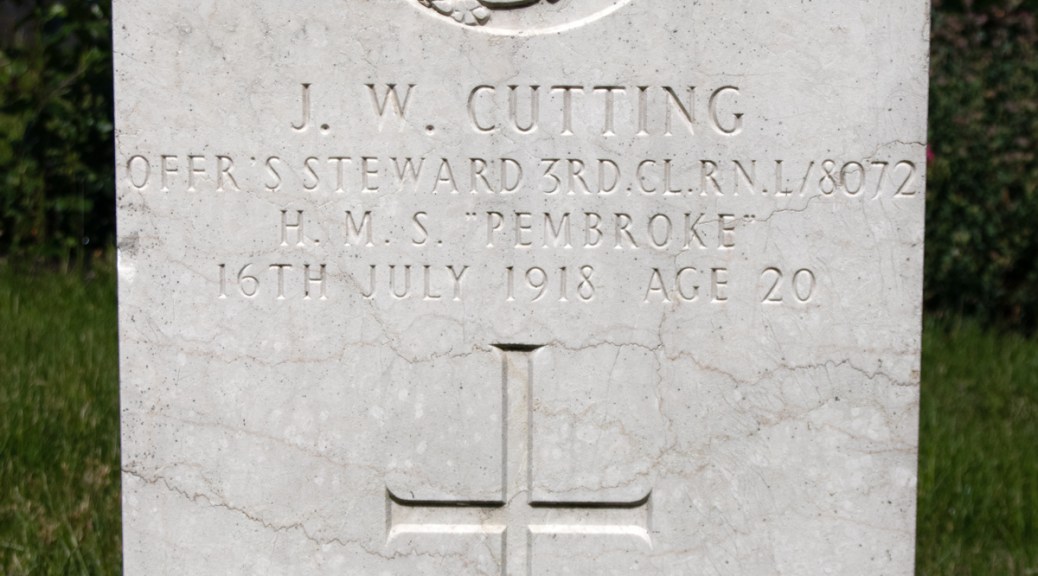
There is, in fact, little documented information about young Thomas’ life. From his military service records, it would seem that he found employment as a steward when he left school. When war broke out, he was called upon to play his part and, on 10th June 1916, he enlisted in the Royal Navy as an Officer’s Steward 3rd Class.
Thomas was initially sent to HMS Victory – the Royal Naval Dockyard in Portsmouth, Hampshire – for training. After a month he was assigned to the steam ship HMS Lucia, spending the next few months on board. At this point, he became unwell, having contracted tuberculosis. and was admitted to hospital in Portsmouth for treatment.
On 30th August 1916, Officer’s Steward Ounan was medically discharge from naval duty due to the condition. He returned to Jersey, remaining in the family home for the next year.
Thomas’ condition was to get the better of him, though. He passed away from tuberculosis at home on 6th October 1917: he was 23 years of age.
Thomas Peter Ounan was laid to rest in the peaceful La Croix Cemetery in Grouville.
Joseph Marie Louis Gionta was born on 7th January 1897 in St Ouen, Jersey. He was the oldest of three children to Matthieu and Marie Gionta. Marie has been married before, and so her two children – Joseph’s older stepbrothers – made up the household.
Shoemaker Matthieu passed away when Joseph was just a teenager. By the time of the 1911 census, Marie was living in two rooms in St Ouen’s, supported by her five children. She was working as a charwoman, while her two children from her first marriage were farm labourers, bringing in three probably meagre wages to the family home.
When war broke out, Joseph stepped up to play his part. Initially enlisting in the Royal Jersey Militia, his unit was absorbed by the 7th (Service) Battalion of the Royal Irish Rifles shortly after he joined up. Rifleman Gionta’s service records confirm he was 5ft 3.5ins (1.61m) tall, and that he was 19 years old when he enlisted.
Joseph’s battalion served in France from December 1915, and he spent the next ten months overseas. In October 1916, he returned to the UK, and was transferred to the regiment’s 4th (Extra Reserve) Battalion, serving in Ireland.
Towards the end of 1917, Rifleman Gionta became unwell, contracting tuberculosis. This led to his medical discharge from the army on 29th January 1918, and he returned to the Channel Islands. At this point, his trail goes cold, and it is not until the autumn of 1920 that he resurfaces.
Joseph Marie Louis Gionta passed away on 24th September 1920: he was 23 years of age. A cause of death is unclear, although the likelihood is that it was related to the lung condition that he picked up while on active duty. He was laid to rest in the peaceful St Ouen’s Churchyard in Jersey.
Percy Light was born on 19th September 1898, and was one of seven children. His parents were groom-turned-motor bus driver Harry Light and his wife, Mary. Harry had been born in Hartlepool, County Durham, while Mary hailed from Penzance, Cornwall. However, the couple raised their family in Paignton, Devon.
Percy’s trail is a challenge to follow. He enlisted in the army around the time of his mother’s death, early in 1914. He was assigned to the Devonshire Regiment and, as a Private, was attached to the 3rd (Reserve) Battalion. His unit was stationed in Britain throughout the First World War, and there is no evidence that he spent any time overseas.
In the spring of 1917, Private Light fell ill, contracting tuberculosis. The condition was serious enough for him to be medically discharged from the army and he was officially stood down on 22nd February.
Percy’s trail goes cold at this point: he returned to Paignton, and it seems that his poor health got the better of him. He passed away at home on 18th November 1917: he was just 19 years of age.
Percy Light was laid to rest in the sweeping ground of Paignton Cemetery, not far from where his father still lived.
Alexander Reid was born in Ballymena, County Antrim, in the autumn of 1898. Information about his early life is a challenge to pin down, as there were a number of boys with the same name growing up in the area at the time. However, his parents were John and Margaret – or Maggie – Reid.
When Alexander finished his schooling, he found employment as a mill hand. However, when war broke out, he received the call to play his part and, on 13th October 1917, he enlisted in the Army Service Corps. His service records show that he was 5ft 7.5ins (1.71m) tall and weighed 138lbs (62.6kg). He was noted as having a tattoo of his initials on his left thumb, and that his right knee was stiff and swollen from an old injury.
Private Reid was sent to England to serve. He was attached to the Mechanical Transport Depot at Grove Park, Kent. Barracked in an old workhouse that had been taken over for army use, he remained there until the spring of 1918.
Alexander had contracted tuberculosis and was medically discharged from service because of the contagious disease. He returned home to Ballymena, but the condition worsened. He passed away at home on 12th November 1918, aged just 19 years old.
Alexander Reid was laid to rest in Ballymena New Cemetery, County Antrim, a twenty-minute walk from where his grieving family lived, in the centre of the town.
Frederick Chamberlain was born in the summer of 1896, the youngest of six children to John and Susan Chamberlain. John was a gardener from Dulverton in Somerset, but it was in Abbots Leigh, near Bristol, that the family were born and raised.
When he finished his schooling, Frederick found work in service and, by the time war broke out, he was employed as a footman. War presented a new adventure, however, and he was quick to step up and serve his country. He enlisted on 1st September 1914, just a few weeks after hostilities were announced, and was assigned to the 1/4th (City of Bristol) Battalion of the Gloucestershire Regiment.
Private Chamberlain’s service records are pretty sparse, but his unit was sent to France in May 1915, and he was to spend the next thirteen months on the Western Front. He seemed to have performed his duty well, however, and during that time was promoted to Corporal. Frederick returned to Britain in the summer of 1916, for what seemed to be health reasons. He was discharged from the army on medical grounds in November, suffering from phthisis, or tuberculosis.
At this point, the trail goes cold. He returned to Somerset, but his health deteriorated. Frederick passed away at home on 18th July 1919: he was just 22 years of age.
Frederick Chamberlain was laid to rest in the family plot in Holy Trinity Churchyard, Abbots Leigh. His funeral was presided over by Reverend Walter Brinkley, who had performed his baptism two decades earlier.
Charles Walter Lavis was born in Iowa, USA, on 2nd April 1888. The second of eleven children, his parents were James and Martha Lavis. The only census record Charles appears from – the return from 1901 – shows that James was an agricultural labourer from Long Sutton in Somerset. The family’s move to America seemed not to have lasted for long – Charles’ immediate siblings – Mabel, who was two years older, and George who was two years younger – were both born in Long Sutton.
Charles was drawn to a life of adventure and, on 11th April 1906, he enlisted in the Royal Navy. His service records confirm that he was 5ft 5ins (1,65m) tall, with brown hair grey eyes and a fresh complexion. As a Stoker 2nd Class, he was initially sent to the training ship HMS Nelson, before moving to what would become his shore base, HMS Victory, the Royal Naval Dockyard in Portsmouth, Hampshire.
Over the next year, Charles serves on HMS Hecla and HMS King Edward VII, where, on 17th May 1907, he was promoted to Stoker 1st Class. He remained on the King Edward VII for more than four years, before returning to Portsmouth in August 1911.
Back on shore, Stoker 1st Class Lavis was promoted to Leading Stoker, and spent the next nine months training for the role at HMS Fisgard, also in Portsmouth. He spent six months on the battleship HMS Revenge, before moving again to another battleship, HMS Britannia.
Charles spent two years on the Britannia, and it was while assigned to her that he got married. He wed Bessie Patten on 31st May 1914 in Martock, Somerset: the couple would go on to have a daughter, Eileen, who was born the following April.
It was while Charles was serving on HMS Britannia that was broke out. In November 1914, he returned to Victory for further training and, in the spring of 1915, he was promoted to Stoker Petty Officer.
Over the next three years, Charles served on three more vessels, before finally returning to Portsmouth in April 1918. The reason for his return was because of his health, and he was soon admitted to the Royal Naval Hospital in Haslar, Gosport, suffering from tuberculosis of the neck. The condition necessitated an operation, but Stoker Petty Office Lavis was not to survive the procedure. He suffered from heart failure, and died on 2nd May 1918. He had not long turned 30 years of age.
Charles Walter Lavis was taken back to Somerset for burial. He was laid to rest in the quiet graveyard of All Saints’ Church in Martock.
Records suggest that the Lavis family could not settle. Passenger lists from March 1912, show James and Martha travelling with nine children to Portland, Maine, before moving on to Huron in Ontario. James was still recorded as being a farm labourer, so it seems that opportunities for the family were better in North America than in Britain.
When war broke out, citizens of the Commonwealth were called upon to play their part and, despite being under age, Charles’ younger brother Arthur, stepped up to serve. Details of his time in the army are scarce, but he was assigned to the 14th Battalion of the Canadian Infantry. His troop set sail for Britain in October 1914: Arthur was just 14 years old at this point, and had lied when he joined up, giving his date of birth as 20th May 1897.
Private Arthur Lavis was in France by August 1916, taking up position on the Front Line at Coucelette. They met heavy troops, even before a full offensive got underway on 16th September. Ninety-two soldiers from the 14th Battalion were killed during the attack, Arthur included. He was just 16 years old, and his remains were never recovered. He is commemorated on the Vimy Memorial in France.
Edward Arthur Pullinger was born in Sutton, Surrey, in the summer of 1897. The oldest of three children, his parents were gardener Arthur Pullinger, and his wife, Ellen.
Arthur seemed to move the family to wherever the work was. By 1902 they had settled in Monkton Wyld, in Dorset, where he was employed on a local estate. Edward’s two siblings, sisters Constance and Nellie, were both born there, but the 1911 census shows that the Pullingers had moved again, to the village of Charlton Mackrell in Somerset.
When war came to Europe, Arthur stepped up to play his part. Sadly, full service records are no longer available, but it is clear from what remains that he enlisted in the Royal Engineers as a Sapper. He remained in the army, until being discharged from duty on 21st May 1919.
Another sad death took place on Wednesday of last week in the person of Mr EA Pullinger, only son of Mr and Mrs A Pullinger… Deceased, who was of a bright and happy disposition and a favourite with all, was gassed in the Great War, from the effects of which he never really recovered. He was always ready and willing to help in the social life of the village and will be missed greatly.
Langport & Somerton Herald: Saturday 12th March 1921
Edward Arthur Pullinger had succumbed to tuberculosis on 2nd March 1921, at the age of 23 years old. He was laid to rest in the peaceful graveyard of St Mary’s Church, in Charlton Mackrell.
Albert Edward Toomer was born in the summer of 1875, one of eleven children to Joseph and Harriet Toomer. Joseph was a labourer from Meare in Somerset, but it was in Highbridge, near Burnham-on-Sea that the family were born and raised.
When he finished his schooling, Albert found work in a local brickyard and, by the time of the 1911 census, when he was the only Toomer child to still be living at home, he was employed as a tile maker. By this point he was 35 years of age, and, as a single man, was in a position to support his parents, who were both in their 70s.
Harriet died in 1914, Joseph following a year later. On 9th January 1915, Albert married Louisa Clark at the Ebenezer Chapel in Brent Knoll. The couple went on to have a child, Arthur, later that year.
By this point, war was raging across Europe. Despite his age, Albert stepped up to play his part, enlisting on 27th November 1915, at the age of 40 years old. Private Toomer’s service documents confirm he was 5ft 3ins (1.6m) tall, and weighed 110lbs (50kg). He was placed in the Army Reserve, and was not formally mobilised until March 1917.
Assigned to the 11th (Reserve) Battalion of the Devonshire Regiment, Albert was sent to France within weeks of being mobilised. He was transferred to the Labour Corps two months later, and remained in France until the autumn of 1918.
By this point, Albert’s health seems to have been suffering. In September, he was admitted to the 7th Canadian General Hospital in Northern France. He was suffering from a carcinoma, although his medical records are not legible enough to confirm what type of cancer. Invalided back to Britain, Private Toomer was sent to a military hospital in Whalley, Lancashire.
Albert’s time in hospital was not to be a lengthy one. He passed away on 8th November 1918, from a combination of the cancer and tuberculous peritonitis. He was 43 years of age.
Albert Edward Toomer was taken back to Somerset for burial. He was laid to rest in Highbridge Cemetery, not far from where his widow and son lived.