Tag Archives: war

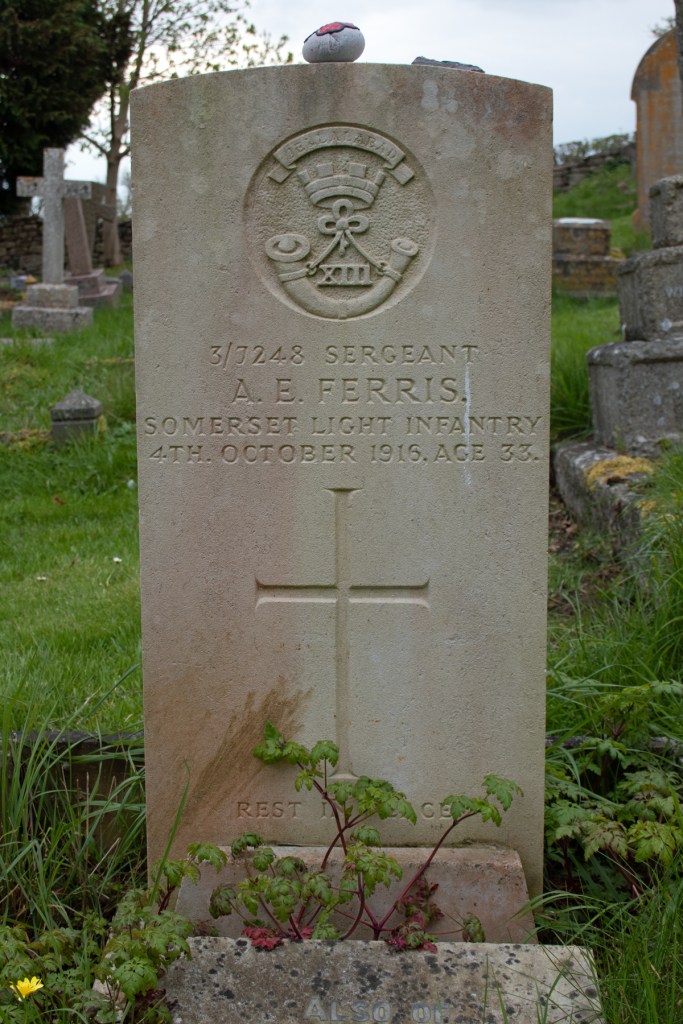
Sergeant Albert Ferris

Sergeant Albert Ferris

Albert Edward Ferris was born in the spring of 1884, one of six children to Charles and Juliana. Charles was quarryman turned farm labourer from Gloucestershire, but it was in the village of Claverton, near Bath, that the family were born and raised.

When he finished his schooling, Albert found work as a baker, but soon sought out a career in the military. On 2nd January 1903 he enlisted in the Royal Marine Light Infantry as a Private. His services records show that he was 5ft 6ins (1.68m) tall, with brown hair, blue eyes and a fair complexion.

Based out of Plymouth, over the next nine years Private Ferris served on four different ships and was recognised as having a very good character and an ability to match.

In 1910, Albert married Eliza Jane Warren, a mason’s daughter from Monkton Combe. The 1911 census found Albert on board the armoured cruiser HMS Cumberland, while Eliza was living with her parents. Military life was taking a toll on married life and, on 6th December 1911 bought an end to his naval career and was ‘discharged by purchase’.

Returning to Somerset, Albert found employment as a motor-man with Bath Electric Tramways. He and Eliza settled into married life, but war was on the horizon and things were to change.

At the outbreak of war, [Albert] promptly responded to his country’s call, and enlisted in the [Somerset Light Infantry], as a Private. When his battalion was sent to France, he distinguished himself in a short time by his excellent work as a sniper, speedily earning his first stripes as a consequence. With his battalion he participated in the heavy fighting around the Ypres district, over an extended period, without sustaining any serious injury. Later his battalion was moved further down the line to take part in the “Great Push,” where, for meritorious conduct, he was… promoted to Sergeant in the field…

Bath Chronicle and Weekly Gazette: Saturday 7th October 1916

Sergeant Ferris’ luck was not to last, however, and things took a turn in September 1916.

In the… fighting around Delville Wood… Sergt, Ferris was severely wounded in the right thigh by a machine-gun bullet. One of his officers gave him the best first-aid treatment possible under the circumstances, and later he crawled nearly three miles in an endeavour to reach the nearest field dressing station. Through loss of blood, shock, and general exhaustion he was on the point of collapse when picked up by a field ambulance, after which he was transferred to the base and later to Tooting Military Hospital, where, despite skilled treatment and the greatest care, septic poisoning intervened and he passed away…

Bath Chronicle and Weekly Gazette: Saturday 7th October 1916

Sergeant Ferris died while admitted in the Surrey hospital on 4th October 1916. He was just 32 years of age.

The body of Albert Edward Ferris was brought back to Somerset for burial. He was laid to rest in the peaceful graveyard of St Michael’s Church, Monkton Combe.


Boy Edwin Hiscock

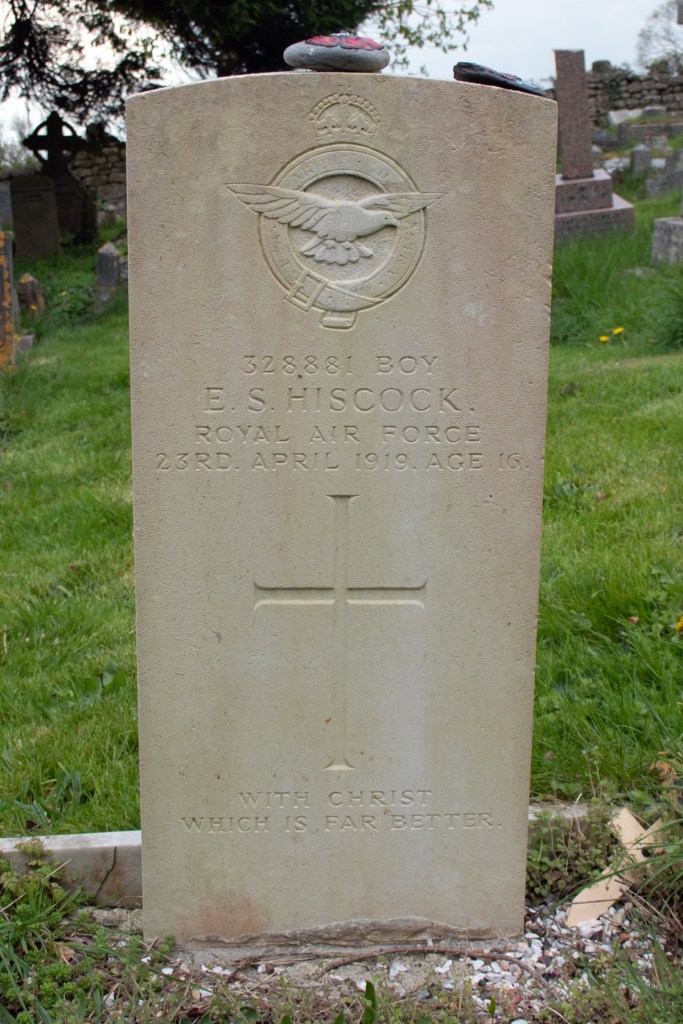
Boy Edwin Hiscock

Edwin Sydney Hiscock was born in Corsham, Wiltshire, 11th November 1902. The older of two children, his parents were quarry manager Edwin Hiscock and his wife, Helen.

When he finished his schooling, Edwin Jr found work as a clerk, but as a young teenager, the thrill and excitement of the war going on around him, drew him to a life in the Royal Air Force. He enlisted on 27th March 1919, and was dispatched to the School of Technical Training at Halton Camp near Aylesbury, Buckinghamshire. Boy Hiscock’s service records note that he was 5ft 9ins (1.75m) tall, with dark hair, brown eyes and a fresh complexion.

Edwin’s life in the military was to be cut tragically short. He had lived a cosseted life in rural Somerset – the family having moved to Monkton Combe, near Bath. At the RAF base, he was surrounded by men and women from across the country, and was suddenly exposed to illnesses that he would not have encountered had he remained at home. It is unclear what he contracted but in the months after the First World War, influenza swept Europe, so this is a likely suspect. Edwin passed away at the base on 23rd April 1919, having completed 27 days’ service. He was just 16 years of age.

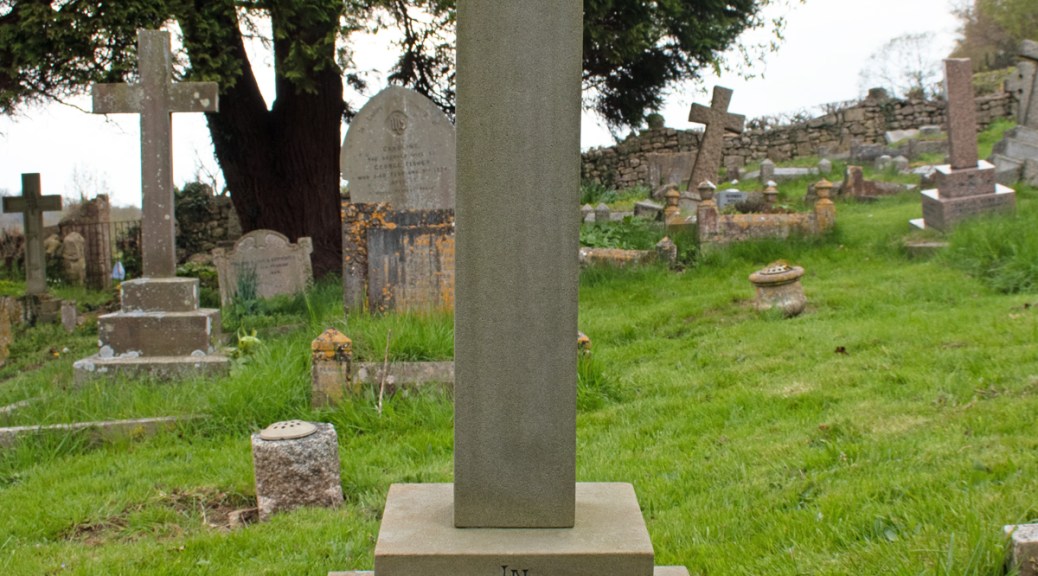
The body of Edwin Sydney Hiscock was brought back to Somerset for burial. He was laid to rest in the peaceful graveyard of St Michael’s Church, Monkton Combe.


Edwin’s headstone includes the epitaph “With Christ which is much better”, a bitter pill to swallow.


Gunner Valentine Wilkinson

Gunner Valentine Wilkinson

Valentine Burnett Wilkinson was born early in 1889 in Combe Down, Somerset. One of eight children, his parents were Harry and Eliza Wilkinson, Harry was from nearby Bath and worked as a gardener, and this is the trade into which Valentine also went when he finished school.

In the spring of 1913, Valentine married Florence Moody. She was the daughter of a stone mason and, at the time of the 1911 census, she was employed as a live-in sewing maid at Monkton Combe Junior School.

Gardening seems to have been a footstep to something bigger for Valentine, and he soon found other employment, as a police constable. He and Florence moved to Street, near Glastonbury, and this is where they were living when war broke out.

Keen to play his part, Valentine enlisted in the Royal Garrison Artillery on 11th December 1915. He was placed on reserve, possibly because of his occupation, and was not formally mobilised until the end of June 1917, just six weeks after Florence had given birth to their first and only child, Joan.

Gunner Wilkinson’s service records note that he was 5ft 11ins (1.8m) tall, and had a scar on his right wrist. He spent five months training, split between No. 3 Depot in Plymouth, Devon, 473 Siege Battery and No. 1 Reinforcing Depot in Bexhill-on-Sea, Sussex. On 3rd November 1917, however, he was sent to France, and was attached to the 234th Siege Battery.

Gunner Wilkinson’s time overseas was to be brief, however. He was caught up in a gas attack in December, and evacuated back to Britain for treatment. His health was now impacted and, during the summer of 1918, he was admitted to hospital having contracted pleurisy. After two months in hospital, Valentine was sent to the Military Convalescent Hospital in Ashton-in-Makerfield, near Wigan.

The war was in its closing stages by this point, and in November 1918 Gunner Wilkinson resumed some of his duties, albeit on home soil. His health was still suffering, and he contracted tuberculosis on the lung and throat. He was formally discharged from the army on 27th February 1919, no longer physically fit to serve.

Valentine returned home to Somerset, and it was here, on 1st April 1919, that his body finally succumbed to the lung conditions that had dogged him for nearly eighteen months. He was just 30 years of age.

Valentine Burnett Wilkinson was laid to rest in the quiet graveyard of St Michael’s Church in the parish of his childhood home, Monkton Combe.


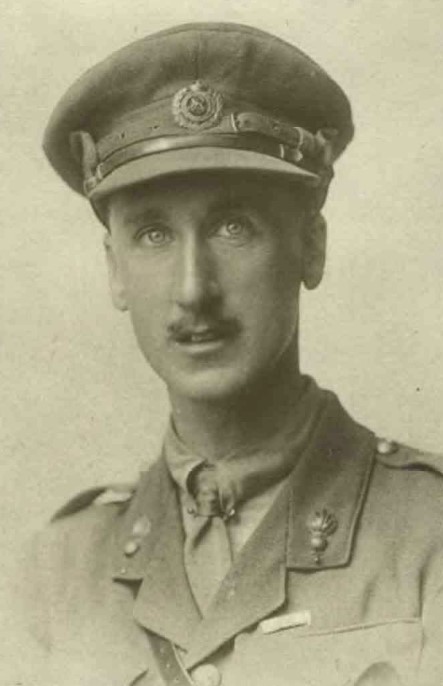
Major Cyril Wilson

Major Cyril Wilson

Cyril Spencer Wilson was born on 12th July 1883 in Charlcombe, Somerset. The youngest of three children, his parents were John and Edith Wilson. John was a solicitor who went on to become President of the Bath Law Society and, because of his standing, Cyril and his siblings had a comfortable upbringing: all three censuses covering his life – in 1891, 1901 and 1911 – all show the family living in a large villa in Charlcombe, with a cook and a housemaid to support them.

[Cyril] was educated at Bath College and Lancing College, and then studied engineering at Bristol University. He then became an articled pupil at the Great Western Railway Works at Swindon. Very interested in, and a keen supporter of, the Territorial movement, he was a Captain of the [Royal Engineers] Wilts Fortress Engineers when war broke out.

Bath Chronicle and Weekly Gazette: Saturday 2nd November 1918

Cyril had begun work for the Great Western Railway in July 1902, and became attached to the Institute of Civil Engineers the following January.

Captain Wilson formally enlisted when war was declared, and was soon sent to France. “He was awarded the Military Cross early in the summer of 1917, after being twice mentioned in despatches for excellent work.[Bath Chronicle and Weekly Gazette: Saturday 2nd November 1918]

Cyril was promoted to Major soon after this, and would go on to serve in France for more than a year more. In February 1918 he married Amy Pounds, the daughter of a bank clerk from East London and the couple exchanged vows in the city.

Major Wilson returned to France, but contracted dysentery that summer. He returned to Britain to recuperate, but came down with pneumonia, and this was to take his life. He died on 27th October 1918, aged 35 years old.

Cyril Spencer Wilson’s body was brought back to Somerset for burial. He was laid to rest in the family plot in St Mary’s Churchyard, Charlcombe.


Major Cyril Wilson
(from ancestry.co.uk)

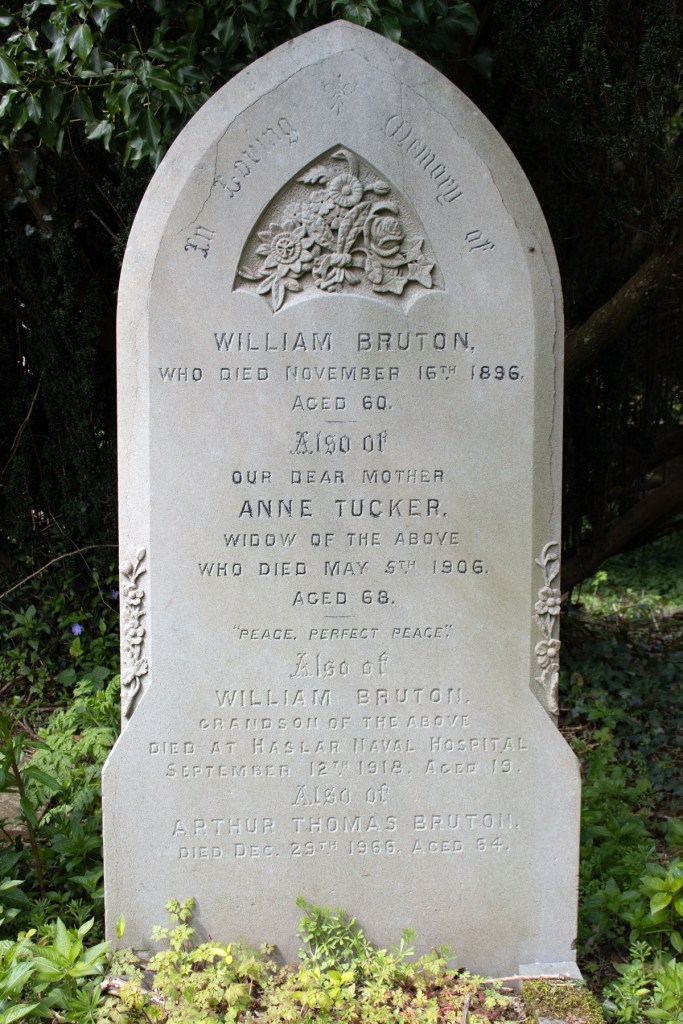
Ordinary Seaman William Bruton

Ordinary Seaman William Bruton

William Bruton was born on 9th August 1899, the oldest of two children to William and Kate Bruton. William Sr was a grocer from Charlcombe to the north of Bath, Somerset, but it was in the Walcot area of Bath itself that the family settled.

Kate died in November 1904, at the age of just 35 years old, and William Sr raised his children on his own. He married a second time, to Edith Elly in 1910, and the couple went on to have a daughter, Mona, the following year.

William Jr – who was known as Willie, to avoid confusion with his father – was still in school at the time of the 1911 census, but when he left a few years later, he found work as an engine cleaner. War had come to Europe by this point, but to begin with Willie was too young to play his part.

He finally got his chance to enlist towards the end of the conflict, and joined the Royal Navy as an Ordinary Seaman on 18th July 1918. His service document record that Willie was 5ft 11ins (1.8m) tall, with brown hair, hazel eyes and a fresh complexion. He was also noted as having a scar on his upper lip.

Ordinary Seaman’s first posting was to be HMS Victory, the Royal Naval Dockyard in Portsmouth, and, tragically, this was also to be his last. Within a matter of weeks he had contracted pneumonia, and he passed away from the condition on 12th September 1918. He was just 19 years of age.

William Bruton was brought back to Somerset for burial. He was laid to rest in the family plot in Lansdown Cemetery, overlooking the city of his birth.


Captain Frederick Walker

Captain Frederick Walker

Frederick Murray Walker was born on 29th July 1862 in the village of Terregles, Kircudbrightshire, Scotland. The fifth of eleven children, his parents were Colonel Sir George Gustavus Walker, Member of Parliament for Dumfries & Galloway, and his wife, Anne. Sir George owned the Crawfordton Estate, and this is where Frederick was raised, with a retinue of fourteen staff to help the family.

Following his father’s military career, Frederick felt a draw to serve. On 15th July 1875, he entered the Royal Navy as a Midshipman. He set out to build a dedicated career, visiting most parts of the world in the process.

While Frederick’s initial service took him to the Mediterranean – where he received the Egyptian Medal and Alexandria Clasp – by 1883 he was out in China, but he also spent time in India and South Africa. In 1882 he was promoted to Sub Lieutenant, three years later he rose to the rank of Lieutenant. By 1899, Frederick had become a Commander.

By his own request, Frederick retired from the Royal Navy on 1st August 1909. He was now 47 years old, and had spent 34 years in service and was given the rank of Captain as a mark of his career.

On 19th June 1891, Frederick had married Lucy Scriven in St Saviour’s Church, Paddington, London. They would go on to have seven children, and to begin with, the life of a Naval Captain took Lucy around the coastal ports of Southern England. When Frederick retired, however, the family settled in a large house in Milford-on-Sea, Hampshire, where they were supported by a governess, cook, parlour maid and housemaid.

When war broke out in 1914, Captain Walker stepped up once more to serve his King and Country. He remained in territorial waters and was given successive command of the yachts James, Zaria and Albion III. By 1917, Frederick’s health was beginning to suffer, and he was placed on HMS Victory’s reserve books, ready should Portsmouth’s Royal Naval Dockyard need his service.

Frederick was not to be called to action again. By the time the Armistice was declared Frederick’s condition was worsening. He had developed cancer of the tongue, and it was having a real impact. He was admitted to the Haslar Hospital in Portsmouth, and passed away there on 7th February 1919, at the age of 46 years old.

By this point the family had relocated to Bath, Somerset, and this is where Frederick Murray Walker’s body was brought for burial. He was laid to rest in the prestigious Lansdown Cemetery, overlooking the city.


Captain Frederick Walker
(from ancestry.co.uk)

Serjeant Joseph Smith

Serjeant Joseph Smith

Joseph Smith was born at the beginning of 1879 in Bath, Somerset. The fifth of six children – all boys – his parents were William and Sarah Smith. William was a carpenter and, while he did not follow in his father’s trade, Joseph found employment as a house painter when he left school.

Joseph married Alice May Martin in 1896: the couple were young, the groom being a year older than the bride, and they went on to have a daughter, Dorothy, who was born the following year. The newlyweds moved into a small, terraced house in Bath with Alice’s mother and sister, both of whom were widowed, and Alice’s nephew.

The 1911 census found the extended family living in larger home away from the centre of the city. Joseph was still employed as a house painter, Dorothy had left school and was apprenticed to a dressmaker. Alice looks to have been looking after the household, while her mother and sister were both living on their own means.

In his spare time, Joseph was also a member of staff at Bath’s Theatre Royal. He was sporty, with a keen interest in football and partial to a game of cricket. He was also very connected to St Stephen’s Church in the city, and was involved in parish life.

War was coming to Europe, and Joseph stepped up to play his part. Full details of his military service are lost to time, but from his gravestone and linked records, it is clear that he enlisted in the 6th Battalion of the Somerset Light Infantry. Further details are outlined in a contemporary newspaper report:

Though married, he was anxious to enlist practically as soon as the war began: and on January 16th, 1915, he offered himself for service, and was at once accepted. He did not leave England till 16th August [1916]. He had been selected for inclusion in 32 drafts on various occasions prior to that date; but had been obliged to remain behind from illness or some other cause. When he actually sailed, it was not as a member of a draft, but as one of five sergeants who had volunteered for special service.

Bath Chronicle and Weekly Gazette: Saturday 28th October 1916

Sergeant Smith made it to the Western Front, and was entrenched at the Somme. The newspaper report picks up on what happened next:

He was wounded in September, being struck by a bullet while leaving the trench preparatory to advancing. The bullet struck him in the thigh, and severed an artery… After doing what he could with his first-aid dressing, Sergt. Smith crawled some three miles from the firing line amid bursting shells. After five hours of this painful progress he was picked up by a stretcher party.

Bath Chronicle and Weekly Gazette: Saturday 28th October 1916

Sergeant Smith was medically evacuated to Britain for treatment, and was admitted to the 3rd Western General Hospital in Cardiff. Alice and Dorothy were a constant presence as his bedside, but the wound was to prove too severe, and he passed away at the hospital on 25th October 1916. He was 38 years of age.

Joseph Smith was brought back to Bath for burial. He was laid to rest in the Lansdown Cemetery, overlooking the city he called home.


Lieutenant Colonel Charles Holroyd-Smyth

Lieutenant Colonel Charles Holroyd-Smyth

Charles Edward Ridley Holroyd-Smyth was born in Ballynatray, Co. Waterford, Ireland, on 16th August 1882. The seventh of nine children, his parents were John and Harriette Holroyd-Smyth. John was a colonel in the army and, while from a a renowned family, there is actually little documented about Charles’ early life.

Given his father’s military career, it seemed natural for Charles to follow suit. His service records are tantalisingly elusive, but he certainly served in South Africa during the Second Boer War at the turn of the century.

When war broke out, Charles took up the rank of Captain in the 3rd Dragoon Guards (Prince of Wales’ Own). He set sail for France on 1st November 1914, and he found himself in the very thick of the fighting, where his battalion fought at Ypres, Loos and Arras. His conduct during the war earned him both the Distinguished Service Order and a Military Cross.

On 29th October 1916, Charles married Norah Layard, the daughter of another army officer, who had been born in Ceylon. Charles was soon back in France, however, and was promoted to Lieutenant-Colonel, and given command of the 15th Battalion of the Durham Light Infantry.

Over the course of 1918, Lieutenant-Colonel Holroyd-Smyth led his troop in the Battles of Bapaume, Messines, Kemmel and Aisne. However, it was during the Battle of Epehy that he was badly wounded. Initially treated on sight, he was quickly evacuated back to Britain for further treatment.

Lieutenant-Colonel Holroyd-Smyth was admitted to the Royal Victoria Hospital in Netley, Southampton, but his wounds were to prove too severe. He passed away on 23rd September 1918, at the age of just 36 years of age.

The body of Charles Edward Ridley Holroyd-Smyth was brought back to Somerset, where Norah was living. His funeral, at St Stephen’s Church, in Bath, was marked with some ceremony, and he was laid to rest in Lansdown Cemetery, overlooking the city.


(from ancestry.co.uk)

Charles’ death came just nine days after the passing of his mother, back in Waterford. He and Norah didn’t have any children, although tragically a newspaper report from July 1918 did note a birth: “On the 3rd July, at East Hayes House, Bath, the wife of Lieutenant-Colonel CE Holroyd-Smyth MC, a son (stillborn).” [Bath Chronicle and Weekly Gazette: Saturday 13th July 1918]


Rifleman Edward Compton

Rifleman Edward Compton

Edward Charles Compton was born in Islington, Middlesex on 4th July 1897, the only child to Charles and Ada Compton. Charles was an agent for the Prudential Insurance company, and the family lived on Devonshire Road, with Charles’ aunt, Mary.

When he finished his schooling, on 7th July 1911, Edward found work as a clerk for the North African Mission. When war came to European shores, he was eager to serve his King and Country. He enlisted on 10th September 1914, and was assigned to the 11th (Reserve) Battalion of the London Regiment.

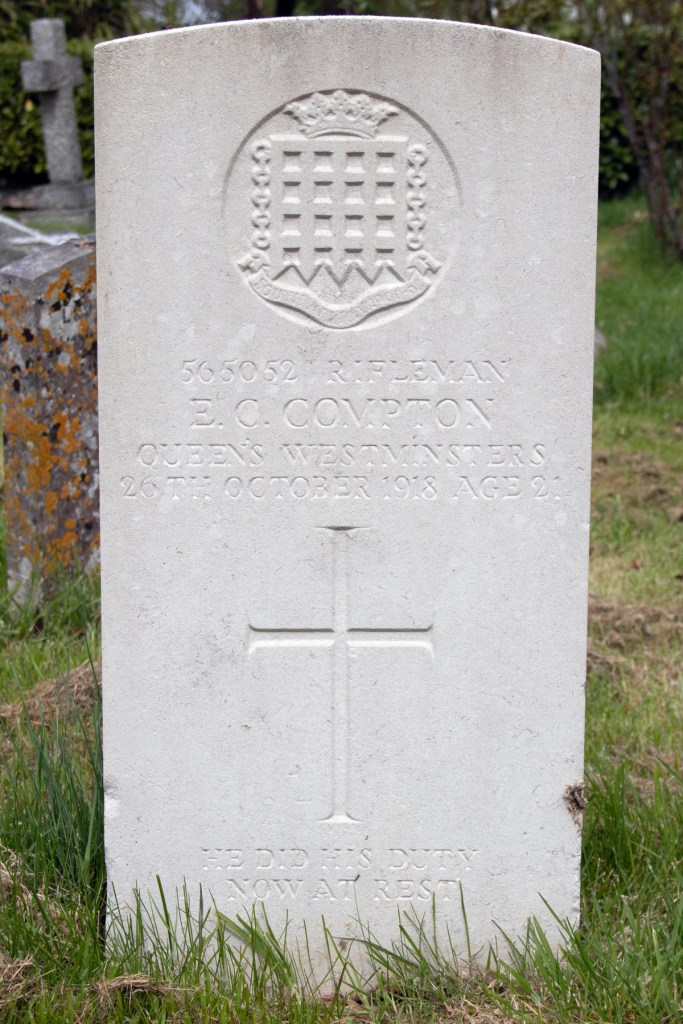
Rifleman Compton’s service records confirm that he was 5ft 8ins (1.73m) tall, with good vision and physical development. He wasn’t formally mobilised until the summer of 1916 and, after training, he was transferred to the 16th (County of London) Battalion, also known as the Queen’s Westminster Rifles. He was sent to France on 19th December 1916.

Edward would have been involved in the German retreat to the Hindenburg Line in the spring of 1917, and the First and Third Battles of the Scarpe in April and May. At the end of July he returned to Britain and, while the reason for this is unclear, it seems that his health was suffering.

On 24th September 1917, Rifleman Compton was medically discharged from the army, after three years and fifteen days’ service. The cause for this isn’t documented, but there is no evidence that he was wounded, so it is likely to have been an illness of some description.

Edward returned to Islington and on 20th October 1918, he married Emily Backholer. She was a farmer’s daughter from Paignton, Devon, and was registered as living there when the couple’s banns were read during October.

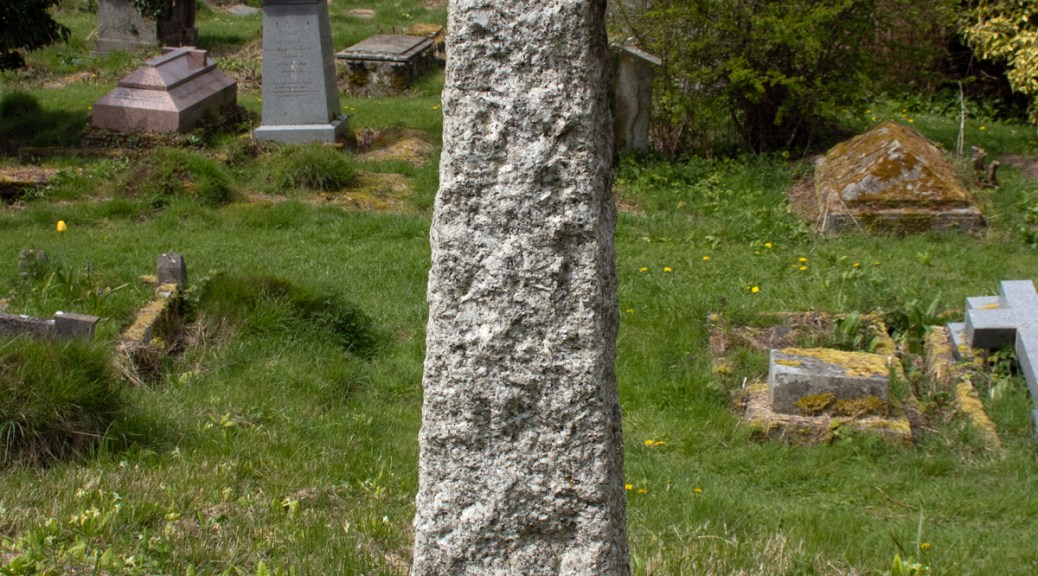
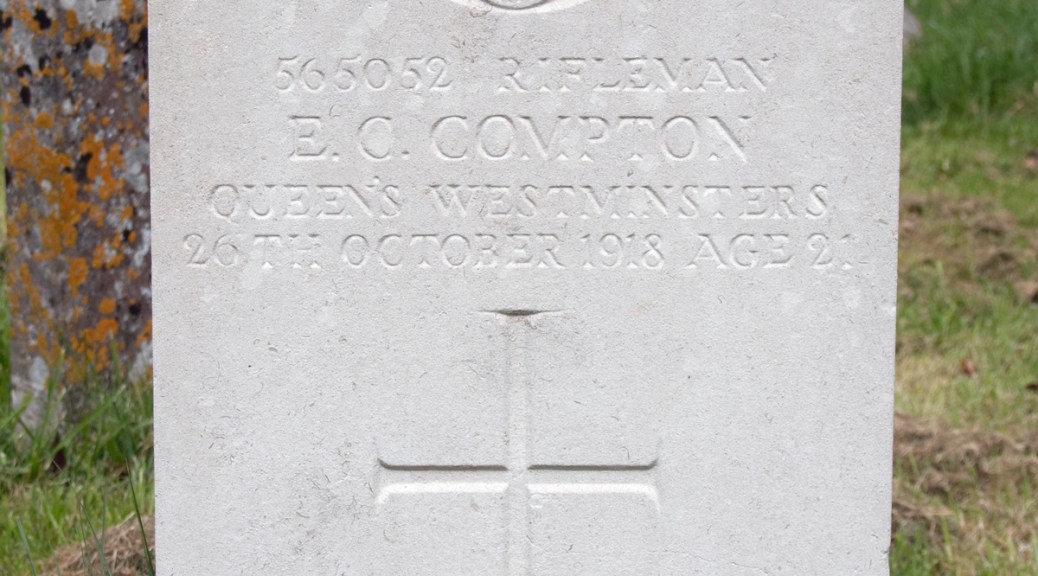
Tragically, Edward and Emily’s marriage was not to be a long one: he died in Kelston, near Bath, Somerset, on 26th October 1918, less than a week after his wedding. He was just 21 years of age.

Edward Charles Compton was laid to rest in the graveyard of St Nicholas’ Church in Kelston, Somerset.


Corporal Frank Crew

Corporal Frank Crew

Frank George Crew was born in Twerton, Somerset, on 25th January 1886. The fourth of five children, his parents were nurseryman and market gardener William Crew and his laundress wife, Fanny.

When Frank finished his schooling, he followed his father into the nursery trade, and this is how he was employed when war was declared. He enlisted in the Dorsetshire Regiment on 19th July 1915, and was assigned to the 3rd (Reserve) Battalion. Private Crew’s service records are limited, but his medical report shows that he was 5ft 9ins (1.75m) tall, weighing around 10st (63.5kg).

On 6th October 1918, Frank, who had been promoted to Corporal by this point, was admitted to the Military Hospital in York with a bullet wound to his right forearm. Given that his battalion remained on home soil for the duration of the conflict, it is unclear whether this was an accidental injury at camp, or if he transferred to another troop when he recovered.

Little additional information for Frank remains. He remained in hospital until 8th November 1918 and it is unclear if he continued with his army service once he recovered – although given the Armistice was declared three days later, it is unlikely that he did.

On 11th November itself, Frank married Kate May, a mason’s daughter from Limpley Stoke, to the west of Bath. By this point he recorded his profession as gardener, so it seems his army career was indeed behind him. The couple went on to have a daughter, Peggy, who was born a year later.

William died in 1920, and by the time of the following year’s census, Frank, Kate and Peggy were living with Frank’s now-widowed mother. The extended family had a home on Padleigh Hill, to the south west of Bath city centre, and Frank seemed to be the main breadwinner, working as a labourer for Stothert & Pitts Ltd, a crane company on the River Avon.

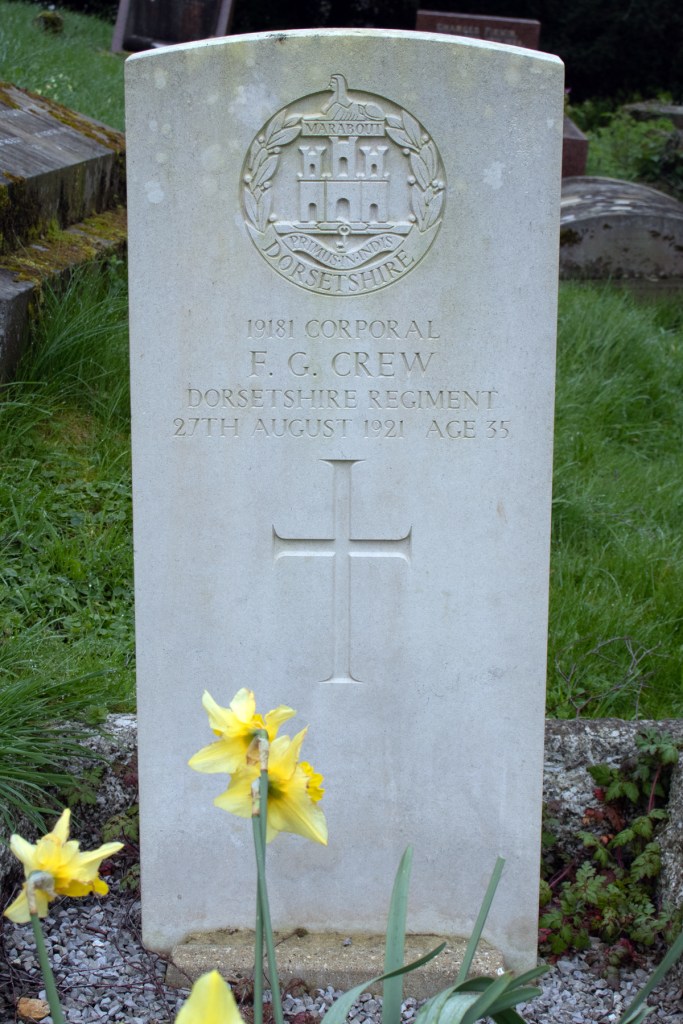
Sadly, Frank was only to survive the census by a couple of months. He passed away on 21st August 1921, dying from a combination of influenza and epilepsy. He was 35 years of age.

Frank George Crew was laid to rest in the quiet Englishcombe Churchyard, close to the family home.