Tag Archives: West Midlands

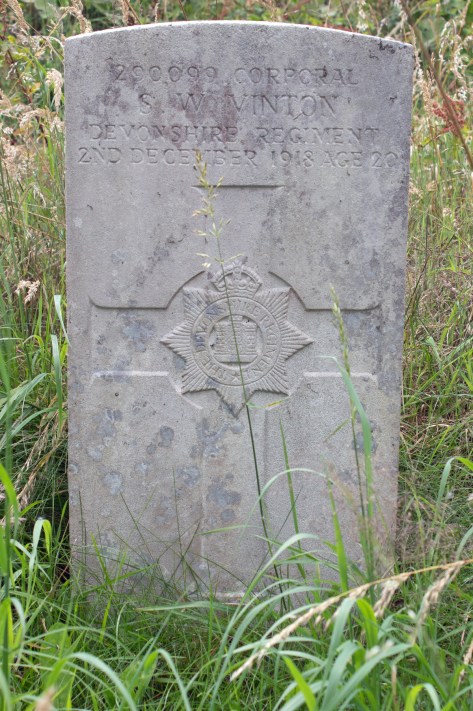
Corporal Stanley Vinton

Corporal Stanley Vinton

Stanley William Vinton was born on 30th April 1898 in Dartmouth, Devon. The second of eight children, his parents were William and Kate. William was an outfitter’s assistant, and by the time of the 1911 census, the family of ten were living in a four-roomed cottage on South Ford Road.

When he finished his schooling, Stanley was apprenticed to a shipwright. Away from work, he volunteered with the Dartmouth Cadet Company, and was drawn towards an army career. On 25th May 1914, he enlisted, joining the 7th (Cyclist) Battalion of the Devonshire Regiment. His service records show that he gave his age as 17 years and four months old. He was 5ft 6.5ins (1.69m) tall, and weighed 154lbs (69.9kg). Private Vinton was of good physical development and had good eyesight.

Stanley was formally mobilised on 5th August 1914. He remained on home soil for the next three years, primarily because soldiers were unable to fight on the Western Front until they turned 19 years of age. During this time, he appears to have impressed his superiors: in July 1916 he was promoted to Lance Corporal, and just four months later he rose to full Corporal.

In July 1917, Stanley’s chance to see some action arrived, when he was posted to the 2nd Battalion, and sent overseas. This move came with a caveat, however, and he reverted to the rank of Private. It was a challenging time for the regiment, and Stanley quickly found himself in the thick of it at Passchendaele.

On 30th November 1917, after four months on the Western Front, Private Vinton’s luck came to end. Caught up in the fighting, he was wounded in his left thigh by shrapnel and the fingers of his left hand by a gun shot wound. He was medically evacuated to Britain for treatment, and admitted to the Edinburgh War Hospital in Bangour.

Thankfully, the injury to Stanley’s hand was minimal, but his leg took longer to heal, and he remained in hospital for more than two months. When he was discharged, Private Vinton was transferred to the regiment’s command depot in Sutton Coldfield. In March 1918, he was promoted to Corporal, but his injured leg was still causing him discomfort. In the end, he was reassigned to a munitions works in Lowestoft, Suffolk, and this is where he would spend the remainder of the year.

Stanley’s constitution was weakened by this point, and that winter, he contracted influenza. The condition was to prove fatal, and he passed away on 2nd December 1918. He was just 20 years of age.

The body of Stanley William Vinton was taken back to Devon for burial. He was laid to rest in the graveyard of St Clement’s Church, Dartmouth, high above the town’s centre, but within walking distance of his grieving family’s home.
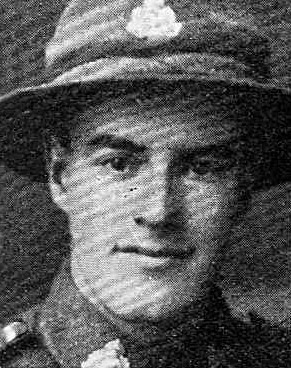
Corporal Ronald Dumbleton

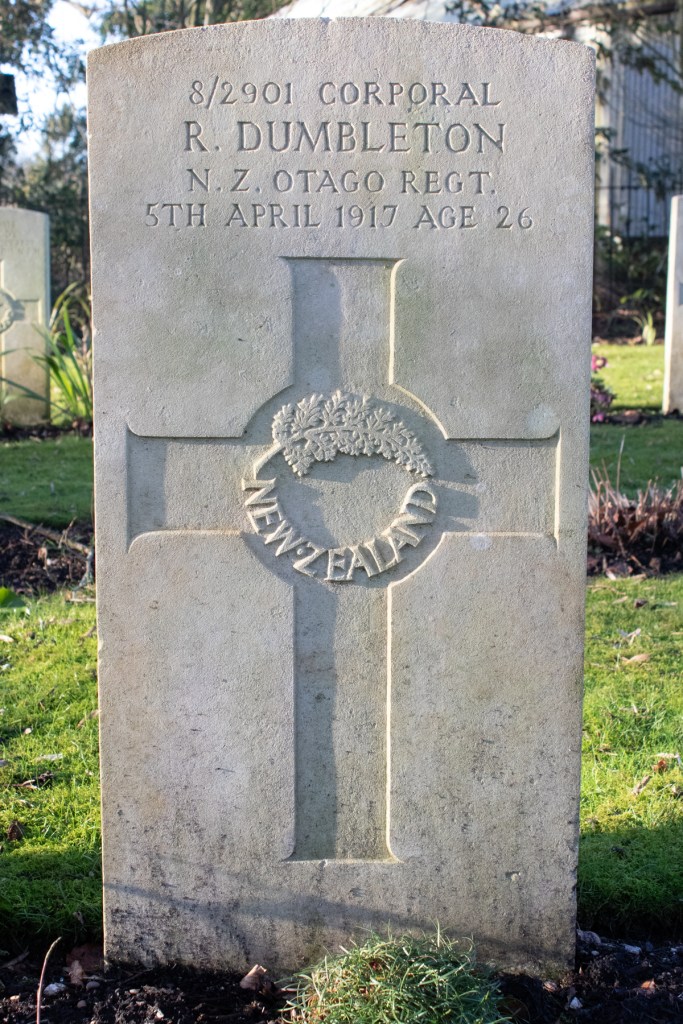
Corporal Ronald Dumbleton

Ronald Dumbleton was born in Pukeuri Junction, New Zealand, at the end of 1890. His parents were William and Lucy, but about his early life, there is very little information.

When he finished his schooling, found work as a telegraphist and, by the time war broke out, he was employed at the Oamaru Post Office. This employment fitted in perfectly with his hobby as a volunteer in the Signal Company.

Ronald enlisted in the Otago Regiment of the New Zealand Infantry on 13th June 1915. His service records show that he was 5ft 8ins (1.73m) tall and weighed 140lbs (63.5kg). An Anglican by faith, he had black hair, dark eye and a dark complexion.

Assigned to the 7th Battalion, Private Dumbleton’s unit set sail for Europe towards the end of the year and, after a few weeks in Egypt, Ronald arrived in Britain in March 1916. His previous military service stood him in good stead. On 8th July 1915 he was promoted to Lance Corporal, and just six weeks later he had made full Corporal.

In April 1916, Ronald arrived in France. Transferred to the 1st Battalion, he would remain overseas for six months. Caught up in the fighting at the Somme, he was injured in his left arm and shoulder and medically evacuated to Britain for treatment. Corporal Dumbleton was admitted to the 1st Southern General Hospital in Birmingham, and remained there for a month.

In November, Corporal Dumbleton transferred to a hospital in Hornchurch, Essex. He then seems to have been moved to the ANZAC base near Codford, Wiltshire, for his ongoing recuperation. He was given two weeks’ leave in January 1917, returning to the base towards the end of the month.

At this point, Ronald’s trail goes cold. He remained based in Codford, possibly as he was not yet fit enough to re-join his unit on the Western Front. While in camp, however, he fell ill, passing away on 5th April 1917. He was 26 years of age.

Thousands of miles from home, Ronald Dumbleton’s body was laid to rest in the extended graveyard of St Mary’s Church in Codford, not far form the base which he had called home.


Corporal Ronald Dumbleton
(from findagrave.com)

Private Sidney Powell

Private Sydney Powell

Sidney Powell was born in the Walcot area of Bath, Somerset, in the spring of 1892. One of five children, his parents were corporation gardener Albert Powell, and his wife, Mary. The family lived at 2 Hedgemead Terrace for at least fifteen years, presumably as it was close to the park where Albert worked.

By the time of the 1911 census, Sidney had completed his schooling, and was employed as a draper’s porter. His was one of four wages being brought into the household: his father was gardening, his younger brother Frank was a law clerk, while his older step-brother, Mary’s son William, also worked as a draper’s porter.

When war came to Europe, Sidney stepped up to play his part. Sadly, details of his service have been lost to the mists of time, but it would appear that he enlisted in the Somerset Light Infantry no later than April 1916. Private Powell soon moved to the Machine Gun Corps, although documents do not confirm whether he spent any time overseas.

In the autumn of 1916, Private Powell was admitted to Birmingham War Hospital, having contracted pneumonia. The condition was to prove his undoing: he died while still admitted on 30th October. He was 24 years of age.

The body of Sidney Powell was taken back to Somerset for burial. He was laid to rest in the majestic grounds of the Bath’s Locksbrook Cemetery.


Private Alex Jacobs

Private Alex Jacobs

Ephraim Alex Jacobs was born in the summer of 1883 in Birmingham, West Midlands and was the youngest child to Morris and Mary Jacobs. Morris was a tailor, but when he finished his schooling, Ephraim followed in his older brother’s trade, becoming a hairdresser.

This was not to prove a long-term career, however and, by the time of the 1911 census, things had changed. Ephraim, who now went by his middle name, had moved to Seend, near Melksham, Wiltshire. The document confirms that he had been married for four years by this point, although full details of his wife, the London-born Ethel, remain elusive. Alex was employed as a rubber worker in a factory in Melksham.

When war broke out, Alex stepped up to play his part. His service records no longer exist, but it seems that he enlisted in the Royal Army Service Corps, and was attached to one of the Mechanical Transport units. He seems not to have served overseas, and was demobbed on 14th September 1919. At this point Private Jacobs was suffering from neuritis, or nerve damage.

Alex’s trail goes cold at this point. He seems to have spent some time at the Pensioner’s Hospital in Bath, Somerset, and this is where, on 22nd December 1920, he passed away. The cause of his death was noted as being a cerebral tumour and asthma. He was 37 years of age.

With finances seemingly leaving Ethel unable to bring her late husband back to Wiltshire, Alex Ephraim Jacobs was instead laid to rest in the sweeping Locksbrook Cemetery, Bath.


Member Ivy Hibberd

Member Ivy Hibberd

Ivy Pretoria May Hibberd was born in the spring of 1900 in the Wiltshire village of Wylye. One of nine children, she was the daughter of bricklayer Edwin Hibberd and his wife, Elizabeth.

There is little information available about young Ivy’s life. She enlisted in the Women’s Royal Air Force on 14th October 1918, and was sent off to Handsworth College in Birmingham for training.

Member Hibberd’s time in service was to be tragically brief. Having contracted a combination of influenza and pneumonia, she died on 6th November 1918. She was just 18 years of age and passed away just over three weeks after signing up.

Ivy Pretoria May Hibberd’s body was taken back to Wiltshire for burial. She was laid to rest in the peaceful graveyard of St Mary’s Church in her home village, Wylye.


Private Arthur Dudley

Private Arthur Dudley

Arthur Samuel Dudley was born in the spring of 1895, and was the second of six children to Arthur and Alberta Dudley. Arthur Sr was an fitter for an engineering works in Birmingham, and it was in the Kings Norton area of the West Midlands where he and Alberta raised their family.

When he finished his schooling, Arthur found work as a grocer’s assistant, but factory work offered better financial prospects, and by the time war was declared in 1914, he was working as a tube drawer for the company that employed his father.

The conflict brought further opportunity for a career and an adventure, and this was not something Arthur was able to let pass by. He enlisted on 3rd September 1914, but intriguingly did so in Bodmin, Cornwall, some 200 miles to the south of his home, and there seems to be no direct connection between the Dudleys and this part of the country.

Arthur joined the Duke of Cornwall’s Light Infantry and was assigned to the 6th (Service) Battalion. His medical report – which was completed back in Birmingham towards the end of September – showed that he was 5ft 6.75ins (1.69m) tall and weighed 120lbs (54.4kg). He had brown hair, green eyes and a fair complexion.

On 18th January 1915, Private Dudley transferred to the Army Cyclist Corps, and was attached to the 19th Divisional Cyclist Company. Based in Somerset, he soon found himself barracked near Burnham-on-Sea. It was here, just two weeks later, that Arthur became ill. On 30th January 1915 he was sent to the Volunteer Aid Detachment Hospital in the town, in a diabetic coma, and passed away same evening. He was just 19 years of age.

Unable to afford the cost of bringing their son’s body back to the West Midlands, Arthur Sr and Alberta instead made their way to Somerset for the funeral. Arthur Samuel Dudley was laid to rest in the peaceful Burnham Cemetery, not far from where he had breathed his last.

About 700 of his comrades followed the coffin… Mrs Duncan Tucker and Mrs T Holt, representing the staff of the Red Cross Hospital, were also present.

Shepton Mallet Journal: Friday 5th February 1915

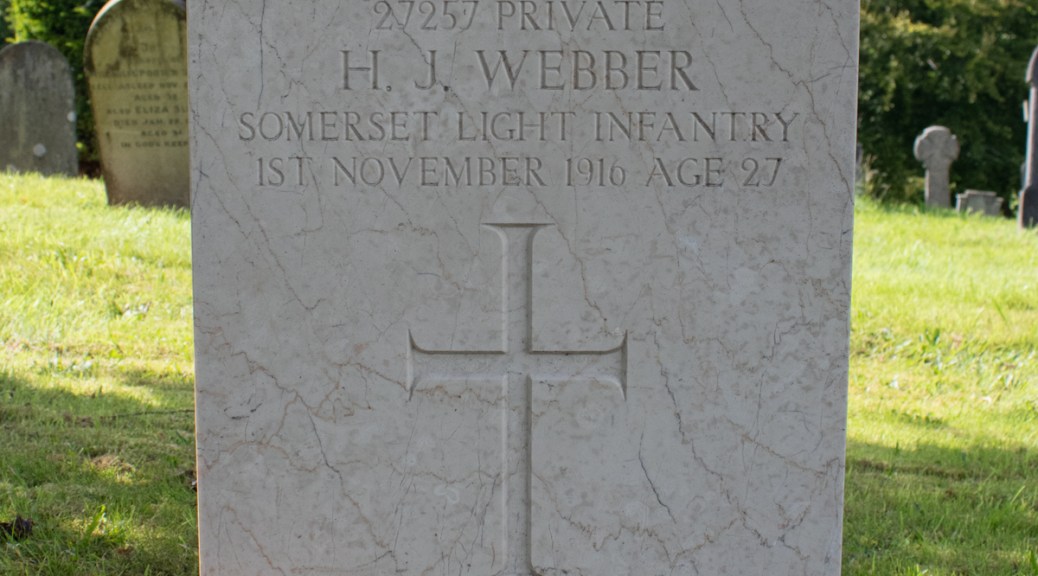
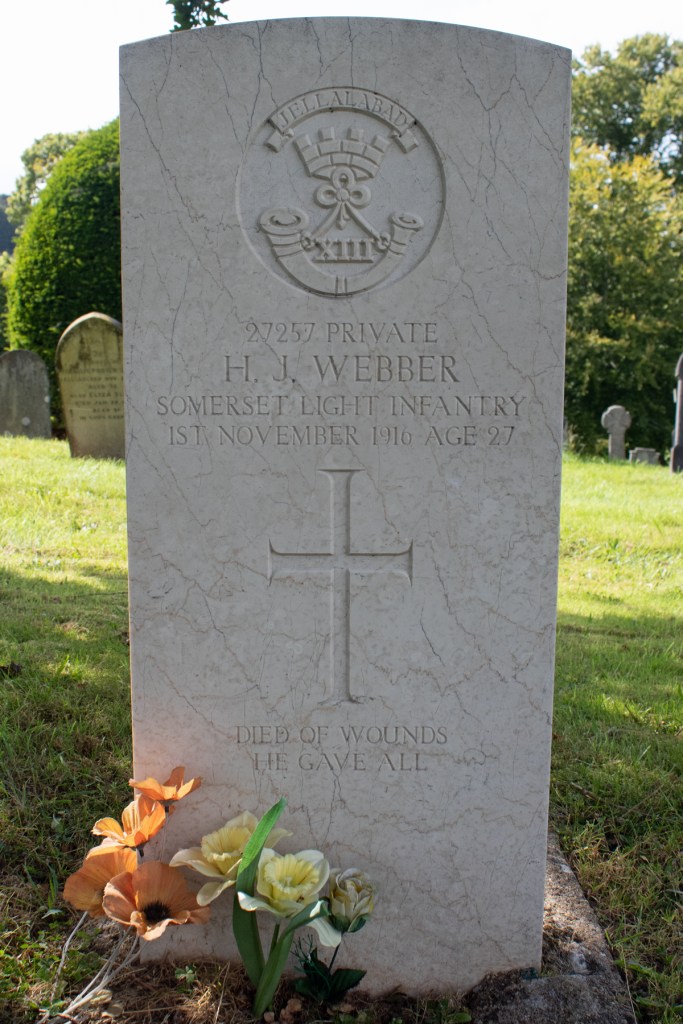
Private Henry Webber

Private Henry Webber

Henry James Webber was born in Plaistow, Essex, in 1889. One of ten children, his parents were Frederick and Etty Webber. Frederick hailed from Somerset, but worked as a sergeant in the Metropolitan Police. By the time of the 1901 census, he had been promoted to Inspector: the family moved to Somerset when he retired in around 1905, settling in Minehead.

Of Henry, there is little information documented. He does not appear on the 1911 census, and there are no military records to confirm his service in the army. He had certainly enlisted by the summer of 1916, joining the Somerset Light Infantry.

Private Webber was attached to the 7th (Service) Battalion and certainly saw action overseas. His troop was heavily involved in the Battles of the Somme in 1916, and it was here that he was injured. Again, full details are not available, but his wounds were severe enough for him to be medically evacuated to Britain for treatment.

Henry was admitted to the 1st Southern General Hospital in Birmingham, but his injuries proved too severe. He died on 1st November 1916, at the age of 27 years old.

Henry James Webber’s body was taken back to Somerset for burial. He was laid to rest in Minehead Cemetery, not far from where his grieving family were living in Cher Street.


Private Albert Pearce

Private Albert Pearce

Albert Edwin Pearce was born on 12th November 1883 in Bristol. Gloucestershire. One of nine children, his parents were William and Mary Pearce. William was a farmer and grazier and, when he finished his schooling, Albert followed him into farm work.

In 1908, when Albert was 25, his older sister Olive was widowed: the following year, their mother, Mary, also passed away. Olive’s late husband had been a farmer in Tickenham, near Clevedon, and so Albert and his older brother Walter moved in with Olive and her four children to help run the farm.

When war came to Europe, Albert stepped up to play his part. Full service details are not available, he served with the Labour Corps. Attached to the 446th Agricultural Company, towards the end of the conflict, he seems to have been serving in the West Midlands.

By the autumn of 1918, Private Pearce was admitted to the Military Hospital on Dudley Road in Birmingham. Details of his condition are not available, but they were to take his life. He passed away on 19th November 1918: he had celebrated his 35th birthday just a week before.

Albert Edwin Pearce’s body was brought back to Somerset for burial. He was laid to rest in the quiet graveyard of St Peter & St Paul’s Church in Weston-in-Gordano. He was buried in the family plot, reunited with his mother: his father, William, would be interred there just five months later, when he died in April 1919.


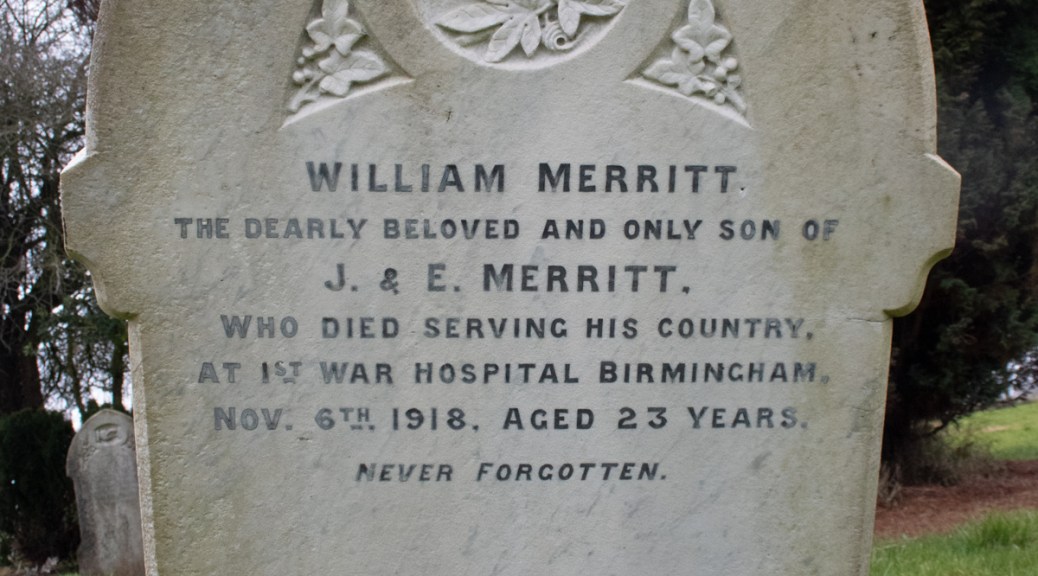
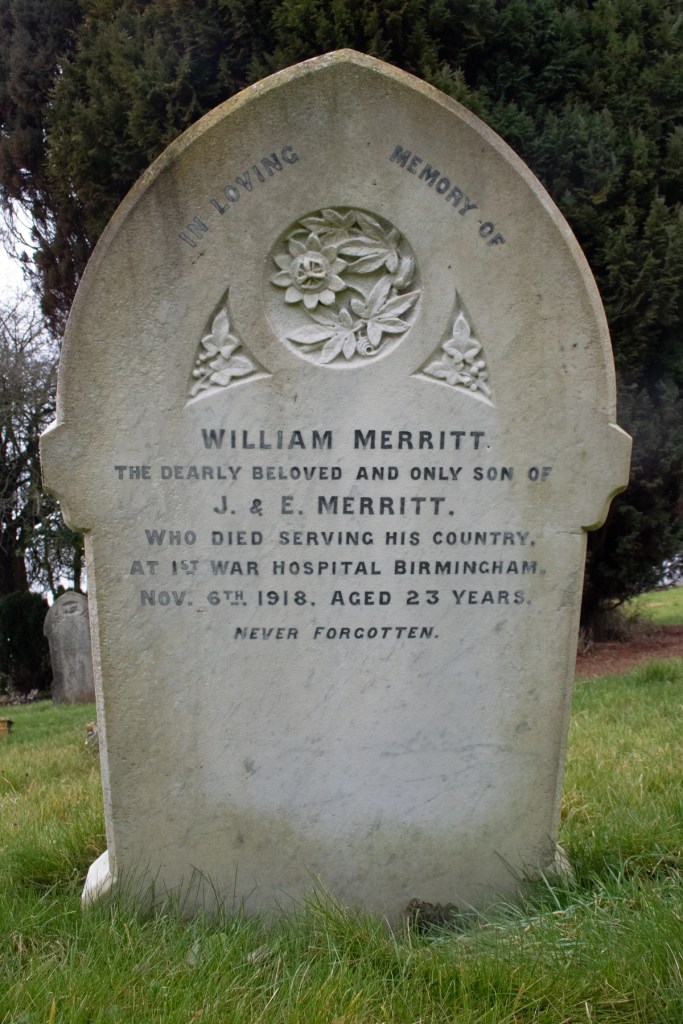
Gunner William Merritt

Gunner William Merritt

William Merritt was born in the summer of 1895 in Chippenham, Wiltshire. He was the youngest of three children to John and Elizabeth Merritt. John was a blacksmith, and he moved the family to Milborne Port, Somerset, when William was just a boy.

William found work as a shoesmith when he left school, but was one of the first to enlist when war broke out in 1914. He had his medical examination on 17th November, which confirmed that he was 5ft 5ins (1.65m) tall, had good vision and was of good physical development.

Initially assigned to the Dorset Yeomanry, Private Merritt’s trade soon found him taking on the role of Shoeing Smith for the battalion. He was obviously good at what he did, because by May 1915, he had been promoted to the rank of Corporal Shoeing Smith.

William had not enlisted in the army to make and mend shoes, however, and, in March 1916, he transferred to the Royal Garrison Artillery, back with the rank of Gunner. Rather than being sent to the Western Front, however, he found himself billeted at a camp in the West Midlands.

Little further information about Gunner Merritt’s service is available for the next couple of years. The next record for him comes on 5th November 1918, confirming his admission to the Birmingham War Hospital, as he was suffering from influenza and pneumonia. Sadly, his admittance to hospital was to prove too late: he passed away from heart failure the following day. Gunner Merritt was just 23 years of age.

William Merritt’s body was brought back to Somerset for burial. He was laid to rest in the cemetery of the town in which he had plied his trade before the war, Milborne Port.


William’s sparse personal effects were also returned to his parents. The records note that these included: “pair [of] boots, 6 postcards, razor, comb, toothbrush, shaving soap and brush, letter, pair of socks, bell.”

Another bureaucratic error is highlighted in a letter sent from the hospital in which William passed to his regiment’s records office notes that “I have to inform you that the body was forwarded to his Wife for burial…” William was unmarried, and his body was actually returned to his mother, Elizabeth.


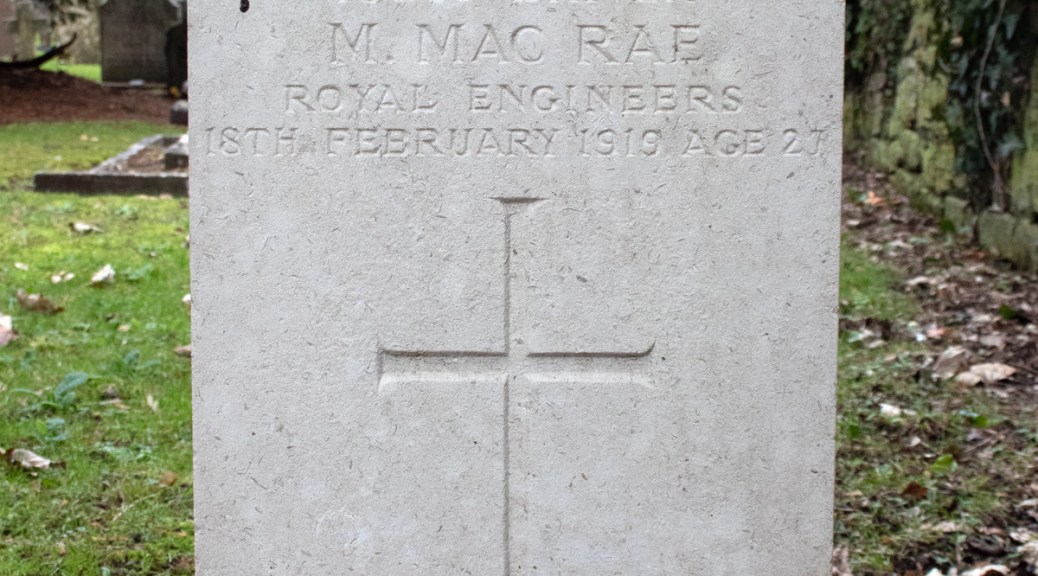
Driver Matthew MacRae

Driver Matthew MacRae

Much of Matthew Alexander MacRae’s life is destined to remain a mystery. He was born in Scotland in 1892, and was the second of three children to Thomas and Christiana MacRae. The family had moved to Birmingham – where Thomas had found work as a garment dyer – by the time of the 1901 census.

When war came to Europe, Matthew enlisted in the Royal Engineers. Nothing of his service records survives, but it is clear that he had joined as a Driver by the summer of 1918.

The next evidence for Driver MacRae is that of his passing, on 18th February 1919, at the age of 27 years. No cause of death is evident, although there is nothing in contemporary newspapers to suggest anything other than natural causes.

Two documents add a little more mystery to Matthew’s legacy. The Army Register of Soldiers’ Effects notes his father, Thomas, as the beneficiary of his estate. The Dependents’ Pension, however, suggests that an Emily MacRae, was to be provided with support. This was not Matthew’s sister, and Emily’s address – Cross Street in Bath, not far from where Driver MacRae was buried – would suggest that she was his widow, although there are no marriage records to corroborate this.

Matthew Alexander MacRae was laid to rest in the Roman Catholic Cemetery in Bath, Somerset.