
Category Archives: Essex

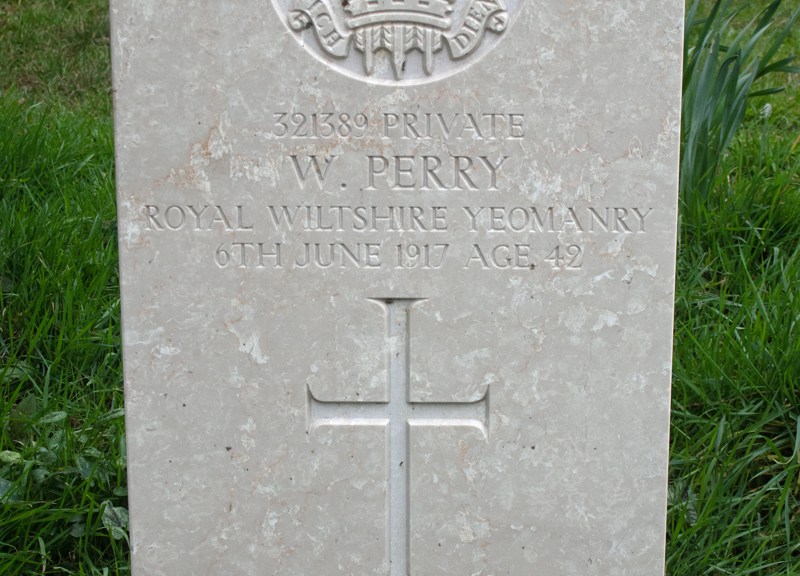
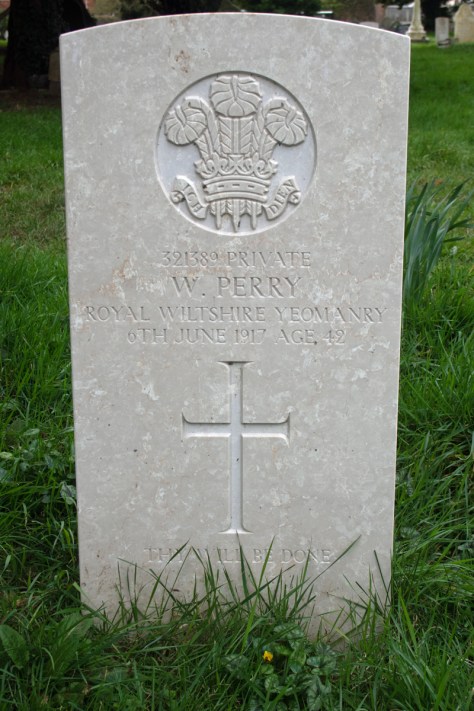
Private Walter Perry

Private Walter Perry

Walter Perry was born in Bridgwater, Somerset, in 1874. He was one of ten children to James Perry, a general dealer, and his wife Hannah. After he had left school, Walter became a labourer; his older siblings had all become labourers or factory workers in the area.

In November 1899, Walter married Rebecca Cavill; their first child, Hilda, was born at the end of March the following year. By this time, Walter was working for a brewery, while his new wife was working at a shirt collar factory. The young couple went on to have two further children – Walter and Beatrice – before Rebecca tragically passed away in June 1906.

Walter married again in November 1908, this time to a Mary Ann Reed also from Somerset. The couple went on to have two children, Joseph and Edna, and the family lived together in the centre of Bridgwater.

The Great War was on the horizon. While details of Walter’s military service are not readily available, it is unlikely that he was called up as soon as hostilities broke out – he turned 40 in 1914, and so was too old to qualify immediately.

Walter enlisted in the 2/1st Royal Wiltshire Yeomanry; he was based primarily in England, where his battalion acted as a training/reserve for the 1st Battalion, who were serving on the Western Front. It was while Private Perry was based in Essex, that he contracted appendicitis; he was admitted to the General Military Hospital in Colchester, but passed away on 6th June 1917. He was 43 years old.

Walter Perry lies at peace in the Wembdon Road Cemetery in his home town of Bridgwater.
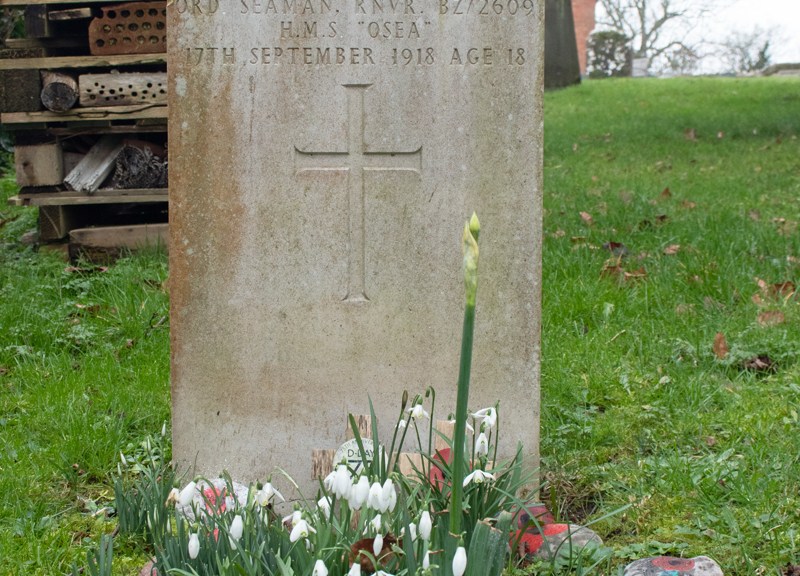

Ordinary Seaman Harry Kick

Ordinary Seaman Harry Kick

Harry Kick was born in August 1900, the oldest of six children to George and Georgina Kick from the small village of Middlezoy in Somerset. George was an agricultural labourer, while his wife helped with the dairy side of Jones Farm, where he worked.

Details of Harry’s military service are scarce, but, based on his age, it is likely to have been the second half of the war when he enlisted. He joined the Royal Navy and was assigned to HMS Osea, a naval base in Essex.

Sadly, there is little evidence of Harry’s time in the navy. His pension records confirm that he passed away on 17th September 1918, having been suffering from pneumonia. He was just 18 years old when he died.

Harry Kick lies at peace in the churchyard of Holy Cross Church in his home village of Middlezoy, Somerset.


Private Henry Boyce

Private Henry Boyce

Henry Leslie Boyce was born on 14th June 1872 in the parish of St Michael, in Barbados, then the British West Indies. His parents were Samuel and Mary Boyce.

Further details of his early life are scant, but Henry appears to have moved to England at some point in the early 1890s. The 1911 census shows him living in Ilford, Essex, and working as an iron and metal merchant. His wife Rosanna, a dressmaker, was born in Wincanton, Somerset, and they married in 1896. The young couple had two children; sadly they both died young.

Henry was quick to do his duty when war broke out, joining up in September 1914. He enlisted in the British West Indies Regiment, and after training on the home front, served in France from April 1917. While there, he was promoted to Acting Corporal, but contracted bronchial pneumonia and was sent back to England to recuperate after only five months.

A medical report from November 1917 states that Acting Corporal Boyce remained unfit for military service, and he was discharged from the army at the end of that year. The same report showed him as a former commercial traveller, living in Forest Gate. It marks him as having a very good military character – “Judging from his records, he is a steady, sober, well-conducted man“.

While no information after that point is available for him, it seems that he succumbed to the disease less than a year later.

Henry Leslie Boyce died on 24th October 1918. He was 46 years old.

He lies at rest in the graveyard of St Leonard’s Church in Butleigh, Somerset; presumably close to his widow’s family.


There is some discrepancy over Henry’s rank. He was discharged with the rank of Acting Corporal, although his headstone cites his previous rank of Private.

Corporal Charles Cornell

Corporal Charles Cornell

Charles Cornell was born in July 1885, the youngest of six children to Philip and Martha Cornell, from Ashdon in Essex. Philip was an agricultural labourer, and Charles and his older brother Daniel followed their father into the trade.

Charles was keen to further himself, however, and enlisted in the army. The 1911 census records him as a Private soldier at the Salamanca Barracks in Aldershot.

Private Cornell married Elizabeth Fanny Hoare in Strood, Kent, in October 1913. Beyond this there is little information on either Charles or Elizabeth.

Charles was assigned to the 3rd Battalion of the East Yorkshire Regiment and was promoted to Corporal. This reserve battalion was initially based in the town of Beverley, before moving to Hull and then nearby Withernsea. It seems unlikely, therefore, that Corporal Cornell saw active service on the Western Front.

His passing seems to have been sudden; his pension record shows that he had been admitted to the Military Hospital at Wharncliffe with nephritis (inflamed kidneys). He passed away on 27th January 1918, aged 32 years old.

Corporal Charles Cornell is buried in the graveyard of St Helen’s Church in Cliffe, Kent, the village his widow’s family were from. He is also commemorated in his own family’s village of Ashdon in Essex (where the memorial states he had attained the rank of Sergeant).


The majority of the the Commonwealth War Graves Commission headstones in the UK are made from Portland stone, although, in face, over 50 different natural stones have been used.

Corporal Cornell’s headstone is one of two in St Helen’s Churchyard that have been fashioned from dark grey slate.