Category Archives: Scotland

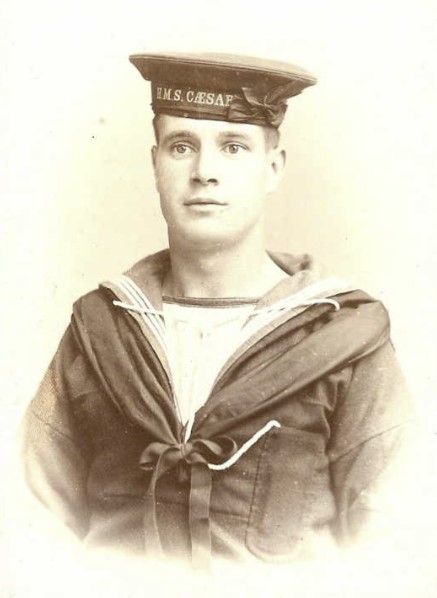
Petty Officer Albert Smith

Petty Officer Albert Smith

Albert Septamus Smith was born in Maidstone, Kent, on 12th January 1881. The oldest of three children to George and Frances Ditcher, he may has been born before the couple married, and seems to have retained his mother’s maiden name throughout his life.

When he left school, Albert sought a life at sea, joining the Royal Navy as a Boy 2nd Class on 12th January 1898, when he was just fifteen. Albert’s naval career was a long and varied one which began on board HMS Impregnable, a training ship. After a month’s training, he was assigned to HMS Lion, where he spent more than a year, gaining a promotion to Boy 1st Class in the process.

In October 1897, Albert transferred to HMS Pembroke, the Royal Naval Dockyard in Chatham, Kent. In the four months that he spent on shore, he turned seventeen and, as a result, came of legal age to formally be enlisted in the navy. Ordinary Seaman Smith signed up for a period of twelve years, and his service records showed that he was 5ft 8ins (1.73m) tall, had brown hair, brown eyes and a dark complexion. He was also noted to have a scar on his right wrist, and a tattoo of a flower and bracelet on the same wrist.

Ordinary Seaman Smith was dedicated to his career. Over the next twelve years he served on board nine different vessels, and rose through the ranks, gaining promotion to Able Seaman (in May 1899), Leading Seaman (January 1903), and Petty Officer 2nd Class (September 1903). He returned to the rank of Leading Seaman, doing so in August 1906, but this seems to have been a deliberate choice, as his service record appears unblemished.

In 1910, Albert’s initial period of service came to an end and he chose not to renew his contract. He had married Ellen Miles on 6th October 1900, and, with four young children, it appears that family had become more important to him. Returning to Maidstone, he found work on the railways, joining the South East and Chatham company as a platelayer. The family home was in Bearsted, a village to the east of Maidstone, now part of its suburbs, and they shared is with Ellen’s sister, Dorothy.

Life was going well for the Smith family, but war was coming to Europe and, with his previous naval experience, Albert was to be called upon again. He was called out of reserve on 2nd August 1914 and, after an initial couple of weeks at HMS Pembroke, Leading Seaman Smith was soon back at sea.

After a couple of years on board the seaplane tenders HMS Engadine and Campania, Albert was promoted to Petty Officer again, and assigned to HMS Sandhurst, a fleet repair ship based at Scapa Flow. He was on board when an explosion in the boiler room killed seventeen seamen on 27th February 1917, although he was not hurt.

It was while Petty Officer Smith was on board HMS Sandhurst that he contracted tuberculosis. He returned to Chatham Dockyard, but the condition was severe enough for him to be medically discharged from active service in February 1918.

Albert returned to civilian life again, and his trail goes cold for a couple of years. His lung complaint continued to haunt him, however, and he passed away from tuberculosis on 4th March 1921. He was 40 years of age.

Albert Septamus Smith was laid to rest in the graveyard of Holy Cross Church in Bearsted, not far from his family home.

Petty Officer Albert Smith
(from ancestry.co.uk)
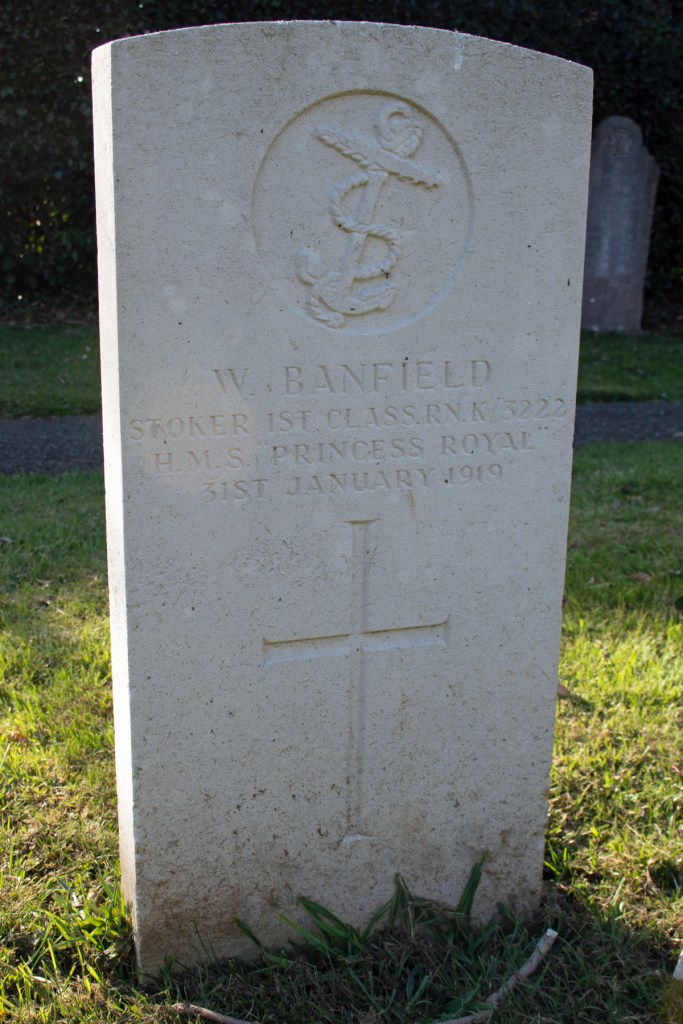
Stoker 1st Class William Banfield

Stoker 1st Class William Banfield

William Banfield was born on 7th November 1890, in Henfield, near Horsham, West Sussex. He was the second youngest of seven children to George and Ellen Benfield. George was a carpenter, and this was a trade his two sons – William and his older brother, George – were initially both to follow as well.

William had a longing for the sea, however, and, on 11th June 1909, he enlisted in the Royal Navy as a Stoker 2nd Class. His service records show that he was 5ft 7.5ins (1.71m) tall, had brown hair, blue eyes and a fair complexion.

Stoker Banfield was based out of HMS Victory, the Royal Naval Dockyard in Portsmouth, Hampshire, but, over the eventual decade of his service, he spent no more than seven months ashore. Instead, he served on a total of nine ships. This included the battleship HMS Exmouth where, during the eighteen months he spent on board, he was promoted to Stoker 1st Class, and also spent 14 days in the brig, for reasons undisclosed.

On 27th September 1915, William was assigned to HMS Princess Royal. He served aboard for nearly three and a half years, patrolling the North Sea, coming under fire during the Battle of Jutland, and providing support during the Second Battle of Heligoland Bight.

Towards the end of January, Stoker 1st Class Benfield fell ill, and was admitted to the Edinburgh City Hospital. Suffering from encephalitis, sadly the condition proved too much for his system to bear and he passed away at the hospital on 31st January 1919. He was 28 years of age.

William Banfield was brought back to Sussex for burial. He was laid to rest in the cemetery of his home town, Henfield.


William’s older brother, George, was also to fall victim to the First World War. He had enlisted in the Royal Navy three years before his younger sibling, and also served as a Stoker 2nd Class (subsequently being promoted to Stoker 1st Class in 1907).

George was also based out of HMS Victory, and, in April 1911, was stood down to the Royal Naval Reserve, having completed an initial five years’ service.

When war broke out, George was called back into service, and was assigned to HMS Good Hope, travelling from English shores to Nova Scotia, before heading to South America and into the Pacific.

Caught up in the Battle of Coronel on 1st November 1914, the Good Hope was sunk by the German cruiser SMS Scharnhost. All souls on board – all 926 of them – were lost; this included Stoker 1st Class George Banfield. He was only 27 years of age.


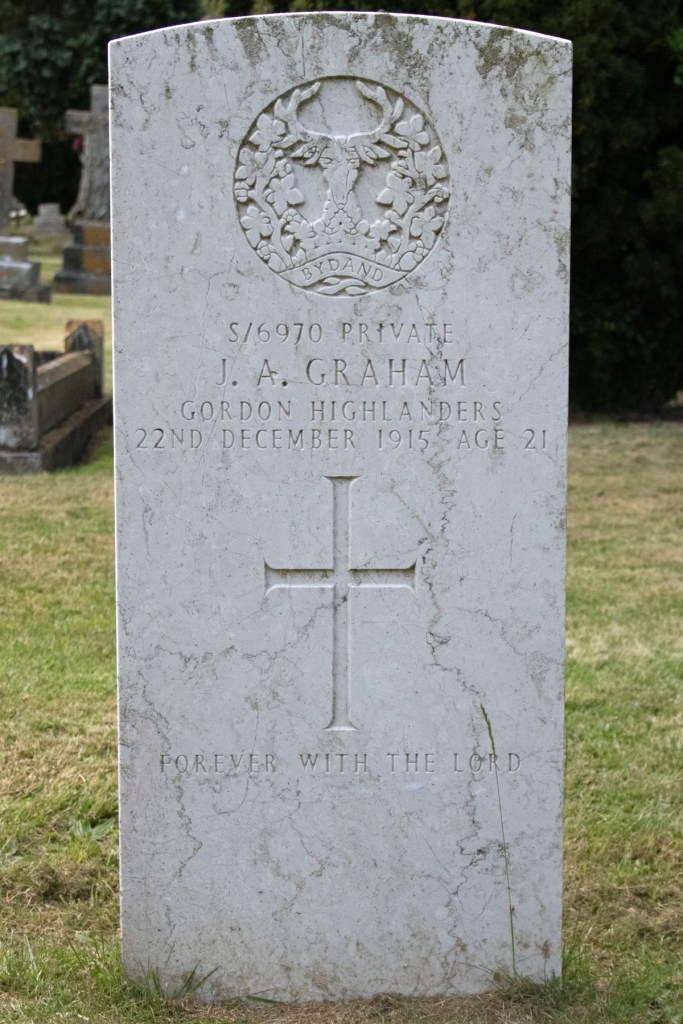
Private Joseph Graham

Private Joseph Graham

Joseph Aitken Graham was born in Kirkmichael, Dumfries, in 1894 and was the son of James and Bella Graham. There is little detail about his early life, but by the time war broke out, he was working with his father as a ploughman.

Joseph enlisted in November 1914, joining the 2nd Battalion of the Gordon Highlanders as a Private. His medical report records that he was 5ft 9.5ins (1.77m) tall, weighed 145lbs (65.8kg), had grey eyes, brown hair and a fresh complexion.

After a short period of training, Private Graham was sent to the Western Front, arriving in France on 2nd February 1915. He was involved in the fighting at Neuve Chapelle and Aubers Ridge. It was at Festubert, however, that things took a turn for the young private.

On the first day of the battle, 16th May 1915, Graham was badly injured, receiving gunshot and shrapnel wounds to his head and legs. He was initially treated at nearby Bethune, before being moved to Rouen. He was then evacuated to England in July, to further his recovery, and admitted to hospital in Wincanton, Somerset.

He was making such good progress that he was able to take a short walk each morning, and it was after one of these walks that he was taken ill. In spite of all that medical skill could do his condition became gradually worse, and it was thought advisable to send to Dumfries for his parents, who at once proceeded to Wincanton.

Dumfries and Galloway Standard: Saturday 8th January 1916

Sadly, nothing could be done for Private Graham: he passed away from a suspected brain haemorrhage on 22nd December 1915, at the age of just 21 years old.

Joseph Aitken Graham was laid to rest in the quiet and peaceful Wincanton Cemetery.


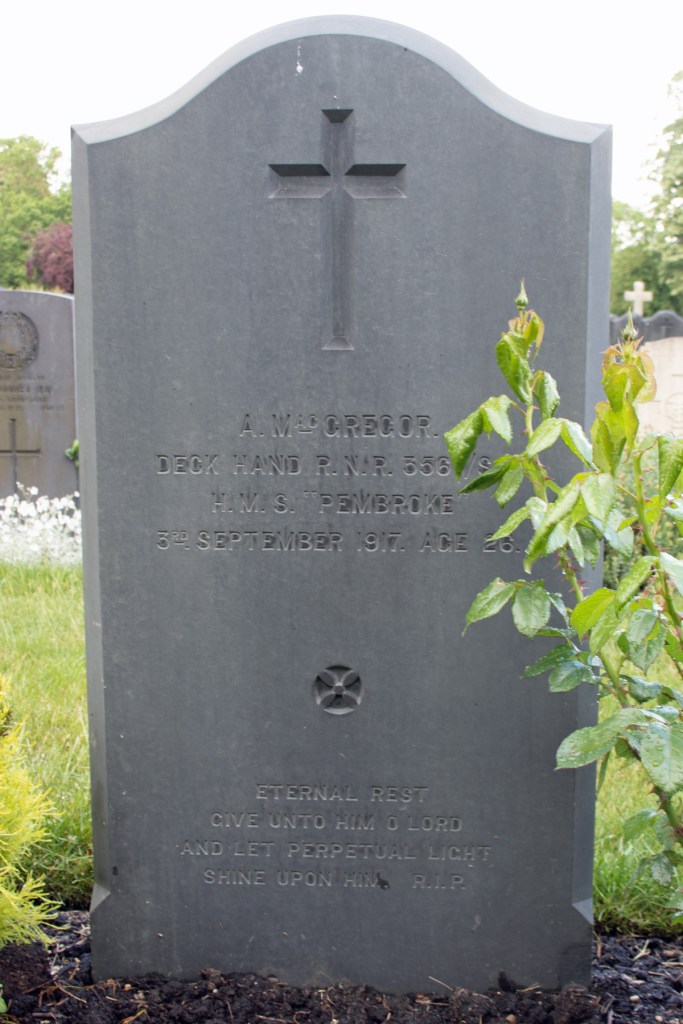
Deck Hand Alexander MacGregor

Deck Hand Alexander MacGregor

Alexander MacGregor was born on 1st January 1890 in the Scottish village of Acharacle. The oldest of eleven children, his parents were Dugald and Mary MacGregor.

There is little concrete information about Alexander’s early life, but, by the outbreak of war, he had moved to London. He married a woman called Bridget in around 1916: the couple settled in Battersea, and went on to have a son, Peter, who was born in December 1916.

Alexander had, by this point, signed up to play his part in the European conflict. He joined the Royal Naval Reserve as a Deck Hand on 1st December 1915. His service records confirm that he was 5ft 7.5ins (1.71m) tall, had grey eyes and a medium complexion. The section of the Royal Navy that he joined suggests that he had had previous sea-faring experience (given the proximity of his home village to the Argyll coast, this is not surprising).

Deck Hand MacGregor’s was assigned to HMS Pembroke, the Royal Naval Dockyard in Chatham, Kent. Details of his military service are unclear, but he spent just under two years at the dockyard. By the summer of 1917, the base was a busy and cramped place, and Alexander found himself billeted in temporary accommodation set up in the barracks’ Drill Hall.

On the night of the 3rd September, the German Air Force conducted the first night time raid on England. Chatham came in the firing line, and the Drill Hall received a direct hit. Deck Hand MacGregor was among those to be killed. He was just 27 years of age.

Alexander MacGregor was laid to rest in the Woodlands Cemetery in nearby Gillingham, along with the other victims of the Chatham Air Raid.


Seaman Alexander Kennedy

Seaman Alexander Kennedy

Alexander Kennedy was born in Cromore on the Isle of Lewis on 15th June 1895. He was one of five children – four of them boys – to John and Isabella Kennedy.

Living in the remote coastal township, he would have grown up knowing the sea and, when the opportunity arose, he volunteered for the Royal Naval Reserve. His service records show that he enlisted on 12th December 1913; they also note that he was 5ft 6.5ins (1.69m) tall, had blue eyes, a fresh complexion and a scar under his chin.

Seaman Kennedy was kept on a retainer until war broke out the following summer, at which point he was sent to the other end of the country – HMS Pembroke, the Royal Naval Dockyard in Chatham, Kent – for formal training. His time in the navy was then split between the dockyard and the battleship HMS Implacable.

Over the next couple of years, Seaman Kennedy toured the Mediterranean, berthing in Egypt, Malta and Gibraltar between stops back in the ports on the English coasts. By the summer of 1917, he had returned to HMS Pembroke for good.

At that point in the war, Chatham Dockyard was a particularly busy place, and Alexander was billeted in overflow accommodation set up in the naval barracks’ Drill Hall.

On the night of the 3rd September, the German Air Force conducted the first night time raid on England. Chatham came in the firing line, and the Drill Hall received a direct hit. Seaman Kennedy was among those killed. He was just 21 years of age.

Alexander Kennedy was laid to rest in the Woodlands Cemetery in nearby Gillingham, along with the other victims of the Chatham Air Raid.


Seaman Alexander Kennedy
(from ancestry.co.uk)

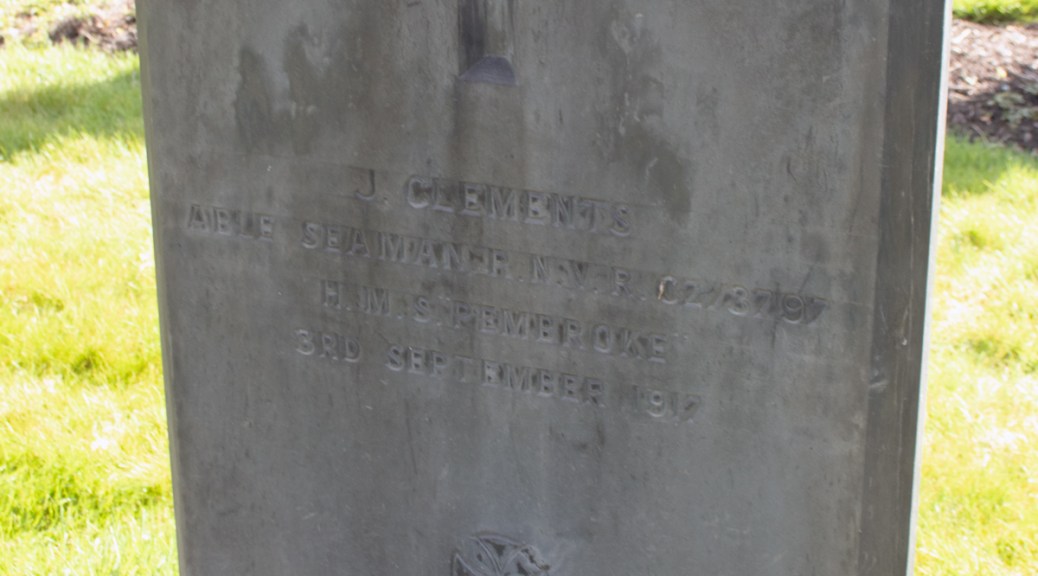
Able Seaman John Clements

Able Seaman John Clements

John Clements was born on 22nd March 1891 in the Lanarkshire town of Airdrie. He was one of seven children to John and Catherine Clements.

There is little concrete information about John Jr’s life. When he left school, he followed his father and two brothers, David and George into the mining industry, working at the New Orbiston Colliery, walking distance from home.

When war broke out, however, John Jr wanted to play a bigger part and – probably to Catherine’s horror – he enlisted in the Royal Naval Volunteer Reserve at the same time as two of his three brothers also joined up.

Information about Able Seaman Clements’ service is scarce. All that can be confirmed is that, in the autumn of 1917, he was based at HMS Pembroke, the Royal Naval Dockyard in Chatham, Kent.

The base was particularly busy at that point in the war, and John found himself billeted in overflow accommodation in the barracks’ Drill Hall.

On the night of 3rd September 1917, Chatham was bombarded by a German air raid, and the Drill Hall received a direct hit. Able Seamen Clements was among those killed. He was just 26 years old.

John Clements’s body, along the other victims of the Chatham Air Raid, was laid to rest in the Woodlands Cemetery in nearby Gillingham.


Able Seaman John Clements
(from britishnewspaperarchive.co.uk)

John and Catherine’s second son had been killed, but, as the local newspaper reported, there seemed to be more trauma ahead:

Private George Clements, Cameron Highlanders, aged 23… is officially posted missing in recent operations in France. He has seen a long period of active service, and previous to enlisting, was employed in the… Hattonrigg Colliery.

Private David Clements, Royal Irish, the eldest son [of John and Catherine] is in hospital in Yorkshire suffering from ‘gassing injuries’. This is the third occasion upon which he has been wounded; fortunately, he is making a satisfactory recovery. He is 28 years of age and was employed in the… New Orbiston Colliery.

Bellshill Speaker: Friday 14th September 1917

Thankfully, George was found and David recovered and John was to be the only casualty of the conflict for the Clements family.


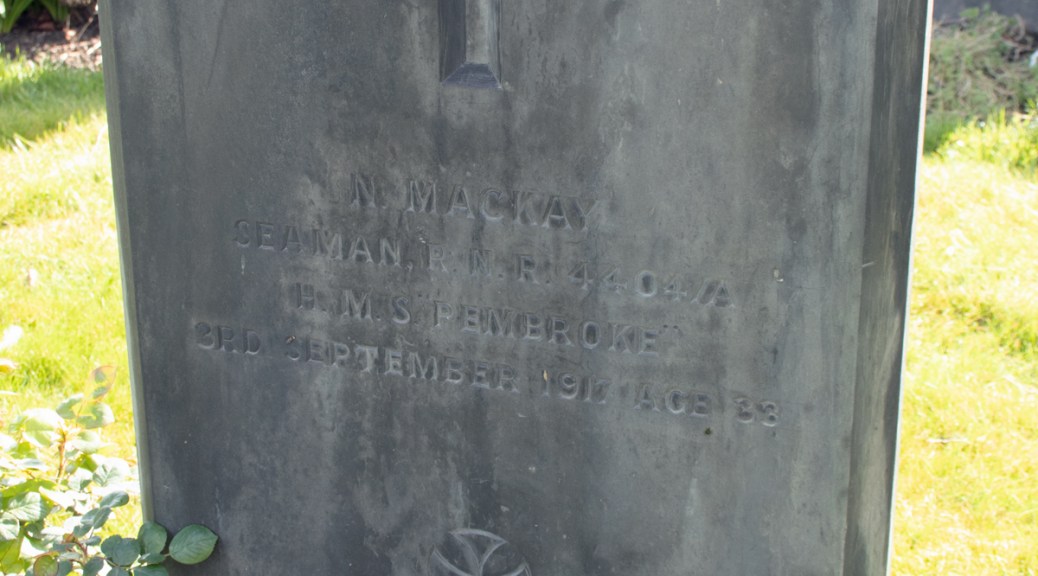
Seaman Neil Mackay

Seaman Neil Mackay

Neil Mackay was born on 16th September 1888 in Stornoway, Scotland, the son of Murdoch and Johanna (known as Murdo and Annie) Mackay.

Sadly, little information remains about his early life; most of what can be gleaned comes from his Royal Naval Reserve records. The document confirms that he was 5ft 9ins (1.75m) tall, had blue eyes, a dark complexion and a scar between his eyes.

Neil enlisted as a Seaman on 3rd September 1912 and, over the next couple of years, he travelled the world, visiting Maine in the United States, New Zealand and Newfoundland on his voyages.

When war broke out, he was assigned to HMS Northbrook, a troopship taking soldiers to India; he returned to the United Kingdom on HMS Dalhousie, in 1915, before making the same round trip, this time on HMS Lawrence, later that year.

In April 1916 Seaman Mackay returned to England, and was based at HMS Pembroke, the Royal Naval Dockyard in Chatham, Kent, for around eighteen months.

The summer of 1917 was to prove a busy time at HMS Pembroke, and Neil found himself billeted in temporary accommodation in the barracks’ Drill Hall. On 3rd September 1917, the town came under fire from a German air raid; the Drill Hall received a direct hit and Neil was killed. He was just shy of his 29th birthday and had completed five years’ service that day.

Neil Mackay was among 98 servicemen to be killed during the Chatham Air Raid that night. The victims were laid to rest in a mass funeral at Woodlands Cemetery in nearby Gillingham a few days later.


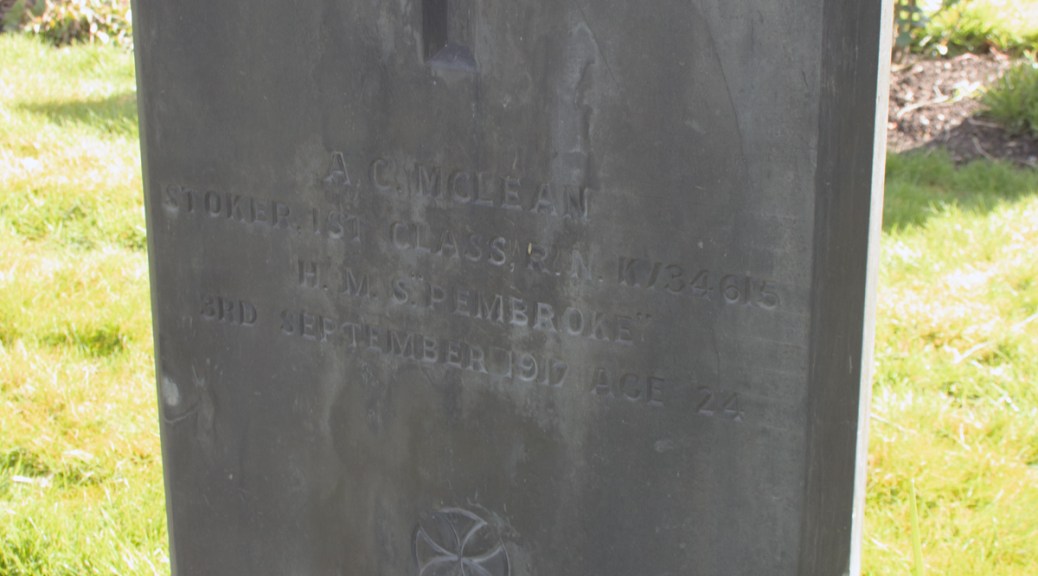
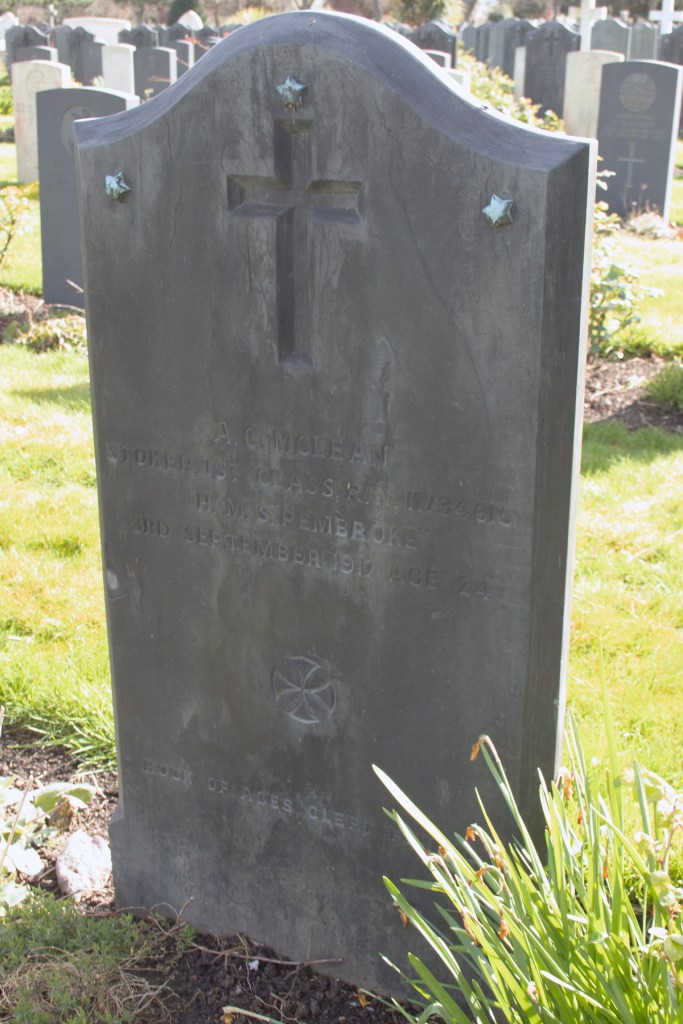
Stoker 1st Class Alexander McLean

Stoker 1st Class Alexander McLean

Alexander McLean was born in the village of Bowling, on the River Clyde near Glasgow, on 7th February 1893. There is little documented on his life, other than that his parents were Duncan and Margaret (Maggie) McLean.

When he left school, he fond work as a caulker at the local docks; war came to Europe, however, and he wanted to play his part. on 11th November 1914, he enlisted in the Cameron Highlanders as a Private. His service records show that he was 5ft 4ins (1.63m) tall, weighed 118lbs (53.5kg), had dark brown eyes, grey eyes and a fresh complexion.

Private McLean’s time in the army was a brief one, however, as his entry exam identified him as medically unfit, and that he would not be an effective soldier.

Alexander was not to be deterred, however, and he soon enlisted in the Royal Navy as a Stoker 2nd Class. There is little information about his life at sea. At some point he was promoted to Stoker 1st Class, and he was certainly based at HMS Pembroke, the Royal Naval Dockyard in Chatham, Kent, by the summer of 1917.

That was particularly busy time for the base, and temporary accommodation had been put in place at the barrack’s Drill Hall: this is where Alexander found himself billeted.

On the night of the 3rd September 1917, Chatham was bombarded by a German air raid, and the Drill Hall received a direct hit. Tragically, Stoker 1st Class McLean was amongst those killed. He was just 24 years old.

Alexander McLean’s body was laid to rest in the Woodlands Cemetery in Gillingham, alongside the other victims of the Chatham Air Raid.


Seaman George Gunn

Seaman George Gunn

George Gunn was born on 15th October 1891, the middle of three children to William and Hughina Gunn. The family lived in the hamlet of Skerray on the North Scottish coast.

Sadly, there is little information about George’s life. When was broke out, he enlisted in the Royal Naval Reserve, which suggests that he had experience of going to sea, although this is likely, because he lived in a coastal village.

George’s service records show that he was 5ft 10.5ins (1.79m) tall, had grey eyes and a fresh complexion. Under ‘personal marks’ the document noted that he had a dimple in his chin.

Seaman Gunn spent most of his time on land; he was initially posted to HMS Pembroke, the Royal Naval Dockyard in Chatham, Kent. In June 1915, however, he was assigned to the minelayer HMS Orvieto, and spent the next year patrolling the North Sea.

By the spring of 1916, George was back in Chatham; by August he was on the move again, this time to London, where he spent twelve months at HMS President, the Royal Naval Base in London. He returned to HMS Pembroke on 3rd September 1917, a move that was to prove fatal.

The base was a particularly busy place that summer, and George was billeted in overflow accommodation in the barracks’ Drill Hall.

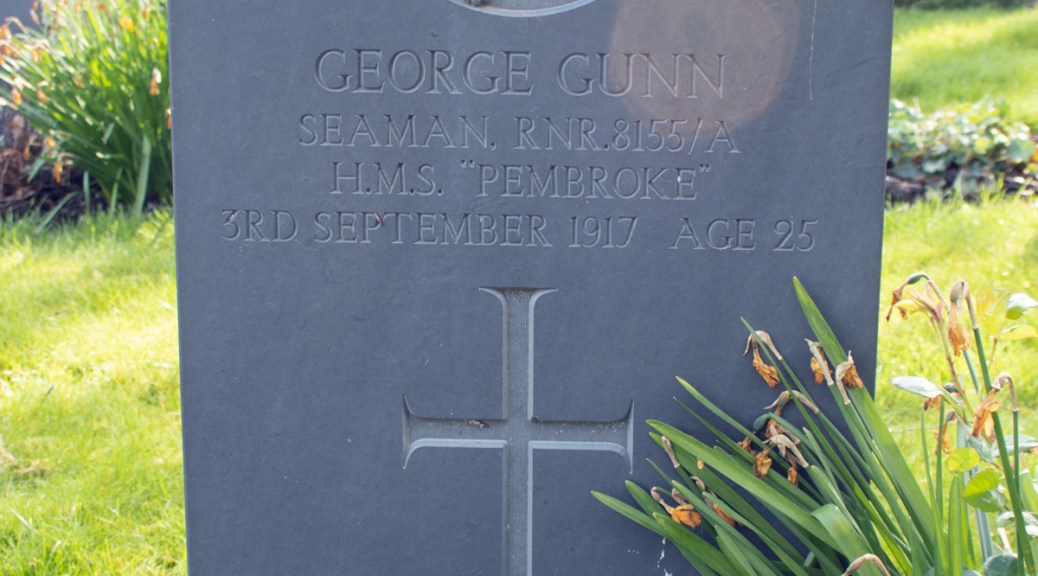
That night, Chatham was bombarded by a German air raid, and the Drill Hall received a direct hit. Tragically, Seamen Gunn was among those killed. He was just 24 years old and has been at HMS Pembroke for a matter of hours.

George Gunn’s body, along the other victims of the Chatham Air Raid, was laid to rest in the Woodlands Cemetery in Gillingham, more than 500 miles from home.


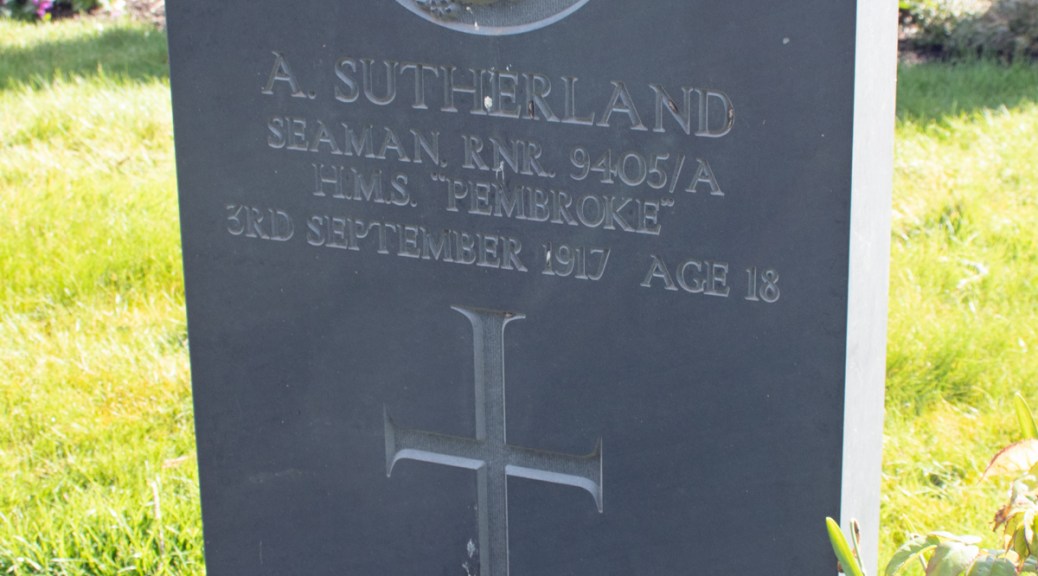
Seaman Alexander Sutherland

Seaman Alexander Sutherland

Alexander Sutherland was born on 20th May 1899 in the Scottish town of Brora. His parents were Peter and Jane Sutherland and he was one of four children, although, tragically, all three of his siblings died before they turned five.

There is little information documented about Alexander’s life: the 1901 census recorded him and his parents living with his paternal grandparents, but give little additional information. Peter died in March 1917, although, again, there is nothing to confirm a cause of death.

The document that provides the most detail about Alexander is his service record. He was too young to enlist when war broke out, but in August 1917, having turned 18, and possibly spurred on by the passing of his father, he joined the Royal Naval Reserve as a Seaman. The record shows that he was 5ft 11ins (1.8m) tall, had fair hair, blue eyes and a fresh complexion. He was also noted as having a scar on the left side of his neck.

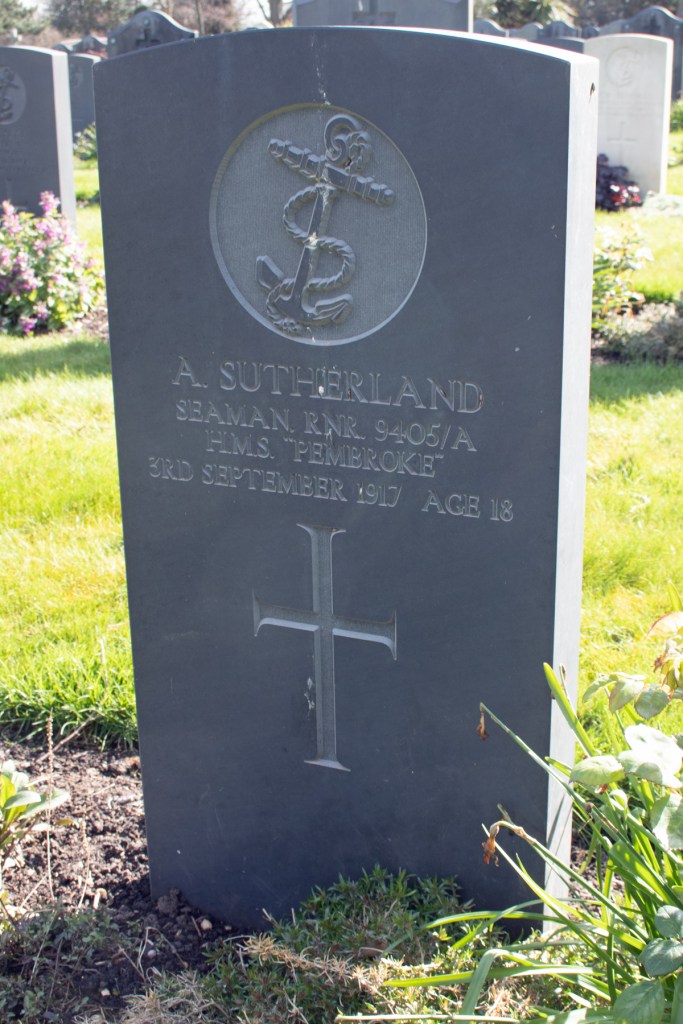
Seaman Sutherlands’s first posting was at HMS Pembroke, the Royal Naval Dockyard in Chatham, Kent and he arrived there on 23rd August 1917. The base was a particularly busy place that summer, and Alexander was billeted in some overflow accommodation in the barracks’ Drill Hall.

On the night of the 3rd September 1917, Chatham was bombarded by a German air raid, and the Drill Hall received a direct hit. Tragically, Seamen Sutherland was amongst those killed. He was just 18 years old and had been at the base for just ten days, and on active service for just over a fortnight.

Alexander Sutherland’s body was laid to rest in the Woodlands Cemetery in Gillingham, alongside the other victims of the Chatham Air Raid.


Alexander’s death was particularly tragic for his mother, Jane. She had lost three children early on, and both her husband and last child within six months. Her torment must have been unimaginable.