Category Archives: Wiltshire

Private Thomas Perrett

Private Thomas Perrett

Thomas William Perrett was born in October 1878, the seventh of eight children to Lewin and Ann Perrett. Lewin was an agricultural labourer from Wiltshire, and it was in Aldbourn, near Marlborough, that the family were raised.

Initially finding work as a farm labourer, Thomas was soon drawn to the bright lights and big city. By the early 1900s he had moved to London, and it was here that he met, and in 1909 married, Mary Sterry, a labourer’s daughter from Middlesex. The couple went on to have three children, Elsie, Rose and Alice.

Thomas, by this point, had found work on the railways: the 1911 census records him as a railway porter, presumably at Paddington Railway Station, which was within a few minutes’ walk of where the Perrett family were living.

War came to Europe, and Thomas was keen to play his part. Full details of his service are not available, but he enlisted in the East Surrey Regiment, where he was assigned to the 2nd/5th Battalion. This was a second line unit, and Private Perrett remained on home soil for the duration of the war.

This territorial role was reinforced when he transferred across to the 696th Agricultural Company of the Labour Corps. Details of his work are not available, but it seems likely that he was assigned to farm work in the mid-Sussex area.

This too is where Private Perrett remained after the war and where, on 24th February 1919, he was to pass away. Details of his death are vague and the cause is unknown, but he was 40 years of age.

Thomas William Perrett was laid to rest in the cemetery in Cuckfield, West Sussex.


Private Cyril Pratt

Private Cyril Pratt

Cyril Robert Pratt was born on 31st October 1899 in the Somerset village of Halse. The younger of two children, his parents were local baker Robert Pratt and his wife, Elizabeth.

Little information about Cyril’s early life remains. He enlisted in the army not long after his eighteenth birthday, joining the Royal Warwickshire Regiment as a Private in November 1917. He was sent to Salisbury Plain for training, and was barracked in Larkhill, just north of Stonehenge.

Sadly, this seems to have been Private Pratt’s undoing. As with numerous other soldiers at the time, being billeted in cramped quarters with other men from across the country meant that disease was quick to spread. During his first winter at the camp, Cyril contracted pneumonia, and was admitted to the local Fargo Hospital. The lung condition was to get the better of him, and he passed away on 28th February 1918, at the age of just 18 years old.

Cyril Robert Pratt was brought back to Somerset for burial. He was laid to rest in the graveyard of St James’ Church in his home village, Halse.


Private Bernard Lane

Private Bernard Lane

Bernard Fred Lane was born in Wellington, Somerset, in the spring of 1880, and was the oldest of nine children to Frederick and Agnes Lane. Frederick was a house painter and, after a stint as a butcher, his son followed the same work. By the time of the 1901 census he was one of four boarders with the Hapgood family, living in Bournemouth, Dorset.

On 5th October 1901, Bernard married Annie Louisa Joyner. The couple wed in St Paul’s Church in Poole, but soon settled back in Wellington, and went on to have four children: Agnes, James, Mildred and Winifred.

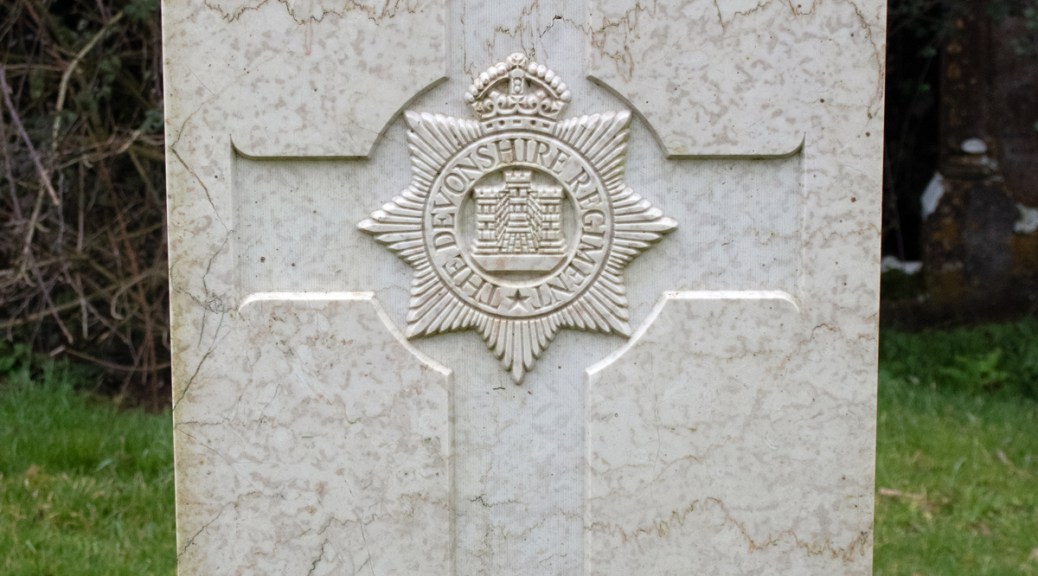
War came to Europe in 1914, and Bernard wanted to play his part. Full details of his military service are not available, but it is clear that he had enlisted in the Devonshire Regiment by March 1918. At some point during the conflict Private Lane was assigned to the Labour Corps, and attached to the 312th Company.

Bernard was serving on Salisbury Plain by the autumn of 1918, and fell ill, although it is not clear what befell him. Admitted to the Fargo Military Hospital at Larkhill, Wiltshire, he passed away on 15th October 1918. He was 38 years of age.

Bernard Fred Lane was brought back to Somerset for burial. He was laid to rest in Wellington Cemetery, the resting place for several other members of his family.


Private Bernard Lane
(from findagrave.com)

Private Frederick Best

Private Frederick Best

Frederick William Best was born in Wellington, Somerset, early in 1898 and was the middle of three children to factory worker Frederick Best and his wife, Bessie. When he left school, he found work as a delivery boy for a local baker, unlike his father, who was a long-time working in the local woollen factory.

War was closing in on Europe, however, and Frederick Jr was soon keen to play his part. Full details of his military service are not available, but it appears that he enlisted in the Worcestershire Regiment as soon as he was able, Private Best was assigned to the 15th (Transport Workers) Battalion, and served on home soil, initially in Swindon, and then in Southampton.

It was while he was billeted in Hampshire that Frederick contracted meningitis. He was admitted to a hospital in the city, but the condition was to get the better of him, and he passed away on 2nd January 1918, aged just 19 years old.

Frederick William Best’s body was brought back to Somerset for burial. He was laid to rest in the cemetery in his home town, Wellington, where his parents were both buried in the 1930s.


Sapper John Spry

Sapper John Spry

Details of John George Spry’s life remain tantalisingly out of reach. He was born in around 1874 in the Devon village of Woolfardisworthy, and was one of eight children to John and Ann Spry. John Sr was a general labourer who died in 1891. By this point the family were living at 14 Honestone Lane, Bideford, and John Jr was working as a stone mason.

John married Emily Langford. She was a blacksmith’s daughter from Taunton, Somerset, but the couple set up home in nearby Wellington, before moving to Twerton, Bath. The went on to have three children: Ivy, Ruby and Frederick. Interestingly, Ivy seems to have been taken in by Emily’s mother, Emma, while Ruby and Frederick remained with their parents.

The 1911 census found Emily, Ruby and Frederick living with John’s mother in Bideford. Ivy was in Wellington with Emma, but John is missing from the records.

When war broke out, John joined up. He enlisted in the Royal Engineers, and was assigned the rank of Sapper. Dates for his service – and where that service was carried out – are lost to time, but by the autumn of 1918, John was based in barracks in Fovant, Wiltshire.

By this time, Sapper Spry had fallen ill. Suffering from influenza and bronchial pneumonia, he was to succumb to the lung diseases, as so many other returning servicemen did. John passed away on 28th November 1918, aged 45 years of age.

John George Spry was brought back to Somerset for burial. He was laid to rest in Wellington Cemetery, not far from where his widow had relocated.


What became of the Spry family after John’s death is unclear. Emily cannot be tracked down in the 1921 census, nor can her middle child, Ruby.

Ivy was boarding at 55 Harrow Road, Paddington, Middlesex, where she was working as a Lieutenant in the Salvation Army. Frederick, meanwhile, had found work as a steersman on a steamroller, and, according to the census, was living with his maternal uncle, Charles, in Bideford.

The 1939 Register picks up Emily once more, living in a small end-of-terrace cottage on the outskirts of Wellington. Now 70 years of age, she was noted as being incapacitated, no doubt being tended to by Ruby, who was also living there, employed as a puttee machinist.


Signaller William Owen

Signaller William Owen

William John Owen was born in the spring of 1900, and was one of thirteen children to Henry and Emma Owen. Henry was an oyster dredger turned coal porter from Faversham in Kent, and this is where the family were born and raised.

There is little concrete information about William’s life, but it is clear that, by April 1918, he had joined the Royal Garrison Artillery, and was assigned to the 2/1st Kent Heavy Battery. Signaller Owen was sent to Larkhill Camp in Wiltshire for training.

The only further information is that William was admitted to the Fargo Military Hospital on Salisbury Plain, suffering from pneumonia. Sadly the lung condition was to get the better of him: he passed away on 11nd October 1918, aged just 18 years old.

William John Owen was brought back to Kent for burial. He was laid to rest in Faversham Borough Cemetery, just a few minutes’ walk from his family home.


Serjeant Albert Woolcott

Serjeant Albert Woolcott

Albert John Woolcott was born in the spring of 1877 and was one of three children to Thomas and Mary. Thomas was a labourer for a spirit company, and both he and his wife came from Chard in Somerset, which is where Albert and his siblings were born.

When he finished school, Albert was apprenticed to a local iron foundry and, by the time of the 1901 census, he was recorded as being a blacksmith in his own right.

By this point, Albert had met local woman Mary Pattimore: the couple married in the local church on Boxing Day 1901, and went on to have four children, all of them boys. Albert continued with his ironwork: the 1911 census records him as being the blacksmith at Chard’s Gifford Fox & Co.’s lace factory.

Albert played a keen role in the local volunteer movement for the Somerset Light Infantry. Through the town’s Constitutional Club he took an active role in its rifle range and was known to be a particularly skilled marksman. He also played in both the Volunteer Band and Chard’s Municipal Band.

When war came to Europe in August 1914, Albert was already billeted on Salisbury Plain as part of the volunteers, and was promoted to the rank of Serjeant. He was sent to India with his troop – the 5th Battalion of the Somerset Light Infantry – and remained there until April 1916.

By this point, Serjeant Woolcott was suffering from dorsal abscesses on his hands, and was evacuated back to England for treatment. Over the next nine months he was in and out of Netley Hospital on the outskirts of Southampton, where he had a number of operations to try and fix the problem.

Sadly, his treatment proved unsuccessful: Serjeant Woolcott passed away in the hospital on 19th January 1917, at the age of 39 years old.

Albert John Woolcott’s body was taken back to Somerset for burial. He was laid to rest in his home town’s cemetery.


Private Joseph Vickery

Private Joseph Vickery

Joseph William Vickery was born in the spring of 1865 in the Somerset village of Isle Abbots. He was the older of two children to farm carter James Vickery and his wife Sarah. James died when Joseph was around six years old, and Sarah remarried, going on to have five children with her new husband, John Kitch.

The new family moved to North Curry, where Joseph found work as a farm labourer when he finished school. The years passed and, on 15th September 1894, Joseph married Elizabeth Ann Saturday, a labourer’s daughter from Chard. The couple settled in the town, and went on to have five children.

By the time war broke out in 1914, Joseph was approaching 50 years old. He still felt a duty to play his part, however, and enlisted towards the end of the following year. Little information survives of Joseph’s military career, but he enlisted in the Somerset Light Infantry and was assigned to the 1/5th Battalion.

Sent to Salisbury Plain for training, Private Vickery was billeted at Tidworth, Wiltshire. While there, he contracted bronchitis and was admitted to hospital. Sadly, the lung condition was to prove too much for his body to bear, and he passed away on 12th December 1915, at the age of 50 years old.

Joseph William Vickery was brought back to Somerset for burial. He was laid to rest in Chard Cemetery.


Joseph and Elizabeth’s son Victor also played his part in the conflict.

Born in 1900, he was too young to enlist at the start of the war, but, by April 1918, he had joined the Scots Guards as a Private. There is no evidence of him serving overseas, and his service seems to have passed uneventfully. He was demobbed in February 1919, and returned to Somerset to continue his work as a furnaceman.


Gunner Charles Hooper

Gunner Charles Hooper

Charles – known as Charlie – Hooper was born on 22nd August 1898, the second youngest of nine children to Sidney and Sarah Hooper. Sidney was a carter from the village of Chillington in Somerset, but it was in nearby Cudworth that the family were born and raised.

Charlie, attended the local school like his older siblings, joining on 2nd June 1902, and remaining there until 28th August 1911. The following month his older sister died, and the next year his mother also passed away.

War was coming to Europe, and, while Charlie was too young to enlist when it first broke out, he seemed keen to play his part as early on as he could. He enlisted with the Royal Field Artillery at the start of 1917, and was assigned to the 23rd Reserve Battery.

Gunner Hooper was sent to Wiltshire for training. The next record for him is that of his passing. He died in Salisbury on 29th April 1917, the cause unrecorded. He was just 18 years of age.

Charlie Hooper’s body was brought back to Somerset for burial. He was laid to rest in the graveyard of St Michael’s Church in his home village, Cudworth.


Private Albert Cornock

Private Albert Cornock

Albert Edward Cornock was born in 1878, and was one of eight children. His parents, John and Hannah Cornock, were both born in Wotton-under-Edge, Gloucestershire, ant this is where the family were brought up.

John was a labourer, and this was the trade than Albert also fell into. On 2nd August 1903, he married local woman Bessie Carter. The couple settled in their home town and went on to have eight children.

War came to Europe in 1914, and Albert was amongst those to enlist early on. He joined the 10th (Service) Battalion of the Gloucestershire Regiment in Bristol on 13th November. Albert’s service records show that he was 5ft 4ins (1.62m) tall and weighed 119lbs (54kg). He had a fresh complexion, brown eyes and black hair.

Private Cornock’s initial training was split between Cheltenham and Salisbury Plain, but he was eventually sent out to France as part of the British Expeditionary Force in August 1915. He spent nearly eighteen months overseas, but, towards the end of the following year, he contracted tuberculosis, and was sent back to England for treatment.

Albert’s lung condition was to ultimately lead to his discharge from the army on medical grounds. His last day of service was 8th February 1917.

At this point, Albert’s trail goes cold. He returned home to Gloucestershire, and lived on another couple of years. He passed away at home on 9th April 1919, aged 40 years old: while the cause of his passing is not clear, it seems likely to have been as a result of the illness that saw him discharged from the army.

Albert Edward Cornock was laid to rest in the graveyard of St Mary the Virgin Church in his home town of Wotton-under-Edge. He lies not far from his cousin, Ernest Cornock, another victim of the First World War, who was buried just a week later.