Category Archives: Wiltshire

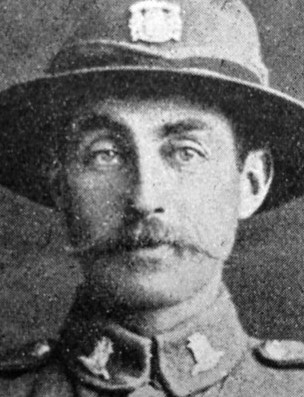
Rifleman Alexander Shaw

Rifleman Alexander Shaw

Alexander Richardson Shaw was born in Sandhurst, Victoria, Australia, on 10th February 1884. The second of seven children – although two of his younger siblings died when just babes-in-arms – his parents were Thomas and Elizabeth Shaw.

Little is known about Alexander’s early life. Thomas passed away in 1890, and Elizabeth was left to raise the family alone.

The next document for Alexander is his army service record, confirming that he enlisted on 27th June 1916. By this point he had moved to New Zealand and settled in Wellington. He was employed as a labourer and working for a GG Holmes.

It seems that Alexander had tried to enlist before: his records show that he had previously been turned down because of poor eyesight. At this point, however, with the war raging in Europe, and thousands of New Zealanders being called upon, he was taken on. His service records show that he was 5ft 8ins (1.72m) tall, and weighed 12st 6lbs (78.9kg). Alexander was also noted as having fair (reddish) hair, blue eyes and a fresh complexion.

Rifleman Shaw was sent to Trentham, outside Wellington, for his basic training. His time there was not without incident, however, and on 21st July he was confined to barracks for three days for failing to comply with an order.

On 16th October 1916, Rifleman Shaw’s unit – the New Zealand Rifle Brigade – set sail from Wellington on the SS Willochra for their ten-week voyage to Europe. Discipline remained tight on board and, as the ship was nearing the end of its journey, Alexander was again pulled up. His records simply state that his offence was ‘for clothing issued’, and he was stopped the sum of 3d 6d from his pay.

The Willochra arrived in Devonport, Devon, on 29th December 1916 and, while the rest of his unit was sent to their base at Sling Camp near Bulford, Wiltshire, Rifleman Shaw was admitted to the port’s military hospital. His condition is unclear, but by 10th January he was well enough to be moved to the No. 3 New Zealand General Hospital in Codford, Wiltshire.

Private Shaw was suffering from influenza, and this quickly developed into pneumonia. He passed away on 15th January 1917, just five days after being admitted. He was 32 years of age.

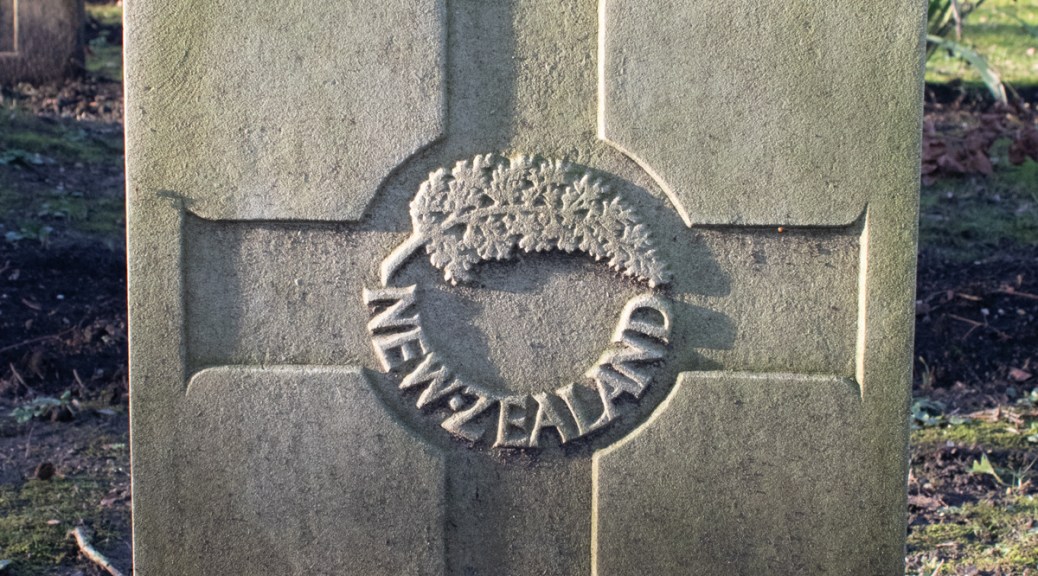
Thousands of miles from home, the body of Alexander Richardson Shaw was laid to rest in the peaceful graveyard extension to St Mary’s Church in Codford, not far from where he had died.


Private James McLeod

Private James McLeod

James McLeod was born on 15th April 1893 in Dunedin, New Zealand. There is little further information about his early life, although the Commonwealth War Graves Commission give his father’s name as Samuel, and his service records note his next-of-kin as his brother, George McLeod.

James was employed by A&T Watt as a French polisher. However, he gave that up on 25th January 1915, when he enlisted in the New Zealand Expeditionary Force. His service records show that he was 5ft 8.5ins (1.74m) tall, and weighed 166lbs (75.3kg). He was recorded a having fair hair, blue eyes and a fair complexion.

Private McLeod was assigned to the New Zealand Otago Regiment, and undertook his initial training on home soil. He evidently showed some promise as, on 1st May, he was promoted to Lance Corporal. Six weeks later his unit was heading for Europe, and by the summer James was in Egypt.

On 20th August 1915, Private McLeod was admitted to the New Zealand and Australian Convalescent Hospital in Mena with a gun shot wound to his finger. He remained there for three weeks, returning to his unit in time for them to leave for the Dardanelles on 7th November 1915.

What happened to James over the next couple of months is uncertain. Certainly he was on the Greek island of Moudros by 18th November and in the Dardanelles on 7th December 1915. Just 20 days later he was back in Alexandria, and he would remain there for the next few months. There is, however, nothing in his medical record to suggest that his return to Egypt was on health reasons.

On 6th April 1916, Private McLeod was on the move again, this time to France. He was wounded again on 14th July 1916, and medically evacuated to Britain for treatment. Details of this injury are not clear, but he was admitted to the 2nd London General Hospital in Chelsea, Middlesex. After a month recuperating, James was released from hospital and sent to camp in Hornchurch, Essex. At this point he was also demoted to Private, although, again, the reason is unclear: it may have been a personal choice, or the reversion may have been connected to his injuries.

In September 1916, Private McLeod was transferred to the ANZAC Camp on the outskirts of Codford, Wiltshire. That winter he contracted pleurisy, and he was admitted to the No. 3 New Zealand Hospital, which was connected to the camp, on Christmas Day. His condition worsened, and James passed away from pneumonia on 28th December 1916. He was just 23 years of age.

Thousands of miles from home, James McLeod was laid to rest alongside his fellow soldiers in the extension to the graveyard of St Mary’s Church, Codford.


Rifleman William Garlick

Rifleman William Garlick

William Garlick was born in Whakatane, New Zealand, on 18th October 1888. The oldest of seven children, his parents were Wiltshire-born Charles and New Zealander Maria Garlick. There is little information about William’s early life, but it is clear that by the outbreak of war he was working as a shearer in Gisborne.

William enlisted on 19th November 1915, and was assigned to the New Zealand Rifle Brigade. His service records show that he was 5ft 9ins (1.75m) tall, and weighed 168lbs (76.2kg). He was noted as having black hair, brown eyes ad a dark complexion. He had a tattoo of an anchor on his upper right arm and a few boil scars on his leg.

Rifleman Garlick spent most of the next year training in the army camp at Trentham. On 25th September 1916 his unit finally left for Europe, and he set foot on British soil two months later. From Devonport, Devon, the battalion made its way to Sling Camp in Wiltshire. William was not to spend much time there, however, and within a fortnight he had fallen ill.

Admitted to the No. 3 New Zealand General Hospital in Codford, Rifleman Garlick had contracted pneumonia, and this was to get the better of him. William passed away on 13th December 1916: he was 28 years of age.

Thousands of miles from home, William Garlick was laid to rest in the ANZAC extension to St Mary’s Churchyard in Codford, not far from the medical facility in which he had breathed his last.


Private William Hasley

Private William Hasley

William George Hasley was born on 14th June 1897. He was the oldest of three children to William and Sarah Hasley. William Sr, a former soldier, worked as a commissionaire, and the family lived at 11 Coach & Horses Yard, St James, Westminster.

Things had changed by 1900, and William Sr was employed as an engineer’s labourer. The family had moved to Dorset, setting up home in the village of Bourton, and their daughter, Susan, was born there at the turn of the century. Susan Sr came from just up the road in Zeals, Wiltshire, and it is likely that she was staying there when her youngest child, Sidney, was born in 1902.

By the time of the 1911 census, the family of five were living at Beach Cottage, Bourton. William Sr was drawing his army pension, but still employed at the engineering foundry; his eldest son, while still at school, was also listed as a news boy, possibly selling the periodicals to villagers.

War came to Europe in the summer of 1914, and William Jr was quick to step up and play his part. Giving up his job as an engineer’s fitter, enlisted on 1st September 1914, and joined the Somerset Light Infantry. His service records show that he stood 5ft 8.5ins (1.74m) tall, and weighed 124lbs (56.3kg). Private Hasley was noted as having brown hair, brown eyes and a sallow complexion. He also had a scar on the tip of the middle finger of his left hand.

Assigned to the 3rd (Reserve) Battalion, Private Hasley’s unit moved to Devonport, Devon, at the start of 1915. It was here that he contracted tuberculosis, which would ultimately lead to his medical discharge from the army in July. He served just 308 days.

At this point, William’s trail goes cold. It is likely that he returned to Bourton, although he had regular check-ups by the army inspection board. He was deemed totally incapacitated by the illness on 3rd January 1917.

William George Hasley’s lung condition would seal his fate. He passed away on 23rd March 1917: he was just 19 years of age. He was laid to rest in Bourton Cemetery.


Private Samuel Harris

Private Samuel Harris

Samuel John Harris was born in the spring of 1895, and was the oldest of three children to Samuel and Annie Harris. Samuel Sr was a cabinet maker from South Molton, Devon, and this was the village in which he and Annie raised their family.

The 1901 census found the Harrises taking rooms at 24 North Street, a house they shared with two other families. Move forward, and they were living four doors down the road at No. 28, a smaller cottage, but one they had to themselves.

Samuel Jr, at this point, was sixteen years old, but had completed his schooling and was working as a hotel waiter. His younger brother, Albert, had also started work, and was employed as an apprentice coach builder. Samuel Sr, meanwhile, was continuing with his cabinet making.

When war broke out, Samuel Jr was one of the first to enlist. While full details of his time in the army have been lost, it is clear that he joined the Devonshire Regiment, and he was initially attached to the 1st/6th Battalion.

Pte. SJ Harris proceeded to India and Mesopotamia with the Territorials. The hardships of campaigning and the trying climate in Mesopotamia proved too much for his constitution.

[Western Times: Friday 9th November 1917]

Samuel returned to Britain, and was admitted to the military hospital in Sutton Veny, Wiltshire. He passed away on 29th October 1917, from a combination of tuberculosis and a cyst in his back. He was 22 years of age.

Despite the apparent weakness in his constitution, the Western Times reported on his youth in South Molton:

The young man was very popular among his comrades in arms, and at Sutton Veny a general favourite. Prior to th war he was a familiar figure at football matches, having played for various teams at [South Molton] and in the district.

[Western Times: Friday 9th November 1917]

The body of Samuel John Harris was brought back to Devon for burial. He was laid to rest in the South Molton Cemetery, just a sort walk from his grieving family’s home.


Rifleman Alfred Glastonbury

Rifleman Alfred Glastonbury

Alfred George Glastonbury – who was better known as Jack – was born on 26th June 1882 in Canvastown, New Zealand. The oldest of fourteen children, he was one of nine sons to Alfred and Matilda Glastonbury.

There is little concrete information about Jack’s early life. He found work with New Zealand Railways, and married Eliza Taylor on 30th January 1904. The couple had a son – also called Alfred – on 2nd December 1908, but Eliza passed away just a couple of weeks after he was born.

Jack married a second time in July 1914, to Ann Leeks. Setting up home in Ohingaiti, they went on to have three children: John, Norah and Harold.

When war came, men of the Empire were called upon to play their part. Jack enlisted on 30th May 1916, and was assigned tot he New Zealand Rifle Brigade. His service records show that he was 5ft 4ins (1.63m) tall, and weighed 182lbs (82.6kg). He had light brown hair, blie eyes and a fair complexion: he was also recorded as never being absent from his job as a surfaceman through sickness or accident, but did have signs of varicose veins in his left leg.

Rifleman Glastonbury’s unit departed from Wellington on 25th September 1916. The troop ship Devon arrived in Devonport, England, two months later, and the regiment marched to Sling, near Bulford, Wiltshire, where they would be based.

Jack’s time there would be brief, however. He was admitted to the No. 3 New Zealand General Hospital in Codford on 3rd December, suffering from gastritis. He would succumb to the condition quickly, passing away on 5th December 1916: he was 34 years of age.

Alfred George ‘Jack’ Glastonbury was laid to rest in the ANZAC extension to St Mary’s Churchyard, Codford, cloe to the hospital in which he had breathed his last.


Rifleman Alfred Glastonbury
(from findagrave.com)

Private Alfred Darch

Private Alfred Darch

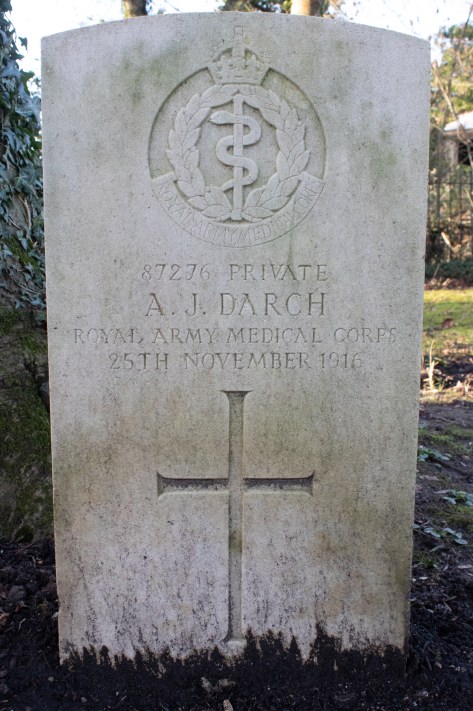
Alfred James Darch was born early in 1884, the second of seven children to James and Emily Darch. James was a postman and labourer from Somerset, but the family were brought up in Devon village of Clayhidon.

By the time of the 1901 census, the family had moved over the border to Wellington. Alfred had completed his schooling, and was working as a showmaker’s assistant. He committed himself to the role, and by 1911 was a shoemaker in his own right. By this point he was one of two of the Darch children to still be living with his parents: the family were settled at 22 Eight Acres Lane in Wellington.

When war broke out, Alfred stepped up to play his part. On 19th October 1916 he enlisted, joining the Army Medical Corps. His service records show that he was 5ft 4ins (1.63m) tall. They also suggested that his right leg was slightly shorter than his left, following an old dislocation. Private Darch had also had an operation for appendicitis five years previously.

Alfred was sent to Codford, Wiltshire, where the No. 3 New Zealand General Hospital was located. His time there was to be tragically short, however. On 17th November he was admitted himself, suffering with some breathing complications. The medical report noted that he was “vaccinated a fortnight ago. Bad, sore, inflamed arm. Reported sick eight days later with general malaise, slightly sore throat, slight headache – some cough. He had one anti-typhoid inoculation 2 or 3 days before vaccination… Has had no [previous] chest trouble… Face flushed. Temp 104.8. Pulse 100. Tongue white in centre, red at sides. Breath extremely foul. Voice hoarse. Breathing quiet. Not distressed.”

Over the nest week, Private Darch’s health deteriorated. Pleurisy was suggested, but when he passed away, at 5:45am on 24th November 1916, the diagnosis was pneumonia. He was 32 years of age.

Alfred James Darch was laid to rest in the extension to St Marys Church, Codford, not far from the base to which he had been sent just weeks before.


Rifleman Edward Foster

Rifleman Edward Foster

The early life of Edward Foster is destined to remain lost in the mists of time. Born in Sydenham, Christchurch, New Zealand on 16th May 1883, the only family connection available is Arthur Norman, a half-brother.

By 1916, Edward was working as a labourer and living in the British Empire Hotel in Gisborne. At this point, however, war was raging across the world, and New Zealanders were being called upon to serve their King.

Edward stepped up to play his part, and his service records confirm the man he had become. At 32 years of age, he stood 5ft 9ins (1.75m) tall and weighed 11st 4lbs (71.7kg). He had light brown hair, blue eyes and a fair complexion and, interestingly, his medical report notes that, while he was fit to serve, he was of very deficient intelligence. Edward’s papers also report that in around 1906 he had spent two months in a Wanganui prison.

Assigned to the New Zealand Rifle Brigade, Rifleman Foster’s unit set sail from Wellington on 19th August 1916. Their ship, the SS Aparima, would arrive in Devonport, Devon towards the end of October. Edward spent nearly three weeks of the of the voyage in the ship’s hospital, suffering from influenza.

When the brigade arrived in Britain, they were marched to camp in Sling, near Bulford, Wiltshire. Rifleman Foster’s health was still causing issues, however, and, on 10th November 1916, he was transferred to the No. 3 New Zealand General Hospital, near the Codford ANZAC base. He was suffering from bronchial pneumonia, and this was to take his life. He died on 14th November 1916, at the age of 33 years old.

Edward Foster was laid to rest in the new extension to St Mary’s Churchyard in Codford. Thousands of miles from home, he was surrounded by tens of his army colleagues.


Rifleman John Delaney

Rifleman John Delaney

Little information is available on the early life of Rifleman John Delaney. Born in Launceston, Ausrtalia, on 31st January 1888, by the summer of 1916 he was working as a shepherd in the New Zealand settlement of Whatatutu.

It was here that he enlisted in the country’s Expeditionary Force, and was assigned to the Rifle Brigade. His service records note that, at 28 years of age, he was 5ft 9ins (1.75m) tall and weighed 143lbs (64.9kg). The record confirms that he had fair hair, grey eyes and a fair complexion. He had tattoos on both forearms, and a scar on his left foot. The service docmentation also gives his next-of-kin as his friend, Mr G Garrett of Springbank, near Canterbury, on New Zealand’s South Island.

John’s unit boarded the TSS Maunganui in Wellington on 15th November 1916, embarking on the ten week voyage to Britain. Arriving in Devonport on 29th January 1917, Rifleman Delaney arrived at the ANZAC camp in Codford, Wiltshire, a few days later.

The journey had taken its toll on a lot of the newly arrived troops. John was admitted to the No. 3 New Zealand General Hospital on the outskirts of the camp with pneumonia on 10th February. His condition was to prove too severe, however, and he passed away just seven days later. He was 29 years of age.

John Delaney was laid to rest in the specially extended graveyard of St Mary’s Church in Codford.


Across the available documentation, John’s rank is given as both Private and Rifleman. I have used the latter rank, as this is what is provided by the Commonwealth War Graves Commission.


Rifleman John Delaney
(from findagrave.com)

Private Charles Tombs

Private Charles Tombs

Charles Tombs was born on 26th November 1875 in Sefton, New Zealand. The seventh of eight children, his parents were Job and Elizabeth Tombs.

There is little information available about Charles’ early life. He found work as a chainman, working as a labourer in a sawmill.

On 11th December 1899, Charles married Eliza Pound, the daughter of immigrants from Somerset. The couple settled in Wairau, and went on to have six children: John, Charles, Arthur, William, Ronald and Alice.

(The Tombs and Pounds seemed to have been closely connected: Charles’ younger brother John, went on to marry Eliza’s younger sister, Elizabeth.)

Sadly, Eliza died in 1910, leaving Charles to raise four children (John and Alice having died when just babes-in-arms), alone. A later document gives Charles’ next-of-kin as Mrs R Register, who was, in fact, his younger sister, Mary (who had married Robert Register in 1907).

War was coming, and Charles would be called upon to serve his long-distant King and Empire. On 26th July 1916, he stepped up, and enlisted in the New Zealand Canterbury Regiment. His service records show that, at 40 years of age, he was 5ft 5ins (1.65m) tall, and weighed 119lbs (54kg). He had brown hair, blue eyes and a dark complexion.

Private Tombs’ unit departed from New Zealand on 15th November 1916, making the journey to Britain on the RMS Tahiti. The journey took nearly three months, and Charles arrived in Devonport, Devon, on 29th January 1917.

The ANZAC camp near Codford, Wiltshire, was to be Private Tombs ultimate destination, and he arrived there a couple of days after landing in Britain. After a lengthy journey, his health had been impacted, as had many of the men he had travelled with.

Suffering from bronchitis, Charles was admitted to the No. 3 New Zealand General Hospital on the outskirts of the camp. The condition was to prove his undoing, and he passed away on 17th February 1917. He was 41 years of age.

Charles Tombs was laid to rest in the ANZAC extension to St Mary’s Churchyard in Codford, Wiltshire.


Private Charles Tombs
(from findagrave.com)