Category Archives: Royal Naval Volunteer Reserve

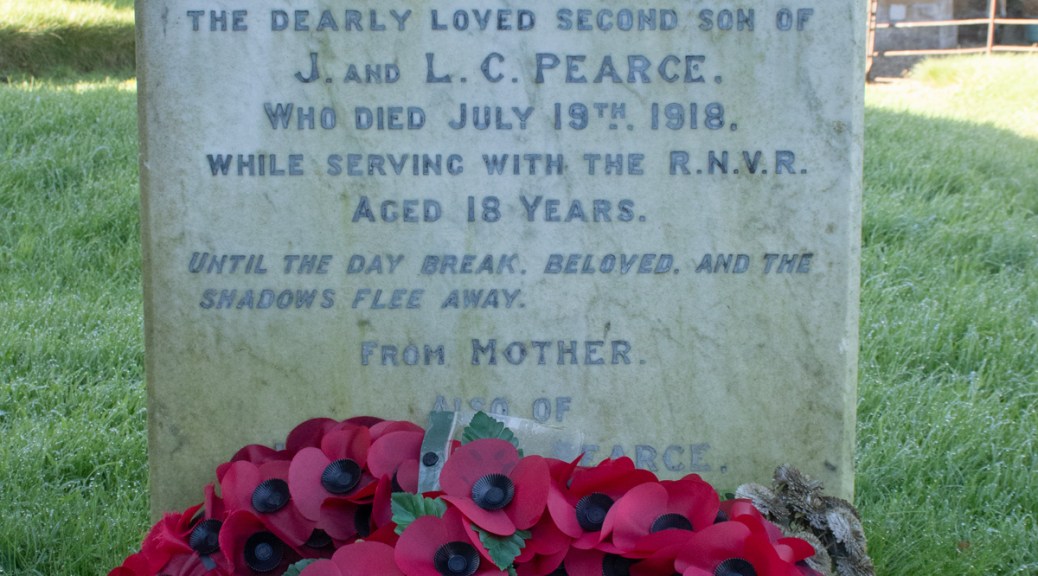
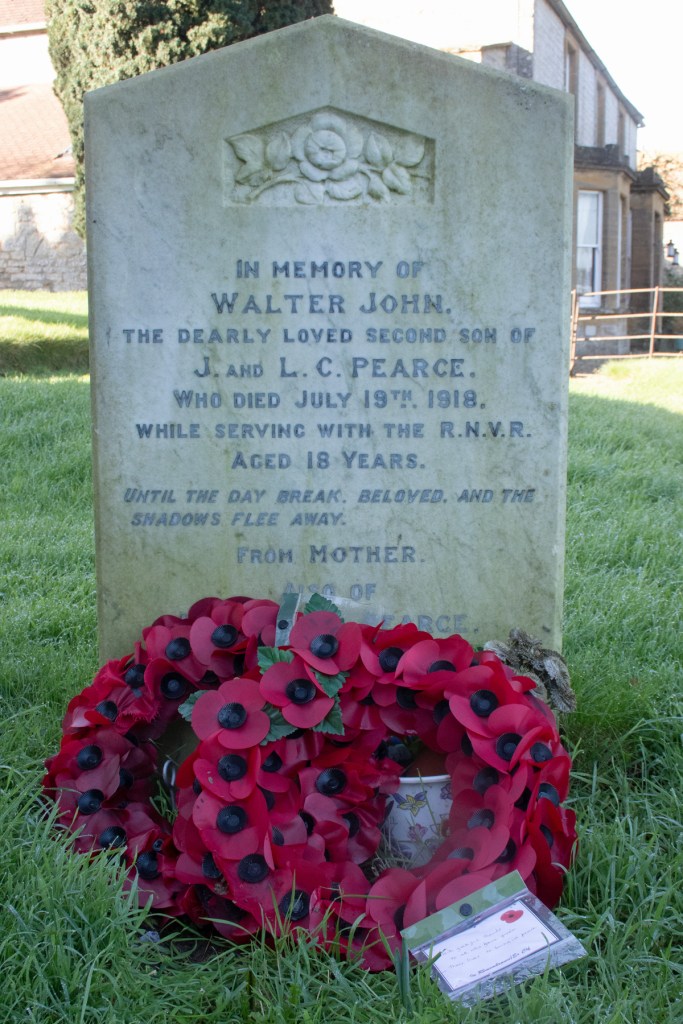
Ordinary Seaman Walter Pearce

Ordinary Seaman Walter Pearce

Walter John Pearce was born on 15th June 1900 in Clapton, East London. One of ten children, his parents were James and Lily Pearce. Both were from Somerset, but cowman James went where the work was and they soon moved back to the South West, where he and Lily were from.

When he finished school, Walter found work as an errand boy for a grocer, but war was coming to Europe and, while he was too young when the conflict began, it was clear that he wanted to play his part as soon as he was able.

Walter enlisted in June 1918, joining the Royal Naval Volunteer Reserve. His service records show that he was 5ft 8ins (1.73m) tall, and had brown hair, hazel eyes and a fresh complexion. Ordinary Seaman Pearce was sent to HMS Crystal Palace in South London for training, arriving there on 17th June 1918.

Tragically, Walter’s service was to be short. Being billeted in close proximity to other men and boys from across the country, meant that disease was readily transmitted, and Walter contracted pneumonia. Admitted to the nearby Norwood Cottage Hospital, the lung condition was to prove fatal: Ordinary Seaman Pearce died on 19th July 1918. He was just 18 years of age, and had been in active service for just 33 days.

Walter John Pearce was brought back to Somerset – where his parents were now living – for burial. He was laid to rest in the peaceful graveyard of St Mary’s Church in Mudford.

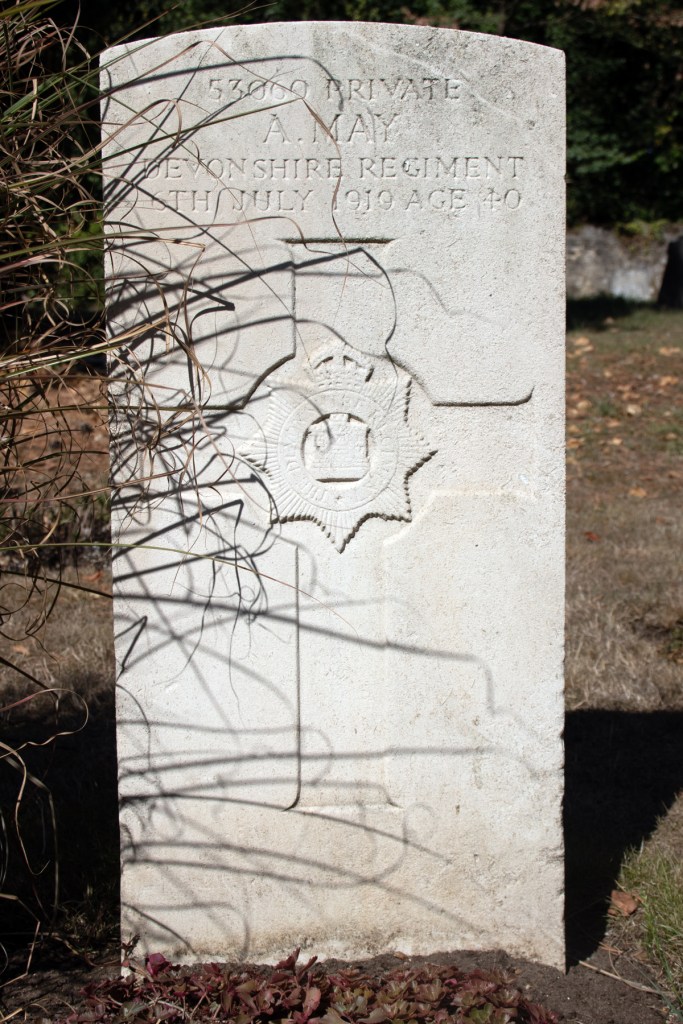
Private Arthur May

Private Arthur May

The life of Arthur May is a difficult one to uncover. Born in Aylesford, Kent, in the summer of 1879, he was baptised on 10th August, and only his mother’s name – Eliza May – recorded.

There is a record of an Arthur May from Aylesford in the 1881 census, but that gives his mother’s name as Ann (and the father’s as labourer William May). Twenty years later, the same Arthur may is listed as boarding with his sister and brother-in-law’s family in Halling, Kent, where he was working as a labourer in the local cement works. Again, however, it is impossible to confirm that this Arthur May is the one being sought.

Further records identify Arthur’s wife as a woman called Annie, although no marriage records remain to confirm a union.

Details of Private May’s war service is pretty limited, but he seems to have enlisted in the Devonshire Regiment in February 1917. He subsequently transferred to the 167th Coy Labour Corps and was sent to France, but returned to Britain a month later, having fallen ill. His condition turned out to be tuberculosis and he was medically discharged from the army in August 1917.

Private May’s medical report adds some tantalising detail to his military service. He is recorded as being 39 years and one month old, 5ft 9ins (1.75m) tall, with a pale complexion, blue eye and light brown hair. He had a tattoo on his left forearm and was working as a labourer, while living in Ditton, near Maidstone, in Kent.

The report also suggests that Arthur had initially enlisted in the Royal Naval Volunteer Reserve in November 1915. It notes that he was frequently disabled with shortness of breath and a cough during his fourteen months with the navy.

Arthur returned home after his discharge. While his trail goes cold, it is likely that his lung condition continued to dog his civilian life. On 6th July 1919, he passed away and, although no cause is freely recorded, as there is a lack of comment in contemporary local newspapers, illness would be a possible cause. He was 40 years of age.

Arthur May was laid to rest in the graveyard of his local church, St Peter’s & St Paul’s in Aylesford, Kent.


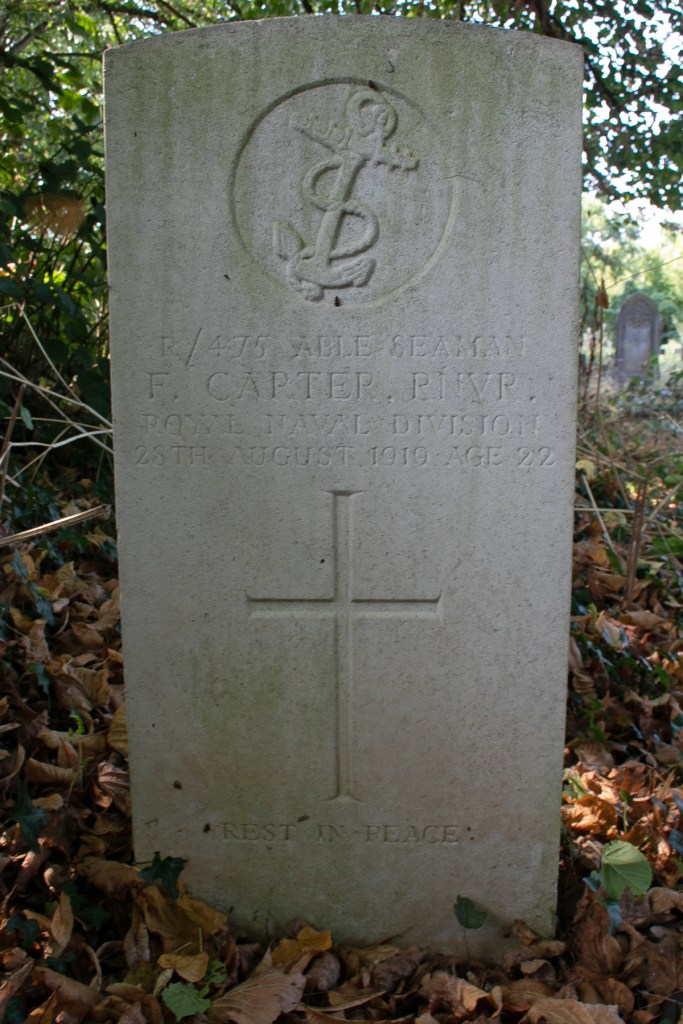
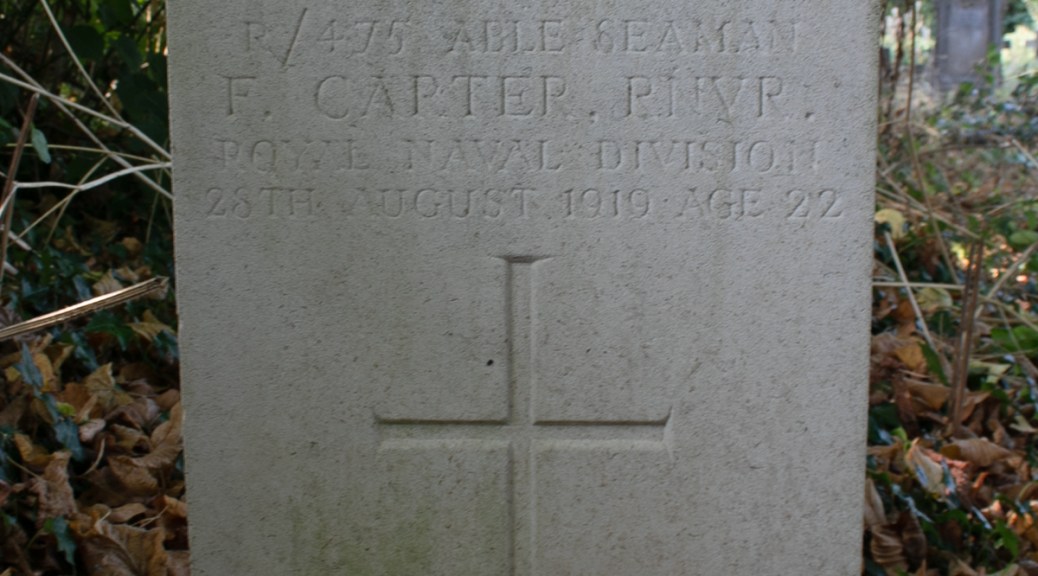
Able Seaman Frederick Carter

Able Seaman Frederick Carter

Frederick Carter was born in the autumn of 1896 in the village of Wick, Gloucestershire, midway between Bristol and Bath. He was one of nine children to farm labourer John and his wife, Charlotte.

Sadly, there is little concrete documentation on Frederick’s life. When he left school, he found work in the local shoe trade, as his older siblings had done before him.

At some point he enlisted in the Royal Naval Voluntary Reserve, although, again, exact details on this are scarce. This particular branch of the Royal Navy was there for people with no specific sailing or sea-faring experience behind him, although Frederick must have been dedicated to his duty as he had risen to the rank of Able Seaman.

What is clear is that he survived the war, but was invalided out of service, having contracted pulmonary tuberculosis. He returned to Warmley, Gloucestershire, where his parents were now living. Sadly, this was to be his last home, as well, as he passed away from the condition on 28th August 1919, at the age of just 22 years old.

Frederick Carter was laid to rest in the graveyard of St Barnabas Church, in Warmley, Gloucestershire.


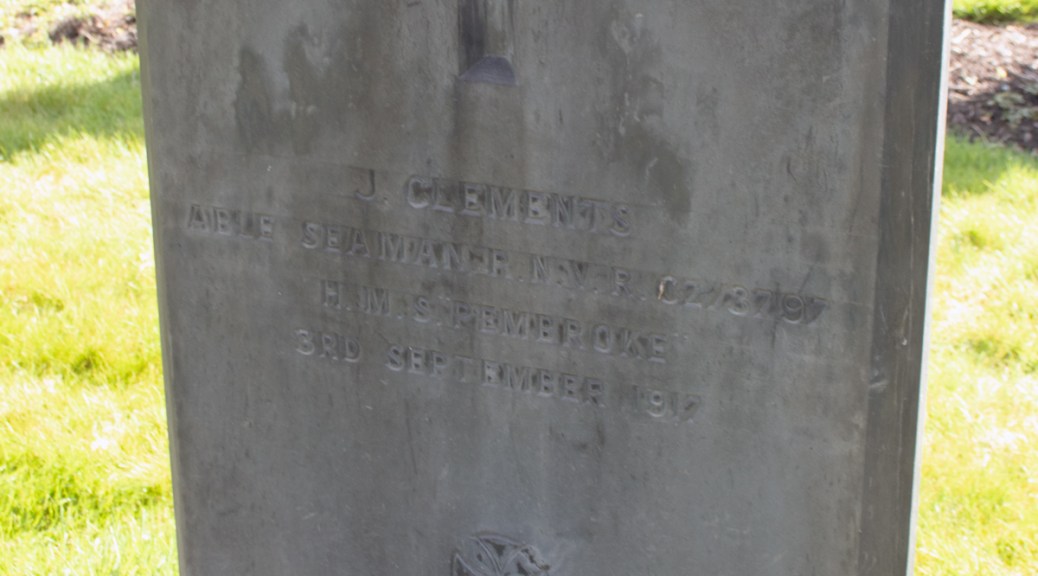
Able Seaman John Clements

Able Seaman John Clements

John Clements was born on 22nd March 1891 in the Lanarkshire town of Airdrie. He was one of seven children to John and Catherine Clements.

There is little concrete information about John Jr’s life. When he left school, he followed his father and two brothers, David and George into the mining industry, working at the New Orbiston Colliery, walking distance from home.

When war broke out, however, John Jr wanted to play a bigger part and – probably to Catherine’s horror – he enlisted in the Royal Naval Volunteer Reserve at the same time as two of his three brothers also joined up.

Information about Able Seaman Clements’ service is scarce. All that can be confirmed is that, in the autumn of 1917, he was based at HMS Pembroke, the Royal Naval Dockyard in Chatham, Kent.

The base was particularly busy at that point in the war, and John found himself billeted in overflow accommodation in the barracks’ Drill Hall.

On the night of 3rd September 1917, Chatham was bombarded by a German air raid, and the Drill Hall received a direct hit. Able Seamen Clements was among those killed. He was just 26 years old.

John Clements’s body, along the other victims of the Chatham Air Raid, was laid to rest in the Woodlands Cemetery in nearby Gillingham.


Able Seaman John Clements
(from britishnewspaperarchive.co.uk)

John and Catherine’s second son had been killed, but, as the local newspaper reported, there seemed to be more trauma ahead:

Private George Clements, Cameron Highlanders, aged 23… is officially posted missing in recent operations in France. He has seen a long period of active service, and previous to enlisting, was employed in the… Hattonrigg Colliery.

Private David Clements, Royal Irish, the eldest son [of John and Catherine] is in hospital in Yorkshire suffering from ‘gassing injuries’. This is the third occasion upon which he has been wounded; fortunately, he is making a satisfactory recovery. He is 28 years of age and was employed in the… New Orbiston Colliery.

Bellshill Speaker: Friday 14th September 1917

Thankfully, George was found and David recovered and John was to be the only casualty of the conflict for the Clements family.


Ordinary Seaman Knight Cooke

Ordinary Seaman Knight Cooke

Knight Cooke was born in Vancouver, Canada, on 10th December 1892. He was one of nine children to John and Mary Cooke. John was a tallyman, selling goods by instalments. Knight, however, preferred working with his hands, and when he left school, found a job in a wood mill, as a planer.

When war came to Europe, those in the Commonwealth were asked to play their part. Knight enlisted, joining the Canadian Expeditionary Force on 22nd April 1916. His service records show that he stood 5ft 9ins (1.75m) tall and weighed 135lbs (61kg): he had dark brown hair, brown eyes and a dark complexion.

When he arrived in England, Knight was initially transferred to the 72nd Regiment of the Seaforth Highlanders, although he was quickly moved again to the 13th Field Ambulance. Within a matter of weeks, Knight was discharged under the King’s Regulations that suggested he would not become an efficient soldier.

At this point, Knight’s trail goes cold. It seems that he remained in England, and it seems that he was still keen to play his part. What is clear is that he enlisted in the Royal Naval Canadian Volunteer Reserve at some point in the months after being discharged from the army.

Knight was given the rank of Ordinary Seaman, and was, by the summer of 1917, based at HMS Pembroke, the Royal Naval Dockyard at Chatham in Kent. This was a busy, overcrowded place at that time, and Knight found himself billeted in temporary accommodation at Chatham Drill Hall.

On the 3rd September 1917, the German Air Force carried out its first night-time air raid: Chatham was heavily bombed and the Drill Hall received a direct hit; Ordinary Seaman Cooke was among those who were killed. He was just 24 years of age.

Knight Cooke was laid to rest alongside the other victims of the Chatham Air Raid, in the Woodlands Cemetery, Gillingham, not far from the Dockyard in which he finally managed to serve.


Knight’s headstone gives his surname as Cook, although his service records – and signature – give the spelling as Cooke.


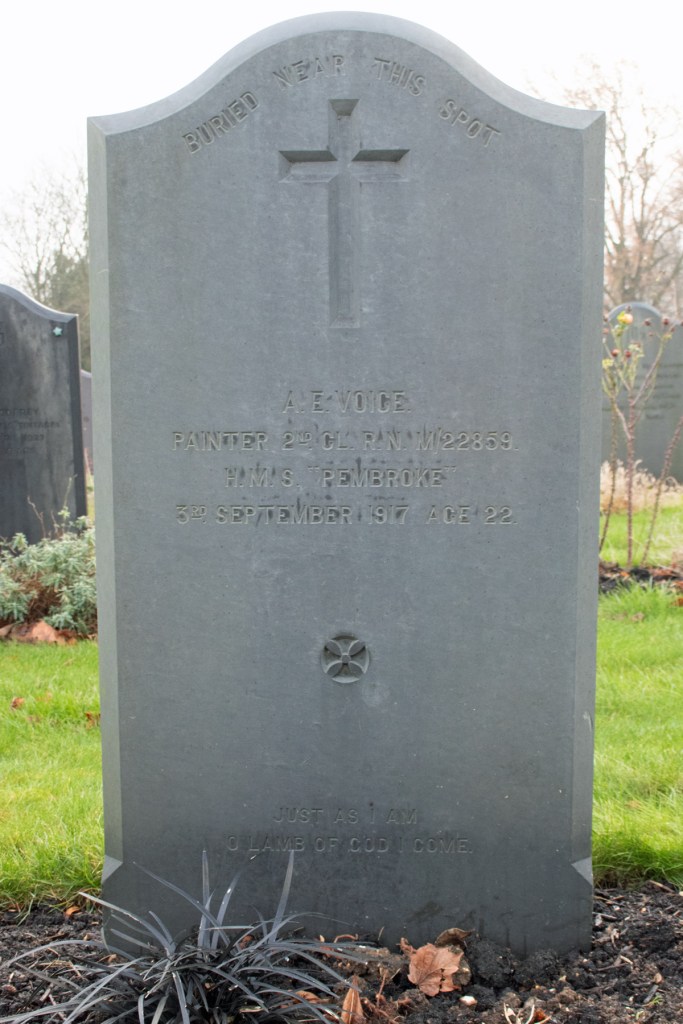
Painter 2nd Class Arthur Voice

Painter 2nd Class Arthur Voice

Arthur Edward Voice was born on 14th August 1895, the youngest of five children to Albert and Jane. Albert was a painter from Sussex, who had set up home in Horley, Surrey, and this is where Arthur and his siblings were born.

When he left school, Arthur followed in his father’s footsteps, becoming a painter and decorator. This was something he continued doing through to the outbreak of war. He was called up to the Royal Naval Volunteer Reserve in February 1916, but was initially excused from duty.

On 1st February 1916, he married Winifred Leppard, from Redhill in Surrey; the couple went on to have a son, Raymond, that September.

Arthur was called up again on 5th December, this time as a Painter 2nd Class in the Royal Navy. His service records show that he was 5ft 5ins (1.65m) tall, had fair hair, grey eyes and a fresh complexion.

Painter Voice was stationed at HMS Pembroke – the Royal Naval Dockyard in Chatham, Kent – and his services seem to have been put to use on shore, rather than at sea.

HMS Pembroke was a generally bustling place, but by the summer of 1917, it had exceeded capacity to the point where temporary accommodation was set up. Arthur found himself billeted at The Drill Hall, away from the main barracks.

On the night of 3rd September 1917, Chatham suddenly found itself in the firing line, as the German Air Force launched a bombing raid. One of the bombs landed squarely on the Drill Hall, and Painter Voice was killed instantly. He was just 22 years old.

Ninety-eight servicemen perished during the Chatham Air Raid that night. They were buried in a mass funeral at the Woodlands Cemetery in nearby Gillingham. This, too, is where Arthur Edward Voice was laid to rest.


Painter 2nd Class Arthur Voice
(from findagrave.com)

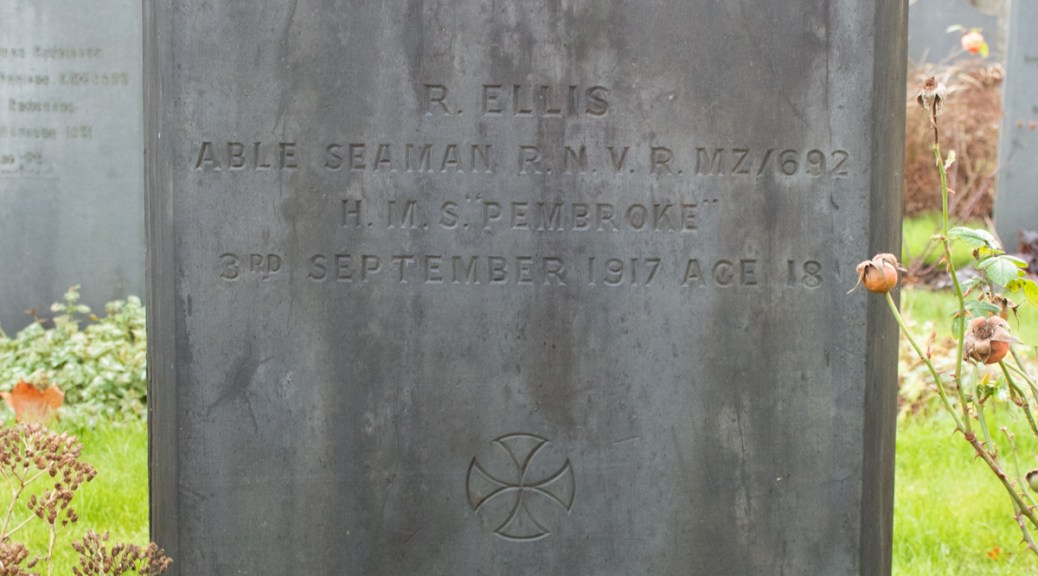
Able Seaman Raymond Ellis

Able Seaman Raymond Ellis

Raymond Ellis was born on 10th August 1898, the youngest of eleven children to Thomas and Elizabeth. Thomas was a former army officer from North Wales. He had met and married Elizabeth Moseley while living in Worcestershire in the 1870s, before moving the family to Oxfordshire ten years later. By the time Raymond was born, the family had moved back to Wales again, and were living in Llandygai, not far from Bangor in Caernarvonshire, where Thomas was working as slate quarry inspector.

By the time of the 1911 census, Thomas had found other employment, and was working as the caretaker for a telephone exchange. This is where one of his daughters was employed, and was also where Raymond himself found work when he left school.

War was coming to Europe by this point, however, and, on 23rd September 1915, Raymond enlisted in the Royal Navy Volunteer Reserve for a period of three years. His service records show that he was 5ft 4.5ins (1.64) tall, had red hair, blue eyes and a fresh complexion. He was given the rank of Able Seaman and, after a month at HMS Victory – the Naval Dockyard in Portsmouth, Hampshire – was given his first posting, on board HMS Wallington.

Able Seaman Ellis came on shore at HMS Pembroke, the Royal Naval Dockyard in Chatham, Kent, on 17th July 1917. The base was a particularly busy place at that point in the war and additional accommodation was desperately needed. Raymond found himself billeted at Chatham Drill Hall, away from the main barracks.

On the night of 3rd September 1917, Chatham suddenly found itself in the firing line, as the German Air Force launched a bombing raid. One of the bombs landed squarely on the Drill Hall, and Able Seaman Ellis was killed. He was just 18 years old.

Ninety-eight servicemen perished during the Chatham Air Raid that night. They were buried in a mass funeral at the Woodlands Cemetery in nearby Gillingham. This, too, is where Raymond Ellis was laid to rest.


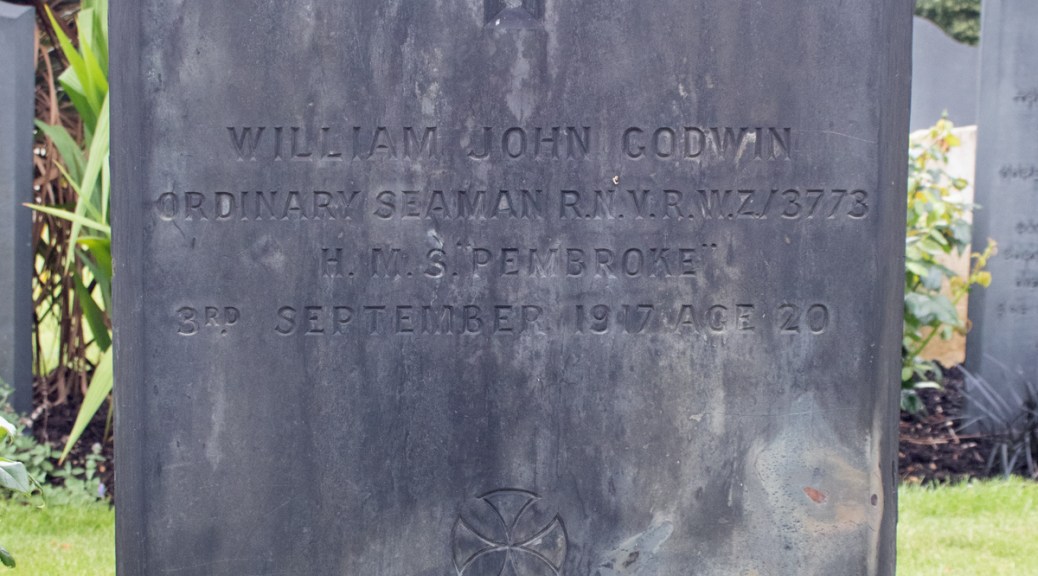
Ordinary Seaman William Godwin

Ordinary Seaman William Godwin

William John Godwin – known as Willie – was born on 13th March 1897, the oldest of six children. His parents were railway signalman George Godwin, and his wife Emily. George was born in Monmouthshire, Emily was from Bristol; the couple raised their family in South Wales.

When Willie left school, he found work at a local tinplate manufacturer, and was employed as a cold roll greaser – helping maintain the equipment. War was knocking on Europe’s doors, however, and, in September 1916, he was called upon to do his duty.

Willie joined the Royal Naval Volunteer Reserve; his enlistment papers show that he stood 5ft 6ins tall, had dark brown hair, brown eyes and a fair complexion. It was noted, however, that he had an abscess scar on his right cheek.

Ordinary Seaman Godwin’s first posting was at HMS Victory, the Royal Naval Dockyard in Portsmouth, Hampshire. Here he undertook his initial training, but in May 1917, he was sent to another shore-based establishment, HMS Pembroke – Chatham Dockyard.

The base was particularly busy when Willie arrived. Temporary accommodation at Chatham Drill Hall had to be set up, and this is where he found himself billeted.

On the 3rd September 1917, the German Air Force carried out one of the first night-time air raids on England: an unprepared Chatham was heavily bombed and the Drill Hall received a direct hit. Ordinary Seaman Godwin was amongst those killed instantly. He was just 20 years of age.

William John Godwin was laid to rest, along with the other victims of the Chatham Air Raid, in the Woodlands Cemetery, Gillingham.


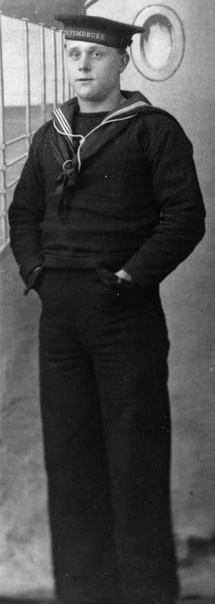
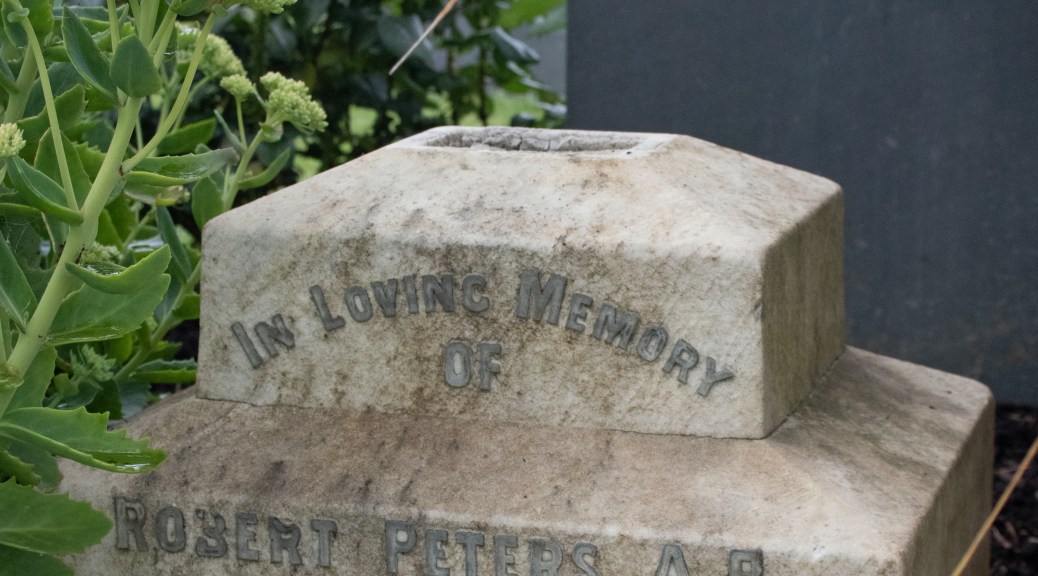
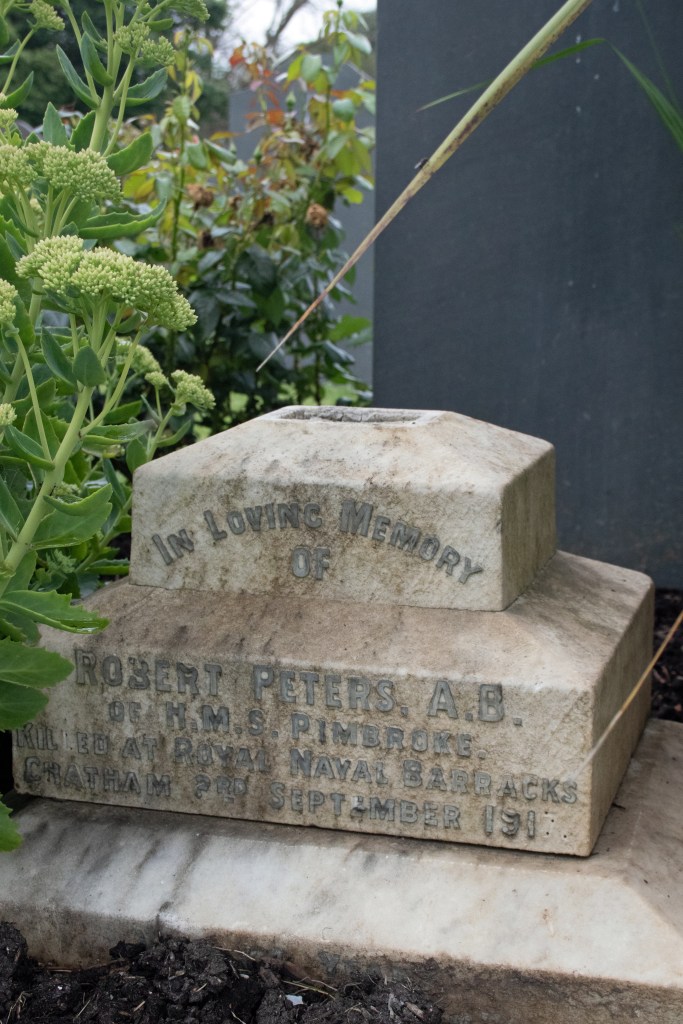
Able Seaman Robert Peters

Robert Peters was born on 27th May 1893 in Dundee. Little information remains documented about his early life, but he was one of at least four children to John and Agnes Peters, and had two sisters, one called Mary, and an older brother. The family lived in towards the west of the city centre, in the now-spartan Annfield Road.

The bulk of the information about Robert comes from one document – his Royal Navy Service Records. He enlisted as an Ordinary Seaman on 4th April 1912, but, because of his work as an iron turner, he seems to have been put on reserve until hostilities broke out two years later.

While on reserve, he received the training that all reservists would have done, which meant that, when he was formally called into action in June 1916, he did so at the rank of Able Seaman. Robert’s service records also show that he was 5ft 5ins (1.65m) tall, had dark hair and brown eyes.

Able Seaman Peters first posting was at HMS Victory – the Naval Dockyard in Portsmouth. After a couple of months’ additional training, he was assigned to HMS Wallington, a depot ship based on the Humber Estuary.

After a year on board, Robert transferred to HMS Pembroke, the Royal Naval Dockyard in Chatham, Kent. The base was a busy place that summer, and temporary accommodation was set up at the Dockyard’s Drill Hall. This is where Robert found himself billeted.

On the 3rd September 1917, the German Air Force carried out its first night air raid: Chatham was heavily bombed and the Drill Hall received a direct hit; Able Seaman Peters was among those killed instantly. He was just 24 years of age.

Robert Peters was laid to rest, along with the other victims of the Chatham Air Raid, in the Woodlands Cemetery, Gillingham. His parents had passed away before the war, and so his sister Mary was confirmed as his next of kin.


Able Seaman Robert Peters (from findagrave.com)

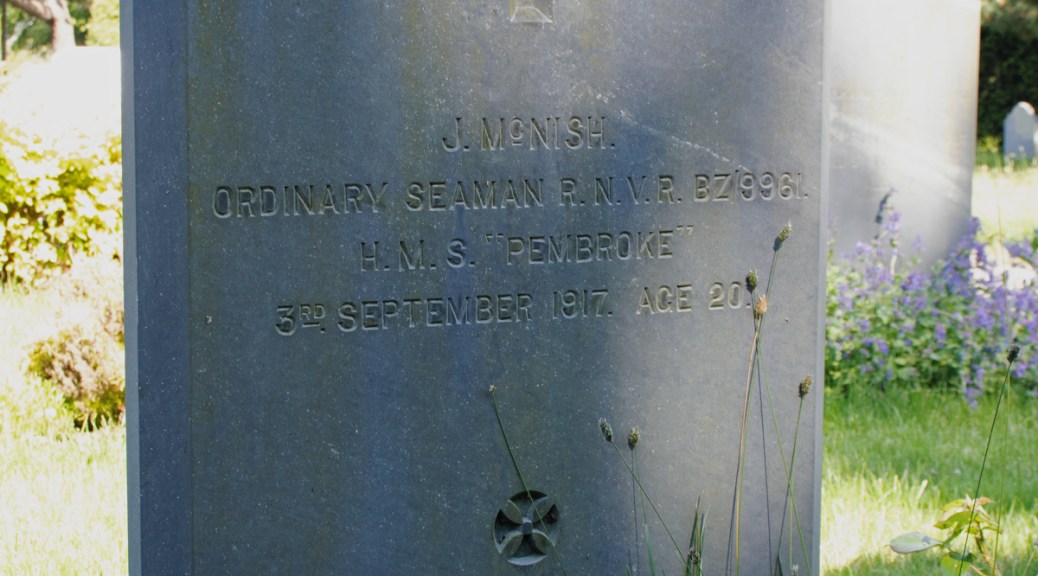
Ordinary Seaman John McNish

Ordinary Seaman John McNish

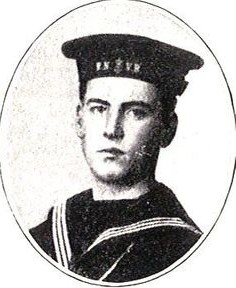
John McNish was born in the Staffordshire city of Wolverhampton on 26th June 1897. The oldest of six children, his parents were railway porter James McNish and his wife Mary Ann.

Sadly there is little documentation to evidence John’s early life. When he left school, he seemed to have joined his father in becoming a porter and, when war broke out, he joined the Royal Navy, given the rank of Ordinary Seaman in the Royal Naval Volunteer Reserve. He was based at HMS Pembroke, the shore-based establishment at Chatham Naval Dockyard in Kent.

In the summer of 1917 HMS Pembroke was becoming crowded and John was billeted at the Chatham Drill Hall. On the night of 3rd September, the building took a direct hit from a German bomber. Ordinary Seaman McNish, along with 97 others, was killed instantly. He was just 20 years old.

John McNish was buried in the nearby Woodlands Cemetery in Gillingham, along with dozens of others who perished that night.


Ordinary Seaman John McNish
(from findagrave.com)

Full details of the night raid on Chatham Drill Hall can be found here.