Tag Archives: 1915

Lance Sergeant Henry Lewis

Lance Sergeant Henry Lewis

The early life of Henry Watkin Lewis is a challenge to piece together, and a lot of the detail comes from his later service records.

The document confirms that Henry was born in Pontypool, Monmouthshire, in December 1885. It gives his next of kin as his aunt, Ann Dunning, and there are no details about his parents.

Henry joined up in the days after war was declared. He was working as a plumber by this point, and enlisted in Preston, Lancashire, although it is not clear whether he was living in the area at this point. His records showing that he was 5ft (1.52m) tall and weighed 116lbs (52.6kg). With brown hair, blue eyes and a fresh complexion, he had a scar across the bridge of his nose and another on his lower lip.

Henry’s military career is an intriguing one. Assigned to the Loyal North Lancashire Regiment, he was initially given the rank of Private. He was promoted to Lance Corporal on 5th September 1914, just two weeks after enlisting. Four days later his rank was increased to Corporal, and by 14th October he had been promoted again, this time to Lance Sergeant. There is no evidence of any previous military background for him, and the cause of this rapid rise is unclear.

With any rapid rise, a rapid fall is often likely to follow, and Henry’s case was to be no different. He service records note that he was discharged from the army on 16th January 1915, as he was ‘not likely to become an efficient soldier’. Again, there is no further record as to why, although his papers do not suggest the cause was anything medical.

Lance Sergeant Lewis’ unit was based in Tidworth, Wiltshire, by this point, but he must have moved to Warminster following his discharge. It was here that he died on 23rd April 1915, the cause of his passing unknown. He was 29 years of age.

Henry Watkin Lewis was laid to rest in the graveyard of St Denys’ Church, Warminster.


Private William Mathias

FishguPrivate William Mathias

William George Mathias was born in the Pembrokeshire village of Littleston early in 1885. The oldest of five children, his parents were John and Sarah Mathias. John was a farm worker, but when he finished his schooling William found work as a rabbit trapper. This meant a move from home, and the 1901 census found him as a servant for the Evans family, in nearby Mathry.

Agricultural work was not employment that William wanted to dedicate his life to, and he soon found a new opportunity. He took a job as a police constable in Glamorganshire. There is little information about this part of his life, but the 1911 census recorded him as being one of 26 police officers boarding in the village of Gilfach Goch. Interestingly the census includes the annotation “The above are police quartered at the Ogmore Arms, Gilfach Goch, temporarily during the coal strike.”

The Miner’s Strike of 1910/11 resulted in the temporary closure of South Wales mines. Police were shipped in, but this only resulted in riots breaking out. In November 1910 disorder broke out in Tonypandy, Pontypridd and Gilfach Goch, amongst other locations. Nearly 80 police and more than 500 civilians were injured, although the exact number of miners wounded is unclear, as many refused to seek medical treatment for fear of being singled out.

As the strike moved into 1911, the army was called in, with four detachments of the Somerset Light Infantry being called into Penygraig, Llwynpia, Clydach Vale and Gilfach Goch. Stones were thrown by the rioters, and a number of William’s police colleagues were injured: thirteen of the Gilfach miners were arrested and prosecuted for their involvement in the unrest.

The decision to send troops in was contentious, and anger became directed at the then Home Secretary, Winston Churchill, for the decisions he took. Ultimately, the miners were defeated, their calls for better living conditions and higher wages went unanswered.

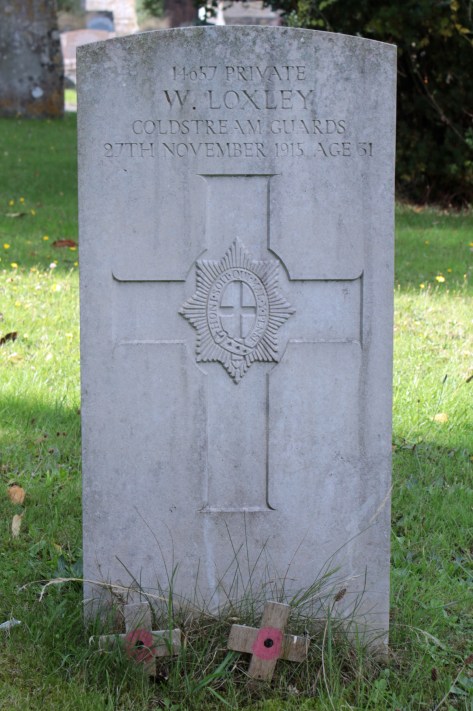
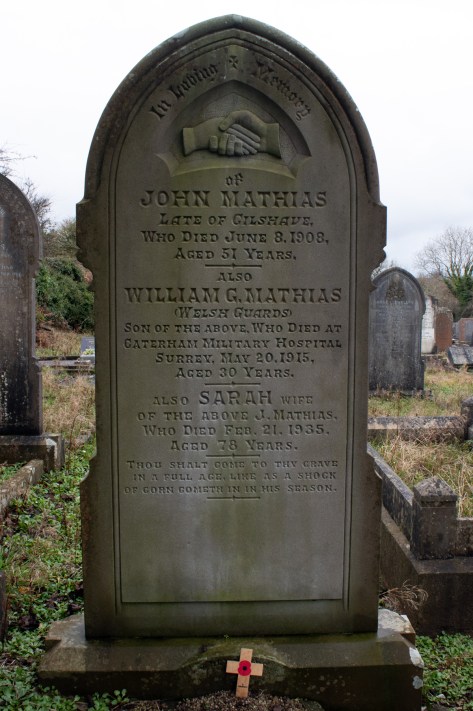
William continued in the police force until war broke out. His time in the army is lost to history, but it is clear that he enlisted in the Welsh Guards as a Private. Sent to Caterham, Surrey, for his training, his time serving King and Country was not to be a lengthy one. In May 1915 he was admitted to a military hospital, though the cause is not clear. He passed away on 20th May 1915: he was 30 years of age.

The body of William George Mathias was taken back to Pembrokeshire for burial. He was laid to rest in Fishguard’s Hernon Baptist Burial Ground.


Private William Mathias
(from findagrave.com)

Leading Boatman Peter Moran

Leading Boatman Peter Moran

Peter Moran was born in Kilmeena, County Mayo, Ireland, on 29th January 1876. Details of his early life are hard to track down, but when he finished his schooling, he wound work as a fisherman.

By 19th August 1891, Peter sought to make a more permanent career of the sea. He signed up to the Royal Navy, and was sent to HMS Impregnable, the shore base in Devonport, Devon, for his training. Being just 15 years of age, he was too young to formally enlist, and was given the rank of Boy 2nd Class.

Over the next few years, Peter learnt the tools of his trade. On 2nd July 1892 he was promoted to Boy 1st Class, and the following February he was given his first sea-faring assignment, on board the battleship HMS Neptune. By March 1893 Boy Moran found himself serving on board HMS Daphne, a screw sloop which would become his home for the next three years.

During his time aboard Daphne, Peter came of age, and was given the rank of Ordinary Seaman. His service records show that he was 5ft 4ins (1.63m) tall, with light hair, grey-blue eyes and a fresh complexion. Within eighteen months he had proved his mettle, and was promoted to Able Seaman.

Over the next decade, Peter would serve on eight vessels. By the time the term of his contract came to an end in September 1903, he had been promoted twice – to Leading Seaman, then to Petty Officer 2nd Class.

Peter renewed his contract, but seems to have chosen a new career path. On 2nd October 1903 he moved to HM Coastguard and, as a Boatman, was assigned to Pendeen Cove, Cornwall.

Love blossomed for Peter, and he married a woman called Caroline in the next few years. There is little further information about her, but the couple would go on to have three children – Mary in 1908, Florence in 1911 and Thomas in 1913.

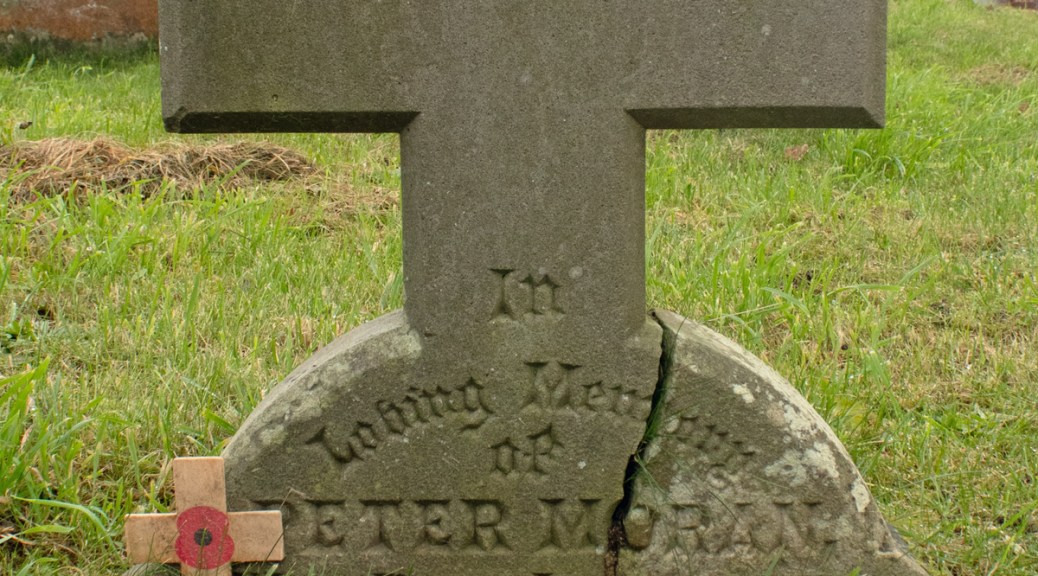
Boatman Moran would spend twelve years with the coastguard, moving to St Ives, Cornwall, in September 1908, and Fishguard, Pembrokeshire, in March 1914. By this point he had been promoted to Leading Boatman, and was set on a new life in Wales. Sadly, the new life was not to be: on 2nd June 1915 he passed away from pneumonia. He was 39 years of age.

The body of Peter Moran was laid to rest in Fishguard Cemetery: a life at sea, and forging homes in three countries at an end.


Serjeant William Shanly

Serjeant William Shanly

William Michael Shanly was born in Hampstead, Middlesex, in the summer of 1892. The fourth of eight children, of whom three died in infancy, he was the eldest son to Michael and Mathilde Shanly. Michael was the owner of a coffee and refreshment company.

The Shanly family lived at 78 Sumatra Road, Hampstead, but by the time he was nine years old, William had been sent to Sussex, and was boarding at the Xavarians Brothers School in Uckfield.

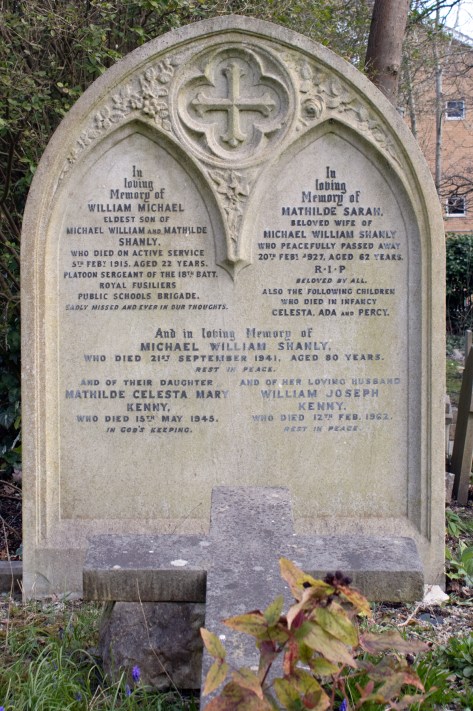
There is little further information available about William’s life. His epitaph on the family headstone suggests that he died on active service and was a Platoon Sergeant of the 18th Battalion of the Royal Fusiliers. His unit was also known as the 1st Public Schools, although exactly what role he held is unclear. His entry on the Commonwealth War Graves Commission Grave Index suggests that he was attached to the 15th (Reserve) Battalion, but his military records no longer exists, so it isn’t possible to confirm either way.

Serjeant Shanly died on 5th February 1915, aged 22 years of age. He had had an operation for appendicitis five days earlier, but had succumbed to peritonitis.

William Michael Shanly was laid to rest in the family plot in Highgate Cemetery, not far from where his grieving family were living.


Private Robert Fisher

Private Robert Fisher

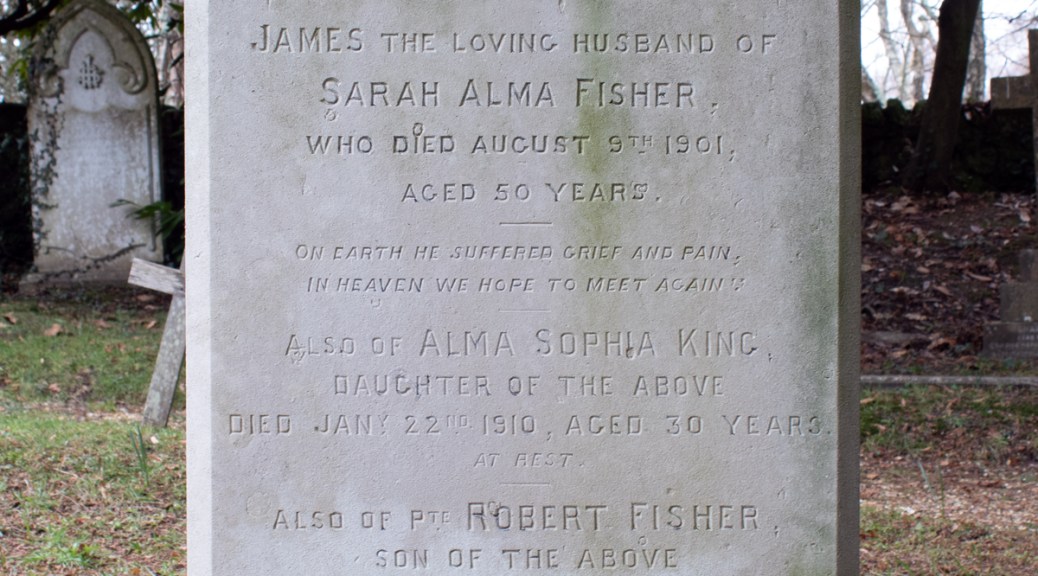
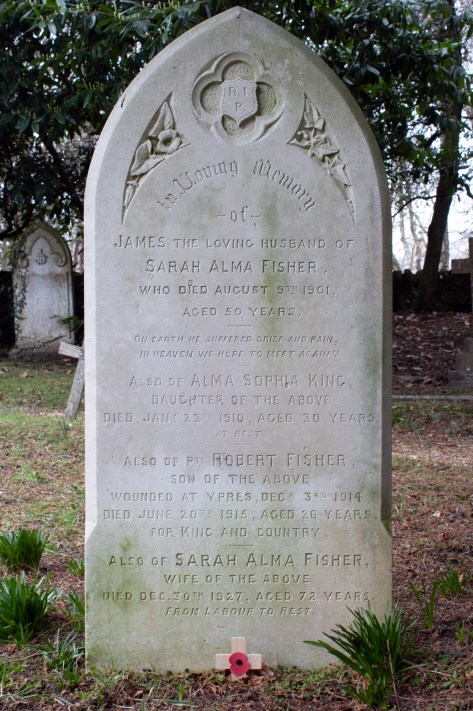
Robert Fisher was born on 12th September 1888 in Lyndhurst, Hampshire. He was the sixth of eight children to James and Sarah Fisher. James was a coachman, and the family lived on Pike’s Hill, to the north of the town centre.

James died in 1901, and Robert remained at home to support his mother and two younger sisters. The 1911 census found the family living in the same four-roomed cottage on Pike’s Hill: Robert was employed as a mail driver, while his sister Kathleen worked as a domestic servant. The family also had a lodger, William Penny, to help bring in some extra money.

When war broke out, Robert stepped up to play his part. His service documentation has been lost, but it is clear that he enlisted in the opening weeks of the conflict, and was assigned to the 1st Battalion of the Hampshire Regiment. As proof of a quick turnaround for these new recruits, Private Fisher found himself in France by mid-November 1914.

Fighting on the Western Front near Armentières, Private Fisher was wounded on 3rd December 1914. He was medically evacuated to Britain for treatment, and admitted to Netley Hospital near Southampton, Hampshire. He had been “struck in no less than seven places by shrapnel.” [Hampshire Independent: Saturday 3rd July 1915]

Eventually well enough to return home, by June 1915, Robert’s health had deteriorated. He contracted meningitis, and was admitted to the Isolation Hospital back in Southampton. The condition would ultimately prove fatal and Private Fisher passed away on 20th June 1915: he was 26 years of age.

Robert Fisher was laid to rest in the family plot in Lyndhurst Cemetery, alongside his father, and not far from where his grieving mother still lived.


Private Arthur Candey

Private Arthur Candey

Pte. Arthur Candey, of the Devon (Cyclists) Territorials, was found shot at Rotterdam, Talland, near Polperro, early on Friday morning. About six weeks ago Candey was drafted to Polperro from Looe and had been engaged in watching the coast, and the deceased and Pts. C Harris went on patrol duty. At Rotterdam Cottage, Candey complained of feeling tired and unwell. so Harris told him to remain in a hut close by while he went on alone and met the other patrol. While on the return journey Harris heard the report of a gun, and deceased was found dead with a bullet wound in the head. Death must have been instantaneous. Pte. Harris was away from the deceased for fifty minutes altogether…

At the inquest at Talland… the jury… returned a verdict that Candey took his life while temporarily insane.

[West Briton and Cornwall Advertiser: Monday 21st June 1915]

Arthur Candey was born in the spring of 1897 in Tiverton, Devon. One of thirteen children, and the youngest surviving son, his parents were Richard and Ellen Candey. Richard was a lace maker, and the family lived in a small terraced house in John Street, to the west of the town.

There is little information available about Arthur’s life. The 1911 census showed that he was still in school, and his army service records have been lost to time. It is clear that he enlisted in the 2nd/7th (Cyclist) Battalion of the Devonshire Regiment, and the newspaper report confirms that he served in Cornwall.

Private Arthur Candey was just 18 years of age, when he died on 18th June 1915. His body was taken back to Devon for burial. He was laid to rest in Tiverton Cemetery, a short walk from where his grieving family still lived.


Driver George Messenger

Driver George Messenger

The death of Driver G Messenger, aged 20, of the 18th Divisional Ammunition Column, stationed at Heytesbury, took place at the Red Cross Military Hospital on Friday, the 11th inst. Messenger was a native of Lower Braithwaite, Carlisle, and was admitted to the hospital in the middle of May suffering from consumption. Deceased joined upon the commencement of the war.

[Salisbury and Winchester Journal: Saturday 19th June 1915]

George Messenger was born in 1895 and was the third of seven children. His parents, George and Sarah, were farmers, and the family grew up in Mealsgate, on the edge of the Lake District. Sarah died in 1901, and by the time of the 1911 census, George Jr and his siblings were helping their father on the farm.

When war broke out, George Jr was quick to enlist. Details of his military service are sparse, but what does remain confirms that he had enlisted no later than December 1914, which backs up the details in his obituary.

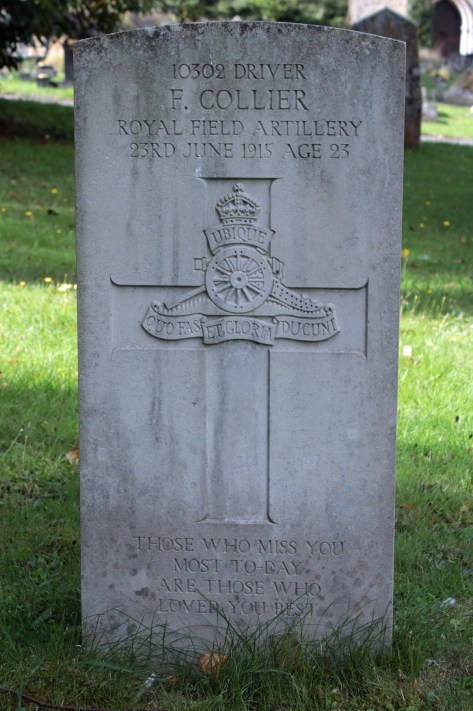
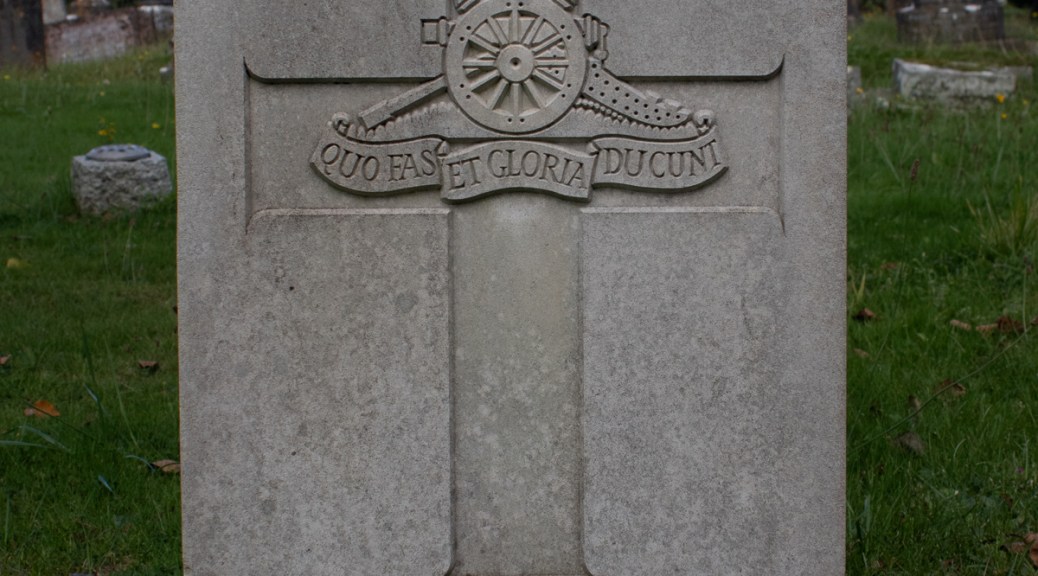
Driver Messenger joined the Royal Field Artillery, but it seems unlikely that he spent any time overseas. He seems to have been sent to a camp on Salisbury Plain, Wiltshire, for training and this is where he became ill. Contracting tuberculosis, probably from the cramped environment of the army barracks, George was admitted to the Voluntary Aid Detachment Hospital in the town of Mere. He passed away from the lung condition on 11th June 1915: he was just 20 years of age.

Rather than being taken back to Cumbria, George Messenger was instead laid to rest in Mere Cemetery.


Serjeant Edwin Huxtable

Serjeant Edwin Huxtable

Edwin Huxtable was born in the summer of 1863, the youngest of eight children to William and Sarah. William was a tailor and Sarah a dressmaker, and they raised their family in their home village of South Molton, Devon.

William’s two younger sons followed him into tailoring, although the family disappears from records for more than 20 years. William passed away in 1889, and a later newspaper report suggests that Edwin enlisted in the army in some capacity, serving in South Africa during the Second Boer War.

Back in Britain, Edwin married Hester Cole in 1904. She was a dressmaker from South Molton as well: the couple set up home and their business at 10 Broad Street in the village. They had two children: Sidney was born in 1905, and Herbert in 1906, although their younger boy passed away when just a babe-in-arms.

When war broke out, Edwin was called back into service. Details of his military career have been lost, but it is clear from what remains that he enlisted in the Devonshire Regiment, and served in the 11th (Reserve) Battalion. His previous time in the army was taken into account, and he was given the rank of Serjeant.

It is unclear whether Edwin saw any time overseas as part of the First World War, but his age and health were against him. Suffering from pneumonia, he was admitted to a hospital in Torquay. The lung condition got the better of him, however, and he passed away on 14th April 1915. He was 52 years of age.

Taken back to South Molton for burial, Edwin Huxtable was laid to rest in the village’s cemetery.


The 1921 census showed that Hestor was keeping up the family business. She was living in East Street, South Molton, and listed as a dressmaker and employer.


Ship’s Corporal 1st Class Thomas Barnes

Ship’s Corporal 1st Class Thomas Barnes

Thomas Henry Barnes was born on 19th September 1878 in the Devon village of Blackawton. One of four children, his parents were Thomas and Thirza Barnes. Thomas Sr was a farmworker who passed away in 1890: the following year’s census found Thirza and her three younger children living in Silver Street, Buckfastleigh, Devon.

Keen to earn enough money to support his mother, Thomas found work on a farm. He sought a career, however, and, on 11th March 1896, he enlisted in the Royal Navy. Six months short of the age to formally join up, he was given the rank of Boy 2nd Class, and was sent to the training ship HMS Northampton. He spent those six months wisely, however, rising to Boy 2st Class in June and was given the rank of Ordinary Seaman when he came of age in September.

By this point, Thomas had been moved to HMS Vivid, the Royal Naval Dockyard in Devonport. His service records show that he was 5ft 5.5ins (1.66m) tall, with brown hair, blue eyes and a fair complexion. He was also noted as having a tattoo of an anchor on his right arm.

Over the next few weeks, Ordinary Seaman Barnes moved from Vivid to HMS Victory, the Navy’s dockyard in Portsmouth, Hampshire, and back again. On 13th January 1897 he was given his first formal posting, on board the cruiser HMS Bellona, and from here his naval career flourished.

Thomas’ initial contract of service was for twelve years, and during this time he proved a committed and determined young man. During the term of his enlistment, he served on six ships, returning to Devonport between voyage. He did not rest on his laurels, either, and worked his way through the ranks. In August 1898 he was promoted to Able Seaman, and in May 1902 he made Leading Seaman.

Away from the sea, love was blossoming for Thomas. In January 1903 he married Alice Percy. The daughter of a paper mill fitter, she would spend her married life with her parents, while her husband was away at sea.

Leading Seaman Barnes’ career continued its upward trajectory: in April 1904 he was promoted again, this time to Petty Officer 2nd Class. When his contract came to an end in September 1908, it was inevitable that he would renew it. His service records show that, at 30 years of age, he was now 5ft 8ins (1.73m) tall.

In February 1909, Thomas was promoted to Petty Officer 1st Class: at this point he was serving on his ninth ship, HMS Ramillies. With his next move, to the armoured cruiser HMS Suffolk, came another change in rank. The now Ship’s Corporal 1st Class Barnes’ career was doing well, and his annual reviews confirmed this, regularly highlighting a character that was very good.

By August 1915, Thomas had spent nearly two years aboard the battleship HMS Temeraire. She would go on to play a role in the Battle of Jutland, but Ship’s Corporal Barnes would not be there. Disembarked to HMS Vivid on 13th August, he was subsequently admitted to the Royal Naval Hospital in Plymouth, suffering from a cerebral thrombosis. This would prove fatal: he died on 26th October 1915, at the age of 37 years old.

The body of Thomas Henry Barnes was taken back to Buckfastleigh for burial. He was laid to rest in the village’s Holy Trinity Churchyard.


Private William Thomas

Private William Thomas

William James Thomas was born in Manordeifi, Pembrokeshire, in 1894. The older to two children his parents were Benjamin and Ellen Thomas. Benjamin was a groom, and, at the time of the 1891 census, the family were living at Cilwendeg Lodge at the entrance to the Welsh estate.

The family moved to Aberporth on the Cardigan coast by the 1901 census. Benjamin had become a farmer, and William, now 17 years of age, was helping out.

Something changed dramatically for William, however, and by 1914, he was living in the West Sussex village of Ferring, some 200 miles (320km) from his birthplace. By this point he was working as a motor driver and, on 25h March, he married Winifred May Knight at St Mary’s Church in Goring-by-Sea.

William stepped up to serve his country when war broke out, enlisting on 18th February 1915. His service records show that he was 5ft 4ins (1.63m) tall, and weighed 138lbs (62.6kg). He was noted as having a mole on his right cheek, and that several teeth were missing. The document confirms his marriage to Winifred, but also gives details of a child, Evelyne Winifred, who had been born in 1905: there is nothing to confirm whether she was his, or was born to Winifred before the couple met.

Private Thomas was assigned to the Army Service Corps Mechanical Transport Division, and sent to nearby Worthing for his training. His time in the army was to be tragically brief, as within a fortnight he had been admitted to the town’s Red Cross Hospital, suffering from cerebrospinal fever.

On 23rd March, William was transferred to Worthing Civil Infections Hospital, but any treatment he was receiving was to prove ineffective. He passed away on 31st March 1915, at the age of 31 years old.

The body of William James Thomas was laid to rest in the graveyard of St Mary’s Church, Goring, where just over a year before he and Winifred had been married.