Tag Archives: 1917

Sapper Albert Colston

Sapper Albert Colston

Albert Edward Colston was born in the spring of 1887 in Bath, Somerset. The oldest of seven children, his parents were Thomas and Elizabeth Colston. Thomas was a carpenter and the family were raised in Lyncombe, to the south of the city centre.

Elizabeth died in 1905, by which time Albert had left school. He worked with Thomas and, by the time of the 1911 census, the family – father and four children at home – had moved to a terraced house in the suburbs of Twerton.

During this time, Albert volunteered with the Somerset Light Infantry. When war came to Europe, however, he was enlisted into the Royal Engineers. He joined on 28th February 1916, and was assigned to the Wessex Field Company. His service record show that he was 5ft 8ins (1.73m) tall, of normal physical development and with good vision.

A few months after enlisting, Albert married Alice Selway. She was a groom’s daughter from Bath who, at the time of their marriage, was working as a housemaid in a boarding house in the centre of the city.

Sapper Colston spent the next year on home soil. In March 1917, however, he was discharged from the army as he was deemed no longer medically fit for active duty. Sadly, the records do not confirm the complaint that led to his dismissal.

It is likely that he returned home when he was discharged. He died in Bath just weeks later, on 4th April 1917. He was thirty years of age.

Albert Edward Colston was laid to rest in St James’ Cemetery in his home city, the same location as Elizabeth, mother and son reunited again.


Alice married for a second time in May 1919. He husband was William Keepen, and the couple went on to have a son, Reginald, who was born in 1920. Reginald died in 1937, while Alice lived until 1918. The couple were buried in Haycombe Cemetery on the outskirts of Bath.


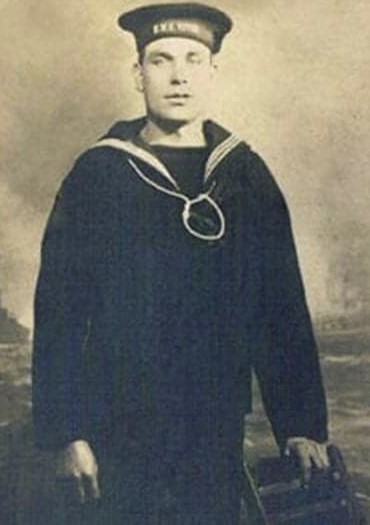
Stoker 2nd Class Tom Mounter

Stoker 2nd Class Tom Mounter

Tom Mounter was born on 24th March 1890 in the quiet Somerset village of Kingsbury Episcopi. He was one of ten children to Robert and Ellen Mounter. Robert was a farm labourer, while Ellen earned a little more money for the family by stripping withy – or willow – branches for use in a variety of ways, such as basket weaving.

When Tom left school, he followed his father into agricultural work, employed to grow and manage the withy fields. In April 1911, he married Ellen Talbot, a farm labourer’s daughter from the village. The couple went on to have three children, Frederick, Martha and Horatio.

When war came to Europe, Tom stepped up to play his part. On 14th December 1916, he joined the Royal Navy, along with four others from the village.

Tom’s service records show that he was 5ft 6ins (1.68m) tall, with brown hair, blue eyes and a fresh complexion. Stoker 2nd Class Mounter was initially sent to HMS Vivid, the Royal Naval Dockyard in Devonport, for training, before being assigned to the cruiser HMS Ariadne on 31st March 1917.

The Ariadne had been converted into a minelayer that year, and worked in the English Channel. On 26th July 1917, she was torpedoed by the German submarine UC-65, and sunk, with the loss of all 38 hands, including Stoker Mounter. He was just 27 years of age.

Tom Mounter’s body was brought back to Somerset for burial. He was laid to rest in the peaceful Kingsbury Episcopi Cemetery, next to George Bonning, who had enlisted on the same day as him, and who had died six months before.

The local newspaper, when reporting on Stoker Mounter’s funeral, noted that he was “the seventeenth Kingsbury Episcopi man who has died for his King and country. It is stated that he had a strong presentiment that he would be killed.” [Langport & Somerton Herald: Saturday 4th August 1917]


Stoker 2nd Class Tom Mounter
(from findagrave.com)

Stoker 2nd Class George Bonning

Stoker 2nd Class George Bonning

George Thomas Bonning – whose forenames seem to have been interchangeable – was born on 9th August 1887 in the Somerset village of Kingsbury Episcopi. His parents were farm workers James and Elizabeth Bonning, and George also entered farm work when he finished school.

In 1909, George marred Olive Harvey, the daughter of another agricultural labourer from the village. The couple set up home together in the village, and went on to have a daughter, Lilian, the following year. It was around the time of their daughter’s birth that George’s mother passed away, happiness and sadness in a short space of time for the young family.

By 1911, George was employed as a carter in a factory, presumably a financial step up from his previous employment on the farm. The money was still not a great deal, however, and Olive was also working, machining gloves at home for the local factory.

War came to Europe, and on 14th December 1916, George enlisted in the Royal Navy, along with four other men from the village, including friend and neighbour Tom Mounter. His service records show that he was 5th 11.5ins (1.82m) tall, with black hair, hazel eyes and a fresh complexion.

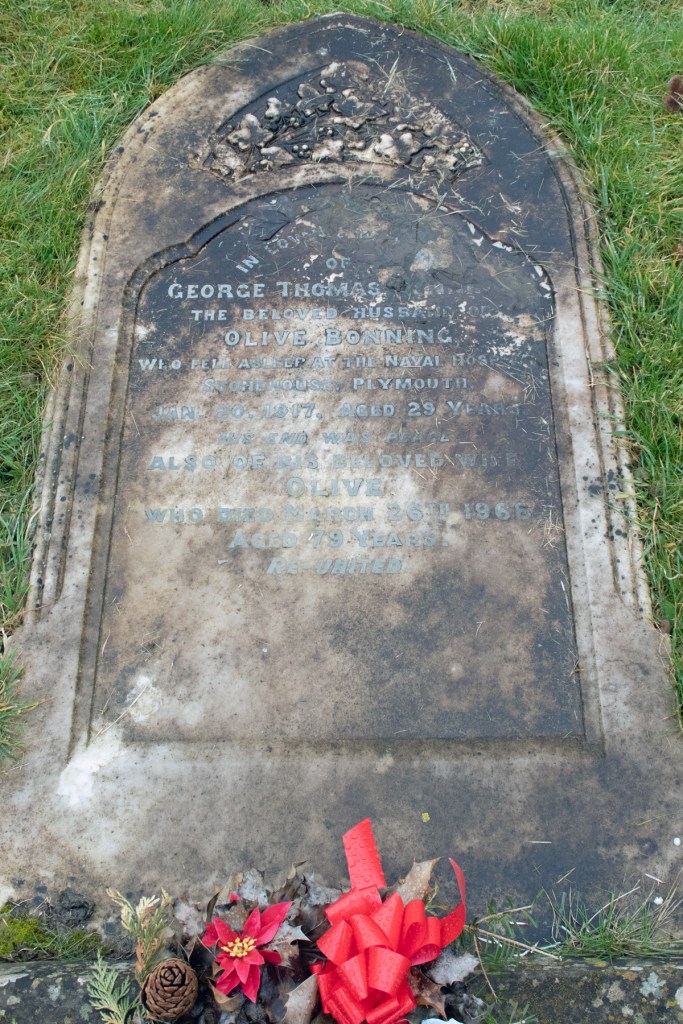
Stoker 2nd Class Bonning was sent to HMS Vivid, the Royal Naval Dockyard in Devonport, for training, and it was here that he contracted a chill. Tragically, this developed into pneumonia, and he died in the barracks on 20th January 1917. He was 29 years of age, and had been in service for just 37 days.

George Thomas Bonning’s body was brought back to Somerset for burial. He was laid to rest in the peaceful Kingsbury Episcopi Cemetery.


Olive never remarried after losing her husband. She remained in the village, raising Lilian and finding occasional employment to help pay the bills. She passed away on 26th March 1968, at the age of 79, and was laid to rest with George, husband and wife reunited after more than fifty years.


Private Charles Oborne

Private Charles Oborne

Charles Philip Oborne was born in Mosterton, Dorset, early in 1899. He was the middle of three children to Charles Oborne. Charles Sr had been married before, to a woman called Martha, and the couple had a son, Joseph. Martha died in the mid-1890s and Charles remarried, to a woman called Elizabeth. They went on to have two children, of which Charles Jr – better known as Charley to avoid confusion with his father – was the older.

There is little documentation for the Oborne family. Charles Sr was a farm labourer, and the family moved from Dorset to Stratton-on-the-Fosse, near Shepton Mallet in the early 1900s. At the time of the 1911 census, Charley was a student, and there is no direct evidence of what he went on to do when he finished his schooling.

Nor are there many documents relating to his military service. Private Oborne joined the Training Reserve, and was assigned to the 94th Battalion. The troop had formed from the 16th (Reserve) Battalion of the Gloucestershire Regiment, and was based in Chiseldon, to the south of Swindon in Wiltshire. There is nothing to confirm when he enlisted, but given his age, and when he passed, it is likely to have been during the winter of 1916/17.

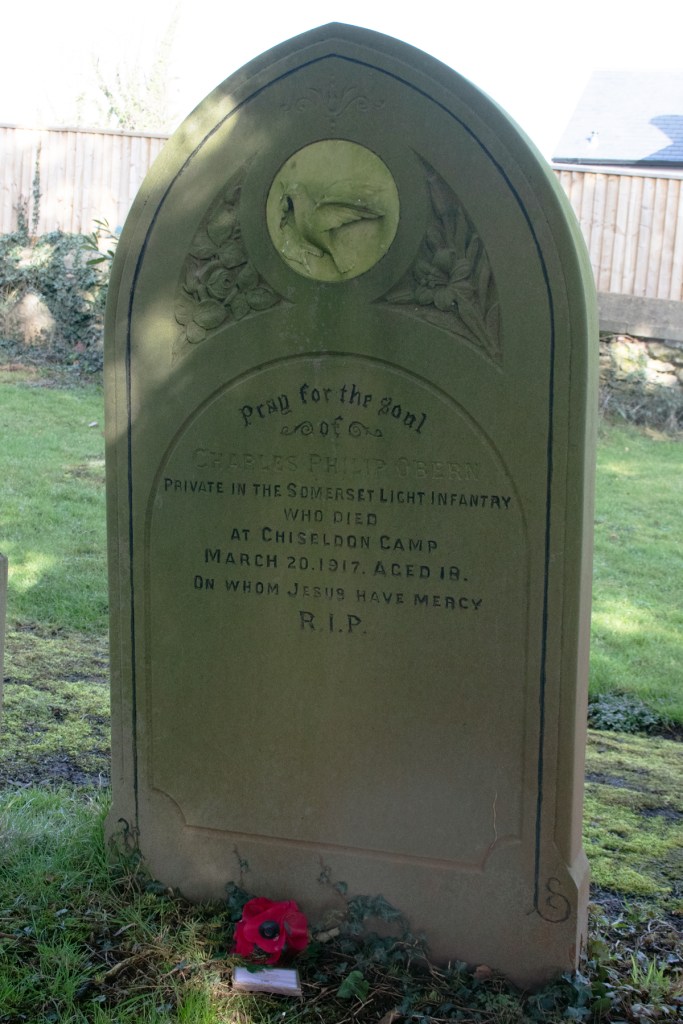
What is clear is that while Private Oborne was training, he contracted pneumonia, and, on 20th March 1917, he passed away from the condition. He was just 18 years of age.

The body of Charles Philip Oborne – Charley to his friends and family – was brought back to Somerset for burial. He was laid to rest in the graveyard of St Benedict’s Roman Catholic Churchyard in the village of Downside, a mile to the north of Shepton Mallet, and not far from Stratton-on-the-Fosse, where his family were still living.


Charles was not alone in succumbing to pneumonia at Chiseldon Camp that spring. Two Somerset soldiers from battalions based there, Private Everett Ferriday, and Private Ivan Day, passed away in the same hospital just days after Charles.

You can read their stories by following the links above.

Gunner Douglas James

Gunner Douglas James

Douglas Arthur James was born on 8th May 1893 near Shepton Mallet, Somerset (records variously quote Oakhill, Stoke St Michael and Shepton itself, but all are within a few miles of each other). One of seven children, his parents were dairy farmers Theo and Elizabeth James.

When Douglas and his siblings left school, they all took up work on the farm, but when war broke out, Douglas wanted to play his part. He would not get his chance to do so until the spring of 1917, when he joined the Royal Field Artillery.

Again, the records differ, one suggesting that he was assigned to the 3rd (Reserve) Brigade, while another suggests that Gunner James was actually assigned to the 15th Reserve Battery. Both units served overseas, although it is impossible to determine whether Douglas went as well.

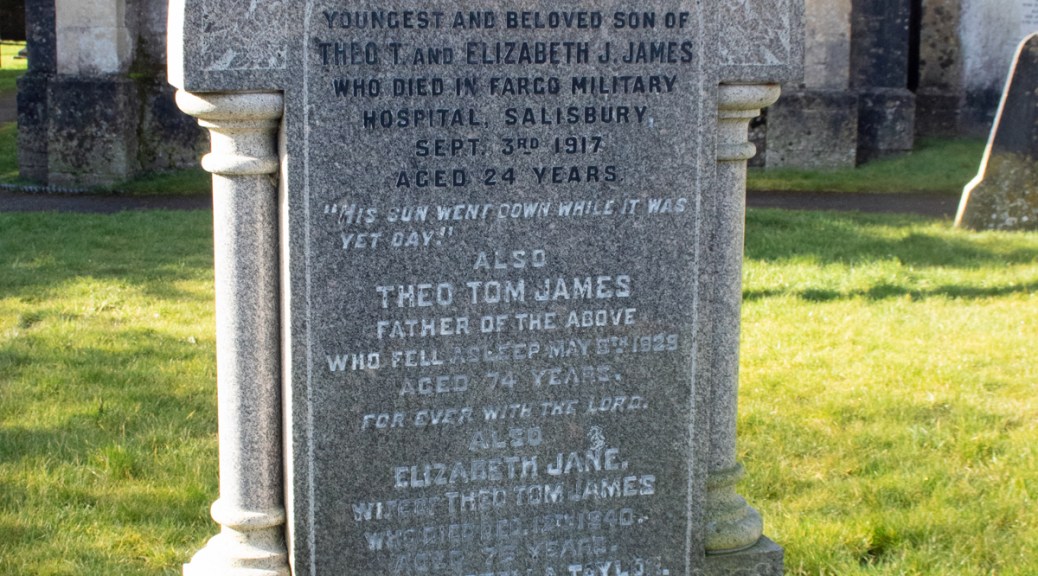
The only other identified document relating to Gunner James confirms that he was admitted to the Fargo Military Hospital at Larkhill, Wiltshire. The cause of his admission is unclear, but he passed away while there on 3rd September 1917. He was just 24 years of age.

The body of Douglas Arthur James was brought back to Somerset for burial. He was laid to rest in the family plot in the graveyard of St Bartholomew’s Church in West Cranmore.


Douglas remained alone in the family plot for a number of years. The family were eventually reunited, however, when Theo, who died in 1929, and Elizabeth, who passed in 1940, were also laid to rest there. Two of Douglas’ sisters were also buried in the plot – Evelyn, the oldest James daughter, who died in 1952, and Emily, the youngest of the siblings, who passed away in 1977.


Private Bernard Sugg

Private Bernard Sugg

Bernard Charles Sugg was born in the spring of 1895 and was the third of eight children to Charles and Emma. Charles was a farm labourer from Somerset and the family were raised in Templecombe, to the south of Wincanton.

While Bernard’s older brother William followed their father into farm labouring, Bernard found employment working with a builder and mason when he left school.

When war broke out, the Sugg brothers wanted to step up and play their part for King and Country. William enlisted in the Royal Engineers in May 1915, while Bernard joined the Devonshire Regiment the following February.

Little information is available about Private Bernard Sugg’s military life. He was assigned to the 12th (Labour) Battalion, and was sent to France within a couple of months. He spent a year on the Western Front, but fell ill in the spring of 1917, and was brought back to Britain for treatment. Admitted to the Ladywell Hospital in Bermondsey, South London, with a fever, he passed away on 4th April 1917, aged just 22 years old.

Bernard Charles Sugg was brought back to Somerset for burial. He was laid to rest in the family plot in the graveyard of St Mary’s Church in his home village of Templecombe. Understandably distraught at her boy’s untimely death because of the conflict, on his mother’s wishes, his funeral was not accorded military honours.


Private William Sugg had an active career with the army. Having joined the Royal Engineers after being a platelayer for the local railway, he transferred across to the 2nd/4th Battalion of the York and Lancaster Regiment.

William was caught up in the fighting on the Western Front in the closing months of the war, and was killed on 25th August 1918. He was 25 years old, and was laid to rest at Gommecourt South Cemetery.

Charles and Emma had lost their two eldest boys to the Great War, but their younger three sons – Arthur, Reginald and Harold – were too young to be called up.


Sapper Henry Tabor

Sapper Henry Tabor

Henry James Tabor was born in 1877, the second of six children to James and Sarah Tabor. Wiltshire-born James was a carpenter and joiner by trade, and the family were raised in Sarah’s home town of Milborne Port, Somerset.

Henry followed in his father’s footsteps when he left school and, by the time of the 1901 census, both were carrying out their trade (along with younger brother, Sidney) from the family home in East Street.

James died in September 1915, at the age of 75, and shortly afterwards, his oldest son stepped up to play his part for King and Country. He enlisted in the spring of 1916, joining the Royal Engineers as a Sapper.

Little information about his military life remains documented, but, according to a later newspaper report, he went to France and fought at both Ypres and the Somme. It was while he was overseas that Sapper Tabor contracted bronchitis, which then developed into tuberculosis. He was medically evacuated to Britain for treatment, but passed away on 28th March 1917, having been admitted to the Military Hospital in Southwark. He was 40 years of age.

The body of Henry James Tabor was brought back to Somerset for burial. He was laid to rest in the family plot in the cemetery of his home town, Milborne Port.


The loss of her husband and oldest son in such a short space of time, may have proved too much for Sarah Tabor. She passed away just two months after Henry, and he was reunited with both parents once again.


Private Francis Barnes

Private Francis Barnes

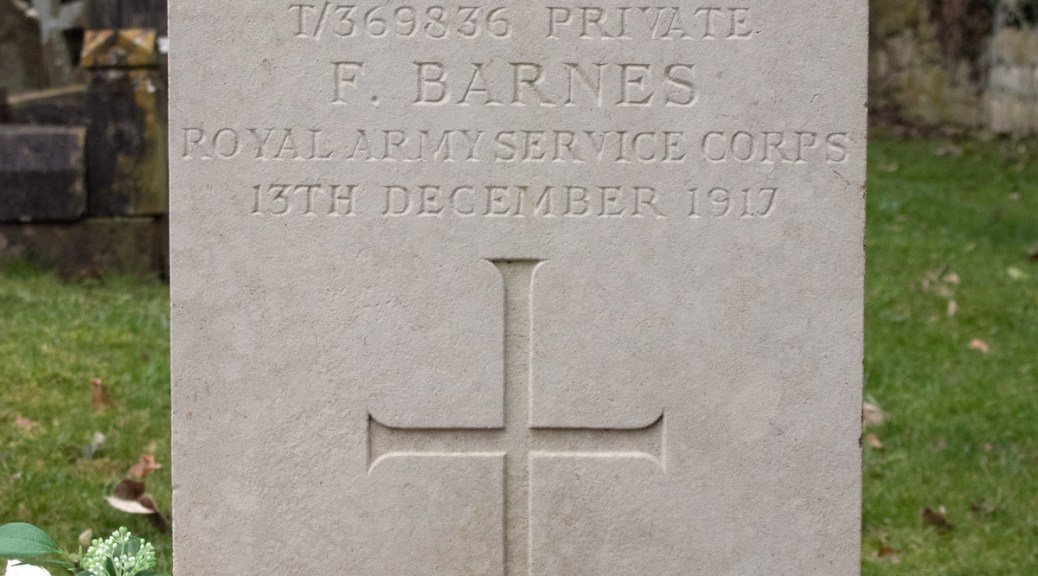
The life of Francis – Frank – Barnes is destined to remain a mystery and, indeed, the majority of the information comes from his headstone and one document, the British Army Register of Soldiers’ Effects.

Frank’s headstone confirms that he was a Private in the Royal Army Service Corps, and that he died on 13th December 1917, though the cause of his passing is unknown. He is buried in Bath Roman Catholic Cemetery, so this also sheds light on his religion.

The British Army Register of Soldiers’ Effects suggests that he was also known as Frank McBarnes, although no further information comes to light with this alternative surname. The document confirms that he died in Bath War Hospital, and that his dependents were not eligible for a war gratuity, which suggests that he enlisted after June 1917.

Five dependents are highlighted on the record – Frank’s siblings Sabrina, Elizabeth, Margaret, Patrick and Thomas. This would suggest that both of their parents were dead by the time Frank himself passed away. Sadly, a combined search of the siblings doesn’t shed any light on their background, despite married names being given for Sabrina and Margaret, and an alternative surname – McManus – being provided for Thomas.

Some lives are not meant to be uncovered, and that of Frank Barnes, at rest in a peaceful Somerset cemetery, took everything to his grave.


Second Lieutenant Charles Hales

Second Lieutenant Charles Hales

Charles Edward Hoare Hales was born in Bournemouth, Dorset, in the summer of 1886. The fourth of five children, his parents were Arthur Hales – a Major General in the Royal Inniskilling Fusiliers – and his wife, Maria.

Arthur’s career stood the family in good stead: the 1891 census records the Hales living in a house in Crystal Palace Park, South London, with five servants supporting their – and their two visitors’ – every need. Arthur also believed in education for this two sons: Charles was dispatched to Hartwood House School in Hartley Wintney, Hampshire.

Arthur died in 1904 and at this point the Hales family disappears – there is no record for Maria or her five children in any of the 1911 census returns.

When war came to Europe, Charles and his older brother Arthur, stepped up to play their part. Both joined the Wiltshire Regiment, both being attached to the 1st Battalion. Sadly, neither of the brothers’ service records remain, so it is difficult to piece together their military careers.

Arthur achieved the rank of Captain, gained a Military Cross for his dedication and service. He was caught up in the Battle of Albert – one of the phases of the fighting at The Somme – in 1916. He was initially reported killed in action, then, to the elation of Maria, this was changed to missing. Tragically, he was subsequently confirmed as dead, having passed away on 6th July 1916, aged 34 years of age. He is commemorated on the Thiepval memorial in Northern France.

A further tragedy was to strike the Hales family the following year, when Charles, who had risen to the rank of Second Lieutenant, also passed away.

The internment took place in Bathwick Cemetery on Monday, of Mr Chas. Edward Hoare Hales, 2nd-Lieutenant Wiltshire Regiment, who died on Thursday, after a long illness contracted on active service. He was the last surviving son of the late Major-General A Hales, Royal Inniskilling Fusiliers, Commandant of the Straits Settlements, and of Mrs Hales… The young officer, whose body was brought from Buxton, was buried in the same grave where rest the remains of his father, who died in April 1904.

Bath Chronicle and Weekly Gazette: Saturday 1st December 1917

Details of Charles’ illness, from which he passed on 22nd November 1917, are unclear. He was 31 years old when he died. He left his estate – which amounted to £6524 18s 1d (the equivalent of £579,000 in today’s money) to his youngest sister, Sophia.


Maria Hales passed away in 1924, at the age of 74. She was buried in the family ploy, reunited with husband and younger son once more.


Second Lieutenant Charles Hales
(from findagrave.com)

Captain Arthur Hales
(from findagrave.com)

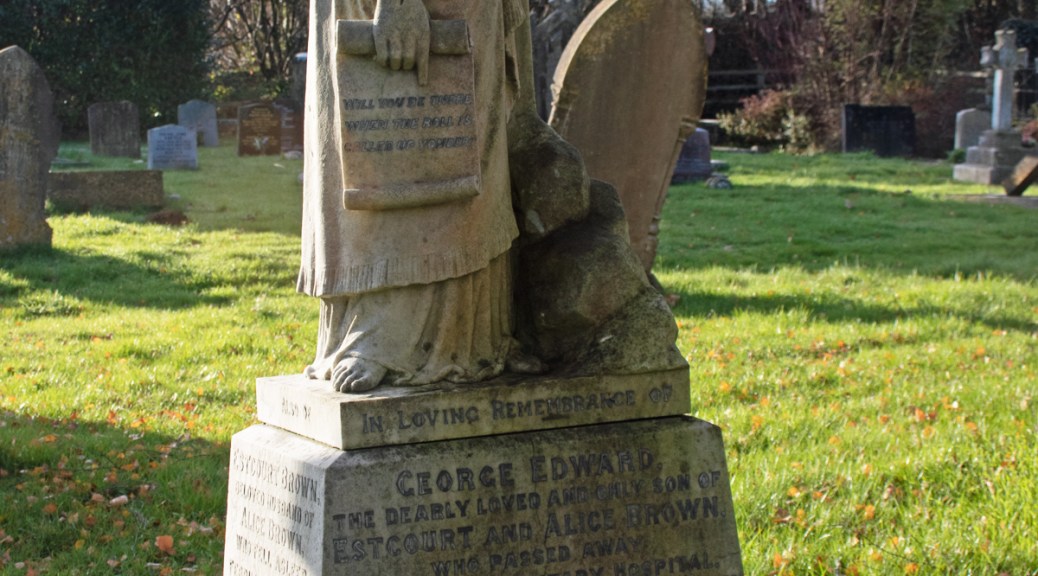
Driver George Brown

Driver George Brown

George Edward Brown was born on 26th June 1898 in South Petherton, Somerset. An only child, his parents were Escourt and Alice Brown. Originally a millstone dresser, by the time of the 1911 census, Escourt had turned his hand to farm work, while Alice made shirts and did housekeeping to bring in a little more money for the family.

George was only 16 years old when war broke out, but he was keen to play his part as soon as he was able to. In the spring of 1917, he enlisted in the Royal Field Artillery, and was assigned to the 105th Company.

Little information remains of Gunner Brown’s military service, but it is evident that he did his training in Norfolk. While here, he came down with appendicitis, and was admitted to the Norfolk War Hospital in Norwich. He was operated on, but sadly died following the procedure. He passed away on 29th June 1917, having just turned 19 years of age.

George Edward Brown’s body was brought back to Somerset for burial. He was laid to rest in the family grave in South Petherton Cemetery. He was reunited with his parents, when they passed away, Escourt in 1924 and Alice some time later.