Tag Archives: 1917

Sergeant Ernest Coombs

Serjeant Ernest Coombs

Ernest Frederick Coombs was born in the summer of 1866. One of four children to cabinet maker Frederick Coombs and his wife Julie, the family lived in Leatherhead, Surrey.

Unfortunately, the documentation around Ernest’s life is a little scattered. What we do know is that he married Alice Amelia Kinnear in June 1889, and the couple went on to have fourteen children.

Jumping forward, and by the time of the 1911 census, the family were living in a small terraced house on the outskirts of Dover. Ernest listed his trade as a canteen managed for a provision merchant.

Sadly, Ernest’s military records are also lost to time. He enlisted in the Royal Marines Light Infantry, and was promoted to Serjeant during his time there.

The only other information available about him comes from the obituaries section of a local newspaper in March 1917:

COOMBS: On February 13th, at the Royal Naval Hospital, Chatham, after a short illness, Ernest Frederick Coombs, aged 50 [sic] years (late of 14 Leighton Road, Dover). RIP

Dover Express: Friday 2nd March 1917

Ernest Frederick Coombs was actually 49 when he died; he lies at rest in the Woodlands Cemetery in Gillingham, Kent.


Ernest’s grave was also the last resting place for his youngest son, Raymond, who died aged just twelve years old, two months after his father, and his widow, Alice, who passed away in 1954, at the age of 82.


Chief Engine Room Artificer 2nd Class Arthur Herring

Artificer Arthur Herring

Arthur Herring was born on 5th December 1877, the third of five children to William and Constance Herring. William was a sign writer at the Naval Dockyard in Chatham, Kent, and the family lived in neighbouring Gillingham.

Arthur joined the Royal Navy in September 1899, just short of his 22nd birthday. He worked as an Engine Room Artificer (ERA), and over the twelve years of his initial service, he crewed on board ten different ships. This was in addition to his service at HMS Pembroke, the shore vessel in his home town of Chatham.

Arthur was evidently a hard worker, and he rose through the ranks from ERA 5th Class to ERA 1st Class during this time.

In September 1912, Arthur married Angela Beck; she was also born in Chatham, and was the daughter of a naval Sergeant. The couple didn’t go on to have any children.

War was looming by the time Arthur completed his twelve years’ service. Arthur was recommissioned, serving as Chief Engine Room Artificer 2nd Class on HMS Aquarius and HMS Tyne during the conflict.

In February 1917, Artificer Herring transferred to HMS Torrent. This was a naval destroyer, part of the Harwich Force, patrolling the North Sea.

One of the duties of the Harwich Force was manning the “Beef Run”; the convoys between England and the Netherlands. It was on one of these runs that tragedy struck HMS Torrent.

At about 2am on 23rd December, the convoy, including HMS Torrent, ran into a German minefield, and Torrent struck a German mine. Two of the other ships in the convoy, HMS Surprise and HMS Tornado went to rescue Torrent’s crew, but Torrent struck a second mine and quickly sank. In an attempt to rescue survivors, Surprise and Tornado also struck mines and sank.

Only the fourth convoy ship, HMS Radiant was undamaged and picked up the survivors from the three ships. In total, 12 officers and 240 other ranks were killed from the three ships. On HMS Torrent, only three of the crew survived; sixty-eight others perished that night. This included Artificer Herring, although his body was rescued from the water; he was 40 years old.

Arthur Herring lies at peace in the Woodlands Cemetery in his home town of Gillingham, Kent.


Private Aubert Smith

Private Aubert Smith

Aubert Charles Smith was born in 1893, the eldest of eight children to Charles and Mary Ann Smith. Charles worked at the Naval Dockyard in Chatham, and the family lived not far away in Gillingham, Kent.

When he left school, Aubert found work as a labourer in a ‘provision warehouse’, which may have been connected to the dockyard at which his father worked.

In July 1915, aged 22, he married Lucy Cox, who was the daughter of a mess cook at the naval base. The young couple went on to have a son, also called Aubert, in 1917.

At this point, the First World War was raging, but little documentation remains of Private Smith’s service. He enlisted in the East Kent Regiment (also known as The Buffs), but there is nothing to confirm when he enrolled or where his duty took him.

The next record for Private Smith shows that he was admitted to Fulham Military Hospital, suffering from testicular cancer. Sadly, he succumbed to the condition, and he passed away on 29th December 1917. He was just 24 years old.

Aubert Charles Smith lies at rest in the Woodlands Cemetery in his home town of Gillingham, Kent.


Private James Godden

Private James Godden

James Godden was born in the autumn of 1879. The youngest of six children to Charles and Mary Ann Godden, the family lived in Bridgwater, Somerset. Charles was a labourer and, while his older brothers followed in a similar vein, by the time of the 1901 census, aged 21, was listed as a hairdresser.

James married Hester Addicott in 1906, and the couple had three children – Ruby, Leslie and Freda. Hairdressing may not have been that well paid; according the to 1911 census, the young family had four boarders, ranging from 17 to 60 in age.

War was on its way, and James enlisted at the end of 1914. Initially joining the Somerset Light Infantry, he was soon transferred to the Army Cyclist Corps. Sadly, full details of his military service are not readily available, but it seems likely that he was part of the company’s First Line, who saw service overseas.

Private Godden served three years before being medically discharged from the army. His discharge records give a startling insight into his health.

Originated at Chiseldon Camp: April 12th 1917.

He is in a condition of violent excitement, talks without ceasing and suffers from insomnia. Refuses solid food, but will take a little milk. Not result of, but aggravated by, strain of ordinary military service.

Permanent total incapacity. Treatment in an asylum required.

Cause of discharge: Medically Unfit – Acute Mania

James Godden: WW1 Pension Records

James was admitted to the Somerset & Bath Asylum in the village of Codford, near Taunton. For good or bad, his time there was brief. Within a couple of weeks, he contracted bronchitis. Sadly, James was to succumb to this, and passed away on 29th April 1917. He was 27 years of age.

An additional twist in the tail came from the local newspaper report on his passing:

Somerset Athlete Killed

The death is reported of a former well-known athlete in the person of Mr James Godden, who before joining the Army carried on business as a hairdresser at Bridgwater. The deceased, who was 37 years of age, enlisted in December 1914, and was subsequently transferred to a cycle corps. He death occurred at a Somerset institution after a short illness. The deceased was well known throughout the West of England as a crack cyclist, and competed at big athletic meetings at Exeter, Plymouth, Bath and Bristol, in addition to local sports. He had won altogether over 400 prizes. He leaves a widow and three children.

Wells Journal: Friday 4th May 1917

James Godden lies at rest in the Wembden Road Cemetery in his home town of Bridgwater, Somerset.


James Godden, celebrated on an Ogden’s Cigarettes card
(with thanks to John Boyland)

Private Arthur Bloomfield

Private Arthur Bloomfield

Arthur Henry Bloomfield was born on 19th December 1888, the youngest of six children. His parents, agricultural labourer and carter William and his wife Mary, raised the family in the small Norfolk village of East Harling, which was about halfway between the larger towns of Thetford and Diss.

Arthur married Rose Howlett in November 1911; the couple had two children – Margaret and Frederick – who became siblings for Rose’s daughter, Violet.

While Arthur’s military records are scarce, it is evident that he enlisted in the 9th Battalion of the Royal Irish Rifles. Private Bloomfield’s troop fought at a number of the key skirmishes on the Western Front, including the devastating (for the battalion) Battle of Albert in 1916.

A year later, the 8th and 9th Battalions were caught up in the Battle of Messines and it was here that Private Bloomfield met his fate. His pension records show that he was killed in action on 7th June 1917. He was 28 years old.

Arthur Henry Bloomfield lies at rest in the Lone Tree Military Cemetery in Mesen, West Flanders, Belgium.


Interestingly, Arthur’s pension records only cite his beneficiaries as Rose, Margaret and Frederick. This may go further in confirming that Violet was not his daughter.


Arthur Henry Bloomfield was my great great uncle.


Photo courtesy of Commonwealth War Graves Commission.

Petty Officer Stoker James Adams

Petty Office Stoker James Adams

James Adams was born in June 1883, son of Robert and Eliza Adams from Bridgwater in Somerset. Robert was an agricultural labourer; James was one of seven children.

James was keen to get out and see the world. In November 1905 – aged just 12 years old – he enlisted in the Royal Navy as a stoker. After training in Devonport, Plymouth, Stoker Adams served on a number of different vessels, including HMS Victorious, Ramillies, Amphitrite, Monmouth, Andromeda and Halcyon.

By the time war broke out, James has been promoted to Leading Stoker, and was assigned to HMS Cornwall. This was an armoured cruiser that was involved in the Battle of the Falklands in December 1914.

Promoted to Stoker Petty Officer in October 1915, James continued to serve on HMS Cornwall until he was transferred to the brand new ship, HMS Valkyrie. The vessel was involved in offensive sweeps and convoy escorts based out of Harwich.

On 22nd December 1917, the Valkyrie was part of the escort for a convoy travelling to the Netherlands, when she struck a mine. In total, nineteen men were killed, twelve instantly; this included Stoker Petty Officer Adams. He was 34 years old.

James Adams lies at rest in the Wembdon Road Cemetery in his home town of Bridgwater.


Private Walter Perry

Private Walter Perry

Walter Perry was born in Bridgwater, Somerset, in 1874. He was one of ten children to James Perry, a general dealer, and his wife Hannah. After he had left school, Walter became a labourer; his older siblings had all become labourers or factory workers in the area.

In November 1899, Walter married Rebecca Cavill; their first child, Hilda, was born at the end of March the following year. By this time, Walter was working for a brewery, while his new wife was working at a shirt collar factory. The young couple went on to have two further children – Walter and Beatrice – before Rebecca tragically passed away in June 1906.

Walter married again in November 1908, this time to a Mary Ann Reed also from Somerset. The couple went on to have two children, Joseph and Edna, and the family lived together in the centre of Bridgwater.

The Great War was on the horizon. While details of Walter’s military service are not readily available, it is unlikely that he was called up as soon as hostilities broke out – he turned 40 in 1914, and so was too old to qualify immediately.

Walter enlisted in the 2/1st Royal Wiltshire Yeomanry; he was based primarily in England, where his battalion acted as a training/reserve for the 1st Battalion, who were serving on the Western Front. It was while Private Perry was based in Essex, that he contracted appendicitis; he was admitted to the General Military Hospital in Colchester, but passed away on 6th June 1917. He was 43 years old.

Walter Perry lies at peace in the Wembdon Road Cemetery in his home town of Bridgwater.


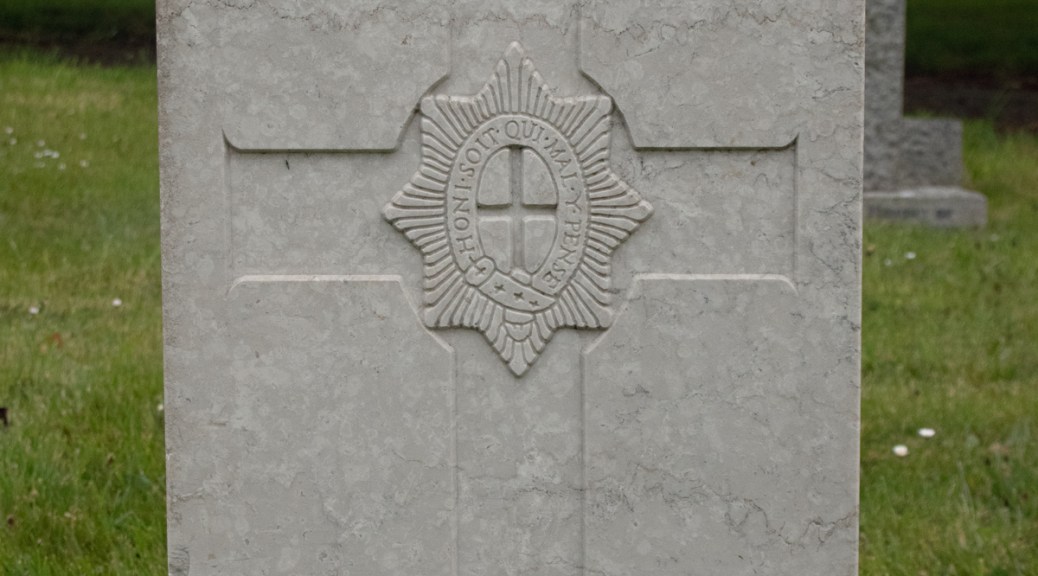
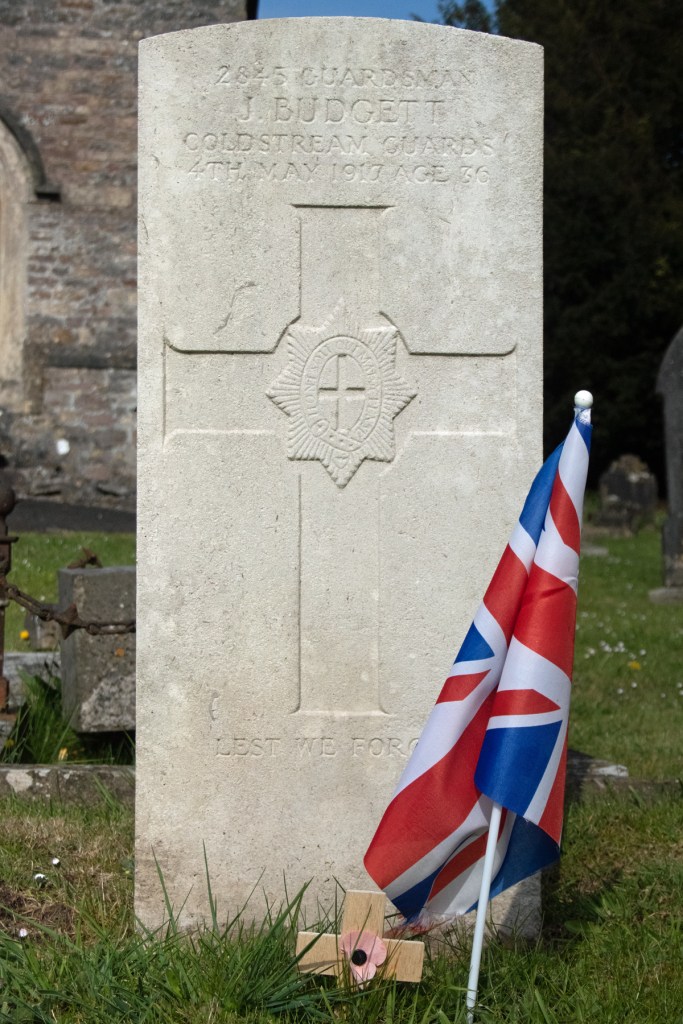
Guardsman Joseph Steadman

Guardsman Joseph Steadman

Joseph Richard Steadman was born in Ellesmere Port, Cheshire, in 1892. One of seven children to William and Mary Ann Steadman, his father worked as a slab maker for the local council.

Sadly, Joseph’s mother died in 1899, at the age of just 40. William had moved the family to Birmingham by this point, and, on leaving school, Joseph found work at a jeweller’s as a scratch brusher.

Moving to London, Joseph met Ethel May Tambling, who was originally from Somerset, and the couple married at the beginning of 1914. Ethel already had a child – Frederick – and the young couple also had a son, Alfred, who was born in July 1914.

War was on the horizon, and Joseph was quick to enlist. He joined the Coldstream Guards, embarking for France a month after Alfred was born. An elite force, the Coldstream Guards were involved in some of the heaviest fighting of the war, including the Battles of Mons, Ypres, Loos, Somme, Passchendale and Cambrai. It is likely that Guardsman Steadman was caught up in many of these engagements.

His luck was to run out, however, and Joseph was injured towards the end of October 1917. Shipped back to England for treatment, he was admitted to the King George Hospital in London. Sadly, Guardsman Steadman did not recover from his wounds; he died on 1st November 1917, aged just 25 years old.

Joseph Richard Steadman lies at rest in the Wembdon Road Cemetery in Bridgwater, Somerset.


Joseph and Ethel Steadman (from Ancestry.com)

As a sad aside to this story, two of Joseph’s brothers also died in the war. William Steadman was 29 when he was killed at Ypres in April 1915, while Charles Steadman was just 19 when he died at Armentieres.


Private Albert Pow

Private Albert Pow

Albert Francis Pow was born in the autumn of 1886, one of five children to Albert and Annie Pow from Somerset. Albert Sr. was a farm labourer, but by the time he left school, Albert Jr. started work as a porter in the Singer sewing machine factory in Bridgwater.

Albert’s father passed away in 1905, at the age of 51, and his son – who was by this time repairing the sewing machines – became head of the household.

He was obviously good at what he did, because, by the time he married in 1913, he was able to support his wife Leonora as branch manager for the Singer store in the town. The young couple soon moved on, as, when war broke out, he was manager of the shop in Barnstaple.

War came calling, and while the date of his enlistment is absent from his records, Private Pow joined the 1st Battalion of the Somerset Light Infantry. Sent to the front, he quickly became ill, suffering from dysentery and trench foot, which led to him being hospitalised for nearly two months.

Returning to his troops, Private Pow’s health remained unsteady, and he soon contracted trench fever. He was evacuated back to England for treatment, and was admitted to the Canadian Red Cross Memorial Hospital in Taplow, Buckinghamshire.

Sadly, Albert was not to recover this time; he died at the hospital on 11th May 1917 as a result of empyema (pleuritis) and an abscess of the axilla (armpit). He was just 30 years old when he died.

Albert Francis Pow lies at rest in the Wembdon Road Cemetery in Bridgwater.


Albert left behind his widow, Leonora and their child Vanessa. Leonora was to be reunited with her late husband; she died in August 1986, and is buried with her beloved.


Driver Sidney Hoskins

Driver Sidney Hoskins

Sidney Victor Hoskins was born in February 1892, one of eleven children to Sidney and Elizabeth Hoskins from Shepton Mallet in Somerset. Sidney Sr worked as a quarryman and labourer in local factories.

Sidney was keen to make a life for himself, enlisting in the army in 1909. He served two years as a driver for the Royal Engineers, before being put on the reserve list. By the time of the 1911 census, he was listed as a packer on the railway. In November of that year, Sidney married Ada Lambert, also of Shepton Mallet.

While working on the line in April 1913, Sidney had an accident, suffering a fractured skull. He wasn’t able to carry out any hard labour form that point.

War broke out and Sidney was remobilised; just a month after Ada gave birth to their one and only child, a daughter they named Ada.

New baby notwithstanding, Driver Hoskins was shipped to France as part of the British Expeditionary Force. After two months he was sent down the line after suffering a fit, and was subsequently treated for pleurisy in Nantes. In November 1914, he returned to England and was ultimately discharged on medical grounds in February 1915.

During his time in France, he had also developed tuberculosis, and eventually spent three months in a sanitorium in Taunton, Somerset, to recover.

The condition continued to haunt Sidney, however, and he succumbed to the illness on 5th November 1917. He was 25 years of age.

Sidney Victor Hoskins lies at rest in the cemetery of his home town of Shepton Mallet.


Sidney’s younger brother, William Napier Hoskins, was also involved in the Great War. He had enlisted in the Somerset Light Infantry, and was based in India. Injured in fighting in the Persian Gulf, he was invalided back to India to recover. He was well enough to return to the fray, and was shipped to Mesopotamia, where he was injured again. He died of his wounds in Kut-al Amarah, Iraq, in 1915, aged just 20 years old.

The boys’ older brother Charles had also died in 1895, aged just six years old. While Sidney Sr and Elizabeth had had a family of eight girls, they were to outlive all three of their sons.