Tag Archives: 1917

Private Thomas Baker

Private Thomas Baker

Thomas Baker was born in 1877, the youngest of four children – all boys – to John and Anna Baker from Meare in Somerset. John was a farm labourer, and it was rural trades that his four sons followed, Thomas himself also becoming a farm worker.

Thomas married in August 1896; Phoebe Ann Willis was also from Meare and was just seventeen when the couple married. While I am sure there was love involved, something more practical might have prompted such a young marriage as, six months later, the couple had their first child, Henry.

Thomas and Phoebe went on to have four children, three of whom – Henry, Florence and Amy – survived. By the time of the 1911 census, the family were living in their home village of Meare, with Henry following in his father’s – and grandfather’s – line of work.

Full details of Thomas’ military services are not available. He enlisted in the Devonshire Regiment as part of the 13th Works Battalion and, while there is no documentation to confirm when he joined up, it was probably early in 1917.

Thomas and Phoebe’s son Henry had enlisted in 1915, joining the Gloucestershire Regiment. It seems likely he fought on the Somme, and he was killed in action in November 1916, aged just 20 years old. It may have been this loss that prompted Thomas to do his duty, albeit on the Home Front.

Whenever it was that Private Thomas Baker had enlisted, it was Phoebe that was to suffer the ultimate price. Having already lost a child young, her boy had died in the fields of France, and her husband was also about to add to that loss.

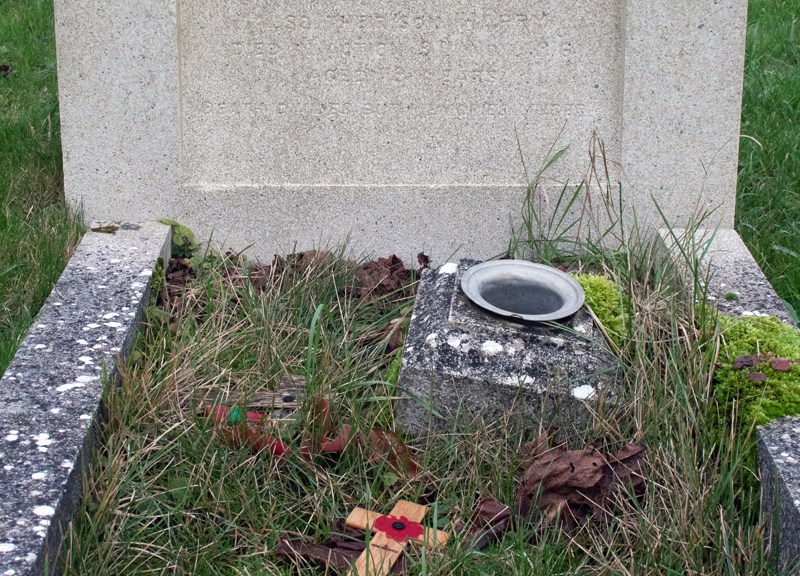
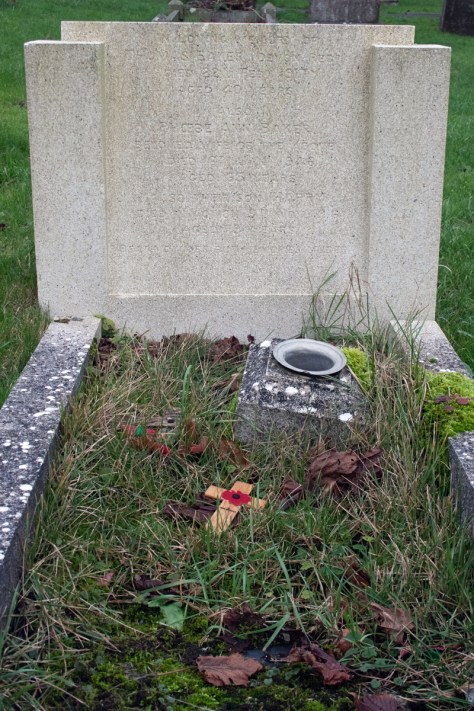
Thomas contracted pneumonia in the winter of 1916-17, and passed away in a military hospital on 22nd February 1917. He was 40 years old.

Thomas lies at rest in the graveyard of the Church of the Blessed Virgin Mary & All Saints in his home village of Meare in Somerset.


Private James Patch

Private James Patch

James Patch was born in 1882, the third of four children – all boys – to Albert and Jane. Albert was a farm labourer in the village of Meare, Somerset, and this is something that, once leaving school, the Patch boys also went into.

Albert passed away in 1904, so James stepped up and stayed living with his mother. By the time of the 1911 census, they were living near the Grape Vine Pub in Meare, both working as agricultural labourers, and had a John Lee boarding with them.

No firm details remain of James’ military service, although it is evident that he enlisted in the Devonshire Regiment and, from the Army Register of Soldiers’ Effects, this can be narrowed down to the 7th Infantry Works Company.

While Private Patch’s military records are sparse, his name crops up a lot in the newspapers around the time of his death, with headlines like “Mysterious Death of Meare Soldier”.

On the evening of the 25th March 1917, James was found lying across the tram tracks in Horfield, a suburb to the north of Bristol. He was in a semi-conscious state, and was taken to the nearby barracks.

An inquest was held and the story unfolded.

Witness statements confirmed that Private Patch was on a tram and had asked the conductress to let him know when they reached the barracks. The tram halted at the allotted stop, but, when nobody alighted, the driver started up again.

James apparently asked the conductress if that had been the stop for Horfield Barracks and, having confirmed that it was, and that he had wanted to get off there, she pressed the bell for the driver to pull up at the next stop. She then went up to the top deck of the tram, and it appear that James had decided he couldn’t wait for the next stop and jumped off the moving tram.

It seems that James fell from the tram and hit his head when he landed; this was when a passer-by found him.

The morning after his fall, the camp doctor identified the extent of James’ injury and he was moved from the barracks to the Royal Infirmary in Bristol. Private Patch died an hour after being admitted, having suffered an extensive fracture of the skull. He was 35 years of age.

The inquest into his death returned a verdict of “accidental death, due to a fall from a tram-car, caused by stepping from the car while in motion”.

James Patch lies at rest in the ground of the Church of the Blessed Virgin Mary and All Saints in his home village of Meare in Somerset.


Private Martin Kiddle

Private Martin Kiddle

Martin Kiddle was born in 1871, the oldest of four children to Joseph and Annie Kiddle. Joseph was a butcher in the Somerset town of Street, and the family lived above the shop on the High Street.

When Joseph died in 1886, Martin took on the role of shopman, before taking over the business entirely.

In 1895, aged 24, Martin married Eleanor Freeman, four years his senior from the nearby town of Ilminster. The young couple had five children and, by the time of the 1901 census, they were running the business as a family, employing an assistant in the shop and a domestic servant.

It is evident that Martin left the butchery business behind him, though. Ten years later, on the 1911 census, he is listed as a Stock Room Manager in a local rug factory.

Martin joined up when war broke out, initially serving in the Somerset Light Infantry, before transferring across to the Royal Defence Corps.

While there is no date for his transfer, it is likely to have been at some point in 1915. Private Kiddle’s wife, Eleanor, passed away in May of that year, so it is reasonable to assume that he requested a transfer to support her before her death, or to support his children afterwards.

Sadly, however, Martin was also to succumb to illness. His pension ledger shows that he passed away on 5th March 1917, dying from carcinoma of the liver. He was 46 years old.

Martin Kiddle lies at rest in the graveyard of Holy Trinity Church in his home town of Street. The gravestone gives dedications to his father, Joseph, and his brother, John, who had died as just over a year old.


Guardianship of Martin and Eleanor’s five, now orphaned, children – Eleanor, Martin, John, Rachel and George – passed to Martin’s mother, Annie.


Private Harold Cook

Private Harold Cook

Harold Cook was born in February 1899, the youngest of nine children to George and Amelia Cook from the Somerset town of Street. George worked as a bootmaker, presumably for the Clark’s factory in the town.

Harold lost his mother at a young age; Amelia passed away in 1901, aged just 41 years old.

By the time of the 1911 census, George, his two older sons – Maurice and George Jr – and his four daughters – Beatrice, Florence, Alice and Gladys – were all employed by the factory. In fact, the only member of the family not employed by Clark’s was Harold himself, who was still at school.

Harold’s military records are not available, but, from the information I have been able to gather, it appears that he enlisted as soon as his age allowed. He joined the Suffolk Regiment, and was in training when an accident occurred.

The local newspaper – the Central Somerset Gazette – picks up his story:

It appears that about 11pm on August 24th [Private Cook was] in bed and suddenly got up, saying he was lying on something. This proved to be the oil bottle of his rifle and he said he would put it away. He got hold of his rifle and turned it muzzle downwards in order to put the oil bottle in the butt. When he closed the butt-trap the rifle went off.

He at once exclaimed “Who put the safety catch forward?”. Corporal Butler and [Private Johnson] then bandaged Private Cook’s foot (which was drilled clean through) and he was taken away at once.

From subsequent evidence by the Adjutant, it transpired than the rifle had been faultily loaded and that the safety catch had been broken.

Deceased had received every possible attention at the American Hospital in Cambridge, but his leg had to be amputated and subsequently septicaemia set in and to this he succumbed.

The jury, in accordance with the Coroner’s summing up, returned a verdict of “Accidental Death.”

Central Somerset Gazette: Friday 19th October 1917

Private Cook died on 4th October 1917, aged just 18 years old.

His body was brought back to his home town of Street and he lies at rest in the local cemetery.


Private Frank Richards

Private Frank Richards

Francis George Richards (or Frank) was born in 1889, the oldest of five children to William and Rhoda Richards. William was an agricultural labourer and the family lived in his home village of Long Sutton in Somerset.

Frank followed his father into agriculture, and, by the 1911 census, was working as a carter.

And that is where the trail of Private Richards goes cold.

What records do exist confirm that he enlisted in the Wiltshire Regiment, serving at its depot in Devizes. This suggests he was part of the 7th (Service) Battalion, raised through the Kitchener Scheme.

The battalion were shipped to France in September 1915, before being moved on to the Balkans, where they fought in the Battle of Horseshoe Hill and the Battles of Dorian. As there are no records of Private Richards’ service, it is not possible to confirm how involved in the fighting in Europe he was, or whether he remained on the Home Front.

Frank’s death also remains a mystery. All that can be said for sure is that he died in hospital on 11th April 1917, in a hospital in England. He was 27 years old. He does not appear to have married, and his pension was assigned to his father.

Frank George Richards lies at rest in the quiet graveyard of Holy Trinity Church in his home village of Long Sutton.


Pioneer George Burroughs

Pioneer George Burroughs

George William Burroughs was born in 1899, the eldest of two sons to harness maker Stratton Burroughs and his wife Alexandra. George was born in Warminster, Wiltshire, but the family soon moved closer to Alexandra’s family in Somerton, Somerset.

The 1911 census found the young family living in Market Place in the centre of Somerton, with a visitor, fancy goods seller Joseph Cazes from Constantinople.

George seems to have enlisted almost as soon as he was old enough to do so, giving up his job as a school teacher (surprising given he was only 17 at the time). He signed up for the Royal Engineers in January 1917, gaining the role of Pioneer.

Sadly, his time in the services was very short. Within weeks of being posted, Pioneer Burroughs was admitted to hospital with meningitis, an illness that was becoming more widespread within the armed forces.

Tragically, after a month in the Norton Barracks Military Hospital in Worcestershire, George passed away from the disease. He was just 18 years old.

George William Burroughs lies at rest in the cemetery of his home town of Somerton.


Private Gilbert Drew

Private Gilbert Drew

Gilbert Victor Drew was born in Dinder, Somerset in 1898, the youngest of the eight children of James and Theresa Drew, a groom/coachman and laundress respectively.

Gilbert initially enlisted in the West Somerset Yeomanry on 11th December 1915, serving on the Home Front.

Private Drew then transferred to the 1st Battalion of the Somerset Light Infantry and was shipped overseas as part of the British Expeditionary Force on 1st August 1916.

He first reported to a medic in mid-November 1916; his records pick up the story from there:

First noticed he was passing a larger quantity of water than usual and was also feeling very thirsty.

2nd December 1916, caught influenza and was sent to England. Thirst has been great and urine very large in quantity since November. General condition good. Passes from 14 to 17 pints of urine each 24 hours – large quantity of sugar contained. No evidence of other disease. No improvement since admission.

Result of AS[?] Prolonged strain – especially during Somme offensive.

Medical Records

Private Drew was discharged from the army on 3rd February 1917 as “no longer physically fit for war service” due to diabetes.

Gilbert Victor Drew died on 1st July 1917; he was just 19 years of age. He was buried in the graveyard of the Church of St Michael in his home village of Dinder, Somerset.

He was one of six villagers to fall during the Great War.

Private Walter Hartnell

Private Walter Hartnell

Walter Ernest Hartnell was born in 1888 to William and Jane Hartnell in Charlton Musgrove, on the outskirts of Wincanton in Somerset.

One of eight children, it appears he could have been a bit of a tearaway in his youth; in October 1905, the Shepton Mallet Journal reports on a “Hobbledehoy Nuisance” in Evercreech, when a Walter Hartnell was caught with nine of his friends causing a disturbance close to the church.


They were shouting, racing after each other up and down the road, using obscene language, and smoking cigarettes. This continued till 7.15, about half an hour.

Shepton Mallet Journal – Friday 20th October 1905

Hartnell was fined 5/- and 2/6 costs, or would face ten days in prison.

Things looked up for Walter and, by the time his call to enlist came, he was working on the railways. He joined the Somerset Light Infantry and the Machine Gun Corps (MGC), while his brother Fred fought in the Royal Artillery.

The MGC was a particularly brutal part of the armed forces. Of the 170,500 officers and men who served in the corps, 62,049 became casualties, including 12,498 killed, earning it the nickname ‘the Suicide Club’.

Details of Private Hartnell’s death are sketchy; his company saw action at Ypres and Arras. However, records suggest that he died in Colchester; the Military Hospital there was used to dealing with troops straight from the Front. It is likely that he was injured at Ypres and shipped back home to recuperate, but died of his injuries.

This is all conjecture on my part, of course, but either way, Private Walter Hartnell lies at peace in a quiet cemetery at Evercreech in Somerset.


Private Harry Edwards

Private Harry Edwards

Henry Charles Edwards was born in 1883, the eldest of four children for Joseph and Elizabeth.

Joseph was an agricultural labourer, and Henry (or Harry) followed his father in the farming life, continuing in the role after Joseph died, and up until at least the 1911 census.

I was unable to find much regarding Harry’s military service. He signed up the Royal Warwickshire Regiment, and subsequently transferred to the Somerset Light Infantry.

He died from tetanus on 24th July 1917, aged 34. His pension records give his mother, Elizabeth, as his beneficiary.

Private Henry Edwards lies at rest in the churchyard of Lydeard St Lawrence, Somerset.

Private Cecil Paine

Private Cecil John Paine

Cecil John Paine was born in Sherborne, Dorset, in May 1899, the son of John and Emily Paine. He was the fifth of seven children, and the second son.

Cecil’s military records are sparse, but the local newspaper provides more information. According to the Western Gazette, Cecil joined up on reaching his 18th year, and had only been in service for three weeks, when he succumbed to pneumonia at Chiseldon Camp in Wiltshire on 6th June 1917.

Private Cecil Paine lies at rest in Sherborne Cemetery.


As an aside, Chiseldon Camp was initially set up to train new soldiers. In 1915, part of it was developed into a hospital for wounded soldiers before, in 1916, it began to treat soldiers coming back from the front who had contracted VD. Interesting times that Private Paine probably knew little about.


Cecil’s eldest brother, Frederick William Paine also served in the Great War. He had enlisted in the navy in 1903, initially for 12 years, but continued on and was finally discharged in 1919.