George Mead was born on 18th September 1900 in the Wiltshire village of Semley. The youngest of eleven children, his parents were police sergeant George Mead and his wife, Rebecca.
The 1911 census recorded the Mead family as having moved to Chapmanslade, near Westbury. George Sr and Rebecca were set up in a five-room cottage, Forest View, with George Jr and two of his older sisters – Edith and Margaret – also living there.
Rebecca passed away when her youngest was just sixteen years of age and, on 12th March 1917, George Jr’s older brother Charlie, a Private in the Worcestershire Regiment, was killed in action while fighting in France. It seems that his younger sibling was keen to prove his mettle before peace was declared and, on the day after his eighteenth birthday, he gave up his job as a carter and enlisted in the Royal Navy.
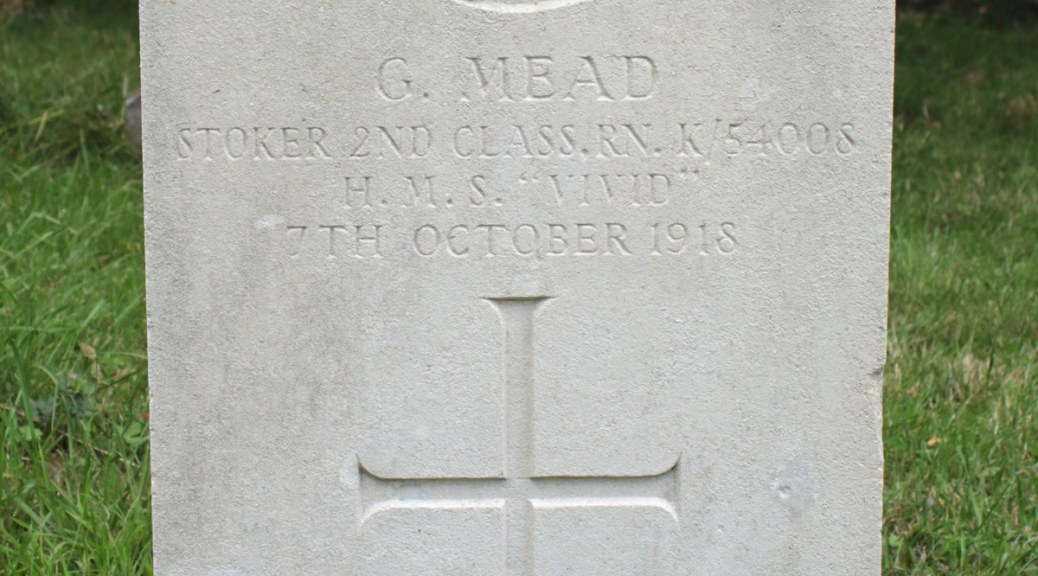
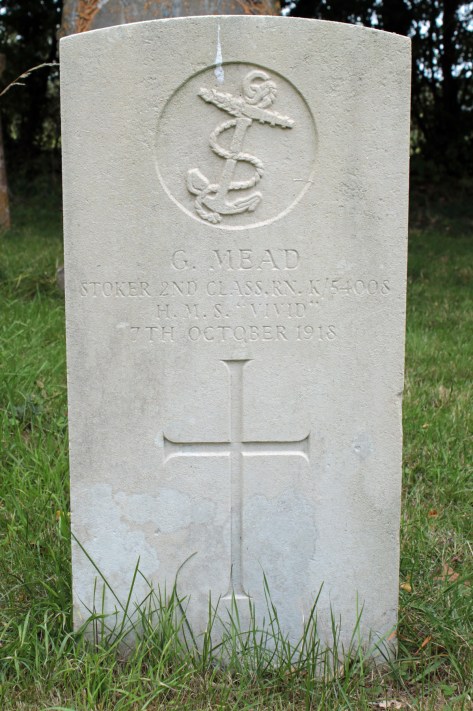
Stoker 2nd Class Mead’s service records show that he was 5ft 10.5ins (1.79m) tall, with brown hair, blue eyes and a fresh complexion. He was sent off to HMS Vivid – the Royal Naval Dockyard in Devonport, Devon – for his training.
Tragically, George Jr’s time in the navy was to be short. He contracted pneumonia and as admitted to the naval hospital in Plymouth. The illness was to prove too severe, and he passed away on 7th October 1918: he was eighteen years of age, and had been in the Royal Navy for just 18 days.
The body of George Mead Jr was taken back to Wiltshire for burial. He was laid to rest in the extension to St Margaret’s Church, Corsley, not far from where his grieving father still lived.
Born in Shelburne, Nova Scotia, in around 1876, the early life of Oscar Cameron is a challenge to piece together. He was one of four children to ship’s carpenter Christopher Cameron and his wife Alice.
Oscar appears to have followed his father in a sea-faring life, and his later army service records confirm that, by 1917, he was a ship’s officer. When the call came to serve the Empire, he took a discharge from his ship in Australia, and joined up.
Enlisting on 20th February 1917, Oscar’s service records show that he was 5ft 6.5ins (1.69m) tall, and weighed 128lbs (50.1kg). He had fair hair, blue eyes and a fresh complexion, with a tattoo on his right forearm and a vaccination scar on his left upper arm. His age was given as 36 years and 6 months, although he was, in fact 41 by this point.
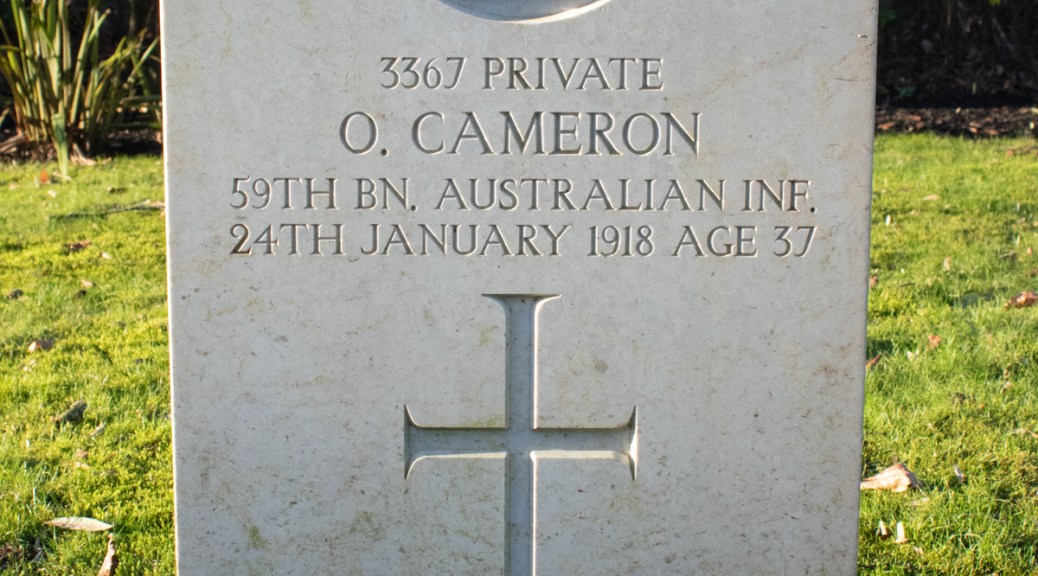
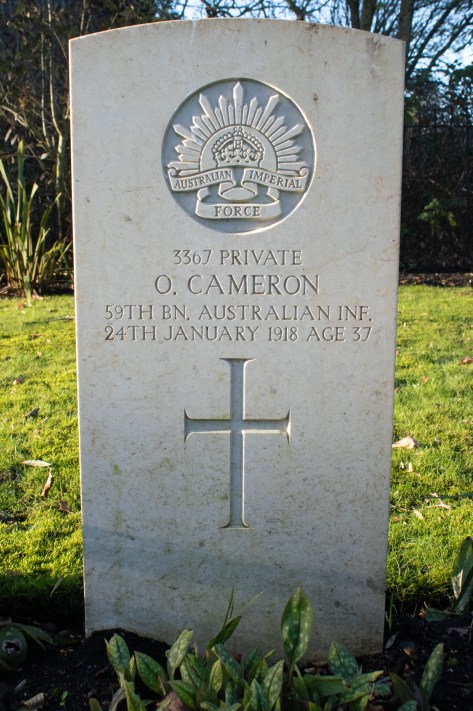
Assigned to the 59th Battalion of the Australian Infantry, Private Cameron’s unit left from Sydney on board the HMAT A16. The two-month voyage was not uneventful: Oscar spent three days in hospital with an undeclared ailment, and also forfeited two days’ pay for being absent without leave for 34hrs during the ship’s layover in Cape Town, South Africa.
The 59th Battalion disembarked in Liverpool, Lancashire, on 16th September 1917. From there it made the journey to the ANZAC camps in Wiltshire, and this is where Oscar would have continued his training.
At the start of 1918, Private Cameron’s health was suffering again. He was admitted to the No. 3 New Zealand General Hospital in Codford, Wiltshire, suffering from nephritis. Ultimately, the condition was to prove fatal: Oscar passed away at 4:45pm on 24th January 1918, aged 40.
Thousands of miles from home, it wasn’t possible for the remains of Oscar Cameron to be taken back to Canada. Instead, he was laid to rest in the ANZAC extension to St Mary’s Churchyard in Codford, not far from the base where he had received treatment.
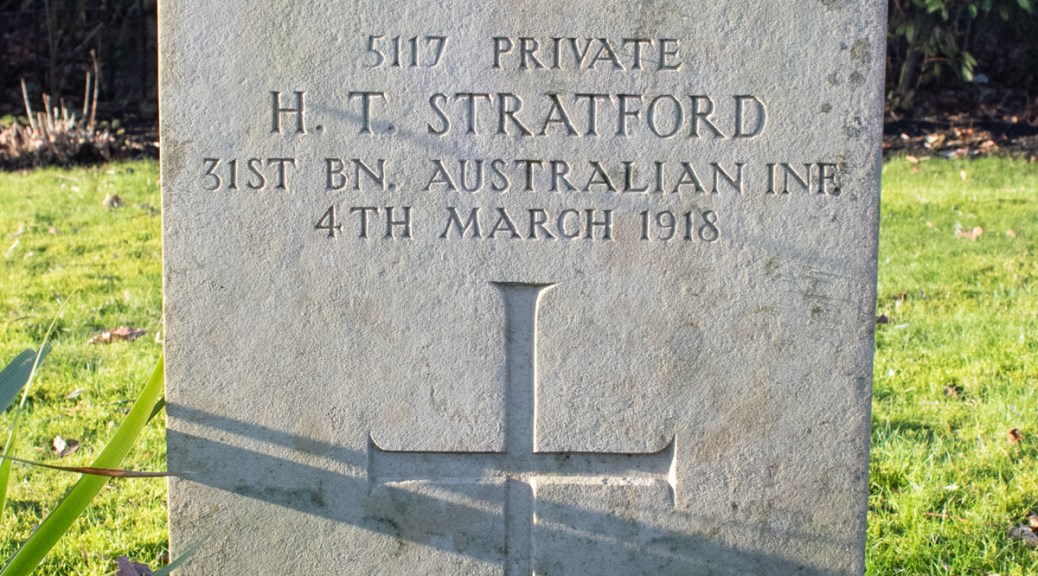
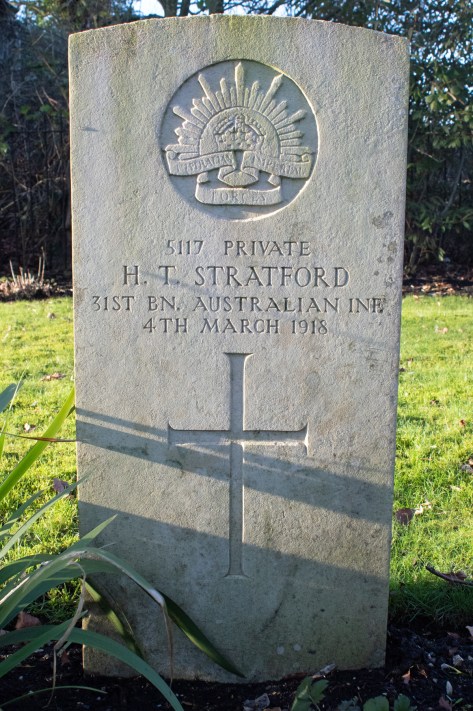
Henry Thomas Stratford was born in Southampton, Hampshire, in the autumn of 1870. The youngest of three children, his parents were John and Maria Stratford. When Henry’s father died in 1876, Maria re-married, and went on to have a further child with her new husband, James Simmons.
Maria’s husbands worked away, and likely served on ships: John was absent from the 1871 census, while James was missing from the 1881 return.
By the 1901 census, Maria had been widowed a second time. She was living at 29 Dock Street with her three youngest children – Henry, his older brother John, and his younger half-brother William. By this point, John was employed as a waterman on a barge, while Henry had also taken to the water, and was employed as a seaman.
Maria passed away in 1904, and there is little further information about Henry’s earlier life. His later army records suggest that he served in the Royal Navy for 14 years, although there are no records for his service at that time.
At some point, presumably after his time in the navy had expired, Henry emigrated to Australia. Again, details are scarce, but he was definitely there by the spring of 1917, having settled in Brisbane, and taken up work as a sailmaker.
When war broke out in Europe, Henry stepped up to serve his country, enlisting in the Australian Imperial Force on 3rd Mary 1917. His records confirm that he was 5ft 4ins (1.62m) tall, and weighed in a 152lbs (69kg). With light brown hair and blue eyes, he had a fair complexion and tattoos on both of his forearms.
Assigned to the 31st Battalion of the Australian Infantry, Private Stratford set sail from Sydney on 14th June 1917. After a ten week voyage, he was marched in to Hurdcott Camp near Fovant, Wiltshire, and would remain in the ANZAC base for his training.
On 23rd February, Henry was admitted to the No. 3 New Zealand General Hospital in Codford, Wiltshire, having fallen from a train. He remained in hospital for the next week, but his head injuries would ultimately prove fatal.
An inquest was held at the New Zealand Military Hospital on Wednesday concerning the death of Henry Thomas Stratford…
Mr FAP Sylvester (coroner) conducted the inquiry, and the evidence went to show that on the night of February 23rd last the deceased man met with an accident by trying to leave a train while it was in motion, before reaching Codford GWR Station. He was picked up in an unconscious state and conveyed to the Military Hospital where he died on Monday.
Corporal John Brooks, ASC Cyclist Section, of Codford, stated that he proceeded from Warminster on the 9:45pm train to Codford on February 23rd. He was in the company of Gunner E Ford, RFA, of Boyton, and they were in the came corridor carriage as the deceased man. After leaving Warminster deceased walked down the corridor, and some time later witness found that deceased had opened the carriage door and was sitting with his feet hanging outside, apparently trying to alight from the train. Just after passing Upton Lovel [sic] crossing, he suddenly disappeared, and witness just saw him fall off the footboard. Deceased never spoke or shouted, and when the train pulled up at Codford, witness reported the matter to the military police and stationmaster, and accompanied them to the spot where deceased was found lying face downwards, his head against the main line rail. First aid was rendered and he was moved to the military hospital.
Private Claude E Thompson, Australian military police, stated that deceased had a road pass, but he had no right to travel by train. He had probably endeavoured to leave the train before it reached Codford to evade the military police.
The jury returned a verdict that deceased came to his death by trying to alight from the train and that he accidentally fell and sustained a compound fracture of the skull.
[Warminster & Westbury Journal – Friday 08 March 1918]
Henry Thomas Stratford was 47 years of age when he passed away. His body was laid to rest in the ANZAC extension to St Mary’s Churchyard in Codford, Wiltshire, close to the hospital in which he had breathed his last.
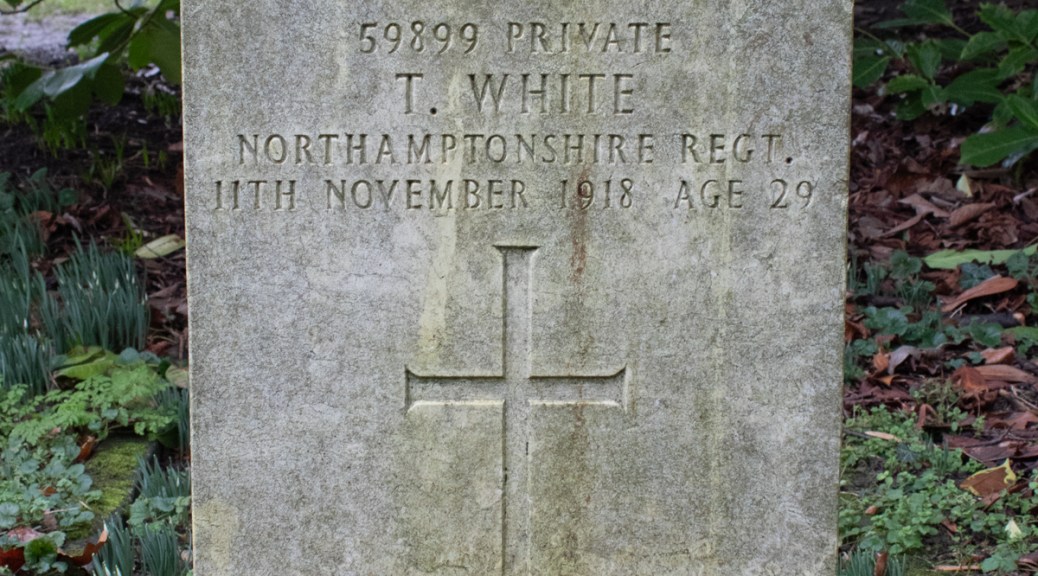
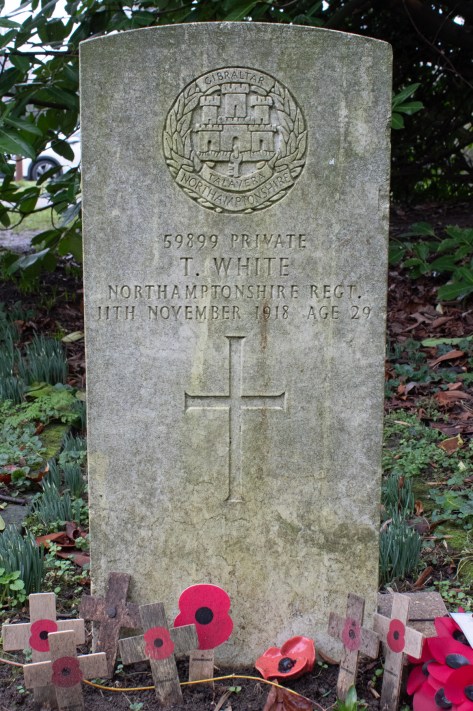
Thomas White was born on 17th October 1889, and was the fourth of nine children to William and Minnie White. William was an agricultural labourer for Hartwell, Northamptonshire, but the family were raised in the village of Hardingstone, to the south of Northampton.
When they finished their schooling, Thomas’ older siblings also found work on local farms, and Thomas was to do the same. By the time of the 1911 census, the white family had moved to Wootton, and were living in a four-roomed cottage on the village’s high street.
On 25th July 1914, Thomas married Nellie Westbury. The daughter of a groom from Wootton, she was employed as a cook at The Hermitage in the village when they couple exchanged vows. They would go on to have a daughter, Phyllis, the following year.
Details of Thomas’ military service are a challenge to pull together. His entry on the Army Register of Soldiers’ Effects confirm that he enlisted on 20th July 1918, joining the 3rd Battalion of the Northamptonshire Regiment. This was a training and depot unit, and, by the time Private White signed up, they were based in Sheerness on the Isle of Sheppey, Kent.
Thomas’ time in Kent was to be brief. While training, he came down with a combination of influenza and pneumonia, conditions to which he would succumb. Private White passed away on 11th November 1918, the day that Armistice was signed: he was 29 years of age.
The body of Thomas White was taken back to Northamptonshire for burial. He was laid to rest in the peaceful surroundings of St George’s Churchyard in Wootton.
Nellie went on to make a life for herself and her daughter. The 1921 census found them living at 28 Alton Street, Far Cotton, Hardingstone, Nellie working as an office cleaner for the Midland Railway.
The early life of Herbert Frederick Barber is a challenge to unpick. His navy service papers confirm that he was born on 12th December 1877 in Great Billing, Northamptonshire. His is not an uncommon name for the area, and Herbert Barbers appear on a number of census records. His parents are likely to have been shoe maker Frederick Barber and his wife, Jane.
In the summer of 1898, Herbert married Agnes Wood. He had found work as a bricklayer’s labourer by this point, and had set up home in Weston Favell, to the east of Northampton town centre. Agnes was a farm labourer’s daughter from nearby Great Billing: the couple went on to have six children – of whom four survived infancy.
The 1911 census found the Barber family – Herbert, Agnes and children Edith, Lilian, Fred and James – living in a five-roomed house in Weston Favell. Herbert was still labouring, but gave his employer as the navy.
When war broke out, Herbert stepped up to serve his country. He enlisted on 22nd September 1915, and his service records give his occupation as a gas stoker (although this was crossed out and replaced with “feller’s mate”). He was recorded as being 5ft 8.5ins (1.74m) tall, with grey hair, blue eyes and a fair complexion.
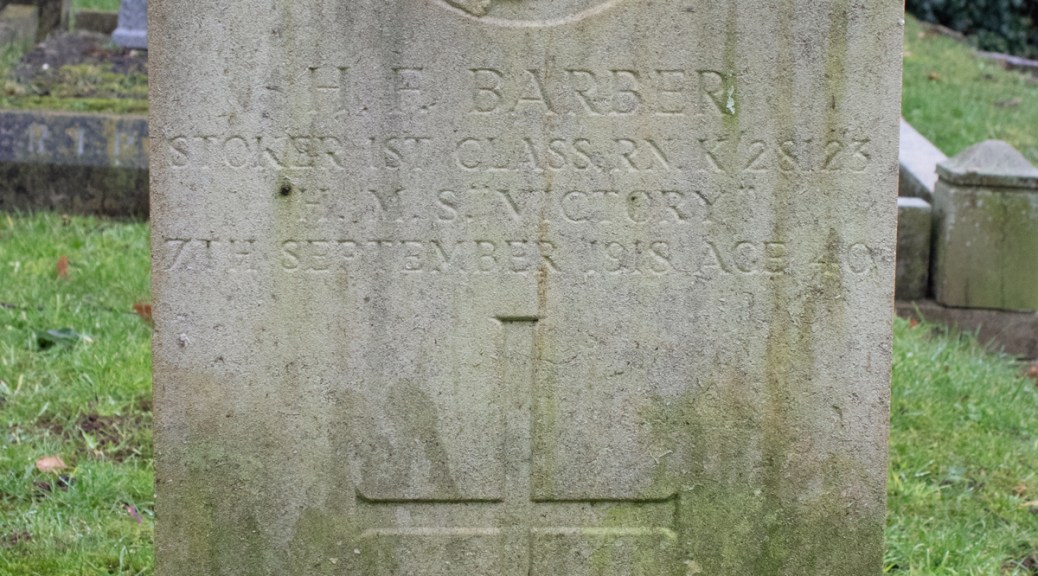
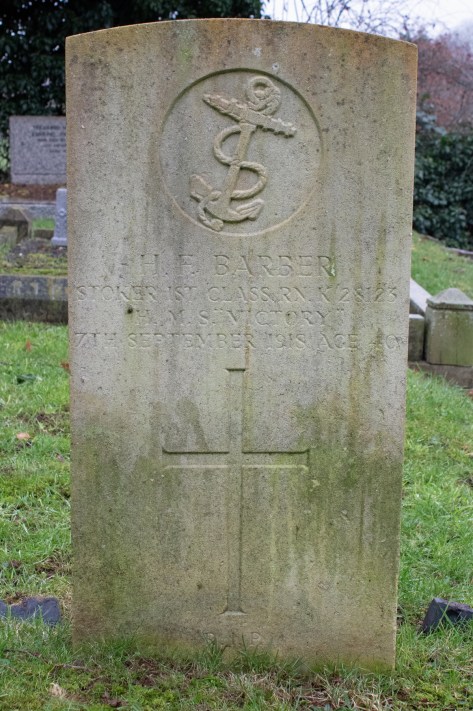
Herbert took on the role of Stoker 1st Class, and was sent to HMS Victory – the Royal Naval Dockyard in Portsmouth, Hampshire – for his training. He remained there for six months – including ten days in the cells for an unrecorded offence – before being sent down the coast to Dartmouth in Devon.
Stoker Barber remained on-shore for his naval career. By July 1917 he had returned to Portsmouth, and this is where he would stay for the next fourteen months. In the summer of 1918 he fell ill, and was admitted to the Royal Naval Hospital in Haslar with pneumonia. The condition would prove his undoing: he passed away on 7th September, at the age of 40 years old.
Barber, Pte. [sic] HF, husband of Mrs Barber of Weston Favell, and son of Mr and Mrs F Barber, Great Billing, died of pneumonia on September 7, after four days’ illness at RN Hospital, Haslar.
[Northampton Mercury – Friday 20 September 1918]
The body of Herbert Frederick Barber was taken back to Northamptonshire for burial. He was laid to rest in the Great Billing Roman Catholic Cemetery.
Agnes was left to raise her children alone. The 1939 England and Wales Register found her living at 10 High Street, Weston Favell, next door to her son Fred and his family. Working as a small shop keeper, she also had two boarders to bring in some additional money.
Agnes lived on until the age of 98: she died on 27th February 1975.
Walter James Ricketts was born in the summer of 1893, the fifth of ten children to James and Elizabeth (and, tragically, the first to survive childhood). James was a farm labourer from the Herefordshire village of Dilwyn, and this is where the family were born and raised.
When he completed his schooling, Walter found work as a groom. The 1911 census recorded him as living at the Moorhampton Hotel, seven miles (11km) to the south west of his home. His employer, Edith Pearman, is recorded as a hotel keeper and farrier, and he was one of two live-in staff.
Walter married Lucy Godwin in the spring of 1918. The oldest daughter of a clerk, she had been born in Lugwardine, near Hereford. By the time the couple married, Walter had enlisted in the army, and was serving in the Royal Field Artillery.
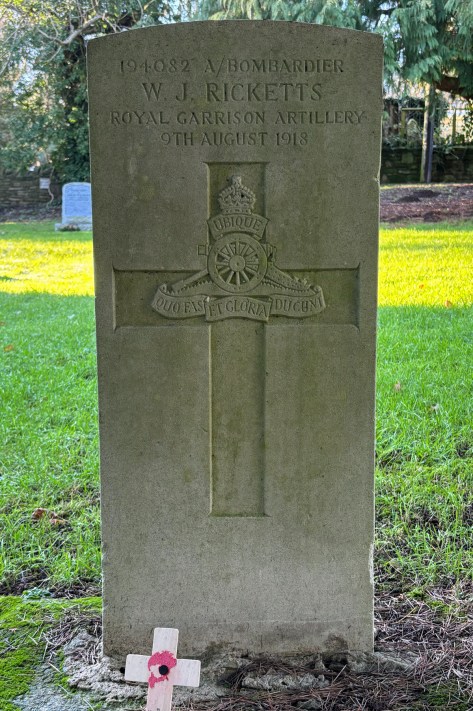
Full details of Gunner Ricketts’ service have been lost, but it is clear that he made the move to the Royal Garrison Artillery at some point. By the summer of 1918, the newly promoted Acting Bombardier was attached to the 57th Company, and based at a gun station in Dulwich, Surrey.
The only other record for Walter is his Pension Ledger card. This confirms that he died on 9th August 1918, following accidental contact with an electric current. There is no further information about the incident, but he was 25 years of age when he died.
The body of Walter James Ricketts was taken back to Herefordshire for burial. He was laid to rest in the tranquil setting of St Mary’s Churchyard in his home village, Dilwyn.
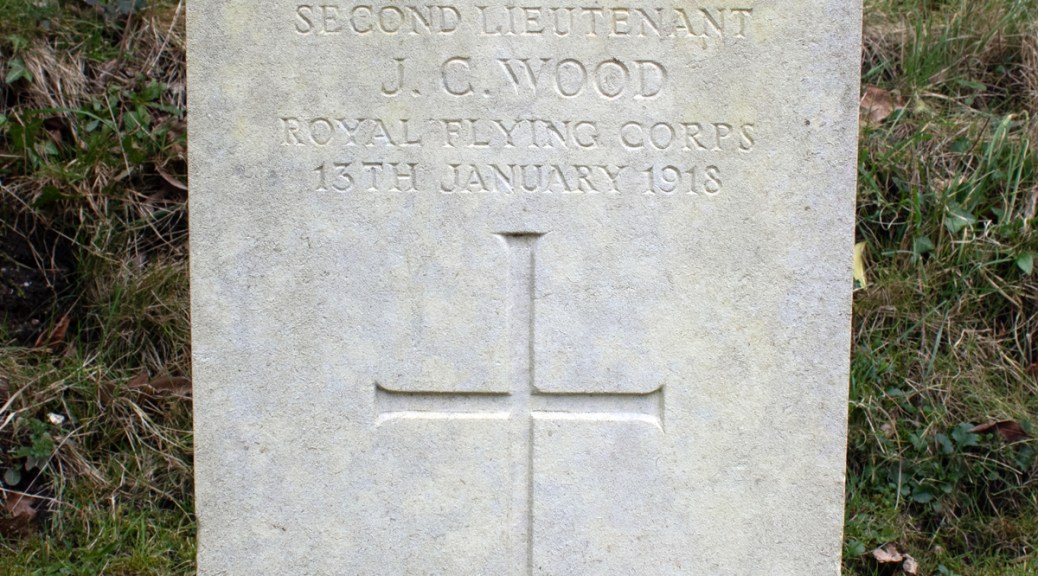
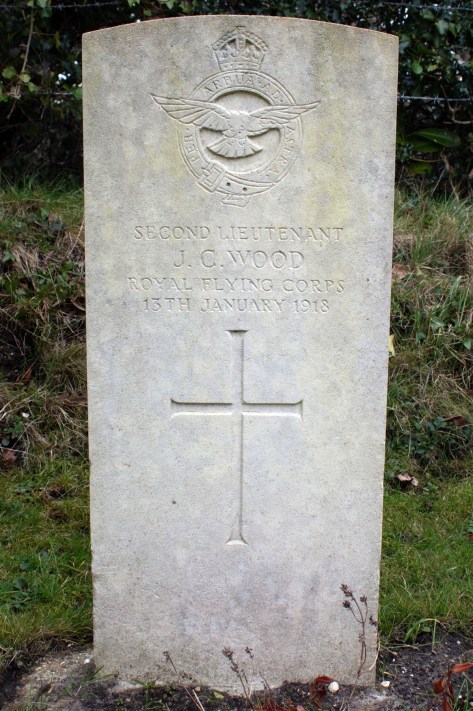
Joseph Clark Wood was born in Horning Mills, Ontario, Canada, on 26th October 1897. The second of six children, his parents were farmers Richard and Bella Wood.
Details of Joseph’s early life are sketchy, and the information that is available contradictory.
By the end of 1917, however, Joseph had stepped up to serve his King and Empire, and had joined the Royal Flying Corps. His service papers no longer exist, so it is not clear how and when he joined, or came over to Britain. As the new year took over the old, Second Lieutenant Wood was attached to the No. 1 Training Squadron, and based in East Boldre, Hampshire.
A newspaper report outlined what became of him:
The Hampshire County Coroner… held an inquest on Monday into the circumstances attending the death of Second-Lieutenant Joseph Clark Wood… which occurred as the result of a flying accident on the previous day.
Lieut. Alexander Gibson Gilroy, RFC, who gave evidence of identification, said that the deceased was a pilot under advanced instruction, quite capable of flying alone.
AM Cecil Bryant spoke to testing the machine just before deceased flew and finding everything in order, Rigger Mechanic Henry Williams, giving similar evidence.
Second-Lieutenant Oswald George Brittorous RFC, told how he was just getting out of another machine when he heard a crash in the air, and looking up saw a machine without wings, the latter having evidently folded back. It hung for a few seconds and then went into a spinning nose-dive. The machine seemed between 1,500 and 2,000 feet up , and it crashed to hearth half a mile away from where witness was. Witness went to the scene after deceased had been removed, and found the machine practically matchwood. The crash he heard in the air was caused by the wings folding back and breaking. There was no collision.
Capt. William Ramsay Nasmyth, RAMC, spoke to the removal of the body. Death was instantaneous and was caused by severe injuries to the head.
The jury returned a verdict of accidental death.
[Hampshire Advertiser: Saturday 19th January 1918]
Second Lieutenant Joseph Clark Wood was just 20 years of age when he died on 13th January 1918. He was laid to rest in the graveyard of St Paul’s Church in East Boldre, Hampshire, not far from the airfield at which he had been based.
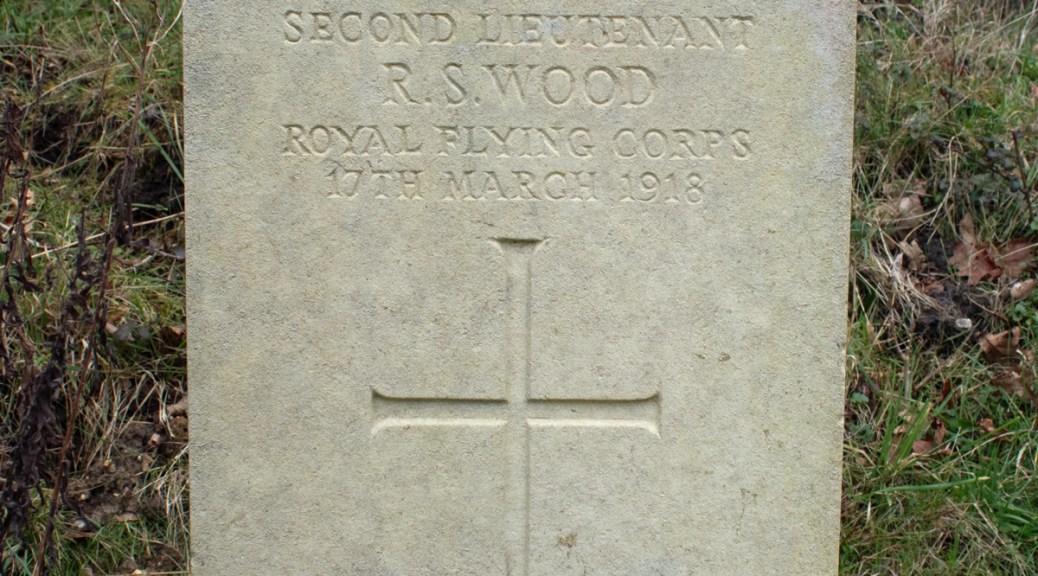
Richard Shaw Wood was born in London, Ontario, Canada, in 1891. The middle of three children his parents were Bermudan Benjamin Wood and his Canadian wife, Mary. Benjamin was a farmer, but his son would seek out bigger and better things for himself.
On 12th November 1913, he married Alice Duggan. There is little specific information about her early life, but she had been born and raised in Toronto. They wend to to have a son, Richard Jr, the following year.
With war raging across Europe, Richard felt compelled to play his part. He gave up his job as a car salesman and, on 30th July 1917, he enlisted in the Canadian Royal Flying Corps. As an Air Mechanic 3rd Class, he was soon sent to Britain, but took a commission in the Royal Flying Corps in December of that year.
The now Second Lieutenant Wood was attached to No. 1 Training Squadron and was based in East Boldre, Hampshire. On 17th March 1918, after just a few months in the unit, he was flying a Sopwith Camel from the Hampshire airfield, when disaster struck. His aircraft nosedived and crashed to the ground. A subsequent inquest concluded that: ‘the smash was caused by the Pilot losing control of the machine… 2nd Lt R Shaw Wood was a steady [skilful] and reliable pilot. He had performed the manoeuvre… on previous occasions. The Court are of opinion that the Pilot [must have] fainted thus losing control.’
Richard Shaw Wood was 27 years of age when he died on 17th March 1918. He was laid to rest in the tranquil graveyard of St Paul’s Church, East Boldre, not far from the airfield that hat become his home.
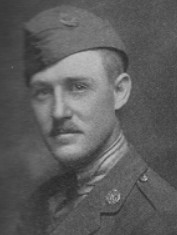
Second Lieutenant Richard Wood (from findagrave.com)
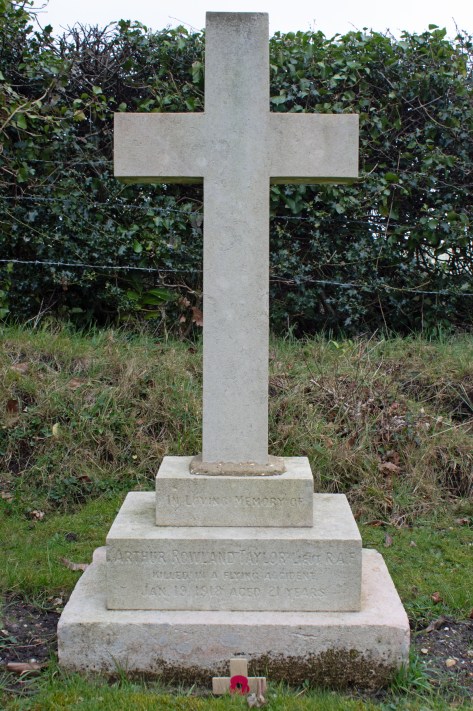
Arthur Rowland Taylor was born on 21st March 1896 in Ilford, Essex. He was the third of five children – all of them boys – to land agent Robert Taylor and his wife, Edith. Robert’s work took the family around the country: the 1901 census found them living in Connah Quay, Flintshire, and this is where Arthur’s two younger brothers were born.
By 1911, the family had moved again, to the 15-roomed Bagle Gate House in Bridlington, Yorkshire. Robert and Edith were living with their three youngest children – including Arthur – and two servants: cook Sarah Leatham and housemaid Lucy Patchett.
At some point after leaving school, Arthur was also drawn to a new adventure. By the time war broke out, he had moved to America and settled in Denver, Colorado.
In June 1917, with war raging across Europe, Arthur had stepped up to play his part. He crossed the border to Toronto, Canada, and enlisted in as an Air Mechanic 3rd Class in the Canadian Royal Flying Corps. Sent to Britain, just three months later, he accepted a commission, taking the rank of Second Lieutenant in the British Royal Flying Corps.
Arthur was based in East Boldre, Hampshire, and was attached to the 79th Training Squadron. On 19th January 1918, he had taken off in his Sopwith 5F1 Dolphin, when the engine stalled. He did not have enough height to try and restart the engine, and the aircraft crashed to the ground, bursting into flames on impact. Second Lieutenant Taylor was killed: he was 21 years of age.
The body of Arthur Rowland Taylor was laid to rest in the peaceful graveyard of St Paul’s Church in East Boldre, not far from the base at which he had served.
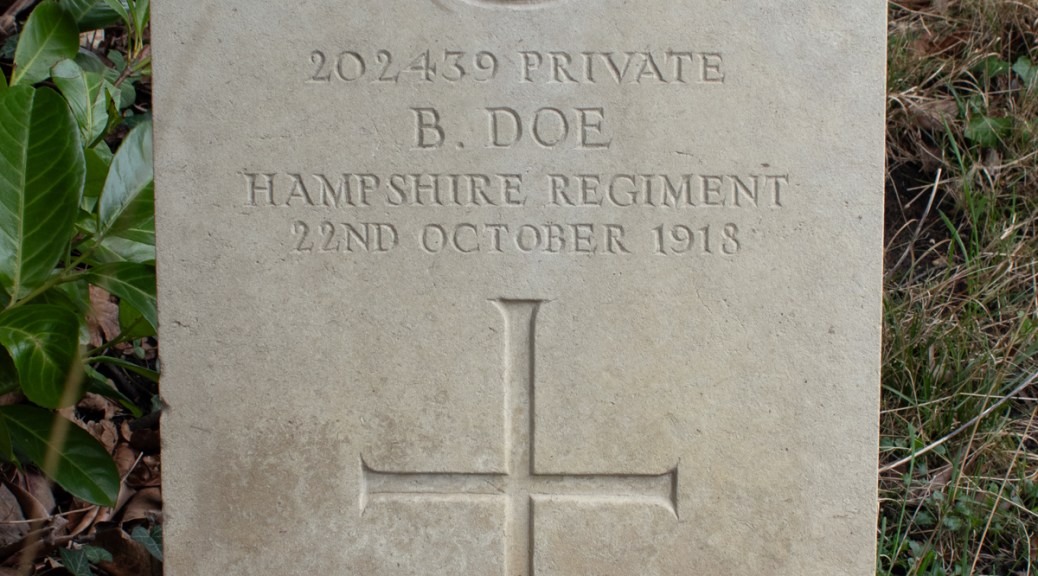
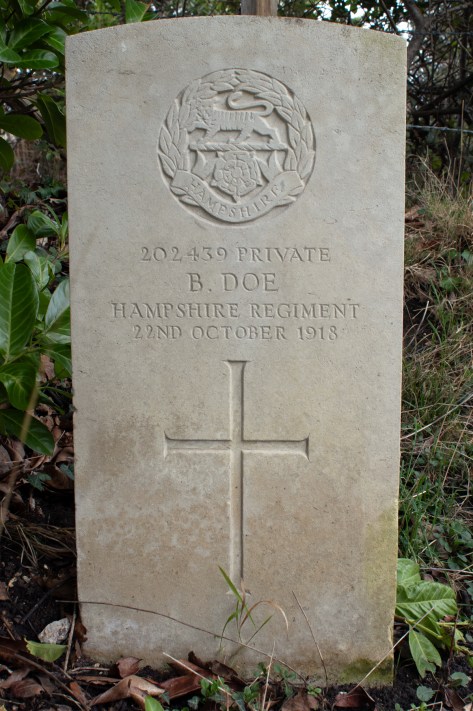
Bert Doe was born in Woking, Surrey, in 1881. One of twelve children, his parents were France and Louisa Doe. Francis – who went by his middle name, John – was a general labour and, over the years, his work took the family across the south of England. The 1891 census found the Does living in the village of Sopley, Hampshire, and this is where they seemed to settle.
There are large gaps in Bert’s early life, On 19th April 1916, he married Ellen Lackey. She was a broom maker’s daughter from Lyndhurst, Hampshire, and the couple had a son, Francis, who had been born a few weeks before they exchanged vows.
By the summer of 1918, Bert had enlisted in the army. He was attached to the Hampshire Regiment, but at some point had transferred over to the 441st Agricultural Company of the Labour Corps. Moves of this nature were often a way to rehabilitate injured or sick servicemen, and it is apparent that Private Doe fell into the latter category.
In October 1918, Bert had fallen ill with a combination of influenza and pneumonia. He was admitted to the Union Infirmary in Winchester, Hampshire, but the conditions were to prove too severe. He died on 22nd October 1918, at the age of 37 years old.
It would seem that Ellen was living in the East Boldre area of the New Forest by this point, and it was in the village’s St Paul’s Churchyard that her husband was laid to rest.
With a young son to raise, Ellen moved back in with her parents, Silas and Anna Lackey. The 1921 census found them living in Warsash Road, Sarisbury, Hampshire. Silas was employed as a labourer, while two of Ellen’s brothers were working as hawkers. Shockingly to today’s mindset, the census document records the family as ‘gipsies’.



 Death and Service