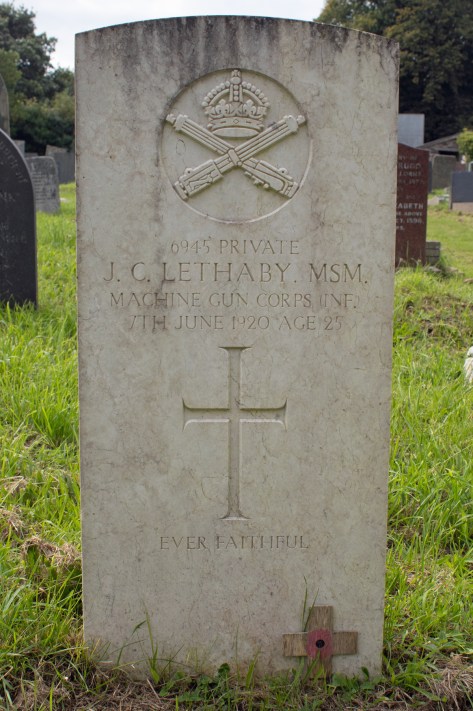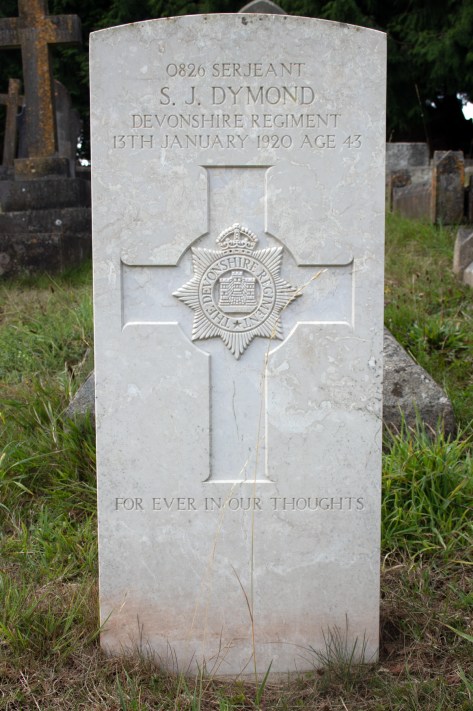
Tag Archives: 1920

Captain Robert Graves

Captain Robert Graves

Robert Kennedy Grogan Graves was born on 1st January 1878. An announcement in the local newspaper confirmed that “at Baronne Court, County Tipperary, the wife of Lieutenant-Colonel W. Grogan Graves, 82nd Regiment, of a son (prematurely).” Robert was the older of two children, while his parents were William Graves, a Justice of the Peace in Ireland, and his wife, Georgianna Graves.

William died in 1890, and Georgianna moved the family to London. The 1891 census found her residing at the Golden Hotel in St Martin in the Fields, while her two boys, Robert and his younger brother, Geoffrey, were boarding students at Francis Napier’s classics school on Shooter’s Hill Road in Kidbrooke, Kent.

Robert found his calling through education. He studied medicine, and by January 1896 he was a student at St George’s Hospital in Tooting, Surrey.

By 1906 Robert had set himself up in an infirmary on Southgate Street in Gloucester, Gloucestershire. That same year, he married Kathleen Schofield: the couple went on to have two children, Robert Jr in 1912, and Bernard the following year.

Graves, Robt. Kennedy Grogan, Scison Lodge, Clevedon, Somerset (Tel. 11 Y Clevedon) – MRCS, LRCP London 1904; (St Geo.); Hon, Med, Off. Clevedon Cott. Hosp.; Med. Off Mutual Insur. N.Y. & Clevedon Hydro. Estab.; late Sen. Ho. Surg. & Asst. Ho. Surg., & Surg. Gloucester Co. Infirm., & Asst. Med. Regist. & Obst. Clerk St Geo. Hosp.

[The Medical Directory, 1910]

Robert had set himself up well during his life. The 1911 census found him and Kathleen – who was better known by her middle name, Gladys – living in their 17-room house on Linden Road in Clevedon. They afforded themselves three servants, including a housemaid, a cook and a motor driver. By the outbreak of war, Robert has an entry in the town’s Kelly’s Directory, and seemed to be a focal member of the community, joining the local Grand Lodge in September 1908.

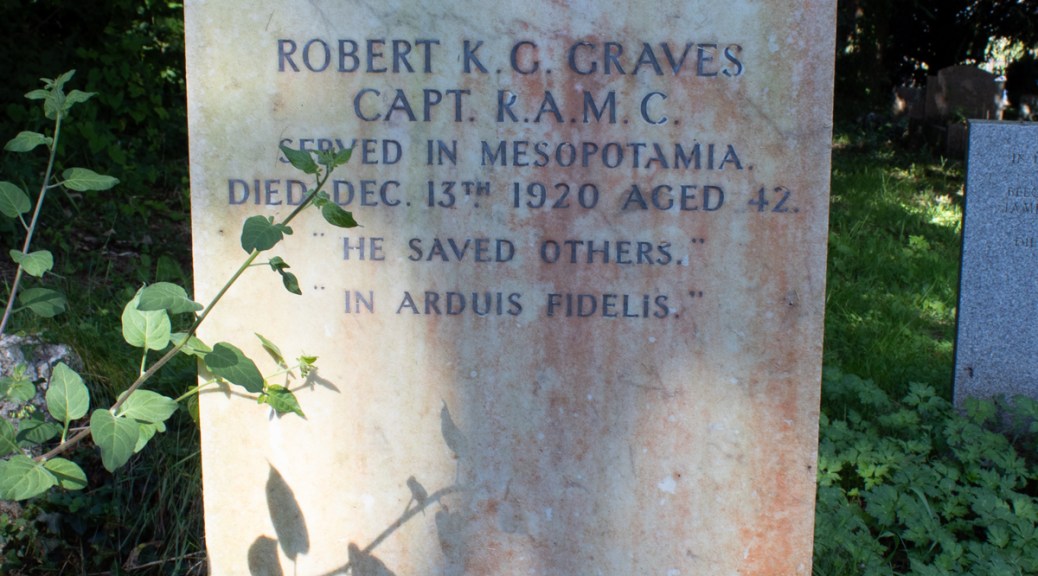
Robert’s time in the army, is hard to piece together. He joined the Royal Army Medical Corps as a Captain, and appears to have been connected to the air force. His headstone suggests that he served in Mesopotamia, but when and exactly where, however, is lost to time.

After the war, Robert returned to Britain. Leaving the Somerset coast, however, he and Kathleen appear to have set themselves up in Dorset. He died, through causes not detailed, on 12th December 1920, at 42 years of age. His entry on the probate register states:

GRAVES Robert Kennedy Grogan of 1 Charnwood Chambers Seabourne-road West Southbourne Hampshire died 12 December 1920 at The Grange Buckfastleigh Devonshire…

It is unclear whether Charnwood Chambers was his working address, with The Grange being the family’s official home, or if Buckfastleigh served as a place of convalescence.

Robert Kennedy Grogan Graves left an estate totalling £370 14s 7d (approximately £21,100 today) to Kathleen. He was buried in the graveyard of Holy Trinity church, Buckfastleigh.


Air Mechanic 2nd Class Alfred Hale

Air Mechanic 2nd Class Alfred Hale

Alfred George Hale was born in Lechlade, Gloucestershire, in the spring of 1891. The youngest of four children his parents were George and Martha. George died when Alfred was just a babe-in-arms, and by the time of that year’s census, Martha was looking after her children alone.

The next census, taken in the spring of 1901, found Martha and the family living in a house on Oak Street in Lechlade. She was taking in laundry to earn a little money, while Alfred’s older brothers, George Jr and James, were employed as house boys. This meant there were three wages coming into the Hale household, but it would still have been a daily struggle for the family.

Tragedy stuck again in 1904 when James also died. Details are unclear, but it seems that he passed away in Headington, Oxfordshire, and was laid to rest in his home town. He was just 16 years of age.

By the time of the 1911 census, Alfred was the only one of Martha’s children to still be living at home. Home was the same four-roomed house on Oak Street, Lechlade. Martha was not noted as having any employment, but her son was working as a journeyman tailor.

On 10th November 1916, Alfred married Elizabeth Smith in Highworth, Wiltshire. There is tantalisingly little information about her, although it seems likely that they met during his travels with work. The couple would go on to have a child, daughter Sylvia, the following October.

1917 proved a year of upheaval for the Hale family. Six months before Sylvia’s birth, Alfred’s sister, Martha Jr, passed away. She had been a patient in the Berrywood Asylum in Northamptonshire, for a while: although the exact dates are unclear, she is recorded as a visitor to the Green family in Reading, Berkshire, in 1911, so her admission would have been after this.

Alfred had enlisted in the Royal Flying Corps by this point. It is likely that his tailoring skills were employed by the service – whose aircraft used canvas in their make-up – , and he was given the rank of Air Mechanic 2nd Class. His service records show that, when he joined up on 28th February 1917, he was 5ft 5.5ins (1.66m) tall.

Air Mechanic Hale transferred to the Royal Air Force on its foundation in April 1918, and within a matter of weeks, he found himself overseas. He remained in France until the end of the year, and was admitted to hospital on 22nd December as a result of an unconfirmed illness. His condition warranted transfer to Britain on 2nd January 1919, and was severe enough for him to be officially discharged from duty on 12th April 1919.

The funeral took place at Locksbrook Cemetery on Wednesday of ex-Private George Hale, formally 2nd Air Mechanic, RAF, who resided at 7 Kensington Gardens, Walcot [Somerset]. Deceased, after serving three years with the Colours, was demobilised in April, 1919, but still suffered from illness, due to active service. His condition grew worse, and he was received at the Pensions Hospital, Combe Park, two days before his death… He was a native of Lechlade, Gloucestershire, but had lived in Bath for about three months.

[Bath Chronicle and Weekly Gazette: Saturday 24th January 1920]

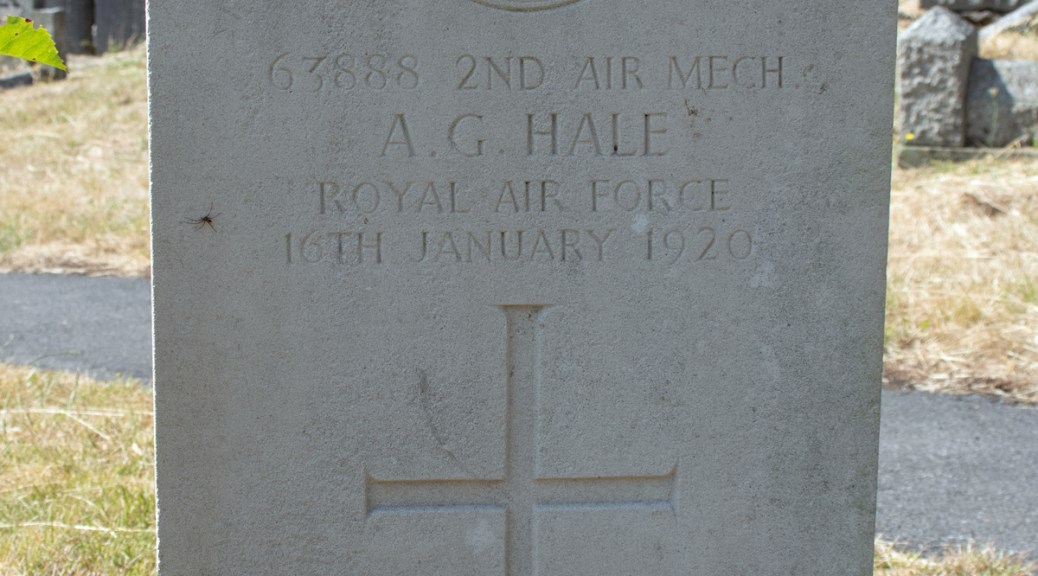
Alfred George Hale was 29 years of age when he died on 16th January 1920. He was laid to rest in the military section of Bath’s sweeping Locksbrook Cemetery. His widow, Elizabeth, and his mother, Martha – who had now outlived her husband and three of her four children – attended the funeral.


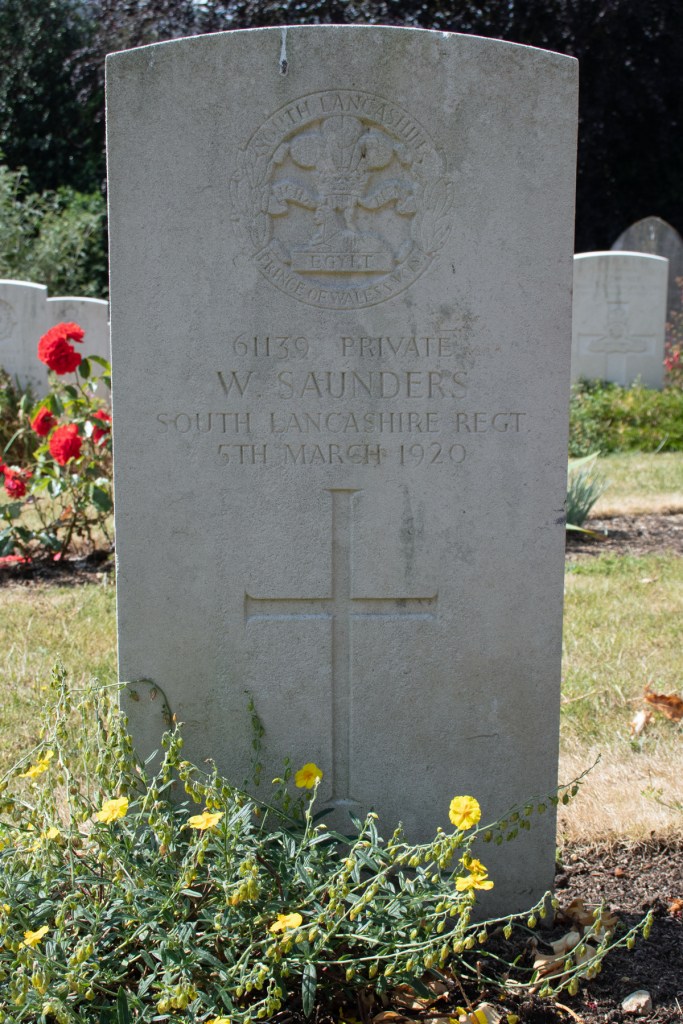
Private Walter Saunders

Private Walter Saunders

There is little concrete information about the life of Walter Saunders, and what details are available come from his limited military documents. These confirm that he was born in December 1862 in Widcombe, near Bath, Somerset.

Walter was unemployed labourer when enlisted in the army in January 1882. He joined the Somerset Light Infantry, and was attached to the 4th Battalion. His service records show that he was just under 5ft 5ins (1.64m) tall, with brown hair, hazel eyes and a fresh complexion. He was also notes as having a scar on his abdomen.

Private Saunders seems to have served in southern Asia, receiving the India medal and Burma 1885-1887 clasp. He then moved to South Africa, and was caught up in the Second Boer War. There is no further information about his initial time in the army.

When his contract came to an end, it would seem that Walter returned to the UK, finding work as a dock labourer in South Wales. When war came to Europe, though, he stepped up once more so serve his country, this time joining the South Lancashire Regiment. He was assigned to the 15th (Transport Workers’) Battalion, which served in the Mersey dockyards.

The next record for Private Saunders comes from June 1917, when he was sent to a medical board. He had been unwell for a while, it seems, and was suffering from arteriosclerosis, or hardened arteries. The medical report confirmed this was a permanent condition, and that he was no longer fit for military service.

At this point, Walter’s trail goes cold. It seems likely that he returned to Somerset, possibly still having family connections there. He passed away on 5th March 1920. He was 57 years of age.

Walter Saunders was was laid to rest in the military section of Bath’s sweeping Locksbrook Cemetery.


Private Frederick Bundy

Private Frederick Bundy

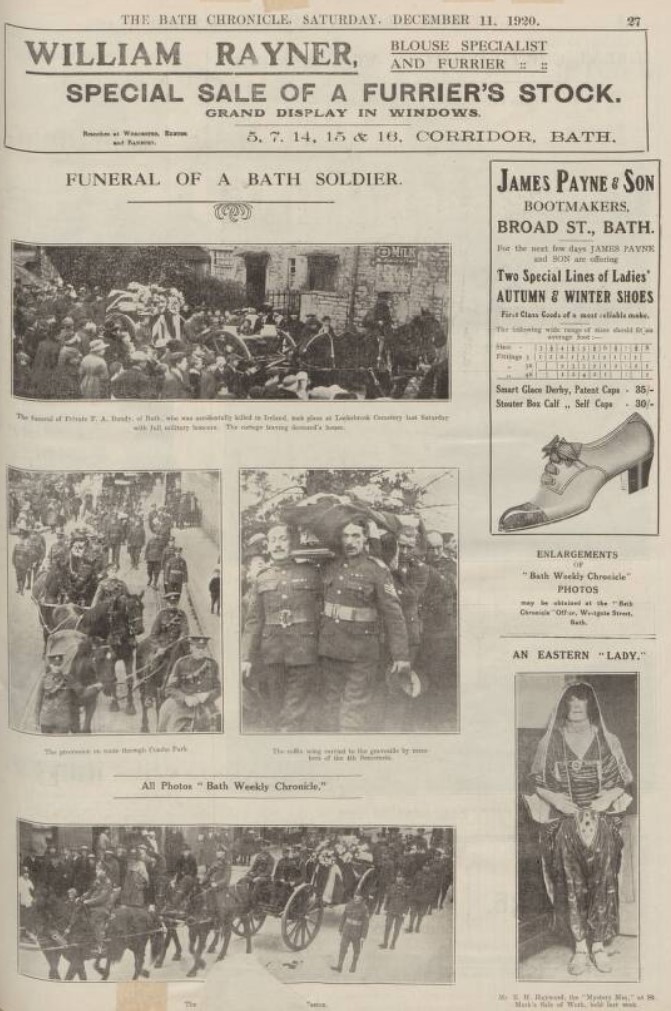
Private Frederick Arthur Bundy, of the 1st Somerset Light Infantry is to be buried in Locksbrook Cemetery tomorrow (Saturday) afternoon with full military honours. He met with a fatal accident in Belfast on Sunday last. In the afternoon when in quarters he was passing from one room to another when a rifle which was bring cleaned by a comrade in the room which he was entering went off. The bullet passed through Private Bundy’s wrist and entered the stomach. He was at once removed to the military hospital, but passed away at midnight, from internal haemorrhage. Deceased, was the son of Mr FA Bundy, of 93 High Street, Upper Weston, and enlisted at the Drill Hall, Bath, in August 1919, when only 15 years of age, being accepted as he was a youth of exceptionally fine stature. At the time of his death he was 16 years and 10 months of age. After a short period of training at Taunton he went with a draft of Somersets to Ireland and was stationed for some time at Carrickfergus Castle, being moved into Belfast when the riots occurred there.

[Bath Chronicle and Weekly Gazette: Saturday 4th December 1920]

Frederick Arthur Bundy was born early in 1904, and was the middle of three children to Frederick and Mary Ann Bundy. Frederick Sr was a labourer from Bath, Somerset, and it was in the Weston area of the city that the family were born and raised.

The 1911 census – the only one Frederick Jr would be recorded on – noted the family as living at 45 High Street, Weston. The household consisted of Frederick Sr, Mary Ann, Frederick Jr, his older sister Sarah, younger brother William and Mary Ann’s daughter from a previous marriage, Annie.

Sadly, due to his young age, there is little additional documentation to build a picture of Frederick Jr’s life. He passed away on 28th November 1920, and was laid to rest in Bath’s Locksbrook Cemetery, not far from the family home.

Frederick Arthur Bundy’s funeral was shown in a photo-spread in the Bath Chronicle of 11th December 1920.


Editor’s Note: While Frederick enlisted nine months after the end of the First World War, his acceptance for a Commonwealth War Grave is because his passing being between the qualifying dates and the cause being as a result of his military service.


Serjeant Edward Davies

Serjeant Edward Davies

Edward Victor Davies was born in the Weston area of Bath, Somerset, in the summer of 1897. The second of four children, and the only boy, his parents were Walter and Emily Davies.

Walter was a park keeper who died when Edward was just 9 years old. By the time of the 1911 census, Emily was working as a caretaker for a solicitor’s office, while her sone was a boarding student at the Duke of York’s School in Guston, Kent. This army school had more than 500 students, with a staff of 100 to train them. It is unclear whether Edward went voluntarily, or whether he was sent there by his mother’s employers because he was fatherless.

War came to Europe in the summer of 1914, and Edward stepped up to play his part. Unfortunately, his service records have been lost to time, so it is unclear whether he went straight into the army after finishing his education. However, given that he held the rank of Serjeant by the end of the conflict, it seems likely that his military career began before the start of the First World War.

Edward – who was better known as Ted – joined the Wiltshire Regiment, and was assigned to the 2nd Battalion. His unit spent time on the Western Front, but there is no evidence whether or not he served overseas. He survived the war, but subsequently fell ill, as so many servicemen did:

DAVIES – March 28th, Sergeant Edward Victor (Ted) Davies, 2nd Wiltshire Regiment, at the Royal Military Hospital, of pneumonia, following influenza, aged 22 years.

[Bath Chronicle and Weekly Gazette – Saturday 03 April 1920]

Edward Victor Davies was laid to rest in the sweeping grounds of Bath’s Locksbrook Cemetery, not far from where he had grown up.


Private Reginald Payne

Private Reginald Payne

Reginald Payne was born on 27th January 1898 in Milverton, Somerset. He was the third of five children – and the oldest son – to Thomas and Mary Payne. Thomas was a dairyman, and both he and Mary were from Devon: the family moved back to the county after Reginald was born, and, by the time of the 1911 census, they had settled in the village of Halberton.

Reginald, at this point, was still in school, and there is little information about his life. When war broke out, he volunteered to serve his country, but, with no military records remaining, the only point of reference for him is a newspaper report of his funeral.

Quite a gloom was cast over Halberton when it became known that Pte. Reginald Payne, eldest son of Mr & Mrs T Payne, of Brimery Dairy, had passed away at the Military Hospital, Devonport. Deceased, who enlisted in 1916 in the Hussars, and was attached to the 1st City of London Yeomanry, proceeded to Egypt, and whilst there he underwent two operations for appendicitis. He returned to England after recovering, and was sent to Ireland, where he had a return of the old trouble, and was again operated on four times, and then sent to Devonport, where he passed away.

[Western Times: Friday 6th February 1920]

Reginald Payne was a day over 22 years of age when he passed away. He was taken back to Halberton for burial, and was laid to rest in the peaceful St Andrew’s Churchyard.


Captain George Lee

Captain George Lee

Anyone who attended the funeral of Captain George Lee, IMT (late Rifle Brigade), held in the churchyard of his old home, Yetminster, on Wednesday could not but have been impressed by the wonderful sense of peace and rest that pervaded the place. After a life of unique adventure in Africa, India, America, and Canada his worn and suffering body was laid to rest beside his beloved father. The solemn service was taken by his uncle, Red. EHH Lee (vicar of Whitchurch Canonicorum) and his cousin, Rev. E Hertslet (vicar of Ramsgate), and Rev. MJ Morgan (vicar of Yetminster), there being also present his old schoolfellow, Rev. J Lynes, and Rev. Hall, curate of Yetminster. Besides the chief mourners Captain Lee’s mother, sister and brother-in-law, there were many friends present and numerous villagers who had known him from boyhood. The coffin was attended throughout the service and for many hours before by his most faithful servant and friend, Rajab Ali Khan, who was with his master through India, Persia, Beluchistan, and Afghanistan, and came to England as his personal attendant when Captain Lee was sent home on sick leave. After the service in the churchyard Rajab, through the kindness of Mr Hall, who translated for him, was able to tell everybody what his master had been to him.

Dorset County Chronicle: Thursday 9th September 1920

George Johnston Lee was born in the summer of 1886, the second of four children to Reverend Robert Lee and his wife, Elizabeth. Robert was the vicar of St George’s Church in Fordington, Dorset, when George was born, but moved west to Toller Porcoram not long after he was born.

Tantalisingly little information about George’s early life remains. He does not appear on the 1901 or 1911 census records, and it is likely that he was already away travelling the world by this point. It seems clear that he followed a military, rather then a clerical, career and, by the end of the First World War he was serving in the Indian Army Reserve of Officers. Attached to the Rifle Brigade, George had reached the rank of Captain.

George’s father had become ill in the early 1910s, and having moved to St Andrew’s Church in Yetminster, he retired from the post in 1912. He and Elizabeth moved to Dorchester, but when he passed away in 1916, at the age of 59, his last wishes were to be buried in Yetminster, the village having held a special place in his heart.

Captain Lee survived the First World War, but, as the newspaper report suggests, he became unwell. George had contracted amoebic dysentery, and returned to England to recuperate. The condition was to prove too severe, and he passed away in London on 29th August 1920, at the age of 34 years old.

In accordance with the family’s wishes, George Johnston Lee’s body was taken back to Dorset, and he was laid to rest next to his father, in the tranquil St Andrew’s Churchyard, Yetminster.


Private Albert Richomme

Private Albert Richomme

Albert John Richomme was born on 13th June 1885 and was one of eight children to Charles and Marie Richomme. Both were from France, but had moved to Jersey in the Channel Islands before Albert’s oldest sibling, Charles, was born. The couple farmed land near Grouville, the children helping out as they became old enough.

On 28th September 1904, Albert married Linda Rouland at St Thomas’ Roman Catholic Church. The couple set up home in Trinity, and went on to have six children. The 1911 census recorded Albert as being a jobbing gardener, with the family living in the four-roomed Sunny Side Cottage.

When war came to Europe, Albert stepped up to play his part. Initially enlisting in the Royal Jersey Militia, his unit was absorbed into the 7th (Reserve) Battalion of the Royal Irish Rifles. By the end of 1915, he found himself in France.

Full details of Private Richomme’s service are lost to time, but is seems that he was caught up in a gas attack and, after being medically evacuated to Britain to recuperate, he was transferred to the Labour Corps.

At this point, Private Richomme’s trail goes cold. He survived the war and returned home, but passed away from pneumonia on 14th May 1920, just short of his 35th birthday.

Albert John Richomme was laid to rest in the peaceful grounds of La Croix Cemetery in Grouville.


While meeting the appropriate criteria for his burial site to be granted a Commonwealth War Grave, Albert is not recognised by the Commission.


Private Albert Richomme
(from ancestry.co.uk)

Rifleman Joseph Gionta

Rifleman Joseph Gionta

Joseph Marie Louis Gionta was born on 7th January 1897 in St Ouen, Jersey. He was the oldest of three children to Matthieu and Marie Gionta. Marie has been married before, and so her two children – Joseph’s older stepbrothers – made up the household.

Shoemaker Matthieu passed away when Joseph was just a teenager. By the time of the 1911 census, Marie was living in two rooms in St Ouen’s, supported by her five children. She was working as a charwoman, while her two children from her first marriage were farm labourers, bringing in three probably meagre wages to the family home.

When war broke out, Joseph stepped up to play his part. Initially enlisting in the Royal Jersey Militia, his unit was absorbed by the 7th (Service) Battalion of the Royal Irish Rifles shortly after he joined up. Rifleman Gionta’s service records confirm he was 5ft 3.5ins (1.61m) tall, and that he was 19 years old when he enlisted.

Joseph’s battalion served in France from December 1915, and he spent the next ten months overseas. In October 1916, he returned to the UK, and was transferred to the regiment’s 4th (Extra Reserve) Battalion, serving in Ireland.

Towards the end of 1917, Rifleman Gionta became unwell, contracting tuberculosis. This led to his medical discharge from the army on 29th January 1918, and he returned to the Channel Islands. At this point, his trail goes cold, and it is not until the autumn of 1920 that he resurfaces.

Joseph Marie Louis Gionta passed away on 24th September 1920: he was 23 years of age. A cause of death is unclear, although the likelihood is that it was related to the lung condition that he picked up while on active duty. He was laid to rest in the peaceful St Ouen’s Churchyard in Jersey.


Private William Pollard

Private William Pollard

William Pollard was born at the end of 1887, the youngest of seven children to John and Alice Pollard. Agricultural labourer John hailed from Hinton Charterhouse in Somerset, while his wife was from Southampton, Hampshire. The family were living in the village of Buckler’s Hard when William was born, but moved back to Somerset when he was just a toddler.

As with most of his siblings, William followed in his father’s footsteps when he completed his schooling. By the time of the 1911 census, only he and his older brother Thomas we still living in the family home: the two siblings were working as carters, while their father, now 61 years of age, was a general labourer.

Alice died in the summer of 1911, and would net get to see her youngest boy wed. On 11th April 1914, William married Augusta Loveless, a carpenter’s daughter from Bath. The couple were living in 2 Rossini Cottages, on Hedgemead Road, to the north of the city centre, and would go on to have two children, William Jr and Geoffrey.

When war was declared, William was called upon to play his part. He enlisted in the Somerset Light Infantry on 30th November 1915, but soon transferred over to the 5th (Service) Battalion of the Dorsetshire Regiment. Attached to the 673th Labour Company, while his unit served at Gallipoli and in France, there is no evidence that Private Pollard spent any time overseas.

William’s brother Thomas had also been called up. He joined the Somerset Light Infantry, and, as a Private, was attached to the 1st Battalion. His unit fought at the Somme, and Thomas was badly injured. He died of his wounds, and was laid to rest in the Puchevillers British Cemetery. He was 31 years of age.

In fact, William seems to have been dogged by ill health. Full service records have been lost to time, but he was medically discharged from the army on 12th September 1917.

John had died that February, at the age of 68 years old, and was laid to rest next to his wife in St John the Baptist Church, Hinton Charterhouse.

At this point, William’s trail goes cold. He returned to Bath, and spent at least some time in the city’s War Pensions Hospital. His condition warranted an operation, but he died of heart failure following the procedure on 12th December 1920. He was 33 years of age.

William Pollard was laid to rest in Bath’s sweeping Locksbrook Cemetery.