Tag Archives: aneurysm

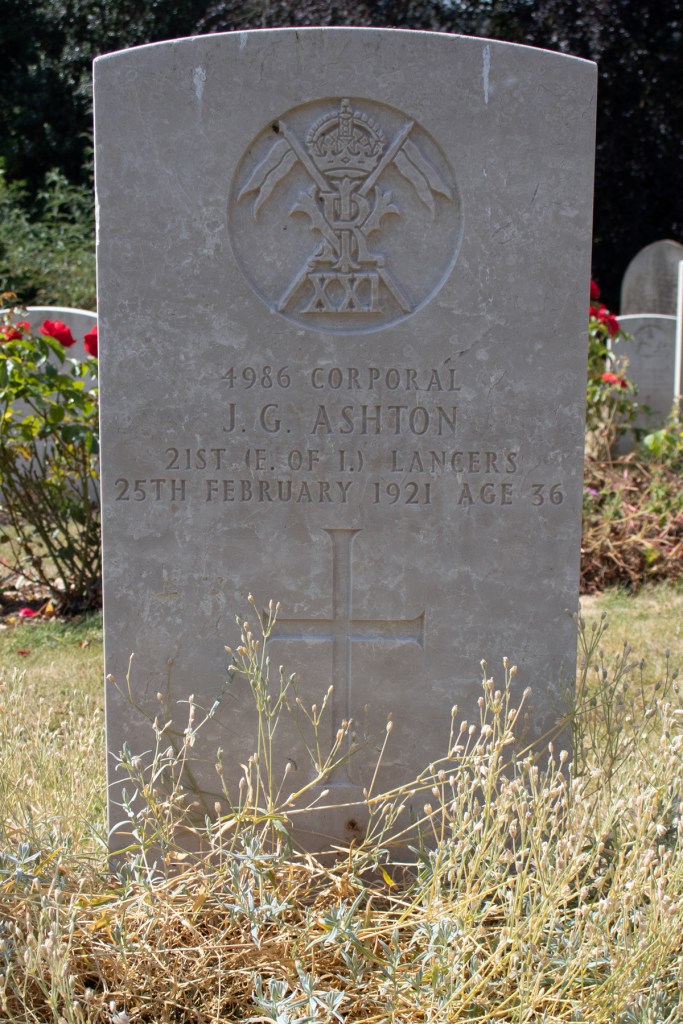
Corporal John Ashton

Corporal John Ashton

John Gordon Ashton was born at the start of 1885, and was one of at least two children to John and Elizabeth. Little information is available about his early life, although later records confirm that he was born in Newcastle-upon-Tyne, and that the family were living on Elswick Road, leading west out of the city, by 1900.

John found work as a musician, but sought a bigger and better career for himself. On 3rd October 1900, he enlisted in the army, joining the 21st (Empress of India’s) Lancers. His service records show that, at not yet sixteen years of age, he was just 5ft 1in (1.55m) tall, and weighed 101lbs (46kg). He had brown hair, grey eyes and a dark complexion, and two moles on the front of his left shoulder.

Private Ashton joined up for a period of 12 years’ service, and spent most of it on home soil. The army seemed to suit him, and he steadily rose through the ranks. By August 1901, John was promoted to Bandsman; five years later, he took the rank of Trumpeter; the start of 1908 brought with it a promotion to Lance Corporal.

In September 1910, John’s unit was sent to Egypt: the move brought him a further promotion. Corporal Ashton spent two years in Cairo, before returning to Britain in the autumn of 1912. He had completed his contract of service with the 21st Lancers, and was formally discharged from service on 4th October.

Back on civvy street, John once again found work as a musician. Life outside of the army seemed not to suit him, however, and he joined the reserve forces in March 1913. The now Lance Sergeant’s service records show the man he had become: he now stood 5ft 9ins (1.75m) tall, and bore a large oval scar on the underside of his right knee.

When war was declared the following summer, John was formally mobilised once more. He was attached to the 9th (Queen’s Royal) Lancers and, by 27th August 1914, was in France. Lance Sergeant Ashton’s time overseas was not to last long, however; he returned to Britain just before Christmas that year, and was based at Tidworth Camp in Wiltshire.

John’s military record was not without its hiccups. On 11th March 1910, while based in Canterbury, he was severely reprimanded for being in neglect of his duty whilst in charge of a barrack room. In 1915, however, he received a more severe punishment: on 23rd January, he was found guilty of using insubordinate language to his superior officer – in front of six ranking witnesses – and was demoted to Corporal.

It would seem that John’s health was beginning to suffer, and, after a career of nearly sixteen years, he was medically discharged from the army because of a heart condition.

At this point, his trail goes cold. He remained in the Wiltshire area, and seems to have been receiving ongoing medical treatment. At some point, he married a woman called Mary, although no other information is readily available for her.

Early in 1921, John was admitted to the Pensions Hospital in Bath, Somerset, having contracted pneumonia. He passed away there on 25th February following an aneurysm of the heart. He was 36 years of age.

John Gordon Ashton was laid to rest in the sweeping Locksbrook Cemetery in Bath.


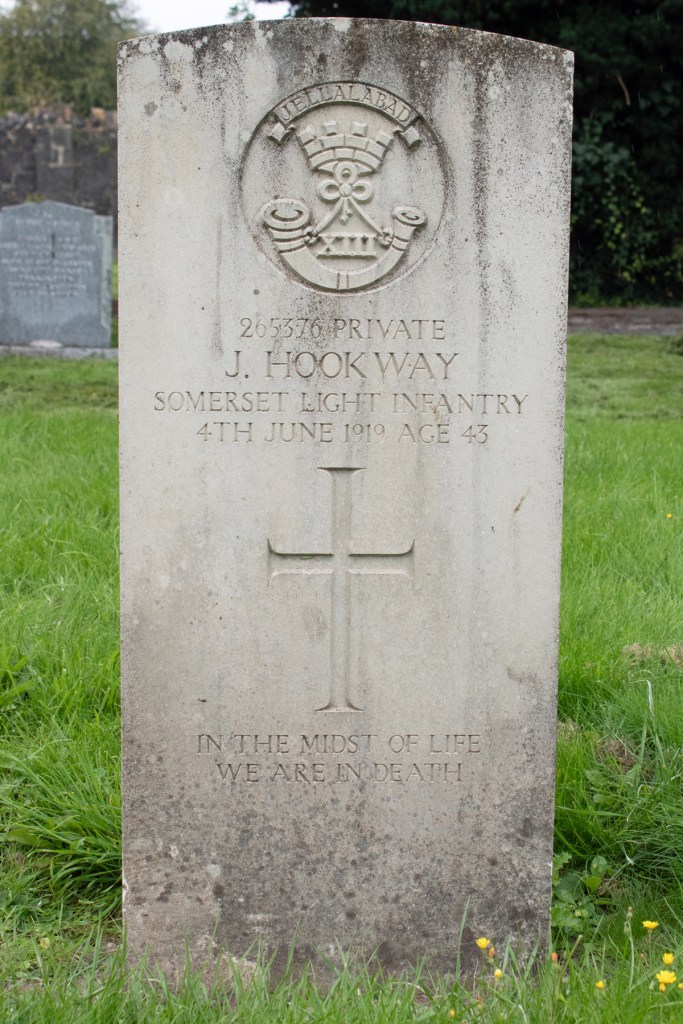
Private John Hookway

Private John Hookway

The early life of John Hookway seems destined to be lost to time. He was born in 1876 or 1877 in Lancashire, and the only surviving 1881 census featuring that name would suggest his parents were James, who was a shoeing smith, and Leah Hookway.

The next census on which John appears is in 1911. This confirms that John had married a widow called Rose Ash the year before. They were living in Huntspill, Somerset, with Rose’s three children – daughters Rose, Violet and Lily – and her sister, Emily. John was employed as an ‘improver in grocery trade’, while Violet, who was 17 years old, was noted as being a ‘servant on the Isle of Wight’. Violet’s sister, Rose, the census recorded, was ‘feebleminded’, while Emily was identified as an ‘imbecile’.

When war broke out, John stepped up to enlist. His age may have excluded him from any compulsion to join up – he was nearly 40 years old when he signed his attestation papers in December 1915. This may suggest that he had served in the army before, hence the absence from the 1891 and 1901 census records.

Private Hookway’s service records noted that he was a grocer, and that he had been born in Devon, although this is at odds with other, earlier, documents. He was 5ft 4ins (1.64m) tall and weighed 137lbs (62.1kg). He was assigned to the Somerset Light Infantry, and he joined the 13th (Home Service) Battalion. As the name suggests, John saw no action overseas, and his time appears to have been split between Somerset and Suffolk.

John’s time in the army was not without issue. In September 1916, he was admitted to a local Volunteer Aid Detachment Hospital with appendicitis, which saw him laid up for more than six weeks. In November 1918, the war having come to an end, Private Hookway was sent to the 2nd Southern General Hospital in Bristol, Gloucestershire, with an aneurysm of the abdominal aorta. This was, understandably, severe enough for him to be discharged from the army, and he was formally stood down on 12th March 1919.

John returned home to be with his family. The next record for him is that of his passing, on 4th June 1919. He was around 43 years of age.

John Hookway was laid to rest in Highbridge Cemetery, Somerset. Rose, who had now been widowed twice in ten years, never remarried. She was laid to rest near her second husband when she passed in 1946.


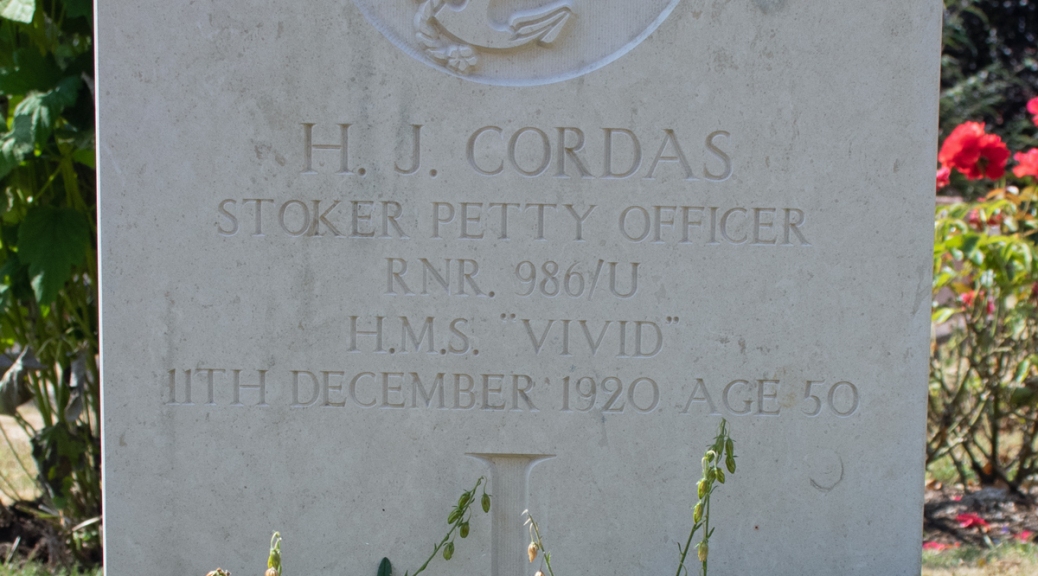
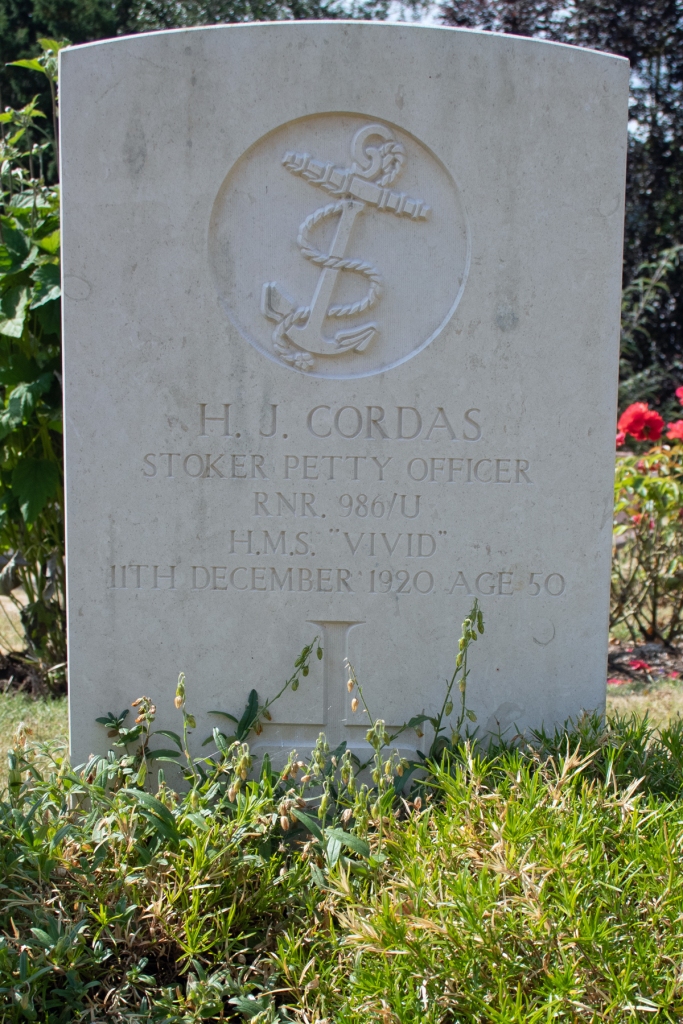
Stoker Petty Officer Henry Cordas

Stoker Petty Officer Henry Cordas

Much of Henry John Cordas’ early life is destined to remain a mystery. The first record for him is the 1881 census, which gives is his address as St Mary’s Orphanage in Heston, Middlesex, where he was one of 650 children.

The 1891 census recorded Henry as living in Humber Street, Grimsby, Lincolnshire, right next to the town’s docks. He is noted as being a fisherman, and is married to a woman called Mary, who was born in Deptford, Surrey.

The next available census record for Henry adds confusion to his story. The document, dating from 1911, confirms that he and Mary are now living in Hotwell Road, Bristol, Gloucestershire, again within spitting distance of the docks. Henry was employed as a marine fisherman in the merchant service. The document suggests that the couple had been married for ten years, and give Mary’s place of birth as Swansea, Glamorganshire.

While the document matches previous information for Henry, it seems unlikely that the Marys in the 1891 and 1911 censuses are one and the same. Either way, the couple were sharing their house with Mary’s niece, Ellen.

Henry seems to have joined the merchant fleet in a more official capacity in the autumn of 1900. His records show that he was 5ft 11ins (1.8m) tall, with blue eyes and a fair complexion. He served out of Bristol and, in the years leading up to the outbreak of war, he was assigned to a number of ships, travelling the Atlantic to Montreal and Jamaica, amongst other far-flung places.

When hostilities commenced, Henry was assigned to the Royal Naval Reserve. Over the next few years, he served on a number of ships, including the armoured cruisers HMS Suffolk and HMS Doris. He worked as a Stoker, but by the end of the conflict had been promoted to Stoker Petty Officer.

In December 1918, Henry’s service came to an end. He was, by now, based at HMS Vivid, the Royal Naval Dockyard in Devonport, but his health was suffering. Medically discharged with a combination of chronic bronchitis and rheumatic pain, he seems to have returned to Bristol.

On 6th December 1920, Henry was admitted to Bath War Hospital in Somerset, as he was coughing up blood. The plan was to transfer him to Greenwich Hospital in Surrey, but he suffered an aneurysm before that move could be made. He passed away on 11th December 1920, at the age of 50 years old.

The body of Henry John Cordas did not travel far for burial. He was laid to rest in the peaceful expanse of Bath’s Locksbrook Cemetery.


Serjeant Robert Priddle

Serjeant Robert Priddle

Zebulon Priddle was born in the autumn of 1876 in Curry Mallet, Somerset. One of ten children, who included Meliam, Cornelius, Absalom, Ebenezer, Lancelot and Jabez, his parents were Robert and Mary Priddle.

Robert was a farm labourer, and his son followed suit at first, but a career away from home beckoned and, on 16th January 1894, he enlisted in the Royal Artillery. Aged just 18 years and 2 months, Zebulon had volunteered in the Somerset Light Infantry, a militia group at that point. His service records confirm that he was 5ft 5ins (1.65m) tall and weighed 122lbs (55.3kg).

Driver Priddle was based on home soil for eighteen months before his wish for a life of adventure was realised. On 16th September 1894, his battalion set sail for India, and he was to remain there for more than six years. Zebulon returned to Britain in February 1902, where he was placed on reserve status. He completed his twelve years’ service in January 1906, and stepped down from the army.

Britain’s shores could not contain Zebulon, however, and at some point he emigrated to Canada. Little information of his life in North America is available, other than that the move seemed to have provided him with an opportunity to change his name, as in documents from this point on he is known as Robert Priddle.

The next record for Robert is that of his re-enlistment when war broke out. He was living in Winnipeg by this point, and, as he gives his mother, Mary, as his next-of-kin, it seems that he did not marry or have children.

Robert joined up again on 16th December 1914, and was attached to the 9th Battalion of the Canadian Infantry. Promoted to the rank of Sergeant, he arrived back in England in March the following year. His time there was to be brief, however, and within a matter of weeks, Robert arrived on the Western Front.

Over the next six months, Sergeant Priddle’s health suffered significantly, and he had several periods in hospital. Initially suffering from bronchitis, in July 1915 he was medically evacuated to Britain with cardiac angina. He remained in England and, when rheumatism set in in October, he was transferred to reserve status.

Sadly, this was not to be the last time Sergeant Priddle’s health suffered: he was admitted to hospital in Shorncliffe, Kent, with a ruptured aortic aneurysm. He succumbed quickly, passing away on 25th January 1916, at the age of 39 years old.

The body of Robert Priddle was brought back to Somerset for burial. He was laid to rest under his assumed name, in the peaceful graveyard of St James’ Church in his home village of Curry Mallet.


Private Frederick Chilcott

Private Frederick Chilcott

Frederick Chilcott was born in Bridgwater, Somerset, early in 1867. He was the fifth of thirteen children to labourer and kiln worker Henry Chilcott and his wife, Ellen.

When he finished his schooling, Frederick also found labouring work. He wanted bigger and better things, however, and the opportunity for a career in the army offered him just that. On 14th January 1888 he enlisted in the Royal Artillery. His service records confirm he was 5ft 6ins (1.68m) tall, and weighed 119lbs (54kg). He was noted as having dark brown hair, dark hazel eyes and a fresh complexion. He also had a scar on his forehead and a tattooed dot on his right forearm.

Frederick was initially given the rank of Driver and was assigned to the regiment’s 3rd Brigade Depot. He was sent to India in February 1889, and remained there until November the following year, when his troop returned to Britain.

Back on home soil Frederick’s role changed and he was given the rank of Gunner. On 1st January 1892, he was promoted to Acting Bombardier, but, on his own request, he reverted to his previous rank just three months later. On 15th January 1895, Gunner Chilcott was stood down to reserve status, having completed seven years’ service.

On 16th April 1895, Frederick married Eliza Stockham. She was a labourer’s daughter from the village of Puriton, to the north of Bridgwater, and it was here that the couple settled. Living in a small cottage, they went on to have six children between 1898 and 1911.

Frederick’s time in the army, however, wasn’t quite done. With the Second Boer War breaking out, he was recalled to the now Royal Field Artillery in January 1900. Sent to South Africa, Gunner Chilcott remained overseas for a year and was recognised for his commitment in the campaign.

Frederick returned to Britain on 3rd January 1901, and was finally stood down from the army in March that year, having fulfilled his twelve years’ contract. He returned home to Puriton, his service records noting that his character was ‘very good’.

The 1911 census found Frederick employed as a labourer in the local cement works. He and Eliza living in a small cottage in Puriton with four of the children (their oldest son was with Eliza’s parents, while she was pregnant with their youngest).

Conflict was knocking on England’s shore by this point, and when conflict broke out, Frederick appears to have stepped up to play his part once more. He was 47 years old when war was declared and, as such, would not have been required to enlist. Full details of his service are no longer available, but he had certainly joined the Army Veterinary Corps by the summer of 1917.

Private Chilcott is likely to have remained on home soil, but towards the end of his service was based in Curragh, County Kildare, Ireland. It was while here, on 23rd December 1917, that he suffered an aneurysm, passing away in the town’s military hospital as a result. He was 50 years of age.

Frederick Chilcott’s body was brought back to Somerset for burial. He was laid to rest in the quiet graveyard of St Michael’s Church in his home village, Puriton.


Sapper William Dove

Sapper William Dove

William Henry Dove was born in the autumn of 1871 in Stafford, Staffordshire and was one of seven children to William and Louisa Dove. William Sr was a gardener by trade, but his son wanted bigger and better things.

On leaving school, he initially took up a post as a junior teacher, but military service was calling him and, on 21st February 1891 he enlisted in the Royal Lancaster Regiment. Private Dove’s service records show that he was 5ft 7ins (1.70cm) tall and 136lbs (61.8kg) in weight. He had sandy hair, grey eyes and a fair complexion. He also gave his age as 18 years and 3 months, although he was actually a year older.

Private Dove signed up for seven years’ service and completed this on home soil. In October 1891 he was promoted to Lance Corporal, and a year later he was promoted again, this time to Corporal.

In November 1894, William was found guilty of ‘conduct to the prejudice of good order and drunkenness‘ and was sentenced to be reduced in rank, so became a Private again. He learnt the error of his ways, though, and was reinstated to Lance Corporal in March 1897.

William’s service was completed in February 1898, and he was transferred across to the Army Reserve. This was intended to be for a further five years, but on 15th February 1900, he was discharged from future active service, having been found to be medically unfit. During his time in the army, William had been treated for a two bouts of gonorrhoea, as well as four further infections. The cause of his final medical discharge, however, is unclear.

While on reserve, William had found employment as a railway porter. His work took him to Llangollen, Denbighshire and, this is where he set up home. On 18th April 1899, he married Ellenor Roberts, a labourer’s daughter from the town: the young couple set up home in Ashfield House, Regent Street – now the busy A5.

The 1911 census records William as a porter: the couple had no children of their own, but had adopted a girl, Cissie, who was then eight years old. A live-in domestic servant – Esther Williams – was also recorded on the census.

War was coming to Europe by this point and, while details of his service are unclear, William stepped up to play his part once more. He enlisted in the Royal Engineers as a Sapper, at some point during the conflict, although exact details are lost to time.

Sapper Dove survived the war and returned to Llangollen. The 1921 census records him Ellenor and Cissie living at Bronhaul, and that William was working as a parcel’s porter for Great Western Railways. On 18th August 1921, he collapsed and died with a brain aneurysm. He was 39 years of age.

William Henry Dove was buried in the graveyard of St John’s Church in Llangollen, a short distance from the station at which he portered for so long.


Ellenor lived on until her late 70s. When she passed away, she was laid to rest in the family plot, reunited with her husband after 35 years.


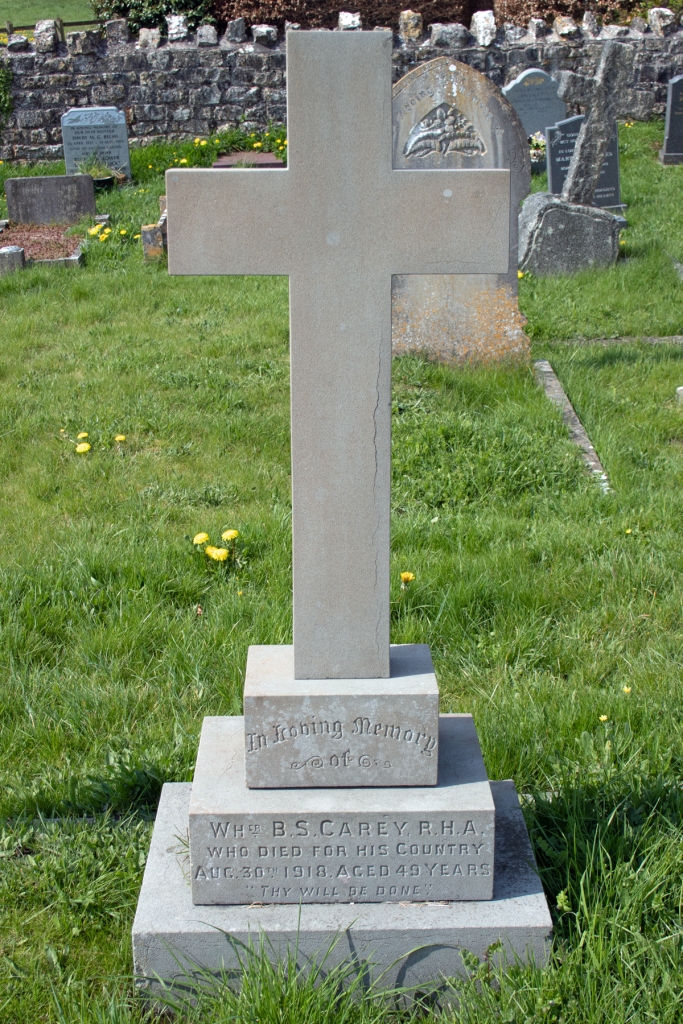
Gunner Sidney Carey

Gunner Sidney Carey

Banfield Sidney Carey – who was also known by his middle name – was born in 1868 in Farmborough, Somerset. His father, Abel, was a wheelwright, and both he and Sidney’s mother, Hannah, came from the village.

Sadly, little of Sidney’s life remains documented. He married Janet Morgan in Blackburn, Lancashire, in the autumn of 1912; they had had a daughter, Dorcas, five years before, and Janet had another daughter, Viola, from a previous relationship.

War came to Europe and Sidney enlisted in the Royal Horse Artillery as a Gunner (Wheeler), at some point before February 1918. By that year he was based at the regiment’s cadet school in St John’s Wood, London.

On 30th August Gunner Carey suffered a ruptured aneurysm and, despite being rushed to the nearby Hampstead Military Hospital, he died. He was 49 years old.

Sidney Carey was brought back to Somerset for burial in the family plot. He was laid to rest in the graveyard of All Saints’ Church in his home village of Farmborough.


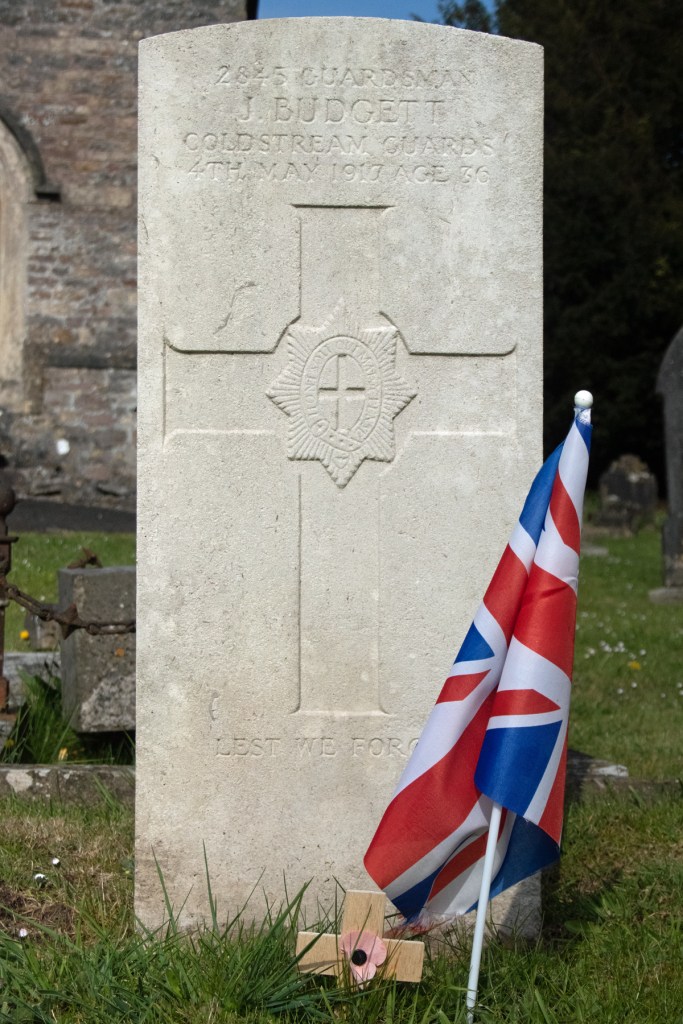
Guardsman James Budgett

Guardsman James Budgett

James Budgett was born in October 1880 and was one of nine children to Henry and Eliza Budgett. Henry was a labourer, and the family lived in the small village of Stoke St Michael, near Shepton Mallett in Somerset.

While initially following his father in to labouring, James was drawn to the military as a career. He enlisted in the army in August 1899, and was assigned to the Coldstream Guards. James’ bearing would certainly have stood him in good stead for this wing of the army; his medical examination shows he was 6ft 1in (1.85m) tall.

Guardsman Budgett’s initial service was for twelve years; during this time, he spent six months in Australia, but his records show that most of his time was spent on home soil.

When his term ended in August 1911, he enrolled for a further four years. Initially assigned to the Reserve Battalion, he was formally mobilised when war broke out. Sent to France as part of the British Expeditionary Force in August 1914, he was wounded in the foot two months later, and was sent home for treatment.

According to Guardsman Budgett’s medical records, the treatment unearthed a two other issues. One was that he was suffering from syphilis, which was treated. The other was that an x-ray identified an aneurysm in his aortic arch. This was considered harmful enough for him to be medically dismissed from the army, and he left active service on 25th March 1915.

After this, details of James’ life get a bit hazy. His pension records show that he married a woman called Bessie, but there is nothing to confirm when the marriage took place.

The next record for James Budgett is confirmation of his passing. He died from an aneurysm on 4th May 1917, at the age of 36. He lies at rest in the graveyard of St Michael’s church in his home village of Stoke St Michael, Somerset.


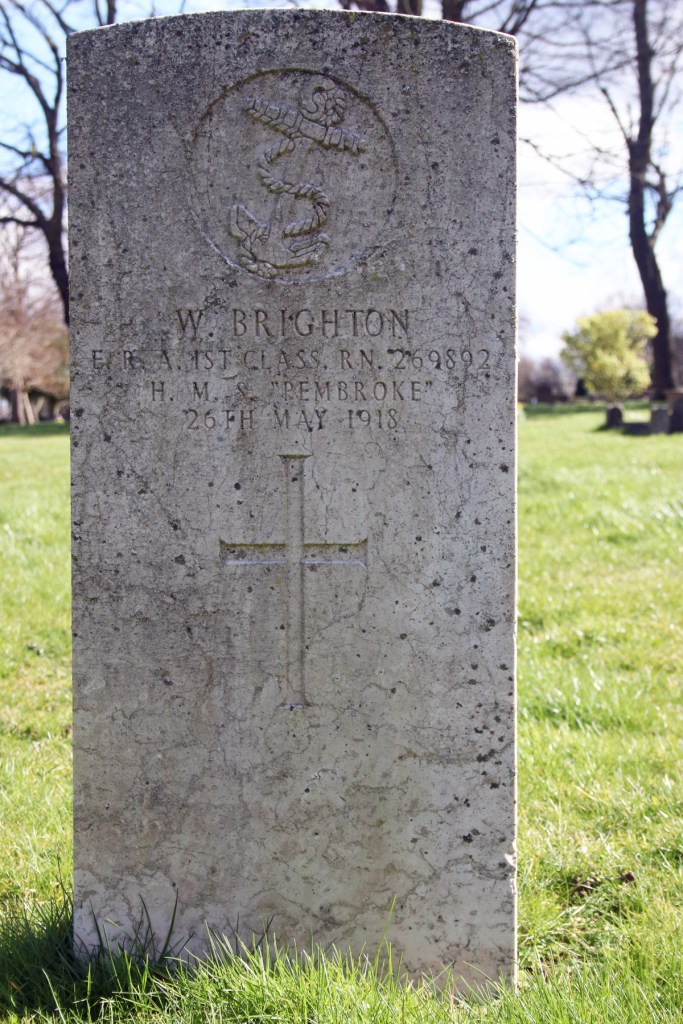
Artificer William Brighton

Artificer William Brighton

William Brighton was born on 13th August 1877 in Peterborough, Northamptonshire. Sadly, details of his early life are lost to time, so his parents’ names, and details of any siblings are a mystery.

William chose a military life early on; he enlisted in the Royal Navy in October 1899 for twelve years’ service. Working as an Engine Room Artificer, he was an engine fitter and repairer on a number of vessels in his time, including the battleship HMS Repulse and the cruisers HMS Andromache and Scylla.

William married Lily Franklin in the autumn of 1904, and the couple went on to have three children; Mona, Lily and John. With William away at sea a lot of the time, Lily set up home in Gillingham, Kent, close to the shore facility – HMS Pembroke – where her husband was based.

The uncertainty around potential conflict meant that William extended his service when it initially came to an end in November 1911. He continued to serve on a number of vessels during the war and was based on a ship off the Scottish coast when he fell ill in May 1918.

William was transferred to the US Hospital in Strathpeffer, near Inverness, suffering from an abdominal aneurysm. Sadly the treatment did not work, and he passed away on 26th May 1918. He was 40 years old.

William Brighton lies at rest in the Woodlands Cemetery in Gillingham, Kent.


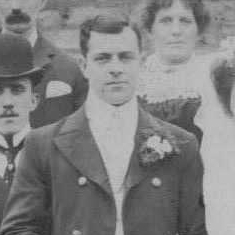
William Brighton (from ancestry.co.uk)