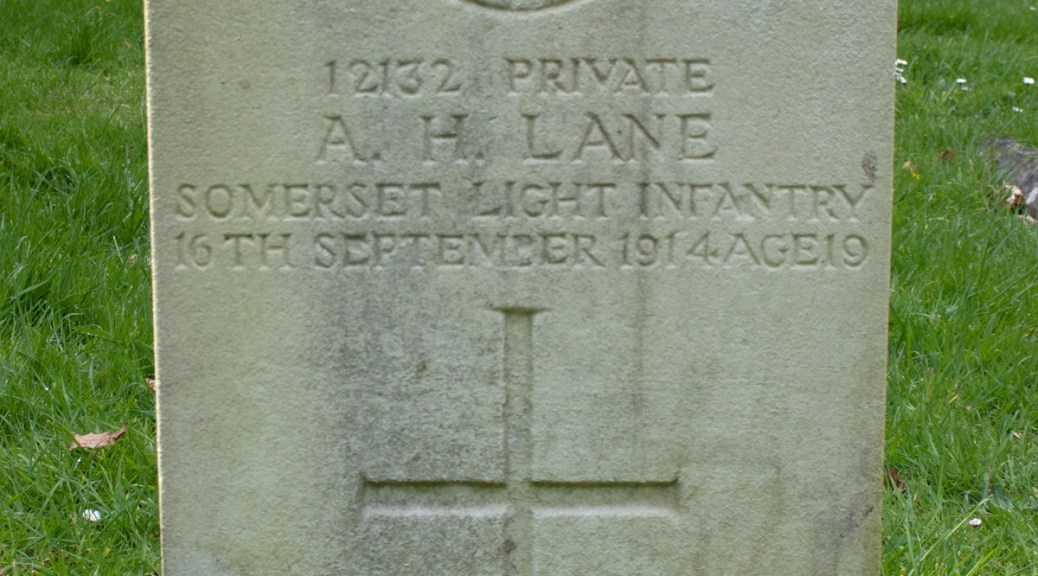
Arthur Henry Lane was born in the summer of 1895, the third of eight children to Henry and Ada Lane. The family were initially born and raised in Templecombe, Somerset, before moving to Bath in the early 1900s.
Henry was employed as an engine driver for Great Western Railways and, after initially finding work as a jobbing gardener, Arthur moved in with relatives in Highbridge in 1911. He found work as an engine cleaner for the Somerset and Dorset Joint Railway Company, and was there for nearly three years.
When war broke out, Arthur was one of the first to enlist. He joined the 3rd Battalion of the Somerset Light Infantry at the barracks in Taunton. Private Lane was then sent to Devon for further training, but he quickly fell ill.
Admitted to Devonport Hospital with appendicitis, he suffered complications following the operation, dying just five days later. He was only 19 years of age, and had been in the army for less than a month.
Arthur Henry Lane’s body was brought back to Somerset for burial. He was laid to rest in Bath’s Twerton Cemetery.
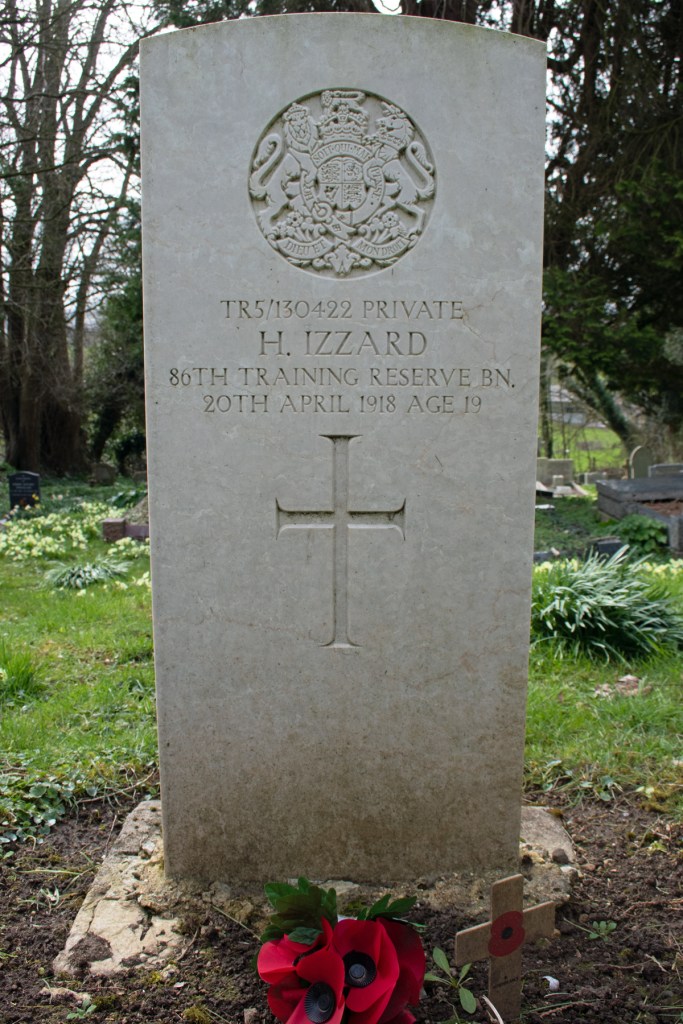
Harry Izzard was born early in 1900, in Chiswick, London and was one of six children to Albert and Florence Izzard. Albert was a groom, but when he died in 1905, Florence, left with a young family to raise, remarried. Things seem not to have gone well between Harry and his stepfather, Richard Warren, and he soon found himself resident of the Church Army Home in London.
In 1914, his schooling complete, he was sent to the village of Clandown in Somerset, where he was employed at the local colliery. He seemed to have flourished in his new life, and he “made friends with all he came in contact with, being of a bright and cheerful disposition and associated with the football club, Wesleyan Young Men’s Bible Class and an ardent temperance worker.” [Somerset Guardian and Radstock Observer: Friday 26th April 1918]
Harry was one of the village’s batch of miners passed for the Army ballot, but seemed eager not to wait to be officially called up. On the day of the ballot, he instead joined up voluntarily, enlisting in the 86th Training Reserve Battalion.
On enlistment he was sent to Clipstone Camp, Notts, where he quickly made friends. He, however, was placed on the sick list… and underwent [an] operation for appendicitis from which operation he never recovered.
Somerset Guardian and Radstock Observer: Friday 26th April 1918
Private Izzard died on 20th April 1918, aged just 19 years old, a life of new promise cut tragically short. His connection with Clandown, and his disconnection from his family in London, was such that his body was brought back to Somerset for burial.
Harry Izzard was laid to rest in the quiet Holy Trinity Churchyard, his sister Mabel being the only family member represented at the service.
Harry’s older brother Herbert Izzard also served in the army. He had found work as a laundry labourer when he left school, and went on to marry Maud Woodage on 14th February 1915. The couple had a daughter, Winifred, later that year.
Herbert enlisted in the London Regiment as a Rifleman, and was assigned to the 17th Battalion, also known as the Poplar and Stepney Rifles. He soon found himself in France and was killed at the Somme on 19th April 1916. He is buried at the Cabaret-Rouge British Cemetery in Souchez.
Tragically, Herbert’s widow died in Oxfordshire in December 1918, leaving young Winifred an orphan at just three years old. She went on to live a long life, dying in 1997, at the age of 81.
Albert Lowman was born in Crewkerne, Somerset, in the autumn of 1876. He was the younger of two children to Charles and Sarah Lowman. The 1881 census recorded the family – Charles, Sarah and their boys Charles Jr and Albert – living in Back Lane. Charles Sr was noted as being a labourer, although in the column highlighting any medical conditions (‘deaf-and-dumb’, ‘blind’, ‘imbecile or idiot’, ‘lunatic’), is one word: “afflicted”.
Charles Sr passed away in 1886, when Albert was just 9 years old. The next census, in 1891, found Sarah working as a charwoman, while her youngest, who had left school by this point, was employed as a labourer. Mother and son also had a lodger, Alice, who was a dressmaker. Charles Jr, by this point, had left home, and was living in Penarth, Glamorganshire, where he was apprenticed to his paternal uncle, who was a tailor.
On 28th November 1896, Albert married Sarah Ann Dodge, a weaver’s daughter who was also from Crewkerne. Albert recorded his job as a drayman, although this seems to have been piecemeal employment.
The next census found more permanent work, as he was cited as being a shirt factory packer, while Sarah was employed by the factory as a machinist. Making up the household was young Charles Lowman, the couple’s first son, who was just a month old although sadly, he survived only a couple of months more before dying.
Further tragedy is highlighted by the 1911 census, as it highlights that the couple had had a further child, who had also died when just a babe-in-arms. The Lowmans were now living on Hermitage Street near the centre of the town. Albert was still a shirt packer, and, even though their cottage was small, they had two boarders and a visitor staying. The lodgers brought the couple a little rent, which meant that Sarah no longer had to work.
War was closing in on Europe and, while his full military records are lost to time, it is clear that Albert had stepped up to play his part. He had enlisted by January 1918, and was attached to the Devonshire Regiment, through which he served with the 380 Company of the Labour Corps.
Private Lowman was barracked on Salisbury Plain, Wiltshire, and in July he was admitted to the military hospital in Salisbury itself, suffering from appendicitis. He was operated on, but died following complications. He passed away on 10th July 1918, at the age of 41 years old.
Albert Lowman was brought back to Somerset for burial. He was laid to rest in the cemetery of his home town, Crewkerne.
Private Lowman’s pension ledger record shows the beneficiaries of his army service. The document identified Sarah as his widow, but also Phillis Annie Matilda Denning, the couple’s adopted daughter, who had been born in August 1904.
Sarah was not to outlive her late husband for long, however.
The death occurred with tragic suddenness on Sunday afternoon, January 7th, at her residence in Hermitage-street, of Mrs Sarah Ann Lowman… The deceased, who was of middle age, was about as usual attending to her ordinary household duties in the morning. Just before dinner hour, however, she complained of not feeling well and went upstairs to lie down. Her niece took her up a cup of how water, and she then apparently went to sleep. She awoke about 3:40pm, and then had to get out of bed owing to sickness. Upon going back into bed again she expired almost immediately. Dr Wolfenstein was called, but he could only pronounce life extinct.
Langport & Somerton Herald: Saturday 20th January 1923
Sarah was 47 years of age when she passed away. It is likely that she was laid to rest near her husband, although records to confirm this have been lost.
Albert’s brother, Charles, survived his sibling by less than six months. He had left tailoring behind him in South Wales, and instead embarked on a military career. He joined the Royal Field Artillery in 1895 and, over the course of his twelve years’ service, served in the Caribbean and the Mediterranean.
Charles married Florence Dodge in 1908, and the couple went on to have two children – Cecil and Freda. When war broke out in 1914, he stepped up once more. Having already risen through the ranks from Gunner to Bombardier and Corporal, he re-entered service as a Sergeant in the Royal Garrison Artillery.
Based in Le Harve, Northern France, Sergeant Lowman was admitted to a hospital in Harfleur, having contracted bronchial pneumonia. Sadly, he passed away while admitted, on 8th November 1918, just three days before the end of the conflict. He was 43 years of age.
Charles Lowman was laid to rest in the Sainte Marie Cemetery, near the centre of Le Harve.
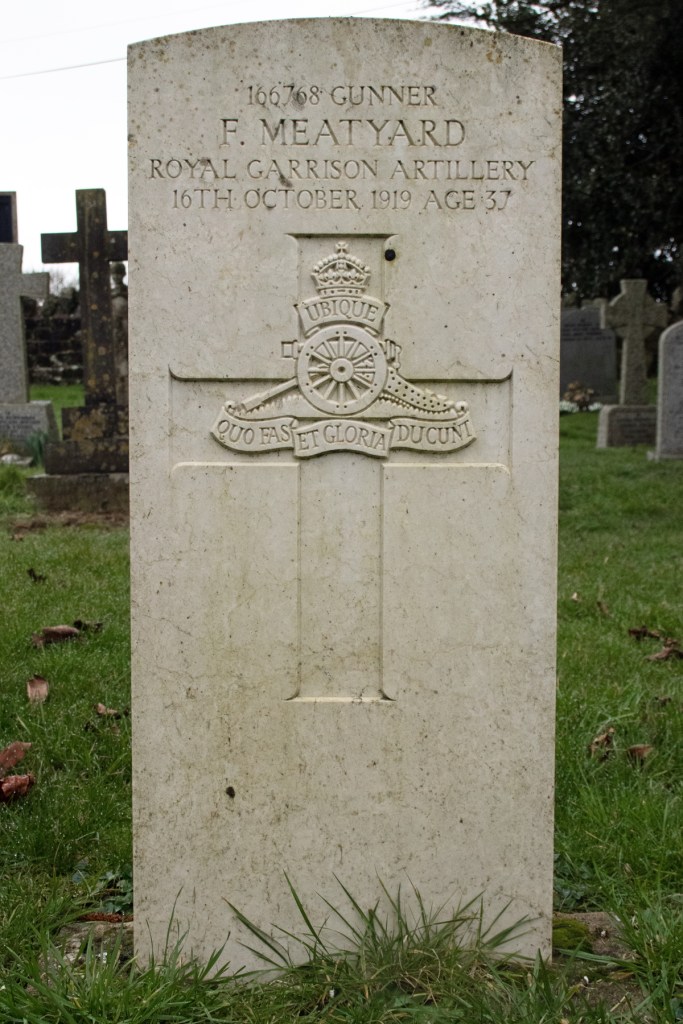
Fred Radford Meatyard was born in Penselwood, Somerset, in September 1882. The son of Henry and Ellen Meatyard, they seem to have been distant in his life. Fred was raised by his paternal grandparents, Henry and Caroline, in nearby Wincanton.
Fred was an intelligent young man. The 1901 census found him boarding with printer and stationer Walter Eaglestone and his family, on Erith High Street, in Kent. He was working as a compositor himself, pulling the type together for his boss to print. This appeared to be a springboard for him, and he soon moved to Oxford finding similar work there.
In 1907 Fred briefly returned to Penselwood, where he married Lily Extence in the parish church. The marriage certificate showed that Fred was living in William Street, Oxford, and was still employed as a compositor, working for the local newspaper, the Oxford Chronicle. His father, Henry, is listed as deceased, and as having been employed as an engineer. Lily was the same age as her new husband, and was the daughter of labourer Francis Extence.
The couple moved back to Oxford, and went on to have three children: Linda (born in 1908), Joan (born 1913) and Frances (born in 1915). The 1911 census record found them living in an end of terrace house in Boulter Street, the River Cherwell flowing past the bottom of their cul-de-sac. Theirs was a five-room house, and they had a boarder, Mancunian William Murphy, who was employed as a vocalist and guitarist.
When war came to Europe, Fred stepped up to play his part. He enlisted on 30th August 1916, but was not formally mobilised into the Royal Field Artillery until the following January. Gunner Meatyard’s service records show that he was a wiry man, 5ft 10ins (1.78m) tall, and weighing 126lbs (57.2kg).
In June 1917, Fred was transferred across to the Royal Garrison Artillery, and was sent to France. Aside from a couple of periods of leave, he remained overseas until the end of the war, and was attached to a couple of the regiment’s Siege Batteries.
When hostilities ceased, Gunner Meatyard finally returned to Britain in the summer of 1919. Based on Salisbury Plain, Wiltshire, while waiting to be demobbed, he fell ill, and was admitted to the Fovant Military Hospital. He was suffering from acute appendicitis, and the condition came on so quickly, that any treatment did not come soon enough. Fred passed away at the hospital on 16th October 1919, at the age of 37 years of age.
Fred Radford Meatyard was brought back to Somerset for burial. He was laid to rest in the quiet graveyard of St Michael’s Church in Penselwood. The newspaper for which he had worked for so long noted that “he was buried with full military honours… Deceased was on the printing staff of the ‘Oxford Chronicle’ for some years… He was a member of the St John’s Ambulance Brigade. Some time ago he returned from the Rhine, having previously fought in France. Much sympathy is felt with the widow and three children, two of whom, it will be remembered, took a prominent part as dancers in the pagent.” [Oxford Chronicle and Reading Gazette: Friday 24th October 1919]
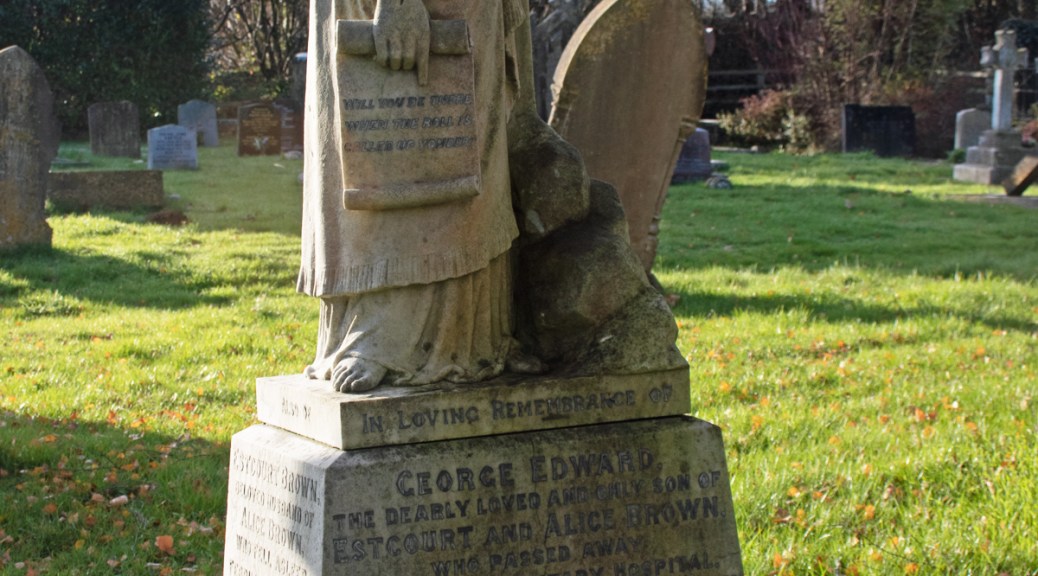
George Edward Brown was born on 26th June 1898 in South Petherton, Somerset. An only child, his parents were Escourt and Alice Brown. Originally a millstone dresser, by the time of the 1911 census, Escourt had turned his hand to farm work, while Alice made shirts and did housekeeping to bring in a little more money for the family.
George was only 16 years old when war broke out, but he was keen to play his part as soon as he was able to. In the spring of 1917, he enlisted in the Royal Field Artillery, and was assigned to the 105th Company.
Little information remains of Gunner Brown’s military service, but it is evident that he did his training in Norfolk. While here, he came down with appendicitis, and was admitted to the Norfolk War Hospital in Norwich. He was operated on, but sadly died following the procedure. He passed away on 29th June 1917, having just turned 19 years of age.
George Edward Brown’s body was brought back to Somerset for burial. He was laid to rest in the family grave in South Petherton Cemetery. He was reunited with his parents, when they passed away, Escourt in 1924 and Alice some time later.
Edward Francis Wakeford was born in Rottingdean, near Brighton, Sussex, in February 1881. He was the younger of two children to curate William Wakeford and his wife, Eliza.
The family home was always a busy one; the 1881 census records one visitor, four boarders and a servant. Ten years later, confirms one boarder and two servants.
By 1901, William had taken up a post in St Peter’s Church, Henfield. This seems to have been a step up: helping look after the family and a visitor were four servants – a gardener, a cook, a housemaid and a kitchenmaid.
In March 1907, Edward married Annie West Thornton; she was the daughter of a well-to-do family – the census records show that her father, William West Thornton, lived by private means, while Annie was sent to Surrey to attend a boarding school.
Edward and Annie couple set up home on the Sussex coast, and, when William passed away in 1912, were soon also living by private means. They went on to have three children: two girls, Olive and Iris, and a boy, who they named William after both of their fathers.
War was coming to Europe by this point. While full details of Edwards military service are not available, he appears to have given a commission in the Royal Sussex Regiment. Initially serving as a Lieutenant, but October 1914, he was promoted to Captain.
Edward was assigned to the 6th (Cyclist) Battalion, and served in East Anglia. It seems that he fell ill while there, and was admitted to the Norfolk and Norwich Military Hospital, suffering with appendicitis. Sadly the condition proved too much, and Captain Wakeford passed away following the operation. He died on 23rd February 1915, not long after his 34th birthday.
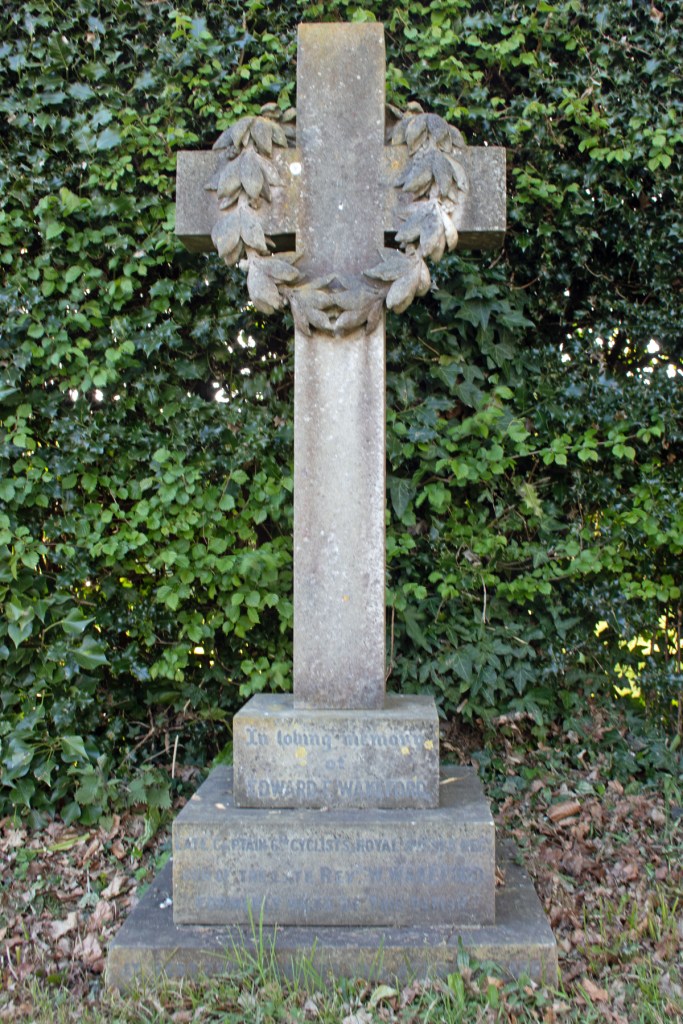
Edward Francis Wakeford’s body was brought back to Sussex. He was laid to rest in Henfield Cemetery, not far from the church where his father had served for so long.
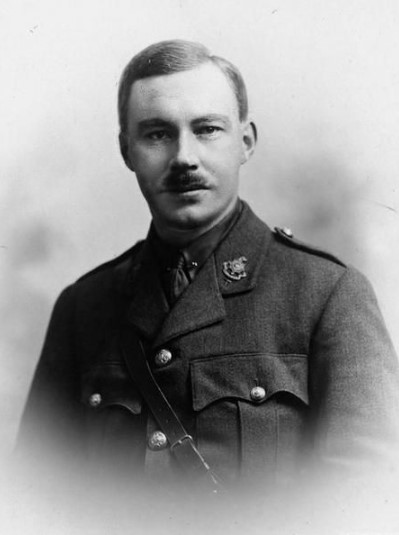
Captain Edward Wakeford (from findagrave.com)
The now widowed Annie wed again, marrying Reverend John Gurney in October 1917. Tragedy was to strike again, though, when she passed away just a year later, on 20th October 1918. She was laid to rest Henfield Cemetery, in the plot next to her late husband, Edward.
John Gurney went on to live a full live. He never married again, and settled in Buxted, near Uckfield. He passed away in November 1956, at the age of 76 years old. He was also laid to rest in Henfield Cemetery, where he was buried in the same plot as Annie.
Edward and Annie’s children also went on to have full lives, despite the early loss of their parents.
Olive never married, and passed away in Nottingham in 1986, aged 78 years old.
Iris married in Liverpool in 1934, and went on to have two children. When the marriage failed in the 1940s, she got wed again in 1949. She passed away in Cheltenham in 1965, at the age of 54.
William got married in 1940, at which point he was serving as a Lieutenant in the 1st King’s Shropshire Light Infantry. He saw action in Italy towards the end of the war, and was awarded a Military Cross for his service. When peace came to Europe again, he and his wife settled into a normal life, before emigrating to Australia. William passed away in May 1967, at the age of 54 years old.
Horace Douglas Thompson was born in Camberwell, East London on 23rd April 1898. He was the oldest of four children – and the only boy – to Horace and Elizabeth Thompson. Horace Sr was a grocer’s packer, originally from the village of Gissing in Norfolk.
Details of Horace Jr’s early life are a little sketchy, but it seems that by some point after the 1911 census, both of his parents had died, and he was fostered by his aunt and uncle – Charlotte and Robert Thompson – who lives in Leytonstone. By this point, he was working as a doctor’s errand boy.
When war broke out, Horace was keen to play his part. He enlisted in the 6th Battalion of the London Regiment – also known as the City of London Rifles – towards the end of 1916. It is unclear whether Rifleman Thompson saw any action overseas, but in April 1917 he was admitted to the Voluntary Aid Detachment Hospital in Newton Abbot, Devon, suffering from acute gastritis, or appendicitis.
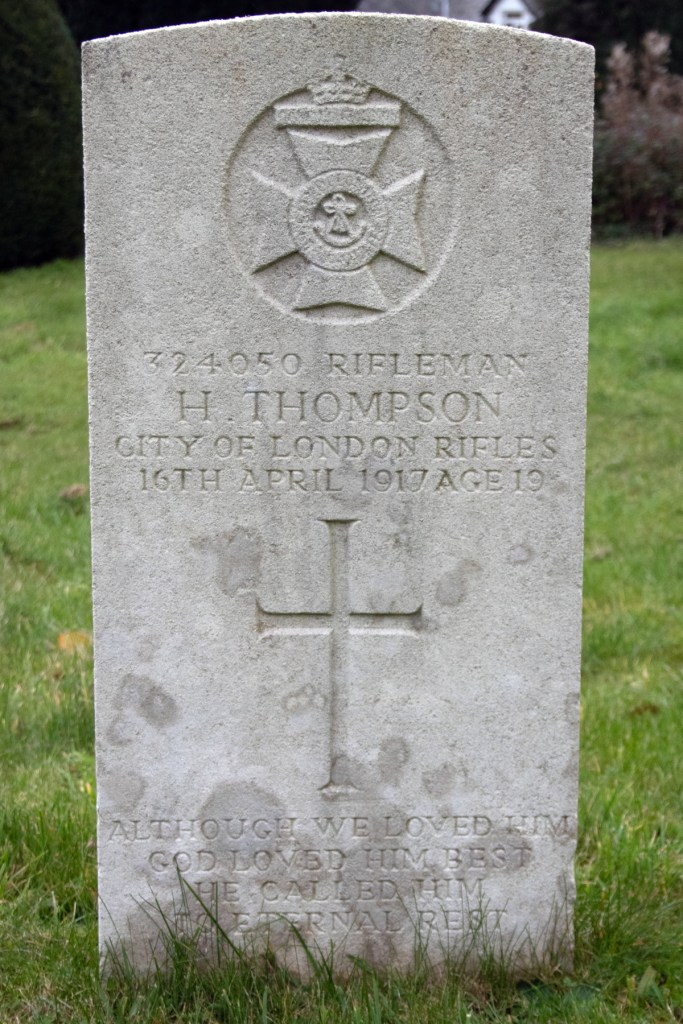
Sadly, Rifleman Horace Douglas Thompson was to succumb to the condition – he passed away at the hospital on 16th April 1917. He was laid to rest in Newton Abbot Cemetery; he was days short of his 19th birthday.
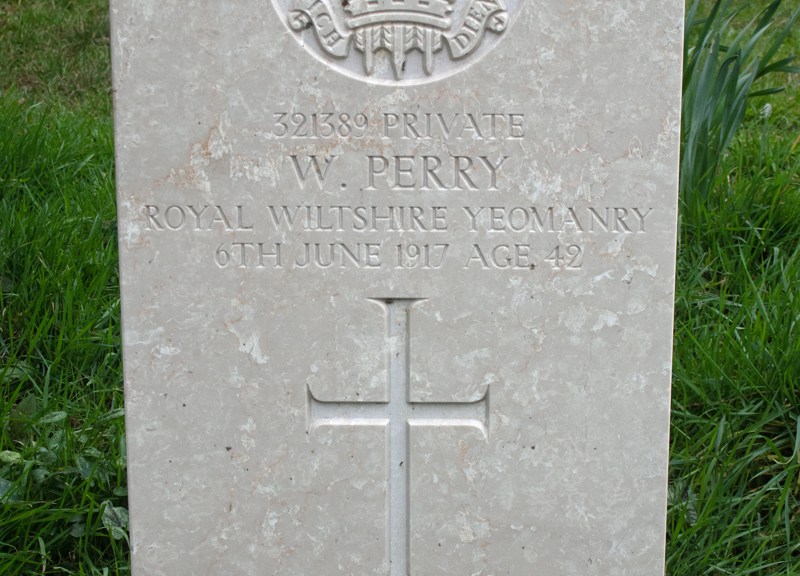
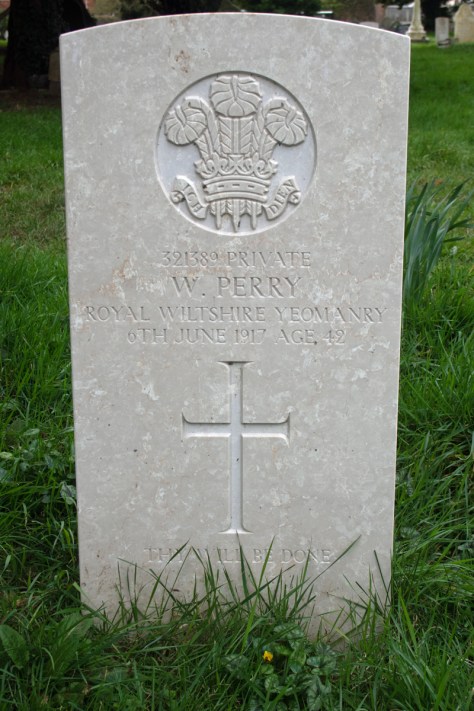
Walter Perry was born in Bridgwater, Somerset, in 1874. He was one of ten children to James Perry, a general dealer, and his wife Hannah. After he had left school, Walter became a labourer; his older siblings had all become labourers or factory workers in the area.
In November 1899, Walter married Rebecca Cavill; their first child, Hilda, was born at the end of March the following year. By this time, Walter was working for a brewery, while his new wife was working at a shirt collar factory. The young couple went on to have two further children – Walter and Beatrice – before Rebecca tragically passed away in June 1906.
Walter married again in November 1908, this time to a Mary Ann Reed also from Somerset. The couple went on to have two children, Joseph and Edna, and the family lived together in the centre of Bridgwater.
The Great War was on the horizon. While details of Walter’s military service are not readily available, it is unlikely that he was called up as soon as hostilities broke out – he turned 40 in 1914, and so was too old to qualify immediately.
Walter enlisted in the 2/1st Royal Wiltshire Yeomanry; he was based primarily in England, where his battalion acted as a training/reserve for the 1st Battalion, who were serving on the Western Front. It was while Private Perry was based in Essex, that he contracted appendicitis; he was admitted to the General Military Hospital in Colchester, but passed away on 6th June 1917. He was 43 years old.
Walter Perry lies at peace in the Wembdon Road Cemetery in his home town of Bridgwater.
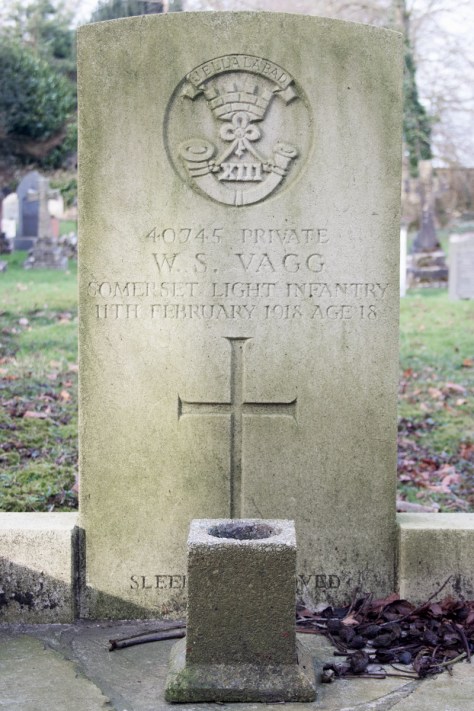
Wilfrid Stanley Vagg was born in 1899 in the Somerset village of Doulting. One of six children, his father Albert was the local blacksmith and innkeeper and he lived with his wife Annie and their family in the Waggon & Horses in the village.
When he left school, Wilfrid was keen to follow in his father’s footsteps; the Oakhill Brewery Company was just up the road from the family pub, and it was here that he found employment as a clerk. When war broke out, however, he must have wanted to do his bet, enlisting in the Somerset Light Infantry when he turned 18.
It may well have been while he was training on Salisbury Plain that Private Vagg became ill. He was treated at the Fargo Military Hospital, situated just to the north of Stonehenge, and was operated on for appendicitis. Sadly, he did not recover, and passed away on 11th February 1918. He was just 18 years of age.
Wilfrid Stanley Vagg lies at rest in the graveyard of St Aldhelm’s Church in his home village of Doulting in Somerset.








 Death and Service