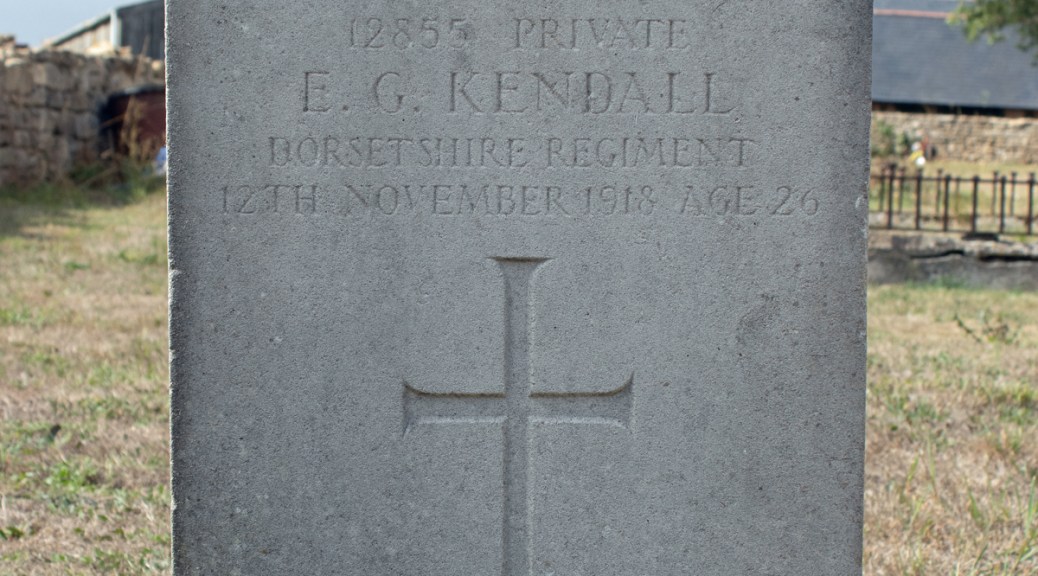
Tag Archives: Battle of the Somme

Rifleman William McMullan

Rifleman William McMullan

William McMullan was born in Okaihau, on New Zealand’s North Island, on 10th May 1896. One of three children, his parents were James and Rose McMullan.

There is little concrete information about William’s early life. By the beginning of 1916, he was working as a bushman and volunteering for the local militia. The First World War provided an opportunity to put his skills to use, and he enlisted in the New Zealand Rifle Brigade on 15th January 1916.

Rifleman McMullan’s service records show that, at 19 years and 8 months of age, he was 6ft (1.83m) tall and weighed 12st 6lbs (79kg). A Roman Catholic, he had brown hair, blue-grey eyes and a medium-dark complexion.

William left New Zealand in May 1916, bound for Britain. The journey took ten weeks and, after disembarking in Devonport, Devon, his unit marched to Sling Camp, near Bulford, Wiltshire, arriving there on 29th July. Just a few weeks later, however, Rifleman McMullan was on the move again, and he found himself on the Western Front towards the end of September.

On 16th November 1916, while fighting at the Somme, Rifleman McMullan received a gunshot wound to his thigh. A blighty wound, it saw him medically evacuated to Britain for treatment, and he was admitted to the No. 1 New Zealand General Hospital in Brockenhurst, Hampshire. A few weeks later, he was moved to Codford, Wiltshire, for recuperation at the No. 3 NZ General Hospital.

William would spend the next few weeks in Wiltshire, but after initially being discharged from hospital, he was re-admitted on 25th January 1917. He had contracted broncho-pneumonia, and this would be the condition to which he would succumb. Private McMullan passed away on 13th February, at the age of just 20 years old.

Thousands of miles away from home, William McMullan was laid to rest in the ANZAC extension to St Mary’s Churchyard in Codford, close to the camp he had most recently called home.


Private Job Jefferies

Private Job Jefferies

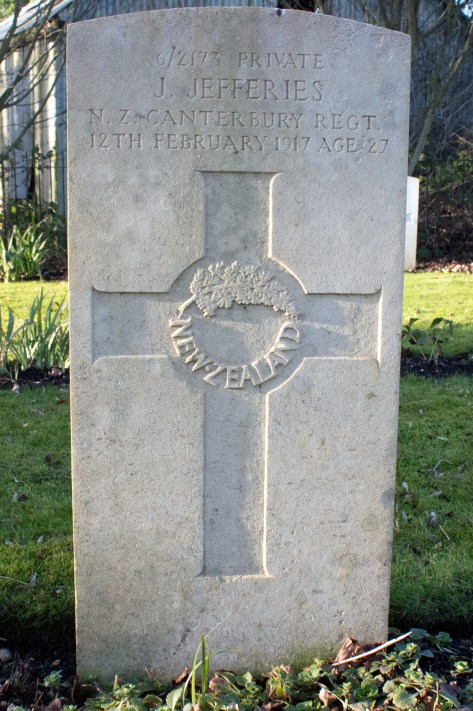
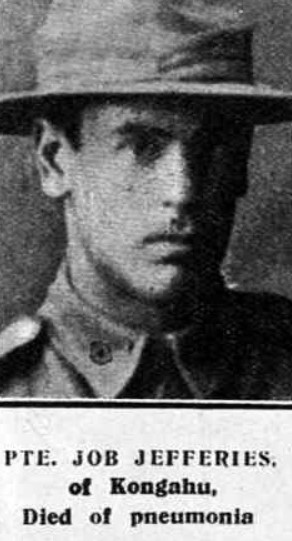
Job Jefferies was born on 12th October 1889 in the city of Timaru, on New Zealand’s South Island. The sixth of ten children, his parents were William and Ada Jefferies.

There is little information available about Job’s early life, but by the time war broke out, he had moved to Kongahu, at the northern tip of South Island. He was working as a labourer, and was employed by the Public Works Department.

Job was quick to step up and serve his country. He enlisted in the New Zealand Infantry on 12th February 1915, and was assigned to the Canterbury Regiment. His service records confirm that he was 5ft 10.75ins (1.79m) tall, and weighed 170lbs (77.1kg).

Private Jefferies left New Zealand in the summer of 1915, and his service record makes for grim reading.

On 9th August 1915, Job’s unit arrived in the Dardanelles, and he was firmly entrenched in the fighting at Gallipoli. Wounded on 5th September, he was initially treated at a casualty clearing station, before being medically evacuated first to Malta, then to Britain. He was admitted to the No. 2 Western General Hospital in Manchester, Lancashire, and would spend the next seven months there.

On 12th May 1916, Private Jefferies was on the move, leaving his base in Hornchurch, Essex, for the Western Front. He re-joined his unit on 7th July, but just nine days later was wounded at the Somme. Medically evacuated to Britain again, he spent the next couple of months being moved between hospitals. Discharged back to base in Hornchurch, Essex at the end of September, he would spend the next four months recuperating once more.

By February 1917, it would seem that Private Jefferies had been moved to Sling Camp near Bulford, Wiltshire. While there, he fell ill, and was admitted to the No. 3 New Zealand General Hospital in nearby Codford. He was suffering from pneumonia, and this time his body could take no more. Job passed away on 7th February 1917: he was 27 years of age.

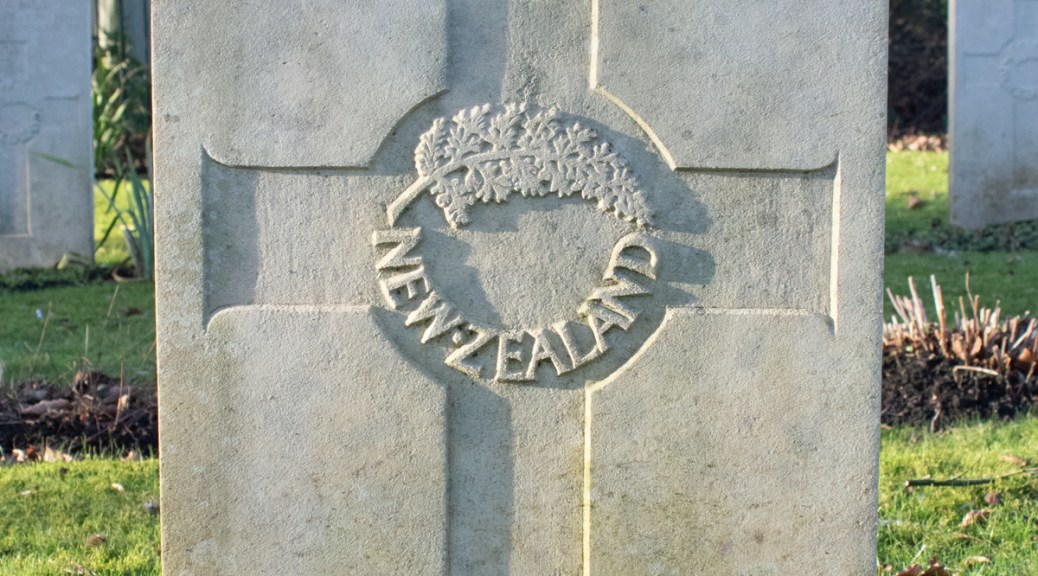
Job Jefferies was laid to rest alongside his fellow soldiers in the ANZAC extension to St Mary’s Churchyard, Codford.


Private Job Jefferies
(from findagrave.co.uk)

Lieutenant Charles Vanstone

Lieutenant Charles Vanstone

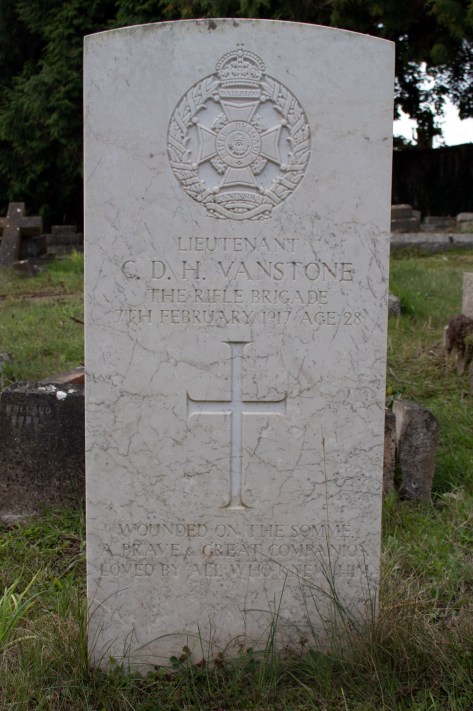
Charles Douglas Howard Vanstone was born in Paignton, Devon, on 27th October 1888. The fourth of seven children, he was the second son to Frederick and Charlotte Vanstone. Frederick was an architect’s surveyor and civil engineer, and the family lived comfortably in the seaside town.

The 1891 census found them living at Sorrento, a villa on Esplanade Road, overlooking the sea. By the time of the next census, they had moved to Torbay Park, and lived in a 12-room property. The family’s three sons all followed in their father’s trade, and, according to the 1911 return, four of the Vanstones were recorded as being civil engineer architects and surveyors.

When war came to Europe, Charles stepped up to play his part. He received a commission in August 1915 and, as a Second Lieutenant, was assigned to the Rifle Brigade. Attached to the 15th (Reserve) Battalion, the records suggest that he was in France by 23rd March 1916.

Lieutenant Vanstone seems to have been part of a Trench Mortar unit at the Somme. Wounded during the battle, he was medically evacuated to Britain for treatment. Admitted to the Reading War Hospital in Berkshire, his injuries were to prove too severe. Charles passed away on 7th February 1917: he was 28 years of age.

Charles Douglas Howard Vanstone’s body was brought back to Devon for burial. He was laid to rest in his home town’s sweeping cemetery.


Charles’ death was the third loss for the Vanstone family in as many years. His older sister, Constance, had died in 1914, while his younger brother, Stanley, a Lieutenant in the 20th Royal Fusiliers, died of wounds he received on the Western Front in October 1915. Just 25 years of age, he is buried in Merville Communal Cemetery, France.


Private Andrew Wishart

Private Andrew Wishart

Andrew Anderson Wishart was born in Mokoreta, New Zealand, on 9th July 1896. The fourth of eight children, his parents were George and Agnes Wishart.

There is little information available about Andrew’s early life, but when he completed his schooling, he found work in the local sawmills, not an uncommon trade for the rural southern part of the country. In his spare time, he enlisted in the cadets, and had spent a year with them when he stepped up to join the war effort.

Andrew signed up on 19th November 1915, and was assigned to the 1st Battalion of the New Zealand Otago Infantry Regiment. His service records show the mad he had become: he gave his age as 20 years old (he was, in fact, only 19), he was 5ft 10.5ins (1.79m) tall and weighed 166lbs (75.3kg). He was initially trained near Wellington, and seemed to enjoy his freedom, as he spent a month in hospital in Trentham, suffering from gonorrhoea.

Private Wishart’s battalion set out from Wellington on 1st April 1916, arriving in Suez a month later. After three weeks’ pause in Egypt, his unit continued on to France, disembarking in Etaples on 28th May, and heading for the Western Front. Andrew soon found himself in the thick of the action.

The 1st Battalion was heavily involved at the Somme in the summer of 1916, and Private Wishart was not to come out unscathed. He was wounded on 30th September, and evacuated for treatment, first to Rouens, then to Britain. Wounded in the left thigh, he was admitted to the 1st New Zealand Hospital in Brockenhurst, Hampshire, and would end up spending two months there.

In December 1916, Private Wishart moved to the ANZAC camp in Codford, Wiltshire. He remained on site for the next few months, although this time was not without incident, as he was admitted to the camp hospital for with venereal disease once more.

Andrew returned to camp on 10th April 1917, but his health seems to have been impacted. He became jaundiced, and was once again admitted to the camp hospital. Atrophy of the liver was identified, and the condition would prove too severe for his body to recover from. He died on 10th July 1917, the day after his 21st birthday.

Andrew Anderson Wishart was laid to rest in the extension to St Mary’s Churchyard in Codford, Wiltshire, not far from the base he had called his home.


Andrew’s younger brother James had also enlisted in the Otago Regiment when war broke out. As a Private, he was assigned to the 2nd Battalion, his path followed a similar one to that of his older sibling. He was killed in action on the Western Front on 15th November 1916, aged just 18 years old.

Private James Wishart is buried in the Cité Bonjean Military Cemetery in Armentieres.

Private James Wishart
(from findagrave.com)

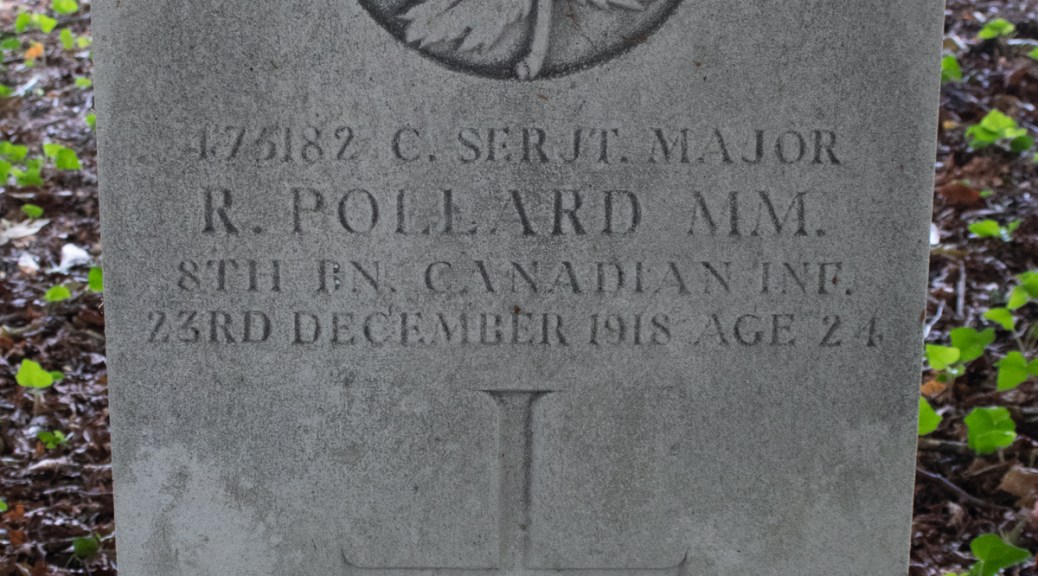
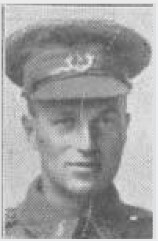
Company Serjeant Major Robert Pollard

Company Serjeant Major Robert Pollard

Robert Edwin Dawe Pollard was born on 8th April 1894 in Bath, Somerset. The youngest of three children, his parents were Joseph and Elizabeth Pollard. Joseph was a gardener from Banwell, but it seems that Robert had his sights on bigger and better things.

At some point Robert emigrated to Canada, and, by the time war was declared in Europe, he was working as an insurance clerk in Winnipeg. He felt a duty to serve his country, however, and on 2nd August 1915, he enlisted in the Canadian Expeditionary Force.

Private Pollard’s service records confirm he was 5ft 6ins (1.69m) tall, with dark brown hair, brown eyes and a fair complexion. He was also noted as being a Presbyterian.

Robert’s commitment to the cause is underlined by his rise through the ranks. Attached to to the 8th Battalion of the Canadian Infantry (also known as the 90th Winnipeg Rifles), he arrived in France on 27th February 1916.

The 8th Battalion was involved in some of the fiercest fighting of the war, and, on the 1st June 1916, he was wounded in his left arm. Admitted to a hospital in Camiers, he was moved to Etaples, before returning to his unit before the month was out.

For good or for bad, this was just before the Battle of the Somme and, over the next few months, Private Pollard fought bravely and hard. Moving from the Somme, his unit fought at Passchendaele and Ypres. On 1st October 1916, Robert was promoted to Corporal, and made Sergeant just three months later.

In April 1917, Robert was admitted to hospital again, this time with an infected foot. Within six weeks he was back with his unit, though, and on 7th November 1917, he was promoted to Company Serjeant Major. He was obviously good at what he did, and this was recognised. On 28th December 1917, he was mentioned in despatches, and the following June he was awarded the Meritorious Service Medal.

As the war entered its closing months, Company Serjeant Major Pollard, still led from the front. He returned to Britain at the end of November 1918, and was attached to the 18th Reserve Battalion in Seaford, Sussex ahead of being demobbed.

It was here that Robert contracted influenza. Whether at his family’s request is unclear, but he was admitted to Bath War Hospital for treatment but, after everything that he had been through, it was a combination of the flu and toxaemia, or blood poisoning, that was to prove his undoing. Company Serjeant Major Pollard died on 23rd December 1918, aged just 24 years old. His mother, Elizabeth was by his side.

Robert Edwin Dawe Pollard was laid to rest Bath’s sweeping Locksbrook Cemetery, not far from where his family lived. His headstone recognises the Military Medal he was posthumously awarded.


Company Serjeant Major Robert Pollard
(from findagrave.com)

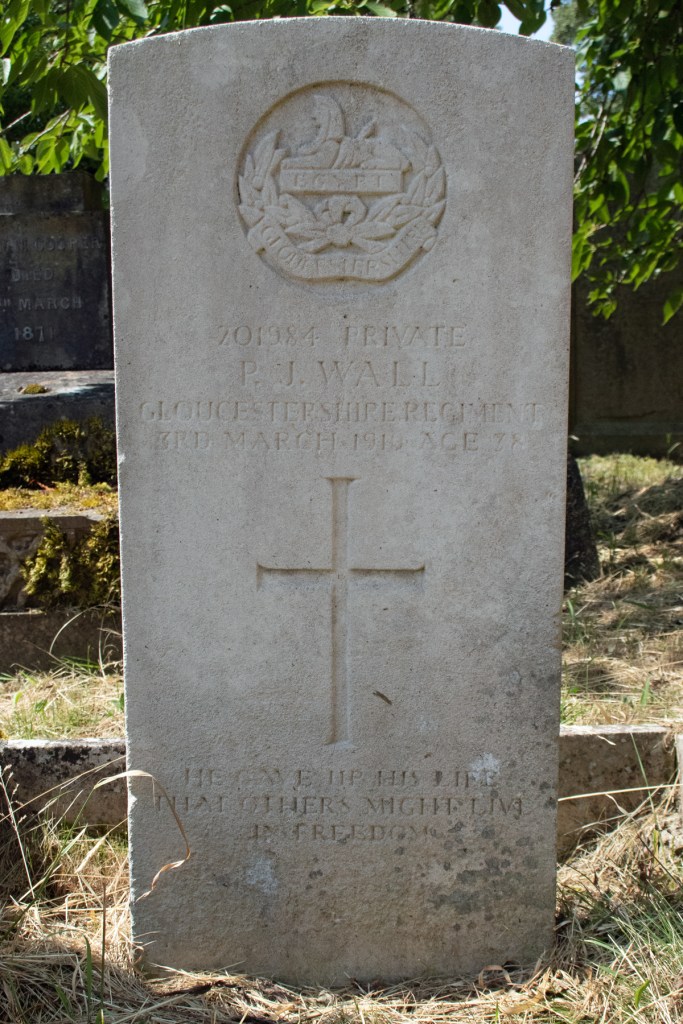
Private Percy Wall

Private Percy Wall

Percy James Wall was born in the Somerset village of Kilmersden in the summer of 1880. The fifth of ten children, his parents were called Robert and Amelia. Robert was a cashier for a local colliery, but it seems that Percy did not follow into his father’s line of work.

The 1901 census found Percy working as a draper’s assistant for Jolly & Son’s in Bath. He was one of 27 boarders at the company’s lodgings on Milsom Street in the city centre. By 1911, he was still working for the same company, but as a draper’s clerk, and had moved to some new lodgings just to the north in Lansdown Road.

When war broke out, Percy stepped up to play his part. He enlisted in the Gloucestershire Regiment, although his full service records are no longer available. Private Wall was attached to the 1st/4th Battalion, and, by the autumn of 1916, he found himself caught up in fighting at the Ancre, part of the Battles of the Somme.

Percy was badly wounded, and evacuated to Britain for treatment. Full details are unclear, but his injuries were enough for him to medically discharged from the army. He was awarded the Silver War Badge – proof of his genuine discharge – but at this point his trail goes cold.

Percy struggled on with his injuries for a further two years. Hhe may have remained in hospital since his original injuries, but there are no records to corroborate this either way. At the start of 1919, he had been admitted to the Bath War Hospital, his family having also moved to the city by this point. He finally succumbed to his wounds, passing away on 3rd March 1919: he was 38 years of age.

Percy James Wall was laid to rest in the sprawling Locksbrook Cemetery, Bath, his pain finally eased.


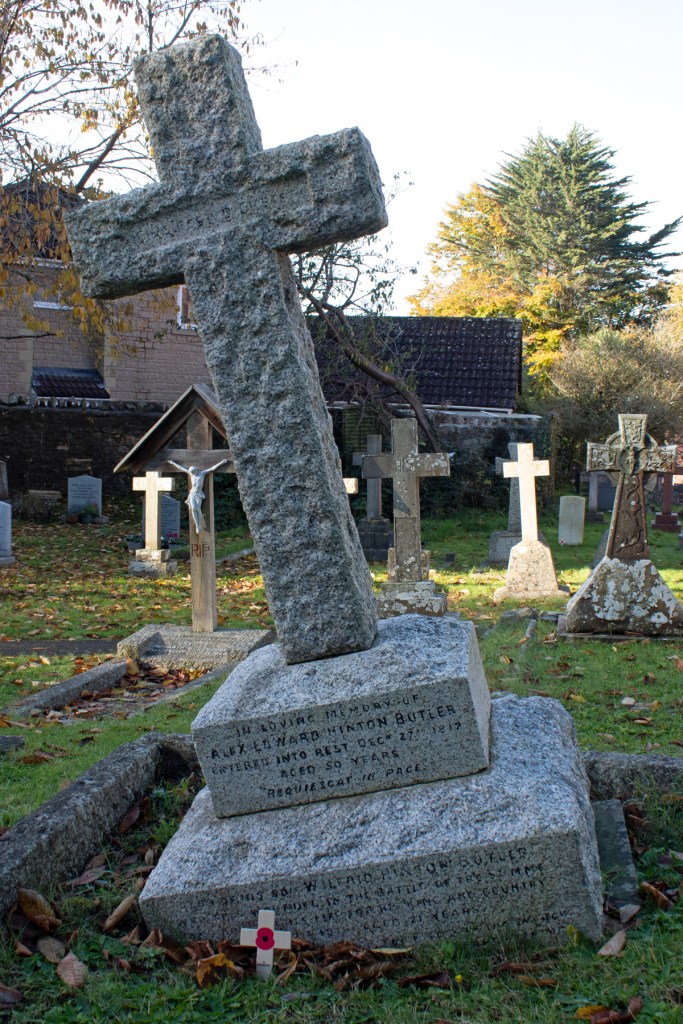
Private Wilfred Butler

Private Wilfred Butler

Wilfrid Hinton Butler was born on 11th June 1895 in Cowley, Oxfordshire, one of four children to Alexander and Mary Butler. Alexander was a foreign stamp importer who, by 1899, had moved the family to the outskirts of Clevedon, Somerset.

The 1911 census found Alexander and Mary living in Clevedon, with Wilfrid’s two younger siblings. Wilfrid himself is missing from the document and, intriguingly, his parents are noted as having only two children: this is likely an misunderstanding over the number of children, and the number residing at home.

At this point, Wilfrid drops off the radar completely, and it is only through later documentation that we can identify what became of him. When war broke out, he joined up, enlisting in the London Regiment. Initially assigned to the 15th (County of London) Battalion (Prince of Wales’s Own Civil Service Rifles), he moved across to the 13th (County of London) Battalion (Kensington) at some point during the conflict.

Private Butler was firmly ensconced in northern France by 1916 and his unit fought in some of the bloodiest battled of the Somme. He was not to come out unscathed, however, and it is likely that he was wounded during the Battle of Morval.

The injuries Private Butler had received were severe enough for him to be medically evacuated back to Britain for treatment. He was admitted to hospital in Kings Norton, Birmingham, but his wounds were to prove fatal. He passed away on 2nd October 1916: he was 21 years of age.

Wilfrid Hinton Butler was taken back to Somerset for burial. He was laid to rest in the graveyard of St Mary’s Church, Walton Clevedon.


Private Charles McManus

Private Charles McManus

Charles McManus was born in Ballymena, County Antrim, in 1891. The middle of three children, his parents were John and Maryann McManus. John was a horse dealer: when they finished their schooling Charles’ older brother, John Jr, found work as a hawker.

Maryann died in 1907, aged just 47 years of age. The next census record, in 1911, found John Jr living with his wife and family in Ballymena, while John Sr was boarding with a fishmonger elsewhere in the town. Alexander, Charles’ younger brother, was a pupil at an industrial school in Dublin, but Charles himself is missing from the census return.

John Sr passed away in 1913, at the age of 53 years old. Charles was 22 years old and an orphan. The following year war was declared, and Charles was one of the first to step up and serve his country. He joined the Royal Inniskilling Fusiliers on 14th September 1914, and was attached to the 1st Battalion.

Full service records for Private McManus are lost to time. However, his unit was sent to Gallipoli in the spring of 1915, only to be evacuated from the region the following January. The 1st Battalion was then sent to France where it became entrenched at the Somme. For Private McManus and his colleagues, this must have felt like going from the frying pan into the fire, but this time he was not to emerge unscathed.

At some point Charles was wounded. He was medically evacuated to Britain for treatment, and admitted to the King George’s Hospital in London. Whatever his injuries, they were to prove too severe: he died on 24th July 1916, at the age of 25 years old.

Charles McManus’ body was taken back to Antrim for burial. He was laid to rest in the Crebilly Cemetery, overlooking his home town, Ballymena. His pension ledger suggests there was happiness in his life, beyond the killing fields. His next of kin is noted as Miss Mary Gordon of Ballymena, recorded as his unmarried wife.


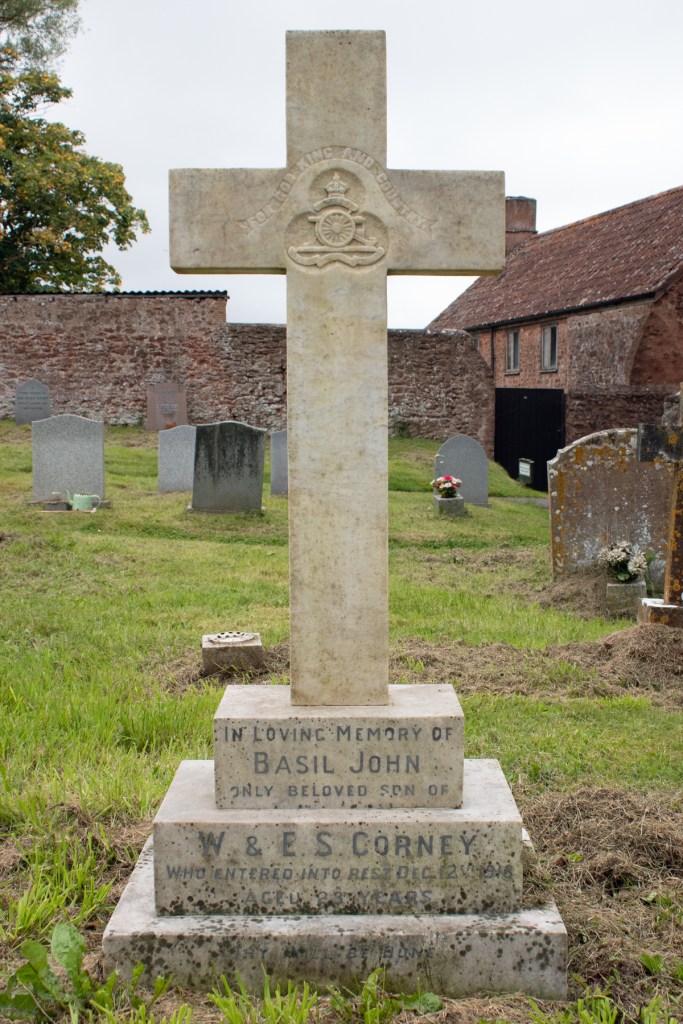
Gunner Basil Corney

Gunner Basil Corney

Basil John Corney was born in Berrynarbor, Devon, in the summer of 1895. The fourth of five children, his parents were William and Elizabeth. William’s work as a farm bailiff, took the family across the area: by 1901, they had moved to Shapwick in Somerset, and the next census record, in 1911, found the family living in Stogumber, where William had taken up management of the White Horse Hotel. Basil, meanwhile, was employed as a butcher’s assistant in the village.

When war came to Europe, Basil stepped up to serve his King and Country. He enlisted on 10th December 1915 and, from this point, preferred to go by his middle name, rather than his first. He asked to be assigned to the Royal Army Service Corps, but by the time he was mobilised in April 1916, he was attached to the Royal Garrison Artillery. Gunner Corney’s service records show that he was 20 years and 8 months old, stood 5ft 10ins (1.77m) tall and weighed 155lbs (70.3kg).

Basil was assigned to the 143rd Siege Battery and, by August 1916, he was sent to France. His time in Europe was to be brief, however, as, on 1st October, he was shot and wounded by shell fire in his right knee while fighting at the Somme. Invalided to Britain for treatment, he eventually seemed to recover, and was transferred to the regiment’s No.2 Depot.

In April 1918, Gunner Corney was admitted to hospital in Edmonton, Middlesex, as his injury was causing some issues again. An examination identified that his kneecap had all but disintegrated, and this led to his eventual dismissal from armed service on medical grounds. He left the Royal Garrison Artillery on 14th November 1918 and was awarded the Silver Badge, noting the reason for him not being in the army.

Basil returned to Somerset, but his time back with his family was to be brief. He passed away at home on 12th December 1918: he was 23 years of age.

The body of Basil John Corney was laid to rest in the peaceful graveyard of St Mary’s Church in Stogumber, across the road from, and within sight of, where his family still lived and worked at the White Horse Hotel.


Private Henry Webber

Private Henry Webber

Henry James Webber was born in Plaistow, Essex, in 1889. One of ten children, his parents were Frederick and Etty Webber. Frederick hailed from Somerset, but worked as a sergeant in the Metropolitan Police. By the time of the 1901 census, he had been promoted to Inspector: the family moved to Somerset when he retired in around 1905, settling in Minehead.

Of Henry, there is little information documented. He does not appear on the 1911 census, and there are no military records to confirm his service in the army. He had certainly enlisted by the summer of 1916, joining the Somerset Light Infantry.

Private Webber was attached to the 7th (Service) Battalion and certainly saw action overseas. His troop was heavily involved in the Battles of the Somme in 1916, and it was here that he was injured. Again, full details are not available, but his wounds were severe enough for him to be medically evacuated to Britain for treatment.

Henry was admitted to the 1st Southern General Hospital in Birmingham, but his injuries proved too severe. He died on 1st November 1916, at the age of 27 years old.

Henry James Webber’s body was taken back to Somerset for burial. He was laid to rest in Minehead Cemetery, not far from where his grieving family were living in Cher Street.