Tag Archives: injury

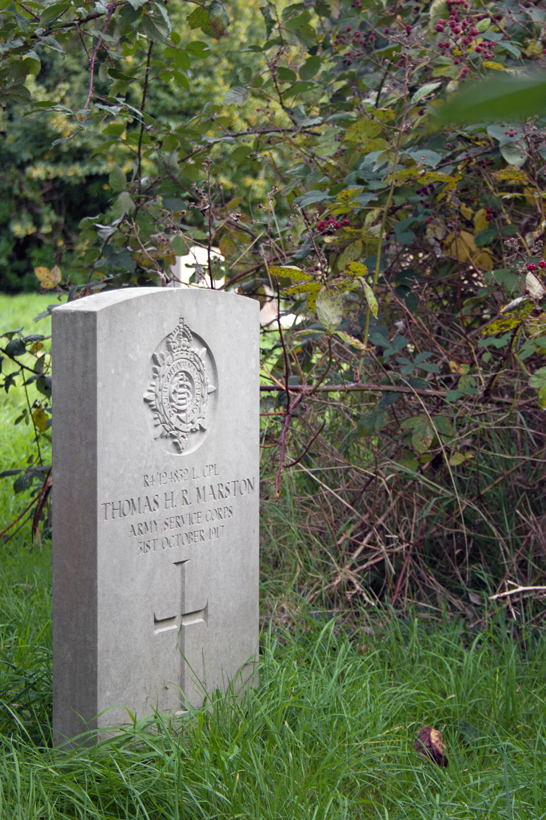
Lance Corporal Thomas Marston

Lance Corporal Thomas Marston

Thomas Henry Robert Marston was born on 12th February 1876, the son of Frederick and Elizabeth Marston. Frederick was a police constable who raised his family in the Paddington area of London.

Sadly, details of Thomas’ early life are tantalisingly scarce. He was not baptised until October 1881, on the same day as his brother, Frederick, who was four years younger.

Thomas seems to have had a sense of adventure; his Commonwealth War Graves Commission records confirm that he served in the South African Campaign – this would put him out of the country during the 1890s, and reinforce why documentation for that time is missing.

The next confirmed information for Thomas is his marriage record. He wed Bessie Ponder by banns in August 1909. The ceremony was at Christ Church in Marylebone, and the couple went on to have two children, Doris, born in 1911, and Hettie, born in 1912.

By the time of the 1911 census, with his military service by now complete, Thomas and Bessie were living on the Caledonian Road in Islington. Still childless at this point (although Bessie was undoubtedly pregnant), Thomas was working as a butcher.

The census gives their address as 54 Wallace Buildings, a Victorian tenement block, and the couple lived in two rooms. Their neighbours at No. 53 were fellow butcher Ralph Bonest, his wife Isabel and their three children, who also all lived in two rooms. On the other side newlywed cab driver William Barnes, lived with his wife Florence and her sister. The Barnes’ had the luxury of No. 55 being a three-roomed flat.

When the Great War broke out, it seems evident that the 38 year old Thomas was either re-mobilised or voluntarily re-enlisted. While the dates are not certain, he had joined the Army Service Corps by March 1917 and was assigned to the Remount Depot at Romsey in Hampshire. This section of the regiment was involved in the provision of horses and mules to other parts of the army.

No further details of Lance Corporal Marston’s military career remain. Sadly, the next record of his life confirm his death. He was admitted to the Hursley Camp Hospital with rupture of viscera (possibly an aneurysm), but died from his injury on 31st October 1917. He was 41 years old.

At some point after the 1911 census, the family had moved to Worthing in West Sussex. The body of Thomas Henry Robert Marston was brought back home, and he was laid to rest in the Broadwater Cemetery in the town.


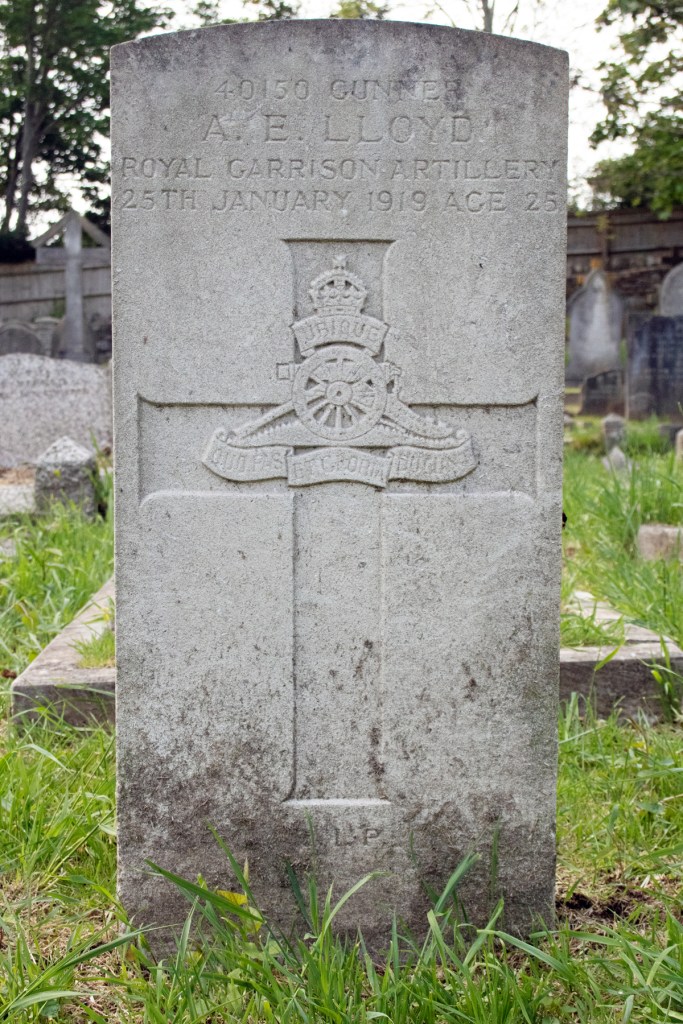
Gunner Albert Lloyd

Gunner Albert Lloyd

Albert Edward Prankard Lloyd was born in Somerset on 25th September 1893, in the Somerset village of Kewstoke (now a suburb of Weston-super-Mare). He was one of eight children to Jabez and Charity Lloyd. Jabez was initially a mason, but later went on to find work as a miner in South Wales. Charity worked as a laundress to help bring in extra money.

When Albert left school, he found employment as a labourer, remaining at home with Charity, with Jabez working away, and three of his sisters working as housemaids or laundresses. By 1911, however, he had moved to Wales with his father to work as a miner; steady employment that brought in a little more money because of the risks involved.

War, however, was on the horizon, and Albert enlisted before hostilities broke out. Joining up on 12th January 1914, his military records show him as standing 5ft 7ins (1.7m) tall and weighing in at 166lbs (75.3kg). He joined the Royal Garrison Artillery and, over the next five years, served three tours of duty in France, totalling just over three years on the Western Front.

Gunner Lloyd’s military service was not without incident, however. In November 1914 he was admitted to hospital for a week, suffering from shock. In April 1917, a shell exploded close to him and he was again found to be suffering from shock. His records note that, following the injury, he had had suicidal thoughts, and wished he was dead.

Just a month later, back on the battlefield, Albert received a gunshot wound to his right thigh. Nine months later, he was admitted to the Hermitage General Hospital in Higham, Kent for three weeks. (The ailment is a mystery, with just the term SCT Toe to identify it.)

When the Armistice came, Gunner Lloyd remained in France, finally returning home on 13th January 1919 ready to be demobbed. While not clear in his records, it seems that the initial ‘shock’ he had suffered from in 1914 had continued throughout the war.

One of the last comments on Albert’s service records is stark. “Found dead on Great Western Railway near Weston-super-Mare. 25.01.19“. Frustratingly, there is no other documentary evidence to expand on this curt phrase, no contemporary newspapers seem to have reported on the event, and nothing more than a scribbled police report was provided for the inquest (again, of which nothing remains).

It seems that the effects of five years of conflict proved too much for Gunner Lloyd; he committed suicide at the age of just 25 years old.

Albert Edward Prankard Lloyd lies at peace at last in the Milton Cemetery in his home town of Weston-super-Mare.


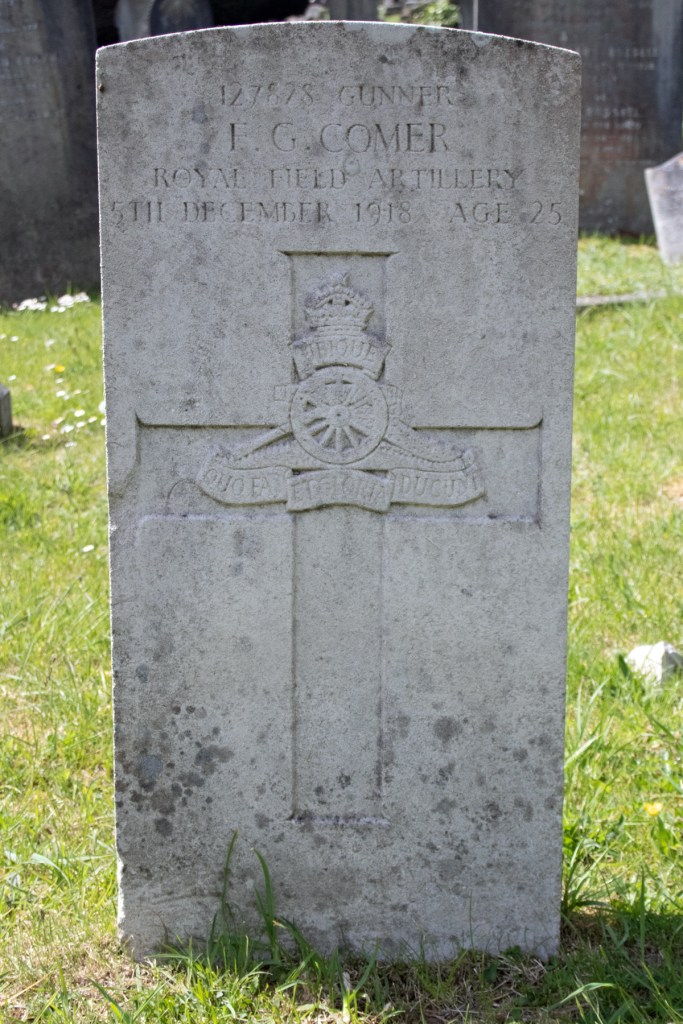
Gunner Frederick Comer

Gunner Frederick Comer

Frederick George Comer was born on 8th July 1893, the older of two children to Fred Comer and his wife Fanny. Fred Sr was a decorator, and raised his family in his town of his birth, Weston-super-Mare.

While his younger brother Clifford followed in his father’s footsteps and became a decorator, Frederick Jr had set his sights elsewhere. The Western-super-Mare Gazette and General Advertiser reported on 31st December 1910, that he had gained a certificate by Pitman’s Shorthand with a speed of 60 words per minute. Within a year, he was working as a news reporter in the local area.

War was on the horizon, but sadly this is where Frederick’s trail goes a bit cold. He enlisted in the Royal Field Artillery, although existing documents do not confirm a date for this. Gunner Comer definitely served overseas, however, and was wounded in action.

Sadly, the other information available confirms that Gunner Comer died from his wounds on 5th December 1918. He was just 25 years old.

Frederick George Comer’s body was brought back to Weston-super-Mare; he lies at rest in the Milton Cemetery in his home town.


Private Ernest Sedgbeer

Private Ernest Sedgbeer

Ernest John Sedgbeer was born in Taunton in the summer of 1891, the second of seven children to Henry and Alice Sedgbeer. Henry worked in a foundry, and his son joined him as a labourer.

By the time of the 1911 census, most of the nine members of the family disappear from the records – it is likely that these were lost – but both father and son are to be found living in South Wales – Henry working as a furnace stoker in the Rhondda, Ernest as a labourer below ground in Llanwonno, near Pontypridd.

Ernest seems to have had an opportunity to find other employment, and started work for Great Western Railways in February 1914. War was imminent, however, and a little over a year later, he had enlisted.

Ernest first joined the Duke of Cornwall’s Light Infantry as a Private, but transferred over to the Dorsetshire Regiment. He was certainly involved in fighting on the Western Front, although full details of his military service are not documented.

His records show that he was awarded the Victory and British Medals and the 1915 Star. Private Sedgbeer was wounded in July 1916 and medically evacuated back to England, where he was admitted to King’s Hospital in Lambeth. Sadly, he was to die of his injuries on 7th July 1916, aged just 25 years old.

Ernest John Sedgbeer lies at rest in the St James’ Cemetery in his home town of Taunton, Somerset.


The local newspaper reported on Private Sedgbeer’s funeral, although it seems to have attributed it to the wrong brother.

The death took place… on Friday last, of Private Charles Sedgebeer of the Dorset Regiment, who was severely wounded in the recent heavy fighting on the Western Front. Deceased was the second son of Mr and Mrs Henry Sedgebeer… and was employed on the railway before the war. His father and three brothers are on active service in France, and one brother in the Navy. The eldest brother has won the DCM.

Taunton Courier and Western Advertiser: Wednesday 19th July 1916

Ernest was indeed the second son of the family, but Charles was the oldest, and survived the war.


Larger memorial image loading...
Ernest John Sedgbeer
(from findagrave.com)

Gunner Walter Coleman

Gunner Walter Coleman

Walter Coleman was born in the spring of 1887, one of seven children to James and Emily Coleman. James was a hairdresser and the family lives in the Somerset town of Taunton.

Walter didn’t follow his father’s trade; instead, after a spell working at a collar factory when he left school, he was soon employed as a groom.

On Christmas Day 1910, he married Kate Norris, and the couple set up in a two-up, two-down in the middle of the town.

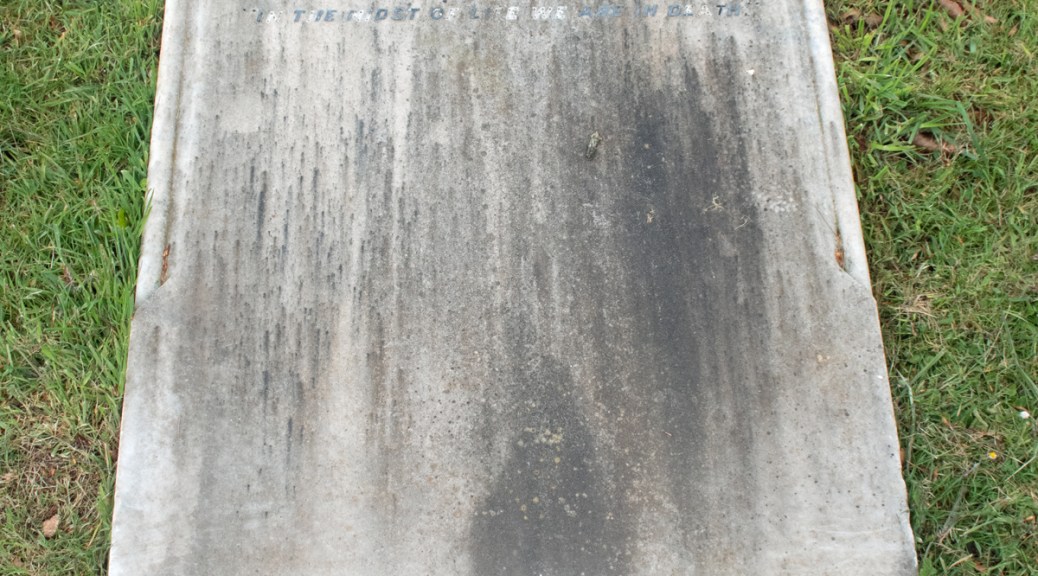
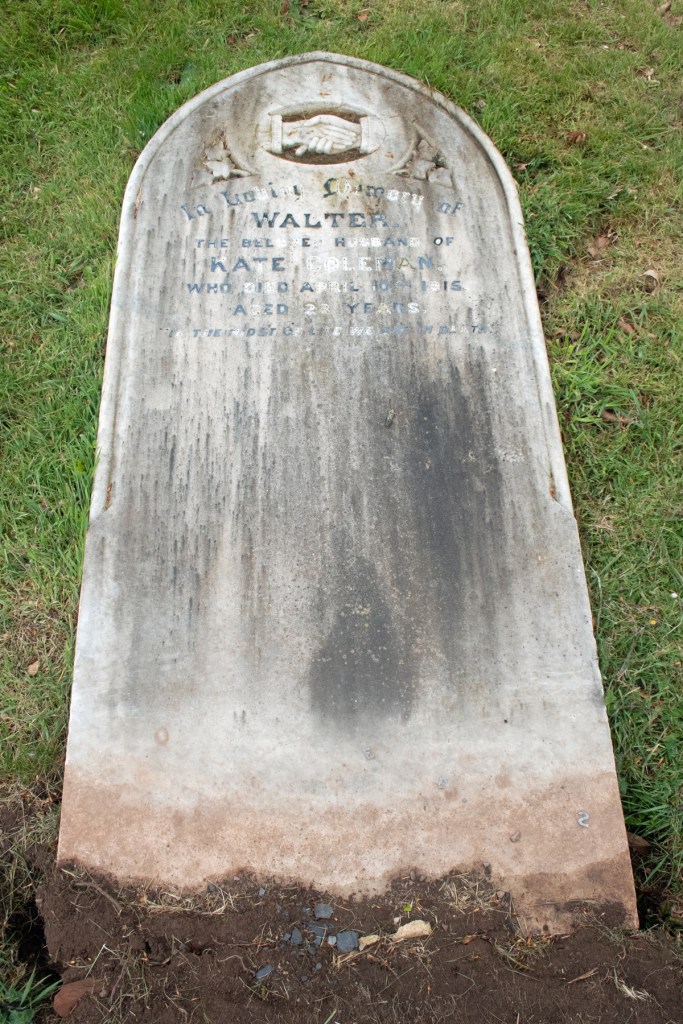
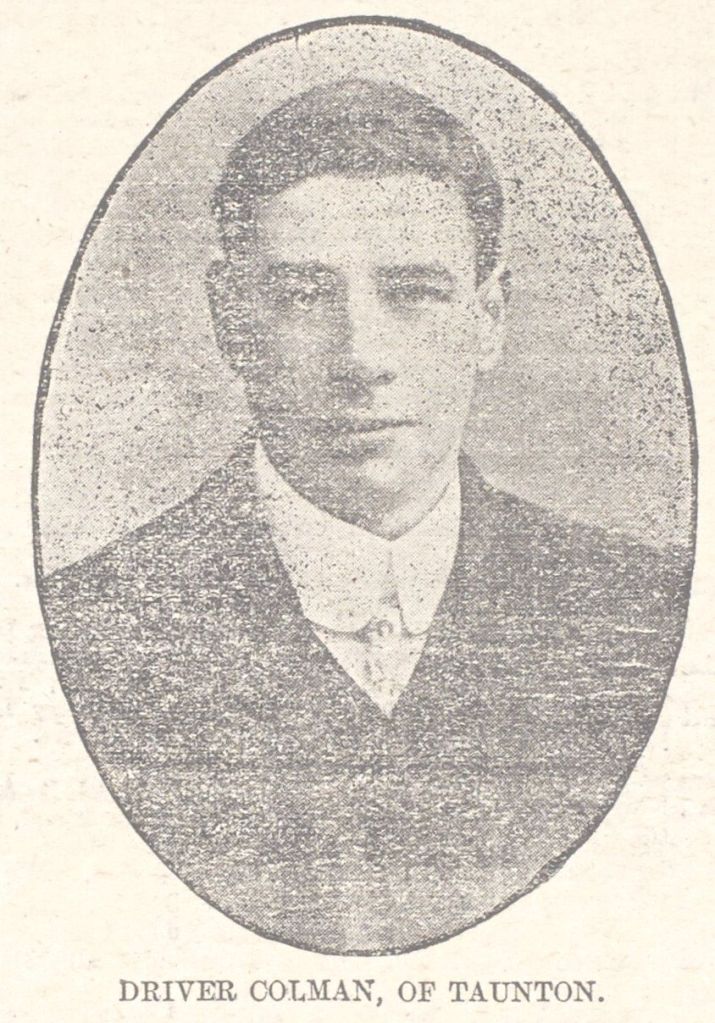
War was on the horizon, however, and when it broke out, Walter signed up straight away. He joined the 72nd Brigade of the Royal Field Artillery as a Driver and trained at the Bulford Camp on Salisbury Plain. It was while he was here on 10th April 1915 that he had an accident and fell off his horse. Sadly, Driver Coleman fractured his skull and died of his injuries that day. He was just 28 years old.

Walter Coleman lies at rest in the St James’ Cemetery in his home town of Taunton.


Walter Coleman (from findagrave.com)

Walter’s older brother Henry James Coleman also served in the Great War. Posted to France as part of the Labour Corps, he died of wounds on 12th April 1918. He was 33 years old, and left behind a widow and four children. He is buried at the Longuenesse Souvenir Cemetery in France.


Private Charles Doble

Taunton St James

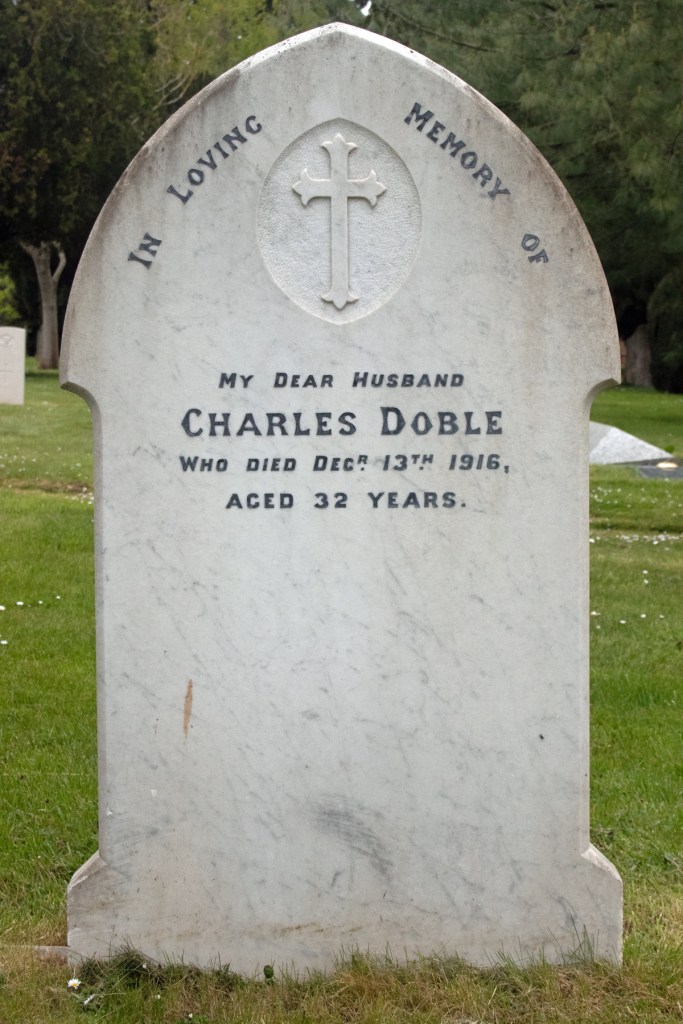
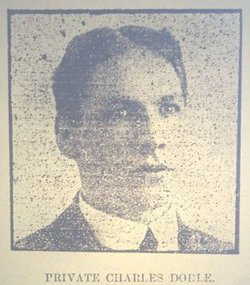
Charles Doble – also known as Charlie – was born 12th September 1884, the second of seven children to James and Mary Ann Doble from Dunkeswell in Devon. James was a carpenter, but on leaving school, Charles initially found work as an errand boy, before becoming employed as a porter at the Taunton and Somerset Hospital.

The 1911 census found Charles in the village of Cotford St Luke, working as an attendant at the Somerset and Bath Asylum. Housing more than 800 patients at the time, it is reasonable to assume that his duties would have been wide and varied.

Details of Charles’ military service are scarce. He enlisted in the Hertfordshire Regiment as a Private in April 1916, but soon transferred over to the 13th Battalion of the Royal Sussex Regiment.

In the spring of that year, Charles married Ethel Willmott; presumably this was before he was sent abroad, because he soon found himself on the Western Front.

His battalion was caught up in the Battle of the Boar’s Head, during with the Royal Sussex Regiment succeeded in capturing a section of the German front line trench and second line trench, before being pushed back because of mounting casualties and a lack of ammunition.

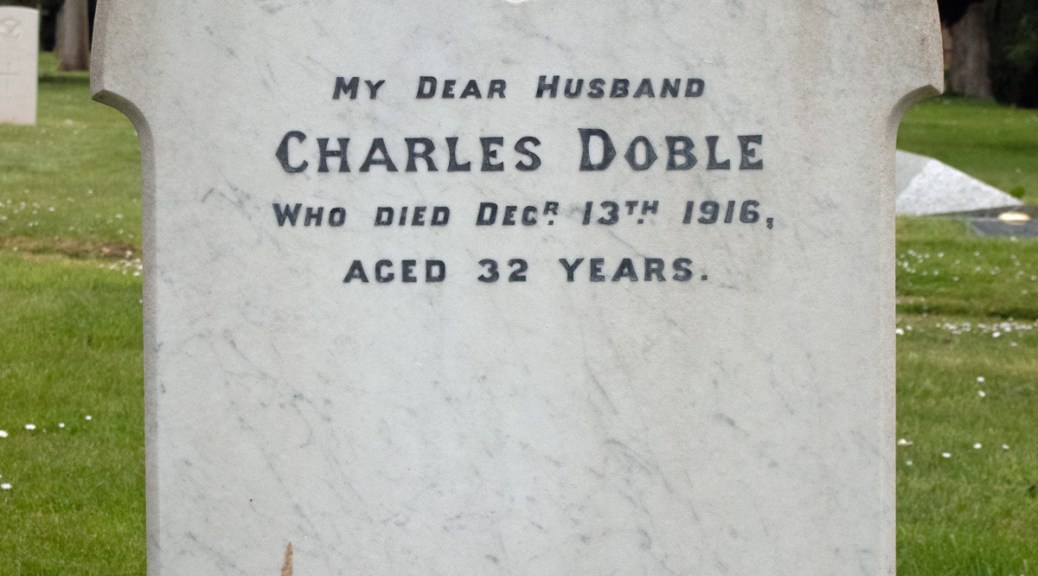
It seems likely that Private Doble was one of those injured on what became known as The Day Sussex Died, as he was evacuated back to England for treatment. Admitted to a military hospital in Stourbridge, sadly his wounds proved too much for Charles to bear; he passed away on 13th December 1916, at the age of 32 years old.

Charles Doble’s body was brought back to Taunton, and he was buried in the St James’ Cemetery in the town.


Charles Doble (from findagrave.com)

Private Frederick Ashton

Private Frederick Ashton

Frederick John Ashton was born in Taunton, Somerset, in 1892. He was one of eight children to scavenger and labourer Thomas Ashton and his wife Susanna.

When he left school, Frederick found work as a carter, and this is the job he was doing in 1913, when he married local woman Ethel May Lock. The young couple went on to have two children, Olive and Phyllis.

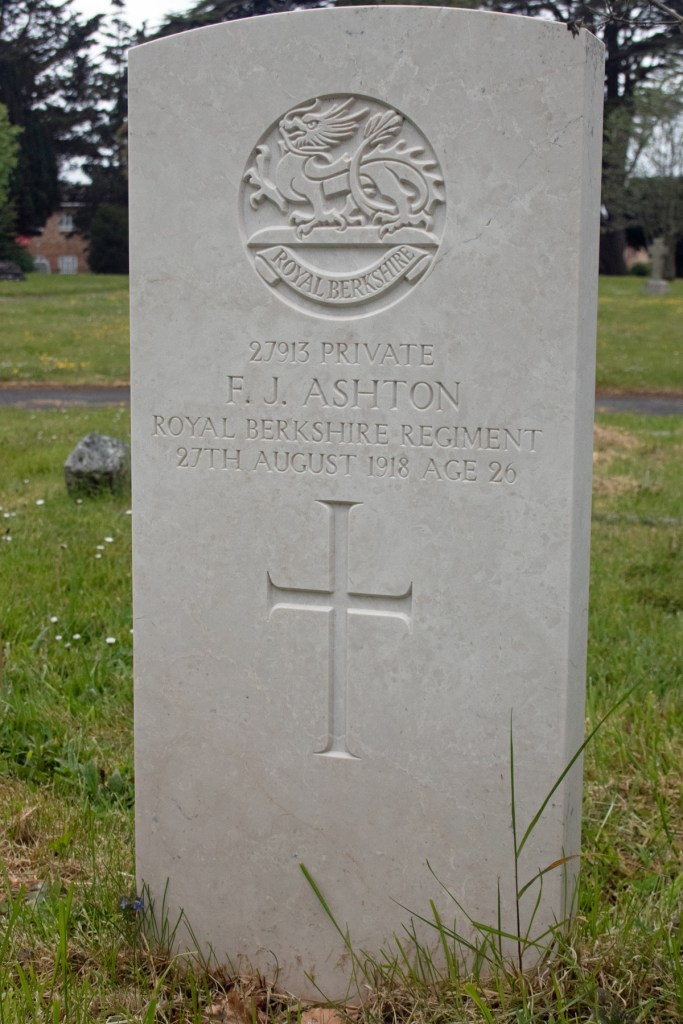
War was on the horizon, and Frederick enlisted in June 1916. Initially assigned to the Royal Berkshire Regiment, Private Ashton was shipped off to France within a couple of months.

During his time there, he was promoted to Lance Corporal, but requested being reverted back to his previous rank a few months later. By this point, he had been transferred to the Labour Corps, the regiment in which he served for the rest of his time.

In March 1918, Frederick was badly wounded, and found himself invalided back to England. He was admitted to the Northumberland War Hospital in Newcastle-upon-Tyne, where his right leg was amputated. Sadly, it appears that the treatment came too late, and Private Ashton passed away on 27th August 1918. He was just 26 years old.

Frederick John Ashton lies at rest in St Mary’s Cemetery in his home town of Taunton.


Private William Bellham

Private William Bellham

William Harry David Bellham was born in September 1888, the only child to William and Rosina Bellham. William Sr was a foreman for a collar manufacturer, and the young family lived in Taunton, Somerset, in a house they shared with Rosina’s mother, Mary Hale.

Life continued pretty much unchanged. When William Jr left school, he became a stenographer for a coal merchant, and, when war erupted in 1914, he didn’t sign up as soon as you would expect for someone of his age.

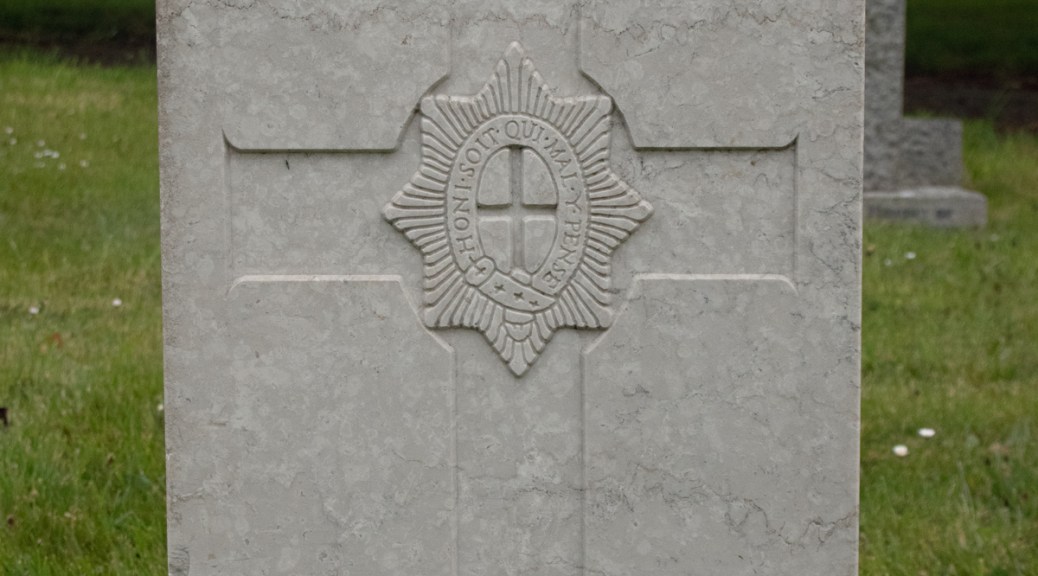
William enlisted in February 1916 and was assigned to the Coldstream Guards – given he stood 5ft 11ins (1.8m) tall, this probably went in his favour. Initially placed on reserve duty, Private Bellham was eventually mobilised in January 1917, and sent to Caterham for training.

Within a matter of weeks, William had an accident. Slipping on some ice, he suffered an inguinal hernia, which subsequently became strangulated, causing him severe pain. After initial treatment in hospital, he was discharged, but was then admitted again five months later when the hernia returned. A further operation was ruled out by the medical examiner, and he was discharged from the army on medical grounds at the end of June 1917.

Once back in Taunton, it did become necessary for William to undergo an additional operation. This was carried out in the local hospital and, according to the records, was a success. Sadly, however, William subsequently contracted pneumonia, and he died on 10th December 1917. He was just 29 years old.

William Harry David Bellham was buried in St Mary’s Cemetery in his home town of Taunton.


Cruelly, the contemporary local media had a less sympathetic take on the incident that caused William’s troubles. The Taunton Courier and Western Advertiser [on Wednesday 26th December 1917] suggested that he “was not really strong enough to stand the strain and hardships of military training and was invalided out after some months’ service.” Not exactly the picture that his medical records had outlined.


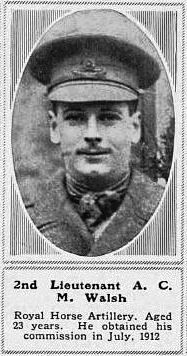
Second Lieutenant Archibald Walsh

Second Lieutenant Archibald Walsh

Archibald Charles Mark Walsh was born on 3rd February 1892, the youngest of three children to Henry Alfred Walsh and his wife Ann. Henry had a distinguished military career, and his sons – Archibald and his older brother Theobald – seemed destined to do the same.

Henry’s service took him around the world, and, by the time Archibald was born, the family had settled in Devon. In tracing the family’s life, however, an unusual quirk arises around the turn of the century.

In 1901, the majority of the Walsh family disappear from census records. For someone like Henry, this would not be unusual; his career took him overseas, and it is likely that records were lost or destroyed.

However, Archibald and his sister Gwladys do appear in the records. They are set up in a seafront villa in the Kent town of Hythe, Gwladys is listed as both a school pupil and the head of the household – at the age of 14 – and the two siblings are living there with a governess, Mary Porter.

By the time of the next census, Cadet Walsh had followed his father into the military. He was a student at the Military Academy in Woolwich, and the following year achieved his commission, becoming a Second Lieutenant in the Royal Horse Artillery.

When war broke out, Archibald’s regiment were shipped off to the Western Front. In March 1915, he was caught up in the Battle of Neuve Chapelle, and was badly wounded.

Shipped back to England for treatment, he was admitted to the Hall-Walker Hospital for Officers in Regents Park, London. Sadly, Second Lieutenant Walsh’s injuries were too severe, and he passed away on 18th March 1915. He was just 23 years old.

Brought back to Taunton, near his family home, Archibald Charles Mark Walsh lies at rest in St Mary’s Cemetery.


Second Lieutenant Archibald Walsh

Private Jack Alston

Private Jack Alston

John Thomas Alston, also known as Jack, was born in Chorley, Lancashire, in 1865 and was one of thirteen children to Richard and Elizabeth Alston. Before he died in 1878, Richard was a stripper and a grinder in a cotton mill, and it was millwork that the majority of his and Elizabeth’s children went into.

When he left school, Jack and his siblings worked as cotton piecers in the mills, tying together any threads that broke on the machines. This was a job aimed at children, whose hands were often the only ones small enough to reach into the equipment.

By 1895, Elizabeth too had passed away. Jack, who was 30 by this point, had moved from Chorley to nearby Oswaldtwistle, and met Mary Ellen Wilcock. She was a widow with two children, and the couple married on 14th February 1897. Their marriage certificate shows that she was the daughter of a weaver, while Jack was working as a furnace man in the mill. The couple went on to have a child together, Amy, who was born in 1900.

The couple settled into if not a comfortable life, then a continued existence. While Mary and her two older children were working in the cotton mill, Jack began labouring at the local chemical works. The family lived in a small, two up, two down cottage right next to Mary and the children’s place of work, and life continued apace.

War was coming however, and Jack volunteered to do his bit. His service records no longer exist, but it can only be assumed that he joined of his own accord; he would have been 50 when hostilities commenced, and so exempt from the initial call-up.

Private Alston was assigned to the Somerset Light Infantry, and was based at their Depot in Taunton. Little information about his time there is available, and sadly, the next accessible document is his pension record. This confirms that he died on 7th April 1916, from “shock caused by a fall while on duty”. There is no other reference to what or how this happened, so the circumstances will remain a mystery. He was 51 years old when he passed away.

It seems that his widow may not have had the funds to bring Jack back home; instead he lies at rest in St Mary’s Cemetery in Taunton, Somerset, close to the depot where he was based.