Tag Archives: killed

Gunner Ernest Prince

Gunner Ernest Prince

Ernest Harold Prince was born in the spring of 1891 in Warminster, Wiltshire. The eighth of eleven children, he was one of five boys to William and Mary Prince. William was a quarry worker, and the family lived at 33 Brook Street to the south of the town.

Ernest followed his father into quarry labouring. William was working in Abercarn, Monmouthshire, at the time of the 1901 census, and had returned to Wiltshire by 1911. Ernest, on the other hand, had sought work in Wales himself by this point, and is recorded as boarding with the Courtney family at 39 Rhyswg Road. The document notes that he was employed as a labourer below ground in a local colliery.

When war broke out, Ernest stepped up to play his part. Full details of his service have been lost to time, and it is unclear whether he was still working in the colliery, and therefore exempt from joining up initially because of his reserved occupation. What is certain, however, is that he had enlisted by the spring of 1918, and, as a Gunner, had joined the Royal Horse Artillery A Battery.

The next record for Gunner Prince relates to his passing. He is recorded as having died of disease on 29th October 1918. His death was recorded in Warminster, so it is safe to assume that he had been at home, or at least in his home town, when he passed. He was 27 years of age.

The body of Ernest Harold Prince was laid to rest in the graveyard of Christ Church in Warminster.


Ernest’s younger brother, Walter, also fought in the First World War. A Private in the 2nd Battalion of the Wiltshire Regiment, he had served on the Western Front during 1915.

Private Prince fought at Loos and was killed on 26th September 1915. He is commemorated on Panel 102 of the Loos Memorial.


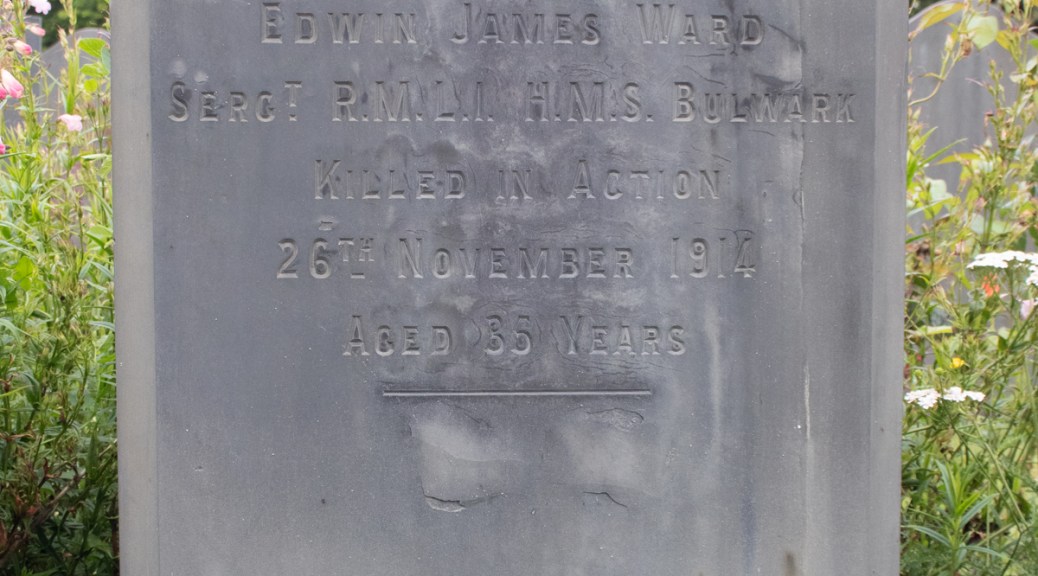
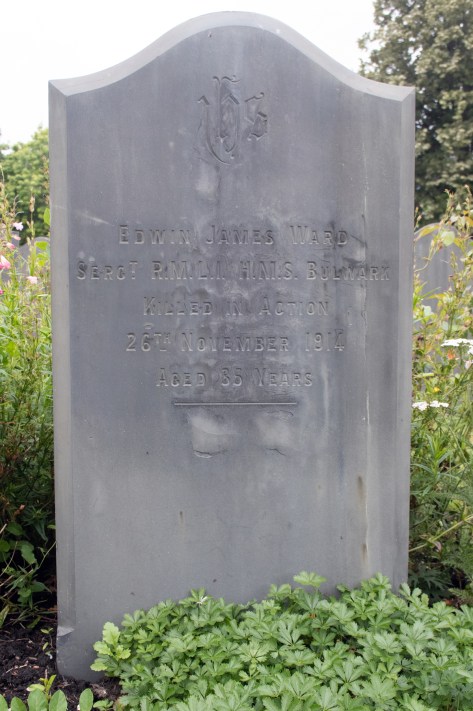
Able Seaman Andrew Jacobs

Able Seaman Andrew Jacobs

Andrew William Jacobs was born on 7th May 1895 in Battersea, Surrey. One of nine children, his parents were Andrew and Ellen Jacobs. Andrew Sr was a bricklayer by trade, and, at the time of the 1901 census, the family lived at 37 Gwynne Road, sharing the house with Arthur and Florence Pitman.

Not long afterwards, the Jacobs family has moved to 31 Farlton Road, and Andrew Jr and his brother Henry were sent to Garratt Lane School. Both were registered on 23rd September 1903, and remained there until 18th November 1904, when they were moved to another school. By this point, Andrew Jr had reached Grade II in the key subjects of reading, writing, arithmetic and spelling.

When he completed his education, Andrew Jr found work as a machine and minder for Price’s Candle Company. According to the 1911 census he was boarding with his older sister, Ellen, and her family, living in a three-room lodging in Durham Buildings, York Road, Battersea.

Later that year, with adventure in mind, Andrew joined the Royal Navy. By this point he gave his employment as a candle wick maker, and, being under the age to fully enlist, he was given the rank of Boy 2nd Class. Sent to the training base in Devonport, Devon, he quickly learnt the tools of his trade and, in January 1912, he was promoted to Boy 1st Class.

On 7th May 1913, Andrew came of age, and formally signed up to the Royal Navy. His papers show that he was 5ft 9.5ins (1.77m) tall, with brown hair, brown eyes and a fresh complexion. The now Ordinary Seaman Jacobs had already served on board the armoured cruiser HMS Leviathan, and was into his second year aboard the training ship HMS St Vincent. Even though he had spent less than two years with the navy, his reviews were promising, noting a very good character and superior ability.

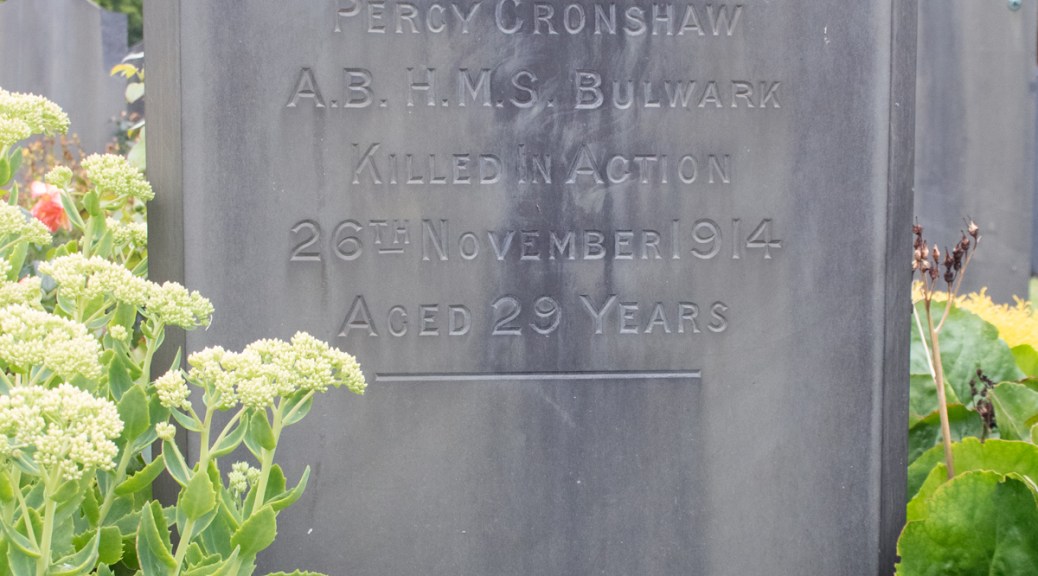
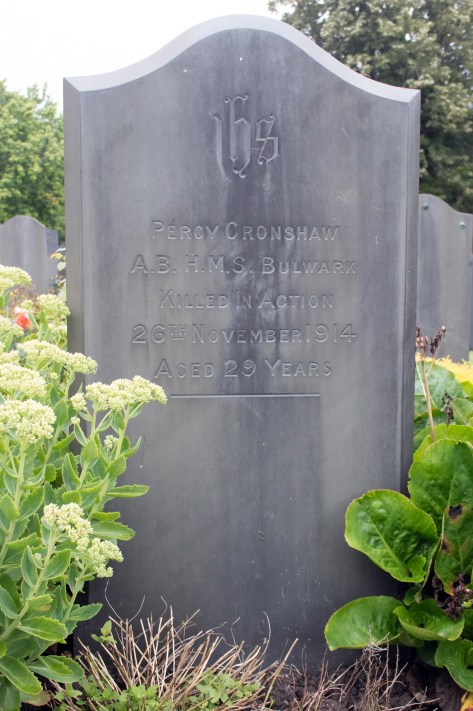
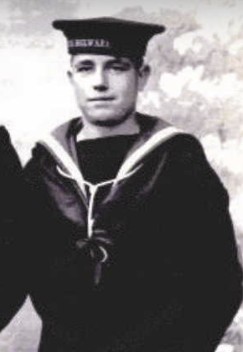
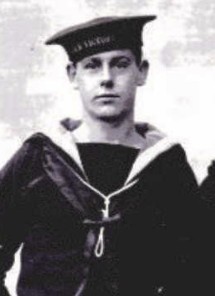
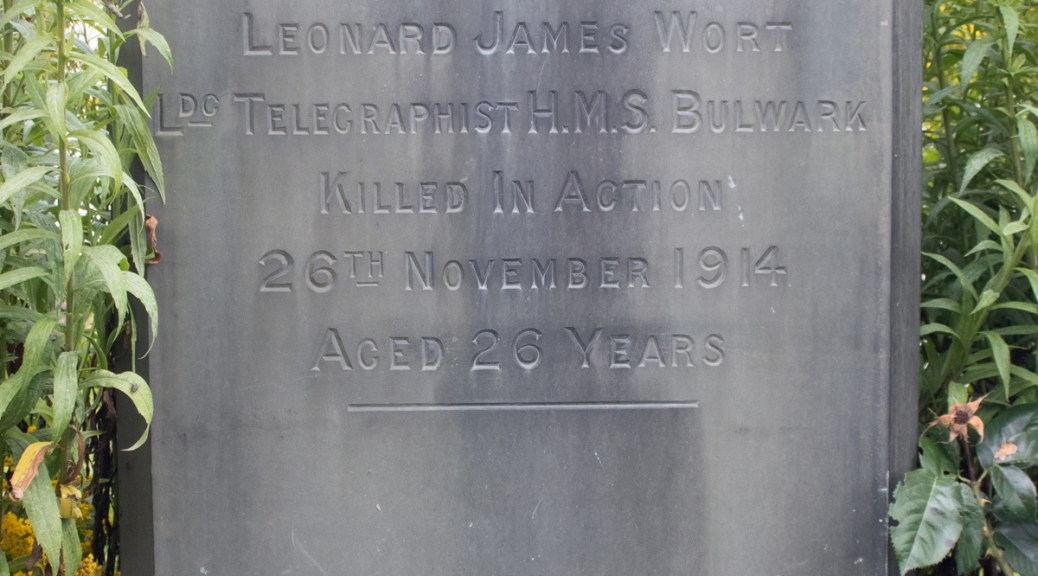
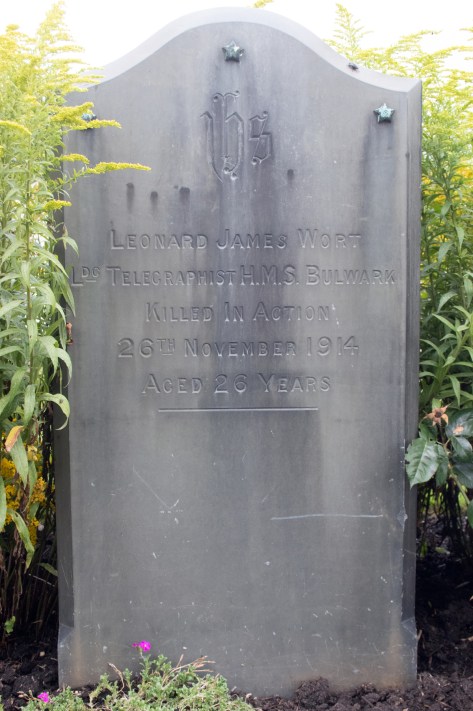
In April 1914, Ordinary Seaman Jacobs was moved to another vessel, the battleship HMS Bulwark. With war on the horizon, she formed part of the Channel Fleet, and was tasked with patrolling and defending Britain’s southern coast. Here Andrew’s dedication continued, and he was promoted to Able Seaman on 9th September 1914.

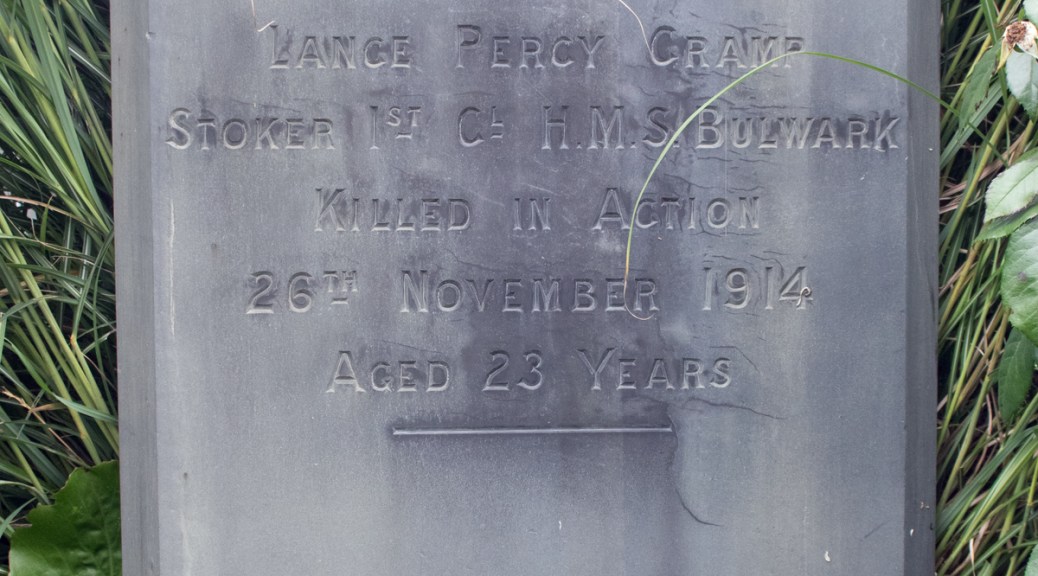
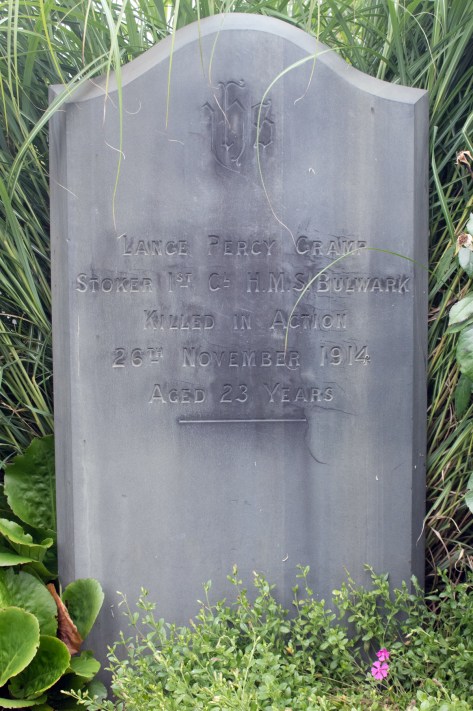
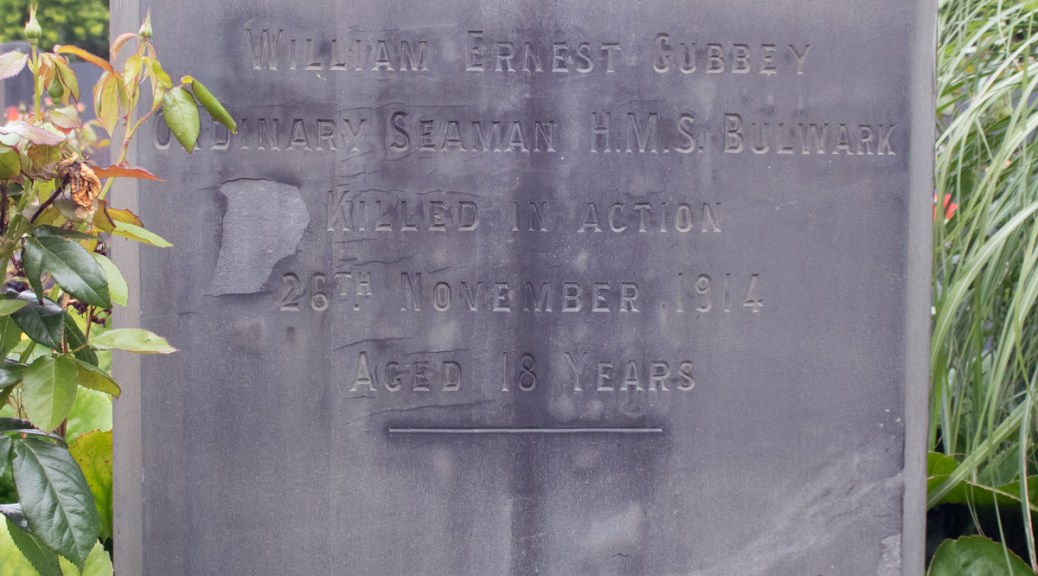
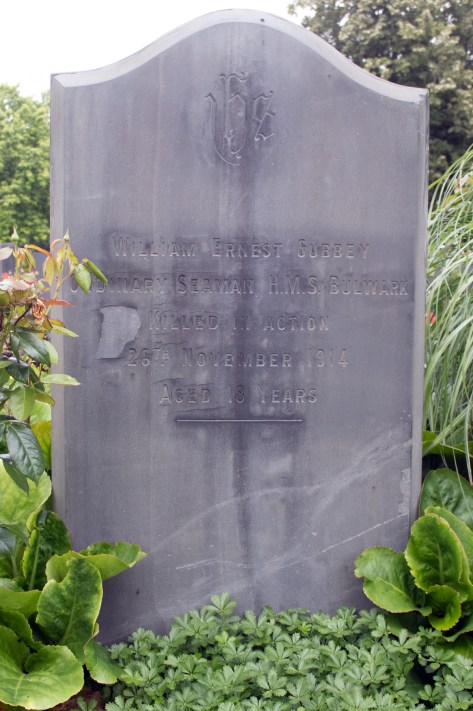
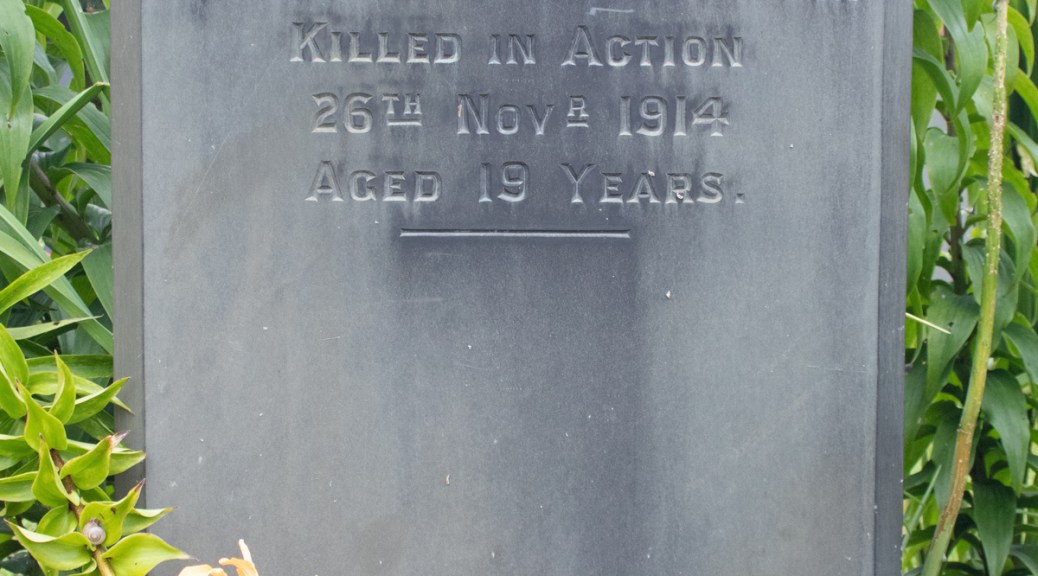
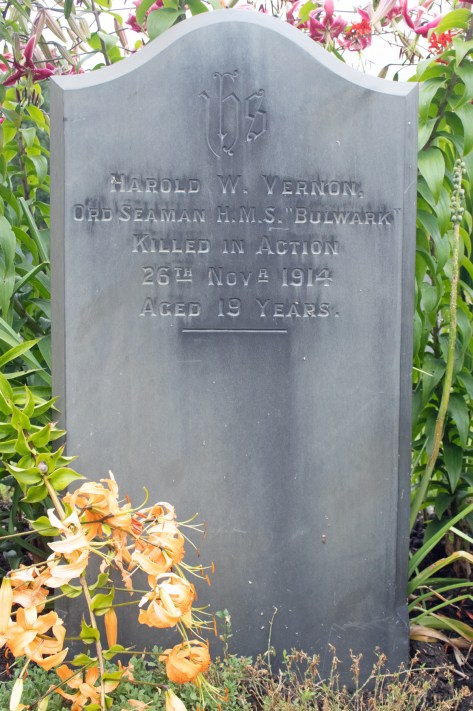
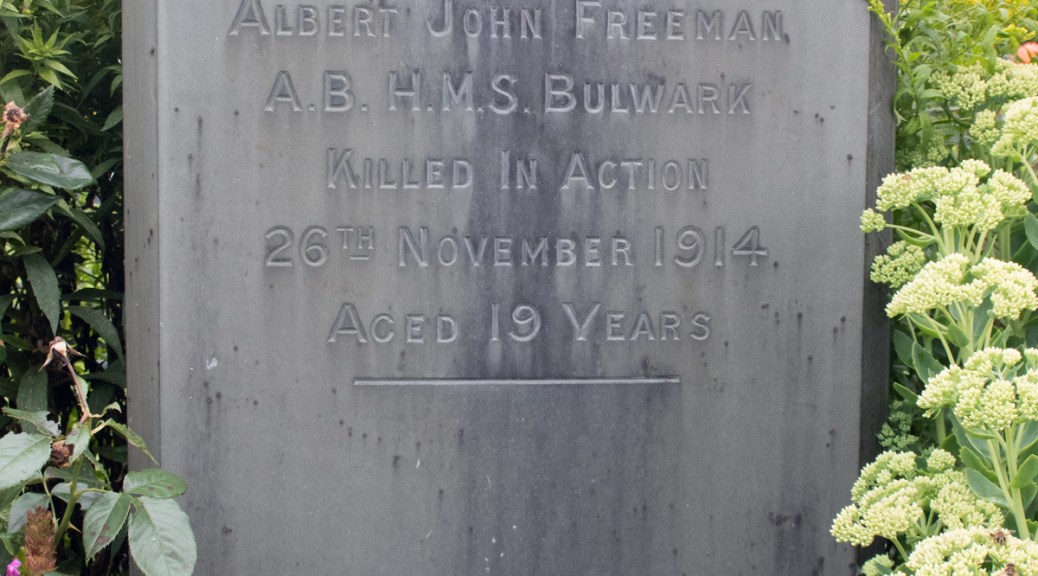
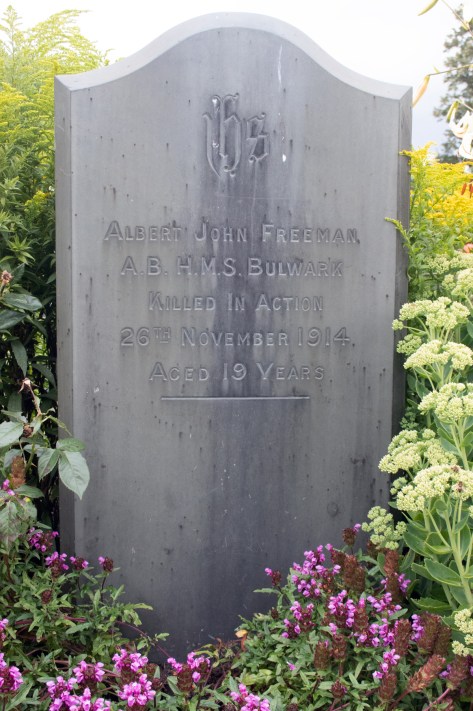
Two months later, on 26th November 1914, Bulwark was moored in the River Medway, close to Sheerness, and was being stocked with shells and ammunition. That morning, some poorly stowed cordite charges overheated, detonating the shells stored nearby. The resulting explosion ripped through the battleship, sinking her and and killing more than 740 crew, Able Seaman Jacobs included. He was just 19 years of age.

Many of the bodies from HMS Bulwark were not recovered, while those that were, but were unable to be identified, were laid to rest in a communal grave in Woodlands Cemetery, Gillingham, Kent. The remains of Andrew William Jacobs were both recovered and identified: he was buried in a marked grave in the same cemetery.


Boy 1st Class Harry Jerrom

Boy 1st Class Harry Jerrom

Harry Herbert Jerrom was born in the parish of Shinfield, Berkshire, on 26th July 1897. The oldest of eight children, his parents were caller Harry and Alice. Harry Sr was a farm labourer, and the family lived in Three Mile Cross.

Details of Harry Jr’s short life are scarce. Certainly when war broke out he stepped up to play his part, and had enlisted in the Royal Navy by the autumn of 1914. He was under the age to fully enlist by this point, and so held the rank of Boy 1st Class.

Harry was assigned to the battleship HMS Bulwark. Part of the Channel Fleet, she was tasked with patrolling and defending Britain’s southern coast. On 26th November 1914, Bulwark was moored in the River Medway, close to Sheerness, and was being stocked with shells and ammunition. That morning, some poorly stowed cordite charges overheated, detonating the shells stored nearby. The resulting explosion ripped through the battleship, and more than 740 crew were killed. Boy 1st Class Jerrom’s was among the bodies to be recovered: he was 17 years of age.

Those who were killed in the explosion were laid to rest in the naval section of Woodlands Cemetery, Gillingham, Kent. As his body had been identified, Harry Herbert Jerrom was laid to rest in a marked grave.


Boy 1st Class Harry Jerrom
(from findagrave.com)

Sergeant Herbert Marriott

Sergeant Herbert Marriott

Herbert Ernest Marriott was born on 15th November 1881 in the Hampshire village of Alverstoke (now part of Gosport). The younger of two children, his parents were George and Sarah Marriott. George was a navy pensioner, who died a matter of months after his youngest son was born, leaving Sarah to raise their two children alone.

The 1891 census found Sarah living at Prince Alfred Cottage in Alverstoke, with her two sons – Herbert, aged 9, and Joseph, aged 22 – and grandson, one-year-old Charles. She was employed as a launderess, while Joseph was employed as a bricklayer’s labourer.

Herbert was keen to build a career for himself and, on 20th July 1897, he enlisted in the Royal Marine Light Infantry. His service record shows that he was 5ft 7.5ins (1.71m) tall, with dark brown hair, brown eyes and a fresh complexion. He was also recorded as having a small scar on his left shoulder.

Private Marriott was sent just along the coast to Portsmouth for his training: this would become his land base in between voyages. He evidently showed some musical talent as, just two months after enlisting, he was given the rank of Bugler. Over the years the career he had sought grew, and his abilities grew with it.

Between 1897 and 1914, Herbert would serve on nine vessels in total. In February 1900 he became a Private once more, but by the end of the following year he had been promoted to Corporal. He continued to rise through the ranks, becoming Lance Sergeant in January 1905 and full Sergeant in the summer of 1907.

In the spring of 1901, Herbert married navy pensioner’s daughter Annie Hill. The newlyweds would set up home at 140 Queen’s Road, Gosport, and have six children between 1904 and 1914.

Back at sea and, by the time war was declared, Sergeant Marriott had been assigned to the battleship HMS Bulwark for two years. Part of the Channel Fleet, she was charged with patrolling and protecting the water off the south coast of England.

On 16th November, Bulwark was moored in the River Medway, near Sheerness, Kent, and being restocked with ammunition. A number of cordite charges had been stored incorrectly and overheated. These detonated the nearby shells and the resulting chain reaction of explosions ripped apart the battleship, sinking it and killing more than 740 crewmen, including Sergeant Marriott. He had turned 33 years of age just the day before.

The bodies recovered were laid to rest in the naval section of Woodlands Cemetery, Gillingham, Kent. As his had been identified, Herbert Ernest Marriott was buried in a marked grave.


Private Thomas Neale

Private Thomas Neale

Thomas Neale was born in the Botley, Oxfordshire, on 3rd June 1876. One of eight children, his parents were George and Mary Neale. George was an agricultural labourer and the family would settle in Cumnor, just over the Berkshire border.

Thomas was keen to make a life for himself and, on 29th December 1898, he enlisted as a Private in the Royal Marine Light Infantry. HIs service papers show that he had been employed as a general labour and the point he signed up, and give an indication into the man he was becoming. He was noted as being 5ft 7ins (1.7m) tall, with grey eyes, brown hair and a fresh complexion. He was also recorded as having a small scar on his right knee.

Private Neale was initially sent to the Royal Marines barracks in Deal, Kent, for his training. Over the next sixteen years, he would serve on eight ships, each time returning to what would become his home base, the Royal Naval Dockyard in Portsmouth, Hampshire, in between voyages. While never outstanding, his annual reviews reported his good or very good character, and very good ability.

When war broke out in the summer of 1914, Private Neale was serving on board the battleship HMS Bulwark. Part of the Channel Fleet, her role was to patrol and protect the English Channel and south coast.

On 26th November she was moored up in the lower reaches of the River Medway, not far from Sheerness, being re-stocked with ammunition. That morning, a number of cordite charges overheated, detonating the shells stored nearby. The resulting explosion ripped through the battleship, and more than 740 crew were killed. Thomas was amongst those whose bodies were recovered and identified: he was 38 years of age.

The bodies that were recovered from the tragedy were taken to the Woodlands Cemetery in nearby Gillingham and laid to rest. Thomas Neale was buried alongside his colleagues in a marked grave, while those whose remains had not been identified were laid to rest in a mass grave nearby.


Private Thomas Neale
(from findagrave.com)

Ordinary Seaman Frederick Millis

Ordinary Seaman Frederick Millis

Frederick Harold Millis was born in Marylebone, Middlesex, on 18th March 1896, and was one of five children to horse keeper William Millis and his wife Emily. Details of his early life are a challenge to piece together – he does not appear on the 1901 census, although Emily and his siblings are recorded at 1 Linhope Street.

William died in 1908, and by the time of the 1911 census, Emily had moved to Brighton, Sussex, where she was living at 49 Bernard Street with Frederick and two of his brothers. Fred was 15 years old by this point, and was working as a telegraph messenger, while his older sibling Alfred was working as a draper’s assistant.

Frederick sought a better life for himself, and, on 28th January 1913, he signed up to the Royal Navy. Being under age, he was given the rank of Boy 2nd Class, and was sent to HMS Vivid, the Royal Naval Dockyard in Devonport, Devon, for his training.

After just three months, Frederick was promoted to Boy 1st Class, and just a few weeks later was assigned to the battleship HMS Prince of Wales. In October 1913, he was moved to another battleship, HMS Bulwark, and it was here that he was formally inducted into the navy.

The now Ordinary Seaman Millis signed up for twelve years’ service, and his papers note that he was 5ft 8ins (1.73m) tall, with dark brown hair, dark brown eyes and a fresh complexion. He was also recorded as having a clasped hands tattoo on his right forearm and another of a sailor on his left arm.

Ordinary Seaman Millis would remain on board HMS Bulwark for a year. The battleship was part of the Channel Fleet, tasked with patrolling and defending Britain’s southern coast. On 26th November 1914, she was moored in the River Medway, close to Sheerness, and was being stocked with shells and ammunition. That morning, some poorly stowed cordite charges overheated, detonating the shells stored nearby. The resulting explosion ripped through the battleship, and more than 740 crew were killed. Frederick was amongst those whose bodies were recovered and identified: he was 18 years of age.

The bodies that were recovered from the tragedy were taken to the Woodlands Cemetery in nearby Gillingham and laid to rest. Frederick Harold Millis was buried alongside his colleagues in a marked grave.


Frederick’s headstone suggests he held the rank of Officer’s Steward: this seems to be an error, and possible a mis-interpretation of the initials of Ordinary Seaman.


Able Seaman Bertram Warner

Able Seaman Bertram Warner

Bertram William Warner was born on 16th February 1895 in Greenford, Middlesex. The youngest of four children, his parents were jobbing gardener Henry Warner and his wife, Elizabeth.

Bertram began working with his father after he completed his schooling, but he had his heart set on bigger and better things. A life at sea drew him in and, on 7th February 1913, he enlisted in the Royal Navy. His service records show the young man he had become: he was 5ft 2ins (1.58m) tall, with dark hair, grey eyes and a fair complexion.

Initially taken on as a Boy 2nd Class, Bertram was sent to HMS Vivid, the Royal Naval Dockyard in Devonport, Devon, for his training. His records outline his ability and commitment to the role. On 28th May 1913, as he moved to the training ship HMS Prince of Wales, he was promoted to Boy 1st Class. On 8th August he was deemed to be of age, and officially inducted into the Royal Navy.

On 4th October, Ordinary Seaman Warner was transferred to the pre-dreadnought battleship HMS Bulwark. Based in Portland, Dorset, at the start of the First World War, she would form part of the Channel Fleet patrolling and defending Britain’s southern coast. Bertram was continuing to prove his mettle and, on 13th October 1914, just eighteen months after initially joining the navy, he was promoted again, to Able Seaman.

Bertram was on board Bulwark on the 26th November 1914, when she was moored close to Sheerness, Kent. That morning, some poorly stowed cordite charges overheated, detonating some of the hundreds of shells stored shells nearby. The resulting explosion ripped through the battleship, killing more than 740 people. Able Seaman Warner was amongst those killed whose bodies were recovered and identified: he was 19 years of age.

The body of Bertram William Warner was taken to Woodlands Cemetery in Gillingham, Kent, and laid to rest alongside his colleagues.


Private John Bellamy

Private John Bellamy

John Henry Bellamy was born in Leicester, Leicestershire, on 14th August 1890. The oldest of four children, his parents were Joseph and Alice Bellamy. Joseph worked as an iron moulder, and the couple lived at 70 Friars’ Causeway when their first child was born.

By the time of the next census, taken in 1901, the Bellamy family had moved, and were living at 19 Pingle Street. Close to the river, this was presumably also close to the foundry where Joseph was employed. John sought a more regular income, however, and, on 22nd November 1907, he gave up his work as a shoe dresser, and enlisted in the Royal Marine Light Infantry.

John’s service records show that he was just over 5ft 5ins (1.65m) tall, with light brown hair, grey eyes and a fair complexion. He had a number of scars, including one by his left elbow and another on the right side of his chin.

Private Bellamy was sent to Deal, Kent, for his training. He spent a year at the Royal Marines base there, and this is where his ability to swim was tested. Over the next seven years, he would go on to serve aboard five ships, more often than not being based in Portsmouth, Hampshire, between assignments.

In July 1914, John was assigned to HMS Bulwark, and would remain with her for the next few months. Indeed, he was on board Bulwark on the 26th November 1914, when she was moored close to Sheerness, Kent. That morning, an explosion ripped through the ship, sinking it and killing more than 740 people. Private Bellamy was amongst them: he was just 24 years of age.

The body of John Henry Bellamy was laid to rest in a marked grave in the naval section of Woodlands Cemetery, Gillingham, Kent.


Leading Seaman Dan Pierson

Leading Seaman Dan Pierson

Dan Pierson was born in Liss, Hampshire, on 14th February 1884. One of eleven children, he was the third of four sons to Daniel and Annie Pierson. Daniel was an agricultural labourer, but his son wanted a more guaranteed career and, on 21st February 1901, he joined the Royal Navy.

Having only just turned 17, Dan was too young to formally enlist, and so was given the rank of Boy 2nd Class. He would spend the next year on training ships – HMS Northampton and HMS Calliope – and was also billeted at HMS Victory, the Royal Naval Dockyard in Portsmouth, Hampshire. Just two months after joining, he was promoted to Boy 1st Class and, when he came of age in February 1902, he was fully enrolled into the navy, and given the rank of Ordinary Seaman.

Dan was assigned to the gunboat HMS Redbreast by this point, and his service records show the young man he had become. He was 5ft 6ins (1.68m) tall, with dark brown hair, grey eyes and a fresh complexion. He also had two tattoos: one of a woman on his right arm, and another of a swallow on his left.

Ordinary Seaman Pierson’s contract was for twelve years and, over that time, he served on board eight different vessels. His annual reviews commented on his very good character and his superior ability, both of which backed up his progression through the ranks. On 11th June 1903, towards the end of his three years aboard Redbreast, he was promoted to Able Seaman, and on 1st December 1913, just a couple of months before the end of his initial term of service, he rose to Leading Seaman.

By this point, Dan had married. His new wife, Edith, was a railway worker’s daughter from Harting in Sussex. She was working as a housemaid for Reverend John Leake and his wife Helena at the time of their wedding.

When his contract came to an end, Leading Seaman Pierson immediately renewed it. His papers show that he had grown to 5ft 9.5ins (1.77m) in height but that he had been injured in the intervening years: it was noted that the little toe of his right foot was missing, and that he had a scar on his left leg.

By the time war broke out, Leading Stoker Pierson was assigned to the pre-dreadnought battleship HMS Bulwark. During the summer of 1914, she was one of the Channel fleet used to protect ships transporting troops across to France. He was on board Bulwark when, on the morning of 26th November 1914, an explosion ripped through the ship while it was moored near Sheerness, Kent, tearing it apart and sinking it. In all 741 souls were lost, Dan amongst them. He was 30 years of age.

Dan Pierson’s body was recovered and identified. He was laid to rest in Woodlands Cemetery, Gillingham, Kent, not far from Chatham Dockyard.


Edith’s brother Ernest Pay was also serving in the Royal Navy. Attached to HMS Bulwark as well, Leading Stoker Pay was also killed in the explosion: he was 28 years of age. Tragically for Edith and her parents, Ernest’s body was never recovered. His loss is commemorated on the Portsmouth Naval Memorial in Hampshire.


Corporal Albert Button

Corporal Albert Button

The early life of Albert James Button is a challenge to piece together. Born in Melbourne, Australia, in 1892, his father was also called Albert. When he finished his schooling, he found work as a hotel clerk, settling at 58 Stirling Street, Fremantle. He married a woman called Gladys, and, in his free time, he volunteered in the local militia.

When war broke out, Albert stepped up to play his part. He enlisted in the Australian Imperial Force on 9th December 1915, his service papers confirming that he was 5ft 8ins (1.72m) tall and weighed 129lbs (58.5kg). He was noted as having fair hair, blue eyes and a fresh complexion: he also had two vaccination marks on his left arm, and a mole on the right side of his neck.

Private Button spent the first half of 1916 training. His voluntary experience put him in good stead, and, he was promoted to Sergeant on 28th March. Towards the end of July, his unit – the 44th Battalion – left Fremantle for Britain, and he arrived in Plymouth, Devon, some two months later.

Sergeant Button was billeted at the ANZAC camp in Codford, Wiltshire. For a unknown reason, when he arrived at the base on 19th September, he was demoted to the rank of Corporal – it is unclear whether or not this was his choice. At this point, he was transferred to the 51st Battalion.

While in Wiltshire, Albert’s training continued. A local newspaper described what happened next:

Mr FAP Sylvester held an inquest at Codford, on Saturday, relative to the death of Corporal Albert James Button, 23, of the Australian Imperial Forces. The deceased, with several of his comrades, was in a bay awaiting his turn to throw a hand grenade, when a private named Taylor, who was in the throwing bay with an instructor, landed his grenade in the opposite direction to that intended, with the result that it pitched into the midst of the soldiers in the waiting bay. Being warned most of the men got away, but the deceased seemed paralysed and stayed until the bomb exploded. He was struck in the head and died almost immediately. Several of his comrades were struck i the legs, but their wounds were not serious. Pte. Taylor’s explanation was that the lever of the grenade caught in his thumb and caused him to swing his arm around. A verdict of “Accidental death” was returned.

[Devizes and Wilts Advertiser: Thursday 30th November 1916]

Albert James Button died on 23rd November 1916: he was 24 years of age. He was laid to rest in the recently extended graveyard of St Mary’s Church, Codford. The epitaph on his headstone starts “In loving memory of my comrade”, but it is unclear who specifically paid for it. Was it Private Taylor? We may never know.


Gladys seems to have distanced herself from her husband’s passing. His memorial plaque and medals were returned undelivered, and his pension seems to have gone unclaimed. It was only in 1923 that the Australian Military Forces were able to confirm that she had remarried, and moved to Sydney.


Private Albert Button
(from findagrave.com)

Private Button’s service papers shed more detail on the incident that took his life. Evidently a summary of notes taken during the inquest, they are light on punctuation:

Inquiry into the death of a soldier in that he on 23.11.16 at Codford whiles in the bay of a live bomb throwing pitch was killed. The bomb was known by 2264 Pte Taylor of 50th Btn now attached to the 13th Inf Btn, which struck against the top of the parapet to the head of the thrower, owing probably to the spin of the bomb came back and dropped on the inside edge of the bay. All men were warned… to reach cover with the exception of 1870 Cpl Button AJJ 51st Battn. who seemed paralysed with fear. He remained in the bay and was found after the explosion lying across the sandbags which were placed at the entrance to prevent the bombs which were thrown against the parapet from falling into the pen. Other soldiers were wounded by shrapnel effect, because instead of falling down flat when a short distance from the bay, continued to run. The bomb not being as was thought a five second bomb, exploded in three seconds (witness 2nd Liet. JW Swanse 45th Bn)… The Court declared that the occurrence was purely accidental owing to the inexperience of live bomb throwing and nervousness on the part of the thrower, also that no blame is attached to any persons concerned in the practice.

[Service papers for Corporal Albert Button]