Tag Archives: mystery

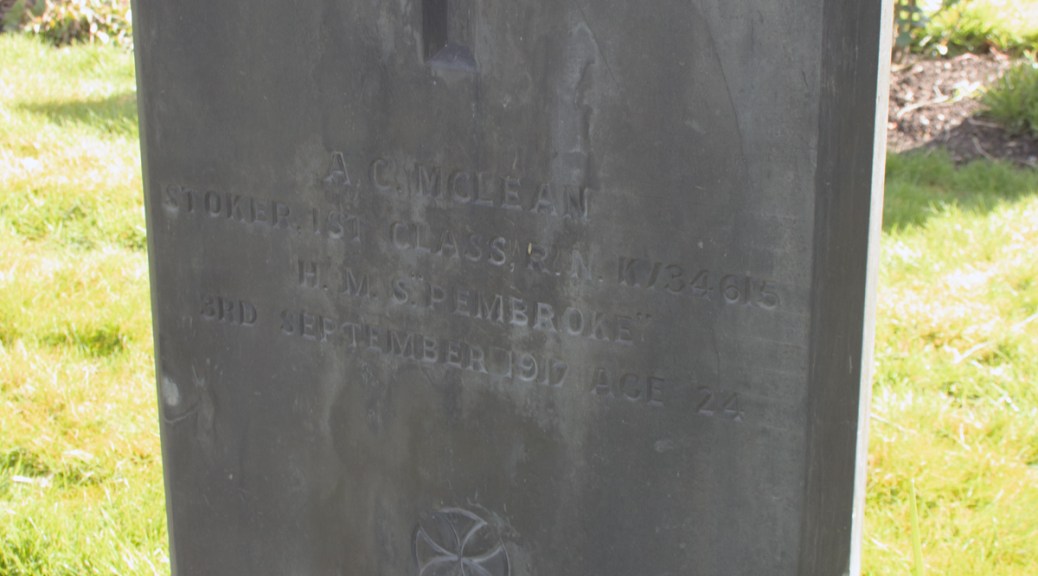
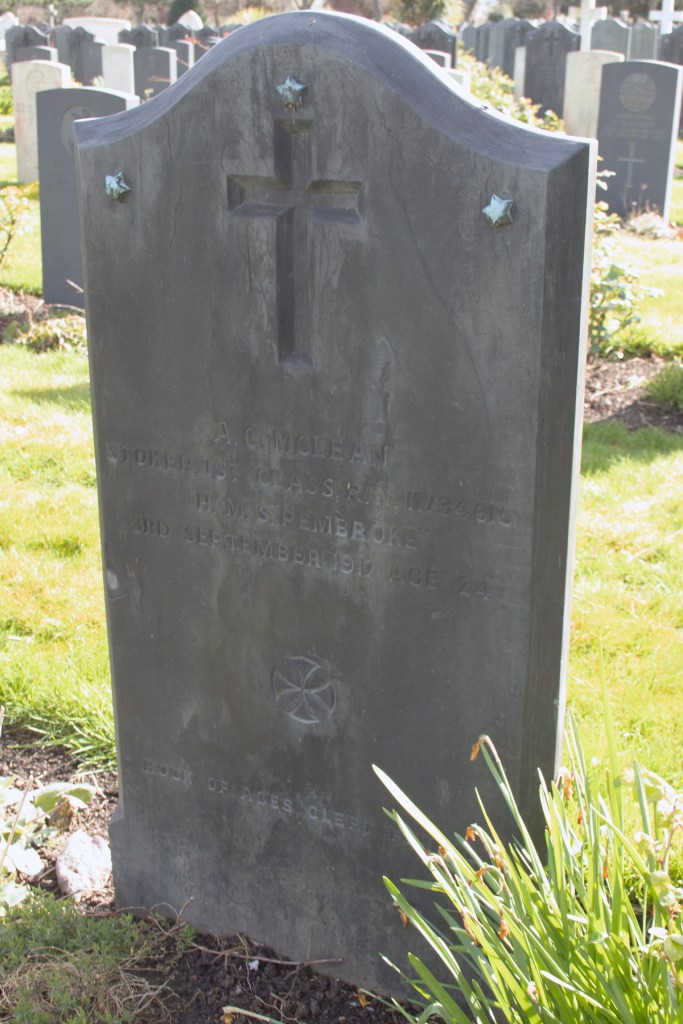
Stoker 1st Class Alexander McLean

Stoker 1st Class Alexander McLean

Alexander McLean was born in the village of Bowling, on the River Clyde near Glasgow, on 7th February 1893. There is little documented on his life, other than that his parents were Duncan and Margaret (Maggie) McLean.

When he left school, he fond work as a caulker at the local docks; war came to Europe, however, and he wanted to play his part. on 11th November 1914, he enlisted in the Cameron Highlanders as a Private. His service records show that he was 5ft 4ins (1.63m) tall, weighed 118lbs (53.5kg), had dark brown eyes, grey eyes and a fresh complexion.

Private McLean’s time in the army was a brief one, however, as his entry exam identified him as medically unfit, and that he would not be an effective soldier.

Alexander was not to be deterred, however, and he soon enlisted in the Royal Navy as a Stoker 2nd Class. There is little information about his life at sea. At some point he was promoted to Stoker 1st Class, and he was certainly based at HMS Pembroke, the Royal Naval Dockyard in Chatham, Kent, by the summer of 1917.

That was particularly busy time for the base, and temporary accommodation had been put in place at the barrack’s Drill Hall: this is where Alexander found himself billeted.

On the night of the 3rd September 1917, Chatham was bombarded by a German air raid, and the Drill Hall received a direct hit. Tragically, Stoker 1st Class McLean was amongst those killed. He was just 24 years old.

Alexander McLean’s body was laid to rest in the Woodlands Cemetery in Gillingham, alongside the other victims of the Chatham Air Raid.


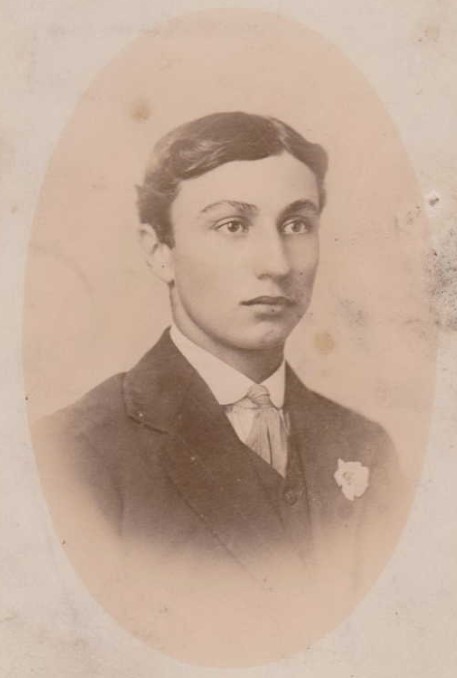
Driver Lionel Shearn

Driver Lionel Shearn

Lionel Shearn was born in April 1895, one of twelve children to, and the youngest son of, Joseph and Emily Shearn. There were two main industries in Paulton, Somerset, where the Shearn family lived, and, over time, Joseph was employed in both. He began in the boot-making industry – this was his trade when Lionel was born – but, by the time of the 1911 census, he had found work as a coal miner. Lionel, who was sixteen by the time of that document, was also working at the colliery as a carter.

War came to Europe in the summer of 1914, and Lionel was one of the first in the town to enlist. Little documentation remains about his military service, but he joined the Royal Field Artillery as a Driver and, by October was in Portsmouth, Hampshire.

Sadly, this is all the service information that’s available, as Driver Shearn passed away in the General Hospital in Southsea, Hampshire on 27th October 1914. His death certificate, which was submitted by his brother, Gilbert, gives a cause of death as otitis media (an infection of the middle ear) and meningitis. He was just 19 years of age.

Lionel Shearn was brought back to Somerset for burial. He was laid to rest in the picturesque Paulton Cemetery.


Driver Lionel Shearn
(from ancestry.co.uk)

Gunner William Withers

Gunner William Withers

William John Withers was born in the spring of 1883, in the Somerset town of Midsomer Norton. He was one of six children to William and Rose Withers. William Sr was a coal miner who went on to become a night bailiff, or caretaker, for the colliery. His son, however, sought different things, and, when he left school, he found work as a grocer’s assistant.

In the summer of 1909, William Jr married Florence Robbins, a miner’s daughter from Radstock. The couple went on to have a son, Allan, in June 1913 but tragically it appears than Florence either died in childbirth, or shortly afterwards.

In the summer of 1914, war came to Europe; by the end of the following year, William had enlisted, joining the Royal Garrison Artillery as a Gunner. His service records show that he stood 5ft 8.5ins (1.74m) tall, and weighted 147lbs (66.7kg). By this time he was working as a shop manager and, as a widower with a young son, it seems that, while he volunteered for service, he wasn’t formally mobilised for another year.

Gunner Withers was initially posted at the Citadel Fortress in Plymouth, but soon moved to Halton Park in Buckinghamshire. He spent time there training to be a Signaller, and in April 1918, he succeeded. That summer, he was posted overseas, serving as part of the 461st Siege Battery in France.

In March 1919, Signaller Withers returned to England. Details are a bit sketchy, but it seems that he was posted to Lincolnshire, and while there he fell ill. He was admitted to the Northern General Hospital in Lincoln with peritoneal adhesions; sadly these proved too much for his body to take; he passed away on 9th April 1919, at the age of 36 years old.

William John Withers’ body was brought back to Somerset for burial. He lies at rest in the graveyard of St Nicholas’ Church in Radstock.


The exact spot of William’s burial is unknown. The grave in the image is of his father, who passed away in 1921. It is likely that William Sr was buried with his son.


Private Bertie Ball

Private Bertie Ball

Bertie Ball was born in Westcott, Berkshire, in the spring of 1890, the oldest of ten children to John and Matilda Ball. John was from Berkshire, who raised his family in Wantage. He began life as a farm labourer, but, by the time of the 1901 census, he had found other employment, as a groom at a racing stable.

Details of Bertie’s life are scarce. When he left school, he found work as a garden labourer and, when war broke out, he enlisted in the Royal Army Service Corps. Private Ball was assigned to the Mechanical Transport Company, but whether he served overseas or on home soil is unknown.

Bertie died on 4th March 1915 from cerebrospinal meningitis. He was just 24 years old. He was laid to rest in the graveyard of St John the Baptist Church in Midsomer Norton – I can find no Somerset connection, so can only imagine that he passed away in or near the town.


Bertie’s younger brother Percival Ball also served in the First World War. He served with the 5th Battalion of the Wiltshire Regiment and fought in Mesopotamia. Sadly, he was killed there, dying on 5th April 1916. He was just 17 years of age. He is commemorated on the Basra Memorial in Iraq.


Guardsman Arthur Baguley

Guardsman Arthur Baguley

Arthur George Baguley was born in the autumn of 1897 in Warwick, and was one of six children to George and Rosa Baguley. George was a journeyman butcher who had moved his family to Frome, Somerset, by the time Arthur was three years old. George died in 1908, leaving Rosa to raise the younger members of her family alone.

Little information about Arthur’s life remains, and the only other documents that can be directly connected to him relate to his passing towards the end of the war. These confirm that he enlisted as a Guardsman in the Coldstream Guards at some point after April 1918.

Based in barracks in Hampshire, Guardsman Baguley was admitted to the Connaught Hospital in Aldershot, suffering from infective endocarditis, a bacterial infection of the heart. Sadly, he succumbed to the illness, passing away on 13th September 1918, aged just 20 years old.

Arthur George Baguley’s body was brought back to Somerset for burial. He was laid to rest in the graveyard of St John the Baptist Church, Midsomer Norton, where his mother was living by that point.


Guardsman Arthur Baguley
(from ancestry.co.uk)

Gunner Sidney Carey

Gunner Sidney Carey

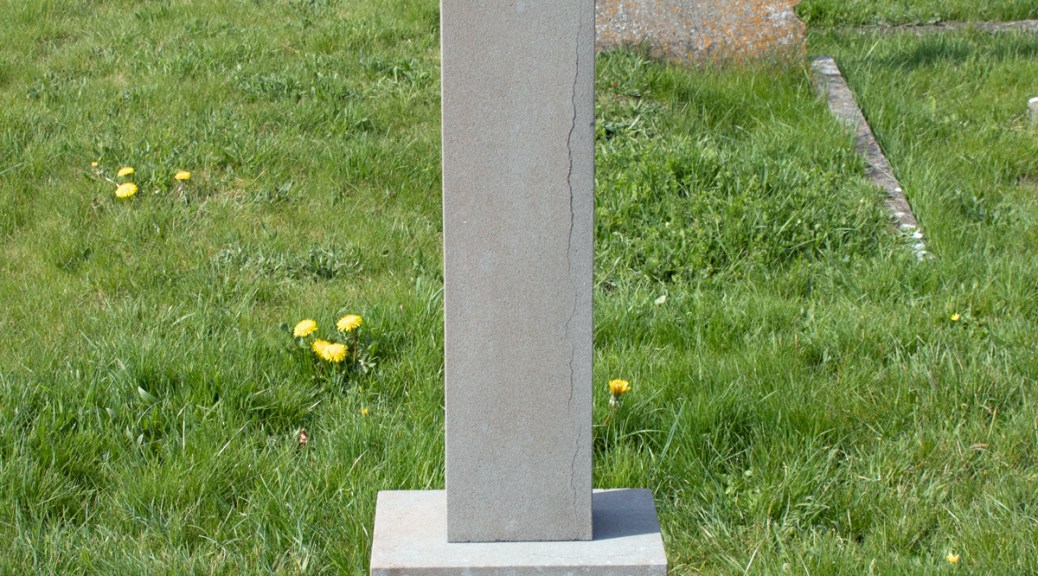
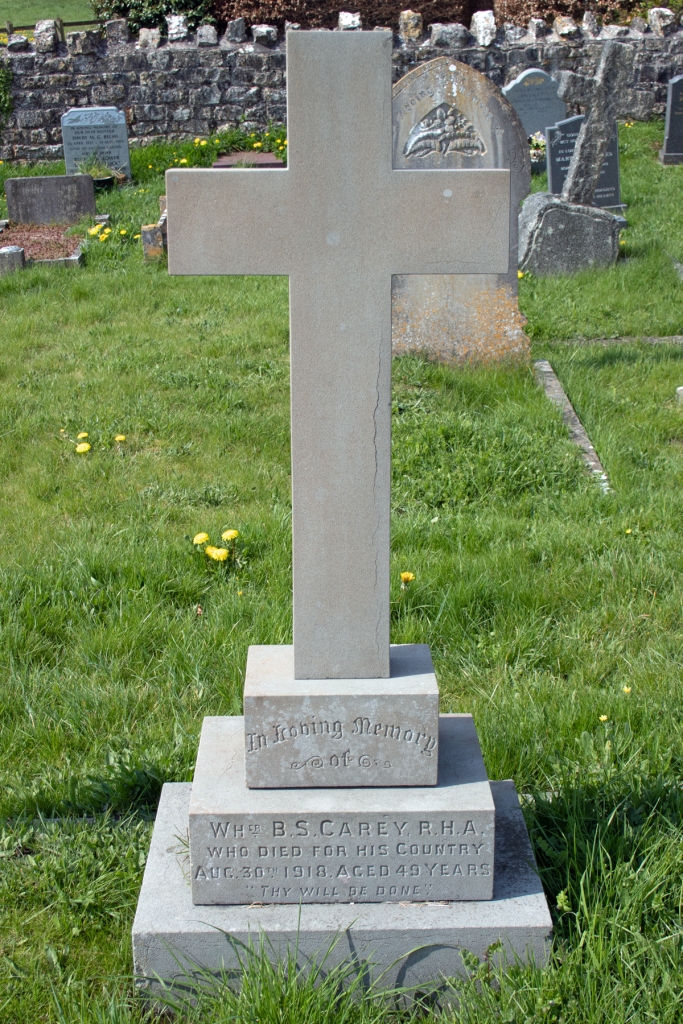
Banfield Sidney Carey – who was also known by his middle name – was born in 1868 in Farmborough, Somerset. His father, Abel, was a wheelwright, and both he and Sidney’s mother, Hannah, came from the village.

Sadly, little of Sidney’s life remains documented. He married Janet Morgan in Blackburn, Lancashire, in the autumn of 1912; they had had a daughter, Dorcas, five years before, and Janet had another daughter, Viola, from a previous relationship.

War came to Europe and Sidney enlisted in the Royal Horse Artillery as a Gunner (Wheeler), at some point before February 1918. By that year he was based at the regiment’s cadet school in St John’s Wood, London.

On 30th August Gunner Carey suffered a ruptured aneurysm and, despite being rushed to the nearby Hampstead Military Hospital, he died. He was 49 years old.

Sidney Carey was brought back to Somerset for burial in the family plot. He was laid to rest in the graveyard of All Saints’ Church in his home village of Farmborough.


Private John Peacock

Private John Peacock

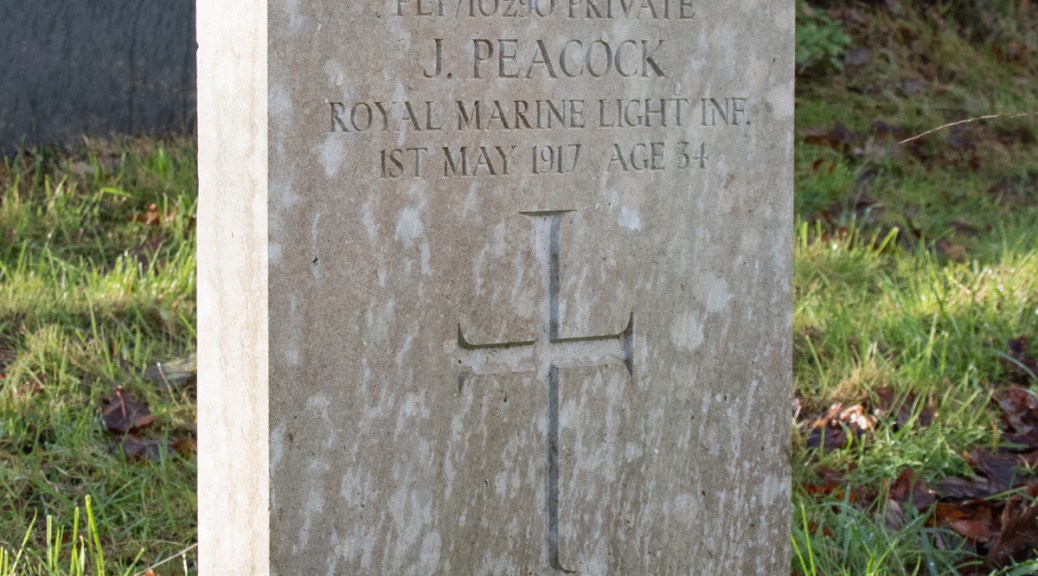
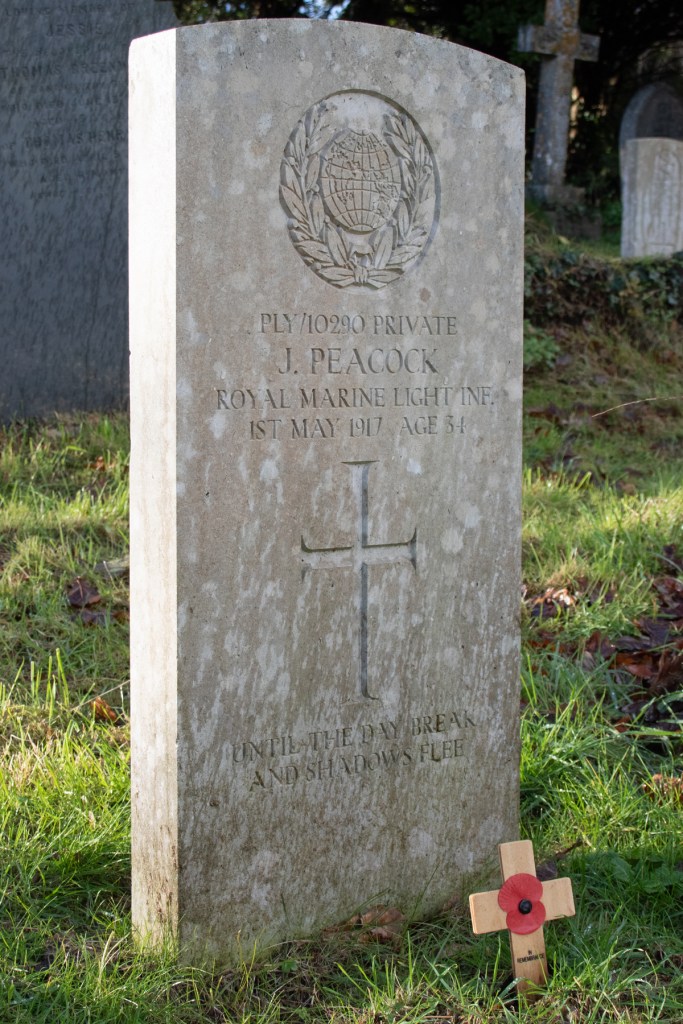
John Peacock was born in Ashburton, Devon, in 1883. Details of his life are a little sketchy, but his parents were John and Mary Ann Peacock, and he was one of at least thee children. John Sr was an agricultural labourer, but his son wanted bigger and better things.

By the time of the 1911 census, John Jr had enlisted as a Private in the Royal Marine Light Infantry. No military records exist to confirm when he joined up or where he served. The census recorded him as being a patient in the Royal Naval Hospital in East Stonehouse although, again, there is no record of why he had been admitted.

The story of Private Peacock’s health seems to remain a thread through his life. The next document evident is his Pension Ledger Card. This confirms that he died on 31st May 1917, from what was described as general paralysis, often insane. He was 34 years of age.

John Peacock was laid to rest in the graveyard of St Andrew’s Church in his home village of Ashburton, Devon.


Private William Moore

Private William Moore

William John Moore was born in October 1893 in the Dorset village of Puncknowle. He was the second of four children to Richard and Elizabeth Moore. Richard was a farm labourer and Elizabeth’s family were all fishermen, but is was agricultural work that William sought out when he left school.

There is little direct information available about William’s life. When war came to Europe, he joined up, enlisting as a Private in the Dorsetshire Regiment at some point before April 1918. He served on home soil, and was based at one of the regiment’s depots on Salisbury Plain.

At some point late in 1918, Private Moore was admitted to the Military Hospital in Tidworth, although the cause for his admission is not known. Tragically, William died in the hospital on 13th October 1918. He was just 25 years of age.

William John Moore was laid to rest in the cemetery in his home village of Puncknole.


Stoker 1st Class Ernest Hoskins

Stoker 1st Class Ernest Hoskins

Ernest Hoskins was born in Catford, South East London, and was the oldest of six children to Joseph and Mary Hoskins. Joseph was a landscape gardener from Devon, who sought his fortune in the capital; the family moved across the city over the years, in search of work.

Ernest found work for the merchant navy when he left school. War soon broke out, and, on 14th July 1915, he enlisted in the Royal Navy as a Stoker 1st Class. His service records give him as 5ft 10in (1.78m) tall, with light brown hair, blue eyes and a fresh complexion. They also confirm a date of birth as 21st July 1889, which is at odds with his census records, which suggest he was born three years earlier.

Stoker Hoskins was initially posted to HMS Pembroke – the Royal Naval Dockyard in Chatham, Kent – and spent the rest of the year there. He was then moved up river to the shore-based establishment in London known as HMS President, remaining there for eighteen months before transferring back to Kent.

Ernest seems not to have always been on the right side of the law: within days of arriving back in Chatham, he was detained for 36 days for “offering [a] forged receipt and attempting to obtain money by false pretences.”

Ernest was released on 6th May 1917, but within a couple of months, he was detained again, this time for five days for reasons unknown. By the end of July he returned to his duties.

HMS Pembroke was a busy place that summer, and temporary accommodation was needed. Chatham Drill Hall was brought into service, and the newly-released Ernest found himself billeted there.

On the 3rd September 1917, the German Air Force carried out its first night air raid: Chatham was heavily bombed and the Drill Hall received a direct hit; Stoker Hoskins was among those killed instantly. He was just 28 years of age (according to his service records).

Ernest Hoskins was laid to rest alongside the other victims of the Chatham Air Raid, in the Woodlands Cemetery, Gillingham.


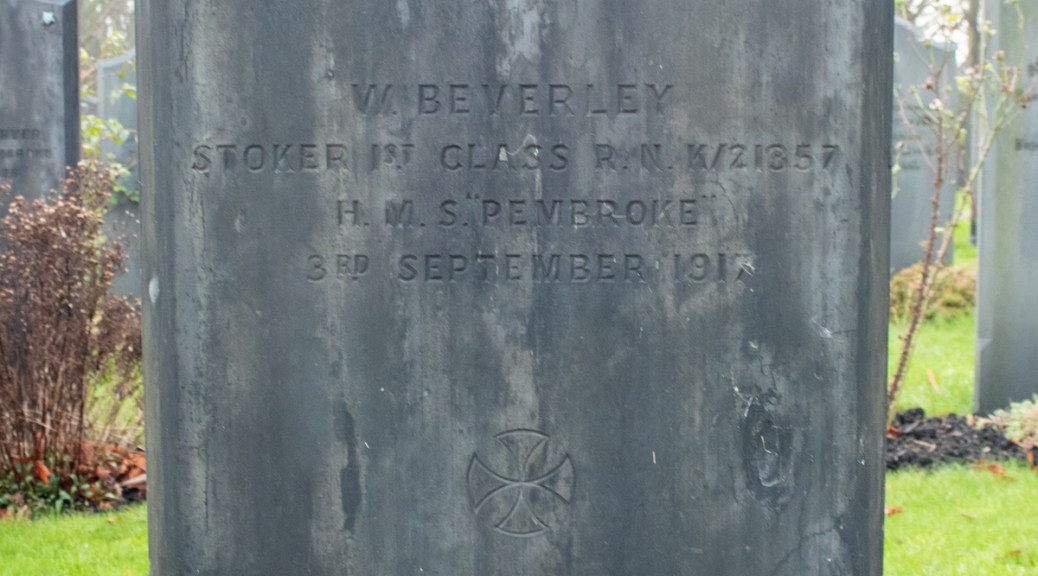
Stoker 1st Class Walter Beverley

Stoker 1st Class Walter Beverley

There is very little documentation relating to Stoker 1st Class Walter Beverley, and so a lot of his life is destined to remain a mystery.

He was born in Tonbridge, Kent, on 20th May 1894, although details of his parents are lost to time. He worked as a tailor after leaving school but enlisted in the Royal Navy on 5th November 1913. He joined as a Stoker 2nd Class, and his records show that he was 5ft 4ins (1.63m) in height, had brown hair, brown eyes and a fresh complexion.

Stoker Beverley spent five months at HMS Pembroke, the Royal Naval Dockyard in Chatham, Kent, before being given a posting on the dreadnought battleship HMS Vanguard. He spent three-and-a-half years on board, gaining a promotion to Stoker 1st Class in the process.

In August 1917, Walter returned to HMS Pembroke. The Dockyard was particularly busy that summer, and the large number of extra servicemen meant that he was billeted in temporary accommodation in Chatham Drill Hall.

On the 3rd September 1917, the first night air raid carried out by the German Air Force bombarded the town, and scored a direct hit on the Drill Hall; Stoker Beverley was among those killed. He was just 23 years of age.

Walter Beverley was laid to rest, along with the other victims of the Chatham Air Raid, in the Woodlands Cemetery, Gillingham.


Stoker Beverley’ Navy Death Record sheds no further light onto his family. His next of kin is noted as “Friend: Elizabeth Payne, Pattscronch Farm, near St Albans, Hertfordshire.”