Tag Archives: New Zealand

Private Andrew Wishart

Private Andrew Wishart

Andrew Anderson Wishart was born in Mokoreta, New Zealand, on 9th July 1896. The fourth of eight children, his parents were George and Agnes Wishart.

There is little information available about Andrew’s early life, but when he completed his schooling, he found work in the local sawmills, not an uncommon trade for the rural southern part of the country. In his spare time, he enlisted in the cadets, and had spent a year with them when he stepped up to join the war effort.

Andrew signed up on 19th November 1915, and was assigned to the 1st Battalion of the New Zealand Otago Infantry Regiment. His service records show the mad he had become: he gave his age as 20 years old (he was, in fact, only 19), he was 5ft 10.5ins (1.79m) tall and weighed 166lbs (75.3kg). He was initially trained near Wellington, and seemed to enjoy his freedom, as he spent a month in hospital in Trentham, suffering from gonorrhoea.

Private Wishart’s battalion set out from Wellington on 1st April 1916, arriving in Suez a month later. After three weeks’ pause in Egypt, his unit continued on to France, disembarking in Etaples on 28th May, and heading for the Western Front. Andrew soon found himself in the thick of the action.

The 1st Battalion was heavily involved at the Somme in the summer of 1916, and Private Wishart was not to come out unscathed. He was wounded on 30th September, and evacuated for treatment, first to Rouens, then to Britain. Wounded in the left thigh, he was admitted to the 1st New Zealand Hospital in Brockenhurst, Hampshire, and would end up spending two months there.

In December 1916, Private Wishart moved to the ANZAC camp in Codford, Wiltshire. He remained on site for the next few months, although this time was not without incident, as he was admitted to the camp hospital for with venereal disease once more.

Andrew returned to camp on 10th April 1917, but his health seems to have been impacted. He became jaundiced, and was once again admitted to the camp hospital. Atrophy of the liver was identified, and the condition would prove too severe for his body to recover from. He died on 10th July 1917, the day after his 21st birthday.

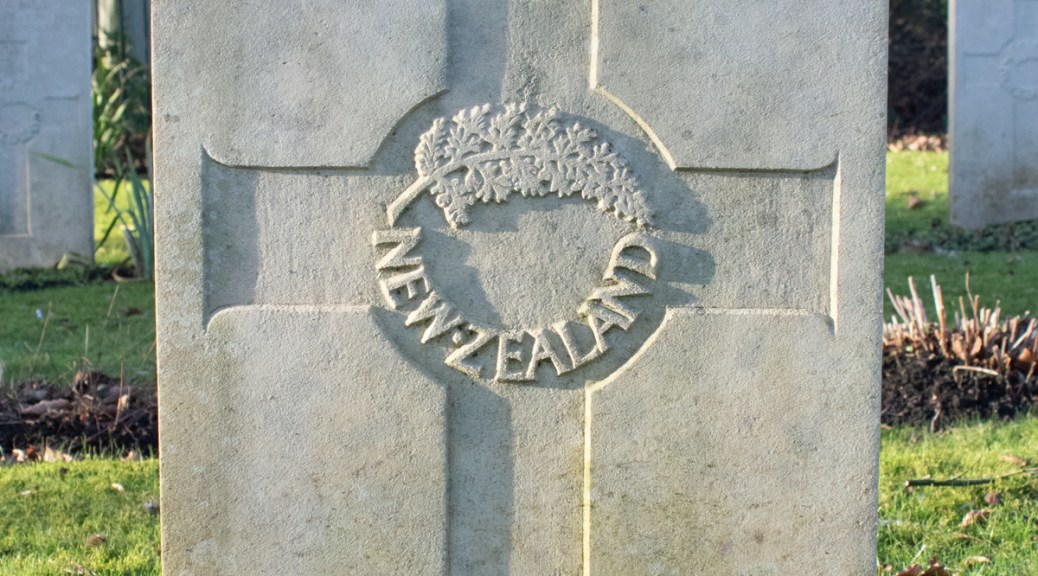
Andrew Anderson Wishart was laid to rest in the extension to St Mary’s Churchyard in Codford, Wiltshire, not far from the base he had called his home.


Andrew’s younger brother James had also enlisted in the Otago Regiment when war broke out. As a Private, he was assigned to the 2nd Battalion, his path followed a similar one to that of his older sibling. He was killed in action on the Western Front on 15th November 1916, aged just 18 years old.

Private James Wishart is buried in the Cité Bonjean Military Cemetery in Armentieres.

Private James Wishart
(from findagrave.com)

Sapper Charles Salisbury

Sapper Charles Salisbury

Charles Salisbury was born in Helensville, New Zealand, on 23rd June 1885. The fifth of six children, his parents were James and Sarah Salisbury.

Little information is available about Charles’ early life, but by his 20s he had found work as a linesman, working his way up to foreman. In April 1914 he married Nora Fiori: the couple settled in Onehunga, and had two children: Pauline had been born in 1907, and sister Catherine followed in 1911.

When war broke out in Europe, the British Empire called upon its own to step up and serve. Charles enlisted on 9th April 1916, joining the 15th Division of New Zealand Signallers, itself part of the New Zealand Engineers. His service records show that he was 31 years of age, 5ft 9ins (1.65m) tall and weighed 154lbs (69.9kg). He was noted as having dark hair, blue eyes and a dark complexion.

Sapper Salisbury’s unit left Wellington for Britain on 28th July 1916. The voyage on board the ship Waitemata took ten weeks, Charles setting foot on solid ground again in Devonport, Devon, in October. From there the battalion moved to its base near Codford, in Wiltshire.

Charles would spend the next six months in camp, presumably in preparation for a move to the continent. Sadly for Charles, however, he was not to see any action away from Britain. On 27th May 1917 he was admitted to the camp hospital, suffering from a cerebral haemorrhage: he died the following day. Sapper Salisbury was 31 years of age.

Charles Salisbury was laid to rest in the newly consecrated ANZAC extension to St Mary’s Churchyard in Codford, not far from the troops encampment.


Sapper Charles Salisbury
(from findagrave.com)

Trooper James Hughes

Trooper James Hughes

James Hughes was born on 12th November 1884 in the town of Kapuni, New Zealand. One of eleven children, his parents were Daniel and Margaret – or Peggy – Hughes. There is little specific information about James’ early life, but the service records he completed when he enlisted for the army confirms that he was working as a farmer by the summer of 1914.

James enlisted on 18th December 1914. He had had some voluntary experience with the army before the war, and was assigned to the New Zealand Wellington Mounted Rifles as a Trooper. His medical exam confirmed he was 5ft 10ins (1.77m) tall and weighed 174lbs (78.9kgs). He was noted as having brown hair, hazel eyes and a fair complexion.

Trooper Hughes and his unit set sail sailed for the Mediterranean in April 1915, finally arriving in the Dardanelles by the summer. There is little specific confirmation of his movements, but he was reported wounded at Anzac Cove on the Gallipoli peninsula on 27th August. Medically evacuated to Mudros (Moudros) on Greek island of Lemnos. He had received a gun shot wound that fractured his skull, and was shipped back to England for ongoing treatment.

James was admitted to the American Women’s War Hospital in Paighton, Devon. This was based at Oldham House, which had been conscripted for use from Paris Singer, part of the sewing machine manufacturing family.

Trooper Hughes’ wounds would ultimately prove too severe. He died from his injuries on 17th October 1915: he was a month short of his 31st birthday.

Yesterday, at Paignton, the funeral took place of Trooper James Hughes, of the Wellington (New Zealand) Mounted Rifles, who died on Sunday at Oldway Hospital… He was wounded in Gallipoli, the wound being perilously near the brain, and recover was hopeless from the first. However, he lingered for six weeks. Deceased being a Roman Catholic, Father Kirk officiated at the Roman Catholic Church and at the cemetery. Several members of the 7th Devon Territorials, under Captain Hunter, were present, as well as a firing party of the Battalion, and a party of wounded from Oldway and The Larches Hospitals also attended. At the graveside the firing party fired three volleys, and the bugles sounded the Last Post.

[Western Times: Wednesday 20th October 1915]

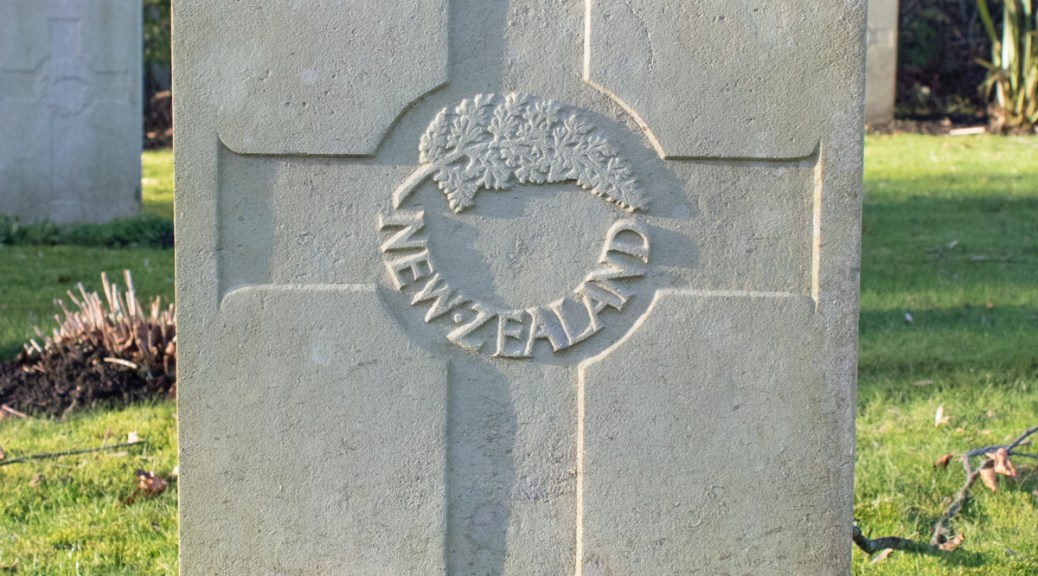
With his family thousands of miles away, James Hughes was instead laid to rest in Paignton Cemetery, not far from where he had spent his last days.


James’ younger brother Charles also fought in the Great War. Serving in the same regiment as his brother, he was injured in the Middle East, and died of his wounds on 19th April 1917: he was 25 years of age. Trooper Charles Hughes was buried in Gaza Cemetery.


Oldway Mansion, Paignton. It was taken over for war service from Paris Singer, of the sewing machine family, and became the American Women’s War Relief Hospital during the First World War.

Major George Hannan

Major George Hannan

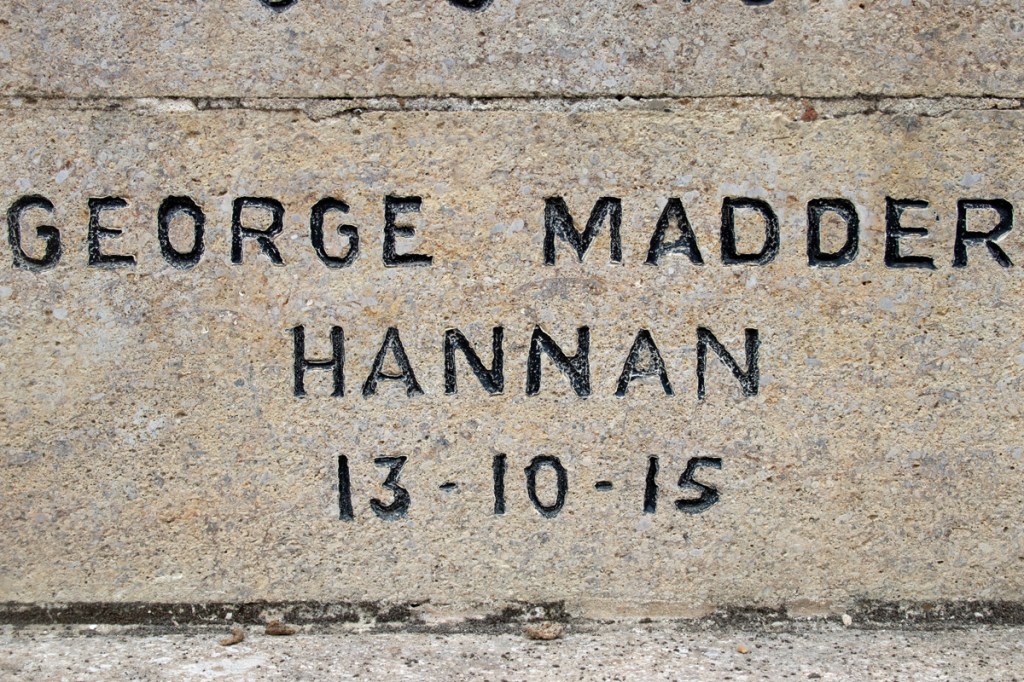
George Madder Hannan was born in Dublin in 1861, the son of banker Benjamin Hannan. There is little concrete information about his early life, but what can be pieced together produces the story of a well-travelled man.

On 22nd January 1896, George was initiated into the Lodge of Otago, a freemason’s collective in Dunedin, New Zealand. He is listed as being a Master Mariner.

George’s marriage certificate records that he wed Mary Carlisle on 27th October 1898. The wedding took place at St Jude’s Church in Kensington, London, and the groom was listed as a Gentleman. Mary was the daughter of a paper manufacturer, and had been born in Lancashire.

The next document for George is the 1911 census. This notes that he ad Mary were still living in Kensington, along with their only child – daughter Grace, who had been born in 1900 – and two servants. This time he is listed as being an army major, a special reserve officer.

Moving forward a few years, the next record for George is the notice of his funeral, in October 1915:

We regret to announce the death of Major Madder-Hannan, which occurred at May Bank on Wednesday morning. Major Madder-Hannan, who had only resided in the village [of Bearsted, Kent] for the past few months, held his commission in the 9th Service Battalion Cameronians. He had been an invalid since taking up his residence here.

Kent Messenger & Gravesend Telegraph: Saturday 16th October 1915

Sadly, no documentation remains about George’s time with the Cameronians. He passed away, presumably through illness, on 13th October 1915, at the age of 54 years of age.

Unusually, given the main family home was in Kensington, George Madder Hannan was buried in the village where he died. He was laid to rest in Holy Cross Churchyard, Bearsted.


Seaman Neil Mackay

Seaman Neil Mackay

Neil Mackay was born on 16th September 1888 in Stornoway, Scotland, the son of Murdoch and Johanna (known as Murdo and Annie) Mackay.

Sadly, little information remains about his early life; most of what can be gleaned comes from his Royal Naval Reserve records. The document confirms that he was 5ft 9ins (1.75m) tall, had blue eyes, a dark complexion and a scar between his eyes.

Neil enlisted as a Seaman on 3rd September 1912 and, over the next couple of years, he travelled the world, visiting Maine in the United States, New Zealand and Newfoundland on his voyages.

When war broke out, he was assigned to HMS Northbrook, a troopship taking soldiers to India; he returned to the United Kingdom on HMS Dalhousie, in 1915, before making the same round trip, this time on HMS Lawrence, later that year.

In April 1916 Seaman Mackay returned to England, and was based at HMS Pembroke, the Royal Naval Dockyard in Chatham, Kent, for around eighteen months.

The summer of 1917 was to prove a busy time at HMS Pembroke, and Neil found himself billeted in temporary accommodation in the barracks’ Drill Hall. On 3rd September 1917, the town came under fire from a German air raid; the Drill Hall received a direct hit and Neil was killed. He was just shy of his 29th birthday and had completed five years’ service that day.

Neil Mackay was among 98 servicemen to be killed during the Chatham Air Raid that night. The victims were laid to rest in a mass funeral at Woodlands Cemetery in nearby Gillingham a few days later.