Tag Archives: Private

Sapper William Dove

Sapper William Dove

William Henry Dove was born in the autumn of 1871 in Stafford, Staffordshire and was one of seven children to William and Louisa Dove. William Sr was a gardener by trade, but his son wanted bigger and better things.

On leaving school, he initially took up a post as a junior teacher, but military service was calling him and, on 21st February 1891 he enlisted in the Royal Lancaster Regiment. Private Dove’s service records show that he was 5ft 7ins (1.70cm) tall and 136lbs (61.8kg) in weight. He had sandy hair, grey eyes and a fair complexion. He also gave his age as 18 years and 3 months, although he was actually a year older.

Private Dove signed up for seven years’ service and completed this on home soil. In October 1891 he was promoted to Lance Corporal, and a year later he was promoted again, this time to Corporal.

In November 1894, William was found guilty of ‘conduct to the prejudice of good order and drunkenness‘ and was sentenced to be reduced in rank, so became a Private again. He learnt the error of his ways, though, and was reinstated to Lance Corporal in March 1897.

William’s service was completed in February 1898, and he was transferred across to the Army Reserve. This was intended to be for a further five years, but on 15th February 1900, he was discharged from future active service, having been found to be medically unfit. During his time in the army, William had been treated for a two bouts of gonorrhoea, as well as four further infections. The cause of his final medical discharge, however, is unclear.

While on reserve, William had found employment as a railway porter. His work took him to Llangollen, Denbighshire and, this is where he set up home. On 18th April 1899, he married Ellenor Roberts, a labourer’s daughter from the town: the young couple set up home in Ashfield House, Regent Street – now the busy A5.

The 1911 census records William as a porter: the couple had no children of their own, but had adopted a girl, Cissie, who was then eight years old. A live-in domestic servant – Esther Williams – was also recorded on the census.

War was coming to Europe by this point and, while details of his service are unclear, William stepped up to play his part once more. He enlisted in the Royal Engineers as a Sapper, at some point during the conflict, although exact details are lost to time.

Sapper Dove survived the war and returned to Llangollen. The 1921 census records him Ellenor and Cissie living at Bronhaul, and that William was working as a parcel’s porter for Great Western Railways. On 18th August 1921, he collapsed and died with a brain aneurysm. He was 39 years of age.

William Henry Dove was buried in the graveyard of St John’s Church in Llangollen, a short distance from the station at which he portered for so long.


Ellenor lived on until her late 70s. When she passed away, she was laid to rest in the family plot, reunited with her husband after 35 years.


Private Lot Hayward

Private Lot Hayward

Lot Hayward was born in November 1897 in the Somerset village of West Coker. The seventh of eight children, his parents were Walter and Elizabeth Hayward. Walter was a twine maker at a local factory, but when Lot left school – and after Elizabeth died in 1908 – he found work as a farm labourer.

Lot was seeking bigger and better things in life, however, and on 18th August 1913, he enlisted in the Royal Marine Light Infantry. His service records confirm that he was 5ft 6ins (1.67m) tall, had light brown hair, brown eyes and a pale complexion. It also confirms that he lied about his age – giving his year of birth as 1895 in order to be accepted for service.

Private Hayward joined up at the recruitment depot in Deal, Kent, and, after training there, he was sent to Plymouth in Devon, arriving there in June 1914. Over the next couple of years, he moved between Devon and HMS Victory, the Royal Navy Dockyard in Portsmouth, Hampshire.

When war was declared, Lot also served overseas, fighting at Antwerp, Alexandria and in Turkey. While there in the summer of 1916, he fell ill, contracting pulmonary tuberculosis. He returned to Plymouth, and was admitted to the Royal Naval Hospital in the city.

His lung condition meant that Private Hayward could no longer perform his duties as a soldier. He was medically discharged from the navy on 10th June 1916.

Lot returned home, but his condition grew steadily worse. He eventually succumbed to it, passing away on 18th November 1917, at the tender age of just 20.

Lot Hayward was laid to rest in the graveyard of St Martin’s Church in his home village of West Coker. Reunited with his mother, Lot’s father, Walter, was also laid to rest in the family plot when he passed away in 1920.


Private Edgar Bowditch

Private Edgar Bowditch

Edgar George Bowditch was born in the spring of 1887, in the Dorset village of Melbury Osmond. One of seven children, his parents were William and Sarah Bowditch. William was an agricultural labourer turned gamekeeper, and Edgar helped his father out when he left school.

William passed away in 1911, and Edgar fell off the radar until March 1914, when he married local mason’s daughter Rosetta Morris. The couple settled down in her home village of West Coker, Somerset.

When war was declared, Edgar stepped up to serve his King and Country, and enlisted in the Machine Gun Corps as a Private. He was assigned to the 37th Battalion, and certainly saw action overseas. He “came through without a scratch and in good health until demobilised in France.” [Western Chronicle: Friday 21st February 1919]

Private Bowditch was unwell when he arrived back in West Coker on 4th February 1919. While his condition is unclear, it worsened, and he passed away at home ten days later. He was 32 years of age.

Edgar George Bowditch was laid to rest in the graveyard of St Martin’s Church in his adopted home of West Coker.


Rosetta married again in 1921, to a John Axe. The couple remained in the same part of Somerset, John dying in 1947. Rosetta lived on, passing away in Yeovil in 1963, at the age of 77 years old.


Private William Tewkesbury

Private William Tewkesbury

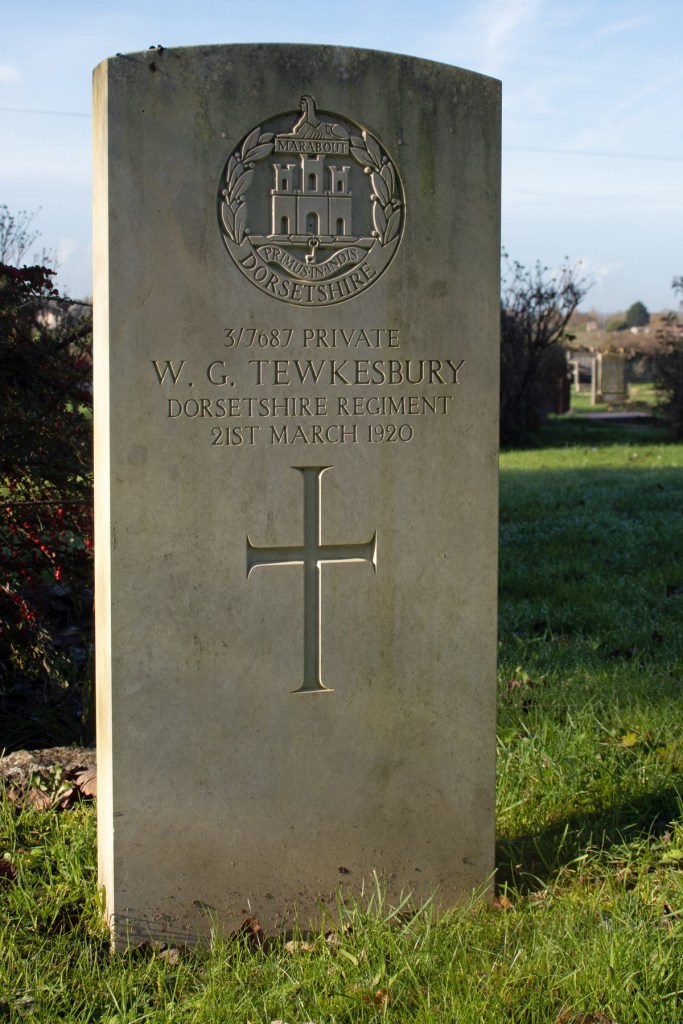
William Gilbert Tewkesbury was born in Ilchester, Somerset, in the autumn of 1881. The middle of three children (although his older brother died in 1887), his parents were William and Jane Tewkesbury. William Sr was a farm labourer, and this is something that William Jr and his younger brother, Hedley, also went into.

When war arrived on Europe’s shores, William Jr stepped up to play his part. Full details of his military service are, sadly, lost to time, but he enlisted in the Dorsetshire Regiment, and was assigned to the 2nd Battalion. His mother, Jane, passed away in 1915, and it is unclear whether this loss proved to be the catalyst for her son’s enlistment.

Private Tewkesbury’s battalion served in the Middle East for the duration of the conflict.

During the past week we have had three of our local men who have seen active service home for a few days’ leave… Private William Tewkesbury… who has been on active service in Mesopotamia…

Western Chronicle: Friday 8th June 1917

William survived the war, and was awarded the Victory and British Medals for his service. He returned home, and, presumably, took up his previous employment once he was demobbed in February 1919.

The next available record for William is that of his passing, and even this is sketchy. He passed away on 21st March 1920 in Sherborne, Dorset, though the cause is unknown. He was 39 years of age.

William Gilbert Tewkesbury’s body was brought back to Ilchester for burial. He was laid to rest in the village’s parish cemetery. While not recorded, it is likely that this is where Jane had been buried five years earlier, and where William Sr would be laid to rest just months later, when he too passed away.


Private William Saunders

Private William Saunders

William Edgar Saunders was born in the summer of 1900 in Limington, Somerset. He was one of nine children to labourer and drainage contractor William Saunders and his wife, Rhoda.

There is little further information documented about William Jr’s life. During the First World War, he enlisted in the Royal Warwickshire Regiment, and was assigned to the 5th Battalion which served in France and Italy. All that can be confirmed, however is that he joined after March 1918 – presumably once he came of age – and was sent to the North of England for training.

Tragically, Private Saunders’ tale is a common one for young men of his age. Billeted at close quarters with other men from across the country, disease was rife, and he was not immune. William was admitted to the 1st Northern General Hospital in Newcastle-upon-Tyne, suffering from a combination of influenza and pneumonia.

This combination of conditions was to prove too much for young Private Saunders’ body to bear. He passed away on 25th October 1918, aged just 18 years old.

William Edgar Saunders’ body was brought back to Somerset for burial. He was laid to rest in the graveyard of St Mary’s Church in his home village of Limington.


Gunner Frederick Milverton

Gunner Frederick Milverton

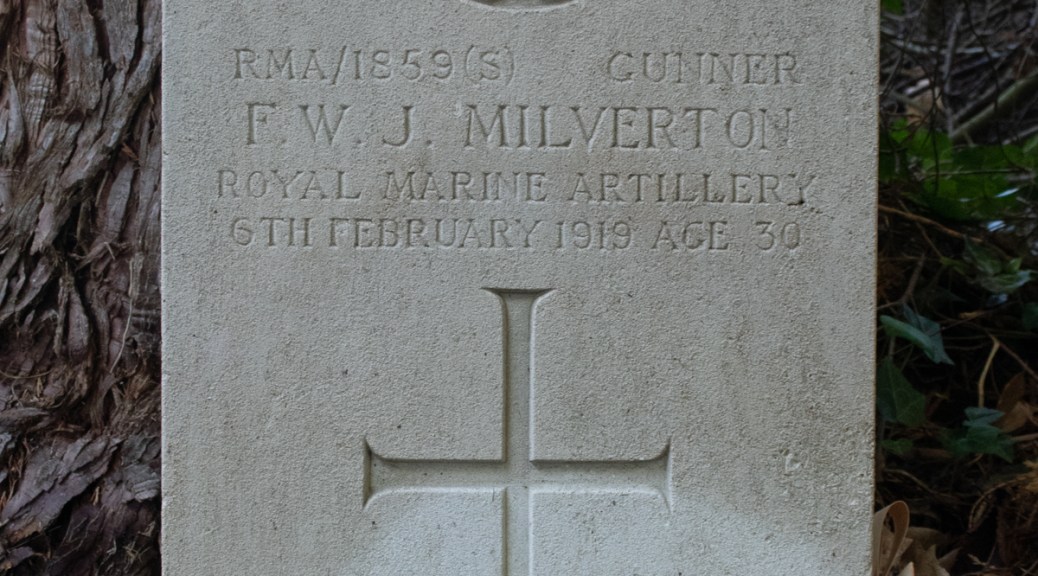
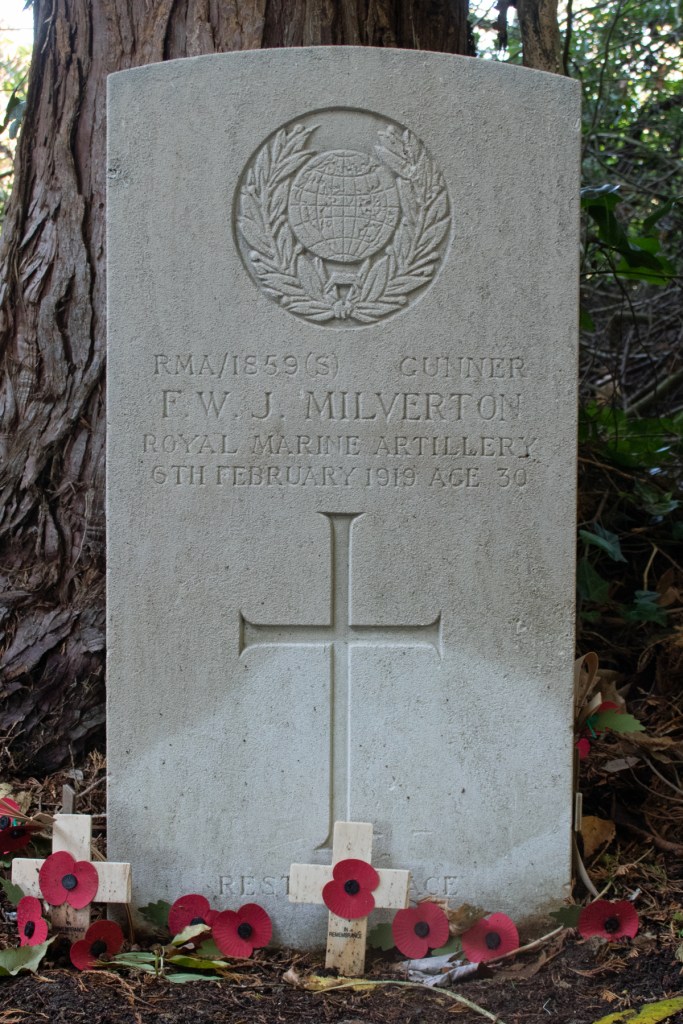
Frederick Walter John Milverton was born on 26th June 1888 in the Somerset village of Rimpton. One of seven children, his parents were farm workers George and Mary Milverton.

When he left school, it was natural for Frederick to follow in his father’s footsteps. The 1901 census recorded him as working as a farm lad in Leigh, Dorset, while in 1911 he was back at the family home, where he was formally employed as a rabbit trapper.

George passed away in 1913 and, with war fast approaching, Frederick remained at home, to help support his mother. But he eventually received his enlistment notice and, on 28th February 1916, he joined the Royal Marine Artillery.

Private Milverton’s service records show that he was 5ft 8ins (1.73m) tall, with dark brown hair, blue eyes and a fresh complexion. After five months’ initial training, Frederick was awarded the rank of Gunner 2nd Class, and assigned to the cruiser HMS Euryalus.

For the next couple of years Gunner Milverton remained on board Euryalus, serving in the Mediterranean, the Middle East, India and Hong Kong. He transferred to HMS Lavatera in March 1918, and saw out the remainder of the war on board.

In January 1919 Gunner Milverton returned to home soil, and was assigned to the Royal Marine Artillery Headquarters in Eastney, Hampshire. It was here, however, that he fell ill, and was admitted to the Royal Naval Haslar Hospital with bronchial pneumonia. Tragically the condition was to get the better of him: Frederick passed away on 6th February 1919, at the age of 30 years old.

Frederick Walter John Milverton’s body was brought back to Somerset for burial. He was laid to rest in the quiet graveyard of St Mary’s Church in his home village of Rimpton.


Corporal de Courcy Raymond

Corporal de Courcy Raymond

de Courcy William Raymond was born in the summer of 1883 in the Somerset village of West Camel. He was one of six children to carpenter George Raymond and his wife, Anne. de Courcy – whose name may have had family connections – followed his father into carpentry and, by the time of the 1911 census, the family had moved to nearby South Barrow, where George had been born.

When war came to Europe, de Courcy was keen to play his part. Sadly, full details of his military service no longer survive, but what can be determined is that he had enlisted by March 1915, joining the North Somerset Yeomanry.

Private Raymond was assigned to the 2nd/1st Battalion, which was a second-line troop, and remained on home soil, moving from Somerset to Wiltshire to Kent by the autumn of 1915. He was evidently good at his job as he was soon promoted to the rank of Corporal for his efforts.

It was while he was based in Kent that de Courcy fell ill. He contracted pneumonia, and was admitted to a military hospital in Canterbury. Sadly, the condition was to prove too much, and he passed away from the condition on 9th October 1915. He was 32 years of age.

The body of de Courcy William Raymond was brought back to Somerset for burial. He was laid to rest in the family plot in the graveyard of St Peter’s Church in South Barrow.


Private Sidney Biddiscombe

Private Sidney Biddiscombe

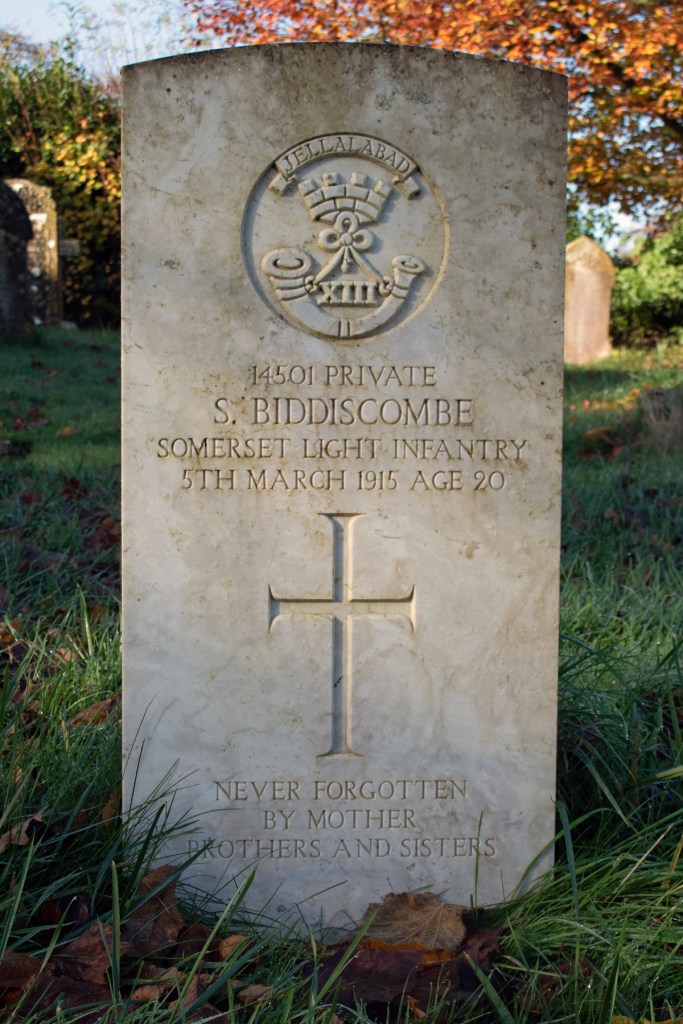
Sidney William Biddiscombe was born in South Cadbury, Somerset, in the spring of 1895. The eighth of sixteen children, his parents were Thomas and Constance Biddiscombe. Thomas was an agricultural labourer, and this is work that Sidney went into when he finished school.

When war came to Europe, Sidney was quick to enlist. Whether this was out of a sense of duty, a keenness to get involved, a need to follow his older brothers, or as an escape from farm labouring is unclear, though. He joined the Somerset Light Infantry in August 1914, and was assigned to the 7th (Service) Battalion.

There is little information available about Private Biddiscombe’s time in the army. He received his training in Hampshire, and was based at Aldershot. The sudden influx of young men from across the country into small, cramped billets meant that illness ran rife, and Sidney, it seems, was not immune. He contracted measles, and was admitted to the camp’s Isolation Hospital.

Sadly, the infection was to get the better of Private Biddiscombe, and he passed away at the hospital on 5th March 1915. He was just 20 years of age.

Sidney William Biddiscombe was brought back to Somerset for burial. He was laid to rest in the graveyard of St Thomas a Becket’s Church in his home village of South Cadbury.


Sidney’s epitaph notes he is “never forgotten by mother, brothers and sisters”. His father, Thomas, died in 1918, at the age of 62, and so was not commemorated on his son’s headstone, which was erected at a later date.


Private Archibald Wilds

Private Archibald Wilds

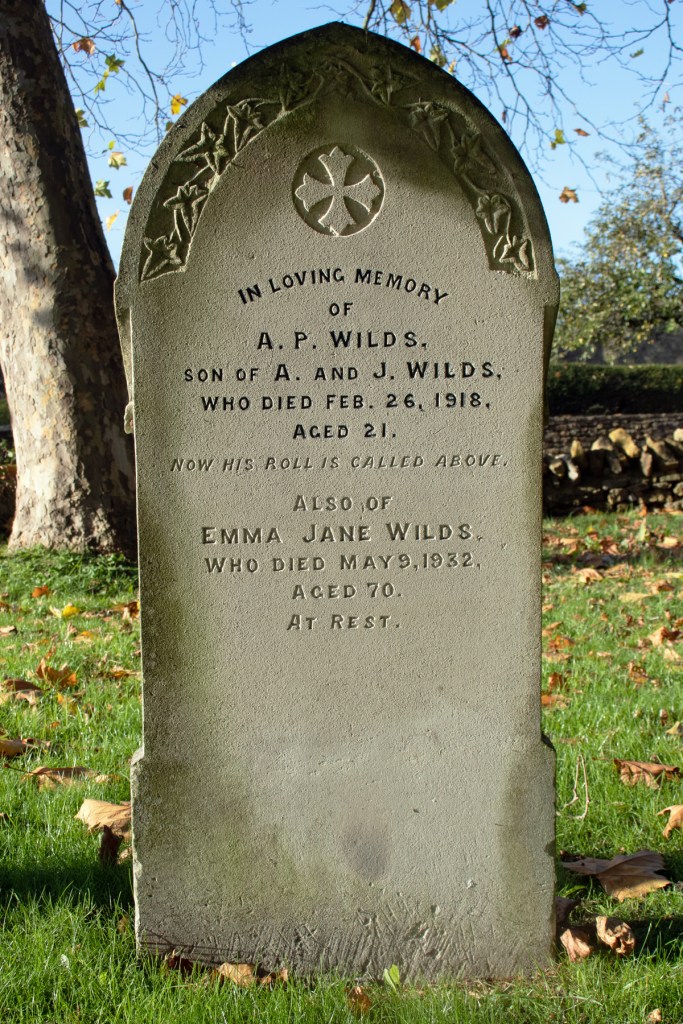
Archibald Percy Wilds was born in 1896 in Kilmington, Somerset. The youngest of three children, his parents were dairy farmers Charles and Emma Wilds. Charles passed away when Archibald was just a toddler, and with the help of her family, Emma raised their children while maintaining the business.

When he left school, Archibald also helped out on the farm, but war was coming, and he wanted to play his part for King and Country. Details about his service are sketchy, but it is clear that he joined the Somerset Light Infantry as a Private, before transferring to the Hampshire Regiment. He was assigned to the 15th (Service) Battalion, also known as the 2nd Portsmouth.

While Private Wilds’ battalion saw action in France, it is unclear whether he went with them. His records show that he was awarded the Victory and British Medals for his time in the army, but they do not give a date for him embarking for the continent.

The only other records relating to Private Wilds are those confirming his passing. The Army Register of Soldiers’ Effects confirms that he passed away on 26th February 1918 in a military hospital, while another database suggests that he died of wounds, although it is not possible to confirm how he was injured, or where specifically he passed. What can be confirmed is that he was just 21 years of age when he died.

Archibald Percy Wilds was brought to Somerset for burial. He was laid to rest in the family plot in the graveyard of St Michael’s Church in Blackford, not far from where his mother still lived.


Emma Wilds went on to live until she was 70 years old. She passed away in 1932 and was also laid to rest in the family plot, reunited again with her husband and son.


Private George Woodforde

Private George Woodforde

George Augustus Woodforde was born on 21st April 1892 in Leyton, Essex. He was one of six children to George and Harriet Woodforde, although, tragically, George had died shortly before his son was born.

George Sr had been born in Ansford, Castle Cary, Somerset and this is where he was laid to rest. He was a theological student in his twenties and, according to the 1891 census, he was living on his own means. This is something that Harriet was fortunate enough to be able to do once she was widowed.

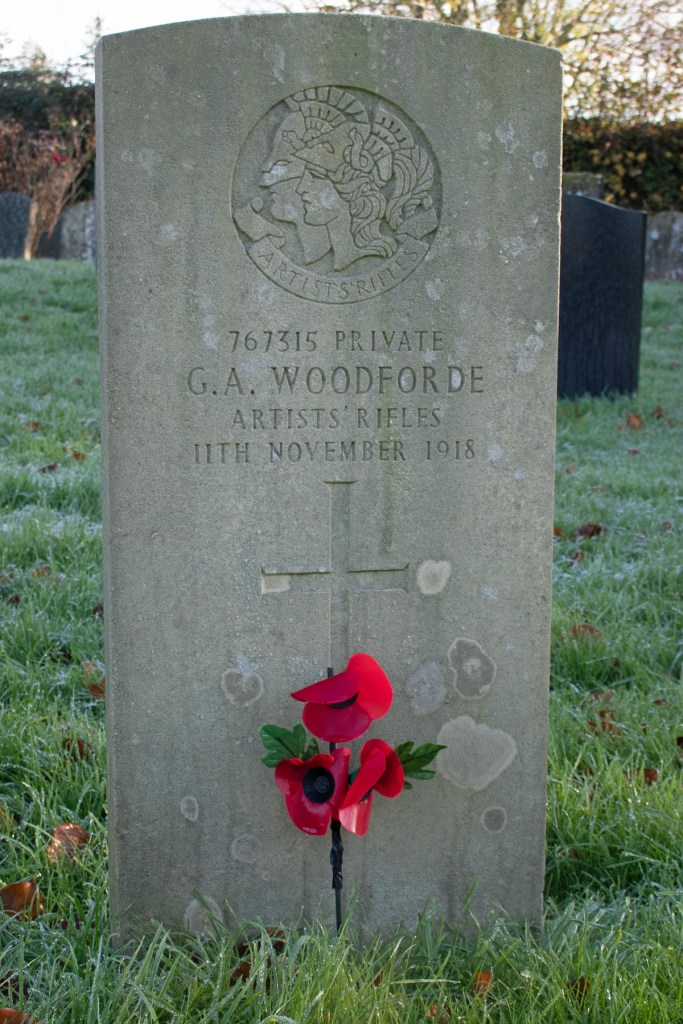
George Jr studied into his late teens and, by the time war was declared in 1914, he was employed as a schoolmaster. He enlisted in April 1916, but was not mobilised until 17th November 1917. He served as part of the 28th Battalion (Artists’ Rifles) of the London Regiment and his records show that he was 5ft 8ins (1.73m) tall and was of a slight build, weighing in at only 110lbs (50kg).

Private Woodforde soon found himself in France, and fought on the front line for a while. He was caught up in the Battle of the Canal du Nord in late September 1918, and was badly wounded. He was medically evacuated to England, and admitted to the East Leeds War Hospital. He had received gunshot wounds to both thighs and feet, and had fractured the tarsal and metatarsals of his right foot.

Private Woodforde’s left leg became infected, and he then developed double pneumonia. It was this lung condition that he was to succumb to: he passed away at the hospital on 11th November 1918 – Armistice Day. He was just 26 years of age.

George Augustus Woodforde was laid to rest in the graveyard of St Andrew’s Church in Ansford, Somerset, close to where his father had been buried all those years before.