Tag Archives: Royal Air Force

Lieutenant Keith Beddy

Lieutenant Keith Beddy

Keith Charles Beddy was born in Port Elizabeth, South Africa. His parents were Walter and Isabella Beddy, and he was the sixth of eight children.

Little additional information is available about Keith’s early life. When war broke out, he enlisted in the army, eventually becoming assigned to the 5th Battalion of the Hampshire Regiment. Rising through the ranks to the rank of Lieutenant, he eventually transferred to the Royal Flying Corps.

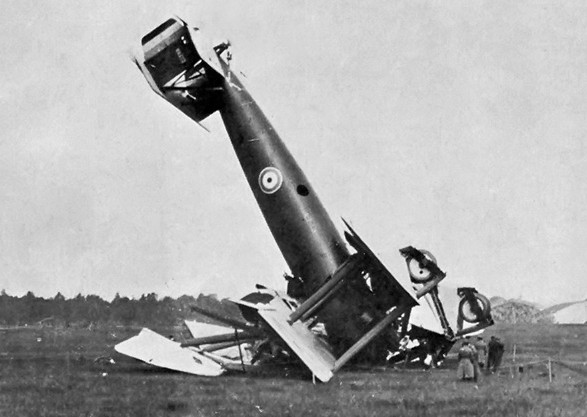
Lieutenant Beddy was based on Boscombe Down, near Amesbury, Wiltshire. On 6th February 1918, he was flying his RAF BE 2e aircraft when he attempted a turn at a low altitude. The plane nose-dived and crashed into the ground, and Keith was killed instantly. He was just 21 years of age.

With his family on the other side of the world, Keith Charles Beddy was laid to rest in Amesbury Cemetery, not far from the airfield where he had been based.


Cadet Hubert Morley

Cadet Hubert Morley

Hubert Arthur Morley was born on 28th July 1900, the second of two children to Arthur and Annie Morley. The family were raised in Coventry, Warwickshire, but Arthur had been born in Manchester. The 1901 census recorded him as working as a cycle works timekeeper, but by 1911 he had found other employment as a dealer in hosiery and hats.

By the summer of 1918, the war was showing hints of coming to an end, and Hubert was keen not to miss out on the action. On 9th July, a few weeks before his eighteenth birthday, he enlisted in the Royal Air Force. His service record show that he was 5ft 7.5ins (1.71m) tall, with brown hair, greenish brown eyes and a fair complexion.

Cadet Morley had previously been employed as an engineer, and was sent to the No. 7 Observers School of Aeronautics in Bath, Somerset. His time here, however, was to be tragically short. Hubert contracted pneumonia, and was admitted to the Bath War Hospital. The condition was to prove his undoing: he passed away on 27th October 1918, at just eighteen years of age.

Finances may have limited Arthur and Annie’s ability to bring their son home. Hubert Arthur Morley was laid to rest in the military section of Bath’s sweeping Locksbrook Cemetery.


Member Ivy Hibberd

Member Ivy Hibberd

Ivy Pretoria May Hibberd was born in the spring of 1900 in the Wiltshire village of Wylye. One of nine children, she was the daughter of bricklayer Edwin Hibberd and his wife, Elizabeth.

There is little information available about young Ivy’s life. She enlisted in the Women’s Royal Air Force on 14th October 1918, and was sent off to Handsworth College in Birmingham for training.

Member Hibberd’s time in service was to be tragically brief. Having contracted a combination of influenza and pneumonia, she died on 6th November 1918. She was just 18 years of age and passed away just over three weeks after signing up.

Ivy Pretoria May Hibberd’s body was taken back to Wiltshire for burial. She was laid to rest in the peaceful graveyard of St Mary’s Church in her home village, Wylye.


Private William Higgins

Private William Higgins

William George Newton was born in Culmstock, Devon, early in 1889. His mother, Ada, was unmarried at the time, and there is no indication as to who his father was. The 1891 census found mother and son living with Ada’s parents, John and Hannah, in South Street, Wellington, Somerset.

In the summer of 1892, Ada married Frederick Higgins, a police constable from Baltonsborough. The couple set up home in the village of Mark, and went on to have ten children. It was at this point that William took on Frederick’s name, though whether that was because he was actually his birth father is unclear.

When he finished his schooling, William found labouring work. On 9th March 1910, he married Annie Achilles, a painter’s daughter from Glastonbury. The couple set up home in a small cottage in Bank Street, Highbridge, and went on to have three children.

The next year’s census recorded that William was employed as a stoker for Highbridge Bacon Co Ltd, a large factory to the south of the town. His and Annie’s oldest child, son William Jr, who was just two months old at this point, and William’s grandfather, the now widowed John, completed the household.

When war broke out, William stepped up to play his part. He enlisted on 28th October 1915, joining the 3rd Battalion of the Gloucestershire Regiment as a Private. His service records show that he was 26 years and 10 months old, and stood 5ft 2ins (1.57m) tall.

Private Higgins’ service documents confirm that he served for nine months before being medically discharged from the army. He had contracted haemoptysis and had an enlarged heart. His medical records confirmed that, at the time of his dismissal, he was totally incapacitated and unable to work.

William returned to Somerset, but is would seem that his health continued to dog him over the next couple of years. He passed away on 29th October 1918, at the age of 29 years of age.

William George Higgins was laid to rest in the cemetery of his adopted home town, Highbridge.


Annie was now a widow, with three young children to support. She married again in the spring of 1922, to bus conductor William Davey. Annie was to outlive not only her husband, but all three of her children.

William and Annie’s youngest, Cyril, passed away when he was just a couple of months old.

Albert, their middle son, “had been for a great while a cripple from trouble in his leg, but was able to get about on crutches.” [Central Somerset Gazette: Friday 22nd July 1932] He passed away on 16th July 1932, aged just 18 years old.

William Jr had tried out in the Royal Navy when he was sixteen years of age. Beginning with the rank of Boy 2nd Class, he was dismissed in March 1928, as he was deemed unsuitable for the rank of Boy 1st Class.

In the autumn of 1934, he married Nettie King, the daughter of a factory worker from Street, Somerset. The couple went on to have three children, although in an echo of his parents’ tragedy, their middle child, Phyllis, passed away when just eighteen months old.

When war came to Europe for a second time, William sought to serve his country for a second time. He enlisted in the Royal Air Force, and rose to the rank of Leading Aircraftman. On 18th June 1940, he was on board a Blenheim aircraft flying from the UK to Malta, when the plane came down in bad weather near Marseille. William and his two companions, Pilot Officer Johnston and Sergeant Micklethwaite were all killed.

Leading Aircraftman Higgins was laid to rest in the Mazargues War Cemetery near Marseille.


Lieutenant David Slocombe

Lieutenant David Slocombe

David William Slocombe was born on 9th November 1893, the oldest of seven children to William and Kate. William was a tin worker from Huntspill, Somerset, and it was in nearby Highbridge that the family were born and raised.

David appears to have been a bright lad, receiving a sponsorship from the King James Foundation to attend Dr Morgan’s School in Bridgwater. He spent six years there, from September 1906 to July 1912, and went on to become a customs and excise clerk when he left.

When war arrived in Europe, David was called upon to play his part. He initially enlisted on 1st December 1915, but was placed on reserve for nearly a year. His service records show that he was 22 years of age and 5ft 8.5ins (1.74m) tall. When he was finally mobilised, he was given a commission in the Royal Flying Corps.

At this point, David’s trail goes cold. Later documents confirm that he transferred across to the Royal Air Force when it was founded in April 1918, and that he rose to the rank of Lieutenant. He served in France and Italy and, by the end of the war, was attached to the 44th Training Depot Station in Oxfordshire.

By the autumn of 1918, Lieutenant Slocombe had come down with pneumonia. He was admitted to the 3rd Southern General Hospital in Bicester, and this is where he was to breathe his last. David died on 24th October 1918, aged just 24 years old.

David William Slocombe was brought back to Somerset for burial. He was laid to rest in Highbridge Cemetery.


Lieutenant Harold Redler

Lieutenant Harold Redler

News has been received at Bathpool, Taunton, that Lieutenant HB Redler, MC (RAF), was killed while flying at Turnberry, near Ayr. Lieutenant Redler, who was 21 years of age, was the eldest son of Mr and Mrs DB Redler, of Moorreesbury [sic], South Africa, and formerly of Bathpool, Taunton, and he sailed from South Africa with a schoolfellow at the end of 1915, at the age of 18, in order to join the Royal Flying Corps. On arrival in England they found no vacancies, and entered the Artists’ Rifles OTC, from which they joined the RFC. After obtaining his commission, Lieut. Redler spent a few months in France last year, and was then sent to Ayr as a fighting instructor. In March of this year he was sent to France for a six weeks’ course, during which he won the Military Cross, and it is believed that his record will show a total of nearly twenty enemy machines brought down.

Taunton Courier and Western Advertiser: Wednesday 3rd July 1918

Harold Bolton Redler was born in Worcester, Worcestershire, on 27th January 1897. The oldest of five children, his parents were Daniel and Annie. Daniel was a flour miller from Devon, and the family had moved to Worcester the year before Harold was born.

In 1903, the Redlers emigrated to South Africa. Initially settling in King William’s Town (now Qonce), they moved to Moorreesburg after the birth of Harold’s youngest sibling, Norman, in 1906.

Harold was educated at the Bishops Diocesan College in Rondebosch, Cape Town, and it was from here that he and his friend decided to step up and serve their King and Empire. Sadly, his service records have been consigned to history, and only the newspaper report remains to piece together his time in service.

Lieutenant Redler’s awarding of the Military Cross, however, is documented:

For conspicuous gallantry and devotion to duty. He encountered four enemy two-seater machines and attacking the lowest drove it to the ground with its engine damaged. Later he attacked one of five enemy two-seater machines and drove it down out of control. He has destroyed in all three enemy machines and driven three others down out of control. He continually attacked enemy troops and transport from a low altitude during operations and showed splendid qualities of courage and determination throughout.

London Gazette: 22nd June 1918

On the morning of 21st June 1918, Lieutenant Redler was flying a de Havilland DH9 aircraft, accompanied by Captain Ian Henderson. The plane was fitted with a Lewis gun, which the pair were testing. At 10am, the aircraft crashed, and both were killed. No immediate cause was identified, and their RAF cards record an open verdict. Harold was just 21 years of age.

With his parents and siblings in South Africa, Harold Bolton Redler’s body was taken to Somerset for burial. He was laid to rest with his paternal grandparents in the peaceful St Augustine’s Churchyard in West Monkton.


Lieutenant Harold Redler

Flight Cadet Claude Rawlings

Flight Cadet Claude Rawlings

Claude John Howard Rawlings was born on 5th November 1896 in the Monmouthshire village of Aberbeeg. One of three children, his parents were Sidney and Alice Rawlings. Sidney was a brewer from Bath, Somerset, while Alice was born in the Welsh village and this is where the couple raised their family.

By the time of the 1911 census, Claude had been sent to Weston-super-Mare, Somerset, and was a boarding student at the Brynmalyn Private School to the north of the town centre. His heritage would not have been out of place, though, as nine of the 25 live-in students were from Wales. Claude’s parents seemed to have taken the opportunity to visit Sidney’s mother in Bath, a possible prequel to them moving back to Somerset permanently.

Claude completed his schooling at Brynmalyn the following year, and took up a place as an agricultural student in Broadstone, Dorset. When war broke out, however, he was called upon to play his part.

Details of Claude’s military service are sketchy, but he initially enlisted in the Gloucestershire Regiment and was assigned to the 4th (City of Bristol) Battalion. The regiment service in France and Italy from 1915 onwards, but there is no evidence of Private Rawlings serving anywhere other than on home soil.

Claude wanted greater things, and was drawn to a life in the sky. In the spring of 1918, he transferred to the Royal Air Force, and was attached to 125 Squadron. Sent to Fowlmere Airfield near Royston, Hertfordshire, Flight Cadet Rawlings began his training. Over the next couple of months, he learnt to fly a Royal Aircraft Factory R.E.8 biplane.

Flight Cadet Rawlings was dong a routine practice flight on 12th August 1918, when, during a left hand turn, the aircraft’s side slipped and nose dived. The plane crashed to the ground, and Claude was killed instantly. He was just 21 years of age.

The body of Claude John Howard Rawlings was brought back to Somerset for burial. He was laid to rest in Bath Abbey Cemetery.


Flight Cadet Claude Rawlings
(from britishnewspaperarchive.co.uk)

Claude’s grave was a family plot, and he was reunited with his parents when Alice and Sidney died in 1933 and 1945 respectively.


The inscription on the family headstone gives Claude’s date of death as October 1918. All other records confirm the crash took place on 12th August, and that he died at the scene.


Boy Edwin Hiscock

Boy Edwin Hiscock

Edwin Sydney Hiscock was born in Corsham, Wiltshire, 11th November 1902. The older of two children, his parents were quarry manager Edwin Hiscock and his wife, Helen.

When he finished his schooling, Edwin Jr found work as a clerk, but as a young teenager, the thrill and excitement of the war going on around him, drew him to a life in the Royal Air Force. He enlisted on 27th March 1919, and was dispatched to the School of Technical Training at Halton Camp near Aylesbury, Buckinghamshire. Boy Hiscock’s service records note that he was 5ft 9ins (1.75m) tall, with dark hair, brown eyes and a fresh complexion.

Edwin’s life in the military was to be cut tragically short. He had lived a cosseted life in rural Somerset – the family having moved to Monkton Combe, near Bath. At the RAF base, he was surrounded by men and women from across the country, and was suddenly exposed to illnesses that he would not have encountered had he remained at home. It is unclear what he contracted but in the months after the First World War, influenza swept Europe, so this is a likely suspect. Edwin passed away at the base on 23rd April 1919, having completed 27 days’ service. He was just 16 years of age.

The body of Edwin Sydney Hiscock was brought back to Somerset for burial. He was laid to rest in the peaceful graveyard of St Michael’s Church, Monkton Combe.


Edwin’s headstone includes the epitaph “With Christ which is much better”, a bitter pill to swallow.


Air Mechanic 2nd Class Leonard Luke

Air Mechanic 2nd Class Leonard Luke

Leonard Arthur Luke was born in the autumn of 1899 in Shepton Mallet, Somerset. He was the fifth of ten children to railway guard George Luke and his wife, Georgina.

By the time of the 1911 census, the family had moved north west, to the village of Wellow, where George continued his employment with the railway. The track and station have now since disappeared, but at the time, it was a busy stopping point for the mining village.

When Leonard left school, he found work as a porter with the Somerset & Dorset Railway, but by now war was raging across Europe, and he was keen to play his part. He initially enlisted in the Somerset Light Infantry on 3rd January 1918, but moved to the Royal Flying Corps after a matter of weeks.

On 1st April 1918, Leonard transferred across to the Royal Air Force. Formally holding the rank of Air Mechanic 2nd Class, he was training to become a wireless operator in Winchester, Hampshire. He was admitted to the Red Cross Hospital in the city, having contracted rheumatic fever. Sadly, this was to take his life, and he passed away on 13th November 1918, two days after the Armistice. He was just 19 years of age.

Leonard Arthur Luke’s body was brought back to Somerset for burial. He was laid to rest in the quiet Wellow Cemetery.


Air Mechanic 2nd Class Leonard Luke
(from britishnewspaperarchive.co.uk)

While Wellow Station was a bustling place, it is highly likely that Leonard would have known Edward Bending, one of the clerks at the time he was there. Edward also went off to war, and his story can be found here.


Serjeant Algernon Spurge

Serjeant Algernon Spurge

Algernon Carlyle Graham Spurge was born on 27th August 1891 in Bath, Somerset. The middle of five children, his parents were Algernon and Ida Spurge.

Algernon Sr was a portrait photographer, based in the Twerton area of the city, and this was very much a family business. The 1901 census recorded the Spurges as living in Victoria Road, Bath, with Ida’s brother, Tom Leaman, who was working as a photographic reloader.

Later that year, however, things were to take a turn for the worst. Algernon Sr seems to have been having some business worries and, on the morning of 16th December, he set off for work as usual. His and Ida’s daughter, also called Ida, arrived at the studio to find her father in some distress, a bottle of potassium cyanide – used as part of the photographic process at the time – next to him. He asked Ida to fetch him some water and salt, but when she returned, he declared it was too late, and lost consciousness. A doctor was called, but Algernon passed away shortly after he arrived.

A note was found, which read “My dearest wife, I really cannot stand the worry and anxiety of another day, to say nothing of weeks and perhaps months. Ask Mr Ashman and Mr Withy to be kind enough to help you straighten out matters a little. My best love to you and all my dear ones. AS” [Somerset Guardian and Radstock Observer – Saturday 21 December 1901] Ashman and Withy were family friends, who were also in the photography business.

An inquest was held and a verdict of suicide while temporarily insane was recorded.

The family rallied round, and Algernon’s widow and children moved in with Ida’s widowed mother in Bristol. Algernon’s daughter Ida continued working in photography, and Algernon Jr also took up the business. The 1911 census found him boarding with, and working for, his uncle Tom in Bath.

War was closing in on Europe by this point and, when it was declared, Algernon stepped up to play his part. He enlisted in the Royal Naval Air Service on 4th June 1915 as a Leading Mechanic (Photography). His service records show that he was 5ft 5ins (1.66m) tall, with dark brown hair, brown eyes and a dark complexion.

Algernon was initially assigned to the shore establishment HMS President in London for three years, rising to the rank of Petty Officer Mechanic (Photography). In April 1918, when the Royal Air Force was created he transferred across to HMS Daedalus in Lee-on-Solent, Hampshire, and rising to the rank of Sergeant Mechanic.

That autumn, with the end of the war in sight, Algernon fell ill. He contracted influenza, and this developed into pneumonia. He was admitted to the Military Hospital in York, but the conditions were to prove too much for his body to take. He died on 27th October 1918, aged just 27 years old.

The body of Algernon Carlyle Graham Spurge was brought back to Somerset for burial. He was laid to rest in St James Cemetery, Bath, not far from his father. When Ida passed away in 1926, she was buried in the same cemetery, father, mother and son reunited once more


Serjeant Algernon Spurge
(from ancestry.co.uk)