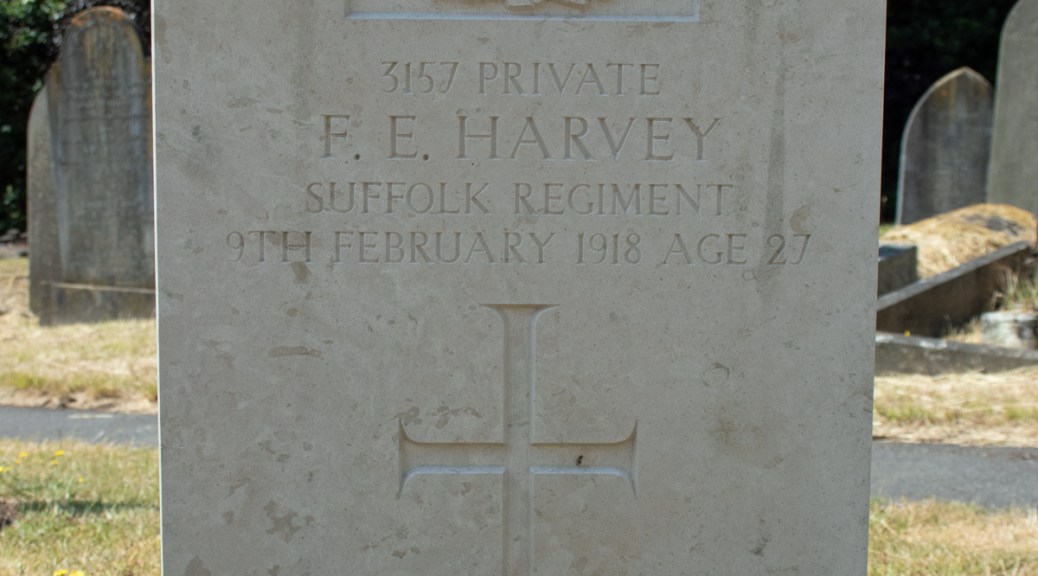
Frank Ernest Harvey was born at the start of 1892, the youngest of seven children to George and Clara Harvey. George was from Bethnal Green, London, and worked as a telegraphist clerk for the Post Office. By the time Frank was born, the family had moved to Leytonstone, while the 1901 census records them as living in Ilford.
On the day of the next census, in 1911, George and Clara were visiting friends in Guildford, Surrey. The four of their children who were still living with them were all at the family home. Ida, their daughter, was not listed as having any employment, while her three brothers were all working a clerks: one for an ironmonger, one for a stockbroker and Frank for an electrical engineer.
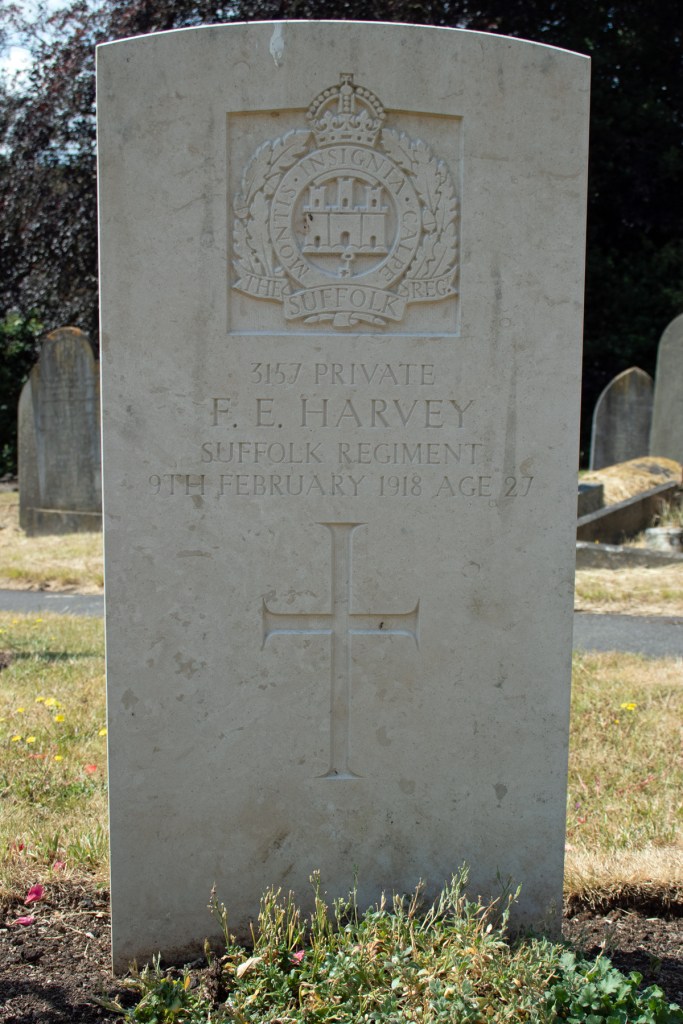
When war broke out, Frank stepped up to serve his king and his country. Little information is available about his military career, and, while his headstone confirms he was in the Suffolk Regiment, other records suggest that he had transferred to the regiment from the Royal Army Service Corps.
There is also little information about Private Harvey’s passing. Based on the fact that he was laid to rest in the Locksbrook Cemetery, Bath, it is likely that he had been admitted to the city’s War Hospital. This did not specialise in any single condition or set of conditions, so it could be that Frank was sent there to recuperate from an injury, or to recover from an illness.
Sadly, neither was to be the case, and Private Frank Ernest Harvey passed away on 9th February 1918. He was 26 years of age.
Albert Edward Farvis Packer was born in Bristol, Gloucestershire, in 1890. The middle of three children, his parents were Francis and Eliza. Francis was a grocer, and when Albert finished his schooling, he worked as his father’s assistant.
Albert went on to work as a butcher’s manager for Messers. John Lewis and Sons in Midsomer Norton. By the time of the 1911 census, he was living in Batheaston with his parents and younger sister, Elsie. When war broke out, Albert stepped up to play his part, following in his older brother’s footsteps. He enlisted in Taunton on 9th December 1915: his service records showed that he was 5ft 10.5ins (1.79m) tall.
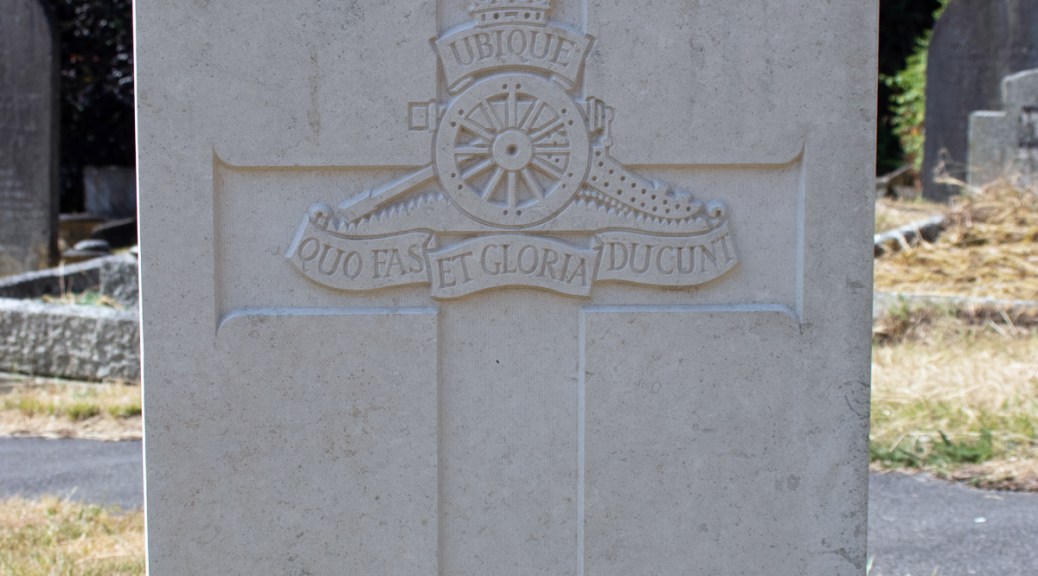
Gunner Packer was assigned to the Royal Garrison Artillery. Initially posted to a depot in Cornwall, he was soon assigned to the 173rd Siege Battery, and found himself in France by the beginning of October 1916. Albert remained overseas for the next fourteen months and, in March 1917, was appointed Acting Bombardier.
On 12th December 1917, Albert returned home on leave and, five days later, he married his sweetheart, stationery shop assistant Dorothy Flower, in St Paul’s Church, Bath. The couple made their way to Bristol, to stay with Dorothy’s parents, but Albert fell ill. He was admitted to the 2nd Southern General Hospital in Bristol, suffering from pleurisy and double pneumonia. The condition was to prove too much for his body, and he passed away, while still admitted, on 27th December 1917. He was just 27 years of age.
Albert Edward Farvis Packer was taken back to Bath for burial. He was laid to rest in the sweeping vista of the city’s Locksbrook Cemetery.
In less than a fortnight, Dorothy had become the blushing bride and a widow. She was to go on and find happiness, however. On 20th February 1920, she married Sapper Sidney Bethell, of the Royal Engineers. Their wedding was in Jamaica, where he was based, and the couple went on to have a daughter, Phyllis, the following year.
Sidney and Dorothy eventually settled in Hertfordshire. He died in 1953, at the age of 59: Dorothy passed the next 38 years as a widow again, passing away on 26th December 1991 – almost exactly 74 year after Albert – at the age of 93.
Albert’s older brother, Francis Packer, also fought and died in the First World War. His story can be found here.
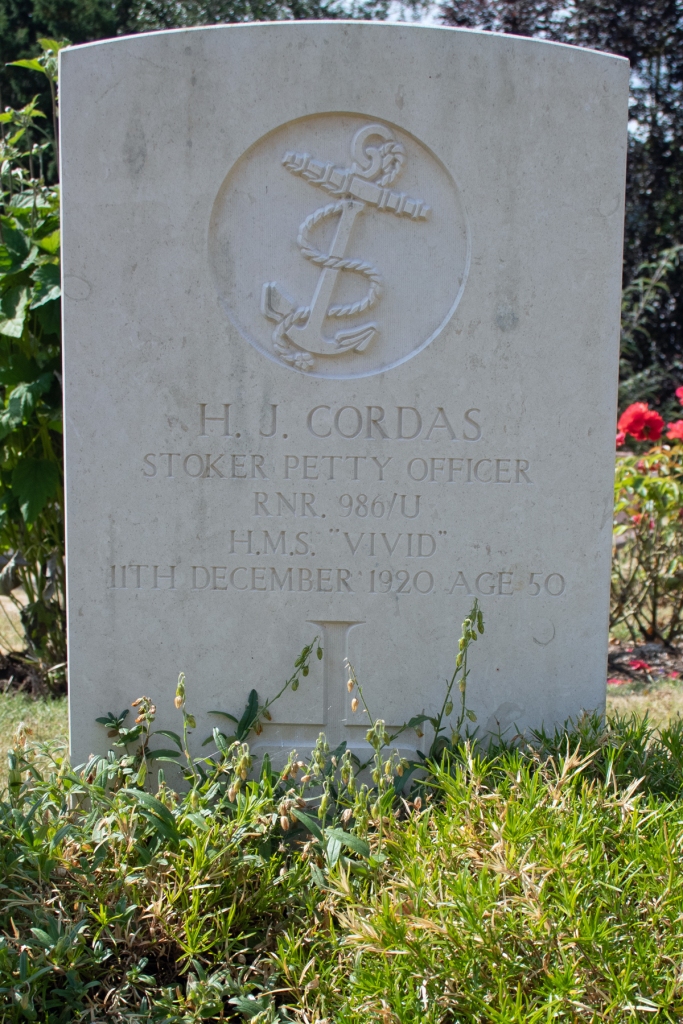
Much of Henry John Cordas’ early life is destined to remain a mystery. The first record for him is the 1881 census, which gives is his address as St Mary’s Orphanage in Heston, Middlesex, where he was one of 650 children.
The 1891 census recorded Henry as living in Humber Street, Grimsby, Lincolnshire, right next to the town’s docks. He is noted as being a fisherman, and is married to a woman called Mary, who was born in Deptford, Surrey.
The next available census record for Henry adds confusion to his story. The document, dating from 1911, confirms that he and Mary are now living in Hotwell Road, Bristol, Gloucestershire, again within spitting distance of the docks. Henry was employed as a marine fisherman in the merchant service. The document suggests that the couple had been married for ten years, and give Mary’s place of birth as Swansea, Glamorganshire.
While the document matches previous information for Henry, it seems unlikely that the Marys in the 1891 and 1911 censuses are one and the same. Either way, the couple were sharing their house with Mary’s niece, Ellen.
Henry seems to have joined the merchant fleet in a more official capacity in the autumn of 1900. His records show that he was 5ft 11ins (1.8m) tall, with blue eyes and a fair complexion. He served out of Bristol and, in the years leading up to the outbreak of war, he was assigned to a number of ships, travelling the Atlantic to Montreal and Jamaica, amongst other far-flung places.
When hostilities commenced, Henry was assigned to the Royal Naval Reserve. Over the next few years, he served on a number of ships, including the armoured cruisers HMS Suffolk and HMS Doris. He worked as a Stoker, but by the end of the conflict had been promoted to Stoker Petty Officer.
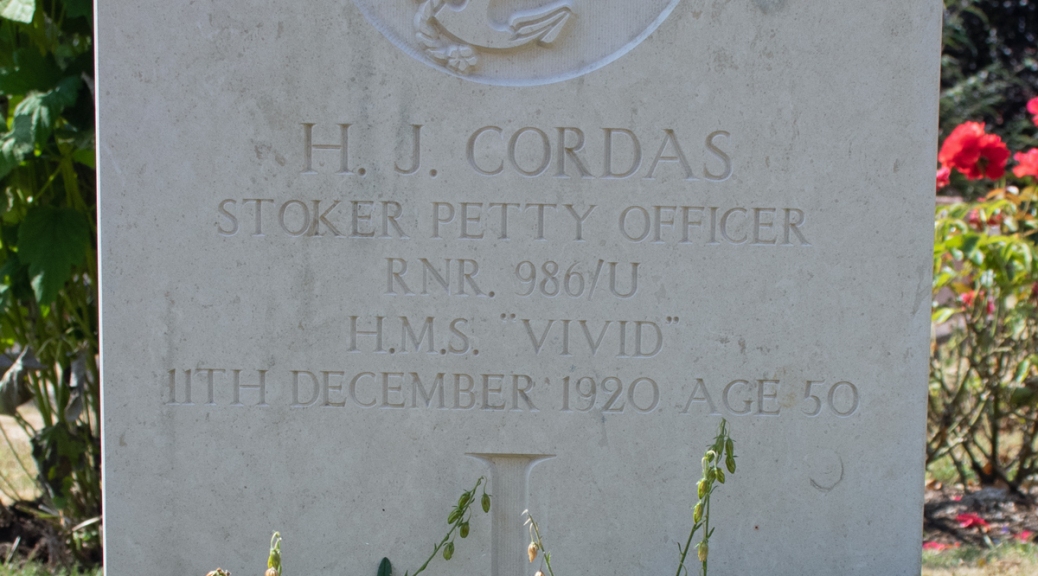
In December 1918, Henry’s service came to an end. He was, by now, based at HMS Vivid, the Royal Naval Dockyard in Devonport, but his health was suffering. Medically discharged with a combination of chronic bronchitis and rheumatic pain, he seems to have returned to Bristol.
On 6th December 1920, Henry was admitted to Bath War Hospital in Somerset, as he was coughing up blood. The plan was to transfer him to Greenwich Hospital in Surrey, but he suffered an aneurysm before that move could be made. He passed away on 11th December 1920, at the age of 50 years old.
The body of Henry John Cordas did not travel far for burial. He was laid to rest in the peaceful expanse of Bath’s Locksbrook Cemetery.
Stanley William Parry was born in the spring of 1890 in St George’s on the outskirts of Bristol, Gloucestershire. One of four children to Herbert and Susannah Parry, Stanley was a twin to brother Roland. Herbert was a commercial clerk for a chemical manufacturer, and this afforded the Parry boys a level of education, with both Roland and Stanley attended the Colston Endowed School in Bristol.
Tragically, Susannah had died when Stanley and Roland were just 3 years old: their younger brother, Wilfred, had died the year before, when just a babe-in-arms. By the time of the 1911 census, Herbert had moved the family to Portishead. He was still working as a clerk, while both of the twins were employed as insurance clerks. Their older brother, Edwin, was also a clerk, in the docks at Bristol, and Herbert had employed a live-in housekeeper, Mary Govier, to look after him and his sons.
When war came to Europe, both Stanley and Roland enlisted. The two of them joined the Royal Field Artillery as Gunners. While full service records are not available, Stanley was assigned to the 40th Trench Mortar Battery, while Roland became attached to A Battery of the 240th Brigade.
Stanley was serving in France in the summer of 1916, when he became ill.
The funeral took place on Saturday afternoon, at Portishead Cemetery, of Gunner Stanley Wm Parry, who… died at Mile End Hospital, London, on September 19th. The deceased, who was 27 years of age, was always somewhat delicate in health, but was anxious to serve his King and country, and joined the [Royal Field Artillery]. He was brought to London from France on the previous Saturday suffering from enteritis, and although he lived until his father reached him, he died shortly after. He was the third son of Mr HC Parry… whose two other sons are also serving, one in France and the other in Egypt.
Bristol Times and Mirror: Monday 25th September 1916
Gunner Stanley William Parry was laid to rest in Portishead Cemetery, just a short distance from the family home.
Gunner Stanley Parry (from findagrave.com)
Roland continued to serve his country in France, but tragedy was to strike the family once more.
Mr HC Parry… has received the sad intelligence that his son, Rowland G Parry [sic], of the [Royal Field Artillery], was killed in action on the 17th September. A letter from deceased’s officer stated that Gunner Parry was returning to the battery when a shell burst on the track, killing deceased instantaneously, death being absolutely painless. The letter further states that Gunner Parry had been a very valuable member of the battery, and will be missed by them all. Gunner Parry was the second of Mr Parry’s three sons to lay down his life in the great fight, a twin brother having died in a military hospital in London last year. The other son, the eldest, is serving in Palestine.
Bristol Times and Mirror: Saturday 29th September 1917
Roland George Parry was 28 years of age when he died. He was laid to rest in the Vlamertinghe New Military Semetery, in Ypres.
Gunner Roland Parry (from findgrave.com)
Herbert Parry passed away in the summer of 1920, at the age of 62. He had outlived three of his sons, as well as being a widower for 27 years. He was laid to rest in Portishead Cemetery with his son Stanley.
Edwin Parry, Stanley and Roland’s older brother, had returned from the First World War by the summer of 1919. He resumed his work as a clerk at the docks in Bristol, and married schoolteacher Annie Homewood in August 1919. They went on to have three children, Barbara, Gwladys and Roland. Edwin died in September 1959, at the age of 71 years old.
In a quiet corner of Portishead Cemetery, Somerset, is the grave of Private EG Davies. His headstone confirms that he was in the Duke of Cornwall’s Light Infantry, give the date of his death – 23rd March 1919 – and his age when he passed – 40 years old. The Commonwealth War Graves Commission website confirms that Private Davies transferred to the Labour Corps, but only a couple of documents remain from his time in the army.
The soldier’s pension records confirm that his full name was Edward George Davies, and that, at the time of his death, he was living with his ‘unofficial wife’, Minnie Louisa Holbrook. The records also give the cause of death: influenza and septic bronchitis.
Minnie Louisa Fido was born in the spring of 1874 in Bedminster, Bristol, one of thirteen children to farmworker David Fido and his wife, Sarah. She married Arthur Holbrook on 28th April 1895, and had Gertrude four months later.
The Somerset School Register from 1906 notes that Gertrude Fido joined the Church of England School in Weston-in-Gordano on 12th February. It gives her mother’s name as Minnie Fido, but doesn’t give a father’s name. It seems that Gertrude left the school in November 1914, as she had found work.
A search of the 1911 census records shows Edward and Minnie (whose surname is now given as Davies), living in George Street, Portishead. Edward is listed as a wagoner on a farm, and that he was born in Gloucestershire. Minnie is noted as a charwoman from Nailsea, Somerset. Making up the household is Gertrude, noted as being Edward’s stepdaughter, and who was working as a domestic servant.
Edward’s history is more of a challenge to piece together. His name is too common to be able to single him out on census records, and, while the 1911 census suggests he and Minnie had been married for eight years, there is no marriage record to shed any further light on his family. (This is not surprising, given that his army pension documents suggest Minnie was his unofficial wife.)
Most of Edward’s life, therefore, is destined to remain lost to time. Minnie did not marry, or co-habit, again, and she passed away on Christmas Day 1949, at the age of 75 years old. Gertrude looks to have married a man called Bessant. The 1939 England and Wales Register recorded her living in the Portishead area, and working as a supervisor in a boot factory. She was living with her maternal uncle, Herbert Fido, but was noted as being the head of the household. She died early in 1967 in Weston-super-Mare.
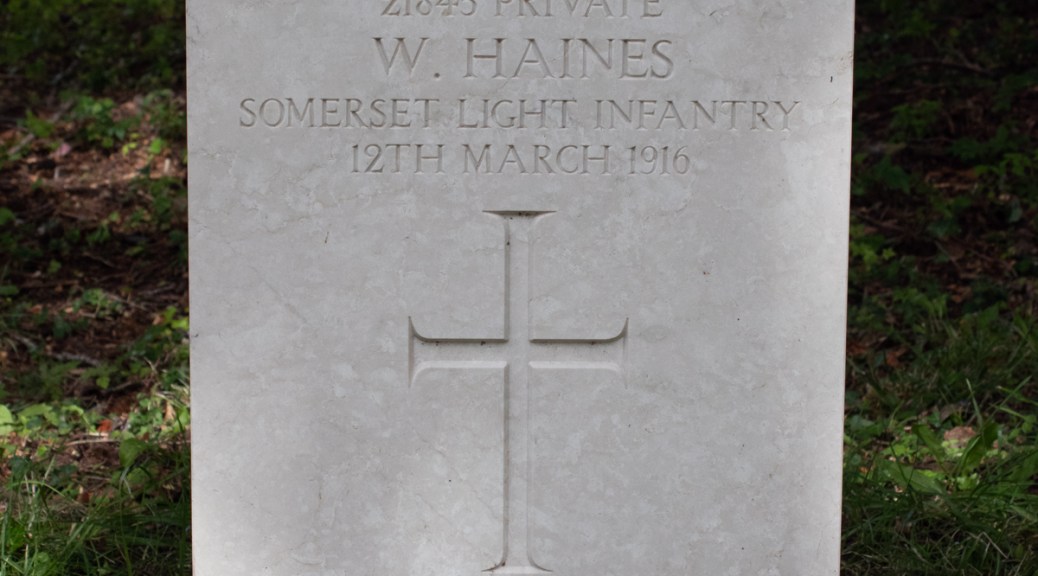
Tauntonians will learn with deep regret of the death of Private W Haines, of the No. 5 Supernumerary Company, 4th Battalion Somerset Light Infantry, which took place at the Portishead Red Cross Hospital, at the age of 64. The funeral took place at the Portishead Cemetery on Friday of last week, the deceased being buried with full military honours… The late Private Haines… came up with the last Company of the National Reserves, about 14 months ago… and during that time did his duty to the satisfaction of the office commanding and all other officers concerned. Corporal Jarman, who is a well-known Tauntonian of the same Company writes: “Private Haines was a fine old soldier, doing his duty in a manner with would be a credit to any youngster, and his death came as a surprise to all of us. There are still with us half-a-dozen of the old ‘sixties’, and I hope when some of these conscientious objectors see this they will alter their mind, and do their little bit for their King and country like he did.”
Taunton Courier and Western Advertiser: Wednesday 29th March 1916
William Haines was born in the spring of 1850 in Hinton St George, Somerset. The younger of two children, his parents were William and Sophia Haines. William Sr died when his son was a teenager, leaving Sophia to raise the family. She found work as a nurse to bring in some income and, by the time of the 1871 census, the family were living together, William Jr working as a stonemason and his older sister earned money through glovemaking.
On 23rd December 1871, William married Jane Shuter, a sawyer’s daughter from Stoke-sub-Hamdon. The couple set up home in South Petherton, and had a son called William Jr the following year. The family remained together through the next three census returns, William Sr continuing as a mason, while his son found work as a plumber. By 1911 they family had moved again, this time to Taunton, where Jane was now working as a dealer in wardrobes.
When war broke out, William Sr stepped up to play his part, as the report suggests. He enlisted at the start of 1915, volunteering his services, despite having reached 64 years of age. Assigned to the 4th Battalion of the Somerset Light Infantry, and attached to the 5th Supernumerary Company – a territorial reserve force – Private Haines he remained in Somerset.
William suffered a heart attack on 12th March 1916. He was rushed to the Red Cross Hospital in Portishead, but passed away soon after being admitted. He was 66 years of age (the newspaper report giving the incorrect age).
William Haines did not travel far to be laid to rest. He was buried in Portishead Cemetery, on the southern outskirts of the town.
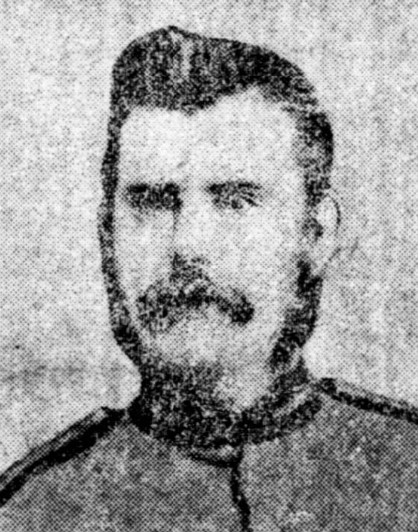
Private William Haines (from britishnewspaperarchive.co.uk)
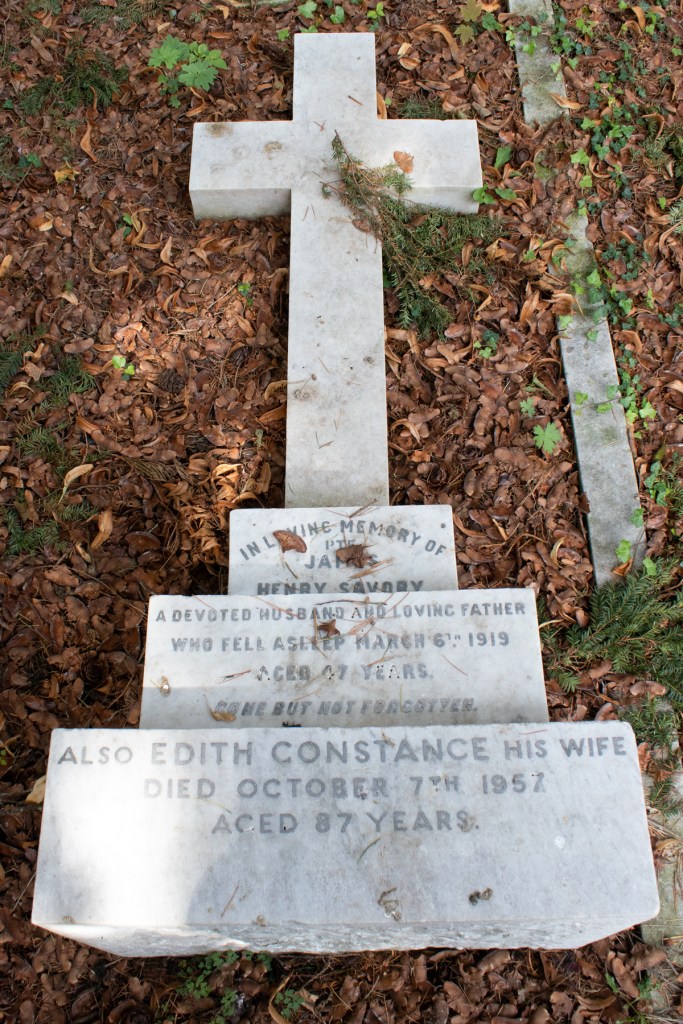
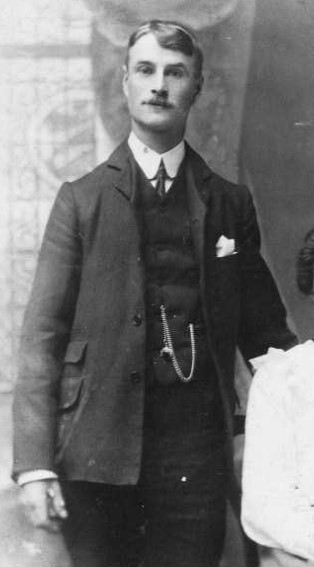
James Henry Savory was born in Gloucester in the spring of 1872. An only child, his parents were Frederick and Sophia Savory. Frederick was innkeeper of the town’s Bell Inn, but things seemed to go wrong for the family as time passed.
Both Frederick and James disappear from the 1891 census return, while Sophia is recorded as being an inmate in the Bristol City Workhouse. She was still there ten years later, although whether she had been there for the full decade is unclear.
James, by this point, had found employment as a travelling labourer. By the autumn of 1891, he had met Edith Morgan, a butcher’s daughter from Bristol. The couple married on 16th May 1892, four days before Edith gave birth to their first child, a daughter they called Eleanor. The couple set up home in Bedminster, James finding work as a foreman at the local marble works. He and Edith went on to have four children in all.
James was drawn to piecemeal work: by the time of the 1911 census, the family had moved to Portishead, Somerset, and he was employed as an ironmonger. His son, James Jr, was apprenticed in the same line of work, and the family had a relative, 71-year-old printer William Badger, boarding with them to bring in a little extra money.
What war came to Europe, James stepped up to play his part. Full records are not available for him, but he certainly enlisted in the army. Based on his age – he was 42 years old when the conflict began – it seems likely that he either volunteered for service, or that he was called up later in the war.
Private Savory was attached to the 19th Battalion of the Hampshire Regiment. Whether he service on home soil or overseas is unclear, but he survived through to the end of the war, and had returned home by the start of 1919.
James Henry Savory died on 6th March 1919: he was 46 years of age. He was laid to rest in Portishead Cemetery, not far from where his widow still lived. Edith lived on until October 1957: she was laid to rest with her late husband, reunited after nearly forty years.
Richard Francis Gould was born in the autumn of 1893 in Wraxall, Somerset. One of fifteen children, his parents were Devon-born farm labourer and carter John Gould and his wife Mary, who came from Bristol.
When he left school, Richard found work as a domestic gardener, and this is what he was doing when he met Ada Archer. She was a nurse from Bristol, and the couple married in Knowle on 17th August 1908. They set up home in Bedminster, and went on to have three children: Edith, born late in 1909; Richard Jr, born in 1915; and Ronald, who was born the following year.
When war broke out, Richard was drawn to serve his country. Sadly, most of his service records have been lost to time, so it’s impossible to piece together a complete record of his time in the army. He was initially attached to the 36th Training Reserve Battalion, but was soon transferred. Attached to the 599th Agricultural Company of the Labour Corps, Private Gould was based in Somerset.
It was while serving in the autumn of 1918, that Richard fell ill. Having contracted pneumonia, he was hospitalised, but the condition proved too much, and he passed away on 19th October, at the age of 34 years old.
Ada and the children were living in the Somerset village of Long Ashton by this point, but it was in the graveyard of the local church – All Saints’ – that Richard Francis Gould was laid to rest.
Harry Payton Gadd was born on 3rd November 1899, one of ten children to Elijah and Ada Gadd. Elijah was a stone mason from the Somerset village of Dundry, and this is where the family were born and raised.
Harry found work as a farm hand when he finished his schooling but he seems to have been eager to play his part for King and Country. As soon as he turned 18, he enlisted in the Royal Navy. His service records show that he joined up as a Stoker 2nd Class on 6th November 1917. He was 5ft 3.5ins (1.61m) tall, with brown hair, grey eyes and a fresh complexion.
Stoker Gadd was initially sent to HMS Vivid, the Royal Naval Dockyard in Devonport, for training. On 28th January 1918, he was assigned his first ocean-going post, on board the frigate HMS Leander. He spent a couple of months on board, before transferring to the store ship HMS Tyne, then moving to HMT Wallington (also branded as HMS Sylvia), a requisitioned trawler, on 15th April 1918.
Stoker Gadd was on board Wallington for six weeks, when he was killed in an accident. No other information is available, and his service records state that “the death of this man… was caused… from an accident on board. No blame attributable to anyone.”
A contemporary newspaper echoes this, but gives no further information: “News has been received that Stoker Harry (Joe) Gadd, the 18-year-old son of Mr and Mrs E Gadd, of Dundry, has been killed by accident on one of his Majesty’s ships.” [Bristol Times and Mirror: Saturday 6th July 1918]
The body of Harry Payton Gadd was brought back to Dundry for burial. He was laid to rest in the graveyard of St Michael’s Church.
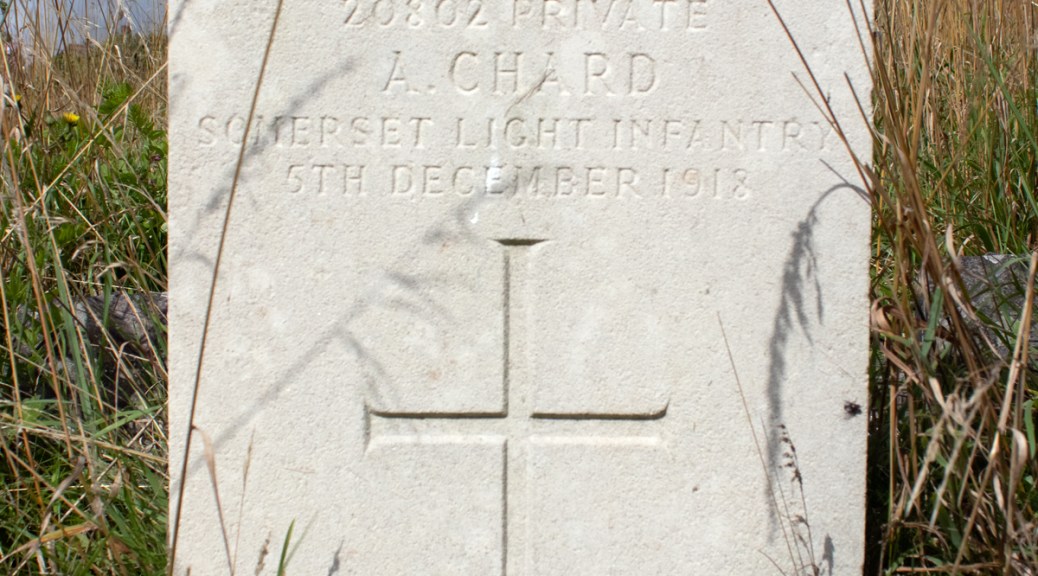
Arthur Chard was born in the spring of 1893, one of eight children to Isaac and Eliza Chard. Isaac was a labourer at the colour works in Winford, Somerset, and this is where the family were born and raised.
When Arthur finished his schooling, he found work as a farm labourer and, by the time of the 1911 census, he was living with his maternal uncle and family in the village, where he was employed as a farm lad.
As war came to Europe, Arthur stepped up to serve his country. He enlisted on 16th November 1915, joining the Somerset Light Infantry. His service records show that he was 5ft 3ins (1.6m) tall and weighed 113lbs (51.3kg).
Private Chard was formally mobilised in January 1916, and was sent to France in September, having completed his training. By May of 1917, he seems to have been back in Britain, and was transferred to the Labour Corps. There appears to have been some health issue behind this, as, on 11th August he was admitted to Henham Hall Auxiliary Hospital in Suffolk, suffering from ‘debility’. Having been moved to another hospital after a couple of weeks, he was finally discharged back to his unit on 20th September 1917.
Arthur joined the 626 Agricultural Company, which was based in Taunton. By July 1918, he had moved to another of the Somerset troops, 593 Agricultural Company. His health was still suffering, however, and he was soon admitted to Taunton Military Hospital. Private Chard passed away from nephritis on 5th December 1918. He was 25 years of age.
Arthur Chard’s body was taken back to Winford for burial. He was laid to rest in the village’s parish church, St Mary & St Peter’s.













 Death and Service