Tag Archives: Wiltshire

Private Edward Boland

Private Edward Boland

Edward James Boland was born on 14th August 1885 in the town of Darfield, on New Zealand’s South Island. Details of his early life are sketchy, but he was the fourth of nine children to Francis and Annie Boland.

When he finished his schooling, Edward found work as a farm labourer. In 1906, he married Ellen – or Nellie – Shea: their first child, son Raymond, was born the same year, and they would go on to have three more children by the time war was declared.

On 18th June 1916, Edward answered the call to serve the Empire. Enlisting in Trentham, he joined the New Zealand Canterbury Regiment as a Private. His service record notes that he was 5ft 8.5ins (1.74m) tall and weighed 144lbs (65.3kg). A Catholic, he had light brown hair, blue eyes and a fair complexion. A scar on his right thigh was also recorded as a distinguishing mark.

On 16th October 1916, Private Boland left from Wellington on board the steam ship Willochra. His unit – the 18th Reinforcements – arrived in Devonport, Devon, ten weeks later. They were then marched to their base at Sling Camp near Bulford, Wiltshire.

The journey from New Zealand, impacted Edward’s health. At the end of January 1917, he was admitted to the 3rd NZ General Hospital in Codford, Wiltshire, suffering from broncho-pneumonia. His condition deteriorated and would take his life. Private Boland died on 4th February 1917: he was 31 years of age.

As he was thousands of miles from his home, Edward James Boland was instead laid to rest in the newly extended graveyard attached to St Mary’s Church in Codford.


Private Edward Boland
(from findagrave.co.uk)

Flight Cadet Ernest Tracey

Flight Cadet Ernest Tracey

Flt-Cadet Ernest Osborn Tracey, RAF, who died on Friday, the result of injuries sustained through a collision in the air when undergoing his final training, was the only son of Rev. HF and Mrs Tracey, of Dartmouth. He was born in Oct. 1899, at St Saviour’s Vicarage, of which church his father was vicar for 23 years, retiring from the living in 1913 in order to take up clerical duties in New Zealand. Mr Tracey was educated at Blundell’s, where he held a house master’s scholarship. When he left in the middle of last year he was the winner of the Coles’ prize for science; was one of the shooting VIII, of which he had his cap and colours; a member of the Upper Sixth, the OTC, and he had also won the first prize for drawing. On leaving Blundell’s he obtained a cadetship at Woolwich, and was transferred to the RAF.

[Western Morning News: Tuesday 4th June 1918]

Ernest Osborn Tracey was born in Dartmouth, Devon, on 25th October 1899, and was baptised in his father’s church six weeks later. The younger of two children to Reverend Henry and Alice Tracey, he gave up his schooling to enlist in the Royal Flying Corps on 12th November 1917.

When the Royal Air Force was formed the following April, Flight Cadet Tracey automatically transferred across. Training to be a reconnaissance pilot, Ernest would have cut a dashing figure, standing 6ft 1in (1.85m) tall. He was based at Yatesbury Airfield in Wiltshire, and was learning to fly a BE2, twin seater biplane.

At 8:30pm on 31st May, his aircraft collided with another, sending Ernest’s machine spinning into a nosedive. He crashed into the ground and was killed instantly.

The body of Ernest Osborn Tracey was taken back to Devon for burial. He was laid to rest in the graveyard of St Clement’s Church, Dartmouth.


Ernest’s will gave his mother, Alice, as his beneficiary. The newspaper report suggests that Henry had travelled to New Zealand to tend a new flock there, and the Commonwealth War Graves Commission records him as being “Chaplain to the Forces” and Vicar of Dartmouth.

It certainly seems that any time spent in New Zealand was limited. By the time of the 1921 census, Reverend Tracey had found a new posting, in the Staffordshire village of Gentleshaw. The same census return found Alice staying with their daughter, Rosamond, and her family, in Totnes, Devon.


Air Mechanic 2nd Class Jack Gauntlett

Air Mechanic 2nd Class Jack Gauntlett

Jack Wallis Gauntlett was born in Burbage, Wiltshire, in the spring of 1898. The oldest of four children, his parents were George and Florence Gauntlett. On Jack’s baptism record, George gives his trade as a yeoman, while later census records confirm he was a farmer.

Jack was baptised in St Mary’s Church in Stapleford, near Salisbury, some distance south of Burbage, and, given that his parents had no connection to that area, it seems that his father’s work took the family around the county. The 1901 census record found them Gauntletts back in Burbage, but by the time of the 1911 return, they had moved to Middleton Farm in Norton Bavant.

When war broke out, Jack stepped up to serve his country. He enlisted in the Royal Flying Corps in January 1917 and, as an Air Mechanic 2nd Class, was sent to Farnborough, Hampshire, for training.

Much sympathy is felt with Mr and Mrs FG Gauntlett, of Middleton Farm, in the loss they have sustained by the death of their eldest son, JW Gauntlett… He came home three weeks ago on leave before proceeding to France, and was then sickening for measles and had bronchitis. He was taken to Sutton Veny military hospital and died there on Friday from an attack of pneumonia.

[Wiltshire Times and Trowbridge Advertiser: Saturday 19th May 1917]

Jack Wallis Gauntlett was just 19 years of age when he died on 11th May 1917. He was buried in the family plot in All Saints’ Churchyard, Norton Bavant.


Private George Francis

Private George Francis

George Edward Francis was born at the end of 1871 in the Wiltshire village of Alvediston. The youngest of six children, his parents were Eli and Mary Francis. Eli was an agricultural labourer, and this was the line of work that George would also follow.

Eli died in 1885, and Mary moved in her daughter Elizabeth’s family, and the 1891 census noted that George and his older brother Samuel were also living there. George, now 19 years of age, was employed as a farm labourer.

On 11th July 1906, George married Alice Shirley. A year older than her new husband their wedding certificate notes that she was also born in Alvediston, but that her father wasn’t known. The couple settled in a house in Tollard Royal, a few miles south of their home village.

George stepped up to serve his country when war was declared. Full details of his time in the army are unclear, but he had definitely enlisted by the summer of 1918. He was initially assigned to the Wiltshire Regiment, but was later transferred to the 651st Agricultural Company of the Labour Corps.

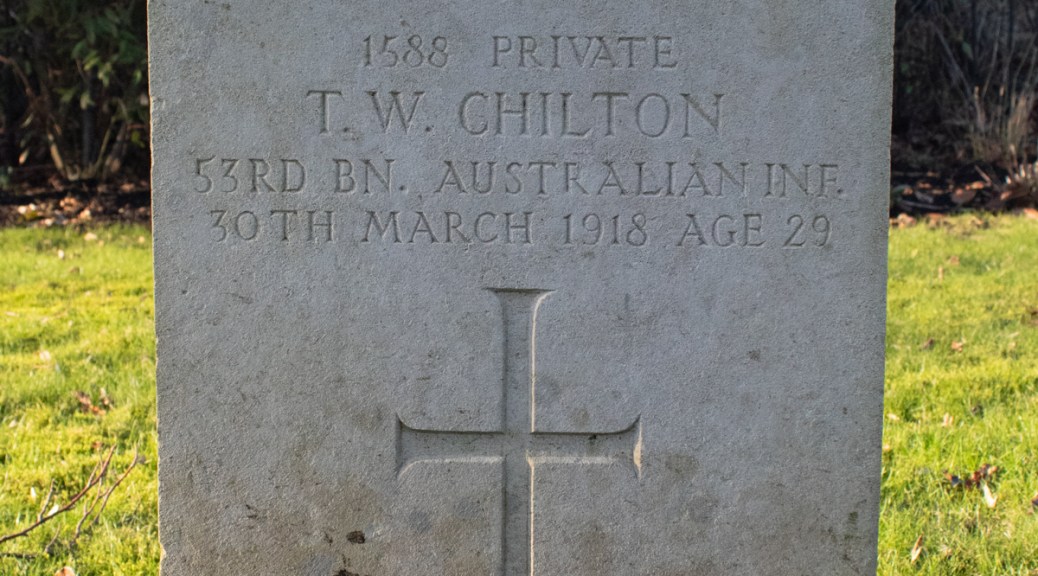
The only other record for Private Francis’ time in the army, is a document relating to his passing. This confirms that he died on 28th December 1918 in camp at Norton Bavant, to the east of Warminster, Wiltshire: he was 47 years of age.

It seems likely that Alice was unable to cover the cost of bringing her husband’s body back to Tollard Royal for burial. Instead, George Edward Francis was laid to rest in the graveyard of All Saints’ Church in Norton Bavant.


Private Joseph Tyler

Private Joseph Tyler

Joseph Tyler was born in the spring of 1882, and was the youngest of three children to Joseph and Sarah. Joseph Sr was a carter from Staffordshire, and the family were born and raised in Wordsley.

The 1901 census found the Tylers living in Brierley Hill, with Joseph Jr having found employment as a glass worker. His father passed away in 1907, and so he remained at home to support his now widowed mother.

By the 1911 census, Sarah and Joseph had moved to Birmingham, and were living at 32 Wiggin Street, a terraced house in the Ladywood area. Joseph listed his employment as a glassblower, while his mother gave no employment, presumably looking after the home.

When war came to Europe, Joseph stepped up to play his part. Full details of his service have been lost, but it is clear that he enlisted early on in the conflict. He joined the Hampshire Regiment, and was sent to Wiltshire for training.

Tragically, Private Tyler’s time in the army was not to be a lengthy one. Barracked near the village of Boyton, he was quickly admitted to the local military hospital. Suffering from heart failure, this would take his life: Joseph died on 13th October 1914, at the age of 32.

The body of Joseph Tyler was laid to rest in Boyton Cemetery, not far from the camp that had, so briefly, been his home.


Private George MacFarlane

Private George MacFarlane

George McFarlane was born in Alexandria, Dumbartonshire, in 1879, and was the third of four children to George and Jane.

There is little concrete information about George Jr’s life, and most of that information comes from his army service records. These confirm that he was working as a printfield worker, employed by the local dye works to produce printed cloth.

The service papers also confirm that George had married Christina Kerr on 19th April 1905, and that they had four children: Irene, William, Christina and George. Christina had also had a son, Richard, from a previous relationship.

George had readily answered the call to serve his country when war broke out. He enlisted on 18th September 1914, and was assigned to the Argyll and Sutherland Highlanders. He is recorded as being 5ft 7ins (1.69m) tall and 135lbs (61.2kg), with auburn hair, grey eyes and a fresh complexion.

Private McFarlane was sent to Wiltshire for his training, and was barracked near the village of Boyton. His time there was to prove tragically short. Within a matter of weeks he contracted pneumonia, and succumbed to the condition on 4th October 1914. He was just 34 years of age, and had been in the army for 16 days.

Christina was unable to cover the cost of bringing her husband back to Scotland. Instead, George McFarlane was laid to rest in Boyton Cemetery, his headstone paid for by the men of his regiment.


Private Charles Leat

Private Charles Leat

Charles Leat was born at the start of 1888 in Tiverton, Devon. One of thirteen children, his parents were Sidney and Ann Leat. Sidney worked as a lace maker, and the family lived in a crowded cottage on St Andrew Street to the south of the town centre.

When Charles left school, he found work as a grocer’s errand boy. Sidney died in 1897, Ann had to take on lace work herself. The house was too small for the growing family, and so the 1901 census found Charles and his brother Arthur living with his maternal aunt, Mary.

Things had moved on as the new century progressed. By 1911, Charles had moved to South Wales, and was living with his older brother, James, and his family in Glamorgan. James was a house painter, but his sibling had taken on work as a railway porter, and the family lived in terraced house at 57 Tydfil Street, Barry.

When war hit Europe, Charles seemed keen to play his part. Sadly, full details of his military service have been lost to time, but it is clear that he initially enlisted in the opening weeks of the conflict. Joining the Devonshire Regiment, he was assigned to the 11th Battalion.

A later newspaper report suggests that he “had been through most of the fighting on the Western Front… [and] was seriously wounded in 1915.” [Western Times – Friday 15 November 1918] It was after he had recuperated that Private Leat was reassigned to the regiment’s Labour Corps.

By the summer of 1918, Private Leat was serving on Salisbury Plain, Wiltshire. While here, he fell ill, and was eventually admitted to the Amesbury Military Hospital. His condition, pneumonia, was to prove too severe for his body to take, however, and he passed away from the condition on 11th November 1918, Armistice Day. He was 30 years of age.

Charles Leat’s body was taken back to Devon for burial. He was laid to rest in Tiverton Cemetery, not far from where his family still lived.


Serjeant Herbert Newman

Serjeant Herbert Newman

Herbert James Newman was born at the start of 1891, the fourth of five children – all sons – to Charles and Mary Newman. Charles was a general labourer, and the family lived on Well Head, to the north of Mere, Wiltshire.

Charles died when Herbert was just a boy, and Mary was left to raise the family on her own. By the time of the 1901 census, the family had moved to a cottage on Old Hollow, and she had taken work as a charwoman. Herbert’s older brother, Theodore and William, had also taken jobs to help with money.

In 1911, her boys had all grown up and were moving on, and Mary found more secure employment as a live-in servant to 80-year-old Anna Collard, a single woman who was living on her own means.

Herbert, meanwhile, had left Wiltshire for the capital, and was working as a compositor. He was boarding with widow Mary Ann Day and her two children, all living relatively comfortably at 41 St Thomas’ Road in Finsbury Park, Middlesex. Amongst the other lodgers were Jeweller John Tipping, conductor Wilfred Mustill and cycle mechanic Lester Rule.

When war came to Europe, Herbert stepped up to play his part. Full details of his military service have been lost to time, but it is clear that he had enlisted by December 1917. Initially joining the Tank Corps, It seems likely that Private Newman had seen service overseas, although there is nothing to confirm this either way.

As the conflict drew into its closing months, the now promoted Serjeant Newman seems to have been based in Dorset. In the spring of 1918, he fell ill, and was admitted to the Military Hospital in Wareham. The cause of his illness is unclear, but it would prove fatal: he passed away on 18th May 1918, at the age of 27 years old.

The body of Herbert James Newman was taken back to Wiltshire for burial. He was laid to rest in Mere Cemetery, on the outskirts of the town he had called home.


Interestingly, Serjeant Newman’s Pension Ledger Index Card gives his beneficiary as his mother, Mary. The British Register of Soldiers’ Effects, however, suggests his next-of-kin was his widow, Lucy, although there appears to be no record of Herbert having married.


Private John McKinnon, aka James Chalk

Private John McKinnon, aka James Chalk

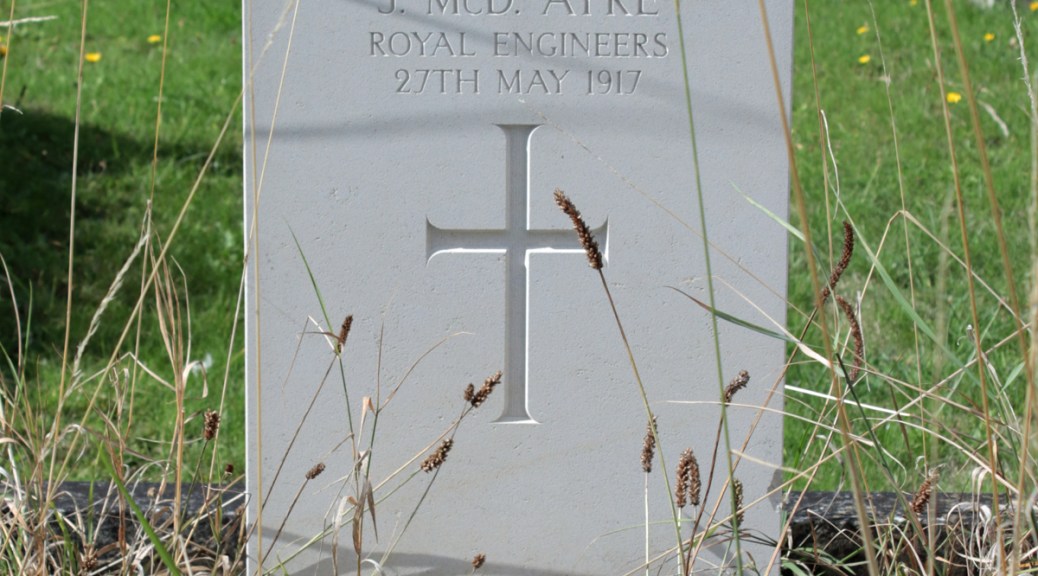
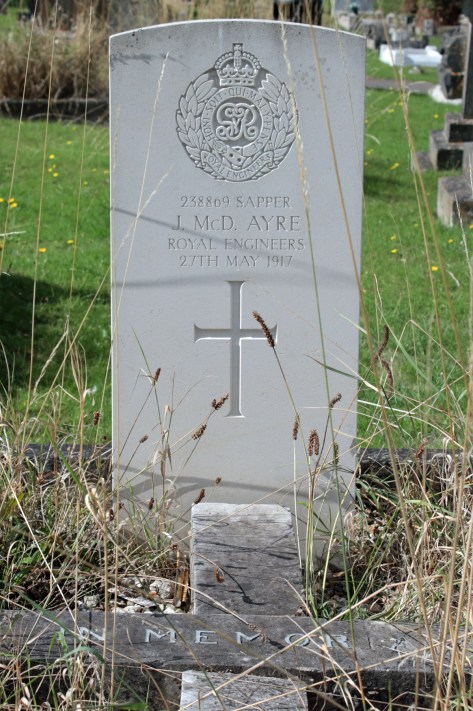
In Mere Cemetery, Wiltshire, is a headstone dedicated to JE Chalk, who served as Private J McKinnon in the Canadian Army Veterinary Corps. He died on 25th June 1920, and gives his age as 53 years old.

Private McKinnon’s service records suggest, however, that he was born on 14th October 1874 in Inverness, Scotland, and give his army name as John. The Commonwealth War Graves Commission give his other name as James Edward Chalk. James seems to have been keen to disguise his background, and it is only with some digging that the real story comes out.

James was the youngest of five children to Edward and Mary Chalk. Edward was a carpenter from Mere, and this is where the family were born and raised.

When he finished his schooling, James found work as a booking clerk. Edward died in the 1880s, and the 1891 census found James living at home with his mother, who had taken on laundry work to help with their finances.

By 1901, Mary and James were living on Water Street, to the south of the town centre. There’s was now an extended household, and included James’ sister Olive. James is noted as being married, and while no marriage records exist, it would seem that his wife, Mary, and their daughter, Ivy, were also living there.

The next census, taken in 1911, suggests James’ life had taken a different turn. Employed as a railway foreman, he was now living with his older sister, Olive, in her home. He is noted as being married with a child, but neither Mary nor Ivy appear in the same census.

At some point in the next five years, James took the decision to move overseas, and create himself a new identity.

John McKinnon was living in Montreal when the call came to join up. He enlisted on 29th April 1916, by which point he was 41 years of age. Assigned to the Canadian Army Veterinary Corps, his service records confirm that he was 5ft 9ins (1.75m) tall, with greying brown hair, grey eyes and a sallow complexion. He was noted as having scars on both legs, and another on the second toe of his right foot.

Private McKinnon’s unit were quick to be dispatched to Britain, and he arrived in Shornecliffe, Kent, on 29th June. He spent the next five months at the army base, and had two spells of a month each in hospital during that time: the first for asthma, the second for bronchitis.

In November 1916, John moved along the coast to Shoreham, West Sussex. His health was badly impacted, though, the medical report stating that ‘his chest is of the emphysematous type but at present free from bronchitis. He will not do well in England.’ John was formally discharged from the army on 15th November 1916.

At this point, John’s already sparse trail goes cold once more. It is possible that he moved to Wiltshire to be nearer to family, although nothing can be confirmed.

James Edward Chalk, who serves as Private John McKinnon, died on 26th June 1920: His service records suggest that he was 45, but he was, in fact, 53 years of age. He was laid to rest in Mere Cemetery, on the outskirts of the town he had called home for so long.


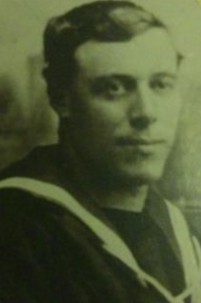
Able Seaman Arthur Norris

Able Seaman Arthur Norris

Arthur Norris was born on 24th February 1897 in the Wiltshire town of Mere. The seventh of nine children, he was one of four sons to Fred and Mary Norris. Fred was a domestic groom, and the family lived on Castle Street on the western edge of the town.

By the time of the 1911 census, Arthur had left school, and had found work as an errand boy. He had moved out of the family home, and was living with his older sister, Beatrice, and her husband. Piecemeal work wasn’t something Arthur was keen on, however, and in September 1913, he found himself a career.

That autumn, Arthur enlisted in the Royal Navy. Just 16 years of age, he was too young to formally join up, and so he was given the rank of Boy 2nd Class. He was sent to HMS Impregnable, the training ship based in Devonport, Devon, for his induction, and seemed to make an impression.

On 14th May 1914 Arthur was promoted to Boy 1st Class, and was assigned to the depot ship HMS Gibraltar. On 24th February he came of age, and officially joined the Royal Navy. His service records show that he was 5ft 5ins (1.65m) tall, with dark brown hair, brown eyes and a fresh complexion. He was noted as having a mole on his left shoulder blade.

The now Ordinary Seaman Norris remained on Gibraltar for most of the year. After a couple of weeks back in Devonport, he was assigned to the Armed Merchant Cruiser Oropesa, and remained on board for the next twelve months. During his time there, Arthur was promoted again, gaining the rank of Able Seaman.

Over the next three years, Arthur served on three further vessels: HMS Excellent from March 1916; HMS Woolwich from April 1916 to June 1918; and HMS Columbine from July 1918.

While attached to the Columbine, Arthur fell ill. He contracted pneumonia, and passed away on 16th October 1918. He was 21 years of age.

The body of Arthur Norris was taken back to Wiltshire for burial. He was laid to rest in Mere Cemetery, not far from where his grieving family were still living.