Tag Archives: wounded

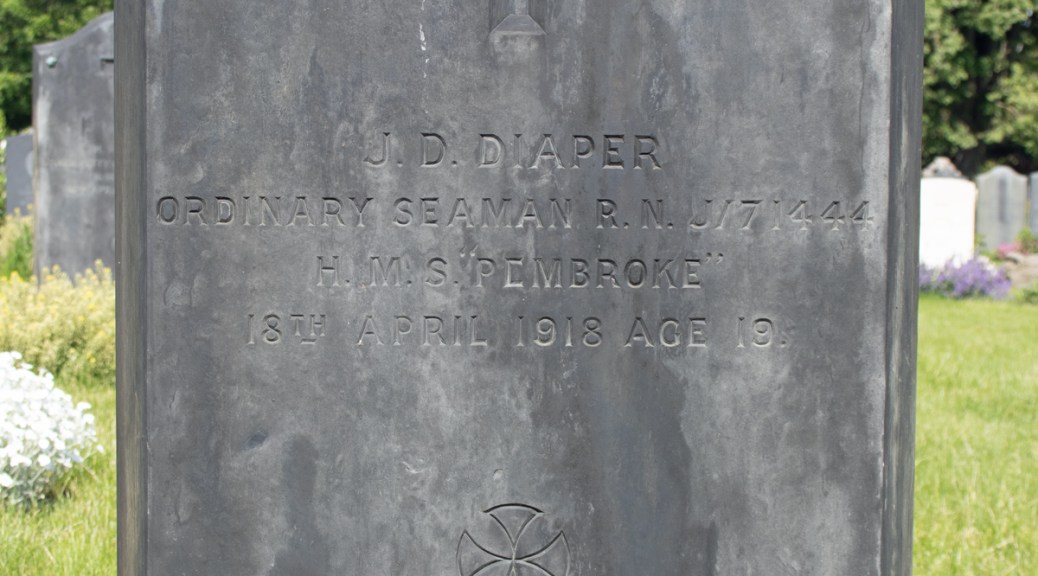
Ordinary Seaman John Diaper

Ordinary Seaman John Diaper

John Dolby Diaper was born in Stowupland, Suffolk, on 1st June 1898. He was the second youngest of ten children to George and Martha, and the older of two sons. George was a cattleman turned gardener, and it seems that John went into farm work when he completed his schooling.

When war broke out, John was called upon to play his part. He enlisted in the Royal Navy on 6th June 1917, joining as an Ordinary Seaman. His service records show that he was 5ft 4.5ins (1.63m) tall, with brown hair, grey eyes and a fair complexion.

Ordinary Seaman Diaper was sent to HMS Pembroke, the Royal Naval Dockyard in Chatham, Kent, for his training. The summer of 1917 was a particularly busy for the base, and temporary accommodation was set up in the Drill Hall; this is where John was billeted.

On the night of 3rd September 1917, Chatham suddenly found itself in the firing line as a wave of German aircraft bombed the town. The Drill Hall received a direct hit, and Ordinary Seaman Diaper was badly injured. He was admitted to the Royal Naval Hospital in the town, and would remain there for some time.

John’s injuries were severe and, although his treatment was ongoing, the impact on his overall health was detrimental. Ultimately, the air raid weakened his system, and his heart gave out. He died on 18th April 1918, more than seven months after the bombing: he was 19 years of age.

John Dolby Diaper was laid to rest in Woodlands Cemetery, Gillingham, alongside those who had given their lives on 3rd September.


Officer’s Steward Giovanni Teuma

Officer’s Steward Giovanni Teuma

Giovanni Teuma was born on 25th December 1878 in Valetta, Malta. There is little information about his early life, but documents confirm that his parents were Paulo and Vinza Teuma.

Most of the information about Giovanni comes from his service records. He enlisted in the Royal Navy on 13th February 1898 as a Domestic 3rd Class. He was noted as being 5ft 5ins (1.65m) tall, with brown eyes, black hair and a dark complexion.

Giovanni’s first posting was on the cruiser HMS Venus. He remained on board for more than three years, which would be his longest assignment. Over the next fifteen years, he would serve on another dozen vessels, returning to shore at HMS Victory and HMS Pembroke – the Royal Naval Dockyards in Portsmouth, Hampshire, and Chatham, Kent, respectively – in between voyages.

Giovanni continually attained a Very Good rating at his annual reviews, and rose through the ranks over the years. He was promoted to Domestic 2nd Class in March 1905 and Officer’s Steward 2nd Class in October 1907. At this point, however, his ranks started to vary, spending just over a year as Officer’s Cook 1st Class before returning to the rank of Officer’s Steward 2nd Class.

On 21st January 1914, Giovanni was stood down: he seems to have requested extended shore leave. He returned to action three months later, retaking his previous rank. On 11th August, just a few weeks after war was declared, he was assigned to the light cruiser HMS Arethusa, as Officer’s Steward 1st Class.

The Arethusa had been launched in the autumn of 1913, and was confirmed as the flotilla leader of the Harwich Force when was was declared. Within weeks of Officer Steward Teuma boarding her, she was involved in the Battle of Heligoland Bight. Severely damaged by two German cruisers, a number of the crew were killed and injured, and she had to be towed home.

When the Arethusa docked at HMS Pembroke, those who were injured were taken to the Royal Naval Hospital in Chatham. Officer’s Steward Teuma was one of those treated there but, sadly, his wounds were to prove too severe. He passed away on 29th August 1914, the day after the battle: he was 35 years of age.

Givoanni Teuma was laid to rest in Woodlands Cemetery, Gillingham, not far from the Kent naval base he had visited regularly.


Private John Sheppard

Private John Sheppard

John Henry Sheppard was born in the autumn of 1889, the older of two children to John and Ellen. John Sr was a general labourer from the Weston area of Bath, Somerset, and when he died, Ellen found work as a laundress to bring in some money.

From the census returns of 1891, 1901 and 1911, it seems that John remained living on Church Street, Bath. The earliest record noted him living with his parents and younger brother, Charles. By 1901, his father had died, and Charles was also noticeable in his absence, so it may be that he had also passed away.

The 1911 census adds a little mystery to the Sheppard line. Although signed off by Ellen, she is not listed as being at the house on the day the return was taken. There are three occupants: John, working as a farm labourer; eight year old Nellie, whose relationship is listed as daughter; and Charles Crane, a 73 year old retired gardener.

On 27th September 1913, John married Elsie Holbrow. The daughter of a gardener, she was working as a domestic servant and he was a groom when the couple exchanged vows. They went on to have a son, Albert, who was born in October 1914.

When war came to Europe, John stepped up to play his part. Full details are lost to time, but it is clear that he had enlisted by the autumn of 1916, initially joining the North Somerset Yeomanry, before transferring across to the Somerset Light Infantry. Private Sheppard was attached to the 1st Battalion and soon found himself on the Western Front.

There is little concrete information about his service, but is appears that he was wounded at Arras in the spring of 1917. He was medically evacuated to Britain for treatment, and was admitted to the 3rd Northern General Hospital in Sheffield, Yorkshire.

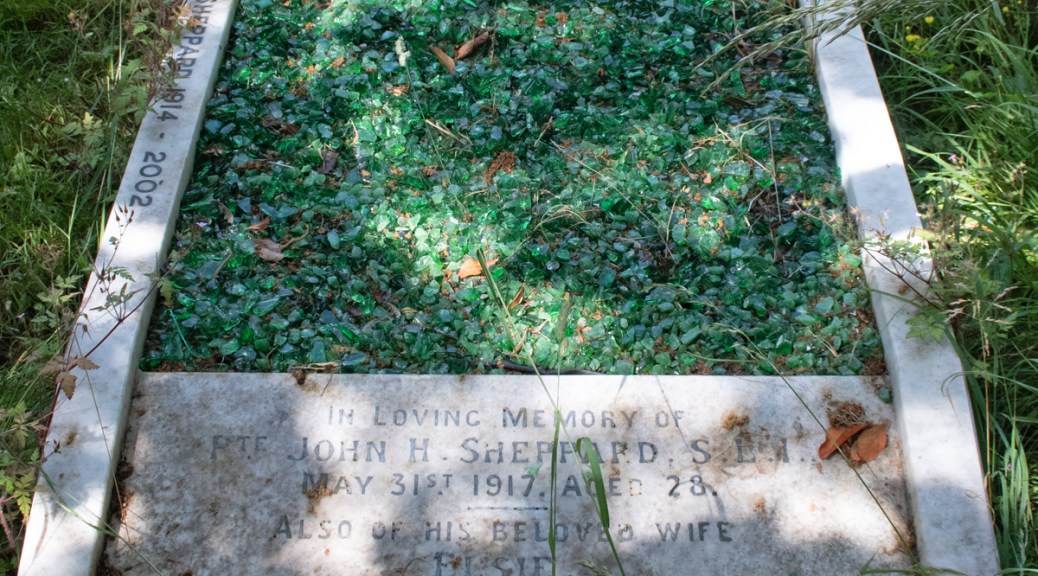
Private Sheppard’s wounds were to prove too severe however, and he succumbed to them on 31st May 1917. He was 27 years of age.

John Henry Sheppard’s body was taken back to Somerset for burial. He was laid to rest in the family plot in Bath’s sweeping Locksbrook Cemetery. He was reunited with Elsie when she passed away in December 1949: husband and wife together again after more than three decades.


Sapper William Harris

Sapper William Harris

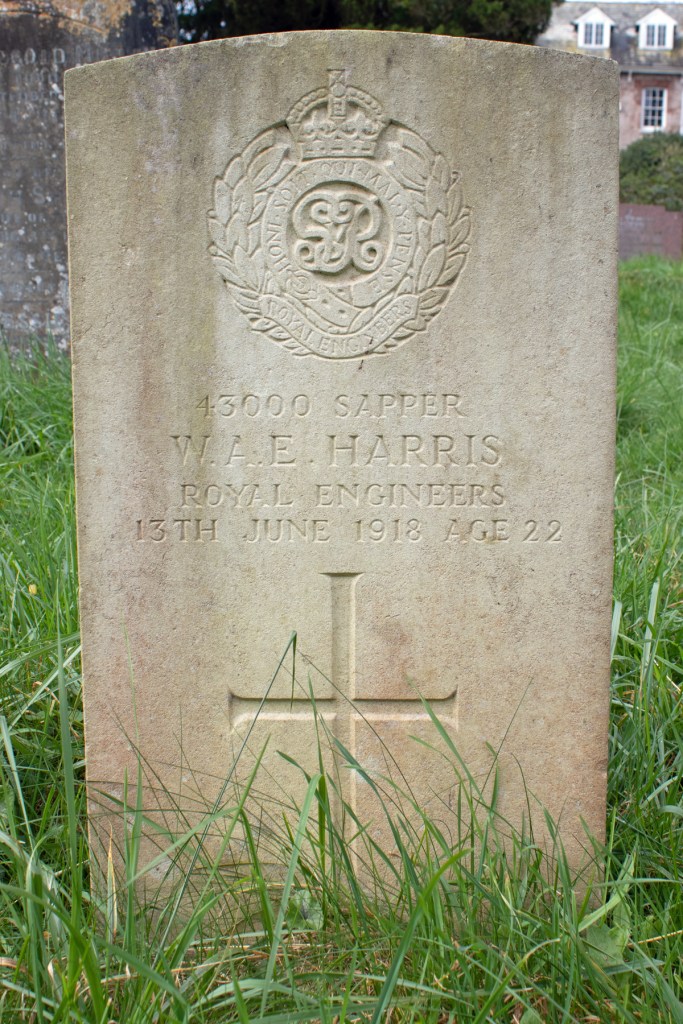
William Arthur Edward Harris was born in the spring of 1896 in Uffculme, Devon. The second of four children, his parents were William and Louisa. William Sr was a ganger on the railways, and by the time of the 1911 census, the family has moved to Halberton, near Tiverton, as that was where the work had moved to.

The same census return confirmed the work that William Jr had taken up, noting that he was an apprentice to an agricultural implement maker. This was not to last for long, however, as storm clouds were brewing over Europe.

When war broke out in the summer of 1914, William Jr was keen to play his part. He enlisted the following year, and his apprenticeship seems to have stood him in good stead. He joined the Royal Engineers as a Sapper, and was attached to the 77th Field Coy. His unit arrived in France on 15th July 1915.

Details of William’s time in the army is lost to time, but a newspaper report of his funeral sheds a little light on his time overseas: “Sapper Harris was among the first from Halberton to join up, and had seen much active service in France, being wounded at Arras on Sept. 16, 1917.” [Tiverton Gazette: Tuesday 25th June 1918]

Sapper Harris seems to have returned to Britain by the summer of 1918, although it is unclear whether he was on leave, based back in the UK or was being medically treated here. “At the early age of 22, [William] passed away in Kempston Military Hospital after a brief illness” [Tiverton Gazette: Tuesday 25th June 1918]

William Arthur Edward Harris had died in hospital in Bedfordshire on 13th June 1918. His body was taken back to Devon for burial, and he was laid to rest in the graveyard of St Andrew’s Church, Halberton.


Corporal John Wetzlar

Corporal John Wetzlar

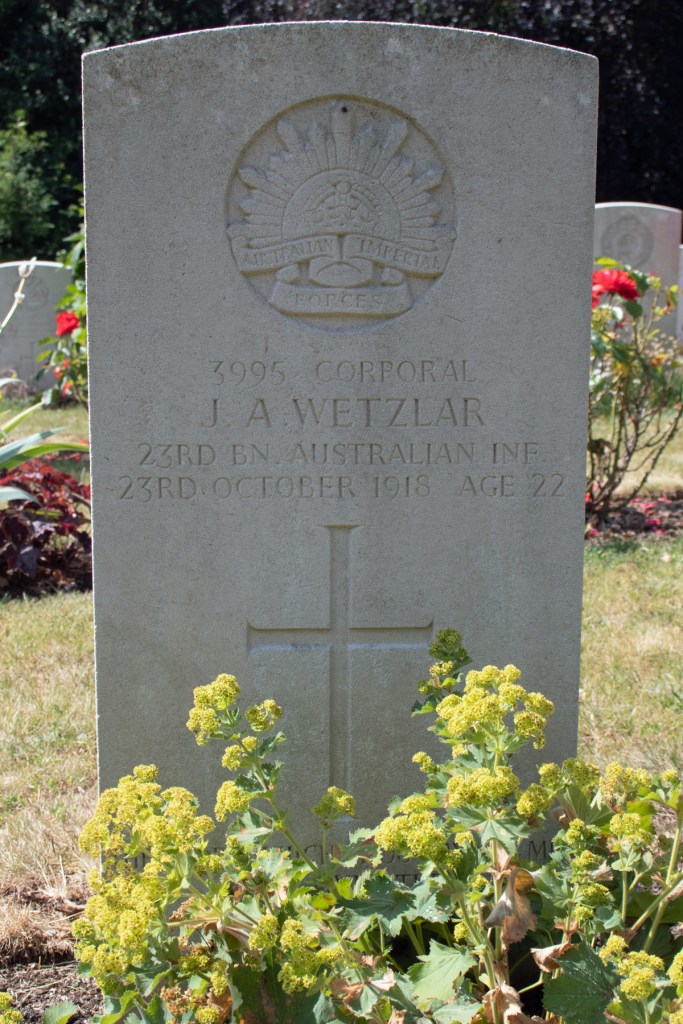
John Albert Wetzlar was born in Bendigo, Victoria, Australia, in the spring of 1895. One of four children, his parents were Ernest and Annie Wetzlar.

Little information about John’s life is available, and most of the detail that can be pieced together comes from his First World War service records. These confirm that he was working as a clerk when he enlisted on 14th July 1915. John’s medical record shows that he was 5ft 4.5ins (1.63m) and weighed 8st 5lbs (53kg). He had brown hair, blue eyes and a fresh complexion.

Private Wetzlar set sail for Europe on 8th February 1916, arriving with his unit in Alexandria, Egypt, six weeks later and landing in Marseille, France, on 31st March. Attached to the 23rd Battalion of the Australian Infantry, by the end of June, he found himself on the front line.

On 22nd August 1916, John’s unit was caught up in fighting, and he was wounded by shrapnel in his right leg. He was admitted to the 4th Australian Field Ambulance unit, before being transferred to the No 1. Canadian General Hospital in Etaples. His injuries required more care, however, and he was medically evacuated to Britain, and was sent to the 2nd General Hospital in Manchester.

Private Wetzlar spent the next six months recuperating, only re-joining his unit back in France on 10th March 1917. Back on the Western Front, he was promoted to Lance Corporal on 9th June, and to full Corporal four months later.

In January 1918, John was transferred back to Britain. Details are sketchy, but it may be that his experience was used to help train new recruits, as he was billeted at Tidworth Camp in Wiltshire. He remained on British soil until May, when he was sent to the Western Front for a third time.

Corporal Wetzlar’s time in France was to be fated. On 1st September 1918, John was wounded a second time, when he received a gun shot injury to his right leg once more. Medically evacuated back to Britain, he was admitted to Bath War Hospital in Somerset. The injury was severe enough to warrant an operation, and the damaged limb was amputated.

During his recovery, Corporal Wetzlar contracted influenza and pneumonia and, tragically, given what he had been through, these were to prove fatal. John died on 23rd October 1918: he was 22 years of age.

Thousands of miles from the home he had left nearly three years before, John Albert Wetzlar was laid to rest in the military section of Bath’s sweeping Locksbrook Cemetery, alongside other from his homeland.


Sapper Nuriel Evans

Sapper Nuriel Evans

Nuriel Ivor Evans was born on 22nd October 1892 in Lefroy, Tasmania, Australia. The older of two children, his parents were Powel and Mary Evans. There is little definitive information about Nuriel’s early life. The first concrete details come from his First World War service records.

Nuriel enlisted in the Australian Imperial Force on 31st August 1915. He was working as a tailor at the time, bring in money for his wife, Ida, who he had married in May 1913, and their daughter, Mollie, who was born that December.

Sapper Evans’ records confirm he was 5ft 3.5ins (1.61m) tall and weighed in at 131lbs (59.4kg). He was noted as having brown hair, grey eyes and a fair complexion, with a scar on his right shin.

Nuriel sailed for Europe on 23rd November, having been attached to the Australian Engineers. His unit left the Egyptian port of Alexandria in March 1916, and arrived in Marseille, France, ten days later. Leave aside, he was to serve on the Western Front for the next two years.

Barring one offence of being absent from parade (on 23rd March 1916, for which he was confined to barracks for a day), Sapper Evans had an unblemished record. On 23rd June that yeah, he was admitted to a field hospital because of a scald to his left foot. The injury was severe enough for him to be medically evacuated to Britain for treatment, and he only eventually returned to his unit on 24th February 1917.

Sapper Evans was badly wounded again on 27th April 1918, having received shrapnel wounds to his back, left buttock and right hand. Initially treated on site, he was moved to a hospital in Rouen, before being evacuated to Britain once more. By 1st May, he was in Bath War Hospital, Somerset, for treatment.

Sadly, any medical support was to prove too little. Sapper Evans passed away on 15th May 1918, from an “aneurysm shock following [a] secondary haemorrhage.” He was 25 years of age.

Thousands of miles from home, Nuriel Ivor Evans was laid to rest in the military section of Bath’s Locksbrook Cemetery.


Sapper Nuriel Evans
(from findagrave,com)

Private Charles Gregory

Private Charles Gregory

Charles Gregory was born in Buckfastleigh, Devon, early in 1879, the son of John and Mary Gregory. There is next to no information about his early life and, in fact, there is very little documentation for him at all.

Most of the details for Charles come from his First World War service records. These confirm that he was living in Australia, having emigrated there with his parents. His father had died by the time Charles joined up, but Mary was living in Welshpool, to the east of Perth.

Charles was 37 years old when he joined up in March 1916: his records show that he was 5ft 3.5ins (1.61m) tall and weighed 160lbs (72.5kg). He had light brown hair, grey eyes and a dark complexion, possibly from the time he spent outside, working as a groom.

As part of the Australian Imperial Force, Private Gregory sailed from Fremantle on 13th October 1916. He arrived in Plymouth, Devon, exactly two months later, and was assigned to the 4th Battalion of the Australian Infantry. He was sent to France on 8th February 1917 and, over the next few months, transferred between the 14th and 16th Battalions.

On 22nd September, Private Gregory was caught up in a bomb attack and badly injured. After initially receiving treatment to his shattered left ankle and lower ribs, he was medically evacuated to Britain for further medical intervention.

Charles was admitted to the Bath War Hospital in Somerset, but his injuries were to prove too severe. He died from tetanus on 29th October 1917, at the age of 38 years old.

With his family in Australia, the body of Charles Gregory was instead laid to rest in the military section of Bath’s sweeping Locksbrook Cemetery, next to where the war memorial would be constructed.


Private Charles Gregory
(from findagrave.com)

Private Edward Brooke-Smith

Private Edward Brooke-Smith

Edward Charles Brooke-Smith was born in Muizenberg, South Africa, on 2nd March 1892. The eighth of nine children, his parents were mariner Alfred Brooke-Smith and his wife, Louisa.

Little further information about Edward’s early life is available. The 1901 census recorded the family as having returned to Britain – where both Alfred and Louisa had been born. The family had set up home in a cottage in Woodbridge, Suffolk, but by the spring of 1911 Edward had moved again, emigrating to Canada to make a life as a farmer.

When war came to Europe, the empire was called upon to fight for peace. Edward, who was working as a merchant in Valcartier, Quebec, by this point quickly stepped up to play his part. He enlisted in the Canadian Expeditionary Force on 17th September 1914 as a Private.

Edward’s service record give an insight into the man he had become. He was noted as being 5ft 11ins (1.8m) tall, with dark brown hair, grey eyes and a dark complexion. Private Brooke-Smith was also noted as having vaccination scars on his left arm, a small scar on his right knee and two moles on the centre of his back.

Details of Edward’s travel back to Europe are lost to time, but he was attached to the 7th Battalion of the Canadian Infantry and, by the spring of 1915, he was in Northern France. In March he had a bout of bronchitis, which was quickly followed by influenza, and he was hospitalised in Rouen.

Private Brooke-Smith returned to his unit in May 1915, but he was dogged by flu for the next couple of months. Sadly, things were not to improve for him.

On 19th August 1915, Edward’s unit was fighting at Wimereux, France, when he was shot. The bullet shattered the top of his right thigh and pelvis, and, after treatment on site, he was evacuated to Britain for further medical support.

Edward was to spend the next sixteen months in hospital. He was initially admitted to the Cambridge Hospital in Aldershot, Hampshire, where his primary treatment took place. In November 1915, he was moved to the Duchess of Connaught Canadian Red Cross Hospital in Taplow, Buckinghamshire for ongoing recuperation.

On 13th March 1916, Private Brooke-Smith was moved to the Auxiliary Hospital in Torquay, Devon. Here further physiotherapy and recuperation took place, before an operation to correct the position of his thigh was undertaken 9th December. Despite the precautions that had been put in place, Edward did not come round from the procedure: he was 24 years of age.

Alfred and Louisa had settled in Paignton by this point – given the year their son had spent in the hospital, it seems likely that they had moved to be nearer to him. Edward Charles Brooke Smith was, therefore, laid to rest in the family plot in the town’s cemetery. When Alfred died nine months later, he was buried alongside his son.


Company Serjeant Major Robert Pollard

Company Serjeant Major Robert Pollard

Robert Edwin Dawe Pollard was born on 8th April 1894 in Bath, Somerset. The youngest of three children, his parents were Joseph and Elizabeth Pollard. Joseph was a gardener from Banwell, but it seems that Robert had his sights on bigger and better things.

At some point Robert emigrated to Canada, and, by the time war was declared in Europe, he was working as an insurance clerk in Winnipeg. He felt a duty to serve his country, however, and on 2nd August 1915, he enlisted in the Canadian Expeditionary Force.

Private Pollard’s service records confirm he was 5ft 6ins (1.69m) tall, with dark brown hair, brown eyes and a fair complexion. He was also noted as being a Presbyterian.

Robert’s commitment to the cause is underlined by his rise through the ranks. Attached to to the 8th Battalion of the Canadian Infantry (also known as the 90th Winnipeg Rifles), he arrived in France on 27th February 1916.

The 8th Battalion was involved in some of the fiercest fighting of the war, and, on the 1st June 1916, he was wounded in his left arm. Admitted to a hospital in Camiers, he was moved to Etaples, before returning to his unit before the month was out.

For good or for bad, this was just before the Battle of the Somme and, over the next few months, Private Pollard fought bravely and hard. Moving from the Somme, his unit fought at Passchendaele and Ypres. On 1st October 1916, Robert was promoted to Corporal, and made Sergeant just three months later.

In April 1917, Robert was admitted to hospital again, this time with an infected foot. Within six weeks he was back with his unit, though, and on 7th November 1917, he was promoted to Company Serjeant Major. He was obviously good at what he did, and this was recognised. On 28th December 1917, he was mentioned in despatches, and the following June he was awarded the Meritorious Service Medal.

As the war entered its closing months, Company Serjeant Major Pollard, still led from the front. He returned to Britain at the end of November 1918, and was attached to the 18th Reserve Battalion in Seaford, Sussex ahead of being demobbed.

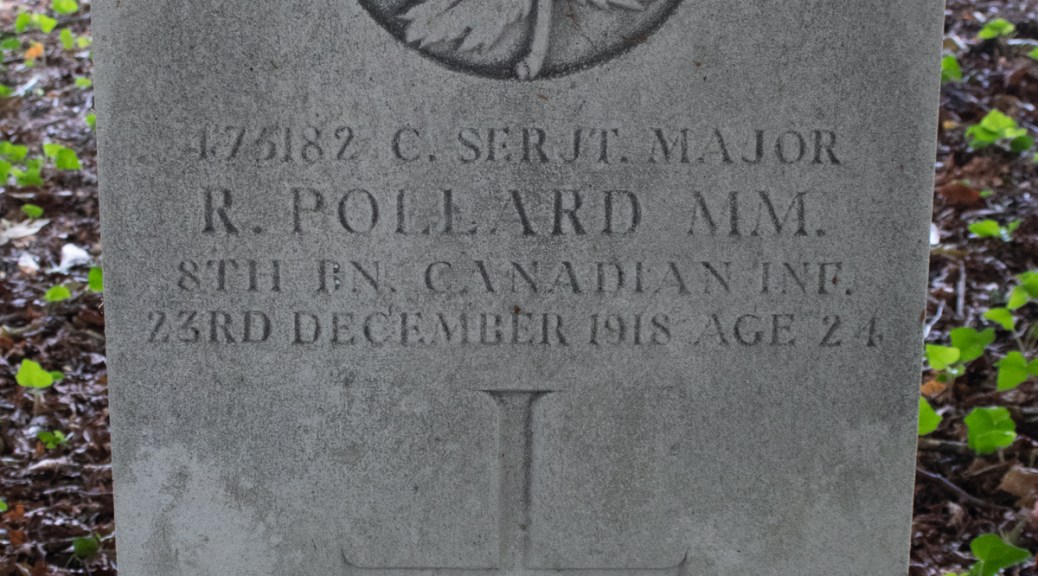
It was here that Robert contracted influenza. Whether at his family’s request is unclear, but he was admitted to Bath War Hospital for treatment but, after everything that he had been through, it was a combination of the flu and toxaemia, or blood poisoning, that was to prove his undoing. Company Serjeant Major Pollard died on 23rd December 1918, aged just 24 years old. His mother, Elizabeth was by his side.

Robert Edwin Dawe Pollard was laid to rest Bath’s sweeping Locksbrook Cemetery, not far from where his family lived. His headstone recognises the Military Medal he was posthumously awarded.


Company Serjeant Major Robert Pollard
(from findagrave.com)

Gunner Daniel Davies

Gunner Daniel Davies

Daniel Rees Davies was born on 10th August 1887, one of eight children to Daniel and Katherine Rees. Daniel Sr was a coal miner, born in Brecon, South Wales, and it was in Aberdare that the family were born and raised.

By the time of the 1901 census, five of the Davies family were working as coal miners. However, something changed dramatically over the following decade. The next census return, taken in 1911, found Daniel Sr working as a butcher, with Daniel Jr employed as his assistant. The two Daniels and Katherine were living in a six-roomed house with Daniel’s younger brother, Moses, his older sister, Margaret, and her husband, another Daniel.

In the autumn of 1913, Daniel Jr married Daisy Loud. She was a milliner from Bath, and it was in the Somerset city that the couple exchanged their vows. The couple set up home in Bath, and went on to have two children, Maurice and Norman. He continued working as a butcher and, by the time war was declared, he was employed by Larkhall.

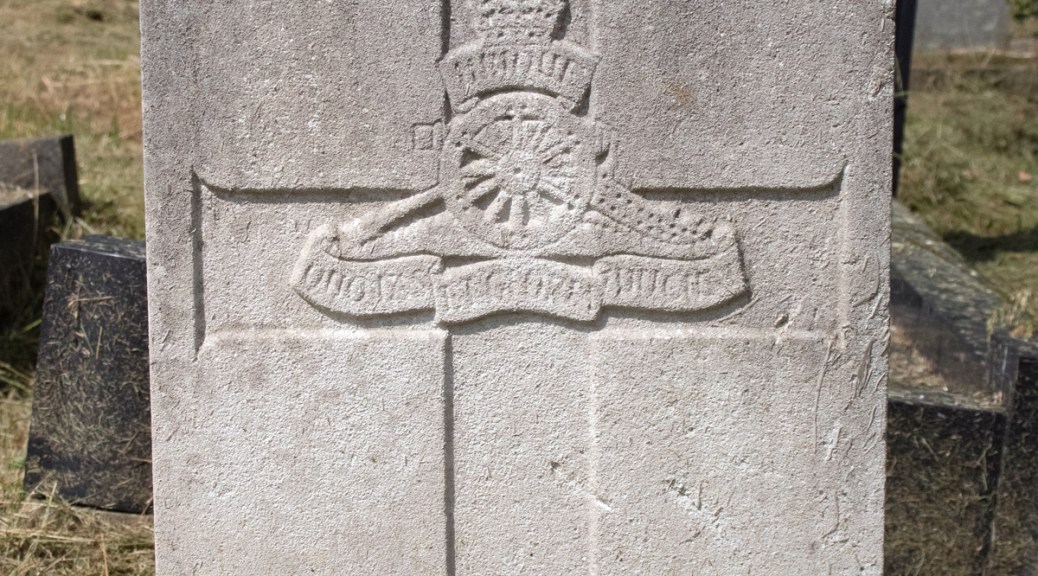
When war came to Europe, Daniel stepped up to play his part. Sadly, full details of his service have been lost to time, but it is clear that he enlisted in the Royal Field Artillery in the spring of 1917 and he was attached to the 88th (Howitzer) Brigade.

Gunner Davies served in Northern France and was badly injured on 3rd June 1918. He was initially hospitalised in Rouen, but then medically evacuated to Britain for treatment. Admitted to Netley Hospital in Hampshire, the wounds he had received to his arm and shoulder were to prove too severe. A telegram was sent to Daisy for her to come to the hospital, but her train was delayed, and she arrived too late to see her husband before he passed away. He died on 17th June 1918, at the age of 30 years old.

The body of Daniel Rees Davies was taken back to Somerset for burial. He was laid to rest in Bath’s majestic Locksbrook Cemetery.


Gunner Daniel Davies
(from ancestry.co.uk)