Category Archives: Devon

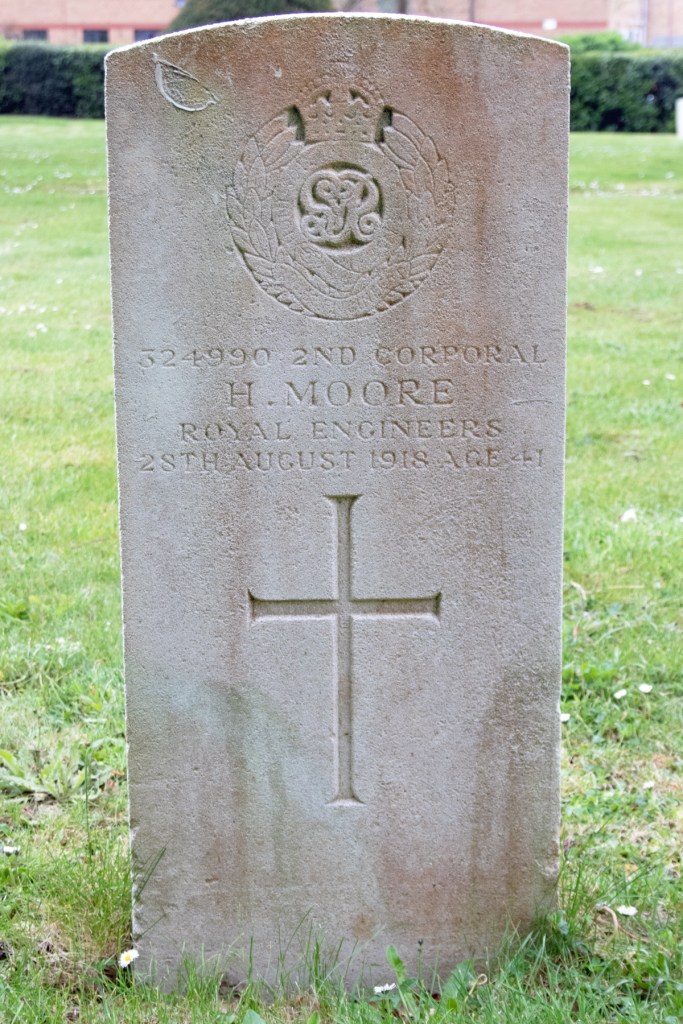
Corporal Harry Moore

Corporal Harry Moore

Harry Moore was born in Tiverton, Devon, in early 1877. He was the fourth of eleven children to James Moore, a railway policeman, and his wife Ann.

By 1890, James had moved the family to Taunton, in Somerset (where his work was now listed as railway porter). Over the next decade, Harry was to encounter tragedy and happiness.

In 1894, his father died from Bright’s disease (a kidney complaint), at the age of just 45 years old.

Three years later, Harry’s mother died, from what appears to have been heart failure. Ann was 49 years of age.

On 13th November 1898, Harry married Alice Mary Larcombe, a dressmaker from Taunton. The young couple set up home together in the north of the town. They went on to have five children, although, sadly, only one would live to reach their 20s.

By now Harry had found employment as an insurance agent, but war was coming to Europe. His military records are lost to time, but he enlisted in the Royal Engineers and was assigned to G Depot Company. (The Depot Battalions received men who had returned from the Expeditionary Force and also those men who had enlisted for Tunnelling Companies, Special Companies and other specialist units.)

The next evidence we have of Corporal Moore is in the Army Register of Soldiers’ Effects. This confirms that he had been admitted to the Southern General Hospital in Bristol with an illness, and that he subsequently passed away on 28th August 1918, at the age of 41.

Harry Moore was laid to rest in the St James’ Cemetery in his home town of Taunton.


Engine Room Artificer Newman Bailey

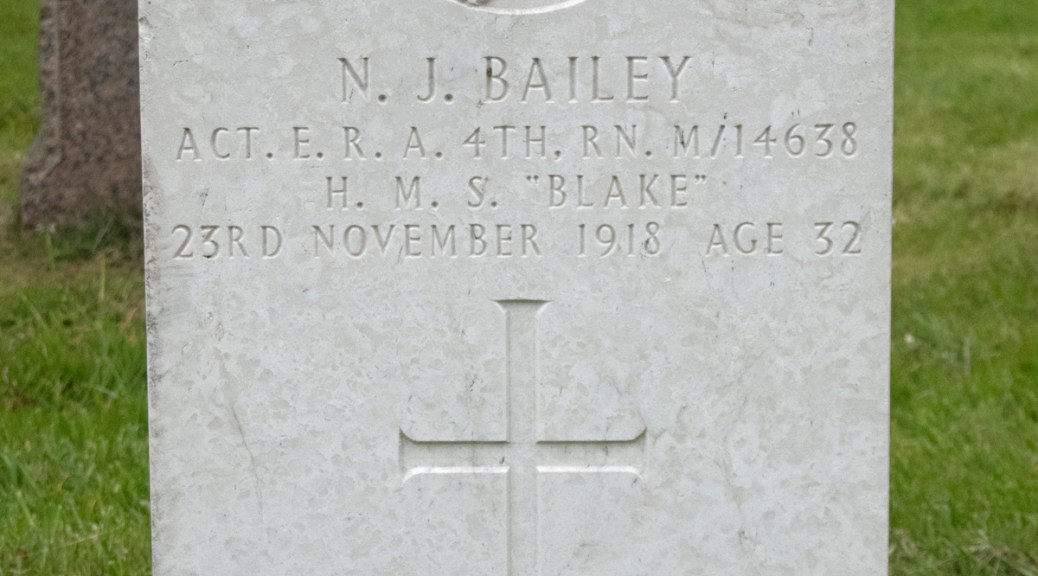
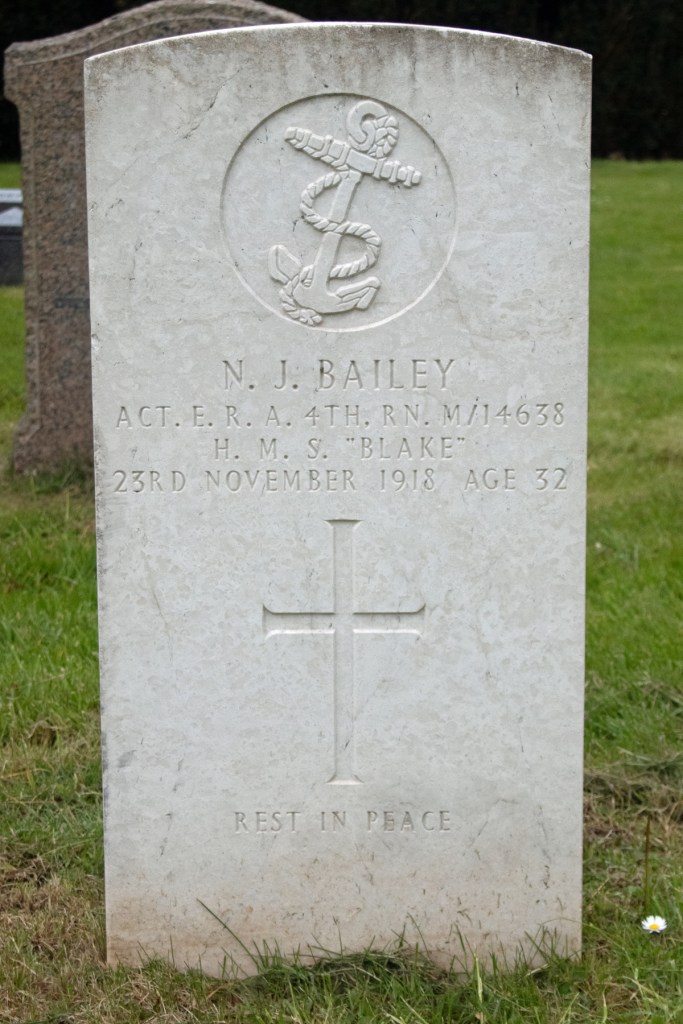
Engine Room Artificer 4th Class Newman Bailey

Newman Joynt Bailey was born on 1st August 1887, the eldest of five children to Newman Bailey and his wife Anna (née Joynt). Newman Sr worked as a switchman and signalman for Great Western Railway and had been born in Bath. He married Anna (whose maiden name was Joynt, and who had been born in Ireland) in 1885 and, after a short stint living across the county border in Devon – where Newman Jr was born – he settled his young family in Taunton.

When Newman Jr left school, he became an office boy, but he soon found himself following in his father’s footsteps. He became a fitter for the railways and, by 1910, was living with spitting distance of the GWR depot in the town.

It was here, in William Street, that he set up home with his new wife, Lily Gill, who he had married on 31t July 1910. Lily was the daughter of a Taunton lamplighter, and, to help make ends meet, worked as an ironer at the town’s collar factory.

War was on the way, and in July 1915, Newman enlisted in the Royal Navy. After initial training aboard Vivid II, the shore establishment in Devonport, he was deployed on HMS Blake as an Engine Room Artificer.

HMS Blake was an auxiliary ship designed to provide maintenance support to a flotilla of destroyers or other small warships. With his experience with steam engines at GWR, his knowledge of mechanics would have made him ideally suited to this type of role.

While he survived the war, Artificer Bailey was to be struck down with something much closer to home. In the immediate post-war period, the Spanish Flu pandemic swept the globe, and Newman was to fall victim to it. Admitted to the Royal Naval Hospital in South Queensferry, near Edinburgh, he passed away from the lung condition on 23rd November 1918. He was just 32 years old.

Brought back home, Newman Joynt Bailey was laid to rest in St James Cemetery in his home town of Taunton.


Private Charles Doble

Taunton St James

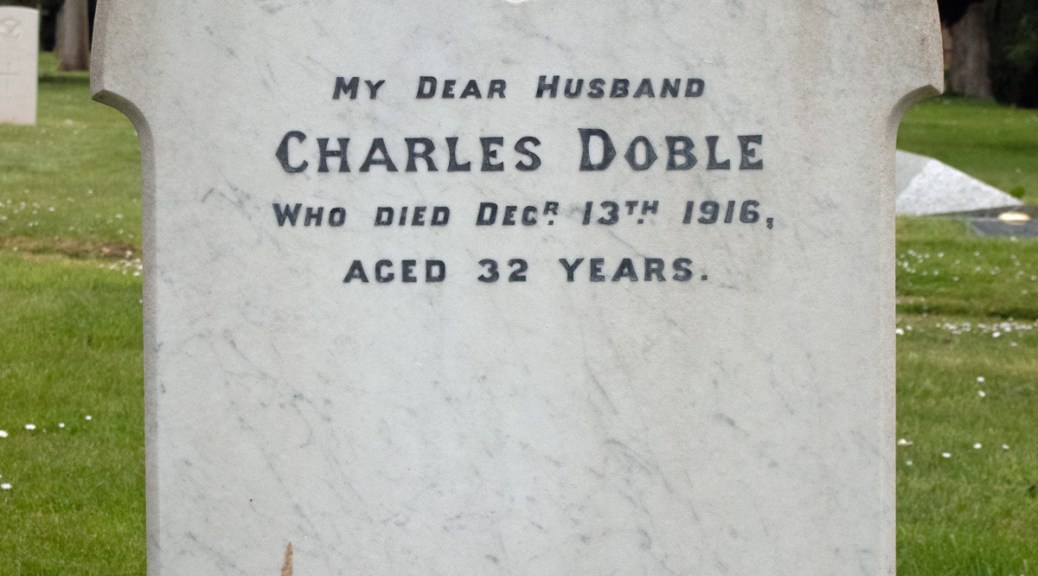
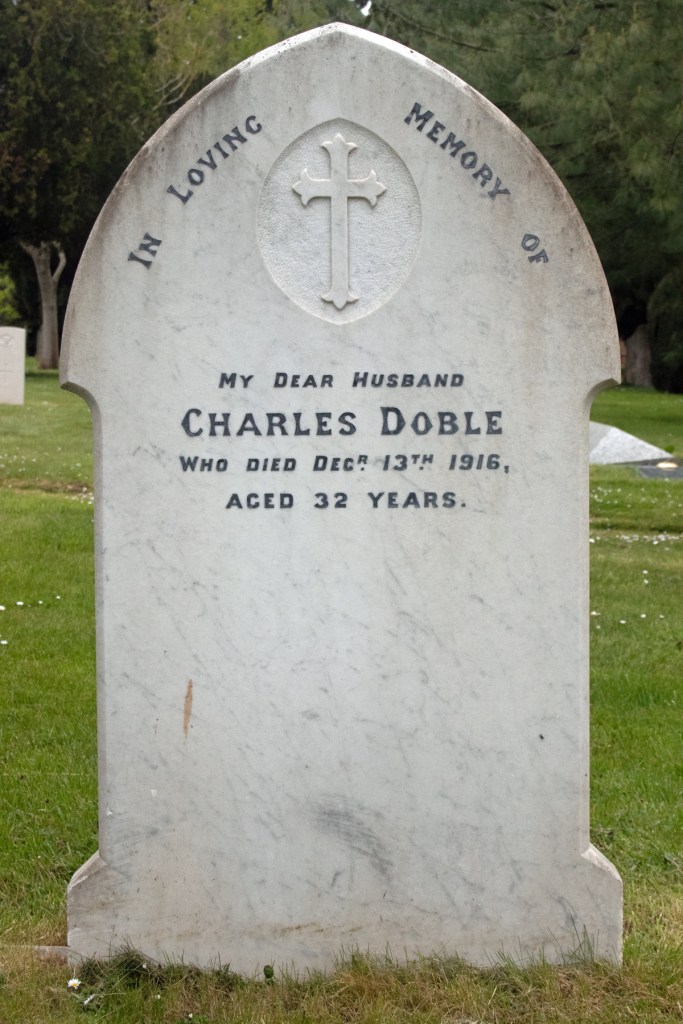
Charles Doble – also known as Charlie – was born 12th September 1884, the second of seven children to James and Mary Ann Doble from Dunkeswell in Devon. James was a carpenter, but on leaving school, Charles initially found work as an errand boy, before becoming employed as a porter at the Taunton and Somerset Hospital.

The 1911 census found Charles in the village of Cotford St Luke, working as an attendant at the Somerset and Bath Asylum. Housing more than 800 patients at the time, it is reasonable to assume that his duties would have been wide and varied.

Details of Charles’ military service are scarce. He enlisted in the Hertfordshire Regiment as a Private in April 1916, but soon transferred over to the 13th Battalion of the Royal Sussex Regiment.

In the spring of that year, Charles married Ethel Willmott; presumably this was before he was sent abroad, because he soon found himself on the Western Front.

His battalion was caught up in the Battle of the Boar’s Head, during with the Royal Sussex Regiment succeeded in capturing a section of the German front line trench and second line trench, before being pushed back because of mounting casualties and a lack of ammunition.

It seems likely that Private Doble was one of those injured on what became known as The Day Sussex Died, as he was evacuated back to England for treatment. Admitted to a military hospital in Stourbridge, sadly his wounds proved too much for Charles to bear; he passed away on 13th December 1916, at the age of 32 years old.

Charles Doble’s body was brought back to Taunton, and he was buried in the St James’ Cemetery in the town.


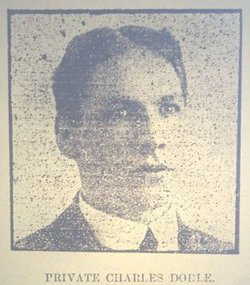
Charles Doble (from findagrave.com)

Private Herbert Jenkins

Private Herbert Jenkins

Herbert Jenkins was born in 1891, the youngest of five children to George and Amelia Jenkins. George was a domestic gardener, and the family lived in the Somerset village of Yatton next to the Prince of Orange public house. Amelia helped make ends meet, by working as a seamstress and upholsterer.

Amelia passed away in 1909, and it was around his time that Herbert felt the calling of military service. He enlisted as a Private in the Royal Marines Light Infantry on 17th September 1909.

Sadly, little documentation remains about Private Jenkins’ naval service, although the 1911 census gives his location as the Stonehouse Barracks in Devon.

Herbert’s family life held a series of highs and lows. His father George died in 1915, and he went on to marry Blanche Elvins, a bootmaker’s daughter from Bristol, the following year. Sadly, however, she passed away in December 1918, and Herbert was alone again.

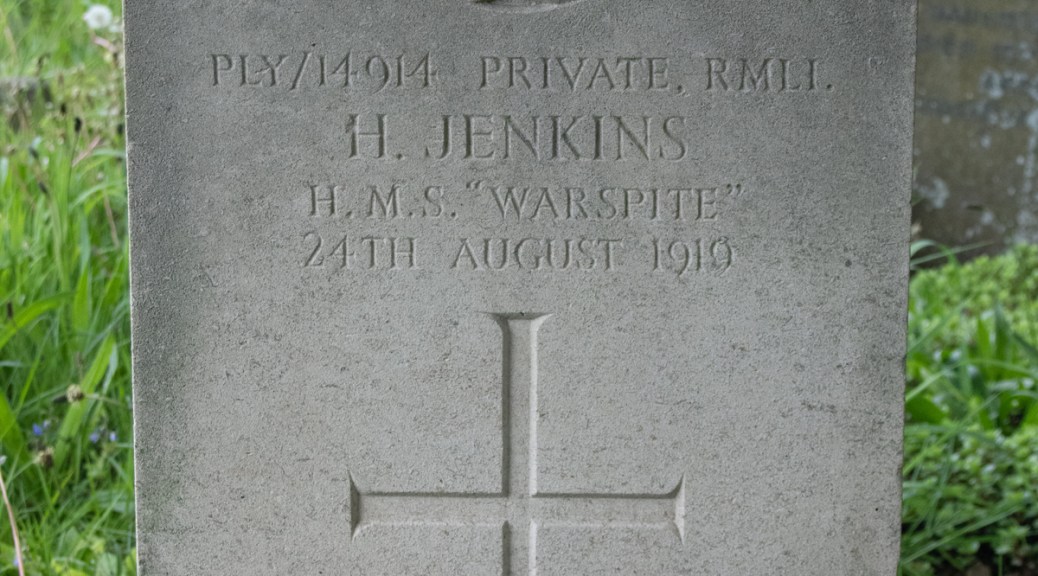
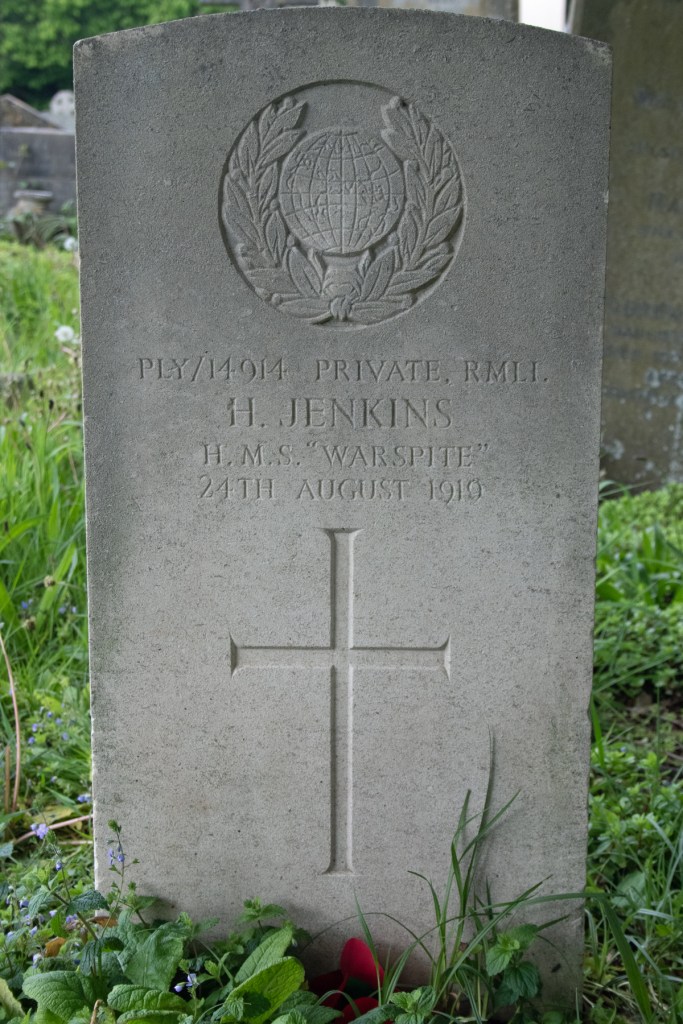
By this time, the Great War was over, although Private Jenkins was still serving. He was assigned to HMS Warspite, which had fought, and been damaged, in the Battle of Jutland. While there is no evidence that Herbert had been on board during the skirmish, this is the last vessel on which he served.

As with his military career, details of Herbert’s passing are lost to time. All that is known is that he died in Bristol on 24th August 1919 and that the cause was ‘disease’. He was just 27 years of age.

Herbert’s next of kin was his sister Jennie; she brought him back to his home town of Yatton to be buried in the graveyard of St Mary’s Church.


Herbert Jenkins

Second Lieutenant Archibald Walsh

Second Lieutenant Archibald Walsh

Archibald Charles Mark Walsh was born on 3rd February 1892, the youngest of three children to Henry Alfred Walsh and his wife Ann. Henry had a distinguished military career, and his sons – Archibald and his older brother Theobald – seemed destined to do the same.

Henry’s service took him around the world, and, by the time Archibald was born, the family had settled in Devon. In tracing the family’s life, however, an unusual quirk arises around the turn of the century.

In 1901, the majority of the Walsh family disappear from census records. For someone like Henry, this would not be unusual; his career took him overseas, and it is likely that records were lost or destroyed.

However, Archibald and his sister Gwladys do appear in the records. They are set up in a seafront villa in the Kent town of Hythe, Gwladys is listed as both a school pupil and the head of the household – at the age of 14 – and the two siblings are living there with a governess, Mary Porter.

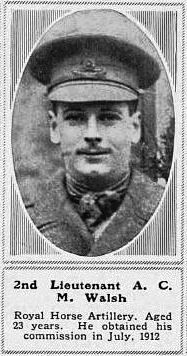
By the time of the next census, Cadet Walsh had followed his father into the military. He was a student at the Military Academy in Woolwich, and the following year achieved his commission, becoming a Second Lieutenant in the Royal Horse Artillery.

When war broke out, Archibald’s regiment were shipped off to the Western Front. In March 1915, he was caught up in the Battle of Neuve Chapelle, and was badly wounded.

Shipped back to England for treatment, he was admitted to the Hall-Walker Hospital for Officers in Regents Park, London. Sadly, Second Lieutenant Walsh’s injuries were too severe, and he passed away on 18th March 1915. He was just 23 years old.

Brought back to Taunton, near his family home, Archibald Charles Mark Walsh lies at rest in St Mary’s Cemetery.


Second Lieutenant Archibald Walsh

Colonel Henry Walsh

Colonel Henry Walsh

Henry Alfred Walsh was born near Taunton, Somerset, in September 1853, the eldest of five children to Theobald and Isabel Walsh. Theobald was a magistrate with some military connections, and it was military service that Henry went into.

While full details aren’t readily available, the 1881 census finds him living in Devon, with his employment simply as “military”. Presumably, he had enrolled in the Somerset Light Infantry, the regiment he had a lifelong commitment to.

By the early 1880s, Henry had married Ann Sparrow. The couple went on to have three children – Theobald, Gwladys and Archibald.

The 1891 finds Henry and his family in the Somerset Light Infantry Barracks at Farnborough. Henry was a Sergeant Major by this time, and was assigned to the 1st Battalion. Also living in the same accommodation – and presumably helping Ann with the running of the household – were a governess and cook.

The census also highlights the transient nature of army life. Henry, as mentioned before, was born in Taunton, while Ann came from Plymouth in Devon. Theobald was born in Taunton, while Gwladys and her younger brother were both born in Devon. Military service brought a sense of stability, but not necessarily geographically.

Henry eventually took a step back from the army; by the time of the 1911 census, he was living back in Bishop’s Hull, the village of his birth in Somerset, and listed as a retired colonel. When war broke out, however, he volunteered his services again, and was appointed the officer commanding the No. 8 District in Exeter.


While Henry came out of retirement to serve his country again, his two sons had also forged their own military careers. Theobald also joined the Somerset Light Infantry, also achieving the rank of Colonel. Archibald joined the Royal Horse Artillery; his story can be found by clicking here.


When Henry passed away in 1918, local newspapers were unanimous in their praise of the long-serving officer, outlining both his military service and his charitable work.

Colonel Walsh had had a distinguished military career, dating from 1870, when he joined the old Somerset Militia at Taunton. [He] was created a CB in 1905, and held the medal and clasp for Zululand, and the medal and two clasps and the Khedive’s Bronze Star for his services in Egypt.

He was a JP for Somerset and a member of the Army and Navy Club. [He] threw himself wholeheartedly into the work of the Boy Scout organisation.

The greatest work in which Colonel Walsh had been identified during the war, however, was undoubtedly that of feeding the Somerset prisoners of war in Germany, and his name will ever be linked in grateful memory with that of his honoured wife for having raised and maintained a fund capable of bearing the strain of over £3,000 expenditure per month to save the Somerset men in Germany from starvation.

Well Journal: Friday 29th November 1918

Ironically, for all this exultation, there is no immediate record of the cause of Henry’s death; given his age – he was 65 when he passed – it seems likely that he died following an illness.

Colonel Henry Alfred Walsh lies at rest in St Mary’s Cemetery in Taunton, Somerset. He is buried next to his son, Archibald.


Colonel Henry Walsh

Driver Ernest Smith

Driver Ernest Smith

Ernest John Smith was born in 1883, one of seven children to John Smith and his wife Sarah Jane. John was a coal merchant, and the family lived in the Somerset town of Bruton. When Ernest initially left school, he worked as a farm labourer, but at some point, a sense of adventure caught him, and he emigrated to Australia. Sadly, details of his travels are not available, but he left England at some point before 1915.

When war broke out, however, he was still keen to do his bit. He was living in Queensland when he enlisted on 26th October 1915, and was assigned to the Australian Army Medical Corps.

Driver Smith’s battalion left Australia for Europe in March 1916, and served in France for the duration. He was dogged by ill health, catching pleurisy a couple of times, and had a number of fibromas operated on.

In October 1918, he was appointed Lance Corporal, but was shipped back to England later that year with ongoing fibroma issues. He was admitted to Torquay Hospital as dangerously ill in December of that year, and spent most of the next nine months in hospital, initially in Torquay, but then when he was able to be moved, he was transferred to the 1st Australian General Hospital near Warminster.

Sadly, the cysts Driver Smith has developing were malignant, and he passed away on 8th October 1919. He was just 36 years old.

Ernest John Smith was brought back to his home town for burial, and lies at rest in the graveyard of St Mary’s Church in Bruton.


Sapper William Lock

Sapper William Lock

William Lock was born in Devon in 1896, one of three children to Tom and Mary Lock, although sadly only William survived childhood. Tom was a shipwright in on the Devon coast, but brought his young family to Kent, where he found work in the Naval Dockyard in Chatham.

When William left school, he set about finding a trade. By the time of the 1911 census, aged 15, he was listed as “learning house joinery”, presumably a trade for which his father’s work would have stood him in good stead.

War was looming, however, and William enlisted. He joined the Royal Engineers at a time where they were being inundated with volunteers. Sapper Lock was assigned to G Company, a provisional troop that formed part of the Depot Battalion.

Documentation relating to Sapper Lock’s military service are no longer available; he was awarded the Victory and British Medals, which suggests that he saw some kind of service overseas, but there is nothing on file to confirm this.

The next document relating to William is his war pension, which confirms that he died on 20th January 1919 from ulcerated endocarditis, or heart disease. He was just 23 years old.

Tom and Mary had lost the third of their three children.

William Lock was laid to rest in the Woodlands Cemetery in Gillingham, Kent.


Sapper William Lock

Private Sidney Lord

Private Sidney Lord

Sidney George Lord was born on 29th March 1895, one of six children to Sidney and Clara Lord. Sidney Sr was a shipwright from Bideford in Devon, and he brought the family to Kent, presumably for work at the Naval Dockyard in Chatham.

Sidney Sr passed away in 1912 and his son left school, finding work as a plumber’s apprentice. War was on the horizon, however and he was keen to do his bit as soon as possible. Sidney Jr enlisted in November 1914, joining the Queen’s Own Royal West Kent Regiment.

After his initial training, Private Lord was sent to the Front on 22nd April 1915, serving in France with his regiment for just over a year. Towards the end of this time he became anaemic, and was shipped back to England for treatment.

Private Lord was admitted to the Yeatman Hospital in Sherborne, but sadly succumbed to his anaemia a matter of weeks later. He passed away on 12th July 1916, having not lung turned 21 years of age.

Sidney George Lord was laid to rest in the Woodlands Cemetery in Gillingham, Kent, close to where his father was buried.


Private Sidney Lord

Musician Henry Selley

Musician Henry Selley

Henry Louis Selley was born in 1876, one of nine children to Richard and Mary Ann Selley. His father was an agricultural labourer and the family lived in Exminster, Devon.

Initially, Henry followed his father in becoming an agricultural labourer, but the military life seems to have sparked an interest. While Henry’s military records no longer exist, he is recorded as having completed 24 years’ service with the Royal Engineers at the time of his death. He would have enlisted, therefore, in around 1897, when he was about 21 years of age.

As to his duties while in the military, these can only be guessed at. He is intriguingly noted as Musician, although there is no documentation to expand on Henry’s role any further. There were many professional musicians in the army, and they performed table music, serenades, and home concerts, mainly for high-ranking officers.

Musician Selley’s role may also have to be set timing for marches, etc, although, again, this is purely speculation on my part, as there is no evidence to suggest this was the case.

Henry married a woman called Constance in 1905; she had been born in Devon, but there is no further information on her. The 1911 census records the young couple as living in a terraced house not far from the Royal Engineers Barracks, where Henry would have been based. The couple did not go on to have any children.

And there, Musician Selley’s trail goes cold. The next that he appears in any documentation is in 1921, when his army pension record confirms that he passed away. He had been admitted to the Royal Herbert Hospital in Woolwich with pulmonary tuberculosis, and succumbed to the disease on 26th May 1921. He was 45 years old.

Henry Louis Selley lies at rest in the Woodlands Cemetery in Gillingham, Kent.