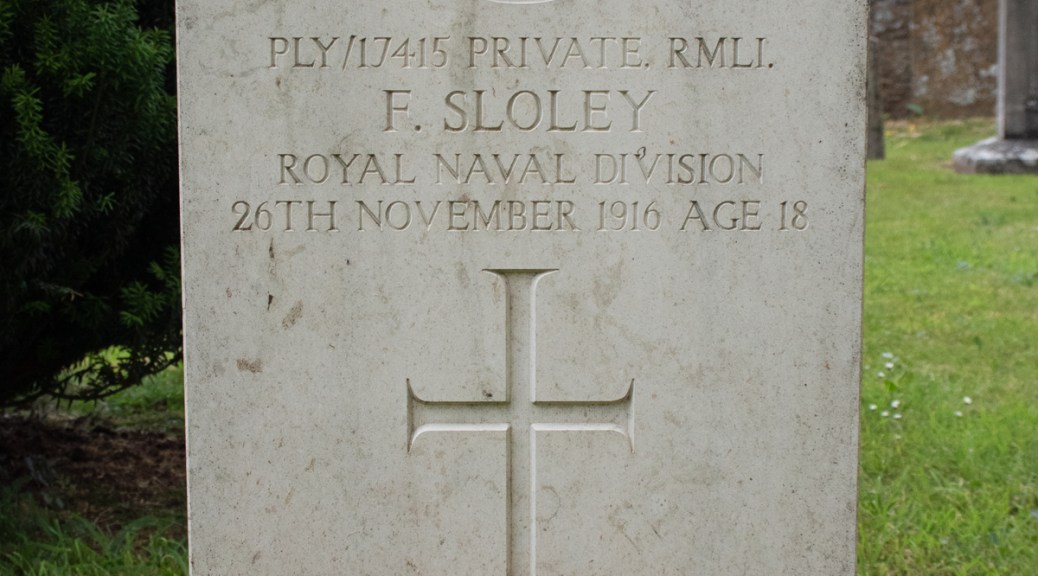
Frederick Sloley was born on 7th April 1897 in Kingston St Mary, Somerset, and was the fourth of nine children to Walter and Mary Jane Sloley. The family were farm workers and were living with Walter’s parents – also agricultural labourers – in the 1901 census.
After he finished his schooling, Frederick found began working with the horses on the farm. When war broke out, however, he saw an opportunity to serve his King and Empire, and enlisted in the Royal Marine Light Infantry. He joined up on 5th October 1914, and his service records show that he was 5ft 4ins (1.63m) tall, with black hair, grey eyes and a fresh complexion.
Private Sloley was initially sent to the Reserve Depot in Deal, Kent, for training, before moving to the Plymouth Division in Devon in March 1915. He records do not make it clear where he served specifically, but by 1916 he has fought in the Dardanelles and Mesopotamia.
It was while he was in the Eastern Mediterranean that Frederick was injured. Wounded in the spine by enemy gunfire, he was medically evacuated to Britain for treatment. Admitted to King George’s Hospital in London, surgery proved too late. Private Sloley passed away on 26th November 1916, at the age of just 19 years old. His mother, Mary, had managed to see him before he died.
The body of Frederick Sloley was brought back to Somerset for burial. He was laid to rest in the peaceful graveyard of St Mary’s Church in his home village of Kingston.
In a quiet corner of St John’s Churchyard, Staplegrove, is a commemorative headstone to three soldiers of the Somerset Light Infantry. The bottom two, share the same surname, and are, in fact, father and son: Francis and Harold Hill.
Harold James Hill was born 23rd November 1896 in Milverton, Somerset. He was the only child to former army man turned storekeeper, Francis Hill and his wife, Florence.
When he finished his schooling, Harold found work as an office boy. By the time of the 1911 census, the family had moved six miles east of Milverton, to the village of Staplegrove. Francis was employed as a house painter, Florence had taken in work as a glove maker, and the Hills also had a boarder, Reginald Cave, who was a nursery foreman.
Storm clouds were brewing by this point and, when war broke out, Harold was keen to play his part, possibly because he wanted to emulate his father’s army life. He enlisted in the Somerset Light Infantry and was assigned to the 2nd/5th Battalion. Private Hill’s medical records show that he was 5ft 10ins (1.78m) tall, and weighed 140lbs (63.5kg). By coincidence, these are almost exactly the same measurements as those of his father, when he joined the army 28 years before.)
After three months’ training, Harold’s battalion was sent overseas, and he arrived in India on 12th December 1914. Within a matter of months, his health began to suffer and, between May 1915 and February 1916, Private Hill was admitted to hospital on six separate occasions, all but one for intestinal problems.
In the end, Harold was taken back to Britain for treatment: he arrived on home soil at the end of March 1916, and within three months had been medically discharged from the army.
At this point, Harold’s trail goes cold, although he did return to Somerset. His illness continued, however, and he passed away from his stomach condition on 23rd October 1916. He was just 19 years of age.
Harold James Hill was laid to rest in the graveyard of St John’s Church, Staplegrove. His grave is lost to time, but it can be assumed that he was buried close to his father, who had died just nine months before. Father and son are commemorated on a special memorial, close to the entrance of the church.
One can only imagine the heartache for Florence Hill, having lost her husband and her only child within a year. Details of her late husband’s life can be found here.
Few details remain of her life, although she is recorded on the 1939 England and Wales Register boarding with an Eda Cummings in Greenway Avenue, Taunton. She was noted as a widow, and employed to do household duties.
Francis Robert Hill was born in the spring of 1868, the middle of seven children to William and Mary Hill. William was a shoemaker from Wiveliscombe, Somerset, and this is where he and Mary raised their family.
When Francis finished his schooling, he found work as a baker. However, he wanted bigger and better things and, in June 1886, he enlisted in the 1st Battalion of the Oxfordshire Light Infantry. Private Hill would have cut a striking figure: at eighteen years old, he was 5ft 10ins (1.78m) tall and weighed 136lbs (62.6kg). He had light brown hair, grey eyes and a fair complexion.
Francis did not spend any time overseas, instead working in the regiment’s depot in Alverstoke, near Gosport, Hampshire. He spent seven years in the military, and was stood down on 16th June 1893.
By the end of 1895, Francis was back in Somerset as, on Boxing Day that year, he married Florence Ida Giles, a shoemaker’s daughter. The couple were both living in Milverton at the time, and Francis’ profession was noted as storekeeper. On 23rd November 1896, the couple had a son, Harold, and the family were living on Fore Street, the village’s main road.
The 1901 census shows another change in work for Francis, who was now noted as being a house painter. This was a career that seemed to stick with him, as he was still employed in the role by the time of the next census, in 1911. The Hills had moved to Staplegrove, on the outskirts of Taunton, by this point. Florence had taken in work as a glove maker, Harold, now 14 years old, was employed as an office boy, and the family had a boarder, Reginald Cave, who was a nursery foreman.
At this point Francis’ trail goes tantalisingly cold. When war broke out, he enlisted once more, this time joining the Somerset Light Infantry. The only other confirmed document gives a tragic hint as to his death, at the age of 48. His entry in the Pension Ledger reads simply “18.2.16: Accidentally killed by passing train while on military duty.” There are no other records to back this up, and no contemporary newspapers report on his passing.
However it happened, Francis Robert Hill’s body was brought back to Somerset for burial. He was laid to rest in the graveyard of St John’s Church, Staplegrove. His grave is lost to time, but he is commemorated on a special memorial, close to the entrance of the church.
Tragedy was to strike a second time for Francis’ widow, Florence, when, in October 1916, Harold was also to pass away. Read his story here.
Cecil St John Harris was the son of Reverend Percy and Constance Harris. Born in Kilver, Staffordshire, on 13th July 1891, he was one of nine children, although, by the time of the 1911 census, four of them had passed away. The Harris family had, by this point, moved from Staffordshire, to Devon, to Cornwall, and had settled in Staplegrove, Somerset, where Percy had become the rector at St John’s Church.
According to the census record, Cecil was studying engineering. He was keen at sports, being a keen member of the village’s cricket club. When war broke out, he enlisted in the West Somerset Yeomanry, but soon took a commission as a Second Lieutenant in the Somerset Light Infantry.
Cecil’s troop, the 3rd/5th Battalion remained on home soil, and he was based in Somerset for the duration of his time in the army. This was not to be for a long time, however, as, in the summer of 1915, he fell ill with appendicitis. He underwent an operation, and made a slow recovery, before relapsing. He passed away on 10th September 1915, aged just 24 years old.
Cecil St John Harris was laid to rest in the north east corner of St John’s Churchyard, Staplegrove, where his father was still the vicar. His grave is now lost to time, but Second Lieutenant Harris is commemorated on a special memorial, close to the entrance of the building.
It is with great regret that we announce the death of Mr Arthur Jeffreys Turner, which took place on Tuesday last. The deceased was the only surviving son of Mr AW Turner, or Fitzroy.
Taunton Courier and Western Advertiser: Wednesday 8th August 1917
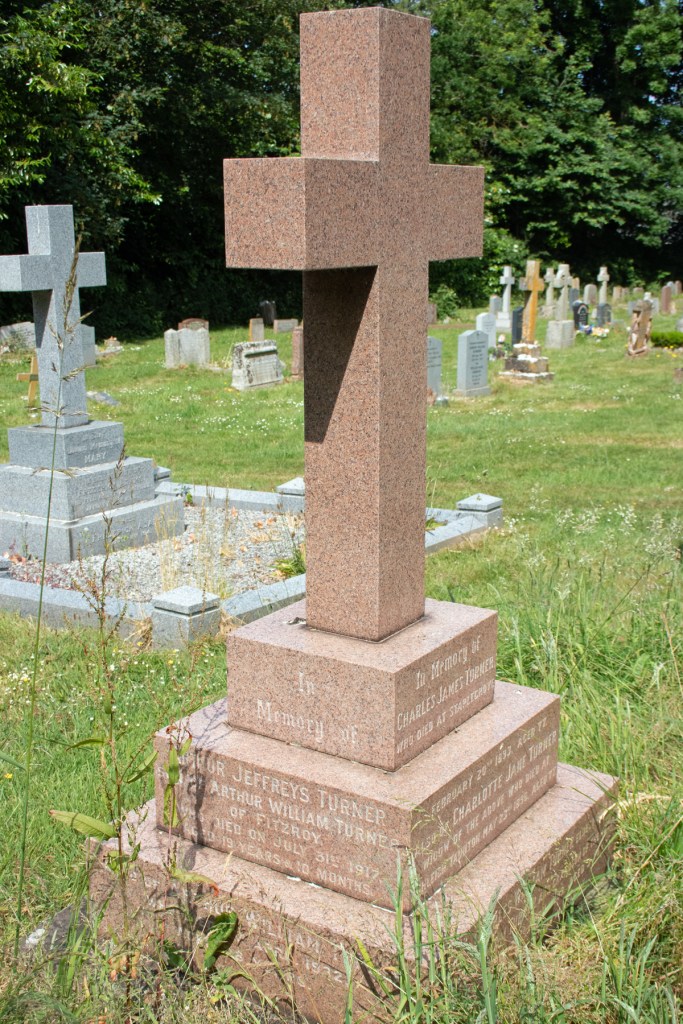
Arthur Jeffreys Turner was born in Staplegrove, near Taunton, in 1897. There is little concrete information about his life, although the newspaper report of his funeral acts as a starting point.
Arthur – who, the report suggests, was known as Jeff – was the son of Arthur William Turner. The son of a gentleman, Arthur Sr was a coffee planter, who disappears from the UK Census returns from 1881 and 1891. On 4th August 1894, he married Carsina Florence Marie le Gay, the Paris-born daughter of Gustave Ferdinand le Gay, an officer in the French Army. Arthur was 40 years old, and gave his address as the Travellers’ Club in Piccadilly, London, while Carsina, who was just 21 years of age, lived in Richmond.
Of Carsina, there appears to be no further record. The 1901 census found Arthur Sr based back in his Piccadilly Club, and gives his marital status as married. Ten years later, Arthur Sr is recorded as living in Fitzroy House, to the north west of Taunton. He is still noted as married, and a retired coffee planter, and that he had two children, of whom only one survived. Arthur Sr’s only companions in the 14-roomed manor house, however, were two servants, Bessie Hill and Eva Caddy.
The same census recorded Arthur Jr boarding at a prep school in Berrow, Somerset. Naish House been purpose-built just seven years before, when the school moved down the coast from Clevedon. Arthur was one of 39 boarders, who were supported by a dozen staff.
Within three years of the census being taken, Britain was at war. Arthur Jr was 17 at this point, and was sent to Cambridge, where he enlisted in the Officers’ Training Corps (OTC). No details of his military career exist, but at some point he made the move to the Somerset Light Infantry. He was given the rank of Private, somewhat unusually, given his time in Cambridge. This would suggest either that he didn’t complete his OTC training, that he did not pass it, or that he chose to work his way up through the ranks, rather than accepting a paid commission.
At this point, Private Turner’s trail goes cold. There are no records to expand on his military career and the newspaper report spends more time focused on the inscriptions on the floral tributes at his funeral, than on his short life.
The Commonwealth War Graves Commission documentation confirms that Arthur had died “of heart failure 31st July 1917. Age 20.” No other context is available, to whether heart failure was the primary cause, or it was brought on by another illness or injury can only be guessed at.
The body of Arthur Jefferys Turner was laid to rest in the graveyard of St John’s Church in Staplegrove, once a separate village, now a suburb of north west Taunton. He was buried in the family plot, alongside his paternal grandparents, Charles and Charlotte Turner.
Private Arthur Turner (from findagrave.com)
Arthur Turner Sr lived on for a further six years after his son’s death. He died on 9th April 1923, and was also laid to rest in the family plot in St John’s Churchyard, Staplegrove. The newspaper report on his funeral gives similarly little away about his life:
The funeral took place at Staplegrove, Taunton, on Tuesday, of Mr Arthur William Turner, of Fitzroy, Norton Fitzwarren, who died… in his 79th year.
…the chief mourners were Lieut.-Com. Kenderdine and Mrs Kenderdine (son-in-law and daughter)…
The late Turner was a keen follower for many years of the Culmstock Otter Hounds, and the oldest member of the Somerset Country Club.
Langport & Somerton Herald: Saturday 16th April 1932
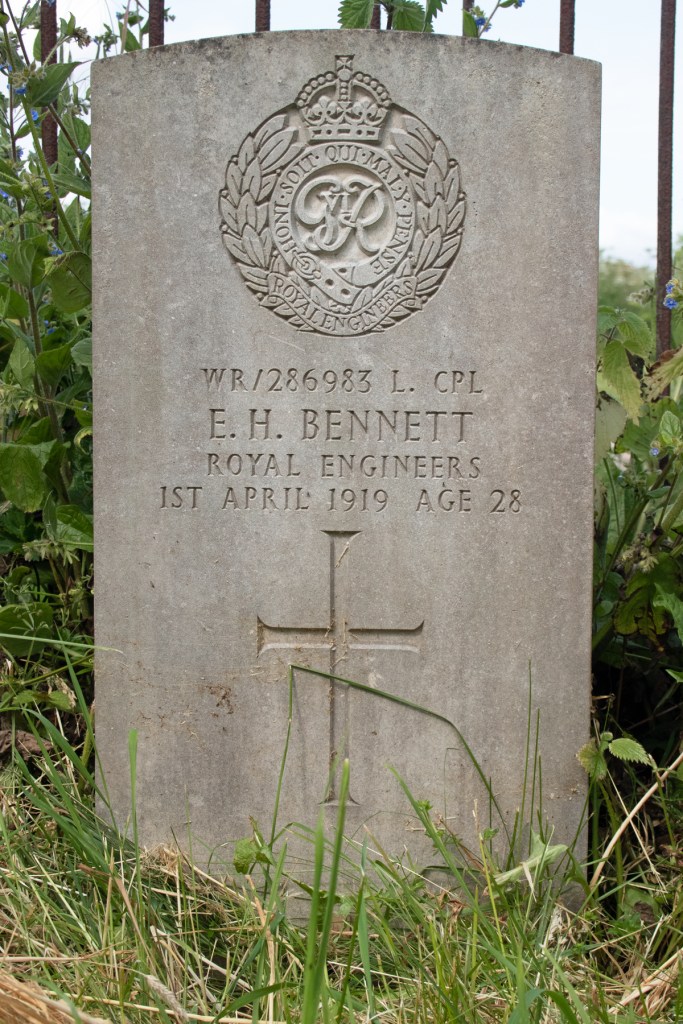
Ernest Harry Bennett was born in the summer of 1890, he third of ten children to Harry and Caroline – or Carrie – Bennett. Harry was a journeyman mason from the Devon village of Chagford, and this is where the Bennett family were raised.
When he finished his education, Ernest found work as a general labourer, and it this work that likely took him across the border to Somerset. He found work as a platelayer for the Great Western Railway in Taunton, and settled in Rowbarton, to the north west of the town.
On 28th September 1912, Ernest married Gertrude Alice Bennett in her local parish church, St George’s in Ruishton. A few months later, the couple had a son, Frederick, and almost exactly two years later, a daughter, Gladys, was born.
By this point, war was raging across Europe, and in July 1915, Ernest received the notice to enlist. Assigned to the Royal Engineers, he was attached to the 53rd Railway Company, probably to make use of his civilian trade. By the end of 1915, Ernest found himself in Egypt, and remained there for the rest of the war.
In July 1918, the now Lance Corporal Bennett was posted to the Railway Operating Division, but continued his service in North Africa. On 8th March 1919, he sailed from Port Said, heading back to Britain to be demobbed.
Returning to Somerset, Ernest fell ill, contracting pneumonia, probably on the journey home. He was admitted to the Taunton Military Hospital, but passed away from the condition just ten days after reaching England’s shores, on 1st April 1919. He was just 28 years of age.
The body of Ernest Harry Bennett was laid to rest in the graveyard extension to St George’s Church in Ruishton, not far from where his widow and children lived.
Henry George Poole was born in the summer of 1892 in Creech St Michael, Somerset. The older of two children, his parents were carpenter Benedict Poole, and his wife, Louisa.
When he finished his schooling, Henry was apprenticed to a carpenter, but also devoted time to the village’s Friendly Society.
With war on the horizon, Henry was drawn to play his part and serve his country. He enlisted early in the conflict and, while full details of his military career are lost to time, documents confirm that he was assigned to the 8th (Reserve) Battalion of the Wiltshire Regiment.
It is unclear whether Private Poole served any time overseas but his battalion moved between Trowbridge in Wiltshire, to Weymouth and Wareham in Dorset. Indeed, by the end of 1915, Henry was based at Bovington Camp, to the west of Wareham. He was here when he fell ill, and when, on 28th November 1915, he passed away from an undisclosed condition in the camp hospital. He was just 23 years of age.
Henry George Poole was brought back to Somerset for burial. He was laid to rest in the peaceful graveyard of St Michael’s Church in the village of his birth.
A local newspaper reported on Henry’s funeral, but the article underlines how facts were gotten wrong then, as they are sometimes now. The Taunton Courier and Western Advertiser reported that Henry was 22, instead of 23, that he had ‘sisters’, when he only had one, and gave his father’s name as Benjamin, not Benedict.
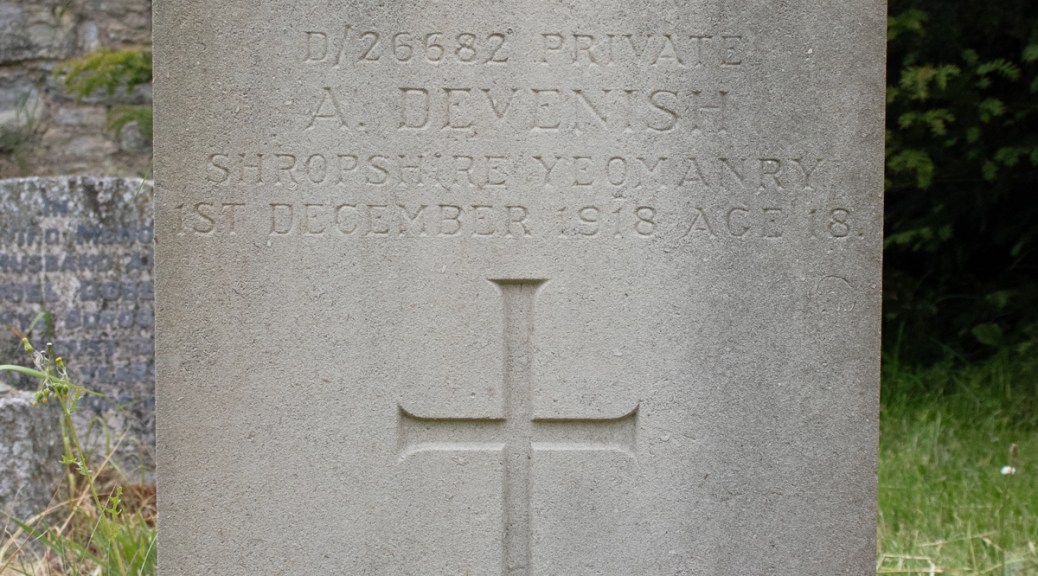
Arthur John Walderow Devenish was born in the spring of 1900, and was the oldest of ten children. His parents, John and Ada Devenish, were both born in Maiden Newton, Dorset, and this is where Arthur and his younger sibling Albert were born. By 1905, however, plumber and glazier John had moved the family thirty miles north-west, across the Somerset border to the village of Thurlbear.
There is little concrete information about young Arthur’s life. When war broke out, he was too young to enlist, but had definitely joined up by the spring of 1918, presumably as soon as he came of age. Private Devenish was assigned to the 2nd/1st Battalion of the Shropshire Yeomanry. The troop remained on home soil, and, by the time Arthur enlisted, was a cyclist unit, based in Northumberland.
Early in 1918, Private Devenish’s battalion moved to County Kildare, Southern Ireland. He was billeted in barracks in Curragh Camp, and remained there for the rest of the conflict. Tightly packed accommodation was a breeding ground for a range of illnesses and, by November 1918, Arthur had contracted pneumonia. He was admitted to the camp hospital for treatment, but the condition was to get the better of him, and he passed away there on 1st December 1918, aged just 18 years of age.
The body of Arthur John Walderow Devenish was brought back to Somerset for burial. He was laid to rest in the quiet graveyard of St Michael’s Church, in Orchard Portman, not far from where the family lived in neighbouring Thurlbear.
Frank Hodge was born in the village of Orchard Portman, to the south of Taunton, Somerset in 1888. One of nine children, his parents were farm workers John and Sarah Hodge. When Frank finished his schooling, he first worked with horses, then became a herdsman on the farm.
By the time war broke out, only the British Army Medal Roll Index Card remains to confirm how Frank he served his King and Country. The document shows that he enlisted in the Somerset Light Infantry, but subsequently made the move to the Dorsetshire Regiment – the Commonwealth War Graves Commission gives his troop as the 2nd Battalion.
While it is unclear in which regiment he was serving at the time, Private Hodge was sent to France on 22nd June 1915. He served for four years, and appears to have been demobbed in May 1919. Private Hodge’s military career between these dates is lost to time.
When he left the army, Frank returned home. His health appears to have suffered, however, and he seems to have been on a downward decline. He passed away from ‘sickness’ on 15th November 1919: he was 31 years of age.
Frank Hodge was laid to rest in the peaceful churchyard of St Michael’s, in his home village of Orchard Portman.
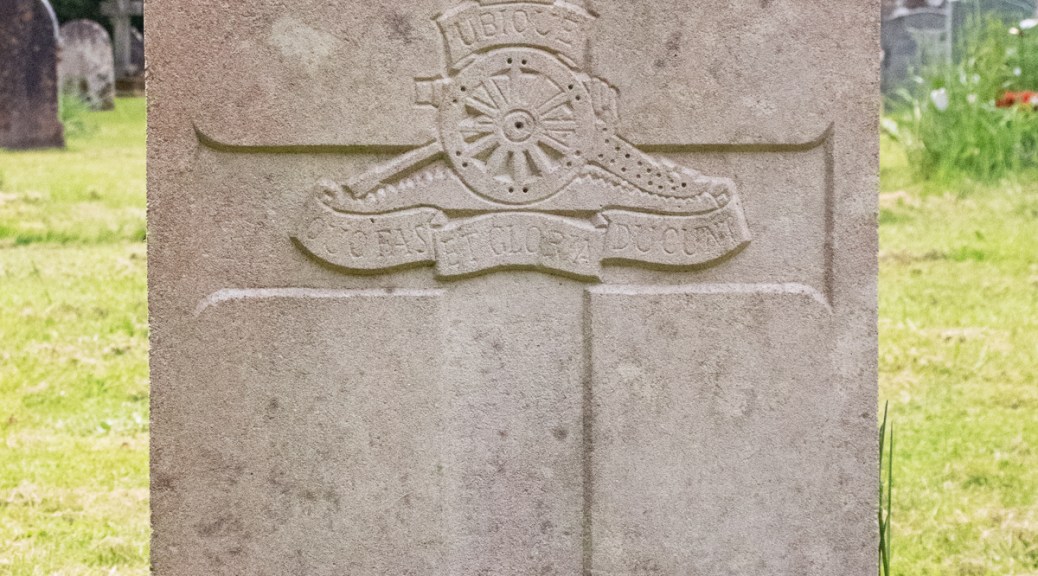
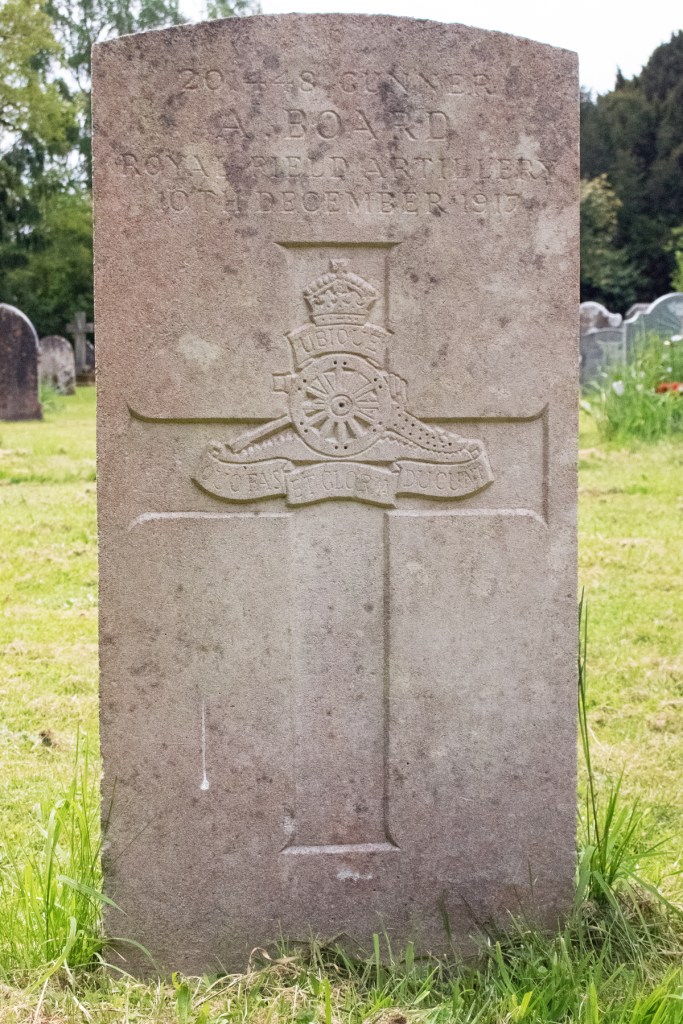
The funeral took place at Pitminster parish churchyard… of Gunner A Board, of the Royal Field Artillery, youngest son of Mr and Mrs W Board… who died in the 3rd Southern General Hospital, Oxford… from wounds received in action on 29th October. Deceased was only 21 years of age, and was buried with full military honours. Having been a former Boy Scout members of the Taunton and Trull Troops attended as a last tribute of respect and sympathy.
Taunton Courier and Western Advertiser: Wednesday 26th December 1917
Concrete information about the young life of Albert Board is destined to remain lost to time, but entries in the 1901 and 1911 censuses suggest that he had been born in Willesden, Middlesex. His parents were William and Annie Board, and the family moved to Pitminster, Somerset, at some point between the two documents.
One of seven children, by 1911 Albert had left school, and had found work as an errand boy. The youngest of the household, he was living with two older siblings – William, who was employed as a gardener; and collar making sister, Lily – and his parents. William, by this time, was working as a boot repairer.
When war came to Britain’s shores, Albert stepped up to play his part. He had enlisted in the Royal Field Artillery by the summer of 1917, and was attached to the 168th Brigade. Private Board fought on the Western Front, and may have been involved in the Arras Offensive of 1917.
Caught up in the fighting on 29th October, he was injured, and medically evacuated to Britain for treatment. He was admitted to the hospital in Oxford, but succumbed to his wounds on 10th December 1917. He was just 21 years of age.
Albert Board’s body was brought back to Somerset for burial. He was laid to rest with all due ceremony, in the quiet graveyard of Saint Mary and Saint Andrew’s Church, Pitminster.









 Death and Service