James Muir was born on 29th October 1889 in the hamlet of Burness on the remote Orkney island of Sanday. The youngest of three children, he was the only son to agricultural labourer Alexander Muir and his wife, Ann.
Little information remains about James’ early life. He seems to have found work at sea, as, when war broke out, he enlisted in the Royal Naval Reserve. His service records show that he was 5ft 8in (1.72m) tall, with brown eyes and a fresh complexion.
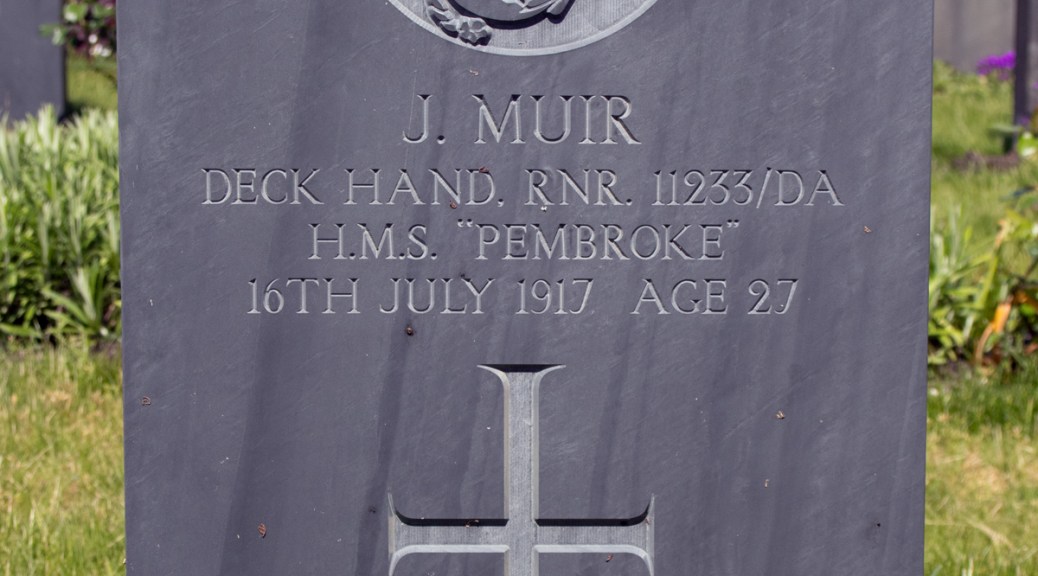
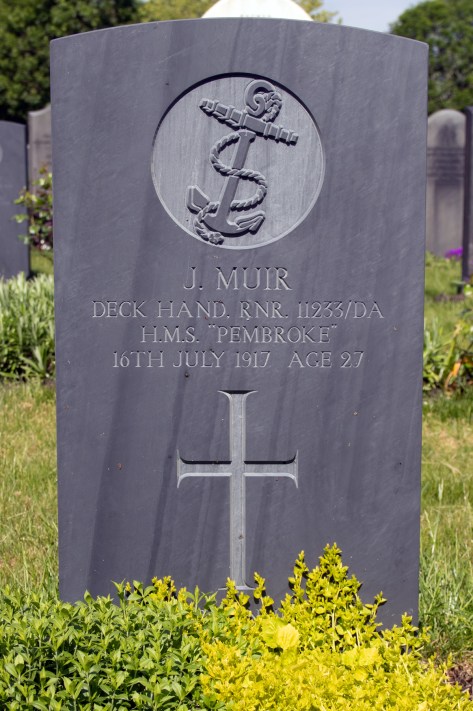
Deck Hand Muir initially served on the depot ship HMS Zaria, before bring transferred to the cruiser HMS Brilliant. By the spring of 1917, he was stationed at HMS Pembroke, the Royal Naval Dockyard in Chatham, Kent.
James was admitted to the town’s Royal Naval Hospital, suffering from fibroid phthisis, a wasting disease of the lungs. Formally discharged from the Royal Naval Reserve on medical grounds on 28th June 1917, his condition was to worsen, and he passed from the heart condition pericarditis on 16th July. He was 27 years of age.
James Muir passed away 560 miles (900km) from home: he was laid to rest in the naval section of Woodlands Cemetery, Gillingham, Kent, not far from the dockyard that had been his home.
Born in Laxay (Lacasaigh) on the Isle of Lewis, Scotland, John Murdo McDonald was the son of Donald and Maggie McDonald. He can be readily identified on the 1901 census, which suggests that he was born in January of that year. The family do not appear on the 1911 census, and John’s trail quickly goes cold.
When war broke out, it would seem that John stepped up to play his part. He joined the Royal Naval Reserve – suggesting that he had some seafaring experience, but his service papers have been lost to time. There are at least four John Murdo McDonalds born around 1901, who all served in the Royal Naval Reserve. None of their service numbers match that of John’s, however.
By the summer of 1917, Deck Hand McDonald was serving on board the motor drifter Ocean’s Gift. The boat, little more than a trawler requisitioned by the Royal Navy, was used as a patrol ship around the Thames Estuary.
That July, John was admitted to the Royal Naval Hospital in Chatham, Kent. He was suffering from tuberculosis, and this would ultimately take his life. He died on 2nd July 1917, aged just 17 years old.
The Isle of Lewis was an unimaginable distance from Kent, and so the body of John Murdo McDonald was not returned to his family. Instead, he was laid to rest in the naval section of Woodlands Cemetery in Gillingham, Kent, not far from the dockyard in Chatham, that had briefly been his home.
A verdict of drowned was returned at the inquest at Dartmouth on Saturday evening on James Lineham (18), a seaman, whose body was recovered from the sea. Lineham was bathing in Dartmouth harbour nine days ago. He called for help, and a comrade with him caught him by the hair, but could not retain his hold. The skipper found the body drifting towards the ship on Saturday.
[Western Times: Tuesday 13th August 1918]
Beyond the newspaper report on James Lineham’s death, there is tantalisingly little information about him or his life. The Commonwealth War Graves Commission confirm he was a Deck Hand in the Mercantile Marine Reserve, and that he was assigned to the HM Drifter Niedra.
James’ pension record add a little more light and a little more confusion to the matter. This names Miss Beatrice Lineham as his dependant, and confirms she was in the care of Mrs Buchly of 22 Vera Road Fulham.
The document has another name on it, written in red, that of a Acting Corporal Thomas Lineham of the Army Service Corps, who died from disease on 7th February 1917. The word daughter is also written in red, so it would seem that Beatrice was Thomas’ child, and potentially James’ niece.
Frustratingly, Thomas’ service number is the same as Deck Hand Lineham’s so it is not possible to trace any more information about his army service.
A more general search of census records draws a blank too: there is no combination of James and Thomas Lineham, with or without Beatrice, in the Fulham area in the 1901 or 1911 records.
It would seem, therefore, that the life of Deck Hand James Lineham , who drowned in the River Dart on 2nd August 1918, is destined to remain lost to time. His secrets were buried with him in St Clements’ Churchyard, Dartmouth, Devon.
James Gore was born on 13th May 1876 in Steart, a community on the Somerset coast near Bridgwater. An only child, his parents were Robert Brewer and Elizabeth Gore, but parental duties were shared with Robert’s family, and Elizabeth went on to marry Thomas Dibble when James was just 4 years old.
Robert was a fisherman, as was his father, and this was a life into which James would also follow. By 1891 he was working with his paternal grandfather, John Brewer, and within ten years he was running his own boat.
On 12th December 1901, James married Emily Chilcott at the parish church in Stogursey, Somerset. She was the daughter of Richard, Chilcott, a labourer employed on the expanding road network for the area. The couple initially set up home in Steart, but had moved to Burnham-on-Sea by the time of the 1911 census. They would go on to have four children – Harold, Reginald, Margaret and Olive – between 1905 and 1916.
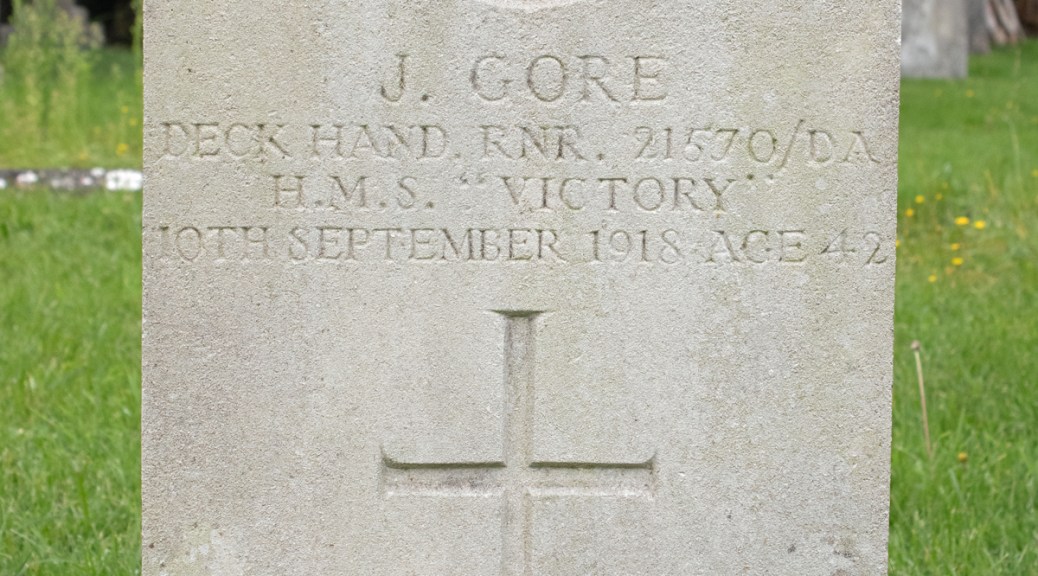
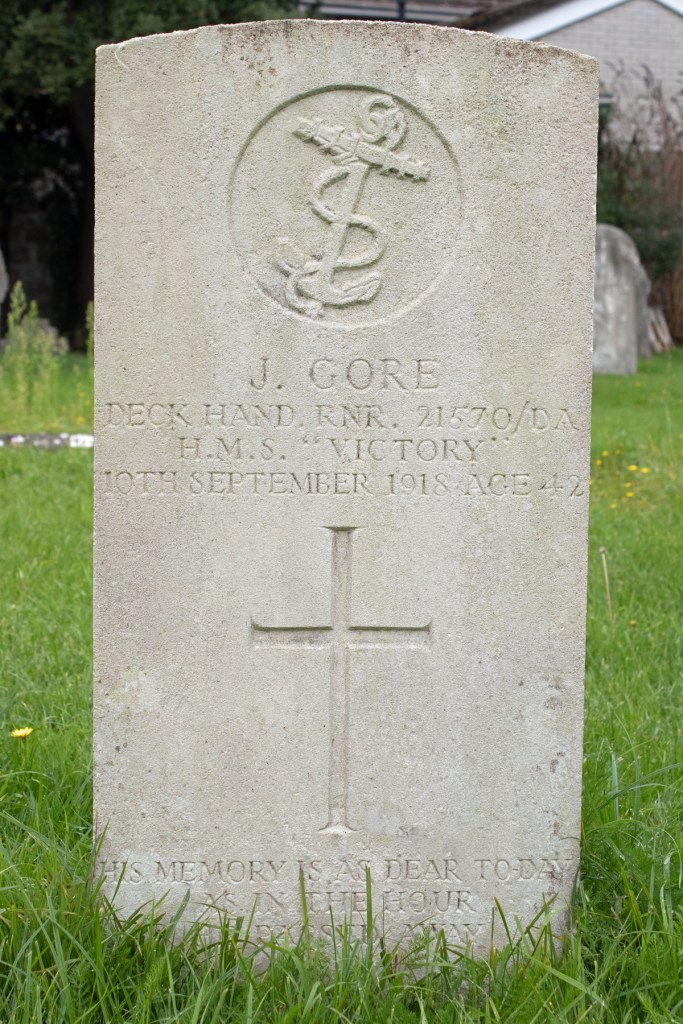
When war broke out, James was 38 years old. He wasn’t called up immediately, but by the closing months of the conflict, the needs of the Royal Navy were strong enough for him to be conscripted. He joined up on 21st August 1918 and, having built a career as a fisherman, he was assigned to the Royal Naval Reserve. His service records confirm that he was 5ft 6ins (1.67m) tall, with a fresh complexion and blue eyes.
Deck Hand Gore was sent to HMS Victory, the Dockyard in Portsmouth, Hampshire, for his initial training. Here, billeted in cramped barracks, perfect breeding grounds for germs and disease, he quickly became ill. Having contracted pneumonia, James was admitted to the Haslar Hospital in Gosport. The condition was to take his life: he passed away on 10th September 1916, less than three weeks after enlisting. He was 40 years of age.
James Gore’s body was taken back to Somerset for burial. He was laid to rest in the peaceful cemetery in Burnham-on-Sea, not far from where Emily and the children were still living.
Philemon Witheridge Richards was born on 9th July 1891 in Porthleven, Cornwall. He was one of at least seven children to George and Ann Richards. George was a sailor, as were he two oldest sons and, by the late 1890s, the family had made the move to Penarth in Glamorganshire.
When he left school, Philemon followed his father and older brothers into sailing. By the time he turned eighteen, George had passed away and Philemon wanted bigger and better things. On 16th July 1909, he enlisted in the Royal Garrison Artillery. His service records show that he stood 5ft 9.5ins (1.76m) tall, had good vision and was of good fitness.
Gunner Richards was posted to No. 6 Company and remained part of the territorial force. On 1st July 1911, after twenty months’ service, he was, at his own request, discharged from the army.
The trail goes cold for a while, and Philemon seems to have returned to a life at sea. This changed, however, when war broke out and, in October 1915, he was drafted into the Royal Naval Reserve as a Deck Hand.
Philemon’s time in service seems to have been shore-based however. After an initial posting to HMS Vivid, the Royal Naval Dockyard in Devonport, he moved to HMS Victory, which was the name given to the dockyard in Portsmouth, Hampshire. He moved on again in the autumn of 1916, by which point he was based at HMS Pembroke, the Royal Navy’s shore-base in Chatham, Kent.
It was here that Deck Hand Richards fell ill. It is unclear what the condition was, but he was admitted to the Military Hospital in Chatham on 20th October 1916. His illness worsened, and he passed away there on 2nd November. He was just 25 years of age.
Philemon Witheridge Richards was brought back to Glamorganshire for burial. He lies at rest in the graveyard of St Augustine’s Church in Penarth.
Philemon’s gravestone is also dedicated to his brother, Thomas Witheridge Richards. Eighteen years Philemon’s senior, Thomas had been a sailor, and, while no records remain, it seems likely that he may also have been called into service during the First World War. He died at home on 4th July 1918, at the age of 45 years old. He was laid to rest in the same plot as his younger brother.
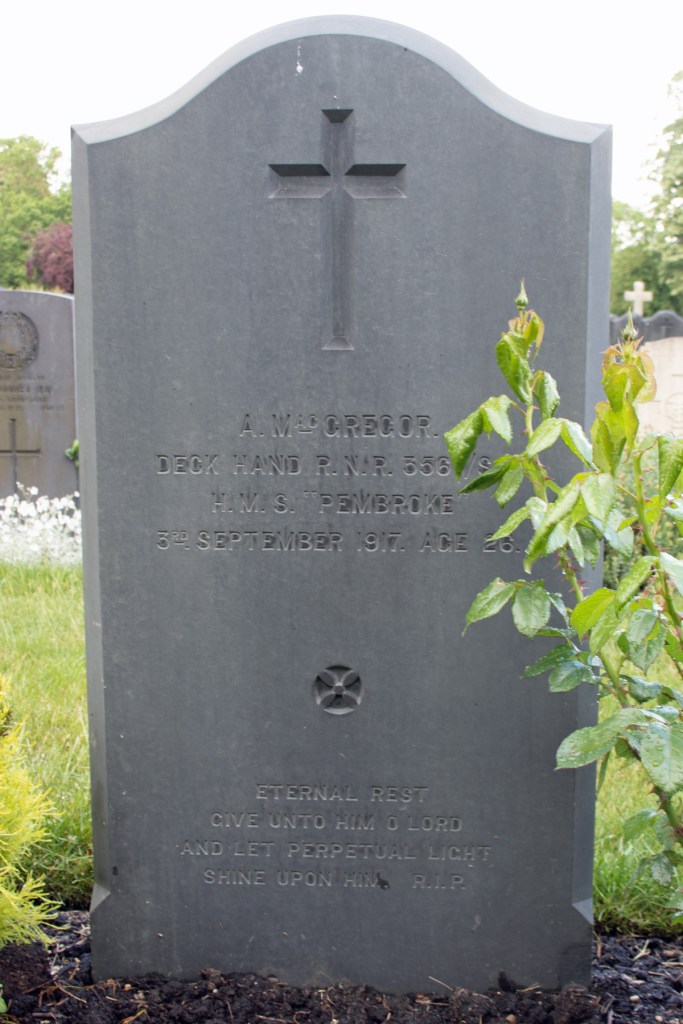
Alexander MacGregor was born on 1st January 1890 in the Scottish village of Acharacle. The oldest of eleven children, his parents were Dugald and Mary MacGregor.
There is little concrete information about Alexander’s early life, but, by the outbreak of war, he had moved to London. He married a woman called Bridget in around 1916: the couple settled in Battersea, and went on to have a son, Peter, who was born in December 1916.
Alexander had, by this point, signed up to play his part in the European conflict. He joined the Royal Naval Reserve as a Deck Hand on 1st December 1915. His service records confirm that he was 5ft 7.5ins (1.71m) tall, had grey eyes and a medium complexion. The section of the Royal Navy that he joined suggests that he had had previous sea-faring experience (given the proximity of his home village to the Argyll coast, this is not surprising).
Deck Hand MacGregor’s was assigned to HMS Pembroke, the Royal Naval Dockyard in Chatham, Kent. Details of his military service are unclear, but he spent just under two years at the dockyard. By the summer of 1917, the base was a busy and cramped place, and Alexander found himself billeted in temporary accommodation set up in the barracks’ Drill Hall.
On the night of the 3rd September, the German Air Force conducted the first night time raid on England. Chatham came in the firing line, and the Drill Hall received a direct hit. Deck Hand MacGregor was among those to be killed. He was just 27 years of age.
Alexander MacGregor was laid to rest in the Woodlands Cemetery in nearby Gillingham, along with the other victims of the Chatham Air Raid.
William Henry Clark was born in Whitby, North Yorkshire, on 15th March 1884 and was the younger of two children to James and Fanny Clark. Fisherman James drowned in September 1885, when the boat owned by his brothers-in-law – Robert and Mark Dryden – capsized.
Fanny and her children moved in with her Robert and her widowed mother, Martha, who was a lodging house keeper. In the spring of 1892, she married quarry labourer William Bennison. Her and James’ two children remained living with their grandmother; she went on to have three children with her new husband.
The 1901 census recorded young William working as a rivet heater in the local iron shipyard. He progressed in his work and, by the next census in 1911, remained living with his grandmother and uncle, but was working as a boilermaker in the shipyard.
When war broke out, William was called upon to play his part. While he had done engineering work, he also worked with his Uncle Robert on his fishing boat; this meant he was placed on reserve in the Royal Navy, and was not formally called upon as a Deck Hand until November 1915. Full details of his service are not available, but it is clear that he was based at HMS Pembroke – the Royal Naval Dockyard in Chatham, Kent – by the summer of 1917.
HMS Pembroke was a generally bustling place, but by the summer of 1917, it had exceeded capacity to the point where temporary accommodation was set up. William found himself billeted at The Drill Hall, away from the main barracks.
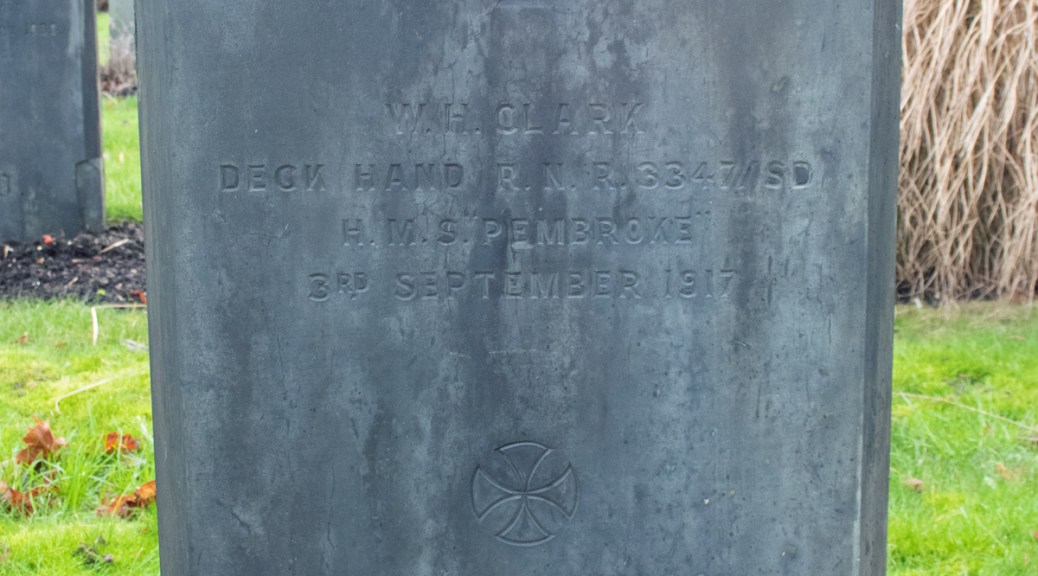
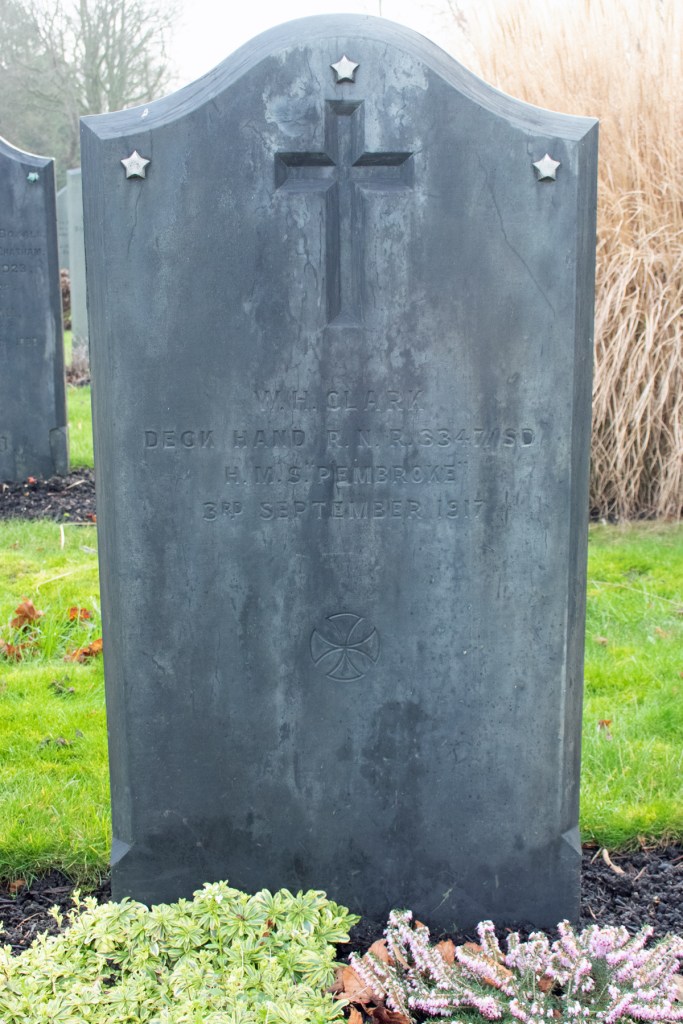
On the night of 3rd September 1917, Chatham suddenly found itself in the firing line, as the German Air Force launched a bombing raid. One of the bombs landed squarely on the Drill Hall, and Deck Hand Clark was killed. He was 33 years of age.
Ninety-eight servicemen perished during the Chatham Air Raid that night. They were buried in a mass funeral at the Woodlands Cemetery in nearby Gillingham. This is where William Henry Clark was also laid to rest.
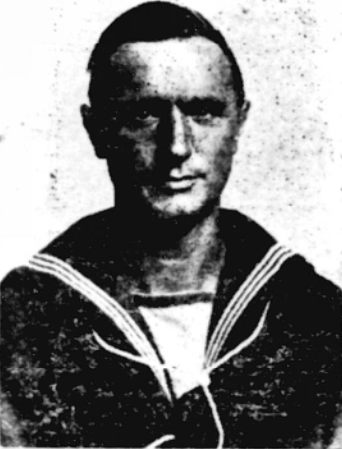
Deck Hand William Clark (from britishnewspaperarchive.co.uk)
A local newspaper had reported on William’s father’s death:
FATAL COBLE ACCIDENT: SURVIVOR’S NARRATIVE
We append the personal account of Robert Dryden, who was capsized along with his two comrades, James Clark and Mark Dryden, in the fishing coble Ann Maria… off Robin Hood’s Bay, on the morning of Saturday, the 19th inst. The tale tells of the marvellous escape of the narrator and of the sad drowning of his two mates, who each leave a widow and two children. The survivor, who is a stout and healthy fellow, had his left leg amputated some years ago, and a wooden support substituted. The following is his account:
“We were coming in from the fishing grounds on Saturday morning in our coble under a three-reefed sail, with two hundred herrings. There was a stiff breeze blowing form the south-east, with occasional squalls, and it was very dark. We should be, I reckon, about two miles from land… I had just gone into her head to see how she was coming for the land, leaving Mark at the helm, when a puff of wind took her on the starboard quarter and sent her over. We were floated out, and she sank directly, each of us catching hold of an oar.
“Just then a steamer passed us, and we shouted, but could not get their attention, and we all swam about, talking to each other, and I told them to keep their hearts up. We all had knee boots on, and, poor Jim, I think he must have been caught by the cold, for about twenty minutes after he sank. He was a fine fellow, as fine a fellow as you would meet in the streets.
“Shortly after he had gone, poor fellow, a tug boat passed us with a black and flesh-coloured funnel. I was too exhausted to shout much, and had to swim across her bows to keep clear. When she had passed, poor Mark had disappeared. I could then see the land, and with the sea beating on my left shoulder I set out for it…
“I was very disheartened after losing my mates, and all I had – for the coble belonged half to me and half to my brother – nets, money, and, all together, about £60 had gone…
“After a long swim, I neared the shore, and swam for the Blue Rock, because I could not swim further to a calm spot. I found myself on the rock after being, I think, knocked senseless by the seas. I climbed the cliff – it’s a bad coast about here – and walked for about two miles before I met anyone…
“I was several times almost in despair when in the water, and was much distressed at having to return with such a sad tale… It’s a great loss to me. Jim was my brother-in-law, and was 29 years of age, and Mark was my cousin, and 23 years old. It’s thirteen years since I had my other narrow escape, and I would sooner go to the poor-house than go through such another time of it.”
By this melancholy accident, two families have been plunged into deep grief and dire poverty, and deserve the sympathy and practical support of all kind and well-to-do-people.
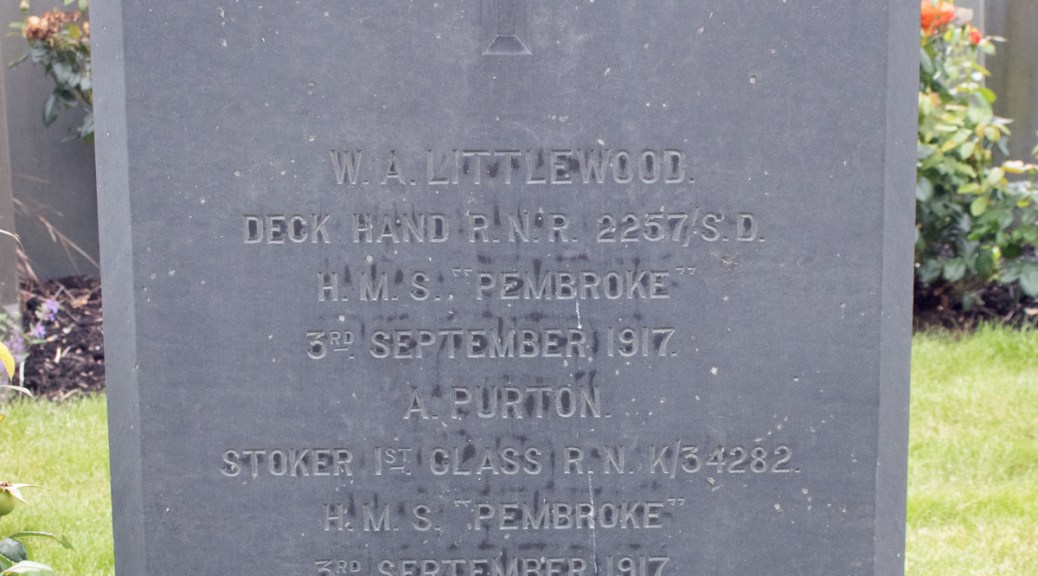
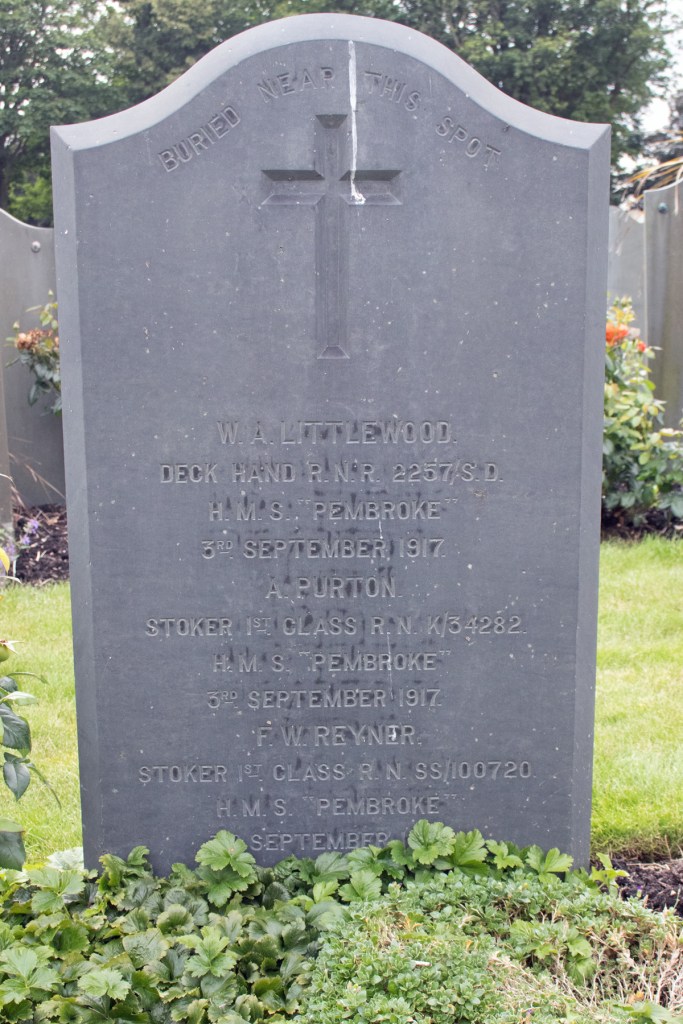
William Alfred Littlewood was born on 19th April 1882, the oldest of four children to Henry and Mary. Henry was a labourer for the gasworks in Great Yarmouth, Norfolk, and the couple raised their family in the town.
William also found work with the local gasworks, and this is who he was employed by when, on 19th December 1903, he married Evelyn Harriet Youman. The couple set up home near the centre of the town, and went on to have four children.
When war broke out, William was keen to play his part. On 17th August 1914, he enlisted as a Private in the Army Service Corps and, within a couple of week, was in France. He spent six months on the Western Front, before returning to home soil. The reason for this return to England was an inflammation of the middle ear, and the resulting deafness led to his discharge from the army in June 1915.
William was not to be deterred, however, and within a matter of weeks, he had enlisted again, this time volunteering for the Royal Naval Reserve as a Deck Hand. Over the next two years, he served on a number of different ships, each time returning to HMS Pembroke, the Royal Naval Dockyard in Chatham, Kent.
In August 1917, Deck Hand Littlewood disembarked HMS Acteon, and returned to his shore base. The Dockyard was particularly busy that summer, and the large number of extra servicemen meant that William was billeted in temporary accommodation in Chatham Drill Hall.
On the 3rd September 1917, the first night air raid carried out by the German Air Force bombarded the town, and scored a direct hit on the Drill Hall; Deck Hand Littlewood was among those killed instantly. He was 35 years of age.
William Alfred Littlewood was laid to rest, along with the other victims of the Chatham Air Raid, in the Woodlands Cemetery, Gillingham. Tragically, the Navy Death Records state that he was Buried as unidentified in one of the following graves: 516, 522, 642, 735, 935, 937 or 948.
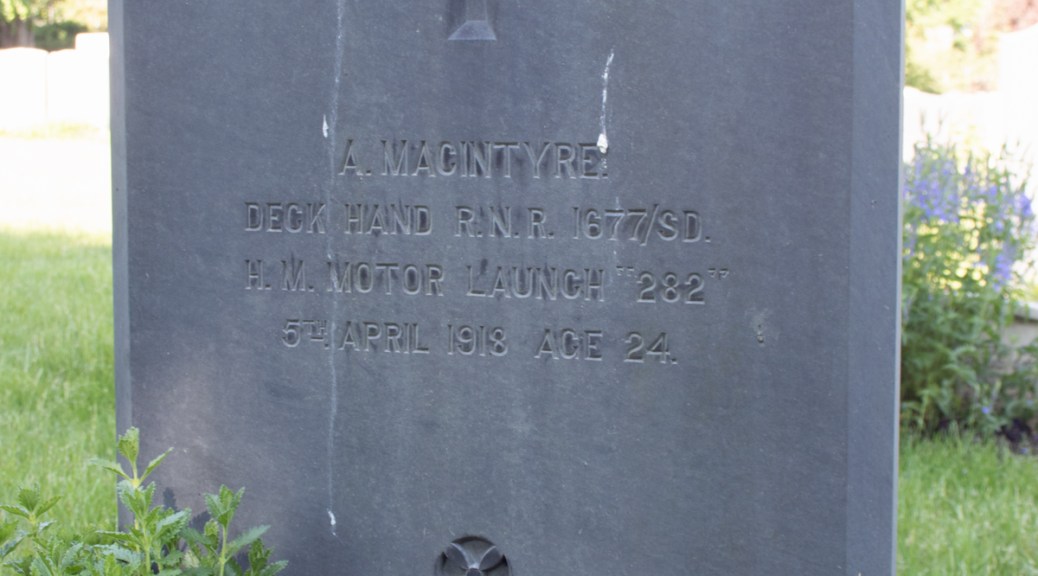
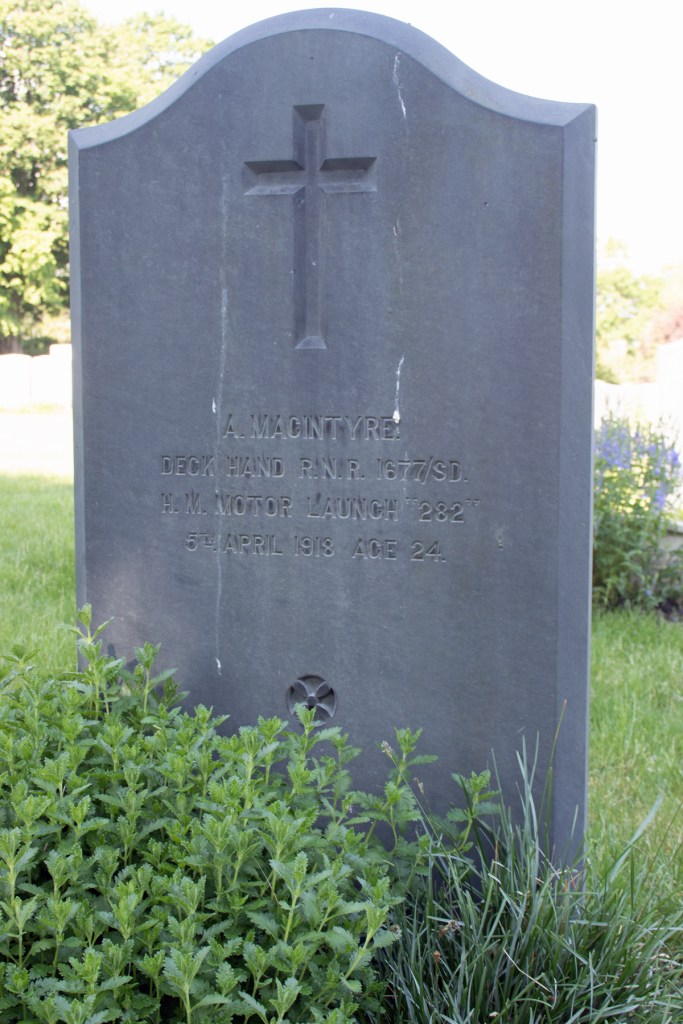
Angus MacIntyre was born on the island of Eriskay in the Outer Hebrides on 9th October 1894. One of eleven children, his parents were fisherman Malcolm McIntyre and his wife Flora.
Sadly, there is little information on Angus’ early life and military service. He was still living in the Scottish Islands by the time of the 1911 census, and enlisted in the Royal Naval Reserve when war broke out.
In April 1918, Angus was acting as a Deck Hand on Motor Launch 282 in the North Sea, supporting the “Zeebrugge Raid”, an attempt by the Royal Navy to block the Belgian port by scuppering obsolete vessels in the canal entrance.
Full details are not clear, but it would seem that the vessel Deck Hand MacIntyre was serving on was ferrying men between some of the ships that were being scuppered. When it was trying to manoeuvre it’s way out of the Zeebrugge Canal, it came under heavy machine gun fire, and a number of people on board were shot.
The motor launch managed to get clear of the fighting and returned to England. Unfortunately, Angus was one of the victims of the German gunfire. He was just 23 years of age.
The boat sailed back to the Naval Dockyard in Chatham, Kent. Angus MacIntyre was laid to rest in the nearby Woodlands Cemetery.
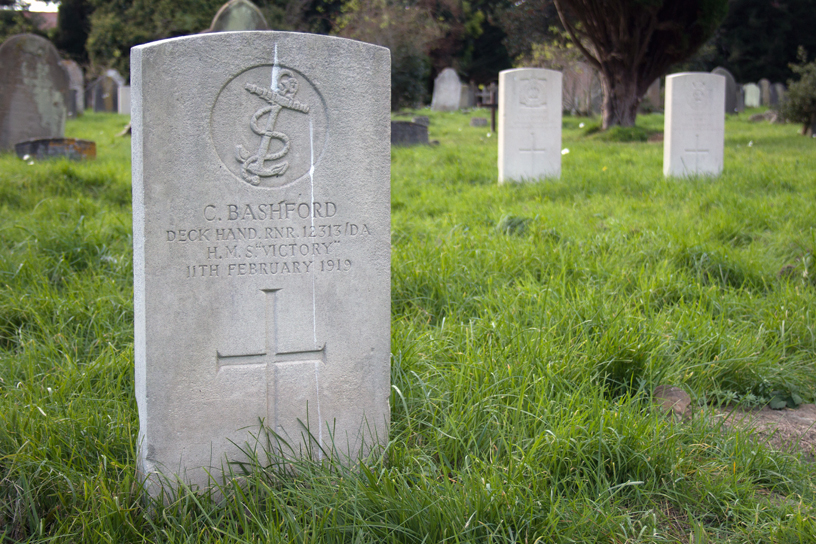
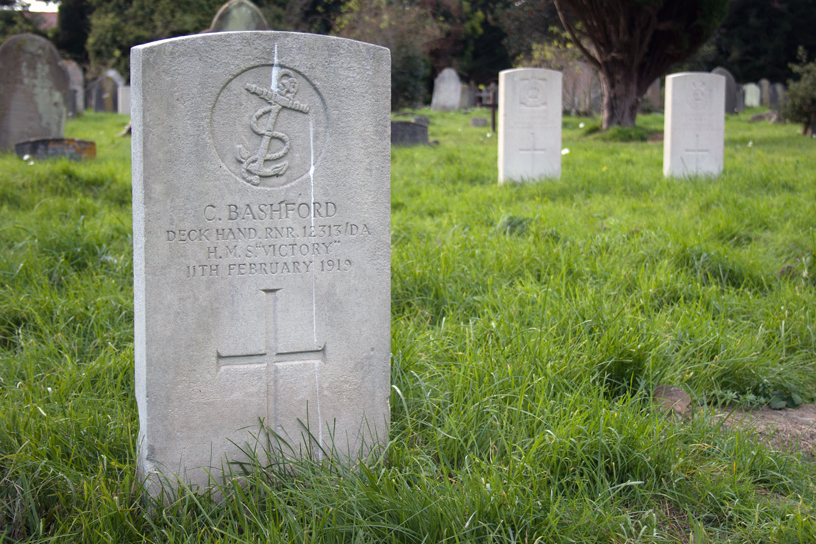
Charles Bashford was born on 10th August 1890, one of fifteen children to James and Mary Ann Bashford. James was a fisherman, and the family lived in Field Row, a narrow lane in the centre of Worthing, West Sussex.
The seaside town was a centre of fishing activity, so it is no surprise that most of James and Mary Ann’s children went into it in some way, and Charles was no exception. The 1911 census list him as the youngest of four siblings still living at home, and three of those gave their trade as fisherman, as well as James. Charles’ older brother William was the only sibling not to, and he was working as a printer.
War was coming to Europe, and, given his seafaring experience, it is no surprise that Charles sought to enlist in the Royal Navy. He joined up on 12th August 1916 and, after six weeks’ training, was assigned to the Royal Navy Reserve (Trawler Section). During his service he would have been involved in minesweeping and anti-submarine activities, using his own boat – or his family’s one – to do so.
Little further information is available for Deck Hand Bashford. He survived the war, but passed away on 11th August 1919 at the Royal Haslar Hospital, where he had been admitted, suffering from pneumonia. He was 28 years old.
Charles Bashford was brought back to his home town of Worthing; he was laid to rest in the Broadwater Cemetery there.






 Death and Service