Category Archives: Private

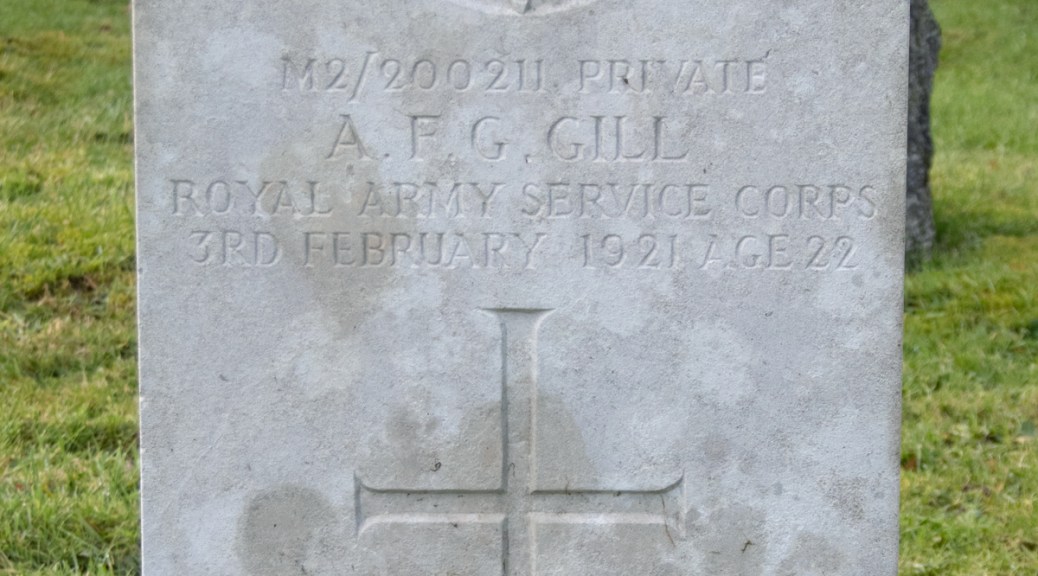
Private Frederick Gill

Private Frederick Gill

There are parts of AFG Gill’s that are destined to remain a mystery. The Commonwealth War Graves Commission give his parents’ names and address – Edwin and Annie Gill of 15 Old Exeter Street, Chudleigh, Devon. Combined with his service number – M2/200211 – this would suggest that the FG in his name is Frederick George, but the initial A remains stubbornly absent.

Frederick George Gill was born in 1898, in the village of Chudlegh, and was one of seven children. His father – Edwin – was a carrier and haulier in the area, and the family lived in the middle of the village.

When war came to Europe, Frederick was keen to do his bit – he enlisted in the Royal Army Service Corps as a Private and was assigned to the Mechanical Transport division.

There is very little information on Private Gill’s military service. He was awarded the Victory and British Medals for his service, but there is nothing to confirm when he enlisted or if he served abroad.

Private Gill survived the war, but was discharged on medical grounds on 18th November 1919 – he had contracted pulmonary tuberculosis during his time in the army, and was not longer fit to serve.

At this point, Frederick’s trail goes cold. While nothing can be confirmed, it would seem that the lung condition got the better of him – on 3rd February 1921 he passed away at home. He was just 22 years of age.

Frederick George Gill was laid to rest in the cemetery of his home village.
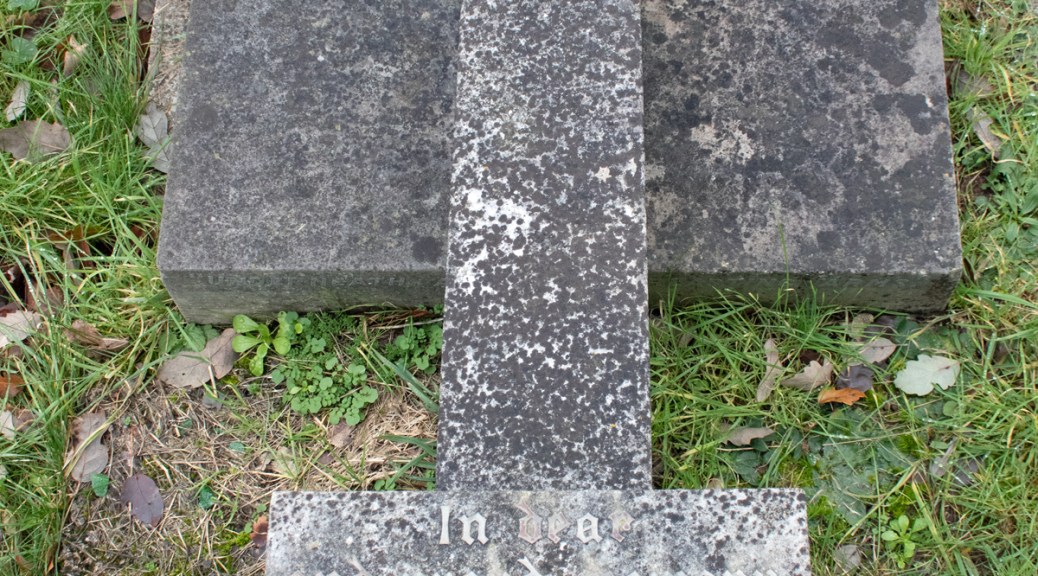

Lieutenant Herbert Marshall

Lieutenant Herbert Marshall

Herbert William Hare Marshall was born in Ambala, India, on 19th August 1890. His father – Herbert Seymour Marshall – was a Colonel in the army, and was serving in India with his wife, Charlotte, when their children – Charlotte (known as Jessie) and Herbert Jr – were born.

The family were back in England by 1898, and had set up home in the Somerset seaside town of Weston-super-Mare. When Herbert Sr passed away that year, Charlotte was set up on a widow’s pension, and this allowed her to send her son to St Peter’s, a private boarding school in the town.

When her son’s schooling was complete, Charlotte took the family off to Canada. They settled in British Colombia, in Revelstoke, a mountain town halfway between Calgary and Vancouver. Here, Herbert found work as a bank clerk, but war came to Europe, and he felt a need to do his bit for King and Country.

Herbert enlisted in the Canadian Expeditionary Force (CEF) in November 1914; his service papers record him as being 5ft 8ins (1.73m) tall, 148lbs (67kg) in weight. He had black eyes, brown hair and a dark complexion – something that he may well have inherited through his mother’s genes.

Shipped to England, by August 1915, Private Marshall had been discharged from the CEF as part of a transfer to the New Army – also known as Kitchener’s Army, the volunteer British Army raised as a direct result of the outbreak of war.

Detailed information about Herbert’s military service is lacking, although it seems that he joined the 17th Battalion of the West Yorkshire Regiment, one of the regiments heavily involved during the Battle of the Somme.

By October 1916, however, the now Lieutenant Marshall had made another move, this time joining the Royal Flying Corps. On the afternoon of 26th August 1917, he was an observer on a flight at Marham, in Norfolk. The pilot, a Lieutenant Challington, was banking the aircraft, when it dived and crashed, killing both men. Lieutenant Marshall had turned 27 years old the week before.

Herbert William Hare Marshall’s body was brought back to his adopted home of Weston-super-Mare. He lies at rest alongside his father in the town’s Milton Road Cemetery.


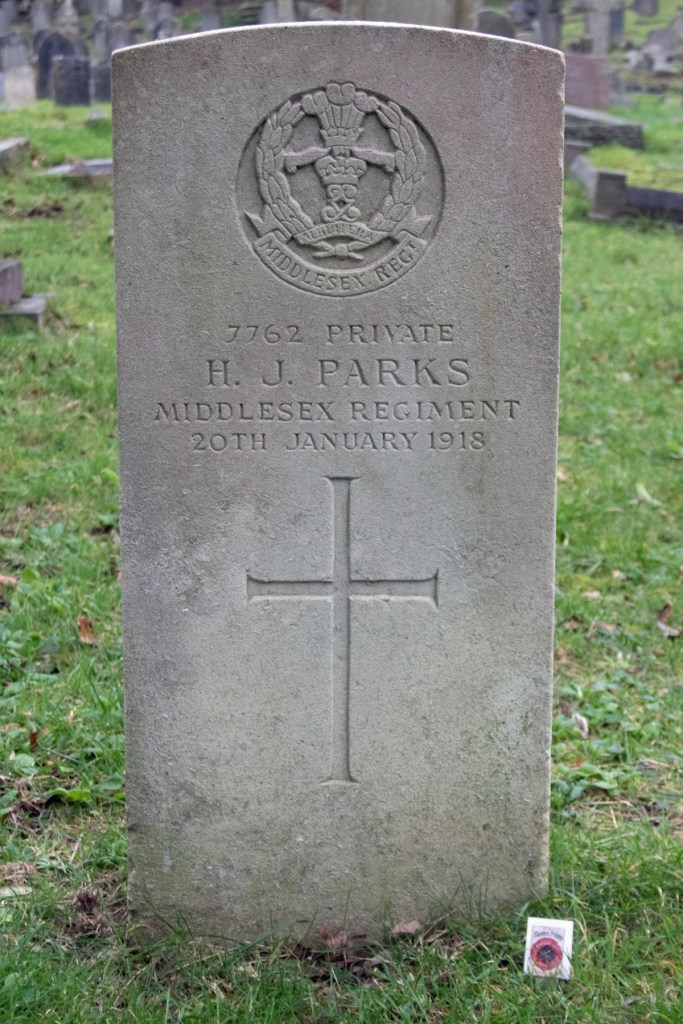
Private Hector Parks

Private Hector Parks

Hector Joseph Parks was born in the spring of 1885, the youngest of five children to William Jacob and Mary Ann Parks. William was a ship’s steward who, when Mary died in 1895, remarried, giving Hector a further two half-siblings.

With William employed at sea, Hector spent a lot of time with his paternal grandparents and, in fact, both the 1891 and 1901 censuses recorded him as living in East London with them. That later document shows that Hector had left school, and was working as a carman for a delivery company.

The next available record for Hector comes thirteen years later, when it is evident that he was among the first to volunteer for war service. He enlisted in the Middlesex Regiment and, while full details of his army career are not available, he soon found himself in the thick of things, arriving in France on 14th August 1914.

Private Parks’ battalion – the 4th – was caught up in skirmishes from the outset of war, fighting at Le Cateau, Marne, Aisne and Hooge. Over the next few years, the Middlesex Regiment found itself at The Somme and Ypres and, while it is not possible to place Hector directly in these conflicts, it seems likely that he would have been involved in a lot of them.

In January 1918, Private Parks was back on home soil, having been admitted to the Auxiliary Hospital at Ashcombe House in Weston-super-Mare, Somerset. Sadly, the cause of his return to England is lost to time, but he was to succumb, passing away on 20th January 1918, at the age of 32 years old.

Hector Joseph Parks was laid to rest in Somerset – he is buried in the Milton Road Cemetery in Weston-super-Mare.


Sergeant Archibald Mills

Sergeant Archibald Mills

Archibald Henry Mills was born in the summer of 1895, the oldest of six children to John and Edith. John was a commercial traveller, selling veterinary wares around the country; he was born in Derby, Edith was from Leicester and, for the for the first seven years of their married life they lived in Edith’s home town – this is where Archibald was born. By the turn of the century, however, they had relocated to Somerset, and set up home in Weston-super-Mare.

When he left school, Archibald found work as an errand boy for a local tailor, but change was on the horizon. By the summer of 1914, he had based himself in Nottingham – the reason is lost to time – and this is where he was when he volunteered for military service.

Archibald enlisted as a Private in the Notts and Derby Regiment – the Sherwood Foresters – and was assigned to the 7th Battalion. He was sent to France as part of the 46th Division and, over the next couple of years, he evidently served his regiment well.

In August 1915, Private Mills was promoted to Lance Corporal; three months later he was again promoted, to Corporal. By May the following year, he received another rise, this time to Serjeant. These promotions were against the backdrop of some fierce fighting – the Sherwood Foresters were involved at Hooge, Hohenzollern and Gommecourt, and were briefly sent to Egypt.

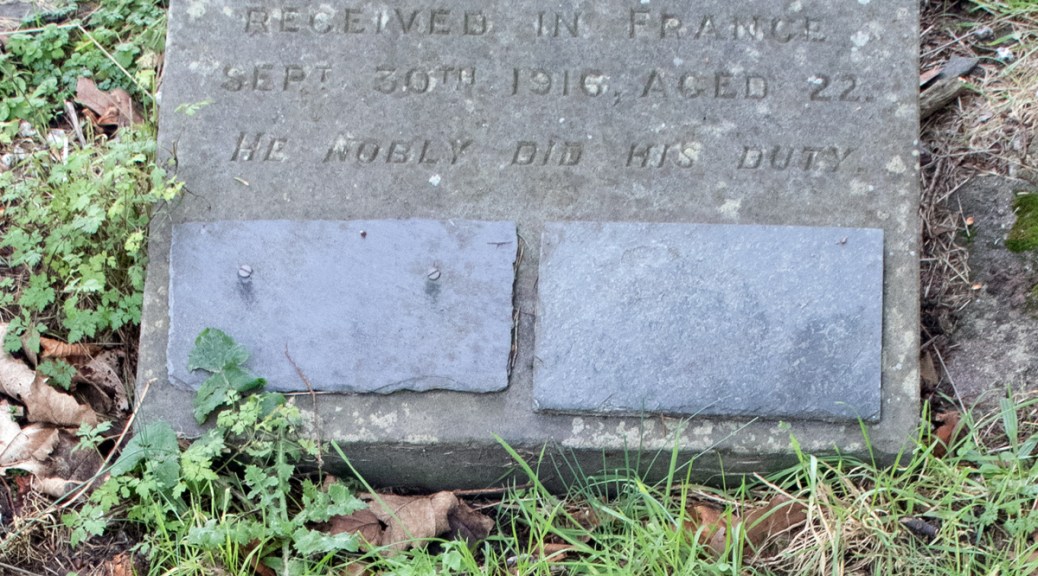
At some point during the summer of 1916 – possible at Gommecourt – Archibald was injured, and medically evacuated to the No.2 Western General Hospital in Manchester. Sadly, however, his wounds were to prove too much: Serjeant Mills passed away on the night of 30th September 1916. He was just 21 years old.

The body of Archibald Henry Mills was brought back to Somerset; he was laid to rest in the Milton Road Cemetery of his adopted home town of Weston-super-Mare.


Sergeant John Foxworthy

Sergeant Joh Foxworthy

John James Foxworthy was born in the South Devon village of East Allington in 1867. He was the middle of five children to carpenter Roger Foxworthy and his wife Ann.

When he left school, John found work on a local farm, but he had bigger plans and, in July 1887, he enlisted in the Royal Marine Light Infantry. His service records show that he stood 5ft 8ins (1.73m) tall, had dark brown hair, brown eyes and a fresh complexion.

John had a varied military career that lasted for more than two decades. During this time, he served on nine ships, and was based at HMS Vivid – the Royal Naval Dockyard in Plymouth – for significant periods of time. He began as a Private, but rose through the ranks to Corporal (in 1894) and Sergeant (in 1900). He was wounded in April 1899, when he was shot in the leg, but recovered from this and continued his career.

In 1895, John married Maria Woodley, the daughter of a railway labourer from Totnes. The couple went on to have four children, Minnie, Gladys, Alice and William.

In 1908, Sergeant Foxworthy left the Royal Marine Light Infantry after 21 years’ service. By now the family home was in Prospect Terrace, Newton Abbot, just a short walk from the town centre. The 1911 census records him as being a Royal Marine pensioner and caretaker of the Miniature Rifle Club.

When war broke out, John was called back into duty and, by September 1914, he found himself in a Royal Marine Depot in Belgium. His service overseas was fairly short, and he had returned to England by the spring. He was working as a recruiting sergeant in Northampton on 30th March 1915, when he suddenly collapsed and died. He was 47 years of age.

John James Foxworthy’s body was brought back to Devon; he lies at rest in the family grave in Newton Abbot Cemetery.


Corporal Bruce Chapple

Corporal Bruce Chapple

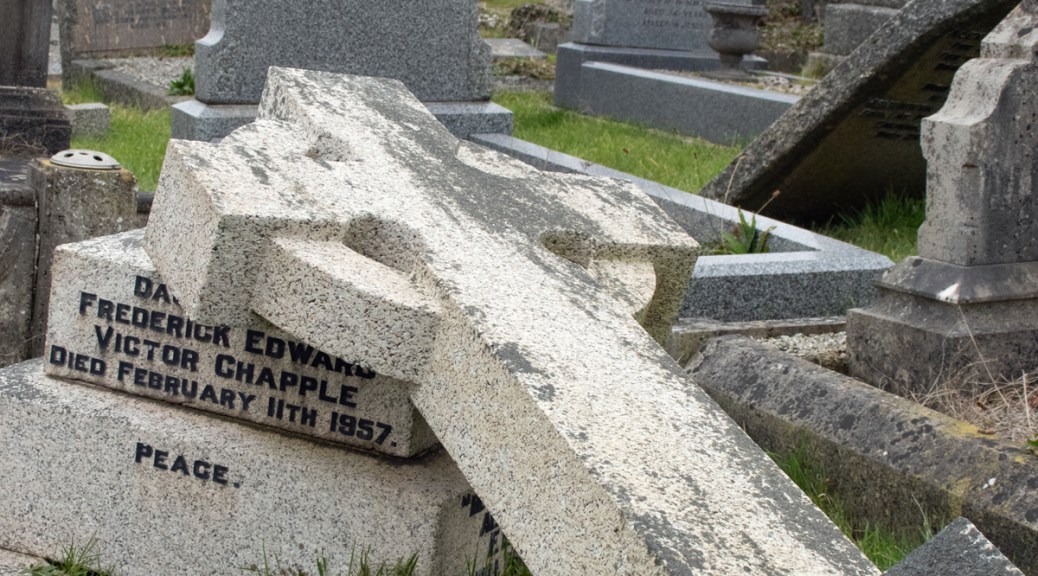
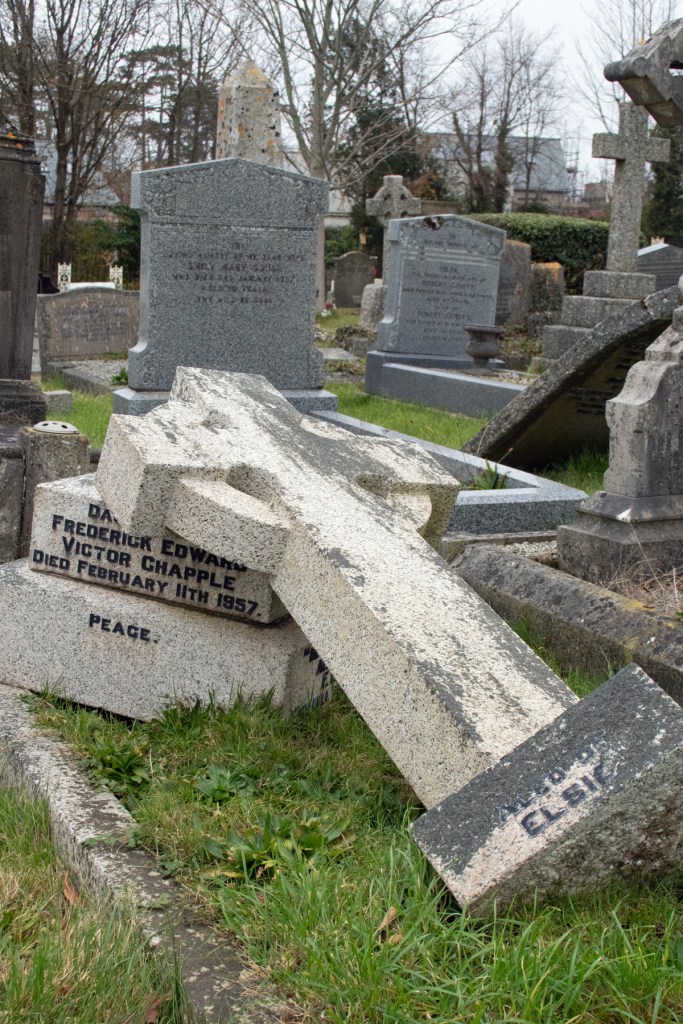
Bruce Chapple was born in the autumn of 1893, the youngest of four children to Frederick and Elizabeth Chapple. Frederick was born in Newton Abbot and ran the managed a public house in the town (now the Locomotive Inn), although the 1901 census also listed him as a tobacco pipe manufacturer.

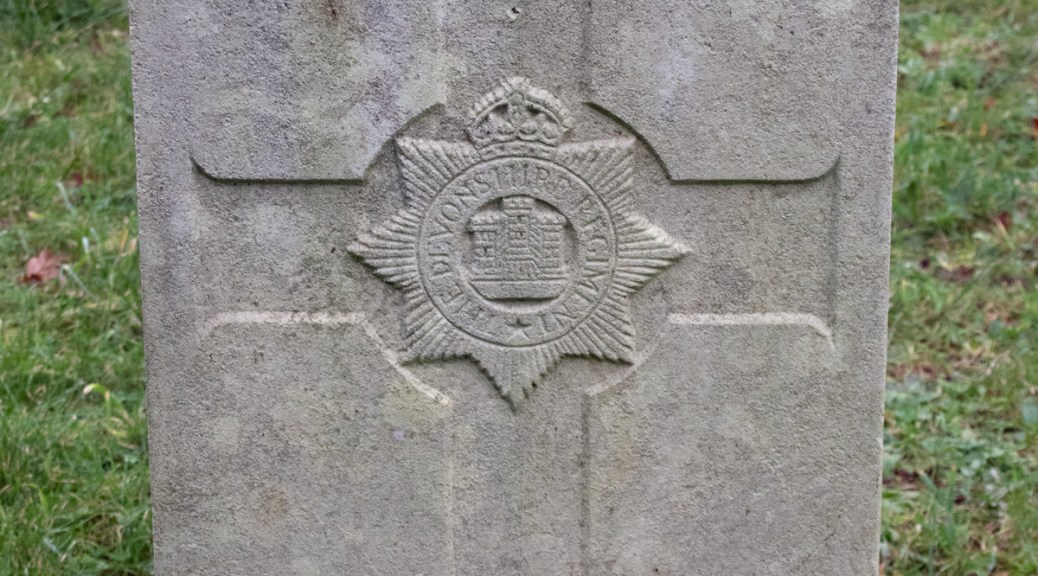
According to the next census – in 1911 – Bruce had taken over the pipe making, which meant that Frederick was devoting his time to being a publican. By this time, Bruce had another interest; military service. He had volunteered for the Devonshire Regiment in October 1909 and, over the next few years, the 5ft 3.5ins (1.61m) tall teenager received training in and around the county.

When war broke out in 1914, Private Chapple was formally enrolled and, as part of the 1st/5th Battalion, he set out for India that October. Initially based in Multan – in what is now Pakistan – he subsequently moved on to Lahore.

Bruce spent a total of two-and-a-half years in India, receiving a promotion to Lance Corporal in the process. In March 1917, his battalion transferred to Egypt, and the now Corporal Chapple went with them.

On 23rd November, Bruce was wounded in action, receiving a gun shot wound to his left thigh; he was not medically repatriated for treatment, but appears to have recovered from his injury and remained in Egypt until July 1918.

Back home in England, Corporal Chapple remained in the army for a further couple of months, before he was discharged as being no longer medically fit for service in September. Sadly, the cause for his discharge is lost to time.

It is at this point that Bruce’s trail goes cold. The next available record is of his death, on 16th November 1919; he was 26 years old.

Bruce Chapple was laid to rest in the family plot in Newton Abbot Cemetery.


Serjeant John Bunclark

Serjeant John Bunclark

John Bunclark was born in the village of Lustleigh, near Bovey Tracey in Devon in 1888. His father is lost to time, but his mother was farm labourer’s daughter, Elizabeth Bunclark. Elizabeth worked as a kitchen maid for a local solicitor, so John’s grandparents – John and Mary – raised him as their own.

In 1894, Elizabeth went on to marry William Wright – they went on to have four children of their own, while John remained with his grandparents. Tragically, in 1907, Elizabeth died in childbirth; the boy also died.

In 1906, John was longing for bigger and better things, and a military career appeared a good option. He joined the Devonshire Regiment as a Private and, while full details of his service are no available, it seems that John made a good impression.

In 1912, John married Emma Jane Horrell. She was the daughter of an agricultural labourer from Tavistock, who was working as a domestic servant when they met. The couple went on to have four children, between 1912 and 1918.

When war broke out, Private Bunclark was posted to France; his battalion – the 2nd – served in many of the key battles of the conflict, including Neuve Chapelle, The Somme, Ypres and Arras. At some point during the war, however, John transferred to the 641st Employment Company of the Labour Corps; this meant work on the Home Front, and a promotion to Serjeant came with it.

It was while John was on leave back in Newton Abbot that he fell ill. His specific ailment is lost to time, but he was admitted to the Temporary Hospital at the Institution in the town. He passed away on 7th November 1918, at the age of 30 years old.

John Clark was laid to rest in Newton Abbot Cemetery.


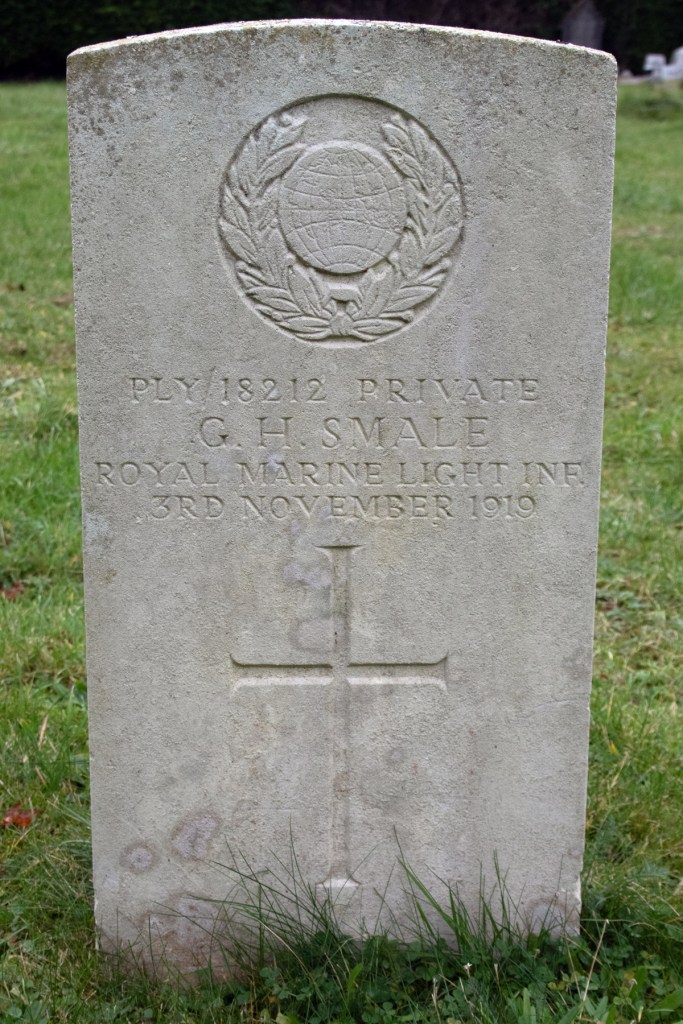
Private George Smale

Private George Smale

George Henry Smale was born in 1899 and was the oldest of four children to George and Alice Smale. George Sr was born in Tavistock, Devon, and worked as a labourer in a tannery. The family were raised in Newton Abbot, which is where George Jr was born.

Sadly, little is documented on young George’s life. He would have been 15 years old when war broke out, but at some point during the conflict, he enlisted in the Royal Marine Light Infantry. Private Smale was based at the Stonehouse Barracks in Plymouth, but no other information about his service is available.

George’s trail goes completely cold at this point, and there is nothing to confirm how or when he left the army, or how he died. All that can be confirmed is that he passed away on 3rd November 1919, and that he was just 20 years old at the time.

George Henry Smale was laid to rest in Newton Abbot Cemetery.


Private James Flood

Private James Flood

James Allan Flood was born in Exeter, Devon, in 1879, and was the oldest of six children to James and Emily. James Sr was a bricklayer, and, according to the 1881 census, the family lived at 2 Stepcote Hill, sharing the house with two other families.

When he left school, James Jr also fell into labouring work. By this time he had met Amy Hobbs, a hotel worker’s daughter who had been born in London. Her father had moved from Devon to the city in the 1870s, but had brought his family back to his home county by 1885.

James and Amy married in the village of Wolborough in December 1899. They set up home in nearby Newton Abbot and went on to have five children.

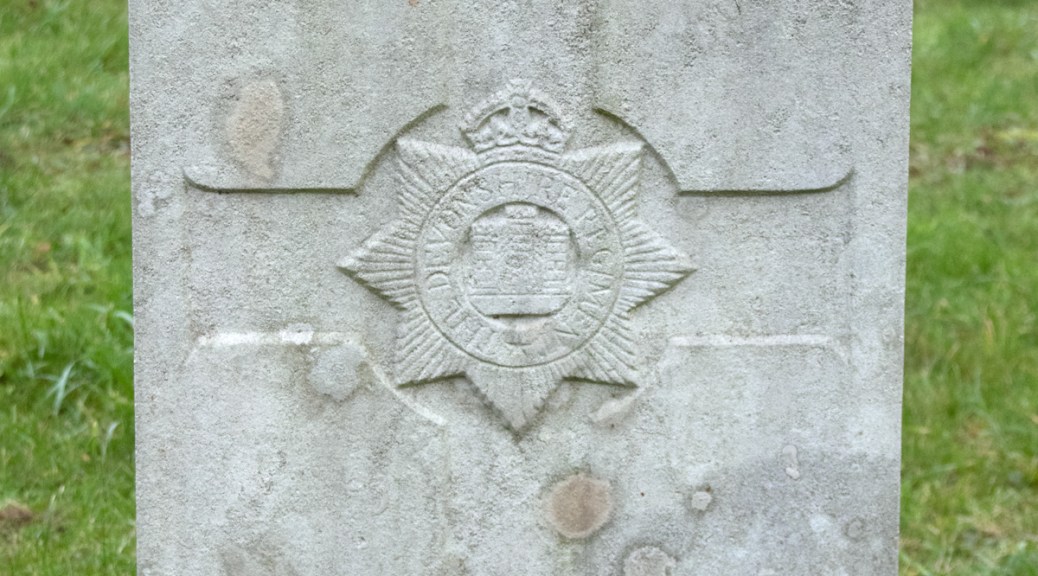
The storm clouds of war were beginning to hover over Europe and, when the conflict broke out, James was keen to play his part. He enlisted within days of war being declared, joining the Devonshire Regiment as a Private. His service records show that he stood 5ft 6ins (1.68m) tall, and weighed 112lbs (51kg). He had a tattoo of a crown and heart on his right forearm.

Private Flood found himself in France by Christmas 1914 and stayed there for more than a year. During this time, he was promoted to Lance Corporal, although, as a result of missing a role call, he reverted back to Private again a couple of months later.

After a brief two months spent back on home soil, James returned to France again, spending a further ten months on the Western Front. In March 1917, he was transferred across to the Labour Corps, and came back to home soil again.

This transfer appears to have been connected to James’ health; he continued to work as part of 621st Agricultural Company for the next eighteen months, before being discharged from the army on medical grounds in September 1918. Sadly, the cause of his discharge is lost to time.

At this point, James Allen Flood’s trail goes cold. The next time he appears in documentation is nearly a year later: he passed away on 17th August 1919, aged 40. He was laid to rest at the Newton Abbot Cemetery.


Private William Lamacraft

Private William Lamacraft

William Morrish Lamacraft was born in Guernsey in 1888, the only son of John and Annie Lamacraft. Annie passed away when William was just 4 years old, and John brought his son back to England, returning to Devon, where he himself had been born. John found employment as a porter at St Thomas’ Union Workhouse in Exeter and lived in here, while William was taken in by his paternal grandmother, Mary, who was also in Exeter.

In 1909, John also passed away. William, by this time, had left school and found work as a bootman at the Queen’s Hotel in Newport, Gwent. War was on its way to Europe by this point and, when it broke out, William enlisted as a Private in the Labour Corps.

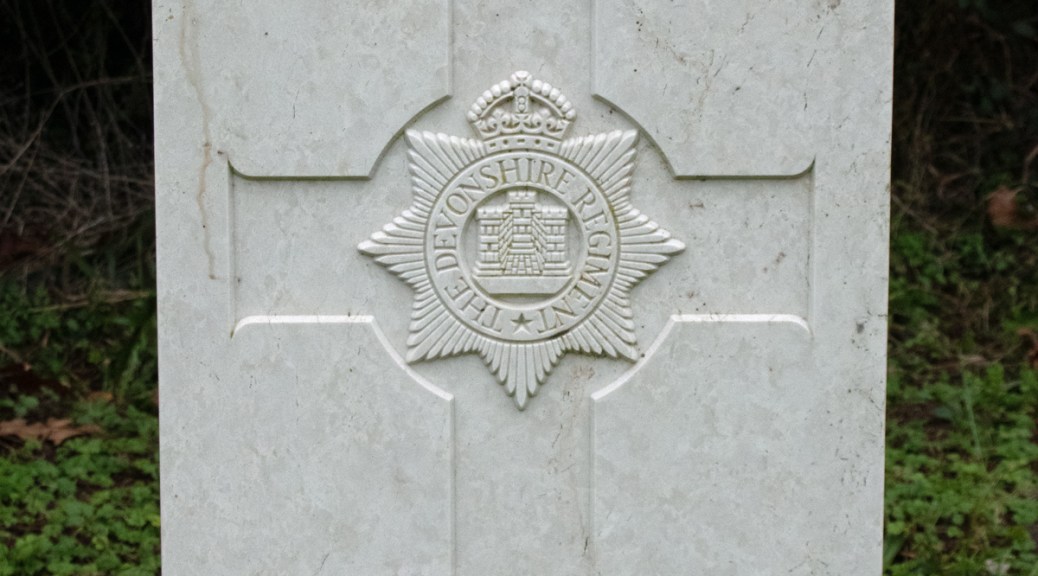
At some point William transferred across to the Devonshire Regiment, but there is little tangible evidence to document when and where he served. What is clear is that Private Lamacraft survived the war, and had returned to Newton Abbot when he was demobbed.

Sadly, William Morrish Lamacraft was not to live a long life after the Armistice was declared. He passed away on 6th June 1919, aged just 31 years old; the cause of death lost to time. He was laid to rest in Newton Abbot Cemetery.