Edwin Huxtable was born in the summer of 1863, the youngest of eight children to William and Sarah. William was a tailor and Sarah a dressmaker, and they raised their family in their home village of South Molton, Devon.
William’s two younger sons followed him into tailoring, although the family disappears from records for more than 20 years. William passed away in 1889, and a later newspaper report suggests that Edwin enlisted in the army in some capacity, serving in South Africa during the Second Boer War.
Back in Britain, Edwin married Hester Cole in 1904. She was a dressmaker from South Molton as well: the couple set up home and their business at 10 Broad Street in the village. They had two children: Sidney was born in 1905, and Herbert in 1906, although their younger boy passed away when just a babe-in-arms.
When war broke out, Edwin was called back into service. Details of his military career have been lost, but it is clear from what remains that he enlisted in the Devonshire Regiment, and served in the 11th (Reserve) Battalion. His previous time in the army was taken into account, and he was given the rank of Serjeant.
It is unclear whether Edwin saw any time overseas as part of the First World War, but his age and health were against him. Suffering from pneumonia, he was admitted to a hospital in Torquay. The lung condition got the better of him, however, and he passed away on 14th April 1915. He was 52 years of age.
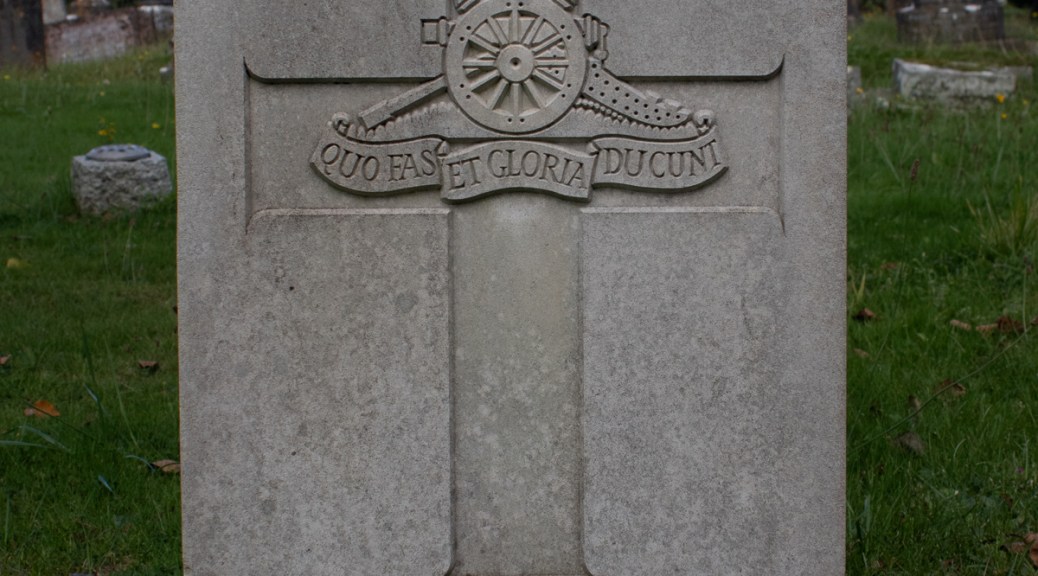
Taken back to South Molton for burial, Edwin Huxtable was laid to rest in the village’s cemetery.
The 1921 census showed that Hestor was keeping up the family business. She was living in East Street, South Molton, and listed as a dressmaker and employer.
Thomas Henry Barnes was born on 19th September 1878 in the Devon village of Blackawton. One of four children, his parents were Thomas and Thirza Barnes. Thomas Sr was a farmworker who passed away in 1890: the following year’s census found Thirza and her three younger children living in Silver Street, Buckfastleigh, Devon.
Keen to earn enough money to support his mother, Thomas found work on a farm. He sought a career, however, and, on 11th March 1896, he enlisted in the Royal Navy. Six months short of the age to formally join up, he was given the rank of Boy 2nd Class, and was sent to the training ship HMS Northampton. He spent those six months wisely, however, rising to Boy 2st Class in June and was given the rank of Ordinary Seaman when he came of age in September.
By this point, Thomas had been moved to HMS Vivid, the Royal Naval Dockyard in Devonport. His service records show that he was 5ft 5.5ins (1.66m) tall, with brown hair, blue eyes and a fair complexion. He was also noted as having a tattoo of an anchor on his right arm.
Over the next few weeks, Ordinary Seaman Barnes moved from Vivid to HMS Victory, the Navy’s dockyard in Portsmouth, Hampshire, and back again. On 13th January 1897 he was given his first formal posting, on board the cruiser HMS Bellona, and from here his naval career flourished.
Thomas’ initial contract of service was for twelve years, and during this time he proved a committed and determined young man. During the term of his enlistment, he served on six ships, returning to Devonport between voyage. He did not rest on his laurels, either, and worked his way through the ranks. In August 1898 he was promoted to Able Seaman, and in May 1902 he made Leading Seaman.
Away from the sea, love was blossoming for Thomas. In January 1903 he married Alice Percy. The daughter of a paper mill fitter, she would spend her married life with her parents, while her husband was away at sea.
Leading Seaman Barnes’ career continued its upward trajectory: in April 1904 he was promoted again, this time to Petty Officer 2nd Class. When his contract came to an end in September 1908, it was inevitable that he would renew it. His service records show that, at 30 years of age, he was now 5ft 8ins (1.73m) tall.
In February 1909, Thomas was promoted to Petty Officer 1st Class: at this point he was serving on his ninth ship, HMS Ramillies. With his next move, to the armoured cruiser HMS Suffolk, came another change in rank. The now Ship’s Corporal 1st Class Barnes’ career was doing well, and his annual reviews confirmed this, regularly highlighting a character that was very good.
By August 1915, Thomas had spent nearly two years aboard the battleship HMS Temeraire. She would go on to play a role in the Battle of Jutland, but Ship’s Corporal Barnes would not be there. Disembarked to HMS Vivid on 13th August, he was subsequently admitted to the Royal Naval Hospital in Plymouth, suffering from a cerebral thrombosis. This would prove fatal: he died on 26th October 1915, at the age of 37 years old.
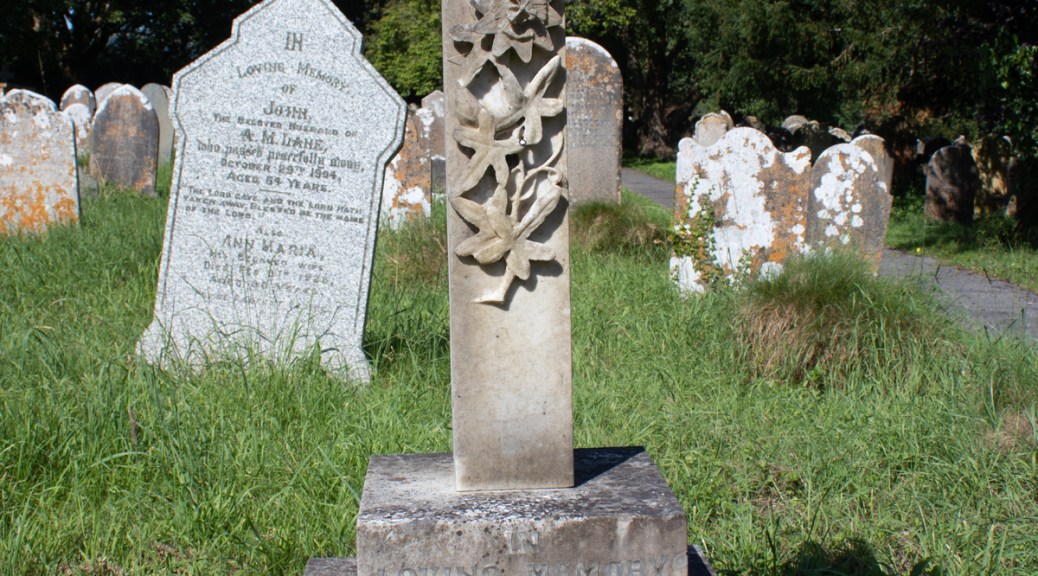
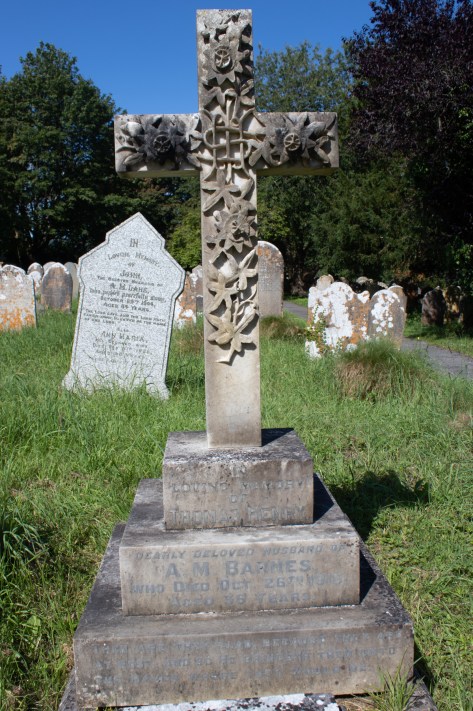
The body of Thomas Henry Barnes was taken back to Buckfastleigh for burial. He was laid to rest in the village’s Holy Trinity Churchyard.
William James Thomas was born in Manordeifi, Pembrokeshire, in 1894. The older to two children his parents were Benjamin and Ellen Thomas. Benjamin was a groom, and, at the time of the 1891 census, the family were living at Cilwendeg Lodge at the entrance to the Welsh estate.
The family moved to Aberporth on the Cardigan coast by the 1901 census. Benjamin had become a farmer, and William, now 17 years of age, was helping out.
Something changed dramatically for William, however, and by 1914, he was living in the West Sussex village of Ferring, some 200 miles (320km) from his birthplace. By this point he was working as a motor driver and, on 25h March, he married Winifred May Knight at St Mary’s Church in Goring-by-Sea.
William stepped up to serve his country when war broke out, enlisting on 18th February 1915. His service records show that he was 5ft 4ins (1.63m) tall, and weighed 138lbs (62.6kg). He was noted as having a mole on his right cheek, and that several teeth were missing. The document confirms his marriage to Winifred, but also gives details of a child, Evelyne Winifred, who had been born in 1905: there is nothing to confirm whether she was his, or was born to Winifred before the couple met.
Private Thomas was assigned to the Army Service Corps Mechanical Transport Division, and sent to nearby Worthing for his training. His time in the army was to be tragically brief, as within a fortnight he had been admitted to the town’s Red Cross Hospital, suffering from cerebrospinal fever.
On 23rd March, William was transferred to Worthing Civil Infections Hospital, but any treatment he was receiving was to prove ineffective. He passed away on 31st March 1915, at the age of 31 years old.
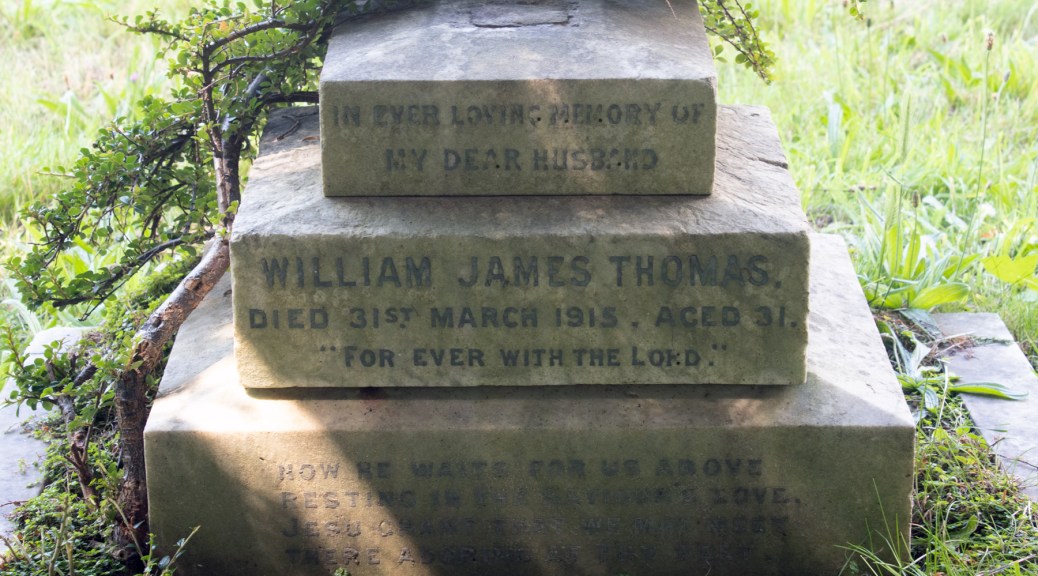
The body of William James Thomas was laid to rest in the graveyard of St Mary’s Church, Goring, where just over a year before he and Winifred had been married.
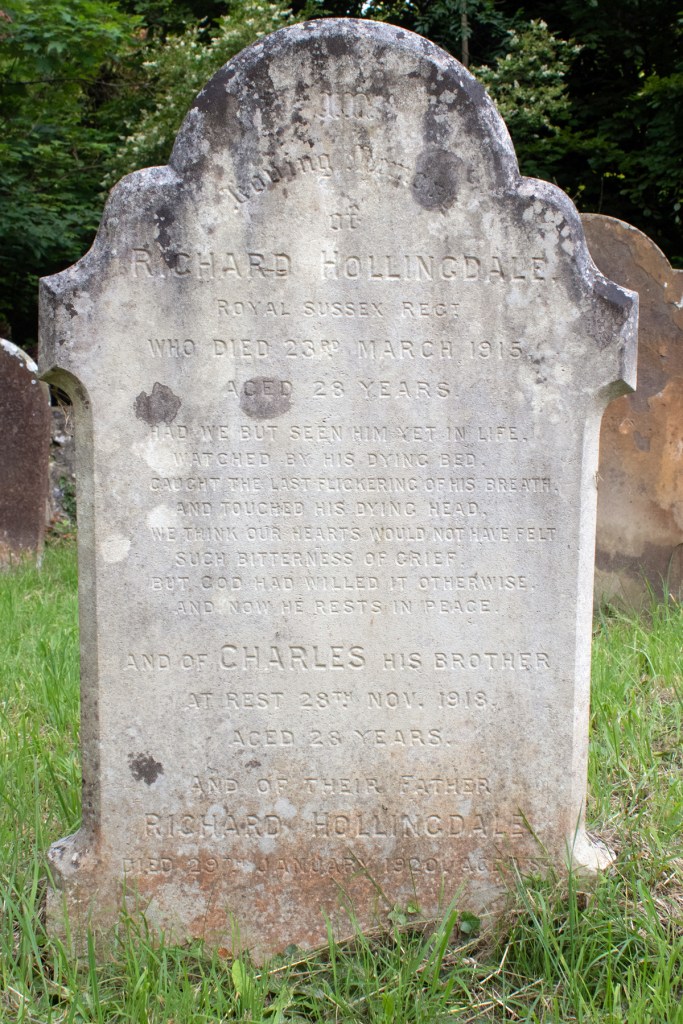
Richard Hollingdale was born at the start of 1887, and was one of nine children to Richard and Elizabeth. Richard Sr was a farm labourer from Lancing, but his namesake son was born in the Sussex village of Washington.
By the time of the 1901 census, the family had moved to Findon, a village to the north of Worthing. Attached to Muntham Farm, they lived in New Barn, a workers’ cottage on the estate. Richard Jr and his brothers all helped out on the farm and, according to the next census return, Richard Sr, now 75 years of age, was a labourer, while the three sons still living at home – William, Richard Jr and Charles – were all waggoners.
When war consumed Europe in the summer of 1914, Richard Jr stepped up to serve his country. Sadly, full details of his service have been lost to time, but it is clear from what remains that he joined up early in the conflict, and certainly no later than October 1914.
Private Hollingdale was attached to the 7th (Service) Battalion of the Royal Sussex Regiment and in the spring of 1915 his unit moved to the Ramillies Barracks in Aldershot, Hampshire. Richard had only been there for a couple of weeks, when he fell ill. He was admitted to the local Isolation Hospital with scarlet fever, and the condition was to prove fatal. He passed away on 23rd March 1915, at the age of 28 years old.
The body of Richard Hollingdale was taken back to Sussex for burial. He was laid to rest in the family plot in St John the Baptist Churchyard, Findon.
George Constable was born in the summer of 1893 in Findon, West Sussex. His parents were Albert and Ruth Constable, and they had seven children: Ruth Jr, Thomas, Albert Jr, William, George, Arthur and Rachel.
There is little concrete information about George’s early life. The 1901 census found the Constable family living at 2 Mill Cottages in Findon, with George’s oldest brother, Thomas, helping his father’s gardening work.
When war came to Europe, George and his older brothers stepped up to play their part. Thomas joined the Dorsetshire Regiment and worked his way to the rank of Lance Corporal. His time in service was to be tragically brief, however. He was killed in France on 26th October 1914, aged 27 years old. He is commemorated on both the Le Touret Memorial, and on the headstone to the family ploy in St John the Baptist Churchyard, Findon.
George also joined the Dorsetshire Regiment and, like his brother, was assigned to the 1st Battalion. During his short time with the regiment – he enlisted no later than October 1914 – he rose through the ranks, and, by the spring of 1915, had been promoted to Serjeant.
Sent to France, George was wounded in April 1915, and medically evacuated to Britain for treatment. He was admitted to the 1st London General Hospital, but his injuries were to prove too severe. He passed away on 5th April 1915 aged just 21.
Albert and Ruth had lost two of their sons to the conflict within six months. While Thomas’ body lay in France, George was brought back to Sussex for burial.
George Constable was buried in the family plot in the graveyard of St John the Baptist Church, Findon.
William Constable was assigned to the Royal Sussex Regiment when he enlisted. He too rose through the ranks, and would take on the role of Serjeant, like his younger brother. His unit, the 2nd Battalion, fought at Loos in the autumn of 1915, and this is where William would be killed. He died on 25th September 1915, aged just 23 years old.
Serjeant Constable is commemorated on the Loos Memorial, while Albert and Ruth, having now lost three sons within a year, added his name to the family headstone.
Albert Constable Jr, was also involved in the conflict. Along with George and Thomas, he had joined the 1st Battalion of the Devonshire Regiment, but unlike his brothers, he survived the horrors of the Western Front.
By the last months of the war, Lance Corporal Constable was caught on in the Battles of the Hindenburg Line, and, tragically, he too was killed. Albert passed away on 15th September 1918, at the age of 29 years old. He was buried in Cologne Southern Cemetery, Germany.
By this point, the face of the family headstone was already full with commemorations to his three brothers, Albert is remembered in lettering around the edge of the grave marker.
Alfred Hurrell was born in the Devon village of Ugborough, in the autumn of 1885. He was the second of eleven children – of which five did not survive childhood – to Agricultural labourer Frank Hurrell and his wife, Hannah.
Soon after Alfred was born, the family moved to the village of Modbury, four miles to the south-west. Frank has found work on Hockenbridge Farm, on the edge of the village and, when he finished his schooling, Alfred also started working there, initially living in.
By the time of the 1911 census, Alfred was back living with his parents, on Galpin Street, Modbury. They shared their home with three of Alfred’s siblings, and his sister Jane’s two children.
When war broke out, Alfred was among the first to enlist. Full details of his military service have been lost, but it is clear from what remains that he had joined up by September 1914. Private Hurrell was attached to the 11th (Reserve) Battalion of the Devonshire Regiment, and seems to have remained in the county for his training.
The only other document relating to Alfred is his entry on the Army Register of Soldiers’ Effects. This confirms that he passed away on 16th February 1915 in Paignton, Devon. He was 29 years of age.
The body of Alfred Hurrell was laid to rest in Paignton Cemetery, not far from where he had breathed his last. It is unclear why he was buried there, rather than being brought back to Modbury.
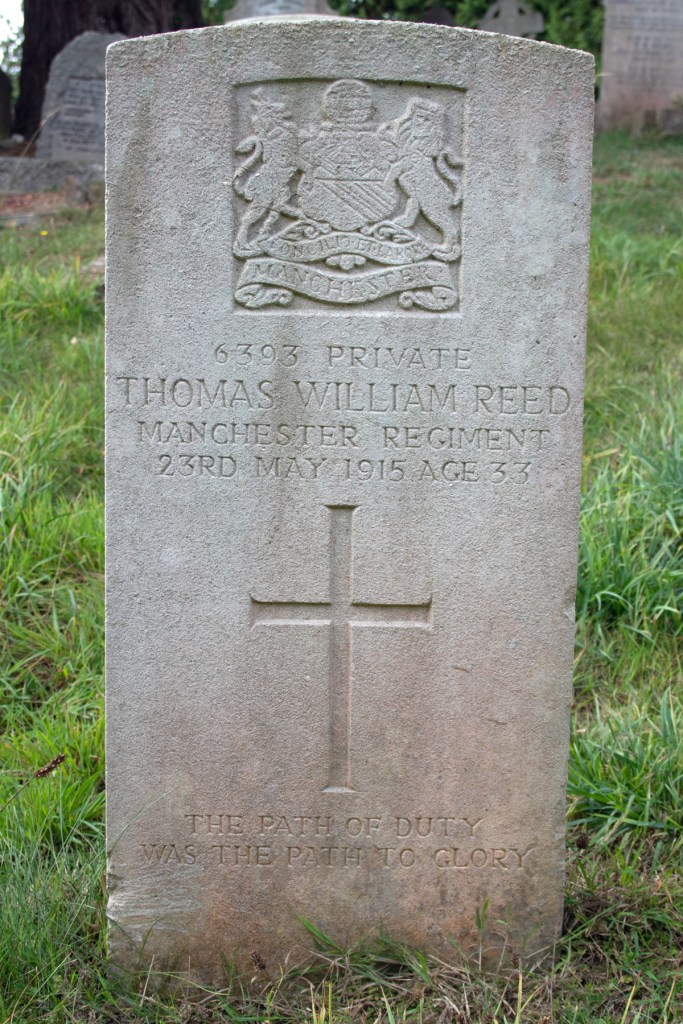
Thomas William Reed was born in 1883 and was one of nine children to George and Catherine. George was a general labour and he and his wife were born in Alton, Hampshire. It was in South London, however, that they raised their family.
Thomas found work as a house painter when he completed his schooling. The 1911 census recorded him as being the only one of his siblings still living in the family home, 16 Valentine Row in Blackfriars.
When war came to Europe, Thomas stepped up to play his part. Full service records have been lost to time, but from what remains it is clear that he had enlisted in the army in the opening months of the conflict. Private Reed was assigned to the Manchester Regiment and, as part of the 2nd Battalion, would have quickly found himself on the Western Front.
Thomas’ time in the army was to be tragically brief. By the spring of 1915 he was back in Britain, hospitalised in Devon with nephritis, or inflamed kidneys. His condition worsened, and he passed away on 23rd May: he was 32 years of age.
Thomas William Reed was laid to rest in Paignton Cemetery, not far from the Devon hospital in which he had breathed his last.
Harold John Spackman was born on 24th May 1897 and was the youngest of two children to Frederick and Eliza Spackman. Frederick was a cowman from Wiltshire, and the family were raised on a farm in Manningford Bohune, near the village of Pewsey.
Harold was educated at Woodborough School, and found work as a nurseryman when he completed his schooling. When war broke out, he was quick to enlist, and joined the 10th (Service) Battalion of the Devonshire Regiment on 17th September 1914.
Private Spackman’s unit was sent to Somerset for training, and it was here, in cramped, busy barracks, that he contracted meningitis. He was admitted to the Red Cross Hospital in Bath, but succumbed to the condition on 12th March 1915. He was just 17 years of age.
Harold John Spackman was laid to rest in Bath’s Locksbrook Cemetery. His was a joint funeral with another Private from his unit, Albert Matthews, who had died on the same day in the same hospital.
In Bath’s sweeping Locksbrook Cemetery, lies the body of Private Albert Edwin Matthews, of the Devonshire Regiment. There is little information available to fully piece together his life, but a range of records give tantalising glimpsed into the world that he inhabited.
The newspaper report of Private Matthew’s passing confirms that he died of pneumonia in the Red Cross Hospital, Lansdown Place, on 12th March 1915. His was a joint funeral with Private Harold Spackman, also of the Devonshire Regiment. He had enlisted at the start of the conflict, and had come from Plymouth, Devon. Frustratingly, the report does not give either of the soldiers’ ages.
Albert’s entry on the British Army Register of Soldiers’ Effects backs up a period of service of at least six months, and gives his unit as the 10th (Service) Battalion. It also provides his father’s name: Edwin Matthews.
Father and son do not seem to appear on any census records, and without a year of birth it is a challenge to track down any additional documentation.
There is a baptism record for an Albert Edwin Matthews, son of Edwin, from 28th September 1881, but this was in Sandown, on the Isle of Wight. While a connection is possible, there is no definitive link between the two men and Devon. (There is a 1911 census return for this Albert, but he is married with three children by this point and, as the military record gives Edwin Matthews as the sole beneficiary, it is unlikely that the two Alberts are one and the same.)
Albert’s life is destined to remain lost to time, therefore, one of the many mysteries in Locksbrook Cemetery.
Thomas Fidler was born on 15th May 1881 in Newbury, Berkshire and was the fourth of eight children to Charles and Sarah. Charles was a groom, who travelled where the work was, and, by the time of the 1901, the family has relocated to Whitchurch in Hampshire.
When he finished his schooling, Thomas found work as a dairyman. However, he had always had his sights on bigger and better things, and, having been a volunteer for the local militia, he was keen to become a full soldier. Things did not go immediately to plan though, and he was initially turned down because he was under height – he was just 5ft 3ins (1.6m) tall when he turned 18.
But Thomas was persistent, and, on 27th June 1898, he was formally enrolled in the Hampshire Regiment. Along with his height, his service records confirm other details about the young man he had become. The document show that he weighed 124lbs (56.2kg), and that he had brown hair, brown eyes and a fresh complexion. The records advise that he was considered fit for duty, but also note that he was given special authority to enlist, presumably to bypass the concerns about his height.
Private Thomas Fidler would go on to build up quite a military career for himself. He spent nearly two years on home soil, before his unit was shipped out to South Africa. During his time in the colony, he served in a number of the campaigns, and was awarded with the Queen’s South Africa medal, including clasps for Cape Colony, Orange Free State and Transvaal, and the King’s South Africa Medal 1901-1902.
After more than two years spent overseas, Thomas’ unit returned to Britain. He would remain on home soil until 1903, extending his service beyond the five compulsory years, and choosing to remain on active duty, rather than being stepped down to reserve status. In September of that year, his unit was on the move again, and he was transferred to Malta.
It would not be until September 1905 that Private Fidler saw home soil again. He was formally stood down from duty the following June and assigned to the Army Reserve. Interestingly, his transfer papers recorded that his conduct was indifferent, disobedient… inclined to drink.
Thomas’ attitude over the years was evidenced by his entries in the Regimental Defaulter Book. He was disciplined no fewer than twelve times during his military career. His offences included being absent from parade and using insubordinate language. While stationed in Malta, he was punished for being drunk four times. Over the years, Private Fidler spent 125 days confined to barracks, and was fined a total of £1 2s 6d for his crimes.
When he was not confined to barracks, Private Fidler would likely be found in a sick bay. Between January 1901 and September 1905, he spent 342 days in hospital with conditions ranging from fevers, psoriasis, scabies and gonorrhoea.
On 22nd March 1905, while serving in Malta, Thomas was admitted to hospital having suffered a fractured jaw following a scuffle. The cause of the injury is recorded in detail in an eleven-page report, which outlined that Private Fidler had been out in Valetta, and ended up quite drunk. He was approached by a couple of military police officers, and became abusive towards them. While trying to take off his boots, a private from another regiment, who was also drunk, came along and punched him in the face, fracturing his jaw. Both men were arrested and taken back to barracks. The investigation in to the incident found that, while Private Fidler was off duty at the time, he was to blame for the altercation.
In June 1906, Thomas returned to civvy street, and to his former job as a dairyman. On 5th February 1907, he married Tryphena Snook, who was the daughter of his employer. The couple had had a son the previous year, and would go on to have three more children in the next few years.
The 1911 census found the young family living in Sparsholt, Hampshire, the household being made up of Thomas, Tryphena and their older two children, Tryphena’s parents, William and Emma, and a boarder, William Clark, who was a carter on the farm.
By the summer of 1914, Thomas had been formally stood down from the army, his contract coming to an end on 26th June. A storm was brewing over the Channel, however, and he would soon be called upon to play his part once more.
Details of Thomas’ re-enlistment into the army have been lost to time. It is likely that he was called upon quite quickly. He was assigned to the South Wales Borderers, and, with the experience he had under his belt, was given the rank of Lance Corporal.
Thomas’ unit – the 4th (Service) Battalion – was initially sent to France, and he arrived there early in July 1915. Within a matter of weeks, however, the battalion moved on to the Eastern Mediterranean, ending up at Gallipoli.
Lance Corporal Fidler’s time in on the peninsula would have been fraught with danger. In the autumn of 1915, he was badly injured and was medically evacuated to Britain for treatment. Admitted to hospital in Devon, his wounds were to prove too severe, and he passed away on 5th November, at the age of 34.
The funeral rook place at Paignton… of Lance-Corpl. Thos. Fidler, of the 4th South Wales Borderers, who died at Oldway Hospital on Friday as a result of wounds sustained at Gallipoli. The widow and other mourners followed, and the Matron of the Hospital (Miss Blackmore) was among those present. Wounded convalescents from Oldway and a Company of the 7th Devons, under Capt. Brearley, attended, and the Devons provided a firing party.
[Exeter and Plymouth Gazette – Tuesday 09 November 1915]
Thomas Fidler was laid to rest in Paignton Cemetery.