Frederick Albert Carder was born on 2nd March 1893 in Dartmouth, Devon. The youngest of ten children, his parents were shipwright Samuel Carder and his wife, Julia. Frederick lost both of his parents in 1909, when he was just 14 years of age. He was taken in by his older brother, Ernest – who was better known as James – and his family and, by the time of the 1911 census was working as a porter for the local Co-operative Stores.
War came to Europe in the summer of 1914, and, two years later, Frederick stepped up to play his part. He enlisted in the Royal Navy on 4th July 1916, and was given the rank of Stoker 2nd Class. He was sent to HMS Victory – the Royal Naval Dockyard in Portsmouth, Hampshire – for his initial training.
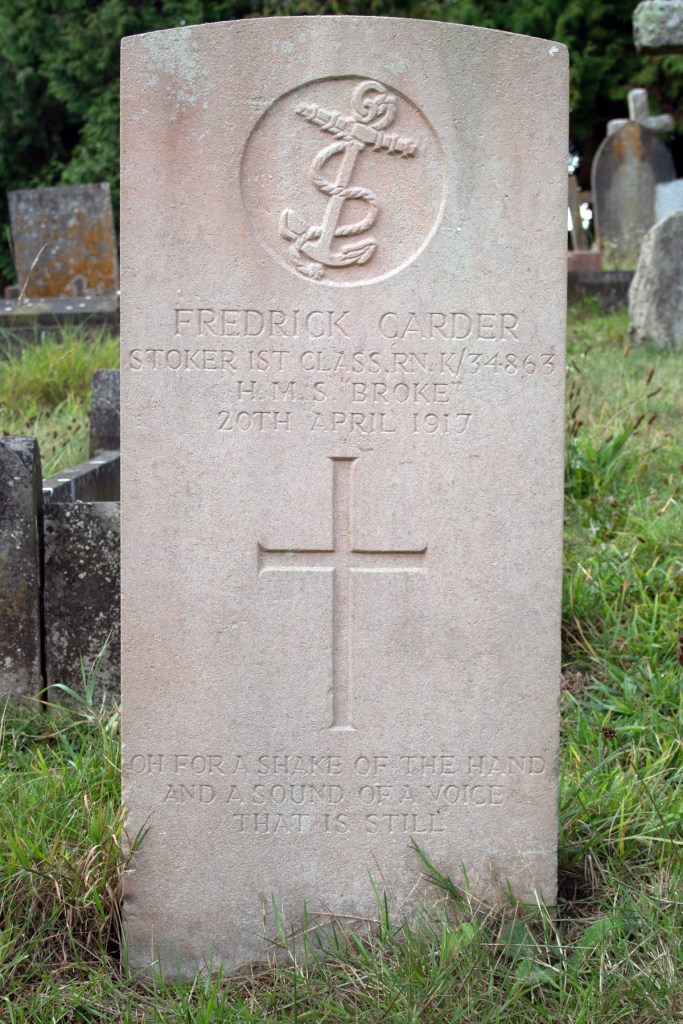
By the end of August, Stoker Carder was assigned to HMS Broke, a destroyer that formed part of the Dover Patrol, monitoring the waters off the Kent coast. He remained attached to the patrol and was promoted to Stoker 1st Class in January 1917.
On 20th April 1917, the Broke and another ship, HMS Swift, took on six German torpedo boats who were attacking the Dover Barrage – a network of nets and mines in the English Channel, designed to stop U-boats. The Broke rammed the torpedo boat SMS G42, and the two ships became locked together. Enemy sailors boarded the Broke, and hand-to-hand combat ensued. Eventually Broke managed to break free, and the G42 sank.
HMS Broke was towed back to shore, but 21 of her crew had died in the Battle of Dover Strait, including Stoker 1st Class Carder. He was 23 years of age.
The body of Frederick Albert Carder was taken back to Devon for burial. He was laid to rest in Paignton Cemetery, close to his brother, James, who had died in the summer of 1916. Read more about him by clicking here.
Ernest James Triggs Carder was born early in 1880, the third of ten children to Samuel and Julia. Samuel was a shipwright from Devon and it was in Dartmouth that the family were born and raised.
Ernest – who went by his second name, James – found employment as a groom when he finished his schooling. In the spring of 1907, he married Elizabeth Seward. The couple wed in St Saviour’s Church, Dartmouth, setting up home in Gospel Lane.
James and Elizabeth went on to have three children – Samuel, Edward and Betty. The 1911 census found James working as a grocer’s waggoner, with his youngest brother, Frederick, living with them.
The times were trying for James and Elizabeth: both Samuel and Julia died in 1909; and Edward, their middle child, passed away in September 1911 at the age of just seven months. In the summer of 1915, Betty wad born, and the following April. James was called up to serve his King and Country.
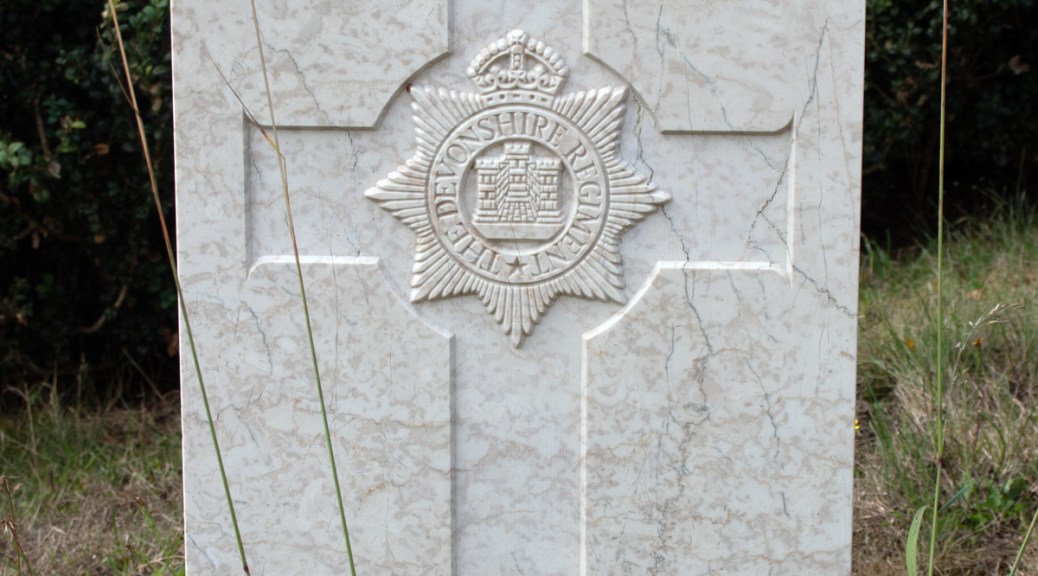
On 14th June 1916, Private Carder was assigned to the Devonshire Regiment, and attached to the 3rd (Reserve) Battalion. The unit would remain on home soil throughout the conflict, but James was not to be part of it for long.
On 29th July 1916, Private Carder was found dead in a lavatory at the Granby Barracks in Devonport, with a razor near him. He had been complaining of eczema on his legs for a while, which made it difficult for him to sleep and had the knock-on effect of causing him headaches. His commanding officer, Corporal Stonelake, said that James “was not too quick, but was a man of good character and tried to do his best… each time he complained of his head he declined to see the doctor.” [Western Morning News: Tuesday 1st August 1916]
Private Carder had willingly enlisted, and appeared not to have any qualms about serving in the army. At the inquest following his death, the jury returned a verdict of taking his life while of unsound mind. He was 36 years of age.
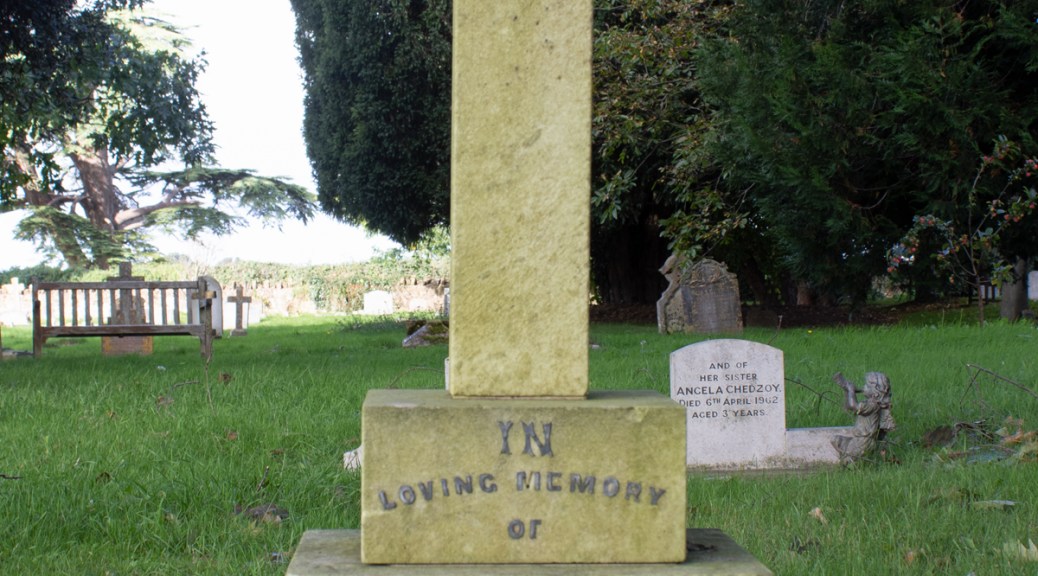
Ernest James Triggs Carder was taken back to Paignton, where Elizabeth and the children were living. He was laid to rest in the town’s cemetery, having found peace at last.
Less than a year later, James’ youngest brother, Frederick, also died. Read more of his life here.
William Pollard was born at the end of 1887, the youngest of seven children to John and Alice Pollard. Agricultural labourer John hailed from Hinton Charterhouse in Somerset, while his wife was from Southampton, Hampshire. The family were living in the village of Buckler’s Hard when William was born, but moved back to Somerset when he was just a toddler.
As with most of his siblings, William followed in his father’s footsteps when he completed his schooling. By the time of the 1911 census, only he and his older brother Thomas we still living in the family home: the two siblings were working as carters, while their father, now 61 years of age, was a general labourer.
Alice died in the summer of 1911, and would net get to see her youngest boy wed. On 11th April 1914, William married Augusta Loveless, a carpenter’s daughter from Bath. The couple were living in 2 Rossini Cottages, on Hedgemead Road, to the north of the city centre, and would go on to have two children, William Jr and Geoffrey.
When war was declared, William was called upon to play his part. He enlisted in the Somerset Light Infantry on 30th November 1915, but soon transferred over to the 5th (Service) Battalion of the Dorsetshire Regiment. Attached to the 673th Labour Company, while his unit served at Gallipoli and in France, there is no evidence that Private Pollard spent any time overseas.
William’s brother Thomas had also been called up. He joined the Somerset Light Infantry, and, as a Private, was attached to the 1st Battalion. His unit fought at the Somme, and Thomas was badly injured. He died of his wounds, and was laid to rest in the Puchevillers British Cemetery. He was 31 years of age.
In fact, William seems to have been dogged by ill health. Full service records have been lost to time, but he was medically discharged from the army on 12th September 1917.
John had died that February, at the age of 68 years old, and was laid to rest next to his wife in St John the Baptist Church, Hinton Charterhouse.
At this point, William’s trail goes cold. He returned to Bath, and spent at least some time in the city’s War Pensions Hospital. His condition warranted an operation, but he died of heart failure following the procedure on 12th December 1920. He was 33 years of age.
William Pollard was laid to rest in Bath’s sweeping Locksbrook Cemetery.
Walter Brett was born in Batheaston, Somerset, on 12th July 1896. The fourth of seven children, he was the second son of George and Louisa Brett. George was a groom and coachman from Norfolk, and his work took the family around the country. Louisa had been born in Staffordshire, their oldest child, daughter Florence, had been born in South Wales. By 1893, the family had settled in Somerset, but the next census, taken in 1901, found them in Branksome, Dorset.
When Walter finished his schooling, he found work as an errand boy for a hairdresser. By now the Bretts had moved back to Somerset, where George – and his widowed father, John – were working as coachmen for a Mr Page. There were seven in the household – George, Louisa, Walter and three of his siblings, and George Sr – and the family were living at 1 Nelson Terrace, on Walcot Street, Bath, in a six-roomed cottage.
Walter sought bigger and better things for himself. His older brother, Frederick, had left home, and was working as a grocer’s assistant in Brislington – now a suburb of Bristol – and he too wanted a career. On 23rd January 1912, he enlisted in the Royal Navy. As he was only 15 year of age, he was given the rank of Boy 2nd Class, and was sent to HMS Impregnable, a training ship based in Devonport, Devon, for his induction.
Obviously showing signs of ability and commitment to the role, Walter was promoted to Boy 1st Class just seven months later. His first assignment was on board the battleship HMS Cornwallis, and he spent the remainder of 1912 serving with her.
After a brief period back in Devonport – this time at HMS Vivid – and six weeks aboard HMS Lancaster, Boy 1st Class Brett was assigned to the ship that would become his home for the next three years. HMS Lion was a battlecruiser, and she was to serve as the flagship of her class of ships during the First World War.
Walter came of age while serving on Lion, and was given the rank of Ordinary Seaman on his eighteenth birthday. His service records show that he was 5ft 6ins (1.68m) tall, with brown hair, blue eyes and a fresh complexion. He was also noted as having a mole on his stomach.
Walter was promoted to Able Seaman in the summer of 1915, and remained on board HMS Lion until the end of April the following year. His ship had been involved in a number of skirmishes by this point, including the Battle of Heligoland Bight, the defence of the raid on Scarborough and the Battle of Dogger Bank. In June 1916, she would be caught up in the Battle of Jutland, but Able Seaman Brett was back on terra firma by this point, and was billeted in Devonport.
On 1st August 1916, Walter was given a new posting, when he was assigned to the dreadnought battleship HMS Ajax. Acting as support to the Norwegian convoys in the North Sea, he was to remain on board until the closing weeks of the war.
Walter’s brother Frederick, meanwhile, was also caught up in the conflict. He had enlisted in the Gloucestershire Regiment, and was assigned to the 12th Battalion. By the spring of 1917, his unit was based in Arras, and was Private Brett was heavily involved. Following an attack on 8th May, he was declared missing, presumed dead. He was 24 years of age, and is commemorated on the Arras memorial.
Back at sea, in October 1918, Able Seaman Walter Brett became unwell, contracting a combination of influenza and pneumonia. He was transferred to the Hospital Ship Garth Castle, but the conditions were to get the better of him. He passed away on 27th October, at the age of 22 years old.
Walter Brett was brought back to Somerset for burial. His parents had lost both of their sons, but were able to lay their youngest to rest in Locksbrook Cemetery, Bath.
Ernest Roye Hewett was born on 18th April 1898 and was the third of twelve children to Alfred and Ada. Alfred was a coachman and groom and, while both he and Ada were born in Cornwall, it was in Budleigh Salterton, Devon, that the family were born and raised.
When he finished his schooling, Ernest found work as a butcher’s boy, but when sought bigger and better things. His oldest brother, Ralph, had enlisted in the army by the time of the 1911 census and, by that October, his next oldest brother, Leslie, had enlisted in the Royal Navy. Ernest felt a career in the military was his destiny and, on 12th September 1913, he also joined the navy.
As he was under age at this point, he was given the rank of Boy 2nd Class, and sent to HMS Impregnable, the training establishment in Devonport, for his induction. His service records show that he was 5ft 2.5ins (1.59m) tall, with brown hair, hazel eyes and a fresh complexion.
Ernest spent nine months training, moving from Impregnable to HMS Powerful, and gaining a promotion to Boy 1st Class in the process. In June 1914, he was assigned to the cruiser HMS Edgar, remaining on board for six months, by which point war had broken out.
On 18th December 1914, Lance Corporal Ralph Hewett was killed in action, aged just 20 years old. Attached to the 2nd Battalion of the Devonshire Regiment, he was caught in fighting in Northern France, and is commemorated on the Le Touret Memorial.
Ernest, by this point, had been assigned to another ship, the armed merchant cruiser HMS Viknor. Patrolling the seas off Scotland, towards the end of the month, she was tasked with locating and detaining the Norwegian ship Bergensfjord, on board which was a suspected German spy.
The vessel was located and escorted to Kirkwall in the Orkneys, and the suspect and a number of other prisoners, were taken on board the Viknor to be transported to Liverpool. The ship and crew were never to reach their destination. On 13th January 1915, she sank in heavy seas off the Irish Coast: no distress signal was made and all hands were lost.
BODY WASHED ASHORE – Another body has been washed ashore at Pallntoy Port, about six miles from Ballycastle. The body was that of a man of about 5ft 10in. in height. He was dressed in a blue jacket, and wore a service blue webbed belt, on which was the name E. F. Hewett. In the pocket of the trousers was a boatswain’s whistle.
Freeman’s Journal: 24th February 1915
Already in mourning for Ralph, Alfred and Ada were unable to bring 16-year-old Ernest Roye Hewett back home. Instead, he was laid to rest in Ballintoy parish church, County Antrim.
The heartbreak was to continue for the Hewett family. Leslie’s career had gone from strength to strength and, by the time of his older brother’s death, he had been promoted to Able Seaman. In the summer of 1915, he was assigned to the cruiser HMS Europa, remaining aboard for the next year as it patrolled the Mediterranean. In July 1916 he fell ill, having contracted malaria. This was to prove his undoing: he passed away from the condition on 21st July, at 20 years old.
Able Seaman Leslie Hewett was laid to rest in the Mikra British Cemetery in Greece. His parents had now lost their three oldest sons, and had no way to reach their final resting places.
Charles Walter Lavis was born in Iowa, USA, on 2nd April 1888. The second of eleven children, his parents were James and Martha Lavis. The only census record Charles appears from – the return from 1901 – shows that James was an agricultural labourer from Long Sutton in Somerset. The family’s move to America seemed not to have lasted for long – Charles’ immediate siblings – Mabel, who was two years older, and George who was two years younger – were both born in Long Sutton.
Charles was drawn to a life of adventure and, on 11th April 1906, he enlisted in the Royal Navy. His service records confirm that he was 5ft 5ins (1,65m) tall, with brown hair grey eyes and a fresh complexion. As a Stoker 2nd Class, he was initially sent to the training ship HMS Nelson, before moving to what would become his shore base, HMS Victory, the Royal Naval Dockyard in Portsmouth, Hampshire.
Over the next year, Charles serves on HMS Hecla and HMS King Edward VII, where, on 17th May 1907, he was promoted to Stoker 1st Class. He remained on the King Edward VII for more than four years, before returning to Portsmouth in August 1911.
Back on shore, Stoker 1st Class Lavis was promoted to Leading Stoker, and spent the next nine months training for the role at HMS Fisgard, also in Portsmouth. He spent six months on the battleship HMS Revenge, before moving again to another battleship, HMS Britannia.
Charles spent two years on the Britannia, and it was while assigned to her that he got married. He wed Bessie Patten on 31st May 1914 in Martock, Somerset: the couple would go on to have a daughter, Eileen, who was born the following April.
It was while Charles was serving on HMS Britannia that was broke out. In November 1914, he returned to Victory for further training and, in the spring of 1915, he was promoted to Stoker Petty Officer.
Over the next three years, Charles served on three more vessels, before finally returning to Portsmouth in April 1918. The reason for his return was because of his health, and he was soon admitted to the Royal Naval Hospital in Haslar, Gosport, suffering from tuberculosis of the neck. The condition necessitated an operation, but Stoker Petty Office Lavis was not to survive the procedure. He suffered from heart failure, and died on 2nd May 1918. He had not long turned 30 years of age.
Charles Walter Lavis was taken back to Somerset for burial. He was laid to rest in the quiet graveyard of All Saints’ Church in Martock.
Records suggest that the Lavis family could not settle. Passenger lists from March 1912, show James and Martha travelling with nine children to Portland, Maine, before moving on to Huron in Ontario. James was still recorded as being a farm labourer, so it seems that opportunities for the family were better in North America than in Britain.
When war broke out, citizens of the Commonwealth were called upon to play their part and, despite being under age, Charles’ younger brother Arthur, stepped up to serve. Details of his time in the army are scarce, but he was assigned to the 14th Battalion of the Canadian Infantry. His troop set sail for Britain in October 1914: Arthur was just 14 years old at this point, and had lied when he joined up, giving his date of birth as 20th May 1897.
Private Arthur Lavis was in France by August 1916, taking up position on the Front Line at Coucelette. They met heavy troops, even before a full offensive got underway on 16th September. Ninety-two soldiers from the 14th Battalion were killed during the attack, Arthur included. He was just 16 years old, and his remains were never recovered. He is commemorated on the Vimy Memorial in France.
William Daniel Yandell was born in 1884 in Bishops Lydeard, Somerset. The second of four children, his parents were Samuel and Jane Yandell. Samuel was a farm labourer, and this is work that William and his younger brothers, wins Sam and Walter, also went into.
The 1911 census found William living with Walter, who had found employment as a labourer at Cotford Asylum, not far from the village. The brothers also had a boarder, Samuel Chaffey, a carter, who brought in some more money to the household. Samuel Sr and Jane were all that remained in the family home. Samuel Jr had married three years before, and was living in a small cottage with his wife, Rosina, and their two children. The oldest of the Yandell siblings, Alice, had been married for ten years by the time of the census, and was living with her husband and son in Minehead.
Samuel Sr died in the spring of 1914. By the summer, war had been declared, and the three Yandell brother enlisted to serve their king and heir country.
William, by this point, had found work at the Goodlands Coal Yard and volunteered for the local fire brigade. He did not enlist immediately but joined the Royal Fusiliers in the spring of 1916. Attached to the 3rd Battalion, Private Yandell found himself in France that summer.
On 1st October 1916, he was badly wounded in the right arm and shoulder, and was medically evacuated to the 2nd Western General Hospital in Manchester for treatment. This proved to be long-term support, and on 21st January 1917, he underwent an operation on the injury. Private Yandell was not to come round from the surgery: he passed away the following day at the age of 33 years of age.
William Daniel Yandell was brought back to Somerset for burial. He was laid to rest in the peaceful graveyard of St Mary’s Church in his home village of Bishops Lydeard.
The deepest sympathy is felt for [William’s] widowed mother and relatives, as the widow has another son a prisoner of war in Turkey, who was taken with General Townshend’s force at Kut, and no news has been heard since they were taken prisoner. Another son is somewhere in Salonica, from whom no news has been heard for some weeks past.
Taunton Courier and Western Advertiser: Wednesday 31st January 1917
Walter was the son being held in Turkey. He had joined the Somerset Light Infantry as a Private, and was assigned to the 1st/5th Battalion. His troop was caught up in the Siege of Kut in the spring of 1916. He died on 31st May 1916, soon after being taken prisoner, a fact his mother would not be made away of for at least nine months, based on the newspaper report. Private Walter Yandell is commemorated on the Basra Memorial in Iraq.
Sam Jr was the son who was based in Salonika. Full details of his military service are not available, but later records confirm that he survived the war. By the time of the 1939 England and Wales Register, he was living back in Bishops Lydeard with Rosina, and was working as a Mess Orderly at a military camp. Sam died in January 1951, at the age of 63.
Herbert Perry was born in Sampford Brett, Somerset, on 2nd July 1887. One of fifteen children, his parents were Henry and Mary Perry. Henry was a groom and gardener, and the family were raised in a small cottage in the centre of the village.
Herbert and his siblings attended the local Church of England school, but once he finished his education his own trail goes cold. The next records relate to his military service, although they are also a bit scarce.
What is clear is that Herbert enlisted early in the war. He joined the 1st Battalion of the Devonshire Regiment, and was in France as soon as January 1915. Private Perry found himself at Ypres, and it was here, in July, that he was badly injured.
Private Perry was medically evacuated to Britain for treatment, and he was admitted to the 5th Northern General Hospital in Leicester. Sadly, this was to be where he would breathe his last: his wounds were to prove too severe, and he succumbed to them on 1st August 1915. He had not long turned 28 years of age.
Herbert Perry’s body was taken back to Somerset for burial. He was laid to rest in the family plot in the peaceful graveyard of St George’s Church. There he was reunited with his mother, Mary, who had died three years before.
Herbert’s older brother, William, joined the Duke of Cornwall’s Light Infantry when war broke out. Assigned to the 1st Battalion, he rose to the rank of Lance Corporal. William fought at the Somme, and was killed there. He is commemorated at the Thiepval Memorial, and remembered on the family headstone in Sampford Brett.
Harold George Shopland was born in the spring of 1893, the youngest of nine children to George and Mary Shopland. George was a joiner and platelayer for Great Western Railways: he died when Harold was just seven years old, which left Mary to raise the family alone. She did this with the support of the community and Harold’s older siblings.
By the time of the 1911 census, Harold, who was now 17 years of age, was the only one of her children to still be living at home: he was a stone mason’s carter, while Mary was getting by as the housekeeper for the local Wesleyan chapel.
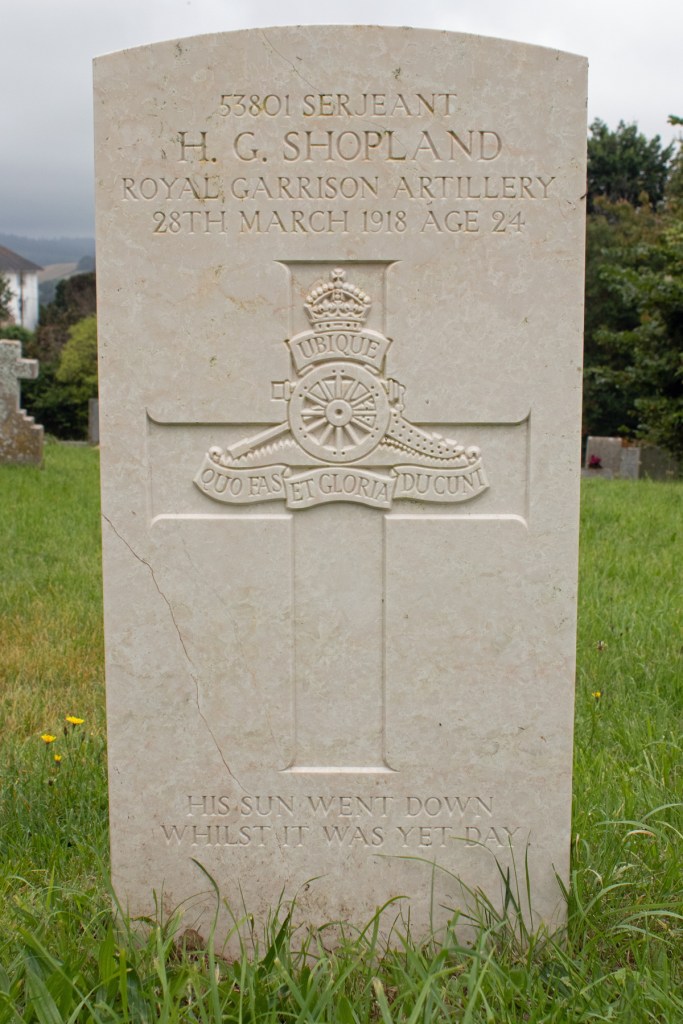
When war broke out, Harold stepped up to play his part. Possibly keen to follow in his oldest brother’s footsteps – Private Walter Shopland had died at Bloemfontein in 1901 – he enlisted on 23rd November 1914. Harold joined the Royal Garrison Artillery as a Private, his service records confirming that he was 5ft 10ins (1.77m) tall, and weighed 165lbs (74.8kg).
Harold spent more than two years on home soil, before being sent to France in July 1917, with a promotion to Serjeant. He remained overseas, but fell ill with tuberculosis that winter, and was medically repatriated the following January. He was admitted to the Queen Mary’s Military Hospital in Whalley, Lancashire, and remained there for the next couple of months.
Harold’s condition meant that he was no longer fit for military duty, and was dismissed from service on 8th March 1918. He remained in hospital, however and his condition worsened. He passed away on 28th March 1918, at the age of 24 years old.
Mary brought Harold George Shopland’s body back to Somerset for burial. He was laid to rest in the peaceful setting of St Andrew’s Churchyard in Old Cleeve, not far from his father’s grave.
Wallace Waterman Parsons was born in the autumn of 1893 and was one of thirteen children. His parents were both Somerset-born, David and Mary Parsons, and it was in a small terraced house in Bampton Street, Minehead, that the family were raised.
David was a chimney sweep and by the time of the 1911 census, eight of the then household of nine people were earning a wage. Six of the Parsons children – ranging in age from 15 to 33 – were living with their parents, working variously as a chair caner, a labourer and a French polisher. Wallace, 17 years old by this point, was employed as a stone worker, presumably alongside his older brother, David, who was a mason.
When war came to European shores, at least two of the Parsons brothers enlisted. While full service records no longer exist, it is clear that Wallace joined the Somerset Light Infantry, and was attached to the 8th (Service) Battalion.
Private Parsons arrived in France on 11th October 1915, and may have been involved in the closing days of the Battle of Loos. Over the next year, he would have been caught up in the fighting at the Somme, but by the autumn of 1916, he had fallen ill and returned to Britain.
Whatever condition Wallace had contracted led to his discharge from the army: his final day in service was 19th December 1916. He was awarded a Silver Star for his service: this confirmed his honourable discharge, and he wore it to show that he had served his country and was not, in effect, a coward for walking the streets of his home town, while other sons, brothers and fathers were fighting for their country.
At this point, Wallace’s trail goes cold. It is likely that he returned home, but his health continued to dog him. He passed away from anaemia on 17th July 1920, at the age of 26 years old.
Wallace Waterman Parsons was laid to rest in the sweeping vista of Minehead Cemetery.
Wallace’s older brother Hubert also served in the Somerset Light Infantry. Attached to the 1st/5th Battalion, he fought in the Middle East and rose to the rank of Corporal. Hubert fell ill with enteritis, dying from the condition on 13th April 1916. He was laid to rest 3,500 miles (5632km) from home, in the Kut War Cemetery, Iraq.








 Death and Service