Tag Archives: family

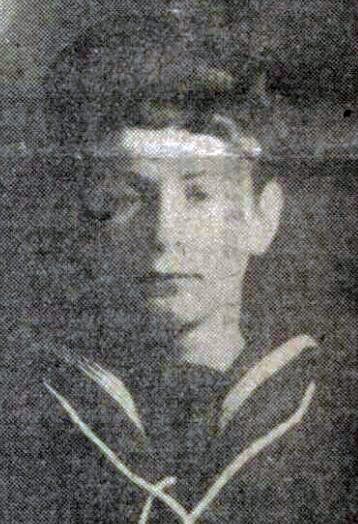
Stoker 1st Class Sidney Goddard

Stoker 1st Class Sidney Goddard

Sidney Goddard was born on 2nd January 1889 in the village of Oldland Common, near Bristol. The youngest of three children, his parents were Albert and Frances Goddard. Albert was a shoemaker, but by the time of the 1911 census, he and Frances had set up home in Saltford, between Bristol and Bath, where he was recorded as being a bootmaker and innkeeper at the village’s Jolly Sailor.

Sidney, by this time, had gone his own way. On 17th January 1917, he enlisted in the Royal Navy as a Stoker 2nd Class. His service records note that he had been working as a collier when he joined up, so it seemed that coal ran through him. The same records note that Sidney had dark brown hair, brown eyes and a fresh complexion. He was also recorded as being was 5ft 5.5ins (1.66m) tall, and having a number of tattoos: a true lovers’ knot on his left wrist, several dots on his left arm. He had three dots on his right arm, a scar on his back and another on the inside of his left shin.

Stoker Goddard was initially sent to HMS Vivid, the Royal Naval Dockyard in Devonport, for training. After a couple of months he was assigned to the cruiser HMS Amphitrite. It is evident that Sidney showed promise, because he was promoted to Stoker 1st Class on 22nd April, just three months after he enlisted. He returned to Devonport in May, but this was only to change assignments: he boarded HMS Blake, another cruiser, a few days later.

Over the next eight years, Stoker 1st Class Goddard served on five further vessels, returning to HMS Vivid in between assignments. On 1st July 1915, he was assigned to the newly commissioned minesweeper HMS Larkspur. In November that year, she came into Merklands Wharf in Glasgow.

[Sidney] met his death while assisting in docking his ship at Glasgow on the afternoon of Wednesday, November 3rd. By some mischance he was thrown into the dock, and in falling his head struck either on the boat’s side or on the dock. It is believed that he was rendered unconscious by the blow, as otherwise, being a good swimmer, he would have been able to keep afloat till help came.

Bath Chronicle and Weekly Gazette: Saturday 13th November 1915

Stoker 1st Class Sidney Goddard was just 26 years of age when he died. His body was brought back to Somerset for burial. He was laid to rest in the peaceful graveyard of St Mary’s Church, Saltford, within walking distance from the Jolly Sailor, where his parents still lived.


Sidney has the dubious honour of being the only member of HMS Larkspur’s crew to die during the First World War. His two older brothers also served in the conflict, Maurice in the Royal Marines and William, who was a Leading Seaman on board HMS Spitfire when he was killed during the Battle of Jutland.


Stoker 1st Class Sidney Goddard
(from britishnewspaperarchive.co.uk)

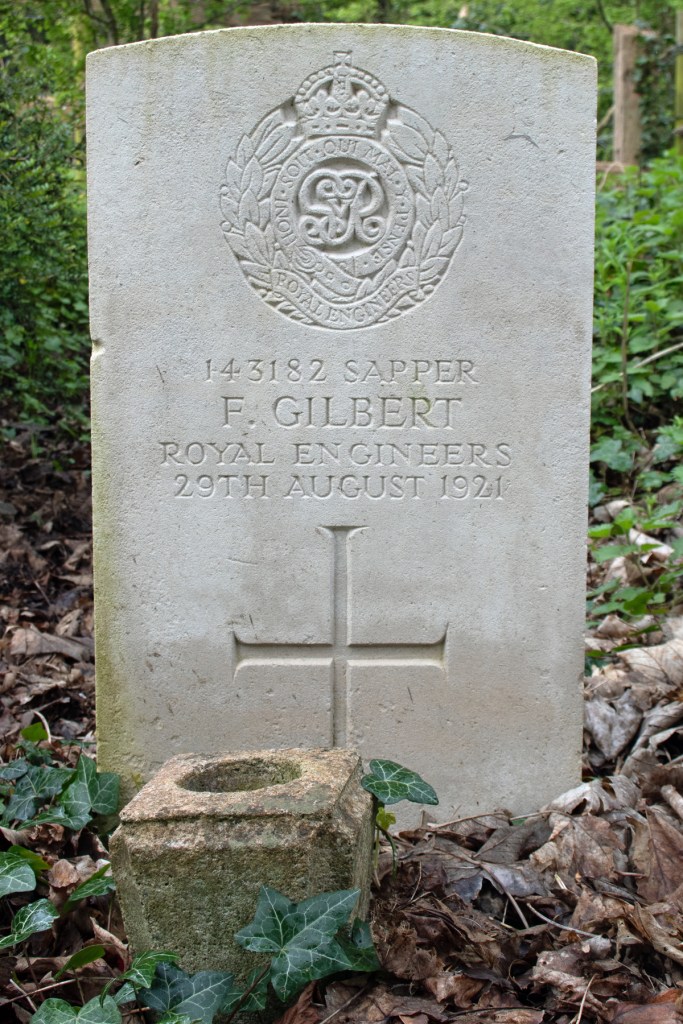
Sapper Frank Gilbert

Sapper Frank Gilbert

On Monday the body of a man was found.. neat Newton Bridge, commonly known as the “Skew” Bridge, having been killed by a passing train… The deceased was Frank Gilbert…

The inquest was held at the Globe Inn, Newton… by the Coroner for North Somerset (Dr S Craddock), who sat without a jury.

The first witness… said the previous morning he was walking along the railway when he saw the body of a man lying on the down side. The head was separated from the body…

PC Cornish said he found four cards in the pockets of the deceased’s coat. Two were National Insurance cards, and there was an unemployment book, the last payment being dated 15-8-21.

Written on the blotting paper of the book was the following:

“It is quite dark. You still take you neck oil, and my children outside waiting. Marry the man who gave you the watch. Don’t forget to have an extra one (Guinness) over my parting. It would be murder if I ever lived with you again.”

The man’s name, “Frank Gilbert, 44 Jubilee Road, Aberdare,” was on some of the cards. Deceased was wearing a discharged soldier’s badge.

Sarah Kate Gilbert, wife of the deceased, who lives at Bristol, said she had not known her husband’s address at Aberdare. They had been living apart since he went into the Army in 1915. She had, however, met him since that date.

Witness added that she saw him on Sunday night, and went on to say that she took out a summons for a maintenance order against him last February at Gloucester. He was then working as a carpenter in Cheltenham.

The Coroner: ‘Have you ever heard him threaten to commit suicide?’

‘Yes, sir.’ She added that he did so on Sunday night when she was with him at the bottom of Park Lane, Bath. “He was always threatening me when we lived together,” she stated, and also said she had a separation order in Bath in 1913. She had a letter from him on Saturday morning in which he said that when she got the letter he would be gone. In the letter was enclosed the ticket for his suit-case, and the key.

[The letter read] “I would never dream of making a home for you as you are worth only the Gloucester man. You have ruined my life, and you will be able to sleep with… for always now. I shall be gone.”

Witness said there was no reason for him to have made any such statements, as she had had nothing to do with any man except him. He was always using threats. When she left him on Sunday night she told him to try and get on and pull himself together.

The Coroner recorded a verdict that deceased committed suicide by placing himself in front of a passing train on the Midland Railway.

Somerset Guardian and Radstock Observer: Friday 2nd September 1921

Little additional concrete information is available for Frank Gilbert’s life. No marriage certificate remains for his wedding to Sarah, nor is there any evidence for the couple in the 1911 census.

Frank’s service records no longer exist in their entirety, although his pension record give hints as to his service. He enlisted in the Royal Engineers as a Sapper on 20th November 1915, although he never saw any action overseas. He was medically discharged because of rheumatism on 11th November 1917. The document confirm he was born in 1883, and lived in Cheltenham after his discharge.

An additional newspaper report of the inquest confirmed that Sarah had two children, and that they lived with her parents in Bath. When asked by the Coroner if she intended to bury her husband’s remains, she replied that “she had no money to do it with.” [Bath Chronicle and Weekly Gazette: Saturday 3rd September 1921]

And so Frank Gilbert was laid to rest in the quiet graveyard of Holy Trinity Church in Newton St Loe, near Bath in Somerset. He was around 38 years of age when he took his life.


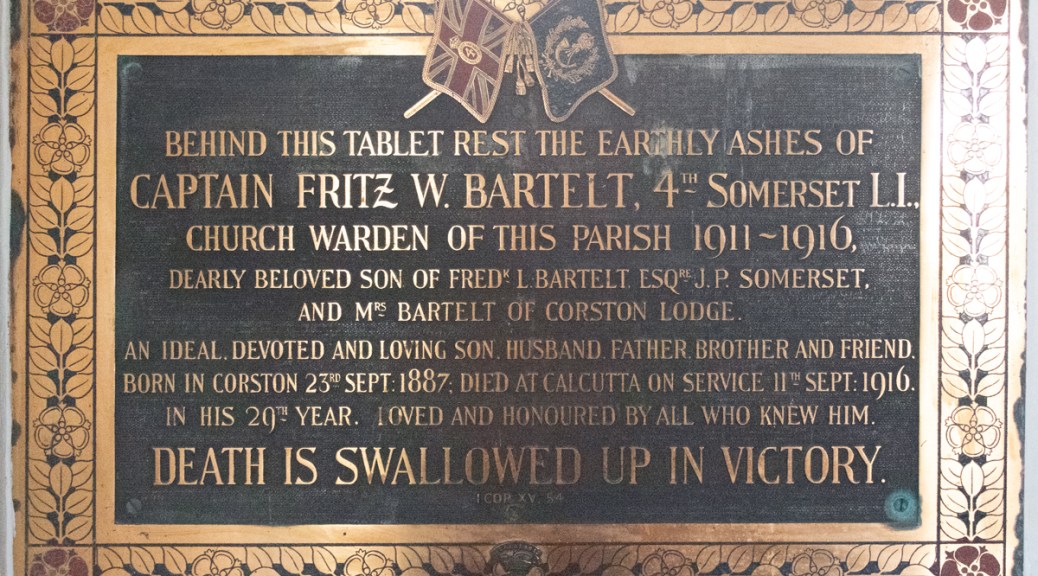
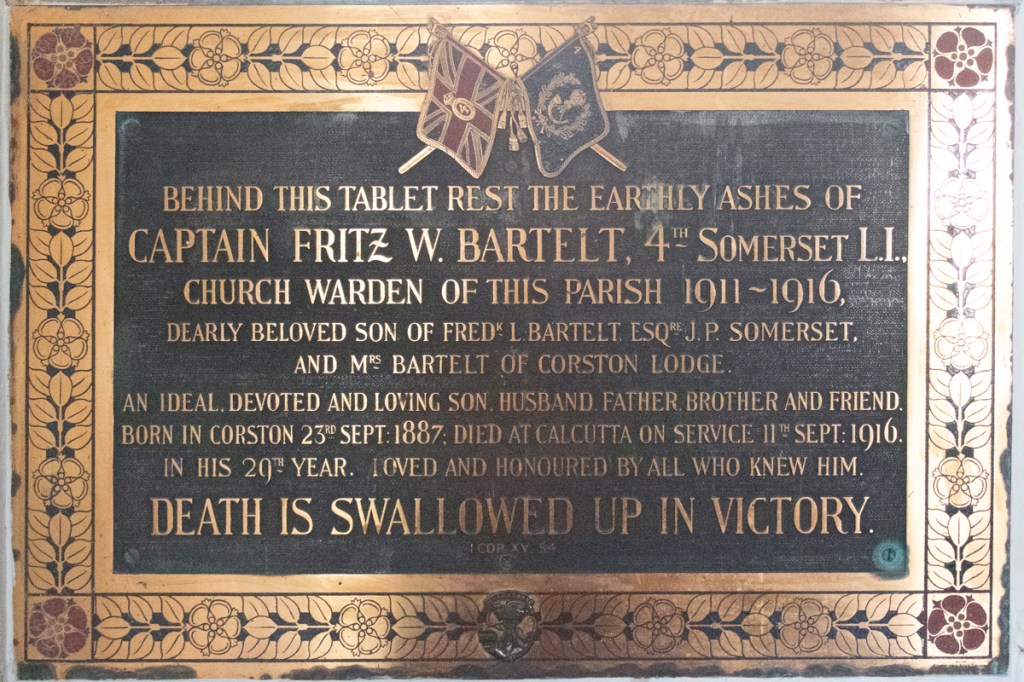
Captain Fritz Bartelt

Captain Fritz Bartelt

Friedrich Wilhelm Bartelt was born on 23rd September 1887 in the Somerset village of Corston. He was the younger of two children to Friedrich and Rosanna Bartelt. Born in Prussia, Friedrich Sr was an import and export merchant of oil and chemicals, who had become a magistrate and chemical manufacturer by the time of the 1901 census.

Friedrich Jr – who was also known as William or Fritz, to avoid confusion with his father – had the upbringing to be expected for the son of a prominent businessman.

He was educated first at St Christopher’s, Bath… and afterwards at Bath College, which he entered in September, 1900, and left in December, 1904. He was prominent in sport and as in the school Rugby Fifteen in 1903 and 1904, and a member of the Cricket Eleven in the summers of 1903 and 1904, and was in the second rowing four in 1904. He subsequently studied chemistry… at Bristol University College, and after a time he became a director in the company of which his father is chairman.

Somerset Guardian and Radstock Observer: Friday 15th September 1916

Fritz enlisted in the Somerset Light Infantry not long after finishing his studies, becoming a Lieutenant in H Company of the Volunteer Battalion, before taking command of G Company. Possibly because other pressures took priority, he stood down from his role in 1911.

On 2nd June 1910, Fritz had married Gertrude Isgar, a gentleman’s daughter from Bathwick, near Bath. The couple went on to have two children, both boys.

[Fritz] was a churchwarden of Corston, and always took a keen interest in all parochial matters, and his loss is very keenly felt in the village. Always kind and genial to all alike, he won the hearts of all with whom he came in contact. His readiness to help, his careful attention to the needs of those around him, and his kindly words and acts will dwell long in the memory of many in Corston.

Somerset Guardian and Radstock Observer: Friday 15th September 1916

When war was declared in 1914, Fritz stepped up to play his part, and was given the commission of Captain in the 2nd/4th Battalion of his old regiment, the Somerset Light Infantry.

On December 1, 1915, he sailed for India, when he took charge of his company, and was afterwards given an important post, being appointed in command of his station at Barrackpore [Barrackpur].

Somerset Guardian and Radstock Observer: Friday 15th September 1916

Captain Bartelt fell ill in the summer of 1916, and was admitted to a hospital in neighbouring Kolkata. While his condition is not reported on, he seemed to have been improving, but his health then took a downward turn, and he passed away while still admitted, on 11th September 1916. He was 28 years of age.

Fritz William Bartelt’s body was cremated in India. His ashes were returned to England, and were interred in All Saints’ Church in his home parish, Corston, where a plaque and a stained glass window are dedicated to his memory.


Captain Fritz Bartelt
(from ancestry.co.uk)

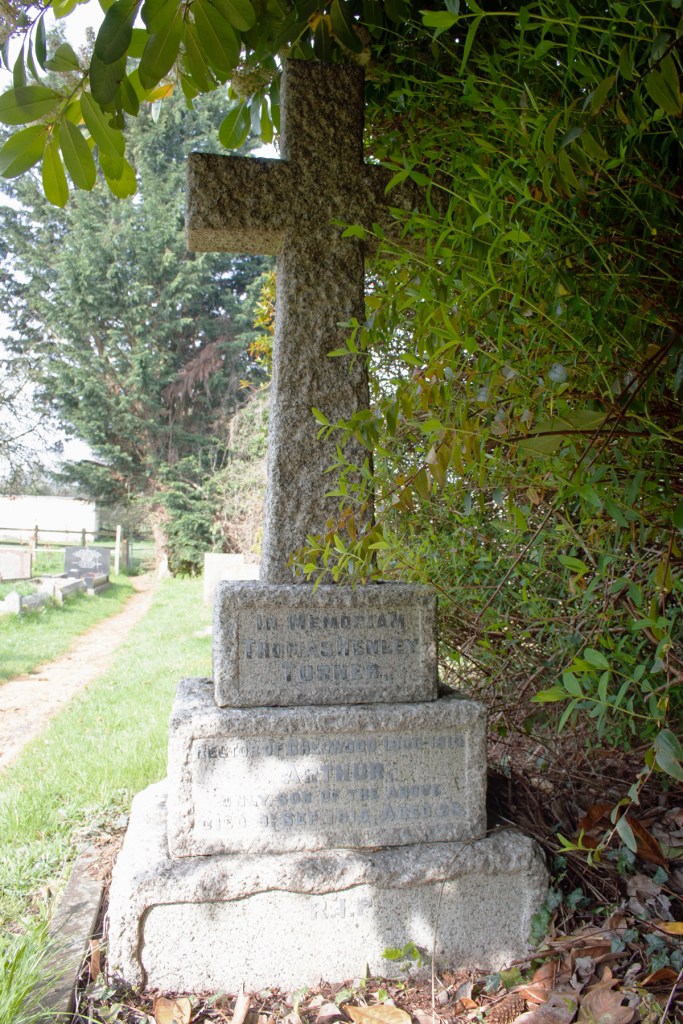
Private Arthur Turner

Private Arthur Turner

Arthur Turner was born in East Brent, Somerset, in the spring of 1892. The younger of two children to Thomas and Lucinda Turner, his older sister had passed away while Lucinda was pregnant with him. Thomas was a vicar for the Church of England, and baptised both children, although the records suggest that he did not lead his daughter’s funeral service.

In 1900, the Turners had moved on to a new parish, setting up home in the rectory in Chelwood, to the south of Bristol. They settled in well, and Thomas remained vicar of St Leonard’s Church there until the summer of 1914, when he passed away after a short illness, at the age of 64.

Conflict had not long darkened Europe by this point, and Arthur felt compelled to play his part. Full details of his military service are not available, but records suggest that he had enlisted in the Gloucestershire Regiment by March 1915.

Assigned to the 12th (Service) Battalion, Private Turner was sent north for training. Billeted in a camp in Wensleydale, North Yorkshire, Arthur would have moved south to Salisbury Plain with his troop, had he not fallen ill. He was admitted to a hospital in Darlington, in neighbouring County Durham, suffering from typhoid. The condition was to get the better of him, and he passed away on 9th September 1915. He was just 23 years of age.

Arthur Turner was brought back to Somerset for burial. He was laid to rest in the family plot in St Leonard’s Churchyard, Chelwood, alongside his father, Thomas.


Whatever her late husband’s calling, Lucinda’s own faith must have been strong. Having lost her eldest child young, she then stood witness to the burials of her husband and son within eighteen months.

The 1921 census recorded Lucinda living with her sister, Charlotte, in Bromley, Kent. Eighteen years later, the 1939 Register found her back in Somerset, where she was living in Clutton, providing support and companionship to Letty Collinson, a retired kindergarten mistress.

Lucinda passed away in March 1942, at the age of 88 years old. She was brought back to Chelwood, and buried alongside her husband and son, the family reunited at last.


Sapper Arthur Coward

Sapper Arthur Coward

Arthur Coward was born in the village of Faulkland, near Radstock, Somerset, on 6th November 1888. One of twelve siblings, of which only five survived childhood, his parents were Henry and Mercy Coward.

Henry was an agricultural labourer, who was 62 years of age when Arthur was born. By the time Arthur had finished his schooling, the family had moved west, to Writhlington, and he took up work in the local colliery.

Arthur was a keen motorcyclist, and when war came to Europe, he enlisted in the Royal Engineers. Working as a dispatch rider, Sapper Coward was assigned to the 34th Division Signal Company, and soon found himself in France.

Arthur returned home for a fortnight’s leave on 22nd October 1918. “He should have returned to France again on the 4th [November] but had a few days previously contracted influenza and this was followed by double pneumonia. Everything possible was done for him, but despite a robust constitution he gradually sank and died peaceful a few hours before the public learnt that the war in which he had taken part was ended.” [Somerset Guardian and Radstock Observer: Friday 15th November 1918]

Sapper Coward had died on 11th November 1918, having celebrated his thirtieth birthday just five days previously. His father, Henry, had lost another child, at the age of 91.

Arthur Coward was laid to rest in the tranquil Writhlington Cemetery.


Private Harry Izzard

Private Harry Izzard

Harry Izzard was born early in 1900, in Chiswick, London and was one of six children to Albert and Florence Izzard. Albert was a groom, but when he died in 1905, Florence, left with a young family to raise, remarried. Things seem not to have gone well between Harry and his stepfather, Richard Warren, and he soon found himself resident of the Church Army Home in London.

In 1914, his schooling complete, he was sent to the village of Clandown in Somerset, where he was employed at the local colliery. He seemed to have flourished in his new life, and he “made friends with all he came in contact with, being of a bright and cheerful disposition and associated with the football club, Wesleyan Young Men’s Bible Class and an ardent temperance worker.” [Somerset Guardian and Radstock Observer: Friday 26th April 1918]

Harry was one of the village’s batch of miners passed for the Army ballot, but seemed eager not to wait to be officially called up. On the day of the ballot, he instead joined up voluntarily, enlisting in the 86th Training Reserve Battalion.

On enlistment he was sent to Clipstone Camp, Notts, where he quickly made friends. He, however, was placed on the sick list… and underwent [an] operation for appendicitis from which operation he never recovered.

Somerset Guardian and Radstock Observer: Friday 26th April 1918

Private Izzard died on 20th April 1918, aged just 19 years old, a life of new promise cut tragically short. His connection with Clandown, and his disconnection from his family in London, was such that his body was brought back to Somerset for burial.

Harry Izzard was laid to rest in the quiet Holy Trinity Churchyard, his sister Mabel being the only family member represented at the service.


Harry’s older brother Herbert Izzard also served in the army. He had found work as a laundry labourer when he left school, and went on to marry Maud Woodage on 14th February 1915. The couple had a daughter, Winifred, later that year.

Herbert enlisted in the London Regiment as a Rifleman, and was assigned to the 17th Battalion, also known as the Poplar and Stepney Rifles. He soon found himself in France and was killed at the Somme on 19th April 1916. He is buried at the Cabaret-Rouge British Cemetery in Souchez.

Tragically, Herbert’s widow died in Oxfordshire in December 1918, leaving young Winifred an orphan at just three years old. She went on to live a long life, dying in 1997, at the age of 81.


Private Alfred Creese

Private Alfred Creese

Alfred Isaac Matthew Creese was born in Wellow, Somerset, in the summer of 1889, and was the youngest child to Jacob and Elizabeth Creese. Jacob was a wagon builder for the Somerset & Dorset Railway, working in the village’s station. When Alfred left school, however, he found employment as a farm labourer.

When war came to Europe, Alfred stepped up to play his part. Sadly, few of his military records remain, and those that do give little information away. He enlisted in the Somerset Light Infantry as a Private and, as a result of his war service, he was awarded the Victory, British and Territorial Force War Medal.

Private Creese survived the conflict, but, according to his headstone, he passed away at the Rock House Hospital in Bath. While this does not appear to be a dedicated hospital, there are a number of locations called Rock House in the Bath area, and it is likely to have been a house used for convalescent purposes. Whatever the location, this is where Private Creese passed away on 18th April 1919, at the age of 29 years old.

Alfred Isaac Matthew Creese was brought back to Wellow for burial. He was laid to rest in the family plot in the village’s peaceful cemetery, to be joined there by his mother in 1930, and his father in 1932, a family reunited once more.


Private William Badman

Private William Badman

William Ewart Badman, whose first names appear interchangeable, was born in the summer of 1888, the older of two children to Francis and Elizabeth Badman. Francis was a builder from Holcombe in Somerset, and this is where the family were born and raised.

Francis died in 1905 and, after William’s sister, Cristabelle moved to Cardiff to take up work as a milliner, he stayed to help support his mother. The 1911 census recorded Elizabeth and William living in Holcombe, where he had found employment as a carpenter.

On 14th November 1915, William married dressmaker Amy Talbot. The couple were living in a terraced house in St Leonard’s Road, Bristol, where he was still finding work as a carpenter.

War had come to Europe by this point, and William was soon to play his part. He enlisted as a Private in the 11th Battalion of the Somerset Light Infantry, in November 1916. Full details of his military service are lost to time, but a local newspaper report give a little information:

Mr Ewart Badman, who… had undergone a slight operation, had passed away.

Somerset Standard: Friday 13th July 1917

No detail of the need for William’s operation are evident, nor does the report expand on his condition any further. His entry in the Army Register of Soldiers’ Effects confirm that he died at the War Hospital in Bath. He passed away on 1st July 1917, at the age of 29 years old.

William Ewart Badman’s body was brought back to Holcombe for burial. He was laid to rest in the graveyard of St Andrew’s Church in the village.


Gunner Alfred Taylor

Gunner Alfred Taylor

Alfred Taylor was born in the summer of 1888 in Crewkerne, Somerset. The second of twelve children, his parents were Henry and Selina Taylor. Henry, who was also known as Harry, was a stone mason, but when Alfred and his siblings left school, they went into the weaving industry, a key employer in the area.

War came to European shores in the summer of 1914, and Alfred was keen to play his part. He had already been a part of the 3rd (Special Reserve) Dorset Regiment, but formally enlisted on 9th December 1915, joining the Royal Garrison Artillery. His service records note that he was 5ft 9ins (1.77m) tall and weighed 149lbs (67.6kg). The document also confirms his next of kin as his father, who, at 48 years old, had also joined up, and was serving in the Royal Engineers in Canterbury, Kent.

Gunner Taylor was not mobilised until September 1916, and served the next eighteen month on home soil. He did his initial training in Hilsea, Portsmouth, before moving around the country. He finally made it to France in February 1918.

During his time in France, Alfred was caught up in a couple of gas attacks, and was evacuated to Britain at the end of August because of the impact on his lungs. Admitted to the 2nd Eastern General Hospital in Brighton, Sussex, his body finally succumbed to pneumonia. He passed away on 25th January 1919, at the age of 30 years old.

The body of Alfred Taylor was brought back to Somerset for burial. He was laid to rest in the Townsend Cemetery of his home town, Crewkerne. “…All the members of Gunner Taylor’s family were present, except his father and his brother George, who [were] with the Army of Occupation in Germany.” [Western Chronicle: Friday 7th February 1919]


Private Albert Lowman

Private Albert Lowman

Albert Lowman was born in Crewkerne, Somerset, in the autumn of 1876. He was the younger of two children to Charles and Sarah Lowman. The 1881 census recorded the family – Charles, Sarah and their boys Charles Jr and Albert – living in Back Lane. Charles Sr was noted as being a labourer, although in the column highlighting any medical conditions (‘deaf-and-dumb’, ‘blind’, ‘imbecile or idiot’, ‘lunatic’), is one word: “afflicted”.

Charles Sr passed away in 1886, when Albert was just 9 years old. The next census, in 1891, found Sarah working as a charwoman, while her youngest, who had left school by this point, was employed as a labourer. Mother and son also had a lodger, Alice, who was a dressmaker. Charles Jr, by this point, had left home, and was living in Penarth, Glamorganshire, where he was apprenticed to his paternal uncle, who was a tailor.

On 28th November 1896, Albert married Sarah Ann Dodge, a weaver’s daughter who was also from Crewkerne. Albert recorded his job as a drayman, although this seems to have been piecemeal employment.

The next census found more permanent work, as he was cited as being a shirt factory packer, while Sarah was employed by the factory as a machinist. Making up the household was young Charles Lowman, the couple’s first son, who was just a month old although sadly, he survived only a couple of months more before dying.

Further tragedy is highlighted by the 1911 census, as it highlights that the couple had had a further child, who had also died when just a babe-in-arms. The Lowmans were now living on Hermitage Street near the centre of the town. Albert was still a shirt packer, and, even though their cottage was small, they had two boarders and a visitor staying. The lodgers brought the couple a little rent, which meant that Sarah no longer had to work.

War was closing in on Europe and, while his full military records are lost to time, it is clear that Albert had stepped up to play his part. He had enlisted by January 1918, and was attached to the Devonshire Regiment, through which he served with the 380 Company of the Labour Corps.

Private Lowman was barracked on Salisbury Plain, Wiltshire, and in July he was admitted to the military hospital in Salisbury itself, suffering from appendicitis. He was operated on, but died following complications. He passed away on 10th July 1918, at the age of 41 years old.

Albert Lowman was brought back to Somerset for burial. He was laid to rest in the cemetery of his home town, Crewkerne.


Private Lowman’s pension ledger record shows the beneficiaries of his army service. The document identified Sarah as his widow, but also Phillis Annie Matilda Denning, the couple’s adopted daughter, who had been born in August 1904.

Sarah was not to outlive her late husband for long, however.

The death occurred with tragic suddenness on Sunday afternoon, January 7th, at her residence in Hermitage-street, of Mrs Sarah Ann Lowman… The deceased, who was of middle age, was about as usual attending to her ordinary household duties in the morning. Just before dinner hour, however, she complained of not feeling well and went upstairs to lie down. Her niece took her up a cup of how water, and she then apparently went to sleep. She awoke about 3:40pm, and then had to get out of bed owing to sickness. Upon going back into bed again she expired almost immediately. Dr Wolfenstein was called, but he could only pronounce life extinct.

Langport & Somerton Herald: Saturday 20th January 1923

Sarah was 47 years of age when she passed away. It is likely that she was laid to rest near her husband, although records to confirm this have been lost.


Albert’s brother, Charles, survived his sibling by less than six months. He had left tailoring behind him in South Wales, and instead embarked on a military career. He joined the Royal Field Artillery in 1895 and, over the course of his twelve years’ service, served in the Caribbean and the Mediterranean.

Charles married Florence Dodge in 1908, and the couple went on to have two children – Cecil and Freda. When war broke out in 1914, he stepped up once more. Having already risen through the ranks from Gunner to Bombardier and Corporal, he re-entered service as a Sergeant in the Royal Garrison Artillery.

Based in Le Harve, Northern France, Sergeant Lowman was admitted to a hospital in Harfleur, having contracted bronchial pneumonia. Sadly, he passed away while admitted, on 8th November 1918, just three days before the end of the conflict. He was 43 years of age.

Charles Lowman was laid to rest in the Sainte Marie Cemetery, near the centre of Le Harve.