Tag Archives: family

Private Alfred Stoyle

Private Alfred Stoyle

Details of Alfred Lawrence Stoyle’s life a challenging to piece together. Most of the information comes from his service records, but even that is limited.

The Somerset Light Infantry records suggest that Private Alfred Stoyle was born in March 1890 in Widcombe, Bath. Physically, he was 5ft 8ins (1.73m) tall, and weighed 109lbs (49.4kg). He had blue eyes, brown hair, a tattoo of crossed flags on his right forearm and a scar above his right eye.

According to the document, Alfred’s parents were Alfred and Ellen Stoyle, and he had been working as a mason’s labourer before he enlisted on 13th February 1909. Early records for the Stoyles are hard to come by, The 1891 census found Alfred and Ellen living in Walcot, Somerset, with their eight children. They have a son, Alfred, although he is noted as being 19 at the time, which does not match the service records for the Alfred who enlisted. They have another son, Albert, who was born in 1886, and it seems that he may have used the name Alfred when enlisting (indeed, those service records note not only Alfred’s parents, but his older siblings Nellie, Ada, Henry and Alfred).

The next census, in 1901, recorded Alfred Sr as being a pauper in the Bath Union Workhouse. He was also listed there in the 1911 census, while that document recorded Ellen living in two rooms in the centre of Bath with Albert/Alfred and her youngest son, William.

Alfred Jr was recorded as being a general painter. By this time, he had enlisted in the Somerset Light Infantry, and was on reserve status, allowing his daily life to continue. He undertook annual training, and, when war broke out in August 1914, he was formally mobilised.

Private Stoyle was sent to France the following month, and ended up spending four months there. In January 1915 he returned home, and there appears to have been a medical reason for doing so. Within a matter of months, he was discharged from the army as he was no longer physically fit. The service records do not give a reason for his dismissal.

At this point, Alfred’s trail goes cold. He seems to have returned home to Somerset, and passed away on 21st August 1915. Based on his service records, he was just 25 years old, although his true age is debatable.

Alfred Lawrence Stoyle was laid to rest in St James’ Cemetery Bath.


Able Seaman William Green

Able Seaman William Green

William Charles Green was born on 27th December 1897, one of five children – and the only son – to William and Mary Green. The family’s backstory is a bit hard to decipher.

William Sr was born in the Bath Union Workhouse in 1869 and the only details of his parentage comes in his marriage certificate, which suggests that his father was also called William Green, who was deceased. The same document records the groom as being a miner, and that he and Mary were living in Widcombe, Bath.

The Greens do not appear on the 1901 census – or at least that census record for them is lost to time. The next census return, in 1911, does have the family recorded as living in three room in St George’s Place, Widcombe. This particular census was the first to put the onus on the resident to complete the form, and, in William Green Sr’s case, this has led to a handful of anomalies in the record.

William Sr notes his trade as “going out with commercial travellers and hotel work also”. He confirms that he was “Somerset-born”, but suggests that Mary was born in “South Wells” (a spelling error, which should be South Wales), even though her birth and marriage certificate confirm she came from Bath.

The Greens certainly spent some time in Wales – their eldest daughter was born in Merthyr Tydfil, while William Sr was working as a miner there. By the time of William Jr’s birth, however, the family seem to have returned to England – he is recorded as coming from Bath.

William was 13 years old at the time of the 1911 census, and still at school. When he left education, he found work at a fishmonger, but with war closing in on Europe by this point, he was keen to serve his King and Country.

On 7th May 1915, William enlisted in the Royal Navy and, as he was just under age, he was given the rank of Boy 2nd Class. His service records note that he was 5ft 1in (1.55m) tall, with brown hair, blue eyes and a fresh complexion. Intriguingly the records give the place of his birth as Aberdare, Glamorganshire, but whether it is this document or the 1911 census that is incorrect is impossible to confirm.

Boy Green was initially sent to HMS Impregnable, the training establishment based in Devonport, Devon. He spent four months there and, on the day he was promoted to Boy 1st Class, he was assigned to HMS Defiance, the navy’s Torpedo School, off the Plymouth coast. In October 1915 he was assigned to HMS Fox, and remained on board for the next three years.

Fox was a cruiser that patrolled the seas from the East Indies to Egypt and the Red Sea. While on board, William came of age, and was formally enrolled in the Royal Navy as an Ordinary Seaman. With a character that was classed very good, even if his ability was noted as satisfactory, within eighteen months he was promoted again, to Able Seaman.

In August 1918, William was assigned to HMS Mantis, a river gunboat that patrolled the Tigris around Baghdad. He remained on board until the end of the year, when he was assigned to HMS Vivid, the Royal Naval Dockyard in Plymouth.

Over the next fifteen months, Able Seaman Green’s time was split between Plymouth and HMS Columbine, the naval base at Port Edgar on the Firth of Forth. It was when he was back in Devon, early in 1920, however, that he fell ill.

Able Seaman Green had contracted influenza, which had developed into pneumonia, and it was the combination of lung conditions that was to ultimately take his life. He passed away at the naval base on 5th March 1920, at the age of just 22 years old.

William Charles Green’s body was brought back to Somerset for burial. He was laid to rest in St James Cemetery, Bath, to be reunited with his parents when William Sr died in 1938 and Mary passed away in 1959.


Sapper Albert Colston

Sapper Albert Colston

Albert Edward Colston was born in the spring of 1887 in Bath, Somerset. The oldest of seven children, his parents were Thomas and Elizabeth Colston. Thomas was a carpenter and the family were raised in Lyncombe, to the south of the city centre.

Elizabeth died in 1905, by which time Albert had left school. He worked with Thomas and, by the time of the 1911 census, the family – father and four children at home – had moved to a terraced house in the suburbs of Twerton.

During this time, Albert volunteered with the Somerset Light Infantry. When war came to Europe, however, he was enlisted into the Royal Engineers. He joined on 28th February 1916, and was assigned to the Wessex Field Company. His service record show that he was 5ft 8ins (1.73m) tall, of normal physical development and with good vision.

A few months after enlisting, Albert married Alice Selway. She was a groom’s daughter from Bath who, at the time of their marriage, was working as a housemaid in a boarding house in the centre of the city.

Sapper Colston spent the next year on home soil. In March 1917, however, he was discharged from the army as he was deemed no longer medically fit for active duty. Sadly, the records do not confirm the complaint that led to his dismissal.

It is likely that he returned home when he was discharged. He died in Bath just weeks later, on 4th April 1917. He was thirty years of age.

Albert Edward Colston was laid to rest in St James’ Cemetery in his home city, the same location as Elizabeth, mother and son reunited again.


Alice married for a second time in May 1919. He husband was William Keepen, and the couple went on to have a son, Reginald, who was born in 1920. Reginald died in 1937, while Alice lived until 1918. The couple were buried in Haycombe Cemetery on the outskirts of Bath.


Leading Stoker Victor Jordan

Leading Stoker Victor Jordan

Victor Jordan was born on 20th November 1893 in Beeston Regis on the north Norfolk coast. The second of four children, his parents were school teachers Albert and Melletta Jordan.

By the time of the 1911 census, the family had moved from one coast to another, setting up home in Bognor Regis, Sussex. Albert had given up teaching, and had become an insurance agent for Prudential. Victor had left school and found work as a wheelwright, while his older sister, Emily, had taken up where her father had left off, teaching in an elementary school, The family of six was expanded by the inclusion of Albert’s mother, Emily, who had moved in with them.

By 1914, war was on the horizon, and Victor sought out a career beyond wheel work. On 21st May he enlisted in the Royal Navy as a Stoker 2nd Class. His service records show that he was 5ft 6ins (1.78m) tall, had light brown hair, blue eyes and a fair complexion.

Stoker Jordan was initially sent to HMS Victory, the Royal Naval Dockyard in Portsmouth, Hampshire, for training. After an initial six-month period, he was assigned to the battleship HMS Indomitable, on board which he was to serve for the next four years.

During his time on board, Victor proved to be a disciplined and determined worker. He was promoted to Stoker 1st Class in July 1915, and reached the rank of Leading Stoker in the summer of 1918. HMS Indomitable was involved in some of the key naval battles of the First World War – including Dogger Bank and Jutland – and Victor would have been on the forefront of maintaining the vessel’s power.

By October 1918, Leading Stoker Jordan was back on dry land, and was based once again in Portsmouth. As the war came to a close, however, he became unwell, and was admitted to Haslar Naval Hospital in nearby Gosport, suffering from acute tonsillitis.

Tragically, the condition was to get the better of him: Leading Stoker Jordan died of heart failure on 8th December 1918, having not long turned 25 years old.

Victor Jordan’s family were, by now, living in the Somerset hamlet of Brewham, and this is where his body was brought for burial: he was laid to rest in the peaceful graveyard of St John the Baptist’s Church.


Leading Stoker Victor Jordan
(from findagrave.com)

Scandal was set to rock the grieving family. Albert, who was now teaching again, was charged with indecently assaulting a nine-year-old girl three times over the winter of 1918/19. He denied the accusation and a jury found him not guilty after only a few minutes’ deliberation.

Albert and Melletta seem to have found it impossible to remain in the quiet corner of Somerset, and moved to Essex. The couple took up new teaching posts, Albert eventually becoming the headmaster of Doddinghurst Church of England School, near Brentwood, while his wife worked as a school mistress for one of the classes.

Melletta died in February 1931, and at this point, Albert came back to Somerset to live with his daughter and her family in Cheddar. He was 75 years old when he passed away at Emily’s family home – called Melletta after her mother – and was laid to rest in St Andrew’s Churchyard, Cheddar.


Private William Stringer

Private William Stringer

William Stringer was born in Warlingham, Surrey, on 4th December 1885, and was one of nine children to Stephen and Jane Stringer. Stephen was a carter, but is seems that William wanted an escape.

On 18th April 1901, he enlisted in the Royal Navy and, because of his age, he was granted the rank of Boy 2nd Class. He was initially sent to HMS Impregnable, the school ship, and remained there for just over a year, during which his hard work paid off and he was promoted to Boy 1st Class.

His basic training complete, and after a short stint at HMS Vivid, the Royal Naval Dockyard at Devonport, he was assigned to HMS Collingwood. Over the next couple of years, William served on a couple more vessels and, in 1903, when he came of age, he was formally inducted into the navy, and given the rank of Ordinary Seaman.

William’s service records show that he was 5ft 4ins (1.63m) tall, had auburn hair, brown eyes and a fresh complexion. For distinguishing marks, he was noted as having two dots on his left forearm and scars on his legs.

Now that he was tied to a twelve year contract, Ordinary Seaman Stringer’s seems to have viewed his life in a different light. His ‘very good’ conduct quickly changed to ‘fair’ and, at the end of 1904, he spent two separate stints in the cells, presumably because of his attitude or behaviour.

This shock to the system seems to have been what William needed, however, as in 1905, he took to the new role, and his ratings improved once more. Over the next couple of years, he served on HMS Montagu and HMS Diamond, returning to Devonport in between voyages. In January 1907 he was promoted again, this time to Able Seaman, but, as with the previous promotion, things began to go downhill again.

In March, he spent two weeks in Diamond’s brig, a punishment that was repeated in September. The following month Able Seaman Stringer’s service records not his character as ‘indifferent’ and, the following month he was discharged from the Royal Navy, having refused to work for 42 days.

It was while he was serving on board HMS Diamond that William met Lena Cropp, who was presumably working in one of the ports on the South Coast. She was the daughter of labourer Jesse Cropp and his wife, Philadelphia. When Jesse died in 1897, Philadelphia married bricklayer James Smith, who had boarded with the family for a number of years.

William and Lena had a son, Joseph, on Christmas Day 1907. Now removed from the Navy, William moved his young family back to Surrey, where he found work as a cowman, and Lena took in laundry to bring in an extra income. The couple went on to marry in 1911, and went on to have two further children – Elsie, who was born in 1912, but who died when just a toddler; and Gladys, who was born in the summer of 1918.

When war closed in on Europe, something of a sense of duty must have pulled on William. He enlisted in the summer of 1915, joining the East Surrey Regiment. He seems to have quickly transferred across to the Labour Corps, and arrived in France on 15th July.

It is unclear for how long Private Stringer served in France, but at some point he returned to Britain. In October 1918, he was admitted to the War Hospital in Bath, suffering from stomach problems. His health was to prove his undoing, and he passed away from a biliary calculi peritonitis on 8th October 1918, at the age of 34 years of age.

Finances may have been tight for Lena, as William was buried in the city where he died, rather than being brought back to Surrey, where she was living. Because of this, it is unlikely that he ever met his daughter, who had been born just two months before.

William Stringer was laid to rest in the Roman Catholic Cemetery in Bath.


William’s Pension Ledger notes Lena as his widow, but only mentions one child – Joseph – as a dependent. The document also records him as an illegitimate stepchild, as he had been born a couple of years before the couple married.

The record notes that it, while Joseph’s legitimacy meant he was not eligible for a share of his William’s pension, it had been decided that the basic rate should be provided while he remained in Lena’s care.


Private Francis Barnes

Private Francis Barnes

The life of Francis – Frank – Barnes is destined to remain a mystery and, indeed, the majority of the information comes from his headstone and one document, the British Army Register of Soldiers’ Effects.

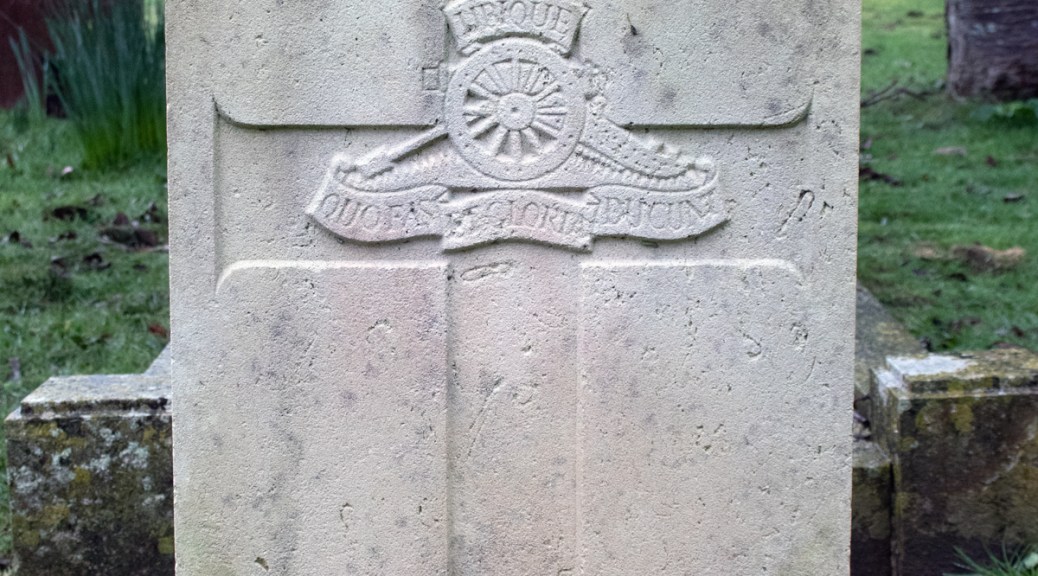
Frank’s headstone confirms that he was a Private in the Royal Army Service Corps, and that he died on 13th December 1917, though the cause of his passing is unknown. He is buried in Bath Roman Catholic Cemetery, so this also sheds light on his religion.

The British Army Register of Soldiers’ Effects suggests that he was also known as Frank McBarnes, although no further information comes to light with this alternative surname. The document confirms that he died in Bath War Hospital, and that his dependents were not eligible for a war gratuity, which suggests that he enlisted after June 1917.

Five dependents are highlighted on the record – Frank’s siblings Sabrina, Elizabeth, Margaret, Patrick and Thomas. This would suggest that both of their parents were dead by the time Frank himself passed away. Sadly, a combined search of the siblings doesn’t shed any light on their background, despite married names being given for Sabrina and Margaret, and an alternative surname – McManus – being provided for Thomas.

Some lives are not meant to be uncovered, and that of Frank Barnes, at rest in a peaceful Somerset cemetery, took everything to his grave.


Serjeant George Collins

Serjeant George Collins

Details of the lives of those who fell during the Great War can be limited by the documentation that is available more than a century later. Based on what remains, the life of George Collins would have been technical and sparse.

From the formal documents that remain, it is possible to determine that he was born in Bath, Somerset, in 1870 or 1871, and his father was farmer Oliver Collins.

George married Florence Lydyard on 25th January 1896 at the parish church in Bathampton. George was listed as a cellarman, while Florence was noted as being the daughter of George Lydyard, an agent.

The 1901 census found the couple living at the Liberal Club in Bath, which they were both managing. The couple had had a son, George Jr, who was born in 1898, and were employing a servant to help with the daily chores.

The 1911 census shows that George had left the club behind, and was employed as a gymnastic instructor. He and Florence now had four children: Mona, who was 14 (and who didn’t appear on the previous census); George; and twins Marjorie and Dorothy, who were born on 5th July 1904.

The limited military documentation confirms that George enlisted in the North Somerset Yeomanry by October 1917. He was assigned to the 2nd/1st Battalion, which was a mounted division that became a cyclist unit. The troop was based on home soil throughout the war and, depending on when he joined, George could have served anywhere from Northumberland to East Anglia or Southern Ireland.

These details, while uncovering something of George’s life, remain as clinical as the engraving on his headstone. With Serjeant Collins, it is a newspaper article on his passing that adds humanity to his life:

Many friends in Bath will regret to hear that Sergeant George Collins died on Saturday at the Bath War Hospital, where he had been an inmate for seven weeks, suffering acutely from gastritis. Deceased, who was a Bathonian by birth, when a youth joined the Welsh Regiment, and served for seven years in the 1st Battalion… He returned to Bath 21 years ago, and became a drill and physical instructor to several schools… whilst he also instructed evening classes at Guinea Lane and St Mary’s Church House. Being a Reservist he was called upon for the South African War, and Sergeant Collins rejoined his old regiment in 1899. He was wounded and invalided home… When he recovered from his wounds, Sergeant Collins resumed his work as an instructor at schools, and continued to act in that capacity until 1915. Though 44 years of age and not liable for military service, he very patriotically rejoined; he entered the North Somerset Yeomanry and became a drill instructor. He had not been abroad in this war, but had served in several places with the 2/1st NSY. The fatal illness became very pronounced in January when on leave, and he was not able to rejoin his unit. Sergeant Collins was a fine boxer, and became middle-weight champion of the Army when serving with the 1st Welsh. His experience as a trainer was often in request locally, and he had acted in that capacity to the most successful Avon Rowing Club crews. Deceased leaves a widow, one son, and three daughters. His only boy, Sapper George Collins, Wessex [Royal Engineers], has been serving at Salonika since 1915.

Bath Chronicle and Weekly Gazette: Saturday 13 April 1918

Beyond the staid, formal documents is a life well lived. Serjeant George Collins was 47 or 48 years old when he passed on 5th April 1918; the army record noted the cause of his death as a cerebral haemorrhage. His body was laid to rest in the graveyard of St Mary the Virgin Church, Bathwick, overlooking the city he loved.


Private Kenneth Harding

Private Kenneth Harding

Kenneth Gordon Harding was born in the autumn of 1896, in the Somerset village of Batheaston. The oldest of nine children, his parents were Lawrence and Fanny Harding. Lawrence was a market gardener when Kenneth was born, but by the time of the 1911 census – and with a growing family to support – he found other employment as a roadman.

When he left school, Kenneth found work as a gardener, but he had his sight set on distant shores. On 25th September 1913 he enlisted in the Royal Marine Light Infantry, determined to see the world. His service records show that he was 5ft 3ins (1.6m) tall, with light hair, blue eyes and a light complexion.

For the duration of his naval career, Private Harding was based out of Plymouth Dockyard, returning there in between each of his voyages. Over the next four years, he served on three different vessels – HMS Heroic, HMS Duke of Edinburgh and HMS Skirmisher. His service records shows that he maintained a satisfactory level of conduct, and that his general character was very good.

By January 1917, Kenneth had fallen ill, and was medically discharged from the army, having contracted tuberculosis. He returned home, but his illness continued to dog him.

On 22nd May 1918, Kenneth’s younger brother, Leonard Harding, who was serving with the Royal Inniskilling Fusiliers, was killed while fighting in France. Private Leonard Harding was just 19 years old. He was laid to rest in the Duhallow ADS Cemetery at Ypres.

With Kenneth’s own health not looking good, his parents must have feared the worst. The worst was to some, sadly, when he breathed his last at home on 29th December 1918. He was just 22 years of age.

Kenneth Gordon Harding was laid to rest in the graveyard of St John the Baptist Church in his home village, Batheaston.


Major Richard Jordan

Major Richard Jordan

Richard Avary Arthur Young Jordan was born on 24th May 1866 in Cashel, Tipperary, Ireland. His father, Richard Jordan, died a week after his son’s birth, leaving his mother, Annabella, to raise him.

The 1871 census records mother and son living in Woolwich, London, with Annabella’s widowed mother, Grace. They were obviously a well-connected family, with Grace living as an annuitant, or pensioner, one son a Surgeon Major in the army and another as a Colonel in a different regiment. Annabella herself was recorded as a landowner, and the family had support with a cook and housemaid living in.

Surrounded by army servicemen as he was, it is no surprise that a military career called to Richard. He enlisted on 10th November 1886, joining the King’s Shropshire Light Infantry as a Lieutenant. Assigned to the 1st Battalion, his service records confirm that he had attended Burney’s Gosport School – a military academy – and was 5ft 7.5ins (1.71m) tall.

Richard was sent to Egypt just before Christmas that year, and over the next five years, he served both there and in Malta. On 11th May 1889 he attained the rank of Captain and, in December 1891 he was sent further afield, to Hong Kong.

After three years in the Far East, returned to Britain, and spent the majority of 1895 back on home soil. His travels were not at an end, however, and by the end of the year, Captain Jordan found himself in India. He spent three-and-a-half years in the sub continent, returning to the UK in May 1899.

At this point, details of Richard’s life get a little sketchy. He seems to have settled in Pembroke Dock, South Wales, and, on 18th April 1904, he married Ella Mary Caroline Grove. She was eight years his junior, and the daughter of a late Lieutenant in the Highland Light Infantry. The couple married at St George’s Church, Hanover Square, London.

Richard’s trail goes gold again, for a couple of years. He retired from the army on 8th August 1906, after nearly twenty years’ service. By the time of the 1911 census, he and Ella had set up home in Heywood House, on the outskirts of Tenby, Pembrokeshire, with two servants – Beatrice and Edith – as two live-in staff.

War came to Europe in the summer of 1914, and Richard seemed to keen to play his part once again. He enlisted again in August 1915, and was assigned the rank of Major in his former regiment. While it is not possible to determine Major Jordan’s complete service at this time, he definitely arrived in France the following month. If he remained in France, it is likely that he saw fighting at the Somme in 1916, Cambrai in 1917 and at Lys and on the Hindenburg Line in 1918.

Again, Major Jordan’s post-war life remains tantalisingly elusive. By the summer of 1920, he and Ella were living at Holcombe Lodge in Bathampton, on the outskirts of Bath. It was here on 14th June, that Richard passed away. He was 54 years of age.

Despite all his travelling, it seems that Ella was comfortable living in Bathampton, and this is where she laid her late husband to rest. Richard Avary Arthur Young Jordan was buried in the graveyard of St Nicholas’ Church in the village.


The widowed Ella married again, to Captain Clare Garsia, on 9th October 1921. She remained in Bathampton, and lived to the age of 77, passing away on 13th August 1951. She was laid to rest in the same plot as her late husband.

When Captain Garsia died the following year, he was also buried in St Nicholas’ Churchyard, in a neighbouring plot to his beloved Ella.


Major Francis Dickinson

Major Francis Dickinson

Francis Arthur Dickinson was born on 5th February 1874 in Lufton, near Yeovil, Somerset. The elder of two children, his parents were banker Arthur Dickinson, and his wife, Alice.

Francis was drawn to a military life. The 1891 census lists him as an army student at a boarding school in Cornwall, and by the end of the decade, he had enlisted in the Duke of Cornwall’s Light Infantry.

Over the next fifteen years, Francis served around the world, fighting in India, South and East Africa and in the Middle East. By the end of his term of service, he had risen to the rank of Major. During this time, he had been awarded a number of decorations, and had been mentioned in dispatches twice for his gallantry.

On 23rd July 1914, Francis married Clare Phipps, the daughter of a man of private means from Dilton Marsh, near Westbury, Wiltshire. The couple married in Clare’s home village, but set up residence in the Dickinson family home in Kingweston, Somerset.

When war was declared in 1914, the newlyweds were on their honeymoon. Francis returned to the army and was offered the rank of Colonel, but turned it down, in order to return to the Duke of Cornwall’s Light Infantry. He soon found himself in the thick of things again, and was caught up in the fighting at Mons, Marne, Aisne and Messines.

In April the following year, Major Dickinson was wounded. Evacuated to a camp hospital in Boulogne, he was not to survive his injuries this time round. He passed away at the hospital on 11th April 1915, at the age of 41 years old.

Due to the masses of servicemen being killed, a decision had been taken by the government of the time to not repatriate the dead to Britain, but to bury them in cemeteries close to where they fell. However, whether because of his family’s connections, or because he passed on the Channel coast, Major Dickinson’s body was, in fact, brought back to Somerset.

Francis Arthur Dickinson was laid to rest with full military honours in the graveyard of All Saints’ Church. He was buried alongside other family members, and in the shadow of the family manor.


Major Francis Dickinson
(from findagrave.com)