Charles Edward Ridley Holroyd-Smyth was born in Ballynatray, Co. Waterford, Ireland, on 16th August 1882. The seventh of nine children, his parents were John and Harriette Holroyd-Smyth. John was a colonel in the army and, while from a a renowned family, there is actually little documented about Charles’ early life.
Given his father’s military career, it seemed natural for Charles to follow suit. His service records are tantalisingly elusive, but he certainly served in South Africa during the Second Boer War at the turn of the century.
When war broke out, Charles took up the rank of Captain in the 3rd Dragoon Guards (Prince of Wales’ Own). He set sail for France on 1st November 1914, and he found himself in the very thick of the fighting, where his battalion fought at Ypres, Loos and Arras. His conduct during the war earned him both the Distinguished Service Order and a Military Cross.
On 29th October 1916, Charles married Norah Layard, the daughter of another army officer, who had been born in Ceylon. Charles was soon back in France, however, and was promoted to Lieutenant-Colonel, and given command of the 15th Battalion of the Durham Light Infantry.
Over the course of 1918, Lieutenant-Colonel Holroyd-Smyth led his troop in the Battles of Bapaume, Messines, Kemmel and Aisne. However, it was during the Battle of Epehy that he was badly wounded. Initially treated on sight, he was quickly evacuated back to Britain for further treatment.
Lieutenant-Colonel Holroyd-Smyth was admitted to the Royal Victoria Hospital in Netley, Southampton, but his wounds were to prove too severe. He passed away on 23rd September 1918, at the age of just 36 years of age.
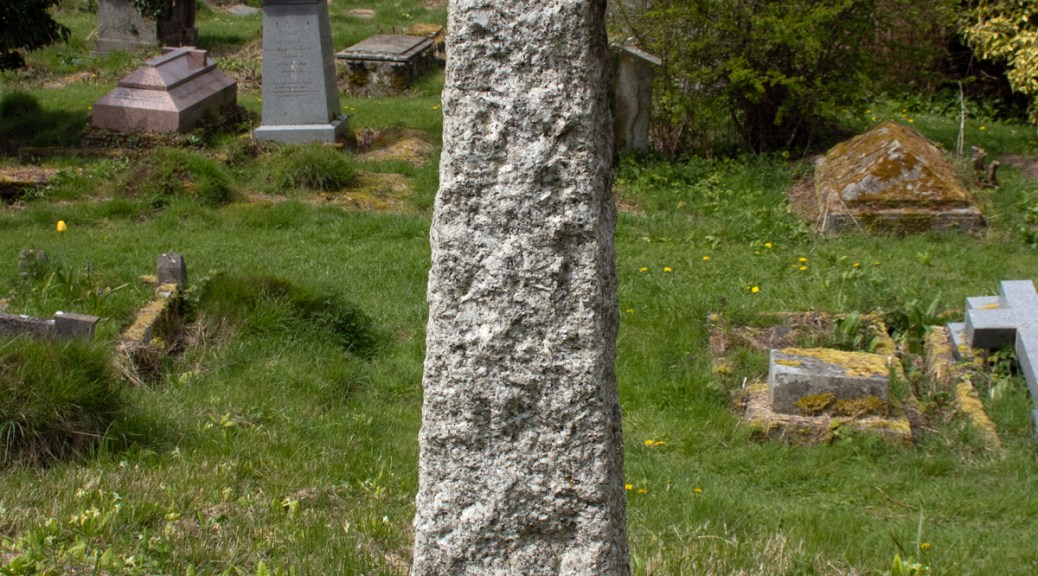
The body of Charles Edward Ridley Holroyd-Smyth was brought back to Somerset, where Norah was living. His funeral, at St Stephen’s Church, in Bath, was marked with some ceremony, and he was laid to rest in Lansdown Cemetery, overlooking the city.
(from ancestry.co.uk)
Charles’ death came just nine days after the passing of his mother, back in Waterford. He and Norah didn’t have any children, although tragically a newspaper report from July 1918 did note a birth: “On the 3rd July, at East Hayes House, Bath, the wife of Lieutenant-Colonel CE Holroyd-Smyth MC, a son (stillborn).” [Bath Chronicle and Weekly Gazette: Saturday 13th July 1918]
Alfred Henry Collins was born on 22nd August 1886, in the Gloucestershire village of Wotton-under-Edge. One of five children, his parents were cowman and farm labourer Samuel George Collins and his wife, Jane. Samuel’s work took the family south, and by the time of the 1901 census, the Collinses had settled in Whitchurch, near Bristol.
When Alfred finished his schooling, he also found employment labouring on a farm, but he was drawn to a more reliable career and a life at sea. On 9th March 1903, Alfred enlisted in the Royal Navy. His service records show the young man he was becoming. He was 5ft 4ins tall, with brown hair, brown eyes and a fresh complexion.
Alfred was still underage in the navy’s eyes, and so he was given the rank of Boy 2nd Class. He was assigned to HMS Northampton, a training ship, and must have shown some promise, as within three months he had been promoted.
In June 1903, Boy 1st Class Collins was assigned to HMS Victory, the Royal Naval Dockyard in Portsmouth, Hampshire, and his trajectory was still upwards. When he turned seventeen on 22nd August, Alfred was formally enrolled in the Royal Navy, and was given the rank of Ordinary Seaman. However, his training in Portsmouth continued, and by November he had become a Signalman.
In December 1903 he was posted to the cruiser HMS Isis and, over the next decade he served on ten different ships, returning to HMS Vivid, the Royal Naval Dockyard in Devonport, in between voyages. During this time he was promoted to Leading Signalman, and his annual reviews showed him as having a very good character and a superior ability.
With war now brewing across Europe, the role of the navy intensified. When conflict was declared, Leading Signalman Collins was serving on board the cruiser HMS Pomone and, after nine months back at HMS Vivid, possibly in a training role, Alfred was assigned to the newly-refitted battleship HMS Bellerophon, on board which he would serve for more than two years.
Bellerophon served at the Battle of Jutland, and remained patrolling the southern part of the North Sea for the rest of the war. In July 1917, Alfred was promoted again, to Yeoman of the Signals, and transferred to HMS King George. He remained in the North Sea, but his new ship was there to protect the convoys transporting good between the UK and Norway, so he was based in Scotland.
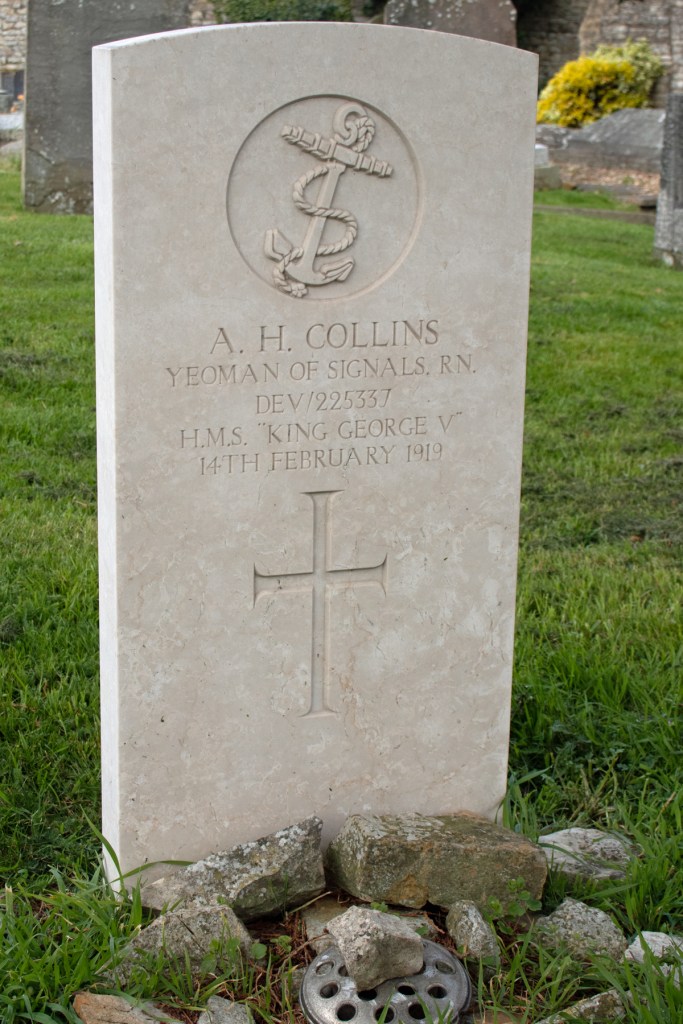
Yeoman of the Signals Collins survived the war, but in February 1919 he was admitted to the Royal Naval Hospital in Granton, near Edinburgh, suffering from pneumonia. Sadly, the condition was to get the better of him and he died on 14th February 1919, at the age of 32 years old. He had served for just short of sixteen years.
The body of Alfred Henry Collins was brought back to Somerset for burial. He was laid to rest in the graveyard of St Nicholas’ Church in Whitchurch.
Leonard Arthur Luke was born in the autumn of 1899 in Shepton Mallet, Somerset. He was the fifth of ten children to railway guard George Luke and his wife, Georgina.
By the time of the 1911 census, the family had moved north west, to the village of Wellow, where George continued his employment with the railway. The track and station have now since disappeared, but at the time, it was a busy stopping point for the mining village.
When Leonard left school, he found work as a porter with the Somerset & Dorset Railway, but by now war was raging across Europe, and he was keen to play his part. He initially enlisted in the Somerset Light Infantry on 3rd January 1918, but moved to the Royal Flying Corps after a matter of weeks.
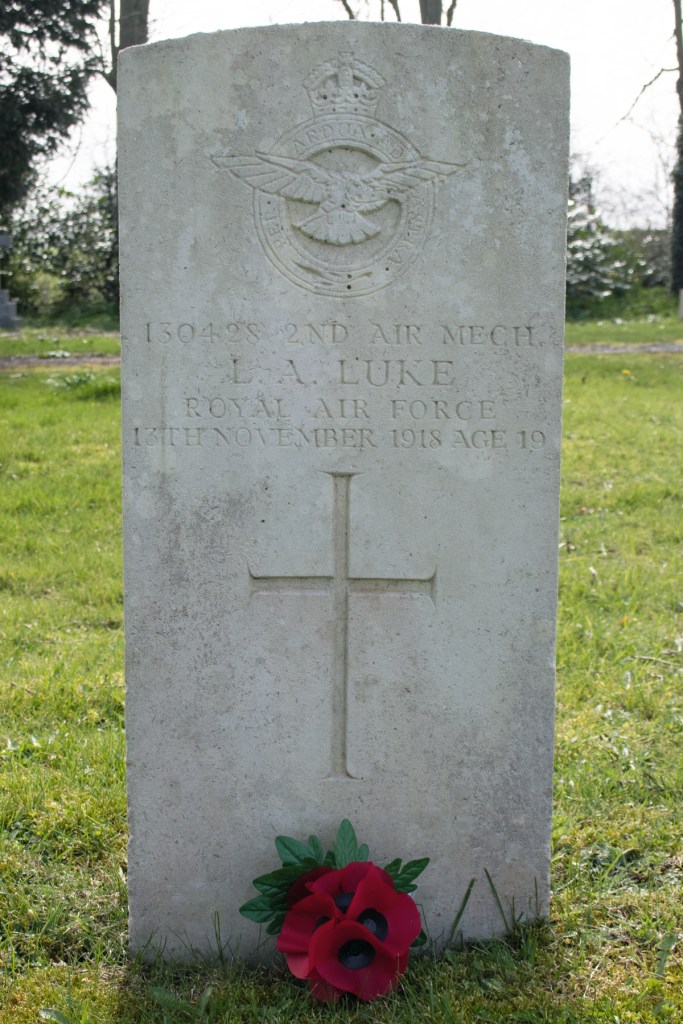
On 1st April 1918, Leonard transferred across to the Royal Air Force. Formally holding the rank of Air Mechanic 2nd Class, he was training to become a wireless operator in Winchester, Hampshire. He was admitted to the Red Cross Hospital in the city, having contracted rheumatic fever. Sadly, this was to take his life, and he passed away on 13th November 1918, two days after the Armistice. He was just 19 years of age.
Leonard Arthur Luke’s body was brought back to Somerset for burial. He was laid to rest in the quiet Wellow Cemetery.
Air Mechanic 2nd Class Leonard Luke (from britishnewspaperarchive.co.uk)
While Wellow Station was a bustling place, it is highly likely that Leonard would have known Edward Bending, one of the clerks at the time he was there. Edward also went off to war, and his story can be found here.
Alfred Taylor was born in the summer of 1888 in Crewkerne, Somerset. The second of twelve children, his parents were Henry and Selina Taylor. Henry, who was also known as Harry, was a stone mason, but when Alfred and his siblings left school, they went into the weaving industry, a key employer in the area.
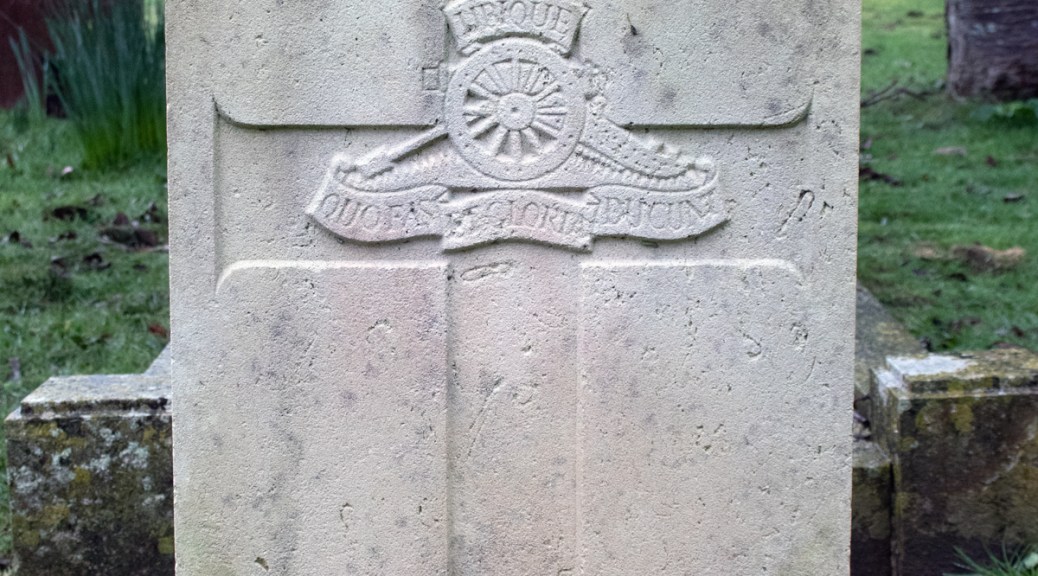
War came to European shores in the summer of 1914, and Alfred was keen to play his part. He had already been a part of the 3rd (Special Reserve) Dorset Regiment, but formally enlisted on 9th December 1915, joining the Royal Garrison Artillery. His service records note that he was 5ft 9ins (1.77m) tall and weighed 149lbs (67.6kg). The document also confirms his next of kin as his father, who, at 48 years old, had also joined up, and was serving in the Royal Engineers in Canterbury, Kent.
Gunner Taylor was not mobilised until September 1916, and served the next eighteen month on home soil. He did his initial training in Hilsea, Portsmouth, before moving around the country. He finally made it to France in February 1918.
During his time in France, Alfred was caught up in a couple of gas attacks, and was evacuated to Britain at the end of August because of the impact on his lungs. Admitted to the 2nd Eastern General Hospital in Brighton, Sussex, his body finally succumbed to pneumonia. He passed away on 25th January 1919, at the age of 30 years old.
The body of Alfred Taylor was brought back to Somerset for burial. He was laid to rest in the Townsend Cemetery of his home town, Crewkerne. “…All the members of Gunner Taylor’s family were present, except his father and his brother George, who [were] with the Army of Occupation in Germany.” [Western Chronicle: Friday 7th February 1919]
Albert Edward Taylor was born in the autumn of 1887 and was the fifth of eight children to John and Mary Taylor. John was a mason and both he and Mary came from Crewkerne, Somerset, which is where they raised their family.
Albert worked as an errand boy when he left school, but he sought a career and, enlisted in the Army Service Corps in July 1904. He lied about his age to join up, suggesting he was nearly 22, where he was actually just 17 years of age.
Driver Taylor’s service records confirm that he was 5ft 3ins (1.6m) tall and weighed 115lbs (52.2kg). He was noted as having brown hair, blue eyes and a fresh complexion. He had a mole between his shoulder and the back of his neck, and his religion was recorded as Baptist.
Albert’s contract was for two years’ service, followed by ten years in the Army Reserve. While a military career was what he sought, he seems to have had a disregard for rules, and regularly had run ins with authority, as his Regimental Defaulter Sheet testifies.
On 19th December 1904, while based in Woolwich, Surrey, he was absent without a pass from 6am until 12:15am on 30th December. He was confined to barracks for eight days.
The following year, Driver Taylor had moved to Bordon in Hampshire. On 28th November 1905, he was absent without a pass, from midnight until 8:30am on 1st December. He was again confined to barracks, this time for ten days.
A third offence came on 29th May 1906, by which time Albert had moved to Aldershot, Hampshire. He was found in neglect of duty ‘in allowing dirty pudding cloths to be deposited in the cupboards of the cookhouse’ and being ‘absent from work from 1:30pm till found in his barrack room at 9:20pm.’ For these, he was confined to barracks again, this time for eight days.
Within a matter of weeks, he was found in neglect of duty again, having broken out ‘of barracks after tattoo and remaining absent till apprehended by the Military Police at about 10:50pm’ and being ‘drunk and improperly dressed.’ This time the punishment was more severe and he was detained in prison for 96 hours.
Unsurprisingly, Albert’s military career didn’t go much further than this. When his two-year contract came to an end, he returned to Somerset and found employment as a mason.
In July 1910, Albert married Mabel Wallbridge, the daughter of a carman, also from Crewkerne. The couple set up home on the outskirts of the town, and went on to have a son, Frederick, who was born later that year.
The 1911 census found the young family living in a cottage in Lye Water, with Albert listing himself as a ‘mason (army pensioner)’. While the military reference may have been added with a sense of pride, irony or bloody mindedness, Albert was not to fully leave his army career behind. When war came to Europe in 1914, he was still within his reserve status, and was called up to play his part.
Private Taylor was to leave his family behind: son Frederick had now been joined by daughters Kathleen and Joyce, and Mabel pregnant with another daughter, Rosaline, who was born in January 1915. Albert was assigned to the 1st Battalion of the Somerset Light Infantry and, in contrast to his previous tenure on the Home Front, he soon found himself in the thick of things.
Albert’s regiment was involved in some of the fiercest opening skirmishes of the First World War, and he would have been caught up on the Battles of Le Cateau, the Marne, the Aisne and Armentières. By the spring of 1915, the battalion was entrenched at Ypres, and it was here during the Battle of St. Julien that Private Taylor was injured.
Albert has received a gun shot wound to the left side of his skull and was medically evacuated to Britain for treatment. He was admitted to the Beechfield House Hospital in Southampton, but his wounds proved too severe, and he passed away on 14th May 1915, at the age of 27 years old.
The funeral of Private Albert Edward Taylor, of the Somerset Light Infantry… who died from wounds received at the Front, took place with military honours at the Cemetery [in Crewkerne] on Tuesday afternoon, and attracted a large attendance. As a mark of respect to the memory of the deceased soldier blinds were drawn at the private and business houses en route to the Cemetery, while the flag erected outside the Victoria Hall for the children’s Empire-day celebration was lowered to half-mast.
Rev. J Street (Unitarian Minister)… spoke of the painful circumstances and the heroic conduct of the deceased, who had sacrificed his life for others. Although death was attended with pain and sorrow, yet in after years deceased’s children would look back with pride to the part their father took in the present war.
Taunton Courier and Western Advertiser: Wednesday 26th May 1915
Albert Edward Taylor was laid to rest in the cemetery of his home town, Crewkerne.
Private Albert Taylor (from findagrave.com)
Albert’s headstone gives his initials as AC Taylor. They should be AE Taylor.
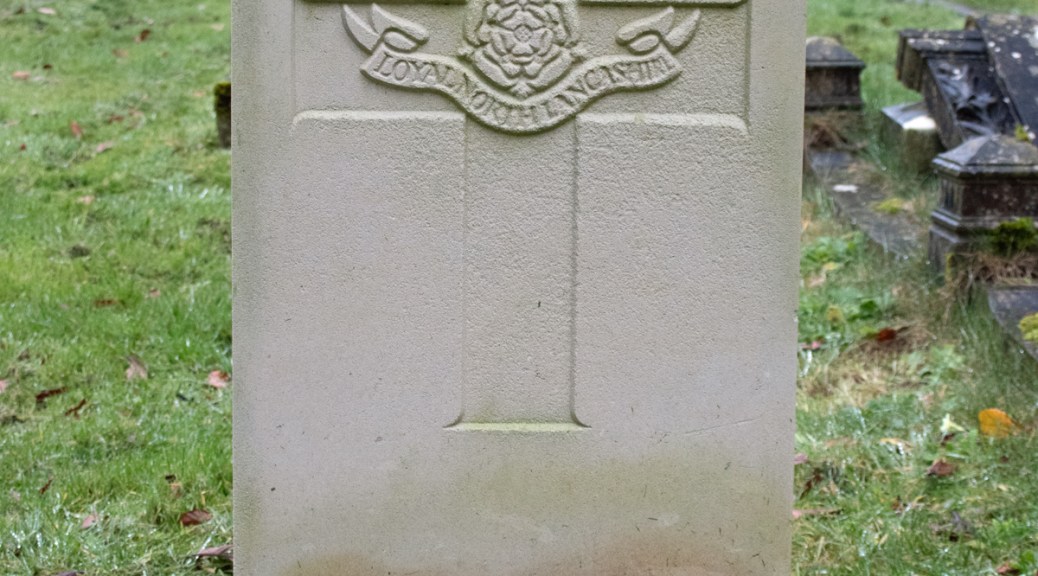
The details of William Pinney’s life seem destined to remain a mystery. His headstone – in Crewkerne Cemetery, Somerset – confirms that he was a Private in the Loyal North Lancashire Regiment, and that he died on 14th August 1919.
The British Army Register of Soldiers’ Effects expands a little on this, identifying that he was in the 2nd Battalion of the regiment. The document states that he died of wounds and had been admitted to the War Hospital in Southampton, Hampshire (this is likely to have been the Royal Victoria Hospital in Netley). It also confirms that his effects were to be passed to his widow, Sarah Pinney.
From this point on, some elements of supposition come in to the research.
There is a marriage certificate for a William Pinney and Sarah Jane Witheyman at the parish church in Crewkerne on 6th January 1911. This record gives William’s age as 23, and shows that he was a weaver and the son of weaver William Pinney Sr. Sarah, meanwhile, was five years older than her new husband, worked as a factory hand, and was the daughter of another factory hand, George Witheyman.
The same year’s census gives more information about William Pinney. He was one of eleven children to William and Mercy Pinney, and every member of the family over school age was involved in weaving and spinning. It should be noted, however, that the census was taken on 2nd April 1911, three months after William’s marriage and, while the ages on the document match, the document states that he is single.
The same census for Sarah tells a similar story. She is noted as being one of twelve children to George and Amelia Witheyman. George is noted as being a ‘hand ackler’, or handyman, while Sarah and the two of her teenage brothers still at home are all working as mill hands. The same anomaly arises as William, however, as she is also noted as being single.
Returning to the marriage certificate, an answer to the anomaly in the dates seems to resolve itself, however. The marriages are noted in chronological order, and the previous wedding to be solemnised in Crewkerne Parish Church was on 26th December 1911, while the following one was on 14th February 1912. It would appear, therefore, that Leonard Jackson, the curate of the church, entered the incorrect date on the certificate.
The census records and marriage certificate all seem to fit the William and Sarah Pinney who were separated by William’s death in 1919. There are certainly no documents suggesting another William Pinney in the Crewkerne area around that time period. It is reasonable to assume, therefore, that they do all connect to the gravestone in the town’s cemetery.
Private Pinney’s military records are missing, or no longer available, so it is not possible to trace his actions during the First World War. The 2nd Battalion of the Loyal North Lancashire Regiment served in India during the first half of the conflict, moving to Egypt in 1917 and to France the following year. It is not possible to confirm where William served, but wherever he fought, he was wounded, and these injuries were to prove fatal. He passed away in the Southampton hospital on 14th August 1919, nine months after the end of the war, aged around 31 years old.
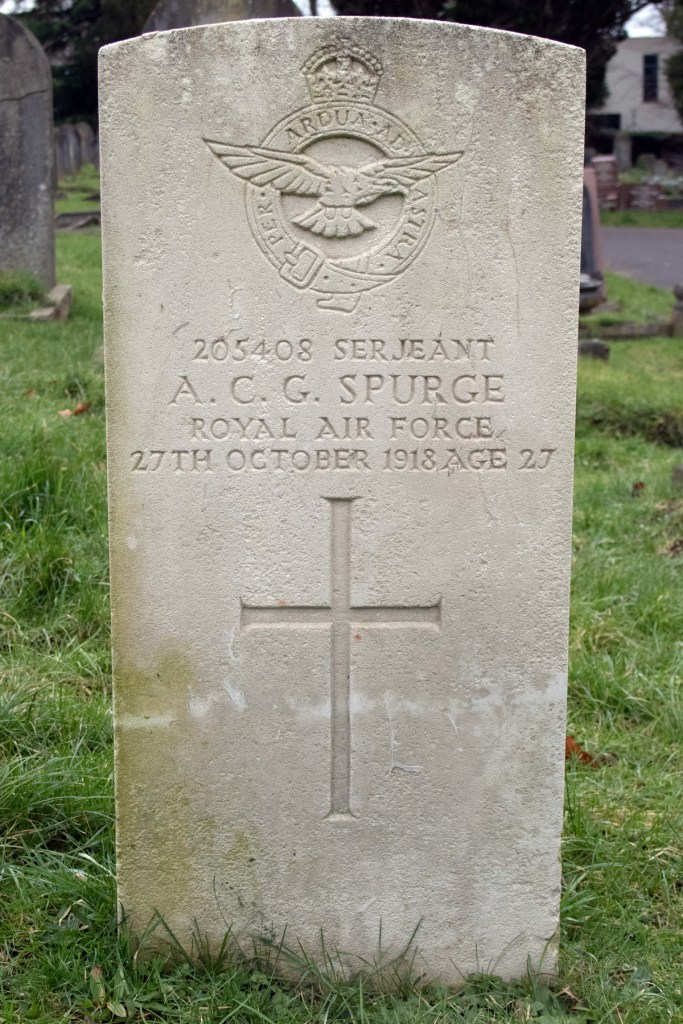
Algernon Carlyle Graham Spurge was born on 27th August 1891 in Bath, Somerset. The middle of five children, his parents were Algernon and Ida Spurge.
Algernon Sr was a portrait photographer, based in the Twerton area of the city, and this was very much a family business. The 1901 census recorded the Spurges as living in Victoria Road, Bath, with Ida’s brother, Tom Leaman, who was working as a photographic reloader.
Later that year, however, things were to take a turn for the worst. Algernon Sr seems to have been having some business worries and, on the morning of 16th December, he set off for work as usual. His and Ida’s daughter, also called Ida, arrived at the studio to find her father in some distress, a bottle of potassium cyanide – used as part of the photographic process at the time – next to him. He asked Ida to fetch him some water and salt, but when she returned, he declared it was too late, and lost consciousness. A doctor was called, but Algernon passed away shortly after he arrived.
A note was found, which read “My dearest wife, I really cannot stand the worry and anxiety of another day, to say nothing of weeks and perhaps months. Ask Mr Ashman and Mr Withy to be kind enough to help you straighten out matters a little. My best love to you and all my dear ones. AS” [Somerset Guardian and Radstock Observer – Saturday 21 December 1901] Ashman and Withy were family friends, who were also in the photography business.
An inquest was held and a verdict of suicide while temporarily insane was recorded.
The family rallied round, and Algernon’s widow and children moved in with Ida’s widowed mother in Bristol. Algernon’s daughter Ida continued working in photography, and Algernon Jr also took up the business. The 1911 census found him boarding with, and working for, his uncle Tom in Bath.
War was closing in on Europe by this point and, when it was declared, Algernon stepped up to play his part. He enlisted in the Royal Naval Air Service on 4th June 1915 as a Leading Mechanic (Photography). His service records show that he was 5ft 5ins (1.66m) tall, with dark brown hair, brown eyes and a dark complexion.
Algernon was initially assigned to the shore establishment HMS President in London for three years, rising to the rank of Petty Officer Mechanic (Photography). In April 1918, when the Royal Air Force was created he transferred across to HMS Daedalus in Lee-on-Solent, Hampshire, and rising to the rank of Sergeant Mechanic.
That autumn, with the end of the war in sight, Algernon fell ill. He contracted influenza, and this developed into pneumonia. He was admitted to the Military Hospital in York, but the conditions were to prove too much for his body to take. He died on 27th October 1918, aged just 27 years old.
The body of Algernon Carlyle Graham Spurge was brought back to Somerset for burial. He was laid to rest in St James Cemetery, Bath, not far from his father. When Ida passed away in 1926, she was buried in the same cemetery, father, mother and son reunited once more
Gilbert Harold Earle Rippon was born in Paddington, London, in the spring of 1887. The third of seven children, his parents were coal merchant Frederick Rippon and his wife, Eugenie.
When Gilbert left school, he found work as a clerk for a building firm. He was an ambitious young man, however, and, after his mother died in 1903 and his father a few years later, he took on work at a rubber plantation in Jementah, Malaysia.
When war broke out, “he came home on six months’ leave in order to enlist, having an exciting voyage owing to the activities of submarines. He was refused at first owing to a slight physical defect, but after an operation learnt to fly and was given a commission in the Royal Flying Corps.” [Somerset Guardian and Radstock Observer: Friday 9th June 1916]
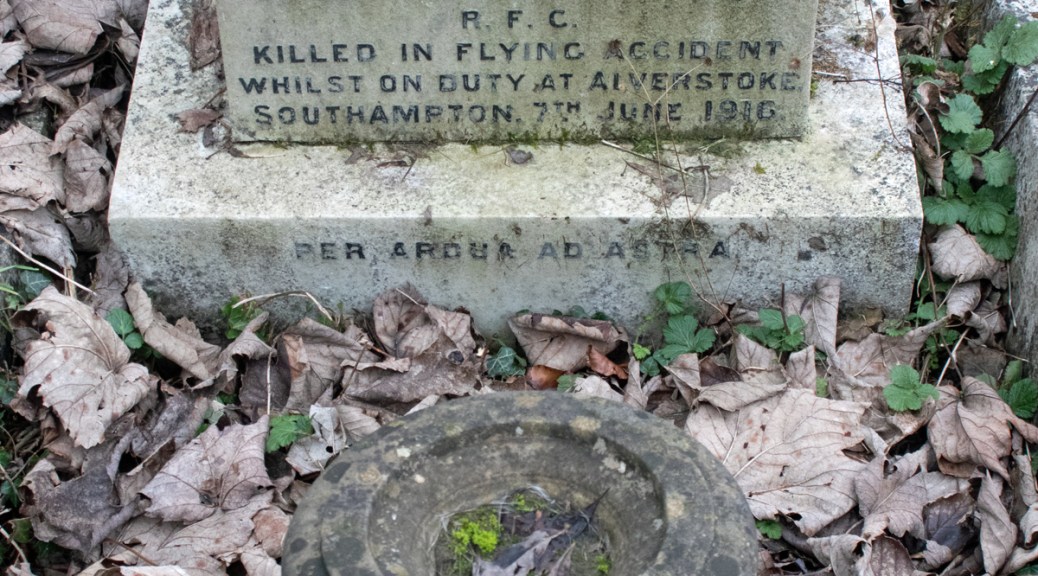
Second Lieutenant Rippon gained his wings at Brooklands in Surrey on 16th January 1916. By the summer he was attached to a flying school in Gosport, Hampshire, and this is where he was based by the early summer of 1916.
On 7th June, Gilbert was flying a de Havilland DH2 aircraft, when an accident occurred. According to a newspaper report: “Evidence showed that the machine, when 300 feet [91m] up, made a double turn, as though the aviator was trying to return. It then slipped and made a nose-dive to the ground, killing the pilot instantaneously. He had only been in the air three minutes. The previous evening the same monoplane had ascended 14,000 ft [4267m].” [Somerset Guardian and Radstock Observer: Friday 9th June 1916]
Second Lieutenant Rippon was 29 years of age. The same report confirmed that he was the older brother of two Bath and Somerset cricketers – twins Dudley and Sydney Rippon – and that his oldest brother, New York-based Secretary of the Board of Correction Frank Rippon, “had the unhappy experience of being in the aerodrome when the accident occurred, and saw his brother fall to the ground.”
Gilbert Harold Earle Rippon was laid to rest in the family plot St James Cemetery, Bath, Somerset. There seems to have been a family connection with the city: this is where both Frederick and Eugenie were buried, and where, after their parents’ deaths, the twins and the youngest Rippon son, Percy, were taken to live.
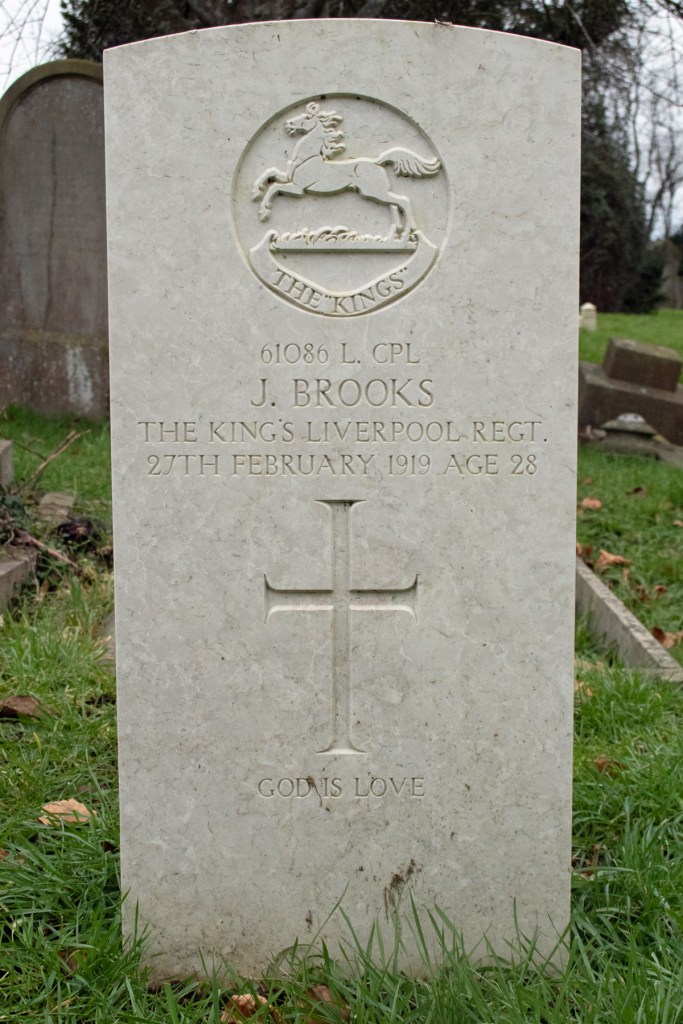
Jack Brooks was born in the autumn of 1890 and was the second of nine children. His parents, John and Kate Brooks, both came from Bath, where they ran a bakery on Queen Street, in the centre of the city. When he left school, it was natural for Jack to follow in his parents’ trade.
When war arrived on Europe’s shores, Jack stepped up to play his part and, on 7th December 1915, he enlisted in the Wiltshire Regiment as a Private. His service records show that he was 25 years and 2 months old, was 5ft 8.5ins (1.74m) tall, and weighed 156lbs (70.8kg). He was also noted to have a scrotal hernia, had flat feet and an upper set of dentures. These were enough for him to be passed for home service only, and he was formally mobilised on 10th February 1916.
Private Brooks seems to have taken a while to settle into army life. He was soon transferred across to the East Lancashire Regiment and, in May 1916, was attached to the 8th Works Coy as a Lance Corporal. In February 1917 he was transferred again, this time to the King’s Liverpool Regiment. On 6th June 1917 he was demoted to Private for ‘neglect of duty’, for not taking proper care of the stores that he was in charge of.
He married a woman called Rosina Elizabeth in 1917: the couple went on to have a son, William, who was born on 22nd November that year.
Jack continued serving after the end of the war and, by the beginning of 1919, was based in Aldershot. It was while here that he fell ill, and was admitted to the town’s Connaught Hospital on 11th February, suffering from influenza and pneumonia. Sadly the combination of illnesses was to prove to much: he succumbed to them, breathing his last on 27th February 1919. He was just 28 years of age, a boy with his mother, Kate, with him when he passed.
The body of Jack Brooks was brought back to Somerset for burial. He was laid to rest in the city’s St James’ Cemetery.
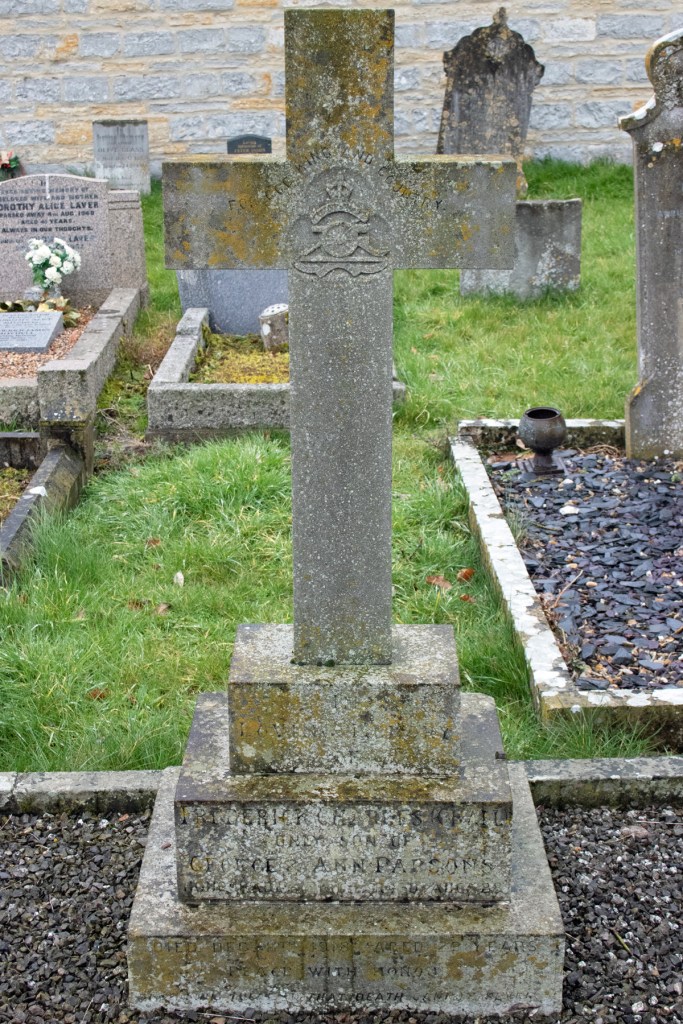
Frederick Charles Harold Parsons was born in 1889, the older of two children to George and Ann Parsons. George was a general labourer from Drayton in Somerset, and this is where he and Ann raised their young family.
Ann’s mother, Elizabeth, was a constant presence in the family’s lives, moving in with them when her own husband, William, died. The 1911 census found a packed family home, with George, Ann, Frederick, Elizabeth, Ann’s widowed brother Joseph and her nephew Robert all living under the same roof.
Frederick – who was known by the nickname Chall – was working as a grocer’s assistant by this point, but when war broke out, he was quick to step up and serve his King and Country. He enlisted on 2nd September 1914, joining the Royal Field Artillery as a Driver. His service records note that he was 5ft 6ins (1.68m) tall and weighed 116lbs (52.6kg). He had dark hair, brown eyes and a dark complexion, and had a scar below his left eye.
For the first ten months of Driver Parsons’ service, he remained on home soil. He was finally sent to France in the summer of 1915 and spent nearly two-and-a-half years overseas. Towards the end of that time, he began to have issues with his kidneys, and was posted back to the UK for treatment.
Initially admitted to Milton Hospital in Portsmouth, Chall was then moved to the VAD Hospital in Ryde on the Isle of Wight. He was initially diagnosed as having kidney stones, but was subsequently found to have enlarged kidneys. He was placed on furlough in May 1918, before being medically discharged from service at the end of August.
At this point, Chall’s trail goes cold. He appears to have returned home to Drayton, as it was in nearby Langport that his death was subsequently registered. He died on 11th December 1918, at the age of just 29 years old.
Frederick Charles Parsons was laid to rest in the family plot in St Catherine’s Churchyard, Drayton.












 Death and Service