Tag Archives: influenza

Gunner William Morgan

Gunner William Morgan

William Francis Morgan was born on 22nd January 1884 in Bengal, India. The youngest of three children, he was the son of James Morgan and his wife Mary. Both came from Ireland, marrying in 1876. They moved to London, before James was posted to India as part of his role in the Royal Horse Artillery.

Sadly James died when William was just a toddler; this prompted Mary to move the family back to England. She married again in 1887, to Edward Curling, who was a carpenter in the Royal Artillery, and the family settled on the Isle of Grain in Kent, living in the fort where Edward worked.

Surrounded by those in military service and with an army heritage himself, is it no surprise that William felt drawn to the life. In September 1898 he enlisted in the Royal Garrison Artillery. Though not yet fifteen years old, he stood 5ft 11ins (1.69m) tall and weighed in at 101lbs (46kg). He had a fresh complexion, grey eyes and light brown hair and four distinctive marks were noted – three scars on his head and one on his right knee.

Trumpeter Morgan certainly got to see a lot of the world during his time in the army. After a period on home soil, he was sent to Egypt on Christmas Eve 1901, staying there for just over a year. He moved on to India, returning to England five years later, by which time he had achieved the rank of Gunner.

War was imminent, and in September 1914 he was sent to France as part of the British Expeditionary Force. Barring a short period at home, Gunner Morgan remained on the Western Front for the remainder of the war, finally returning to the UK in January 1919.

William’s time in the army was one of two halves. He had several bouts of illness during his service, coming down with phimosis in 1901, scarlet fever and gonorrhoea in 1902, a fractured clavicle in 1903, pneumonia in 1904, rheumatism in 1906, ague in 1908, pleurisy in 1909, and had to return from France to England for an operation to remove a carbuncle between his shoulder blades in the summer of 1915.

Gunner Morgan was also pulled up for his conduct a few times too. He was punished for neglect of duty in August 1908, disobeyed orders in May 1909, was pulled up for being improperly dressed while in Portsmouth’s Highbury Arms Pub in November 1909 and went AWOL for ten hours on 31st July 1913.

There were positives to William’s service too, however. He was awarded the British and Victory Medals as well as the 1914 Star during the First World War. He was mentioned in dispatches and received the Military Medal in 1917 an the Long Service and Good Conduct Medal two years later.

Sadly, though, after Gunner Morgan’s positive and lengthy military service, his time out of the army was to be brief. Returning to England on 13th January 1919, he contracted influenza and pneumonia and succumbed to the lung conditions within weeks. He passed away on 27th February 1919, at the age of just 35 years of age.

William Francis Morgan was laid to rest in the Woodlands Cemetery, Gillingham, Kent, just minutes’ walk from where his mother now lived.


Serjeant George Carpenter

Serjeant George Carpenter

George Palmer Carpenter was born in Worthing, West Sussex, in 1881, one of fourteen children to James and Elizabeth Carpenter. James ran the Steyne Hotel on the seafront, and sent his boys off to the Lucton Boarding School in Henfield for their education.

A regimented life seems to have suited George. When he left school, he enlisted in army, joining the Royal Engineers as a Sapper. The 1901 census found him billeted at the Elphinstone Barracks in Portsmouth.

Sadly, there is little further documentation on the life of Sapper Carpenter. He served through to and during the Great War, attaining the rank of Serjeant. He was sent to France in May 1915, though there is little to confirm his role there, or how long he stayed.

Serjeant Carpenter was subsequently attached to G Depot Company of the Royal Engineers, which received men returned from Expeditionary Force and also men enlisted for Tunnelling Companies, Special Companies and other specialist units. By this time – presumably later on in the conflict – he was based back in England, at the regiment’s barracks in Chatham, Kent.

When the war came to a close, George continued with his army career. With conflict in Europe coming end, he was shipped to Singapore in 1917, where he served through to 1920. A Sussex newspaper picked up his story from there:

Much sympathy will be extended to Mrs Carpenter and her family, of the Steyne Hotel, consequent upon the death of Sergeant George Carpenter, of the Royal Engineers, another of our Worthing boys whose life has been laid down in his country’s service. He arrived home in a bad state of health on the 25th of February last from Singapore, where he had been on duty for three years. Suffering from gastric influenza, it was found necessary that he should undergo an operation, which was carried out at midnight on Saturday. But he sank from weakness, and died at half-past eight on Sunday morning. This is the second son of whom Mrs Carpenter has been bereaved within a year, and there is pathos in the words addressed to us by her: “I have again the sorrowful task of sending the news of the death of one of my sons this morning.

Worthing Gazette: Wednesday 24th March 1920

George Palmer Carpenter was 39 years old. He was laid to rest in the Broadwater Cemetery of his home town, Worthing, in West Sussex.


The other brother referred to in the report was George’s younger brother Norman.

He had emigrated to Canada in 1906, but returned to Europe as part of the Canadian Expeditionary Force when war broke out. Wounded in battle in May 1917, he returned to the UK for treatment and recuperation, and remained on home soil for the rest of the war.

In the spring of 1919, he was admitted to hospital with pleurisy and anaemia, and seems that he never fully recovered, succumbing to the conditions in August of that year. He was just 32 years old.


Private Bertie Bridger

Private Bertie Bridger

Bertie Charles Bridger was born in the summer of 1876, one of nine children to William and Anne. William was a carman for the railway, and the family lived close to the central station in Worthing.

When Bertie left school, he followed in his father’s trade and, by the time of the 1901 census, was working as a groom and carman alongside his father and older brother, Arthur.

Bertie came to the notice of the local court when, in February 1900 he was called up to the Petty Sessions. He was fined for ‘cruelly ill-treating a horse by working it into an unfit state’ [Sussex Agricultural Express: Friday 9th February 1900], and ordered to pay a total of 18 shillings.

In the spring of 1904, Bertie married Ethel Gray, a carpenter’s daughter from Essex, who had found employment as a parlour maid for a Worthing solicitor. The couple would go on to have two children, Bertie Jr, who as born in 1905, and Leonard, born seven years later.

By the time of the 1911 census, the young Bridger family were living near the main railway station in a two-up, two-down property, where Bertie Sr was still plying his trade as a carman at the station.

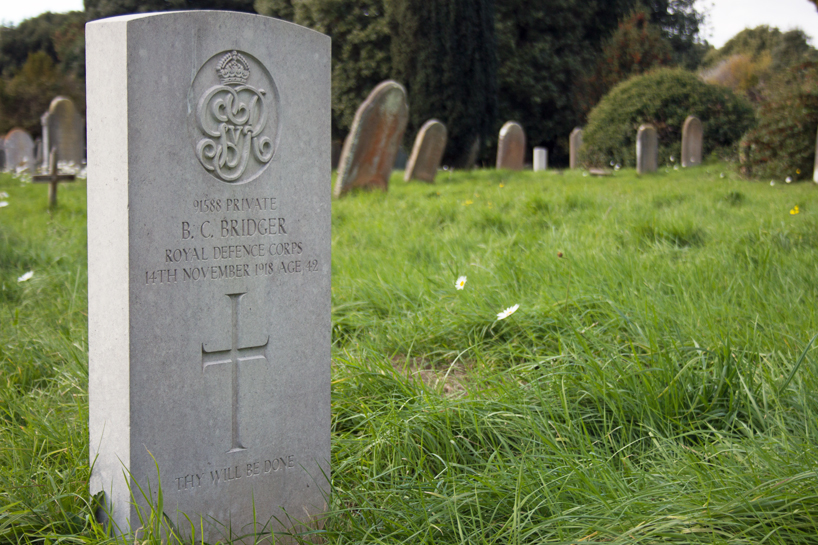
War was coming, however, and in the summer of 1915, Bertie enlisted in the Royal Defence Corps. He was assigned as a Private to the 452nd Protection Company and, while his exact duties remain unclear, it is likely that he would have been involved with horses at some level, given his experience.

Private Bridger’s service appears to have mainly been spent on home soil, although, towards the end of the conflict he was sent to Ireland. It was while he was there, that he came down with influenza, which then turned into pneumonia. He was admitted to the Military Hospital in Curragh, but he died of the conditions on 14th November 1918, three days after the Armistice was signed. He was 42 years old.

The body of Bertie Charles Bridger was brought back to Sussex, and he was laid to rest in the Broadwater Cemetery to the north of Worthing. The local newspaper commented that:

Previous to his enlistment the deceased soldier was an outside porter at the Railway Station for nearly thirty years, and the sympathy of a wide circle of friends will be extended to his widow and two children.

Worthing Gazette: Wednesday 27th November 1918

Private Bertie Bridger (from Ancestry.com)

Corporal Henry Forrest

Corporal Henry Forrest

Henry Charles Forrest was born in Bromley, Kent, in the summer of 1893. The youngest of eight children to William and Wilhelmina Forrest, Henry’s father was a police sergeant, who retired not long after his youngest son’s birth, moving his family to Worthing in West Sussex.

Henry was obviously a bright lad; the 1911 census records him as a student teacher. The only one of William and Wilhelmina’s children still living at home, he was, by this point, still just 17 years old. His career continued over the next few years, and he taught at the Ham Road Schools in Worthing.

In the spring of 1916, Henry married Constance Robertson. The young couple had a lot in common and seemed like a perfect match. Constance was the daughter of a retired police constable, and was also a student teacher.

War, by this time, had come to Europe. Full details of Henry’s military service are not available, but it seems that he initially joined the Oxfordshire and Buckinghamshire Light Infantry. Private Forrest was promoted to the rank of Corporal, and subsequently transferred to the Army Cycling Corps, serving in France.

As the war moved on, Corporal Forrest was released to resume his teaching back in Worthing but, in the autumn of 1918, he contracted influenza and pneumonia. The conditions got the better of him, and he passed away on 5th December 1918, at the age of just 25 years old.

Henry Charles Forrest was laid to rest in the Broadwater Cemetery in Worthing; sadly, it seems that Constance was unable to attend – she was represented at the ceremony by her mother.


Gunner Fred Ford

Gunner Fred Ford

Fred Ford was born in the Wiltshire town of Mere in 1877. One of eight children to John and Charlotte, his father was an agricultural labourer from the village.

When he left school, Fred initially found work as an errand boy; he soon moved into labouring and, by the time of the 1901 census, was employed as a bricklayer.

In 1904, Fred married Florence Phillips; she was the daughter of an agricultural labour from Somerset. Fred, by this time, had found work as a coal miner in the county, and the young couple set up home in the village of Babington, near Frome. They went on to have four children.

Conflict was on the horizon and, while full details of his military service are not available, it’s clear that he enlisted as soon as he was able to, almost as was was declared. Gunner Ford joined the Royal Field Artillery, and was assigned to the 108th Brigade of the regiment’s Ammunition Corps.

Initially based in Taunton, Fred was soon moved to Portsmouth and then Worthing, and it was here, in the first winter of the war, that he contracted influenza and pneumonia. Admitted to St Cecil’s Red Cross Military Hospital in the Sussex town, sadly the condition proved too much for him. He passed away on 8th February 1915, tragically hours before Florence arrived from Somerset. Gunner Ford was just 37 years old.

Finances not enabling her to transport his remains back home, Florence Ford laid Fred’s body to rest in Broadwater Cemetery in Worthing, the town where he died.


Lance Corporal Reginald Foot

Lance Corporal Reginald Foot

Reginald Robert Foot was born at the beginning of 1888 in Shaftesbury, Dorset, the oldest of three children to Robert and Annie Foot. Robert was a tailor from the town, who brought up his young family in the comfort of well-known surroundings.

When he left school, Reginald found work as a carpenter and joiner. He was a keen, if over-eager, sportsman, and played for Shaftesbury FC. In May 1906, he was reported for ‘cheeky’ behaviour towards the referee in one match.

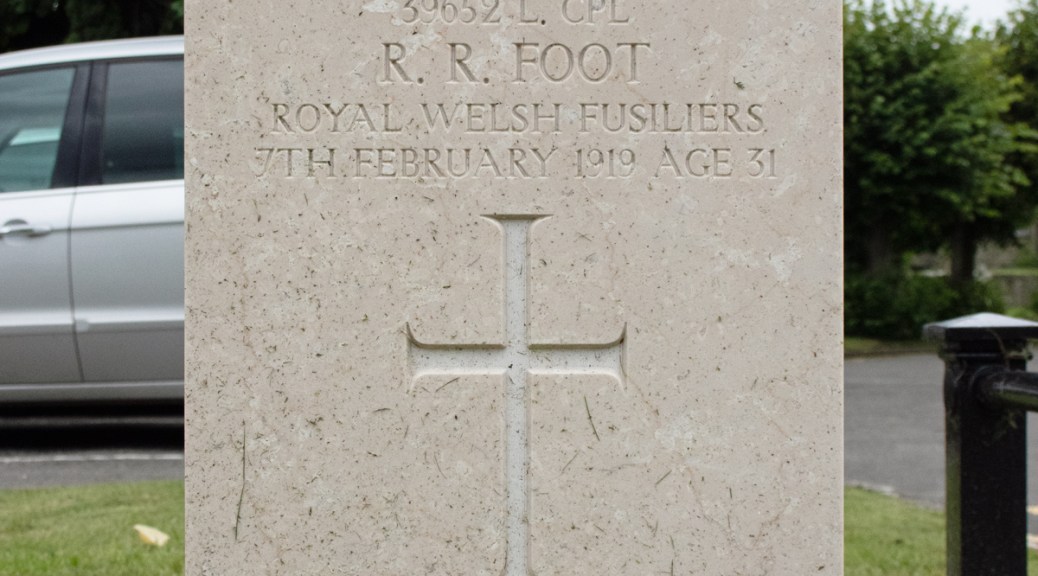
In the lead up to the Great War, he also spent some of his his spare time in the Territorial Army and, when war broke out, he was keen to continue doing his bit. He joined the Royal Welch Fusiliers as a Private in December 1915 and, by the time he was shipped out to France in January 1917, he had been promoted to the rank of Lance Corporal.

After a year on the Western Front, Reginald returned to the United Kingdom and, once the Armistice had been declared, his unit was shipped to Ireland. He fell ill while he was out there, and, in January 1919 was admitted to a military hospital in Ireland.

Sadly, the lung conditions he had contracted – influenza and pneumonia – were to get the better of him, and he passed away on 7th February 1919. Lance Corporal Foot was 31 years old.

The body of Reginald Robert Foot was brought back to Dorset; he lies at rest in the Holy Trinity Churchyard in the town of his birth, Shaftesbury.


Major Stanley Payne

Major Stanley Payne

Stanley James Payne was born towards the end of 1882, one of eleven children to Stephen and Elizabeth Payne. Stephen was a leather salesman from Essex, who had moved his family to Weston-super-Mare in Somerset in around 1880.

Stanley seems to have been drawn in to a military life from an early age. In January 1900, he enlisted as a Private in the Somerset Light Infantry, and the 1901 census listed him as living at the Raglan Barracks in Devonport, near Plymouth.

Military service took Private Payne to India, where he served for six years. His success and ambition were clear; in 1906 he was promoted to first to Corporal and then to Sergeant. By 1911 – and now back in England – as a Lance Sergeant, Stanley was working as a military clerk at the Royal Horse Artillery Barracks in Dorchester, although he was still attached to the Somerset Light Infantry.

Stanley’s ambition and sense of adventure continued; by July 1912 he had made the transfer over to the newly-formed Royal Flying Corps, as a Sergeant.

It was while he was based in Dorchester that he met Winifred Bell. She was the daughter of a local council worker, and the couple married in the town in September 1912. Stanley and Winifred went on to have a daughter, Doris, who was born in July 1914.

War had arrived in Europe, and on 7th October, the now Warrant Officer Payne was shipped to France. During his nine months on the Western Front, he was mentioned in despatches and received the Croix de Guerre for his gallantry. The local newspaper also reported that he:

…had also the honour of being presented to the King on the occasion of His Majesty’s last visit to the front, and at a home station had also been presented to Queen Mary.

Western Daily Press: Saturday 8th March 1919

Returning to England on 1st June 1915, he was again promoted to Lieutenant and Quartermaster, although here his military records dry up. By this time, he had been in the armed forces for more than fifteen years, but his military records seem to confirm this as the last day of his service.

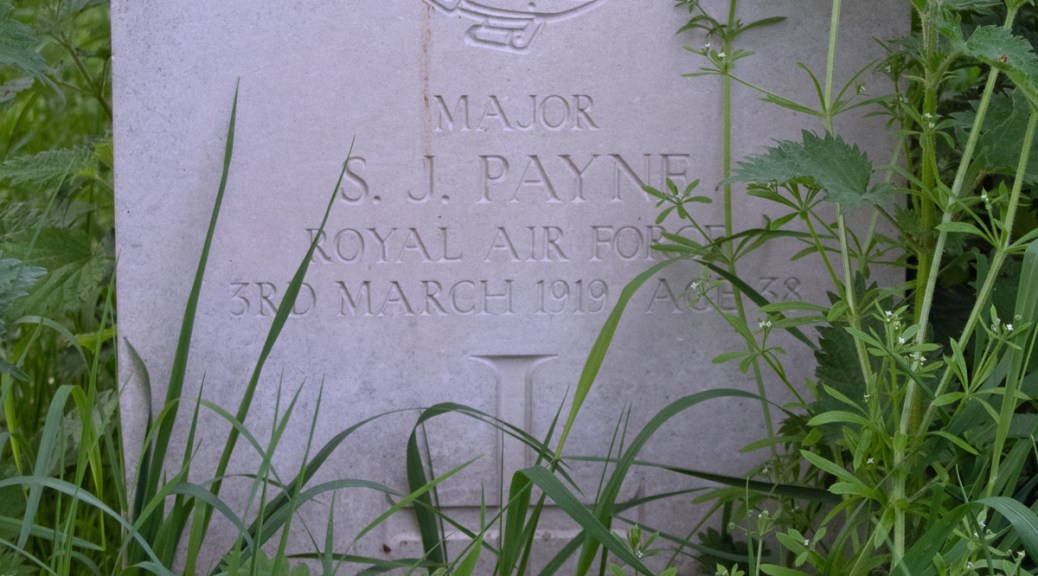
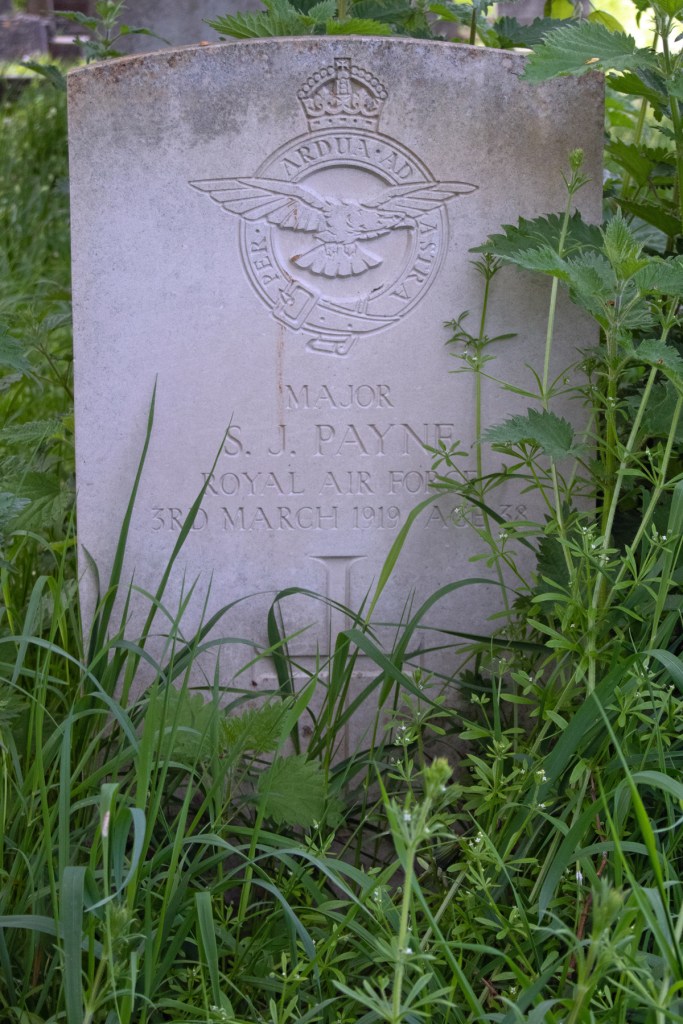
The next record for Stanley confirms his passing. Admitted to the Central Air Force Hospital in Hampstead with a combination of influenza and pneumonia, he died on 3rd March 1919. He was just 36 years of age.

Brought back to Weston-super-Mare, where his now widowed father was still living, Stanley James Payne was laid to rest in the Milton Cemetery in his home town.


Stanley’s gravestone gives his rank as Major. While there is no documented evidence of any additional promotions after June 1915, the rank is the equivalent of Quartermaster in the Army Reserve. It seems likely, therefore, that the end date of his military service marked the start of his time in the reserves.


Private Charles Dyer

Private Charles Dyer

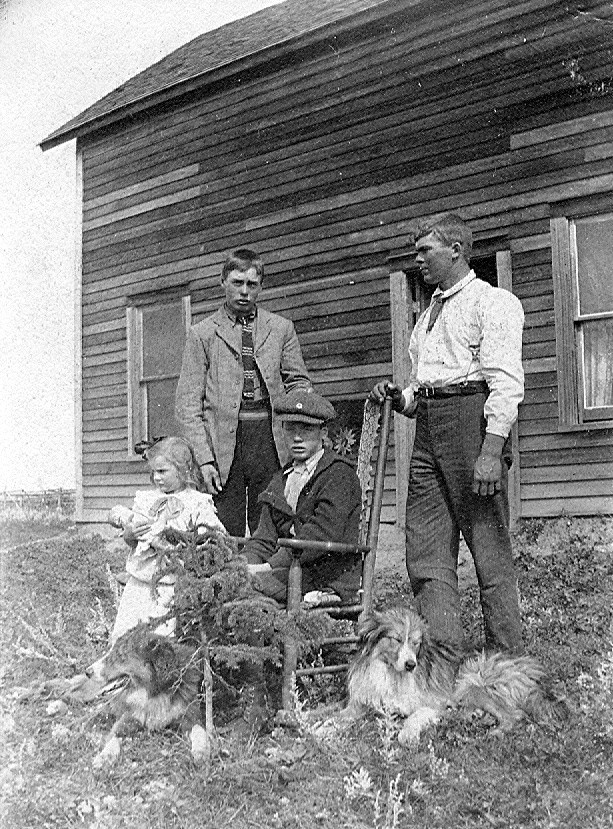
Charles William Dyer was born on 12th May 1895, the youngest of seven children to Harry and Mary Dyer.

Harry was a farmer, who brought his family up in the village of Kewstoke, just to the north of Weston-super-Mare, Somerset. He seems to have been keen to try new things because he and Mary lived for a while in Australia, and their first two children were born there. They then moved back to the UK in around 1887, settling back in Somerset.

By the time of the 1911 census, Charles was 16 years old, and all of the family were helping out on the farm. He seemed to share his father’s sense of adventure; in 1913, he emigrated to Canada, setting himself up as a farmhand in Winnipeg.

War was coming to Europe, however, and Charles joined up. He enlisted in October 1917, joining the Canadian Infantry. Leaving Canada on a troop ship on 19th February 1918, he arrived back in England on 4th March.

Private Dyer was soon installed at the Canadian Infantry camp at Bramshott in Hampshire. Within weeks of arriving in England, however, he had contracted influenza; this developed into pneumonia, and was admitted to the camp’s Military Hospital on 22nd May. Sadly, a week later, Private Dyer was dead. He was just 23 years old.

Charles William Dyer was taken back to Weston-super-Mare and laid to rest in the Milton Cemetery there.


Charles Dyer (on right) in Canada
(Courtesy of ancestry.co.uk)

Captain Arthur Poole

Captain Arthur Poole

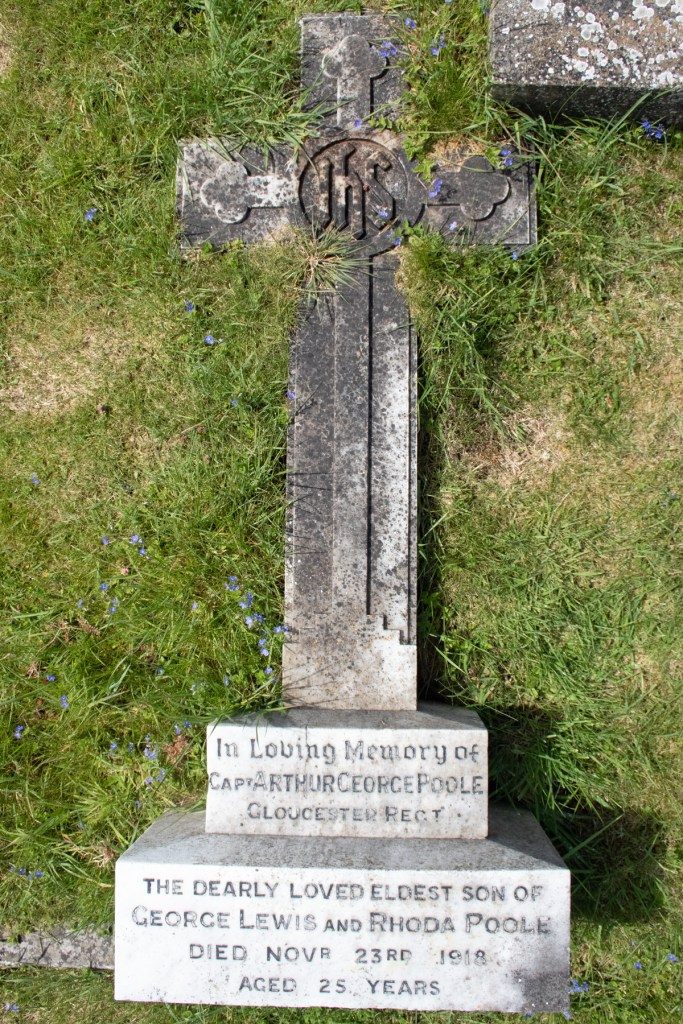
Arthur George Poole was born in Brislington, Somerset, in April 1893. His father, George, was a master builder, and with his mother, Rhoda, the family raise their five children in the Bristol suburb.

Arthur was obvious a bright lad; he attended the Bristol Grammar School, excelling at football, hockey and cricket. After finishing school, he joined a firm of Bristol solicitors and was also appointed secretary of the Bristol Law Society. He went on to continue his studies, when he was accepted to read law at Emmanuel College, Cambridge.

The war was on the horizon, however, and he was called upon to do his duty.

He joined Bristol’s Own (12th Gloucester Regiment) in 1914, and was musketry officer at Chiseldon for some months before going to France in 1915, where he was attached to the 6th Gloucester Regiment.

Within three months he had a severe attack of trench fever, and was home on sick leave for a few weeks. He was severely wounded in October 1917, and came back to England for good. Some months later he was mentioned in despatches. He spent a year in hospital, and although not discharged, was allowed to resume his law studies.

Gloucestershire Echo: Saturday 14th December 1918

While in hospital, Captain Poole contracted influenza, which then became pneumonia. Although recovering from his injuries, it was these conditions that were to get the better of him, and he passed away on 23rd November 1918, at the age of 25 years old.

Arthur George Poole was laid to rest in the pretty graveyard of St Andrew’s Church in Clevedon, Somerset, where his parents now lived.


Private Alfred Wheeler

Private Alfred Wheeler

Alfred Wheeler was born in Binstead, on the Isle of Wight, in the summer of 1886. One of three children, his parents were John, a labourer from the Isle of Wight, and his wife Emily.

When he left school, Alfred found work at the London City Mission in Ventnor. By this point, tragically, both of his parents had passed away, and the young siblings were finding their own ways in life.

The 1911 census found Alfred living with his uncle back in Binstead. His trade was given as a Motor Car Driver for the local Carriage & Motor Works; while he was obviously brought up with a spiritual side, he seems to have had a sense of adventure too.

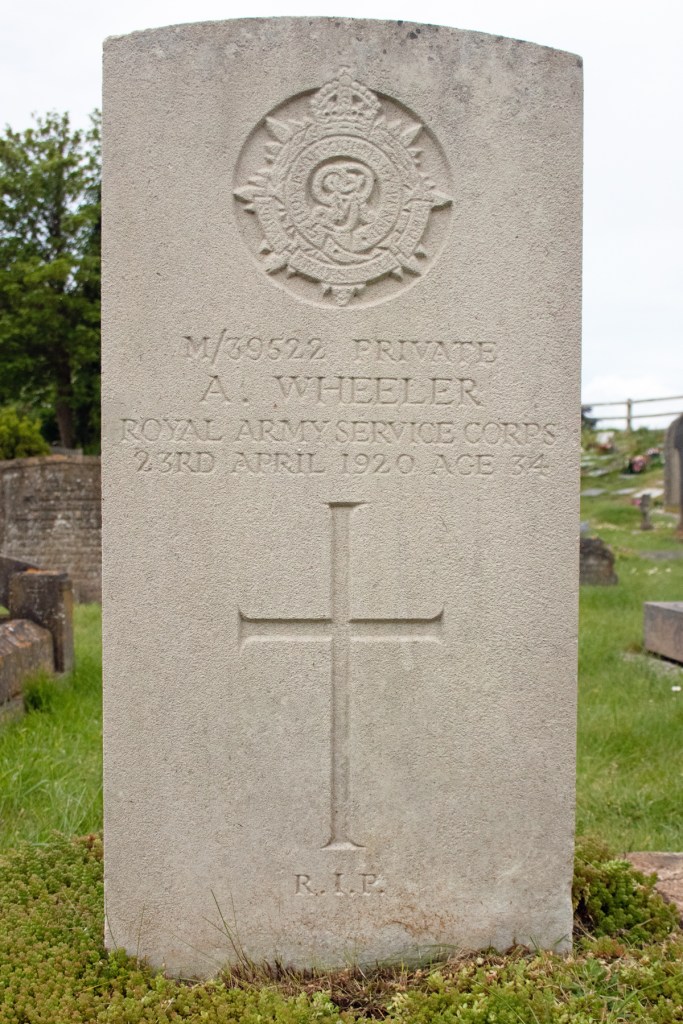
When war broke out, Alfred was keen to do his bit. He enlisted in the Gloucestershire Regiment and was attached to the 1st Battalion. Sent to France within weeks of the war commencing, Private Wheeler was awarded the Victory and British Medals and the 1914 Star.

With his background with cars, Alfred subsequently transferred over to the Royal Army Service Corps in the 615th Motor Transport Company. While full dates are not readily available, the 615th were formed in January 1916, so it was likely after this that Private Wheeler moved across. The company were based in Dublin, and it was in Ireland that he saw out the remainder of the conflict.

On 11th July 1919, Alfred married Rose England. She was the daughter of an organ tuner from Bristol, although there is no obvious connection to Clevedon for him. It seems likely, therefore, that the couple may have met around through the church, possibly as Private Wheeler was travelling between Ireland and Hampshire.

Alfred wasn’t demobbed as soon as the war ended, remaining part of the Royal Army Service Corps through until 1920. It was while he was in Ireland that he contracted influenza. Admitted to hospital in Dublin, he sadly succumbed to the condition on 23rd April 1920. He was 34 years old.

Alfred Wheeler’s body was brought back to England. He lies buried in St Andrew’s Churchyard in Clevedon, Somerset.