Tag Archives: influenza

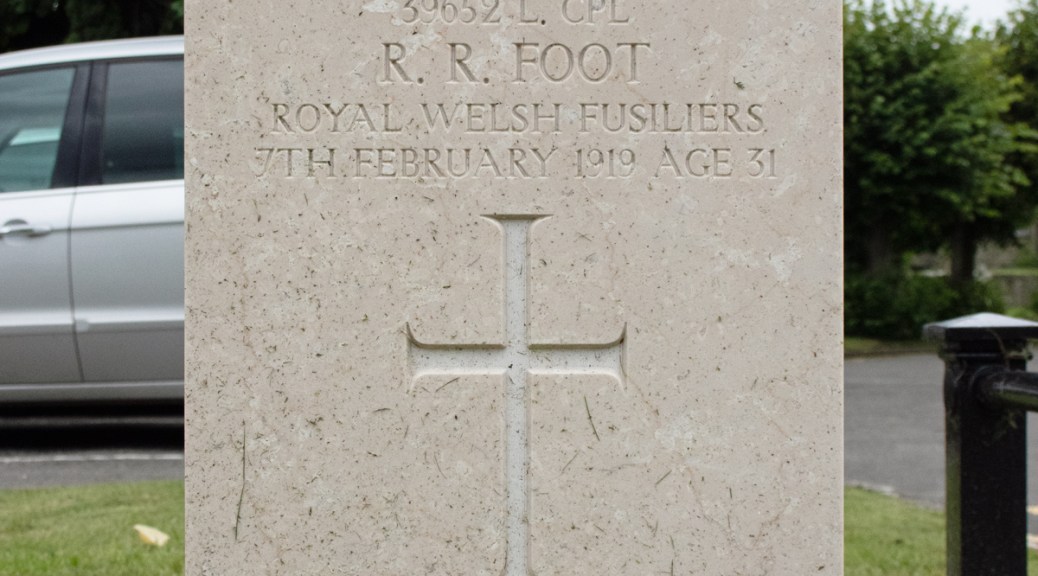
Lance Corporal Reginald Foot

Lance Corporal Reginald Foot

Reginald Robert Foot was born at the beginning of 1888 in Shaftesbury, Dorset, the oldest of three children to Robert and Annie Foot. Robert was a tailor from the town, who brought up his young family in the comfort of well-known surroundings.

When he left school, Reginald found work as a carpenter and joiner. He was a keen, if over-eager, sportsman, and played for Shaftesbury FC. In May 1906, he was reported for ‘cheeky’ behaviour towards the referee in one match.

In the lead up to the Great War, he also spent some of his his spare time in the Territorial Army and, when war broke out, he was keen to continue doing his bit. He joined the Royal Welch Fusiliers as a Private in December 1915 and, by the time he was shipped out to France in January 1917, he had been promoted to the rank of Lance Corporal.

After a year on the Western Front, Reginald returned to the United Kingdom and, once the Armistice had been declared, his unit was shipped to Ireland. He fell ill while he was out there, and, in January 1919 was admitted to a military hospital in Ireland.

Sadly, the lung conditions he had contracted – influenza and pneumonia – were to get the better of him, and he passed away on 7th February 1919. Lance Corporal Foot was 31 years old.

The body of Reginald Robert Foot was brought back to Dorset; he lies at rest in the Holy Trinity Churchyard in the town of his birth, Shaftesbury.


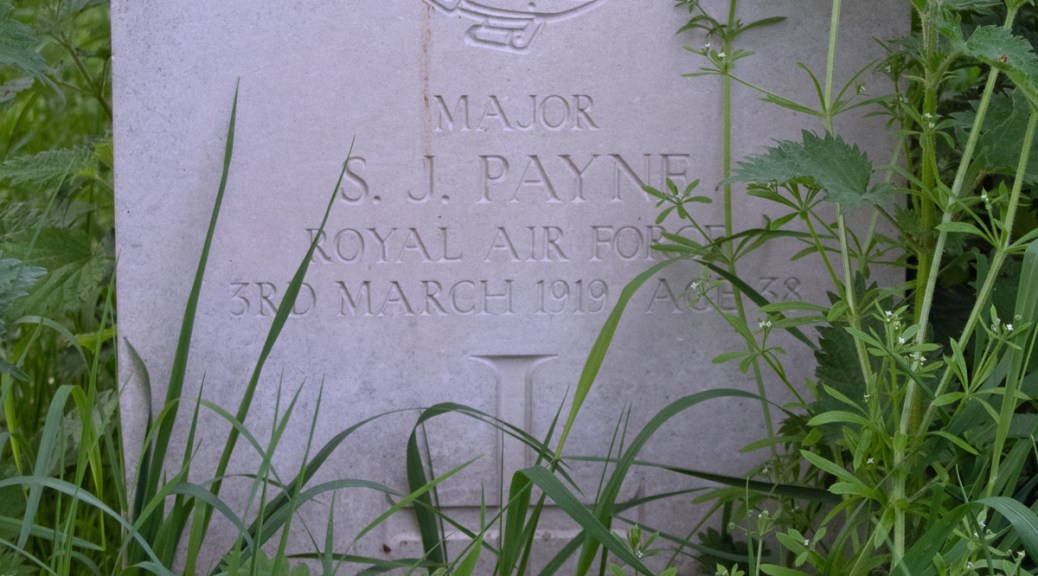
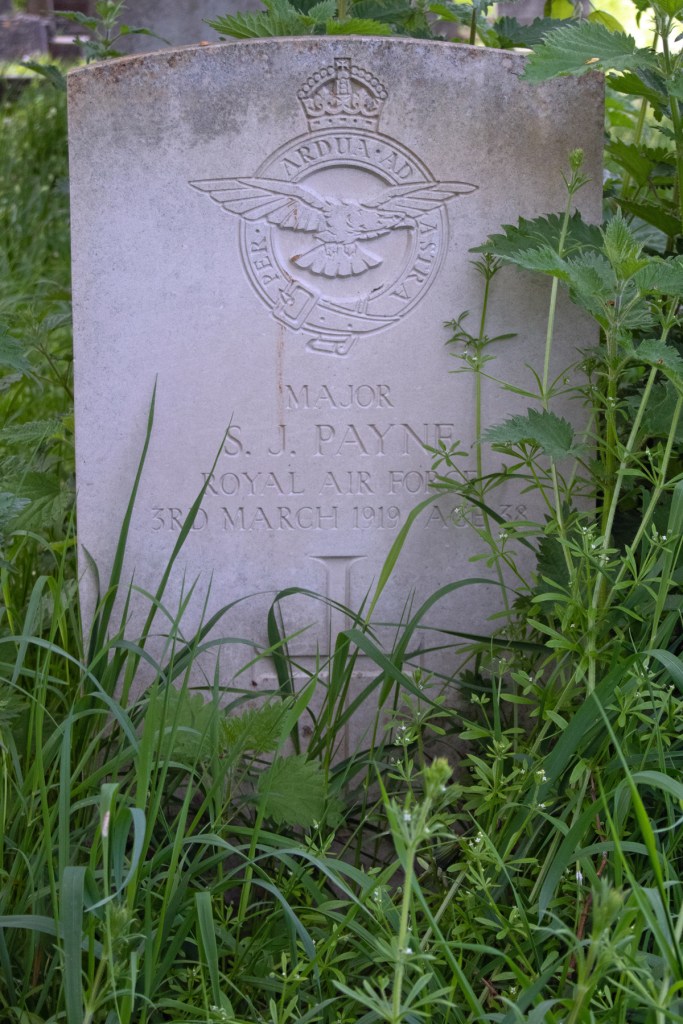
Major Stanley Payne

Major Stanley Payne

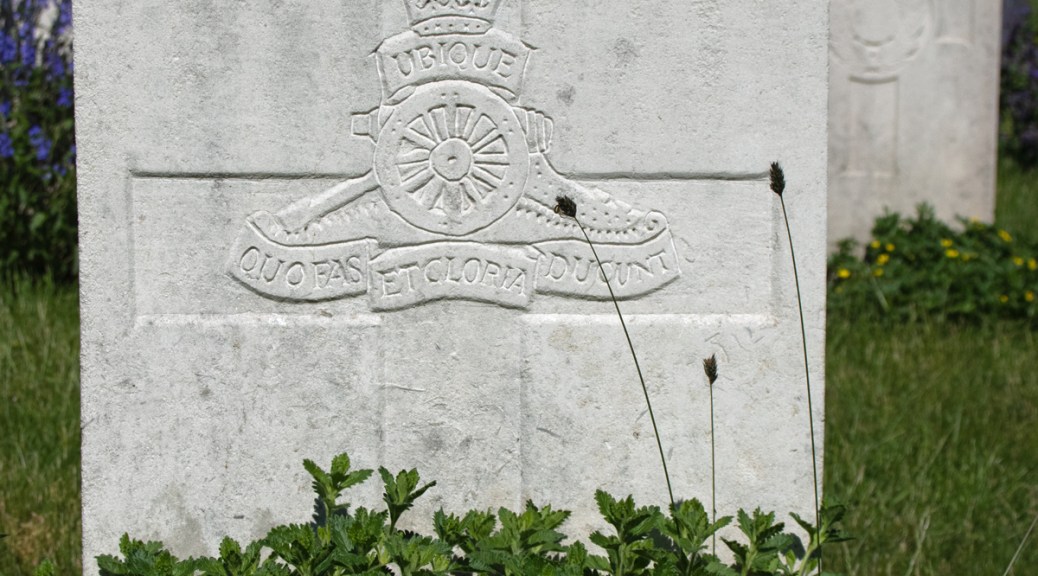
Stanley James Payne was born towards the end of 1882, one of eleven children to Stephen and Elizabeth Payne. Stephen was a leather salesman from Essex, who had moved his family to Weston-super-Mare in Somerset in around 1880.

Stanley seems to have been drawn in to a military life from an early age. In January 1900, he enlisted as a Private in the Somerset Light Infantry, and the 1901 census listed him as living at the Raglan Barracks in Devonport, near Plymouth.

Military service took Private Payne to India, where he served for six years. His success and ambition were clear; in 1906 he was promoted to first to Corporal and then to Sergeant. By 1911 – and now back in England – as a Lance Sergeant, Stanley was working as a military clerk at the Royal Horse Artillery Barracks in Dorchester, although he was still attached to the Somerset Light Infantry.

Stanley’s ambition and sense of adventure continued; by July 1912 he had made the transfer over to the newly-formed Royal Flying Corps, as a Sergeant.

It was while he was based in Dorchester that he met Winifred Bell. She was the daughter of a local council worker, and the couple married in the town in September 1912. Stanley and Winifred went on to have a daughter, Doris, who was born in July 1914.

War had arrived in Europe, and on 7th October, the now Warrant Officer Payne was shipped to France. During his nine months on the Western Front, he was mentioned in despatches and received the Croix de Guerre for his gallantry. The local newspaper also reported that he:

…had also the honour of being presented to the King on the occasion of His Majesty’s last visit to the front, and at a home station had also been presented to Queen Mary.

Western Daily Press: Saturday 8th March 1919

Returning to England on 1st June 1915, he was again promoted to Lieutenant and Quartermaster, although here his military records dry up. By this time, he had been in the armed forces for more than fifteen years, but his military records seem to confirm this as the last day of his service.

The next record for Stanley confirms his passing. Admitted to the Central Air Force Hospital in Hampstead with a combination of influenza and pneumonia, he died on 3rd March 1919. He was just 36 years of age.

Brought back to Weston-super-Mare, where his now widowed father was still living, Stanley James Payne was laid to rest in the Milton Cemetery in his home town.


Stanley’s gravestone gives his rank as Major. While there is no documented evidence of any additional promotions after June 1915, the rank is the equivalent of Quartermaster in the Army Reserve. It seems likely, therefore, that the end date of his military service marked the start of his time in the reserves.


Private Charles Dyer

Private Charles Dyer

Charles William Dyer was born on 12th May 1895, the youngest of seven children to Harry and Mary Dyer.

Harry was a farmer, who brought his family up in the village of Kewstoke, just to the north of Weston-super-Mare, Somerset. He seems to have been keen to try new things because he and Mary lived for a while in Australia, and their first two children were born there. They then moved back to the UK in around 1887, settling back in Somerset.

By the time of the 1911 census, Charles was 16 years old, and all of the family were helping out on the farm. He seemed to share his father’s sense of adventure; in 1913, he emigrated to Canada, setting himself up as a farmhand in Winnipeg.

War was coming to Europe, however, and Charles joined up. He enlisted in October 1917, joining the Canadian Infantry. Leaving Canada on a troop ship on 19th February 1918, he arrived back in England on 4th March.

Private Dyer was soon installed at the Canadian Infantry camp at Bramshott in Hampshire. Within weeks of arriving in England, however, he had contracted influenza; this developed into pneumonia, and was admitted to the camp’s Military Hospital on 22nd May. Sadly, a week later, Private Dyer was dead. He was just 23 years old.

Charles William Dyer was taken back to Weston-super-Mare and laid to rest in the Milton Cemetery there.


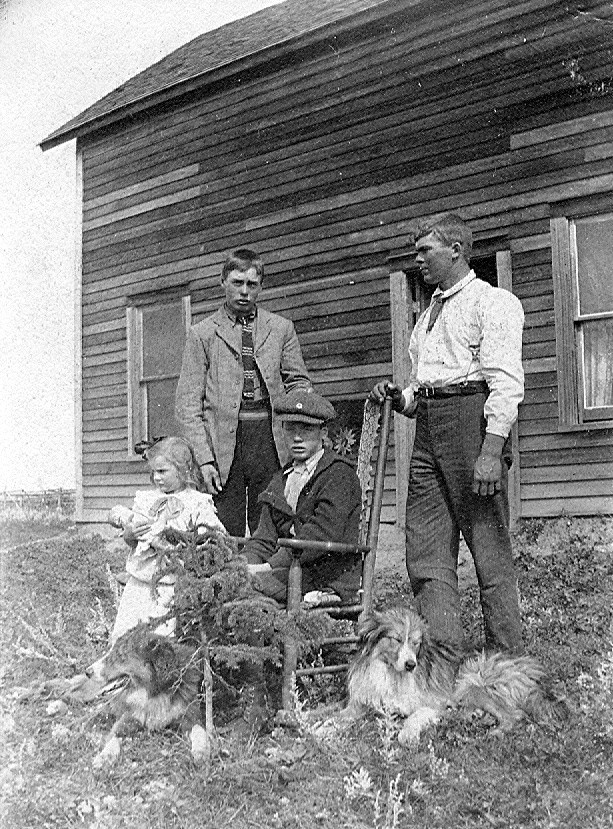
Charles Dyer (on right) in Canada
(Courtesy of ancestry.co.uk)

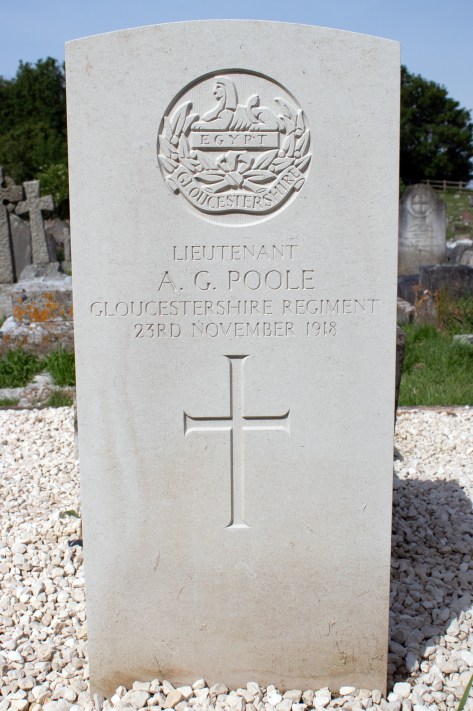
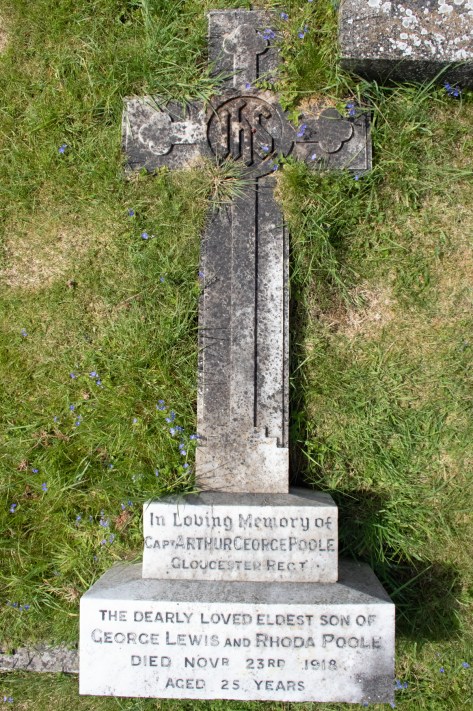
Captain Arthur Poole

Captain Arthur Poole

Arthur George Poole was born in Brislington, Somerset, in April 1893. His father, George, was a master builder, and with his mother, Rhoda, the family raise their five children in the Bristol suburb.

Arthur was obvious a bright lad; he attended the Bristol Grammar School, excelling at football, hockey and cricket. After finishing school, he joined a firm of Bristol solicitors and was also appointed secretary of the Bristol Law Society. He went on to continue his studies, when he was accepted to read law at Emmanuel College, Cambridge.

The war was on the horizon, however, and he was called upon to do his duty.

He joined Bristol’s Own (12th Gloucester Regiment) in 1914, and was musketry officer at Chiseldon for some months before going to France in 1915, where he was attached to the 6th Gloucester Regiment.

Within three months he had a severe attack of trench fever, and was home on sick leave for a few weeks. He was severely wounded in October 1917, and came back to England for good. Some months later he was mentioned in despatches. He spent a year in hospital, and although not discharged, was allowed to resume his law studies.

Gloucestershire Echo: Saturday 14th December 1918

While in hospital, Captain Poole contracted influenza, which then became pneumonia. Although recovering from his injuries, it was these conditions that were to get the better of him, and he passed away on 23rd November 1918, at the age of 25 years old.

Arthur George Poole was laid to rest in the pretty graveyard of St Andrew’s Church in Clevedon, Somerset, where his parents now lived.


Captain Arthur Poole

Private Alfred Wheeler

Private Alfred Wheeler

Alfred Wheeler was born in Binstead, on the Isle of Wight, in the summer of 1886. One of three children, his parents were John, a labourer from the Isle of Wight, and his wife Emily.

When he left school, Alfred found work at the London City Mission in Ventnor. By this point, tragically, both of his parents had passed away, and the young siblings were finding their own ways in life.

The 1911 census found Alfred living with his uncle back in Binstead. His trade was given as a Motor Car Driver for the local Carriage & Motor Works; while he was obviously brought up with a spiritual side, he seems to have had a sense of adventure too.

When war broke out, Alfred was keen to do his bit. He enlisted in the Gloucestershire Regiment and was attached to the 1st Battalion. Sent to France within weeks of the war commencing, Private Wheeler was awarded the Victory and British Medals and the 1914 Star.

With his background with cars, Alfred subsequently transferred over to the Royal Army Service Corps in the 615th Motor Transport Company. While full dates are not readily available, the 615th were formed in January 1916, so it was likely after this that Private Wheeler moved across. The company were based in Dublin, and it was in Ireland that he saw out the remainder of the conflict.

On 11th July 1919, Alfred married Rose England. She was the daughter of an organ tuner from Bristol, although there is no obvious connection to Clevedon for him. It seems likely, therefore, that the couple may have met around through the church, possibly as Private Wheeler was travelling between Ireland and Hampshire.

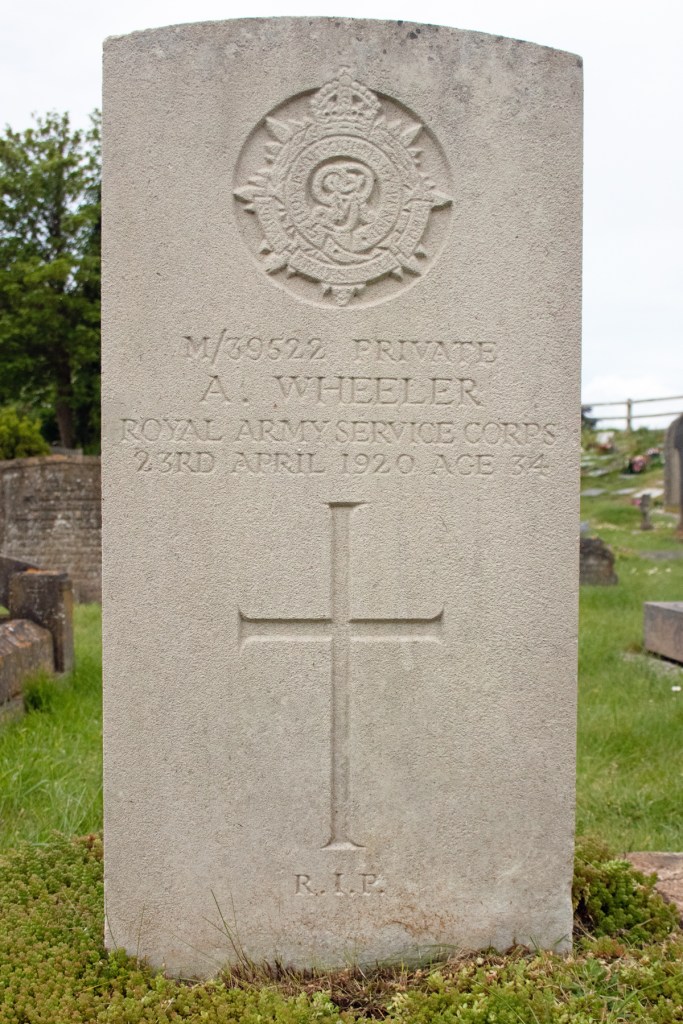
Alfred wasn’t demobbed as soon as the war ended, remaining part of the Royal Army Service Corps through until 1920. It was while he was in Ireland that he contracted influenza. Admitted to hospital in Dublin, he sadly succumbed to the condition on 23rd April 1920. He was 34 years old.

Alfred Wheeler’s body was brought back to England. He lies buried in St Andrew’s Churchyard in Clevedon, Somerset.


Private Robert Voisey

Private Robert Voisey

Robert Voisey was born towards the end of 1891, one of six children to Richard and Sophia. Richard was a tailor and, while both he and Sophia had been born in Cullompton, Devon, by the time Robert was born, they had moved to the Somerset town of Taunton.

When he left school, Robert followed his father’s trade and, by the time of the 1911 census, he was living with his parents and two of his sisters in a terraced house not far from the town’s station.

With the outbreak of the Great War, Robert was keen to do his bit. While full details of his military service are not available, it seems that he initially enlisted in the Somerset Light Infantry, but was subsequently transferred to the Royal Warwickshire Regiment. Joining the 6th Battalion as a Private, he saw action on the Western Front, and was wounded in April 1918.

Evacuated to England for treatment, Private Voisey was admitted to the 5th Northern General Hospital in Leicester. He seemed to be recovering well from his injuries, but then contracted influenza.

Sadly, this developed into pneumonia and Private Voisey subsequently died on 23rd October 1918, at the tender age of 25 years old.

Robert Voisey’s body was brought back to Somerset and he was laid to rest in the St James’ Cemetery in the town.


Robert’s funeral was written up in the local newspaper, and the report sheds more of a light on the Edwardian attitude towards some medical and mental health conditions than it does on the actual service.

The very fact of [Robert] ever having been a soldier, considering the great disability he was afflicted with through an incurable impediment in his speech, testifies abundantly to his high and noble interpretation of duty and patriotism.

Had he insisted he could at any time have evaded military service, but so eager was he to serve his country that it was not until he had actually been four times rejected as “physically unfit for military service” was he eventually accepted.

To the writer o this brief notice, who was his friend and fellow shop-mate for a long while, but who was at the time doing duty at Castle Green Recruiting Office, he often time used to express his indignation at not being accepted, and on the last occasion he spoke to the writer, it was to emphatically declare himself “as fit to be a soldier as anyone who had yet left Taunton.”

He dreaded the thought of being considered a shirker, and his opinion of many who have, even up till now, successfully evaded service, though far more physically fit than he was, was contemptuous to the bitterest extreme.

He was a true Britisher, a faithful friend and shop-mate, and a courageous soldier of whom no fitter epitaph could be written than “he gave himself in defence of home, country and liberty.”

Taunton Courier and Western Advertiser: Wednesday 6th November 1918

Leading Seaman Alfred Davidge

Leading Seaman Alfred Davidge

Alfred Ernest Davidge was born on 22nd July 1882, one of six children to Richard and Ermina. Richard was a boilermaker from Bristol, but brought his family up in the Wiltshire town of Swindon.

Alfred was keen on adventure, and sought out a live on the open seas. In August 1898, at the age of sixteen, he joined the Royal Navy. After serving two years at the rank of Boy, he officially enlisted for a term of twelve years.

Starting as an Ordinary Seaman, Alfred had worked his way up to Leading Seaman by 1905. He continued in this role until 7th June 1909, when he was knocked back a rank for misconduct. He evidently realised the error of his ways, however, as, just over a year later, he was promoted again.

Leading Seaman Davidge’s term of service came to an end in July 1912, and, having been assigned to seventeen vessels during that time, he became part of the Royal Naval Reserve.

Back on home soil, and Alfred set up home in Taunton. He found work as a labourer and, in October 1913, married local lady Louisa Pomeroy. The couple went on to have a daughter, Hilda.

Storm clouds were gathering over Europe by now, and Alfred was soon recalled to the Royal Navy. He took up his previous role, and, after a period of training at HMS Vivid in Plymouth, he was assigned to HMS Suffolk.

Leading Seaman Davidge spent eighteen months aboard HMS Suffolk (during which time the photo below was taken), before being transferred to HMS Columbella in November 1916. His time there was short, however, as he became unwell.

Admitted to the Royal Infirmary in Glasgow with influenza, Leading Seaman Davidge sadly succumbed to the condition on 17th March 1917. He was 34 years old.

Alfred Ernest Davidge was brought back to Taunton for burial. He lies at rest in the St James Cemetery in the town.


Larger memorial image loading...
Alfred Davidge
(from findagrave.com)

Engine Room Artificer Newman Bailey

Engine Room Artificer 4th Class Newman Bailey

Newman Joynt Bailey was born on 1st August 1887, the eldest of five children to Newman Bailey and his wife Anna (née Joynt). Newman Sr worked as a switchman and signalman for Great Western Railway and had been born in Bath. He married Anna (whose maiden name was Joynt, and who had been born in Ireland) in 1885 and, after a short stint living across the county border in Devon – where Newman Jr was born – he settled his young family in Taunton.

When Newman Jr left school, he became an office boy, but he soon found himself following in his father’s footsteps. He became a fitter for the railways and, by 1910, was living with spitting distance of the GWR depot in the town.

It was here, in William Street, that he set up home with his new wife, Lily Gill, who he had married on 31t July 1910. Lily was the daughter of a Taunton lamplighter, and, to help make ends meet, worked as an ironer at the town’s collar factory.

War was on the way, and in July 1915, Newman enlisted in the Royal Navy. After initial training aboard Vivid II, the shore establishment in Devonport, he was deployed on HMS Blake as an Engine Room Artificer.

HMS Blake was an auxiliary ship designed to provide maintenance support to a flotilla of destroyers or other small warships. With his experience with steam engines at GWR, his knowledge of mechanics would have made him ideally suited to this type of role.

While he survived the war, Artificer Bailey was to be struck down with something much closer to home. In the immediate post-war period, the Spanish Flu pandemic swept the globe, and Newman was to fall victim to it. Admitted to the Royal Naval Hospital in South Queensferry, near Edinburgh, he passed away from the lung condition on 23rd November 1918. He was just 32 years old.

Brought back home, Newman Joynt Bailey was laid to rest in St James Cemetery in his home town of Taunton.


Private Geoffrey Lake

Private Geoffrey Lake

Geoffrey William Lake was born in London in 1900, the oldest of two children to George and Emma Lake. George was a bank clerk who soon got promotion to bank manager and, as a result, moved the family to the Somerset town of Taunton at some point between 1904 and 1911.

When he left school, Geoffrey found work at his father’s bank and, with the war still being played out on the other side of the English Channel, he joined the Inns of Court Officers Training Corps in August 1918.

Sadly, this was to be the decision that saw Private Lake’s undoing. Whilst training in Hertfordshire, he caught influenza, which then led to pneumonia. Admitted to the Military War Hospital in Napsbury, the illnesses got the better of him, and tragically he passed away on 10th November 1918. He was just 18 years of age.

Geoffrey William Lake was brought back to Taunton, and lies at rest in St Mary’s Cemetery in the town.


Lance Corporal Francis Hawkins

Lance Corporal Francis Hawkins

Francis Moreton Hawkins was born in Cottingham, Northamptonshire on 15th July 1895. He was the eldest of eight children to Francis and Louisa Hawkins. Francis Sr was a butcher and, by 1905, he had moved the family to Taunton, where he set up a ship on the main shopping street in the town.

When Francis left school, he became a clerk for the business; he went on to take civil service exams, gaining employment in the General Post Office and then Customs & Excise. War was looming, however, taking him in a different direction.

Sadly, a lot of Francis’ military records no longer exist. What the records do tell us, though, is that he initially enrolled with the Somerset Territorials in October 1914, transferring first to the Civil Service Rifles and then the Rifle Brigade. He served his term in the army, rising to the rank of Lance Corporal.

When the war came to a close, Lance Corporal Hawkins was placed on furlough while he waited to be demobbed, and returned home on 19th November 1918. Feeling unwell, he took straight to his bed, and, three days later, was admitted to the Military Hospital in Taunton with influenza and pneumonia.

Tragically, these were to get the better of him; Francis passed away at the hospital on 23rd November 1918. He was just 23 years old.

Francis Moreton Hawkins lies at rest in St Mary’s Cemetery in his home town of Taunton.