Tag Archives: meningitis

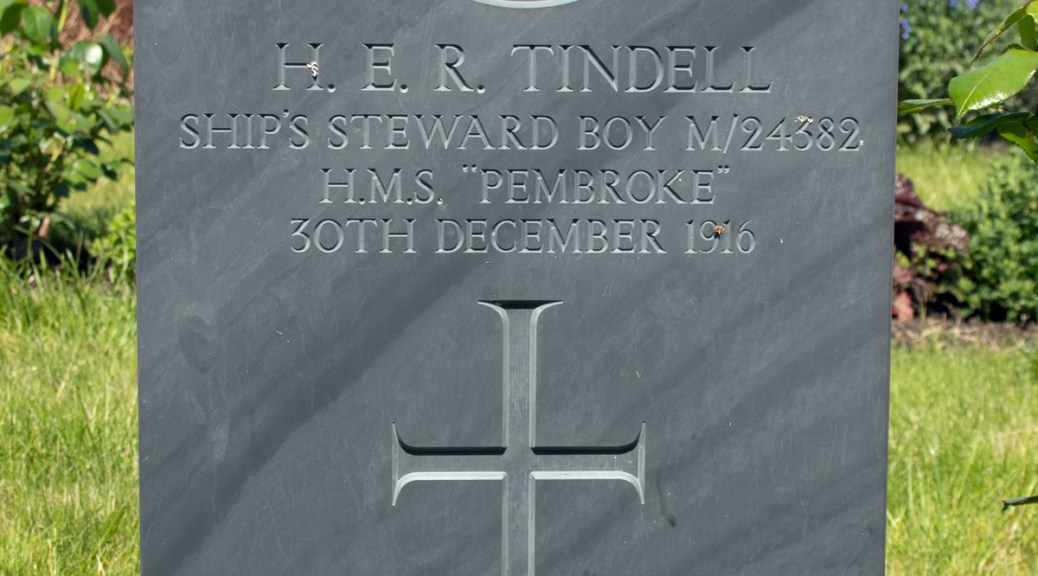
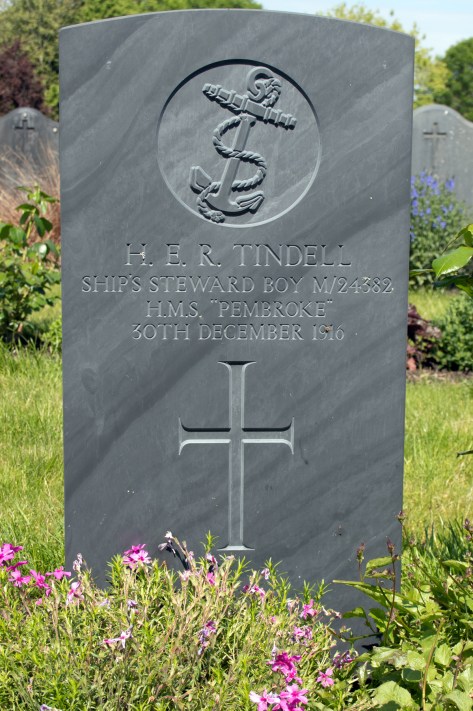
Ship’s Steward Assistant Harold Tindell

Ship’s Steward Assistant Harold Tindell

Harold Edward Richard Tindell was born in Sidcup, Kent, on 15th January 1898. The middle of three children, his parents were travelling salesman Lawrence Tindell, and his wife, Alice.

There is little concrete information available about Harold’s life: his family do not appear in the 1911 census, and it is only on his enlistment papers that we get a picture of the young man he had become. He joined the Royal Navy on 28th November 1916, signing up as a Ship’s Steward Assistant.

The document suggests that he had transferred over from the Royal Naval Volunteer Reserve, giving up his job as a clerk to fully serve his country. His papers show that he was 5ft 4.5ins (1.64m) tall, with brown hair, grey eyes and a fresh complexion.

Ship’s Steward Assistant Tindell was sent to HMS Pembroke – the Royal Naval Dockyard in Chatham, Kent – for his training. Tragically, however, his time there was to be brief. He contracted cerebrospinal meningitis, dying from the condition on 30th December 1916: he was eighteen years of age, and had been in the Royal Navy for just 32 days.

Harold Edward Richard Tindell was laid to rest in the military section of Woodlands Cemetery, Gillingham, Kent, not far from the base he had so briefly called home.


Harold’s headstone gives his rank as Ship’s Steward Boy: however, his service papers and the Commonwealth War Graves Commission both confirm the role as Ship’s Steward Assistant.
Private Robert Fisher

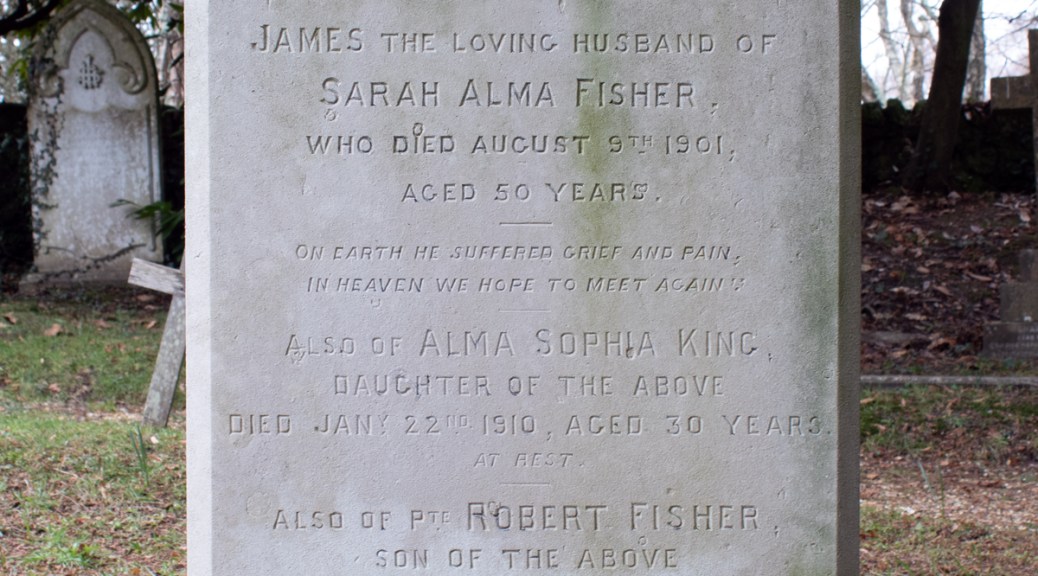
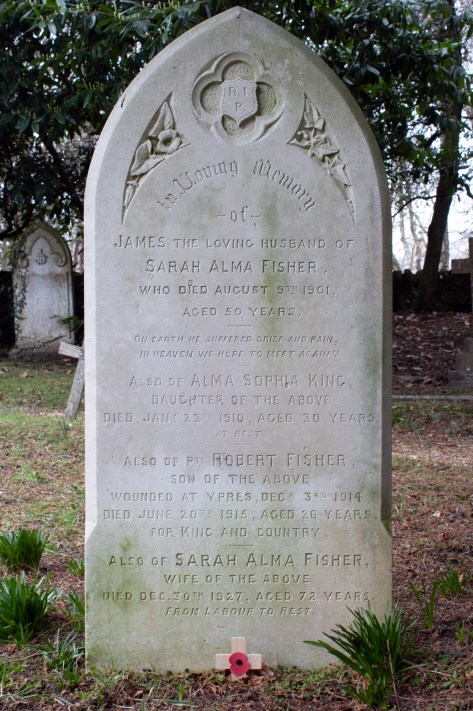
Private Robert Fisher

Robert Fisher was born on 12th September 1888 in Lyndhurst, Hampshire. He was the sixth of eight children to James and Sarah Fisher. James was a coachman, and the family lived on Pike’s Hill, to the north of the town centre.

James died in 1901, and Robert remained at home to support his mother and two younger sisters. The 1911 census found the family living in the same four-roomed cottage on Pike’s Hill: Robert was employed as a mail driver, while his sister Kathleen worked as a domestic servant. The family also had a lodger, William Penny, to help bring in some extra money.

When war broke out, Robert stepped up to play his part. His service documentation has been lost, but it is clear that he enlisted in the opening weeks of the conflict, and was assigned to the 1st Battalion of the Hampshire Regiment. As proof of a quick turnaround for these new recruits, Private Fisher found himself in France by mid-November 1914.

Fighting on the Western Front near Armentières, Private Fisher was wounded on 3rd December 1914. He was medically evacuated to Britain for treatment, and admitted to Netley Hospital near Southampton, Hampshire. He had been “struck in no less than seven places by shrapnel.” [Hampshire Independent: Saturday 3rd July 1915]

Eventually well enough to return home, by June 1915, Robert’s health had deteriorated. He contracted meningitis, and was admitted to the Isolation Hospital back in Southampton. The condition would ultimately prove fatal and Private Fisher passed away on 20th June 1915: he was 26 years of age.

Robert Fisher was laid to rest in the family plot in Lyndhurst Cemetery, alongside his father, and not far from where his grieving mother still lived.


Private Arthur Charles

Private Arthur Charles

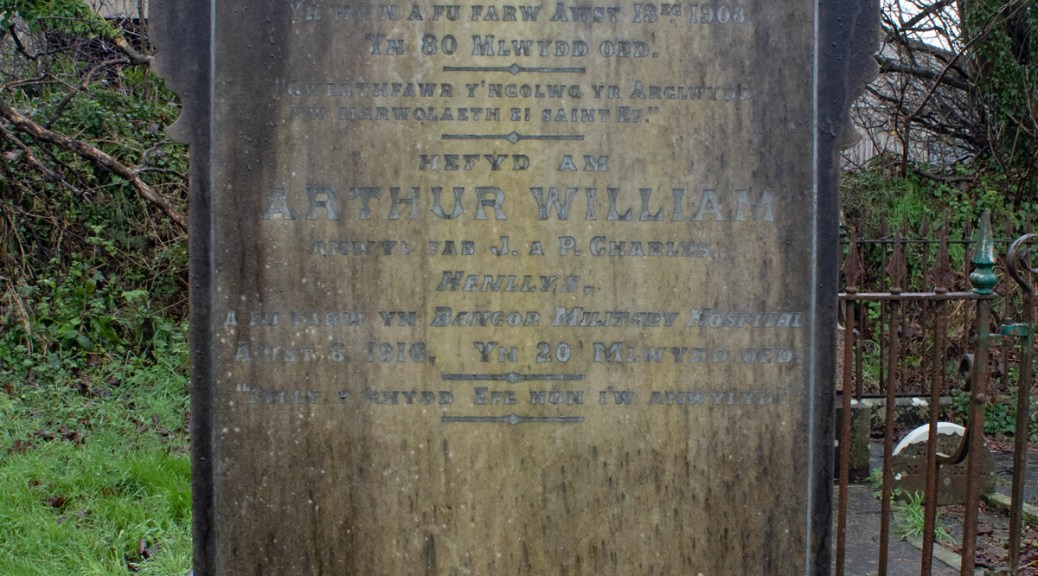
Arthur William Charles was born in Llanrhian, Pembrokeshire, in the summer of 1896. The middle of eleven children, his parents were Joseph and Phoebe Charles.

The 1901 census recorded Joseph as being a butcher and innkeeper in the village, but by the time of the next poll, the family were split. Joseph and Phoebe were now noted as being farmers, living with five of their children plus two servants at Henllys Farm. Arthur, meanwhile, was living with two of his sisters on his brother Thomas’ farm in Mathry. At 14 years of age, he was noted as being a farmer’s son, working on a farm.

When war broke out, Arthur was called upon to play his part. His service papers are long since lost, but he had enlisted in the Welch Regiment by the spring of 1916. Assigned to the 20th (3rd Rhondda) (Reserve) Battalion, he was sent to Bangor, Gwynedd, for training.

Tragically, however, Private Charles’ time there was not to be a lengthy one. He contracted cerebrospinal meningitis, and passed away on 6th August 1916: he was 20 years of age.

The body of Arthur William Charles was taken back to Pembrokeshire for burial. He was laid to rest in the Mathry Congregational Churchyard in Rehoboth.


Private Arthur Charles
(from ancestry.co.uk)

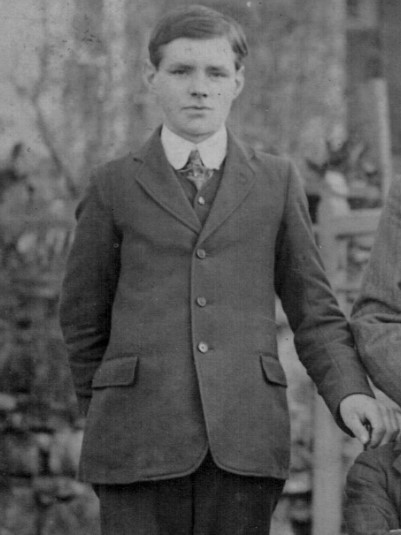
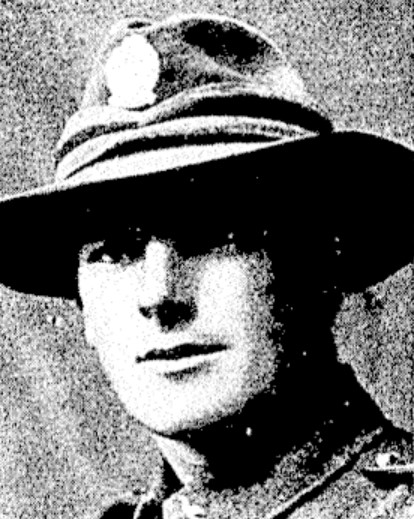
Private Gordon McDonald

Private Gordon McDonald

Gordon McDonald was born on 28th January 1893 in Pongaroa, New Zealand. The youngest of six children, and the only son, his parents were Scottish-born farmers John and Helen – or Ellen – McDonald.

Little information is available about Gordon’s early life. When he completed his schooling, he went into agricultural work, and this was his employment when, on 27th June 1916, he answered the call to play a part in a conflict on the other side of the globe.

Gordon’s service papers show that he would have been an imposing figure of a man. He was 6ft 3ins (1.91m) tall, and weighed 160lbs (72.6kg). A Presbyterian, he had brown hair, blue eyes and a medium complexion. He was also noted as having two scars, one on the outside of his right forearm, the other on his left thumb.

Assigned to the New Zealand Wellington Regiment, Private McDonald’s unit left the country of his birth on 16th October 1916. The SS Willochra would take two-and-a-half months to reach Britain, arriving in Devonport, Devon, on 29th December. From there Gordon and his unit were sent to Codford, Wiltshire, where their ANZAC base was set up.

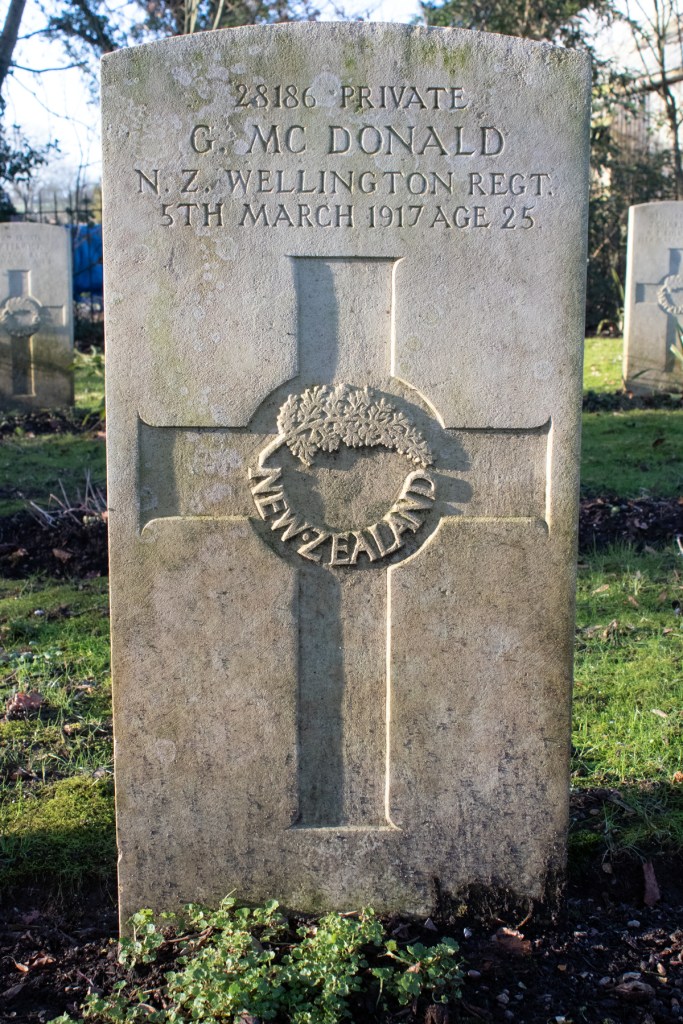
Private McDonald’s time in Britain was to be tragically brief. At this point in the war, disease was rife in the Codford billets, and he was not to be immune to its effects. On 13th February 1917, he was admitted to the No. 3 New Zealand General Hospital, attached to the camp, with tubercular meningitis. The condition would prove too severe, and he passed away on 5th March 1917. He was 24 years of age.

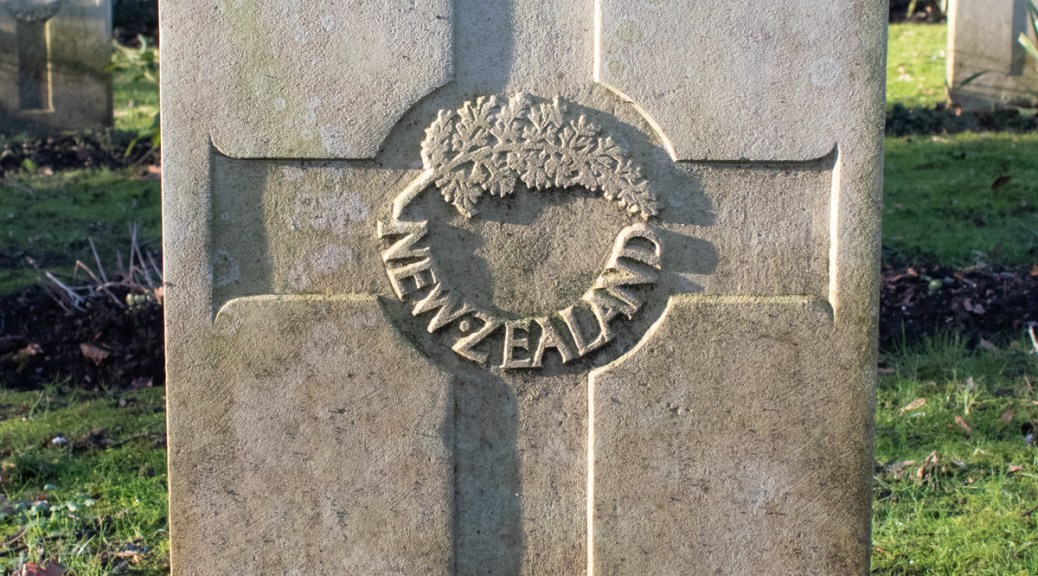
Gordon McDonald was laid to rest in the ANZAC graveyard extension to St Mary’s Church in Codford, close to the camp where he had breathed his last.


Private Gordon McDonald
(from findagrave.com)

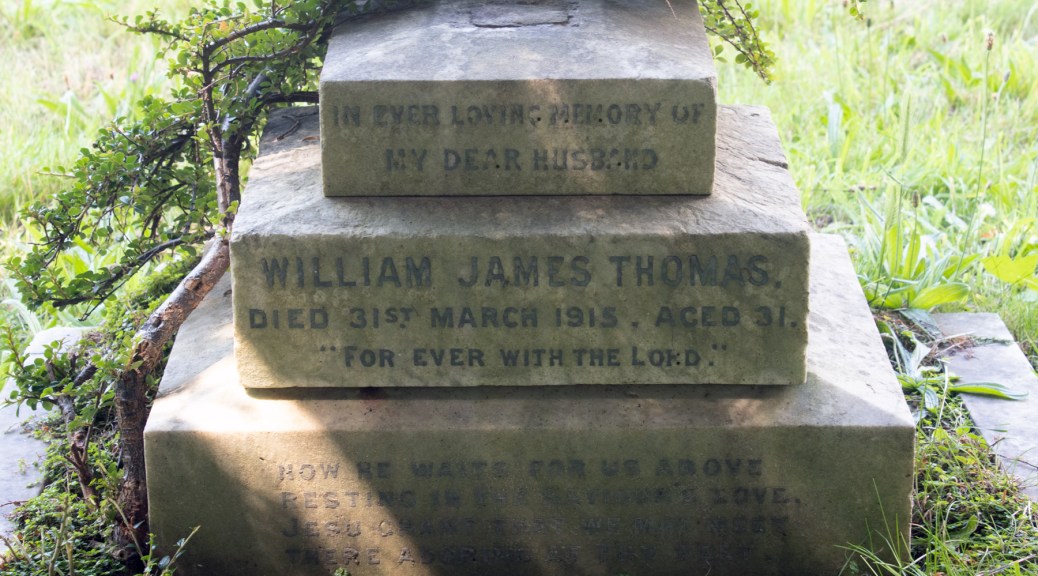
Private William Thomas

Private William Thomas

William James Thomas was born in Manordeifi, Pembrokeshire, in 1894. The older to two children his parents were Benjamin and Ellen Thomas. Benjamin was a groom, and, at the time of the 1891 census, the family were living at Cilwendeg Lodge at the entrance to the Welsh estate.

The family moved to Aberporth on the Cardigan coast by the 1901 census. Benjamin had become a farmer, and William, now 17 years of age, was helping out.

Something changed dramatically for William, however, and by 1914, he was living in the West Sussex village of Ferring, some 200 miles (320km) from his birthplace. By this point he was working as a motor driver and, on 25h March, he married Winifred May Knight at St Mary’s Church in Goring-by-Sea.

William stepped up to serve his country when war broke out, enlisting on 18th February 1915. His service records show that he was 5ft 4ins (1.63m) tall, and weighed 138lbs (62.6kg). He was noted as having a mole on his right cheek, and that several teeth were missing. The document confirms his marriage to Winifred, but also gives details of a child, Evelyne Winifred, who had been born in 1905: there is nothing to confirm whether she was his, or was born to Winifred before the couple met.

Private Thomas was assigned to the Army Service Corps Mechanical Transport Division, and sent to nearby Worthing for his training. His time in the army was to be tragically brief, as within a fortnight he had been admitted to the town’s Red Cross Hospital, suffering from cerebrospinal fever.

On 23rd March, William was transferred to Worthing Civil Infections Hospital, but any treatment he was receiving was to prove ineffective. He passed away on 31st March 1915, at the age of 31 years old.

The body of William James Thomas was laid to rest in the graveyard of St Mary’s Church, Goring, where just over a year before he and Winifred had been married.


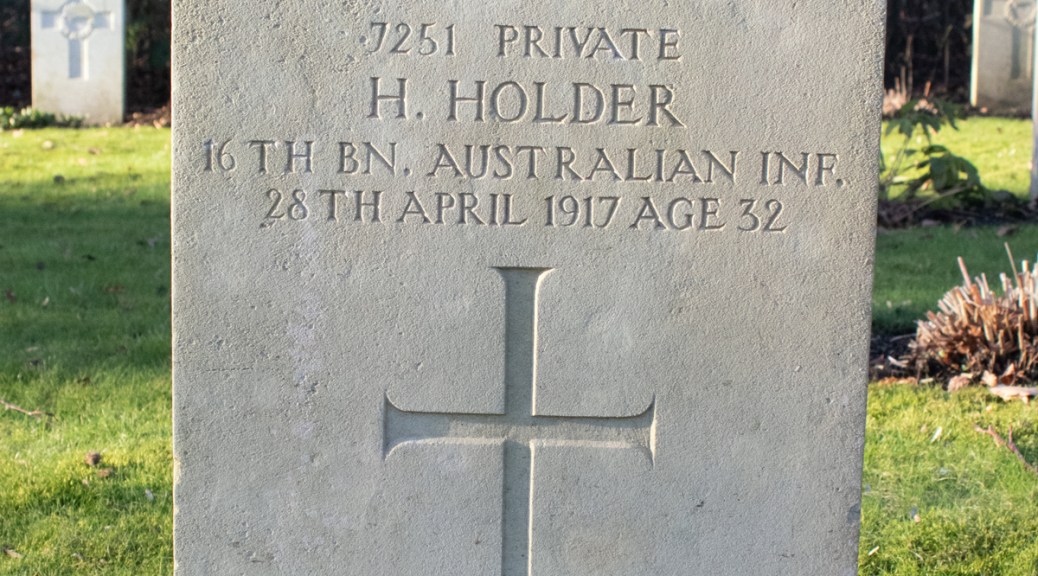
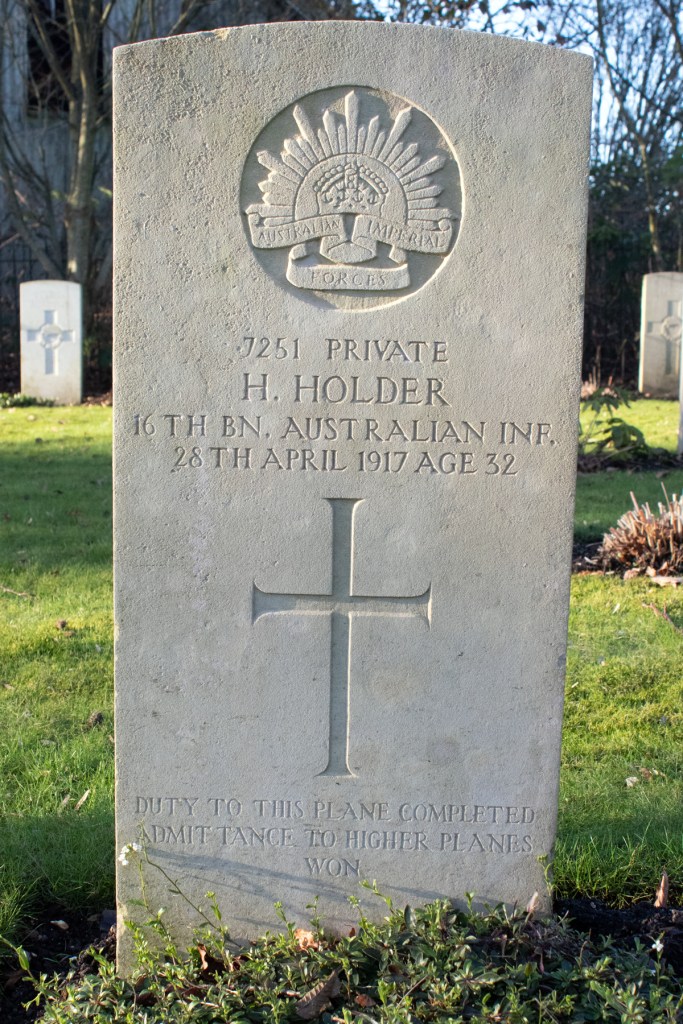
Private Harry Holder

Private Harry Holder

Harry Holder was born in the village of Ludgvan, Cornwall, in the summer of 1885. The oldest of fourteen children, his parents were Harry and Grace Holder. Harry Sr was a market gardener, and his oldest son was to follow in his footsteps.

By the time of the 1911 census, the Holders had moved to Cheltenham, Gloucestershire. Settling in a seven-room house in Leckhampton Road, the household of eleven people had six wages coming in, split between market gardening for the men and floristry for the women.

The following year, Harry Sr took his family on the long journey to Australia for a new life. They found work on a farm near Perth, and Harry Jr was employed as an agricultural labourer when war broke out. When the call came, he stepped up to play his part and his service records suggest that he had spent four years in the territorial army back in Britain. Harry had been turned down for service because of the state of his teeth just a month before trying to enlist again. The second time, however, he was successful, and he joined the Australian Imperial Force on 13th September 1916.

Private Holder’s medical report confirmed the man he had become. At 31 years of age, he was 5ft 10.5ins (1.79m) tall, and weighed 140lbs (63.5kg). A Roman Catholic, he had brown hair, blue eyes and a fresh complexion.

Assigned to the 16th Battalion of the Australian Infantry, Private Holder’s unit departed from Fremantle on 21st January 1917, travelling no board the ship Miltiades. Just under two months later, on 27th March, Harry arrived back in Britain, docking at Devonport, Devon, before moving with his battalion to a camp on the outskirts of Codford, Wiltshire.

A significant proportion of the ANZAC troops became unwell within weeks of arriving at the camp, and Harry was not to avoid illness. On 27th April he was admitted to the barracks’ hospital with cerebrospinal meningitis, but the treatment was to prove too little, too late. Private Holder died on 28th April 1917: he was 31 years of age.

Harry Holder was laid to rest in a new extension to St Mary’s Churchyard in Codford, close to the base where he had breathed his last.


Private Harry Holder
(from findagrave.com)

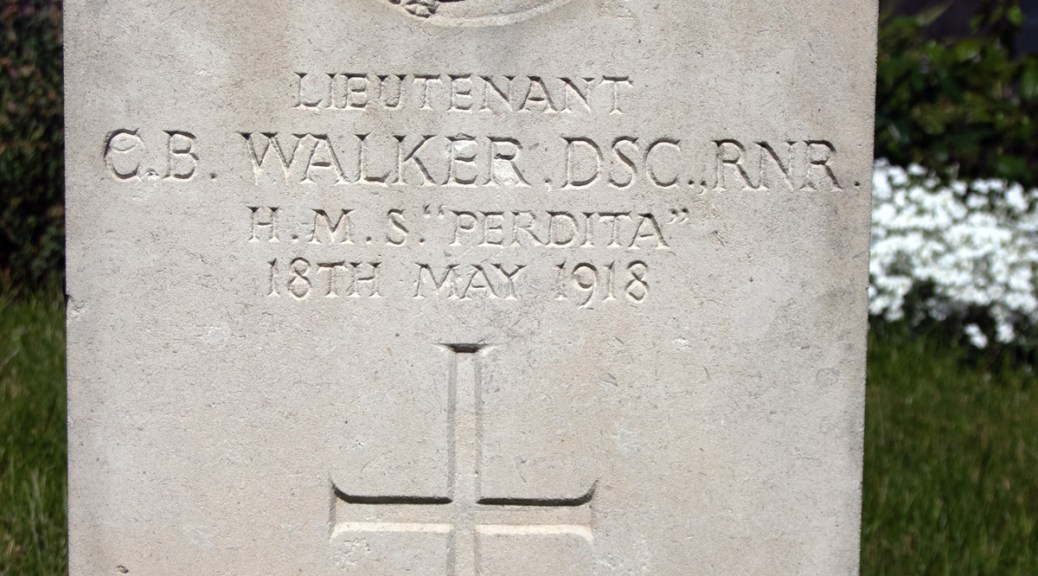
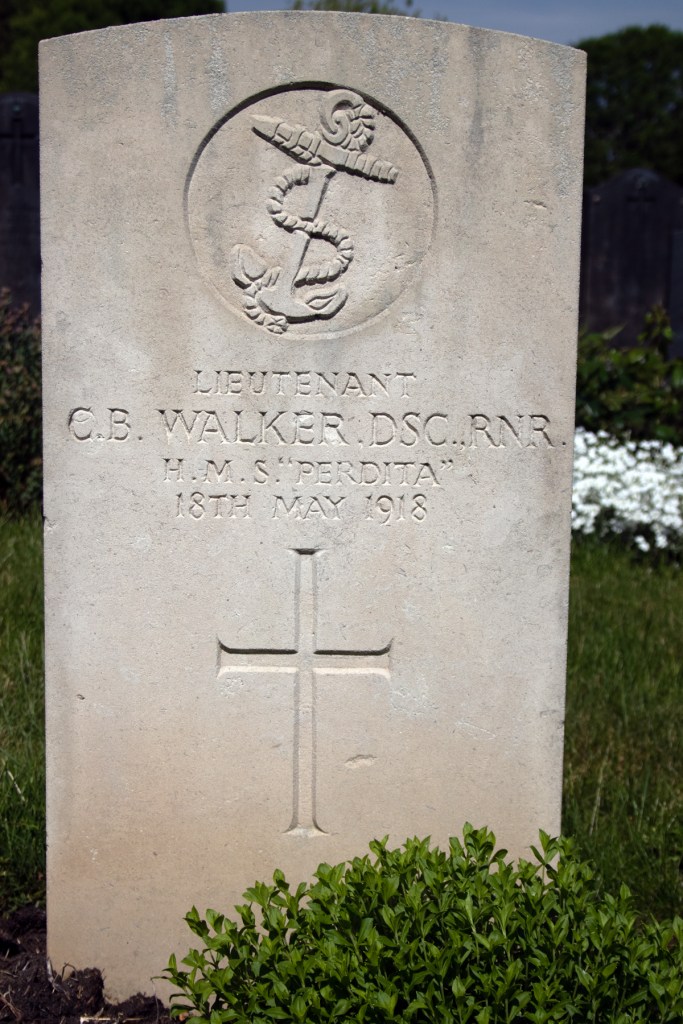
Lieutenant Claude Walker

Lieutenant Claude Walker

“The funeral took place on Wednesday with naval honours of Lieut. Claude Bennett Walker, RNR, whose home is a 23, Overcliffe, Gravesend, and who died at the Royal Naval Hospital, Chatham, on Saturday. His death was a naval casualty, and it was only on Friday, a day before his death, that he was taken to the Chatham Hospital.”

[Kent Messenger & Gravesend Telegraph: Saturday 25th May 1918]

Claude Bennett Walker was born on 6th July 1882 in Deal, Kent. The oldest of five children, his parents were George and Amelia Walker. George was a Trinity pilot, navigating ships off the Kent coast and beyond, and it was only natural that his first born followed in his stead.

Claude set to a life at sea when he completed his schooling. By August 1904, he was a registered Second Mate on board sea-going vessels, and within two years, he was deemed competent to become a First Mate. By 1909 he was certified as a Master of a foreign-going ship. At some point he joined the Royal Naval Reserve, and on 5th July 1912, was given the rank of Sub-Lieutenant.

That autumn, Claude married Gwen Case. The wedding took place in her home town of Melksham, Wiltshire, and the couple would go on to have two children – son Alec in 1913, and daughter Alison three years later.

When war broke out, Claude would be called upon to play his part, serving on the battleship HMS Majestic and the destroyer HMS Recruit early on in the conflict. By the spring of 1915, he was assigned to the minelayer HMS Biarritz, and that October, he was promoted to full Lieutenant.

On 9th March 1917, Claude was given command of the minelayer HMS Perdita. She served in the Mediterranean, and would be caught up in some skirmishes. In October 1917, Lieutenant Walker was awarded the Distinguished Service Cross, and the following April he was mentioned in dispatches.

The Perdita was back in Kent by the spring, by which point Claude had fallen ill. He was admitted to the Royal Naval Hospital in Chatham with cerebrospinal meningitis, and this would be the condition to which he would succumb. He passed away on 18th May 1918, at the age of 35 years of age.

Claude Bennett Walker was laid to rest in the naval section of Woodlands Cemetery, Gillingham, Kent.


Private Harold Spackman

Private Harold Spackman

Harold John Spackman was born on 24th May 1897 and was the youngest of two children to Frederick and Eliza Spackman. Frederick was a cowman from Wiltshire, and the family were raised on a farm in Manningford Bohune, near the village of Pewsey.

Harold was educated at Woodborough School, and found work as a nurseryman when he completed his schooling. When war broke out, he was quick to enlist, and joined the 10th (Service) Battalion of the Devonshire Regiment on 17th September 1914.

Private Spackman’s unit was sent to Somerset for training, and it was here, in cramped, busy barracks, that he contracted meningitis. He was admitted to the Red Cross Hospital in Bath, but succumbed to the condition on 12th March 1915. He was just 17 years of age.

Harold John Spackman was laid to rest in Bath’s Locksbrook Cemetery. His was a joint funeral with another Private from his unit, Albert Matthews, who had died on the same day in the same hospital.


Private Harold Spackman
(from findagrave.com)

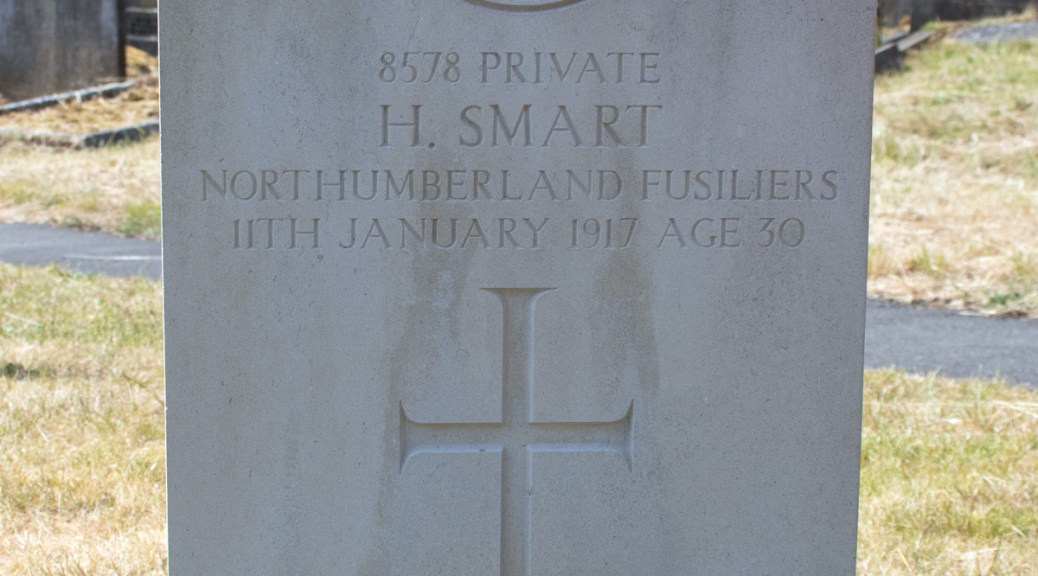
Private Herbert Smart

Private Herbert Smart

Herbert – or Bertie – Smart was born on 9th February 1885, and was the middle of five children to John and Lucy. John worked as a gardener and the family were raised in the Kent town of Sidcup.

By the early 1900s, Bertie had moved to London, and had settled in Islington, Middlesex. He was working as a fruiterer and, on 19th May 1907, he married Lucy Purton, a policeman’s daughter from the east of the capital.

The couple set up home in Kensington, and went on to have four children: Frank, Herbert, Kathleen and Frederick. The 1911 census found the family renting three rooms in a tenement at 36 Netherwood Road. They were sharing their home with Lucy’s younger brother, Frederick.

When war broke out across Europe, Bertie was called upon to play his part. Full service details have been lost to time, but it is clear that he enlisted in the second half of 1916, and was assigned to the Northumberland Fusiliers. Attached to the 2nd/4th Battalion, it seems that he may have been sent to the South West for training.

Private Smart’s time in the army was not to be a lengthy one. He came down with cerebrospinal meningitis, and was admitted to the War Hospital in Bath, Somerset. The condition was to get the better of him: he passed away was still admitted, on 11th January 1917. He was 31 years of age.

Herbert Smart was laid to rest in the sweeping grounds of Bath’s Locksbrook Cemetery.


These were tragic times for the Smart family. Lucy’s brother died just four months after her husband, and Lucy herself passed away in February 1918. In just over a year, the four children – Frank, Herbert, Kathleen and Frederick – had become orphans.


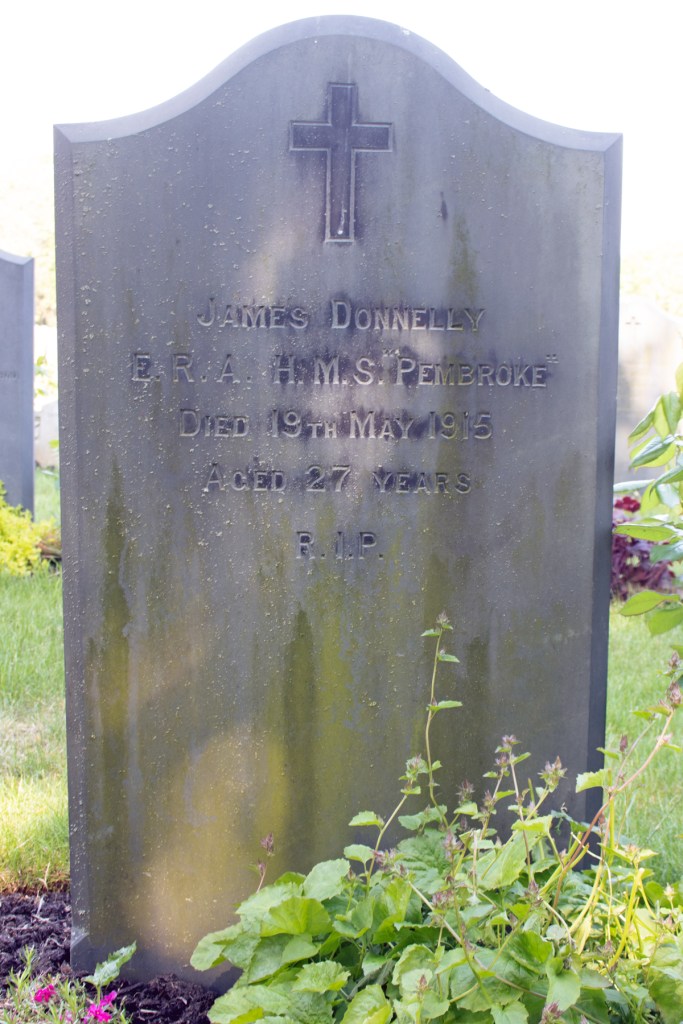
Engine Room Artificer James Donnelly

Engine Room Artificer James Donnelly

James Donnelly’s life is a challenging one to pin down. Based on the Commonwealth War Graves Commission information, he was born in 1888 in Cappagh, County Tyrone, Northern Ireland, and was the son of Owen and Mary Donnelly. Unfortunately, there are no baptism or census records to expand on his family background.

Military records are equally sparse. James enlisted in the Royal Navy as an Engine Room Artificer 4th Class. He was assigned to HMS Pembroke, the Royal Naval Dockyard in Chatham, Kent; given how early in the conflict, and his position at the lower end of the ERA rankings, is it likely that he was posted there for training.

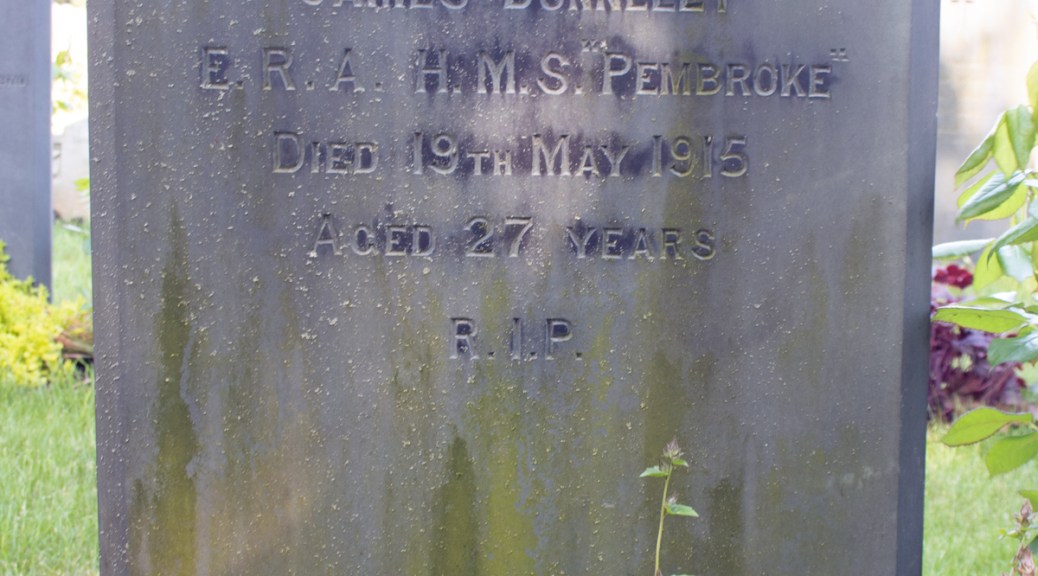
James’ time in the military was to be brief. He was admitted to the Royal Naval Hospital in Chatham, suffering from cerebrospinal meningitis. The condition was to prove severe: he succumbed to it on 19th May 1915, at the age of 27 years old.

Finances may have prevented the Donnelly family from bringing their boy back home. Instead, James was laid to rest in the Roman Catholic section of Woodlands Cemetery, Gillingham, not far from the naval base at which he had served.


Engine Room Artificer James Donnelly
(from findagrave.com)