Tag Archives: Middlesex

Gunner Basil Corney

Gunner Basil Corney

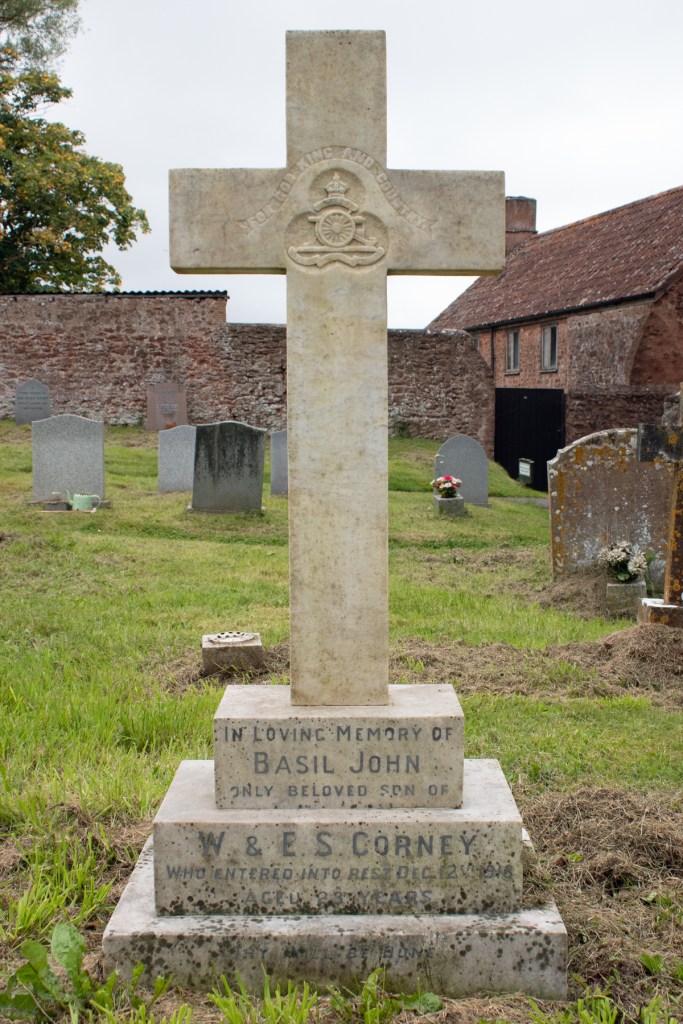
Basil John Corney was born in Berrynarbor, Devon, in the summer of 1895. The fourth of five children, his parents were William and Elizabeth. William’s work as a farm bailiff, took the family across the area: by 1901, they had moved to Shapwick in Somerset, and the next census record, in 1911, found the family living in Stogumber, where William had taken up management of the White Horse Hotel. Basil, meanwhile, was employed as a butcher’s assistant in the village.

When war came to Europe, Basil stepped up to serve his King and Country. He enlisted on 10th December 1915 and, from this point, preferred to go by his middle name, rather than his first. He asked to be assigned to the Royal Army Service Corps, but by the time he was mobilised in April 1916, he was attached to the Royal Garrison Artillery. Gunner Corney’s service records show that he was 20 years and 8 months old, stood 5ft 10ins (1.77m) tall and weighed 155lbs (70.3kg).

Basil was assigned to the 143rd Siege Battery and, by August 1916, he was sent to France. His time in Europe was to be brief, however, as, on 1st October, he was shot and wounded by shell fire in his right knee while fighting at the Somme. Invalided to Britain for treatment, he eventually seemed to recover, and was transferred to the regiment’s No.2 Depot.

In April 1918, Gunner Corney was admitted to hospital in Edmonton, Middlesex, as his injury was causing some issues again. An examination identified that his kneecap had all but disintegrated, and this led to his eventual dismissal from armed service on medical grounds. He left the Royal Garrison Artillery on 14th November 1918 and was awarded the Silver Badge, noting the reason for him not being in the army.

Basil returned to Somerset, but his time back with his family was to be brief. He passed away at home on 12th December 1918: he was 23 years of age.

The body of Basil John Corney was laid to rest in the peaceful graveyard of St Mary’s Church in Stogumber, across the road from, and within sight of, where his family still lived and worked at the White Horse Hotel.


Private Richard Birch

Private Richard Birch

Richard George Birch was born on 8th July 1878, in Westminster, Middlesex. One of nine children, his parents were Samuel and Alice Birch. Samuel started work as a messenger for the House of Lords, and went on to be a military cap maker by the time of his son’s baptism.

When he finished his schooling, Richard found employment as a printer and compositor. He married Evelyn Groom in 1906, and the couple went on to have three children: Harry, Doris and Richard Jr.

The 1911 census showed a change in circumstances for the family. They were living in Farnham, Surrey, and their household was made up of Richard, a pregnant Evelyn, Harry, Doris and a servant, Florence. Richard had now left the printing business, as was employed as a comedian.

When war came to Europe in August 1914, Richard stepped up to play his part. Having enlisted by the spring of 1917, he initially joined the East Surrey Regiment, although at some point he made the transfer to the Royal Fusiliers.

Little information remains available about Private Birch’s military life. Attached to the 22nd (Service) Battalion, he seems not to have served overseas. It appears that he either served in Somerset, or was sent there to recuperate following an illness or injury, as he was in Burnham-on-Sea by the autumn of 1917. He passed away in the town on 19th September, the cause of his passing not freely recorded. He was 39 years of age.

Richard George Birch’s body was not taken back to Surrey, possibly because of financial constraints. Instead laid to rest in Burnham Cemetery, Somerset.


Private Edward Ham

Private Edward Ham

Edward John Ham was born in Berrow, Somerset, in the spring of 1886. The second of seven children – all boys – his parents were Edward and Mary Ham. Edward Sr was a plasterer, but when he finished his schooling, his son found work as a jobbing gardener and nurseryman.

On 2nd October 1906, Edward married Annie Paddy. A carter’s daughter, three years older than her new husband, she was working as a domestic servant when the couple wed at St John the Evangelist’s Church in nearby Highbridge. They went on to have four children: Edward, Rose, Gladys and Horace.

The 1911 census recorded the family as living in Love Lane, Burnham-on-Sea, Edward continuing with his gardening work. War was on the horizon, though, and he was soon called upon to play his part.

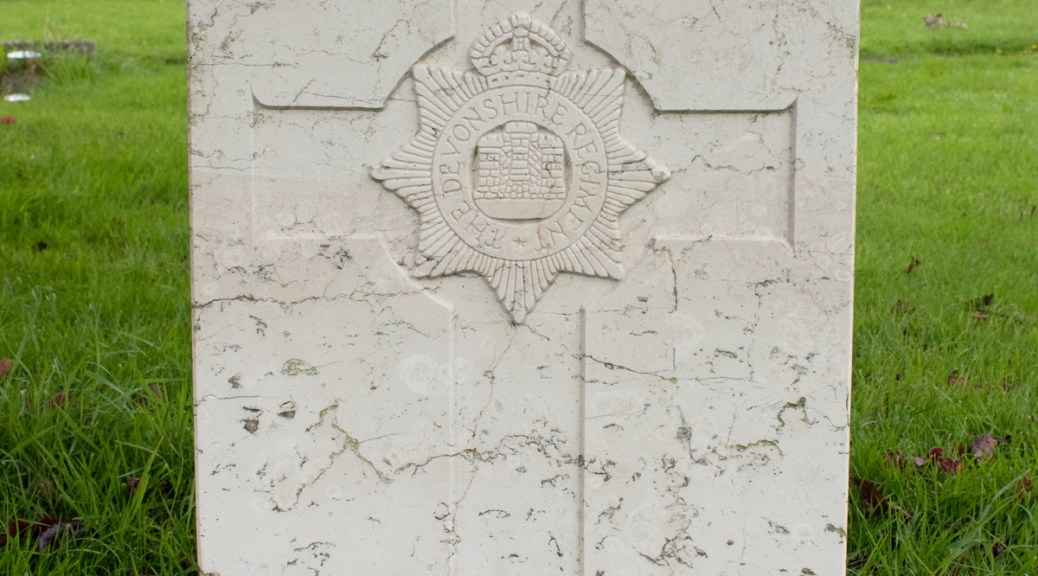
Full service records are not available for Edward, but he had enlisted by the summer of 1917. Private Ham initially joined the Devonshire Regiment, but at some point transferred across the to Labour Corps. Edward was attached to the 149th Company and was based in Enfield, Middlesex.

At this point, Private Ham’s trail starts to cool. He passed away on 25th December 1917 at the age of 31 years old. The cause of his death is unclear, but his body was brought back to Somerset for burial.

After a service in Burnham’s St Andrew’s Church, Edward John Ham was laid to rest in the town’s cemetery.


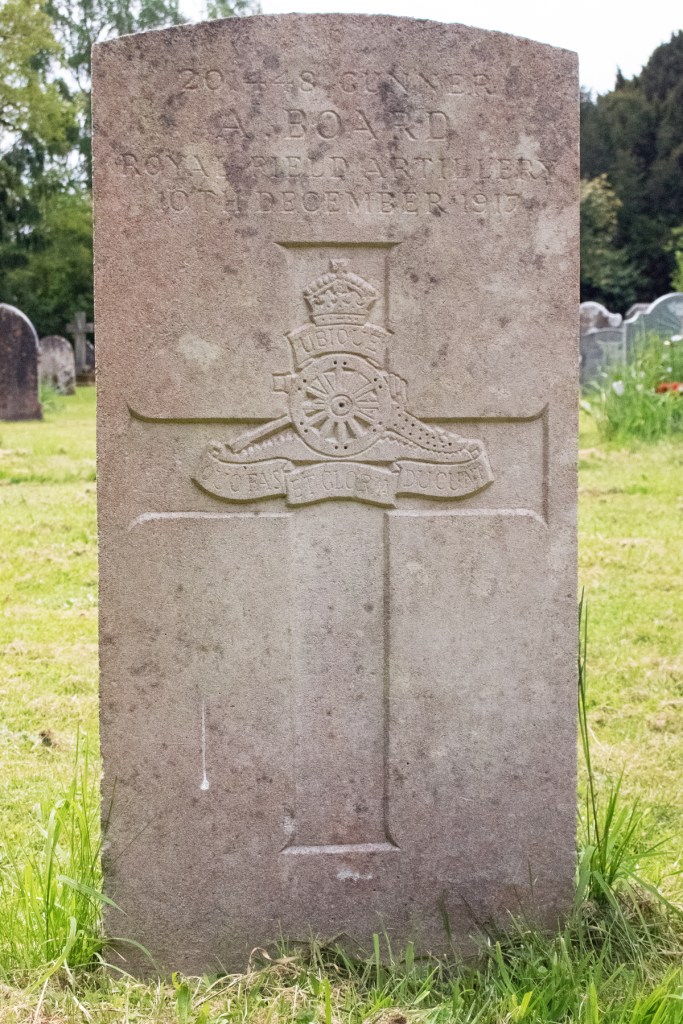
Gunner Albert Board

Gunner Albert Board

The funeral took place at Pitminster parish churchyard… of Gunner A Board, of the Royal Field Artillery, youngest son of Mr and Mrs W Board… who died in the 3rd Southern General Hospital, Oxford… from wounds received in action on 29th October. Deceased was only 21 years of age, and was buried with full military honours. Having been a former Boy Scout members of the Taunton and Trull Troops attended as a last tribute of respect and sympathy.

Taunton Courier and Western Advertiser: Wednesday 26th December 1917

Concrete information about the young life of Albert Board is destined to remain lost to time, but entries in the 1901 and 1911 censuses suggest that he had been born in Willesden, Middlesex. His parents were William and Annie Board, and the family moved to Pitminster, Somerset, at some point between the two documents.

One of seven children, by 1911 Albert had left school, and had found work as an errand boy. The youngest of the household, he was living with two older siblings – William, who was employed as a gardener; and collar making sister, Lily – and his parents. William, by this time, was working as a boot repairer.

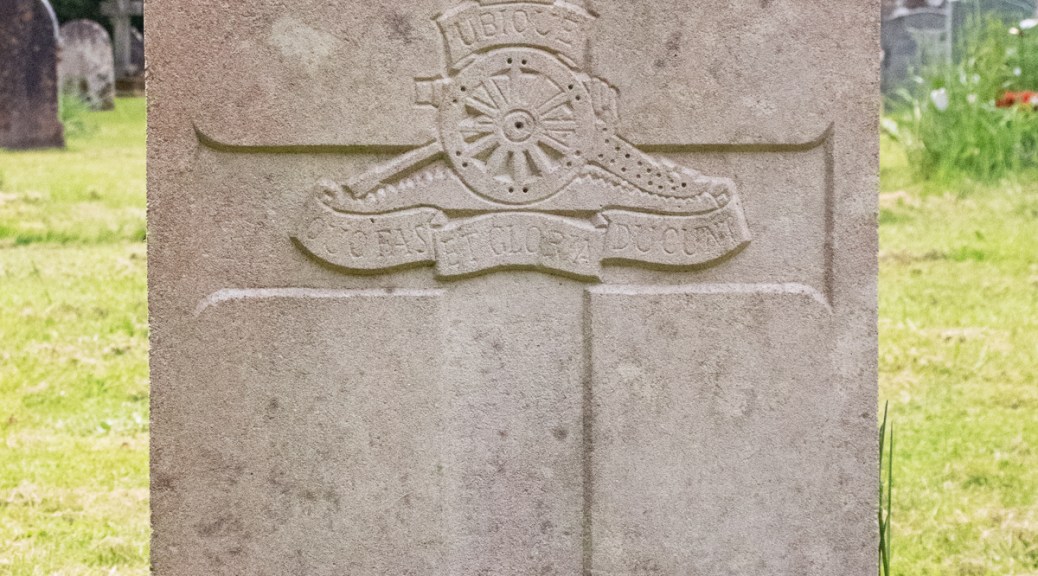
When war came to Britain’s shores, Albert stepped up to play his part. He had enlisted in the Royal Field Artillery by the summer of 1917, and was attached to the 168th Brigade. Private Board fought on the Western Front, and may have been involved in the Arras Offensive of 1917.

Caught up in the fighting on 29th October, he was injured, and medically evacuated to Britain for treatment. He was admitted to the hospital in Oxford, but succumbed to his wounds on 10th December 1917. He was just 21 years of age.

Albert Board’s body was brought back to Somerset for burial. He was laid to rest with all due ceremony, in the quiet graveyard of Saint Mary and Saint Andrew’s Church, Pitminster.


Major Montgomerie Boyle

Major Montgomerie Boyle

Montgomerie Boyle was born on 20th March 1859 in Hendon, London. The youngest of three children, his parents were John and Jane Boyle. John was a barrister, and the family lived in some comfort – the 1861 census found them living in a house in Harrow, Middlesex, with four live-in servants and a groom.

[Montgomerie] joined the South Notts Yeomanry 22 years ago. Subsequently he obtained an appointment at Weston-super-Mare, under the Somerset Territorial Force Association, and did much useful work in co-ordinating the Army Service Corps in the county.

Taunton Courier and Western Advertiser: Wednesday 2nd April 1919

In the spring of 1891, Montgomerie married Constance Smith. She was a banker’s daughter from Nottingham, and the couple tied the knot in Basford, now a suburb of the larger city. They went on to have a daughter, Marion, who was born the following year.

By the 1901 census, the young family had moved to Timsbury, Somerset. Montgomerie was recorded as living on his own means, and the family had a retinue of servants to support them. A decade later, they had moved into the manor house in Staple Fitzpaine, Somerset. Montgomerie was now listed as a Captain in the Army Service Corps.

Storm clouds were gathering over the continent and, when war broke out, Captain Boyle was called back into active service.

…he was stationed with his Regiment on the East Coast for twelve months, and then went to France, where he remained for six months. He was re-called for service with the Mechanical Transport Section of the Army Service Corps in German East Africa, contracted malaria at the end of fifteen months and was invalided home. On his recovery he was despatched to the Egyptian front, and was with the British troops in Jerusalem. He became ill while there, and, on going down to the base at Cairo, was for a month in the Citadel Hospital, where he was treated for a malignant disease. By slow stages, first in a hospital ship, then in a Red Cross train through France, he was conveyed to [Le] Havre. Here, curiously enough, the doctor in charge of the hospital ship upon which he was placed happened to be… an old friend and medical attendant. Major Boyle landed at Southampton, and went immediately to the 3rd London General Hospital at Wandsworth [Surrey], where he was examined by an eminent specialist. His condition was serious but on Monday week last he arrived at his old home, where, despite the devoted care of his wife and daughter, he passed away quietly.

Taunton Courier and Western Advertiser: Wednesday 2nd April 1919

Major Montgomerie Boyle passed away on 27th March 1919, a week after his sixtieth birthday. He was laid to rest in the quiet graveyard of St Peter’s Church, on the outskirts of the grounds of the manor house the Boyles had made their home ten years before.

When Constance died ten years later, at the age of 70 years old, she was laid to rest in the family plot, reunited with her late husband once more.


Major Montgomerie Boyle
(from findagrave.com)

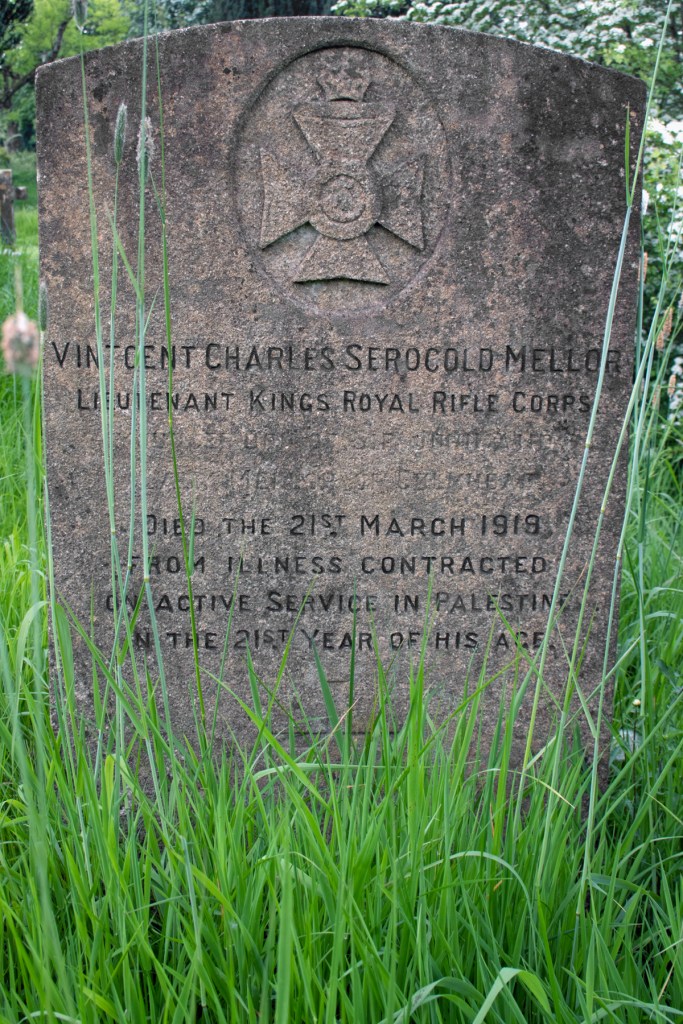
Lieutenant Vincent Mellor

Lieutenant Vincent Mellor

Vincent Charles Serocold Mellor was born in Chelsea, Middlesex, in the spring of 1897. The younger of two children, his parents were Chief Solicitor to the Treasury – and later Sir – John Paget Mellor and his Australian-born wife, Mabel. The 1901 census recorded the family living on Chelsea Embankment, with four servants: a cook, a nurse and two housemaids.

For someone with a relatively high standing in Edwardian England, there is surprisingly little documentation relating to Vincent – who was known as Vin. His name does not appear in the 1911 census, although nor does his family.

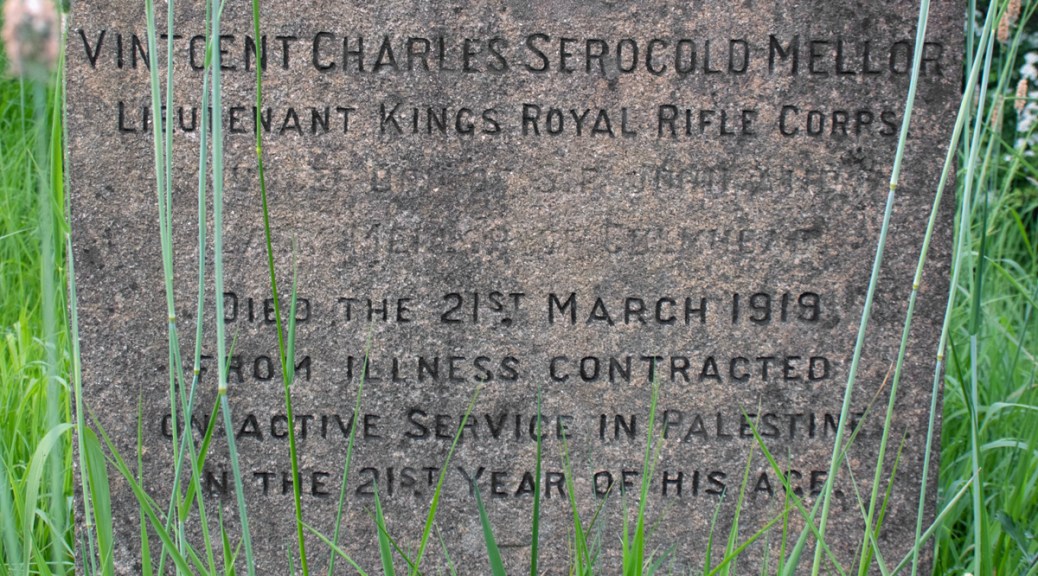
At some point, Vincent was given a commission in the King’s Royal Rifle Corps, but his service records are lost to time, which makes it impossible to find any specific information about his military career. Lieutenant Mellor’s headstone confirms that he served in Palestine, and that he fell ill while in the Middle East.

Vincent returned to Britain for treatment, and was admitted to the Red Cross Hospital for Officers in Portland Place, London. Whatever his condition, he was to succumb to it: he passed away on 21st March 1919, aged just 20 years of age.

Vincent Charles Serocold Mellor was brought back to Somerset for burial. He was laid to rest in the peaceful graveyard of St Paul’s Church in Churchstanton, close to the family’s country home, and the same church in which he had been baptised two decades before.


Lieutenant Vincent Mellor
(from findagrave.com)

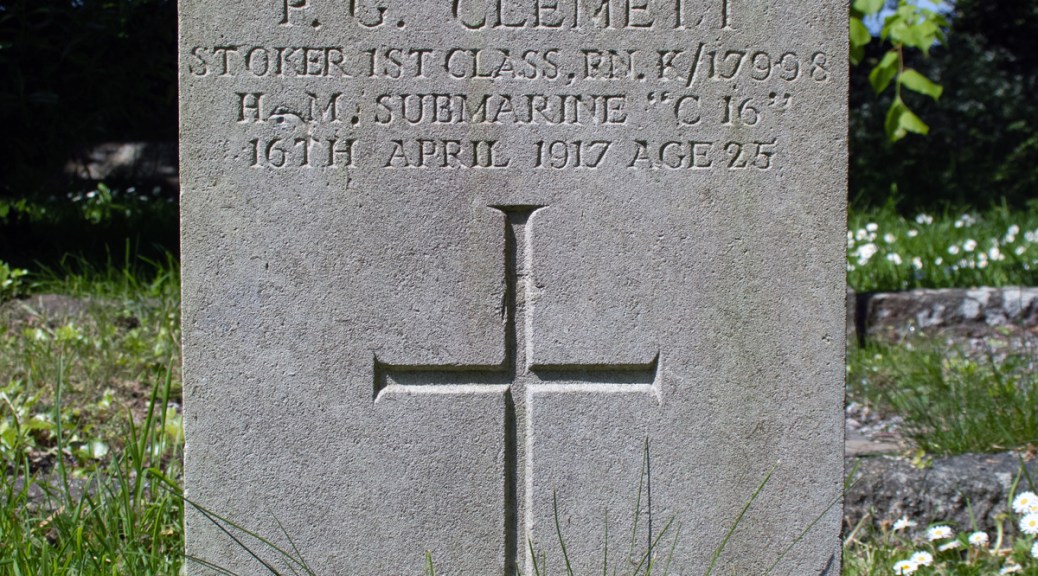
Stoker 1st Class Phillip Clemett

Stoker 1st Class Phillip Clemett

Phillip George Clemett was born on 5th December 1891, one of eight children to Albert and Mary Jane Clemett. Albert was a carpenter from Devon, Mary Jane came from Somerset, but by the time Phillip was born, the family had moved to Fulham in Middlesex.

The 1911 census records the family as having moved back to Somerset. Mary Jane had been born in the village of Huntspill, and it was here that the Clemetts returned. Albert was now working as a farmer, so it is possible that they had moved to work on the family farm.

Labouring was not a job to satisfy Phillip, though, and he sought a career on the high seas. On 3rd February 1913, he enlisted in the Royal Navy as a Stoker 2nd Class. His service records show that he was 5ft 4ins (1.63m) tall, with brown hair, brown eyes and a fresh complexion.

Stoker Clemett’s was initially sent to HMS Vivid, the Royal Naval Dockyard in Plymouth, Devon. Here he received a few months’ training, before being given his first posting, on board the battleship HMS Indefatigable. He remained on board for the next fifteen months, gaining a promotion to Stoker 1st Class in the process.

Over the next couple of years, Phillip served on a couple more vessels, but on 11th February 1917 he was assigned to the submarine HMS C16. Stoker Clemetts was on board for a couple of months, as she was patrolling off the Essex coast. On 16th April 1917, the C16 was accidentally rammed by the destroyer HMS Melampus. She sank to the bottom and a couple of attempts were made for the crew to escape, but they became trapped and all perished, including Stoker 1st Class Clemetts. He was 25 years of age.

Contemporary newspaper reports give little detail about the accident – stating simply that Phillip ‘perished at sea’ [Western Daily Press – Tuesday 01 May 1917] His service documents are equally cagy about the incident, confirming jus that he ‘lost his life on duty.’ The records, however, show that on each of his five annual reviews, his character was noted as ‘very good’, while his ability was ‘superior’.

When the submarine was salvaged, Phillip George Clemett’s body was brought back to Somerset for burial. He was laid to rest in the peaceful graveyard of St Peter’s Church in Huntspill.


Captain Frederick Walker

Captain Frederick Walker

Frederick Murray Walker was born on 29th July 1862 in the village of Terregles, Kircudbrightshire, Scotland. The fifth of eleven children, his parents were Colonel Sir George Gustavus Walker, Member of Parliament for Dumfries & Galloway, and his wife, Anne. Sir George owned the Crawfordton Estate, and this is where Frederick was raised, with a retinue of fourteen staff to help the family.

Following his father’s military career, Frederick felt a draw to serve. On 15th July 1875, he entered the Royal Navy as a Midshipman. He set out to build a dedicated career, visiting most parts of the world in the process.

While Frederick’s initial service took him to the Mediterranean – where he received the Egyptian Medal and Alexandria Clasp – by 1883 he was out in China, but he also spent time in India and South Africa. In 1882 he was promoted to Sub Lieutenant, three years later he rose to the rank of Lieutenant. By 1899, Frederick had become a Commander.

By his own request, Frederick retired from the Royal Navy on 1st August 1909. He was now 47 years old, and had spent 34 years in service and was given the rank of Captain as a mark of his career.

On 19th June 1891, Frederick had married Lucy Scriven in St Saviour’s Church, Paddington, London. They would go on to have seven children, and to begin with, the life of a Naval Captain took Lucy around the coastal ports of Southern England. When Frederick retired, however, the family settled in a large house in Milford-on-Sea, Hampshire, where they were supported by a governess, cook, parlour maid and housemaid.

When war broke out in 1914, Captain Walker stepped up once more to serve his King and Country. He remained in territorial waters and was given successive command of the yachts James, Zaria and Albion III. By 1917, Frederick’s health was beginning to suffer, and he was placed on HMS Victory’s reserve books, ready should Portsmouth’s Royal Naval Dockyard need his service.

Frederick was not to be called to action again. By the time the Armistice was declared Frederick’s condition was worsening. He had developed cancer of the tongue, and it was having a real impact. He was admitted to the Haslar Hospital in Portsmouth, and passed away there on 7th February 1919, at the age of 46 years old.

By this point the family had relocated to Bath, Somerset, and this is where Frederick Murray Walker’s body was brought for burial. He was laid to rest in the prestigious Lansdown Cemetery, overlooking the city.


Captain Frederick Walker
(from ancestry.co.uk)

Rifleman Edward Compton

Rifleman Edward Compton

Edward Charles Compton was born in Islington, Middlesex on 4th July 1897, the only child to Charles and Ada Compton. Charles was an agent for the Prudential Insurance company, and the family lived on Devonshire Road, with Charles’ aunt, Mary.

When he finished his schooling, on 7th July 1911, Edward found work as a clerk for the North African Mission. When war came to European shores, he was eager to serve his King and Country. He enlisted on 10th September 1914, and was assigned to the 11th (Reserve) Battalion of the London Regiment.

Rifleman Compton’s service records confirm that he was 5ft 8ins (1.73m) tall, with good vision and physical development. He wasn’t formally mobilised until the summer of 1916 and, after training, he was transferred to the 16th (County of London) Battalion, also known as the Queen’s Westminster Rifles. He was sent to France on 19th December 1916.

Edward would have been involved in the German retreat to the Hindenburg Line in the spring of 1917, and the First and Third Battles of the Scarpe in April and May. At the end of July he returned to Britain and, while the reason for this is unclear, it seems that his health was suffering.

On 24th September 1917, Rifleman Compton was medically discharged from the army, after three years and fifteen days’ service. The cause for this isn’t documented, but there is no evidence that he was wounded, so it is likely to have been an illness of some description.

Edward returned to Islington and on 20th October 1918, he married Emily Backholer. She was a farmer’s daughter from Paignton, Devon, and was registered as living there when the couple’s banns were read during October.

Tragically, Edward and Emily’s marriage was not to be a long one: he died in Kelston, near Bath, Somerset, on 26th October 1918, less than a week after his wedding. He was just 21 years of age.

Edward Charles Compton was laid to rest in the graveyard of St Nicholas’ Church in Kelston, Somerset.


Private Harry Izzard

Private Harry Izzard

Harry Izzard was born early in 1900, in Chiswick, London and was one of six children to Albert and Florence Izzard. Albert was a groom, but when he died in 1905, Florence, left with a young family to raise, remarried. Things seem not to have gone well between Harry and his stepfather, Richard Warren, and he soon found himself resident of the Church Army Home in London.

In 1914, his schooling complete, he was sent to the village of Clandown in Somerset, where he was employed at the local colliery. He seemed to have flourished in his new life, and he “made friends with all he came in contact with, being of a bright and cheerful disposition and associated with the football club, Wesleyan Young Men’s Bible Class and an ardent temperance worker.” [Somerset Guardian and Radstock Observer: Friday 26th April 1918]

Harry was one of the village’s batch of miners passed for the Army ballot, but seemed eager not to wait to be officially called up. On the day of the ballot, he instead joined up voluntarily, enlisting in the 86th Training Reserve Battalion.

On enlistment he was sent to Clipstone Camp, Notts, where he quickly made friends. He, however, was placed on the sick list… and underwent [an] operation for appendicitis from which operation he never recovered.

Somerset Guardian and Radstock Observer: Friday 26th April 1918

Private Izzard died on 20th April 1918, aged just 19 years old, a life of new promise cut tragically short. His connection with Clandown, and his disconnection from his family in London, was such that his body was brought back to Somerset for burial.

Harry Izzard was laid to rest in the quiet Holy Trinity Churchyard, his sister Mabel being the only family member represented at the service.


Harry’s older brother Herbert Izzard also served in the army. He had found work as a laundry labourer when he left school, and went on to marry Maud Woodage on 14th February 1915. The couple had a daughter, Winifred, later that year.

Herbert enlisted in the London Regiment as a Rifleman, and was assigned to the 17th Battalion, also known as the Poplar and Stepney Rifles. He soon found himself in France and was killed at the Somme on 19th April 1916. He is buried at the Cabaret-Rouge British Cemetery in Souchez.

Tragically, Herbert’s widow died in Oxfordshire in December 1918, leaving young Winifred an orphan at just three years old. She went on to live a long life, dying in 1997, at the age of 81.