Tag Archives: Royal Navy

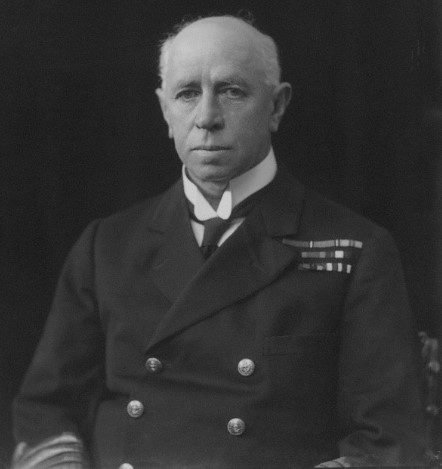
Admiral of the Fleet Sir George Callaghan

Admiral of the Fleet Sir George Callaghan

George Astley Callaghan was born in London on 21st December 1852, the third of six children to Frederic and Georgiana Callaghan. Frederic was born in Ireland and was the son of MP and landowner Daniel Callaghan. He built a career for himself as a magistrate and set up home in Bath, Somerset with Cheltenham-born Georgiana.

The family had means and the 1861 census records them living at a five-storey Georgian house in Catharine Place, Bath, with five live-in servants: a butler, cook, housemaid, nursemaid and nurse.

George enlisted in the Royal Navy in January 1866, and was assigned to the training ship HMS Britannia. From here, his career was to prove meteoric. He was promoted to the rank of Midshipman in October 1867 and by 1870 he was serving in the East Indies. On 15th April 1872 he gained the rank of Sub-Lieutenant, and was promoted to full Lieutenant exactly three years later.

In 1877, Lieutenant Callaghan received a commendation for saving the lives of sailor whose boat had capsized in the Irrawaddy River. George was assigned to HMS Excellent, a gunnery school, in 1880, and formally joined the staff there in 1882. Back on the open seas by 1885, he was promoted to Commander on 31st December 1887 and given control of the battleship HMS Bellerophon. By 1894, George had been promoted again, to the rank of Captain, and took on the additional duties of naval advisor to the War Office.

As the new century dawned, George was mentioned in dispatches for his support during the Boxer Rebellion. Further commands followed, including HMS Edgar and HMS Caesar, both in 1901. He was made Captain of Portsmouth Dockyard and then naval aide-de-camp to the King in 1904. By the following year, he was given the rank of Rear Admiral, became Second-in-Command of the Channel Fleet in 1906, Second-in-Command of the Mediterranean Fleet in 1908. In December that year he was awarded Knight Commander of the Royal Victorian Order for the aid he provided to survivors of the Messina earthquake.

In April 1910, George was knighted and promoted to Vice Admiral, and within eighteen months he was made Commander-in-Chief of the Home Fleet, gaining the rank of Admiral in November 1911.

During this time of military promotion, George had also had his own family. On 2nd February 1876, he had married Edith Grosvenor in St Andrew’s Church, Walcot, Bath. The couple went on to have four children: Dorothy, Cyril, Noël and Stella.

A naval officer’s wife was destined to be a lonely life, and the census records seem to reflect this. In 1881, Edith and Dorothy were visiting a curate and his family in Wiltshire. Ten years later, Edith and her four children were living at the family home in Bathwick, with one visitor and three servants. The 1901 census found Edith, Cyril (who was now a midshipman himself) and Noël living in Devonport with a cook and two other servants. By 1911, Edith had moved again. She was 54 by this point, and based at a house in Havant, Hampshire, with a cook and two maids. All of this time, of course, George was away at sea, performing his duties.

George, by this point, had spent years preparing for the war he knew was coming. However, in July 1914, the First Lord of the Admiralty, Winston Churchill, commanded Sir John Jellicoe to relieve George of his position as Commander-in-Chief of the Home Fleet. Whether Churchill believed that Sir Callaghan was now too old to successfully carry out the duties the advancing conflict would impose upon him is unclear. It must have disappointed the 62-year-old George, however.

His work continued, however: he was appointed First an Principal Naval Aide-de-Camp to the King in September 1914, and became Commander-in-Chief of The Nore in three months later. He was promoted again, to Admiral of the Fleet, in April 1917, but subsequently retired less than a year later.

George’s life over the next couple of years goes a little quiet. Indeed it is only in November 1920 that further information is available.

The death occurred in London yesterday afternoon of Admiral of the Fleet Sir George Callaghan KCB. He had been ill for some months, and the immediate cause of death was an affection of the heart.

The Scotsman: Wednesday 24th November 1920

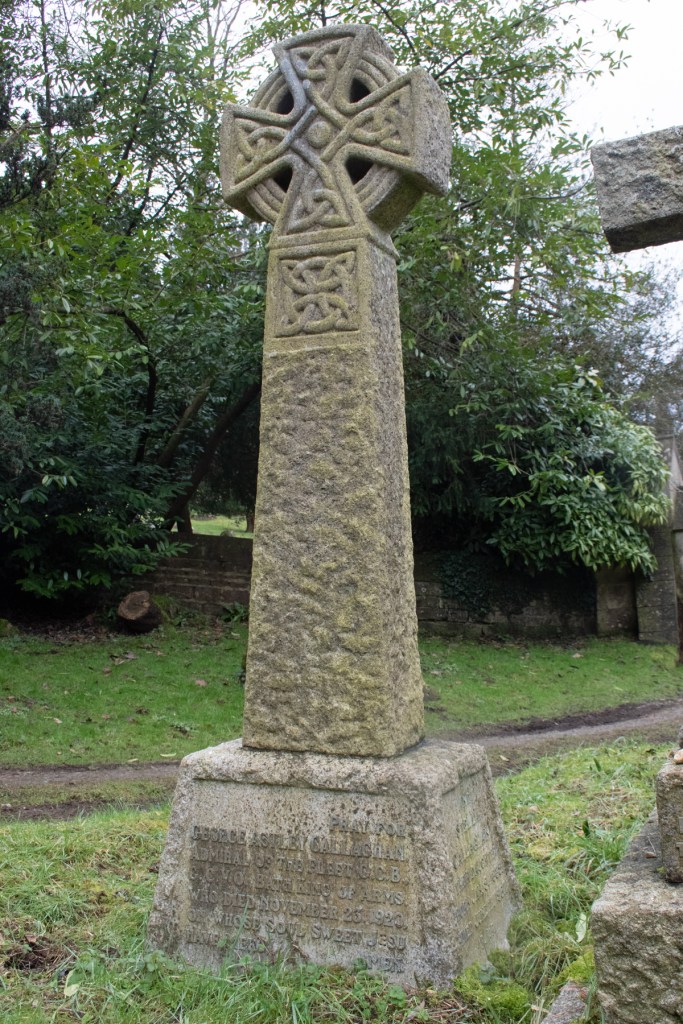
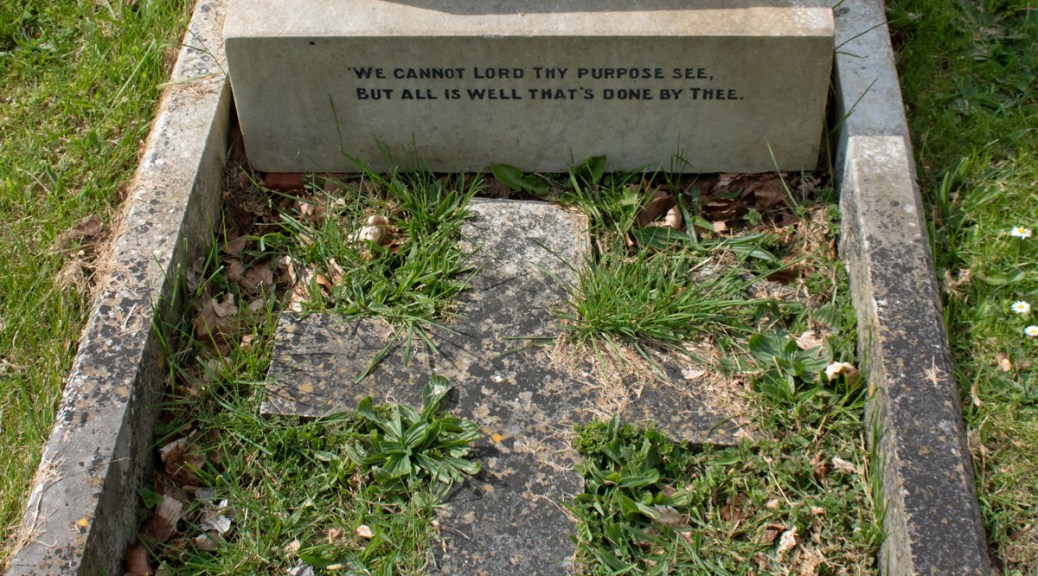
Sir George’s passing at his London home was reported in most of the press, highlighting his military achievements and decorations. His funeral was held at Westminster Abbey, and he was then laid to rest in the graveyard of St Mary’s Church in Bathwick, not far from his and Edith’s main home.


Sir George Callaghan

Petty Officer 1st Class Samuel Bailey

Petty Officer 1st Class Samuel Bailey

Samuel Inkerman Bailey was born in the summer of 1861 in Bath, Somerset. The youngest of five children, his parents were James and Mary Bailey. James was an ostler, or groom, but he died in August 1862, when his son was barely a year old.

Mary was left a widow, with a young family to raise and, as so many women in her position did in Victorian Britain, she remarried. She wed tailor Robert Lankesheer, a widower with four children of his own. The couple went on to have three further children – three half-siblings to Samuel.

While the 1871 census suggests that Robert welcomed Mary’s youngest into the family home, it seems that things were not so comfortable for Samuel. On 22nd May 1878, he enlisted in the Royal Navy, destined for a life at sea. He was only 16 years old at this point – although, interestingly, his service records give his date of birth as 27th March 1862. They also note that he was 5ft 2.5ins (1.59m) tall, with light brown hair, blue-grey eyes and a fair and fresh complexion.

As he was too young to formally enlist, Samuel was given the rank of Boy 2nd Class and sent to HMS Impregnable for training. Just over a year later, he was promoted to Boy 1st Class and, on 10th January 1880 he was given his first posting, on board the sloop HMS Dryad.

It was while Samuel was on board the Dryad that he came of age, and was officially inducted into the Royal Navy. He signed up for ten years service, and was given the rank of Ordinary Seaman 2nd Class. Samuel was certainly a dedicated young man: within three months he was again promoted, this time to Ordinary Seaman. He remained on Dryad until February 1884, by which time he had been promoted again, to Able Seaman.

Samuel ended up serving until 31st March 1900. During his time with the Royal Navy, he continued to distinguish himself, his character being noted as Very Good on each of his service reviews. He served on thirteen vessels, and was promoted through the ranks, to Leading Seaman (in August 1885), Petty Office 2nd Class (in January 1894) and Petty Officer 1st Class (in September 1897).

When he was stood down to the naval reserve, Samuel returned to Somerset. He found a job as a superintendent at the public baths in Bathwick and, on 15th April 1901, he married former housemaid and agricultural labourer’s daughter, Alice Clarke. As Samuel’s house came with his job, the couple set up home there, and went on to have five children: Samuel Jr, Emma, James, Alice and Joseph.

When war broke out, Samuel has been stood down from reserve status for more than two years. This did not stop him from stepping up to play his part again, however, and as Petty Officer 1st Class, he took up a training role at HMS Victory, the Royal Naval Dockyard in Portsmouth. He served for just over fourteen months, before he became ill, passing away from intestinal disease – which an inquest identified as ptomaine poisoning – at the city’s Royal Naval Hospital. He was 54 years of age.

Reporting on his death, the local newspaper recognised his fifteen years’ service at the public baths, as well as picking up on the fact that his unusual middle name was given to him in recognition of the death of his great uncle in the battle of that name during the Crimean War.

The same report outlined his dedicated naval career, although not always being correct with all of the details. It did note, however “two years or more on the Royal Yacht ‘Victoria & Albert,’ when used by Queen Victoria, a testament to the reliance placed in his trustworthiness.” [Bath Chronicle and Weekly Gazette: Saturday 16th October 1915] The then Able Seaman Bailey’s service records do note that he served aboard the Victoria & Albert, from 18th March to 11th May 1885, although whether the Queen sailed on her during this time is not known.

Samuel Inkerman Bailey was brought back to Somerset for burial. He was laid to rest in the Smallcombe Vale Cemetery in Bathwick, the community he had served for so long.


Petty Officer 1st Class Samuel Bailey
(from ancestry.co.uk)

Boy 2nd Class Charles Hancock

Boy 2nd Class Charles Hancock

Charles Henry Hancock’s story underlines the innocence and exuberance of youth, and a life cut tragically short.

He was born on 9th July 1900 in Newton Abbot, Devon, the oldest of four children to Edward and Annie Hancock. Edward – who was also known by his middle name of Charles – was a jobbing gardener. By the time of the 1901 census, he had found employment as a groom and gardener with artist and sculptor Frederick Sturge in Tintagel, Cornwall. Annie was also employed by the family as a cook.

Edward passed away in June 1912, aged just 38 years old. Charles stepped up to help his mother, finding work as a farm labourer when he left school. War came to Europe, and while he was only 14 at the start of the conflict, he was drawn to play his part.

On 1st April 1916 Charles enlisted in the Royal Navy, either as a way to a permanent career to help bring in much needed money for his family, or because he was seeing his older peers going of to fight or King and Country. He was still underage, however, and was given the rank of Boy 2nd Class. Charles’ service records show that he was 5ft 2in (1.57m) tall, had fair hair, grey eyes and a fresh complexion.

Boy Hancock was sent to HMS Impregnable, the training ship based in Devonport, for his initial service. Tragically, this service was not to be a long one. Billeted in crowded barracks, he contracted measles and bronchial pneumonia, dying on 1st May 1916, while admitted to the Royal Naval Hospital in Plymouth, Devon. He was just 15 years of age, and had been in service for exactly one month.

Charles Henry Hancock was brought back to Cornwall for burial. He was laid to rest next to his father in the peaceful graveyard of St Materiana’s Church in Tintagel.


Leading Stoker Daniel Johnson

Leading Stoker Daniel Johnson

Daniel Johnson was born in Dingle, County Kerry, Ireland, on Christmas Day 1883, one of nine children to John and Ellen Johnson. John was a general labourer in the town, but while he initially followed suit, his son was destined to see the world.

On 3rd April 1903, Daniel joined the Royal Navy as a Stoker 2nd Class. His service records show that he was 5ft 7ins (1.70m) tall, with auburn hair, grey eyes and a sallow complexion.

Stoker Johnson was initially sent to HMS Vivid – the Royal Naval Dockyard in Devonport – for training. He was given his first posting in December, and was assigned to the battleship HMS Empress of India. She was to be his home for the next fifteen months.

In February 1905, Daniel was moved to another battleship, HMS Hannibal. Over the next eight years, he would go on to serve on six further vessels. His conduct was noted as Very Good throughout his time in the Royal Navy, and this was matched with the promotions he received. In July 1906, while on board HMS Suffolk, he was given the rank of Stoker 1st Class, and four year later, while serving on HMS Commonwealth, he was promoted to Leading Stoker.

In between voyages, Daniel’s base was HMS Vivid, but in February 1913, he was assigned to HMS Victory – the Royal Naval Dockyard in Portsmouth, Hampshire. He had been serving for ten years by this point, and his records hint at the man he had become. His height was now 5ft 10ins (1.78m), his hair recorded as dark brown and his complexion was noted as being fresh.

On 16th April 1913, Daniel seems to have been assigned to the Northern Irish Inniscrone Battalion, remaining with them for some fifteen months. Based at Inniscrone (now Enniscrone, Co. Sligo), this posting seems to have been with the Coastguard, patrolling the western coast of Ireland.

August 1914 saw Leading Stoker Johnson return to the Royal Navy. He was assigned to the battleship HMS Bulwark, which patrolled the English Channel when he first came on board. By that autumn, however, she had moved to North Kent, guarding the waters around the Isle of Sheppey against potential German invasion.

Daniel was on board Bulwark when, on the morning of 26th November 1914, an explosion ripped through the ship, tearing it apart and sinking it. In all 741 souls were lost, Leading Stoker Johnson among them. He was just 30 years of age.

The majority of those who died in the explosion aboard HMS Bulwark were buried in a mass grave in Woodland Cemetery, Gillingham, Kent. Daniel’s body, however, was not recovered until 24th January 1915, some two months after the explosion.

The sixteenth inquest on the victims of the Bulwark disaster was held at Chatham Naval Hospital on Monday. A body clothed in the dress of a patty officer was identified as that of Thomas Henry Treacher, who was a gun-layer. Two stokers were identified by marks on their clothing as Daniel Johnson, of Blackfields, Co. Kerry. and Edward Henry Buckingham of Nunhead, London, and an able seaman’s body proved to be that of John Griffin, of Kilrush, Co. Clare. The jury returned a verdict of accidental death in each case. Twenty-five bodies have now been recovered.

Westerham Herald: Saturday 30th January 1915

Daniel Johnson was laid to rest in a marked grave in Woodlands Cemetery, not far from his fellow servicemen.


Interestingly, the Coastguard station at Enniscrone would feature in history again a few years after Daniel’s death. Based next to the town’s pier, it was manned by up to five guards and was home to them and their families.

The coastguard station at Enniscrone, County Sligo, was raided on Thursday night, and arms and ammunition taken. The streets of Enniscrone were cleared by the Volunteers prior to the raid. One coastguard is stated to have fired several shots at the attackers, but he was eventually overpowered, and the garrison were then marched out. The arms and ammunition were removed to a waiting motor car, and the furniture and personal belongings of the coastguards taken from the building, which was then set fire to and destroyed.

Belfast News-Letter: Saturday 28th August 1920

Able Seaman John Griffin

Able Seaman John Griffin

John Griffin was born on 26th November 1885, one of six children to John and Mary Griffin. John Sr was a shoemaker from Limerick, Ireland, but it was in neighbouring County Clare, in the coastal town of Kilrush, that he and Mary raised their family.

John Jr’s siblings found labouring work when they left school, but he was after bigger and better things. In July 1901 he enlisted in the Royal Navy, set for a life at sea. As he was only fifteen years old at this point, he was not formally enrolled in service, but given the rank of Boy 2nd Class. He was initially posted to the training ship HMS Black Prince, which was based in Queenstown – now Cobh – County Cork.

Boy Griffin spent nine months on board the Black Prince, rising to the rank of Boy 1st Class in the process. In May 1902 he was given his first posting, aboard the battleship HMS Minotaur. After six months he transferred to the frigate HMS Agincourt, before moving again – to HMS Russell – on 18th February 1903.

It was while John was assigned to this battleship that he came of age. On his eighteenth birthday, he was formally enlisted into the Royal Navy for a period of 12 years’ service. He was given the rank of Ordinary Seaman and his records give an indication of the man he had become. They note that he was 5ft 4.5ins (1.64m) tall, with dark brown hair, brown eyes and a fresh complexion.

In April 1904, Ordinary Seaman Griffin was transferred to the battleship HMS Queen. He spent two years on board, gaining a further promotion – to Able Seaman – in September 1905.

Over the next nine years, John served on seven further vessels and, when not at sea, was based primarily at HMS Vivid, the Royal Naval Dockyard in Plymouth/Devonport, Devon. In July 1914, with Europe on the brink of war, he was given another transfer, to the battleship HMS Bulwark. Boarding in Portsmouth, Hampshire, the ship sailed to the North Kent coast, off Sheerness.

Able Seaman Griffin was on board Bulwark when, on the morning of 26th November 1914, an explosion ripped through the ship, tearing it apart and sinking it. In all 741 souls were lost, John among them. He should have been celebrating his 29th birthday.

The majority of those who died in the explosion aboard HMS Bulwark were buried in a mass grave in Woodland Cemetery, Gillingham, Kent. John’s body, however, was not recovered until 24th January 1915, some two months after the explosion.

The sixteenth inquest on the victims of the Bulwark disaster was held at Chatham Naval Hospital on Monday. A body clothed in the dress of a patty officer was identified as that of Thomas Henry Treacher, who was a gun-layer. Two stokers were identified by marks on their clothing as Daniel Johnson, of Blackfields, Co. Kerry. and Edward Henry Buckingham of Nunhead, London, and an able seaman’s body proved to be that of John Griffin, of Kilrush, Co. Clare. The jury returned a verdict of accidental death in each case. Twenty-five bodies have now been recovered.

Westerham Herald: Saturday 30th January 1915

John Griffin was laid to rest in a marked grave in Woodlands Cemetery, not far from his fellow servicemen.


Stoker Anthony Eames

Stoker Anthony Eames

Anthony Eames was born on 29th October 1876 in the village of Newhall, Derbyshire. He was one of four children to James and Mary Eames, although Mary passed away in 1880, not long after Anthony’s younger brother was born. James remarried, and he and his new wife (and possibly his late wife’s sister), Theresa Barlow went on to have twelve children of their own.

James was a coal miner, and while Anthony initially followed in his father’s footsteps, he sought bigger and better things. In September 1896, just short of his twentieth birthday, he joined the Royal Navy as a Stoker 2nd Class. His service records show that he was 5ft 3.5ins (1.61m) tall, had brown hair, grey eyes and a fresh complexion. The document also noted that he had tattoos on both of his arms.

Stoker Eames’ initial posting was at HMS Victory, the Royal Naval Dockyard in Portsmouth, Hampshire. He spend a year there, honing his skill, before being assigned to HMS Powerful in September 1897. Three months later, he was transferred to the cruiser HMS Alacrity and, over the remainder of his twelve years’ service, he worked on eight further vessels, rising to the rank of Stoker 1st Class in the process.

It was during this time that Anthony met and married Frances Pelley, a young woman from Portsmouth. The couple went on to have three children and, when Stoker Eames was stood down from active service at the end of his contract in 1908, the family moved to Sheffield. Anthony found employment in the mines again and the family settled in to a small terraced house in the then village of Darnall.

The sea continued to call to Anthony, though, and, on 8th March 1912, he re-enlisted. For the next couple of years he was based at HMS Victory, but when war broke out he was transferred to the battleship HMS Bulwark.

Stoker Eames was on board Bulwark when, on the morning of 26th November 1914, an explosion ripped through the ship, tearing it apart and sinking it. In all 741 souls were lost, Anthony amongst them. He was 38 years of age.

The majority of those who died in the explosion aboard HMS Bulwark were buried in a mass grave in Woodland Cemetery, Gillingham, Kent. Anthony Eames’s body, however, had been identified, and so he was laid to rest in a marked grave in the cemetery.


Leading Stoker Ernest Brown

Leading Stoker Ernest Brown

Ernest William Brown was born on 5th April 1889 in Halstead, Essex. One of twelve children, his parents were carpenter Edward and silk weaver Elizabeth Brown.

Ernest initially found work as an errand boy, then as a house painter. He wanted bigger and better things, however, and the Royal Navy offered him that opportunity. He enlisted as a Stoker 2nd Class on 12th March 1908 for a period of twelve years’ service.

Ernest’s early service records are lost to time, but he received a promotion to Stoker 1st Class on 12th March 1909, exactly a year after a joined up. At this point he was assigned to the dreadnought battleship HMS Russell, on board which he served until August 1912.

After a short period at HMS Pembroke, the Royal Naval Dockyard in Chatham, Kent, Stoker 1st Class Brown was transferred to the Apollo-class cruiser HMS Iphigenia. She was to be his home for the next two-and-a-half years, during which time he was promoted again, this time to Leading Stoker.

Returning to HMS Pembroke in March 1915, this was to be his shore base for the next couple of months. On 27th May, Leading Stoker Brown was helping out on the steamer Princess Irene. Tragically, while on board an explosion ripped through the ship, while moored off Sheerness, Kent and he was one of the 352 souls killed. He was just 26 years of age.

Ernest William Brown was laid to rest in the Woodlands Cemetery in Gillingham, Kent. His body having been identified, he was given his own grave, unlike those who were buried in a mass grave nearby.


Officers’ Steward Peter Galea

Officers’ Steward Peter Galea

Peter Galea was born in the Maltese town of Senglea on 25th August 1893. His mother’s name was Carmela, but there is little further concrete information about his early life.

What is clear is that Peter found employment by enlisting in the Royal Navy. He joined up on 2nd January 1912 as an Officer’s Steward 3rd Class. His service records show that he was 5ft 9.5ins (1.66m) tall, had brown eyes, black hair and a dark complexion.

Officer’s Steward Galea’s first assignment was on board the dreadnought battleship HMS Orion. He was to spend more than three years on board, although his continuous service was interrupted by three days spent in the cells in May 1913: unfortunately his misdemeanour is not recorded.

In February 1914, Peter was transferred to the Apollo-class cruiser HMS Thetis. She was to be his home for the next year, during which time war was declared across Europe. In March 1915, Officer’s Steward Galea was assigned to another ship, the ocean liner Princess Irene.

Tragically, Peter was on board when, on 27th May 1915, an explosion ripped through the ship, while moored off Sheerness, Kent and he was one of the 352 souls killed. He was just 21 years of age.

Peter Galea was laid to rest in the Woodlands Cemetery in Gillingham, Kent. His body having been identified, he was given his own grave, unlike those who were buried in a mass grave nearby.


Leading Signalman Albert Pomeroy

Leading Signalman Albert Pomeroy

Albert Pomeroy was born on 22nd May 1882 in Totnes, Devon. The tenth of thirteen children, his parents were William and Susanna Pomeroy. William was a labourer at a cider store, and his son found work as a page when he left school. However, it is clear that he lusted after a life of adventure.

On 2nd September 1897, Albert enlisted in the Royal Navy. Aged just 15 years old, he was initially given the rank of Boy 2nd Class, and sent to HMS Impregnable, a training ship based in Devonport. He remained on board for just over a year, rising to Boy 1st Class in the process.

Boy Pomeroy moved to HMS Vivid, the Royal Naval Dockyard in Plymouth, in December 1898, and remained there until he was given his first formal sea-faring post nine months later. The cruiser HMS Terrible was to be his home from September 1899 until the spring of 1902.

On 22nd May 1900, during his time on board Terrible, Albert came of age, and he was formally enrolled into the Royal Navy. His service records confirm that he was 5ft 3in (1.60m) tall, had dark brown hair, grey eyes and a fresh complexion.

Albert was given the rank of Ordinary Seaman, but seems to have been well thought of as, just over a year later he was promoted to Able Seaman. Over the next eleven years, he served on a further ten ships, returning to HMS Vivid between voyages. On 21st May 1912, having completed the twelve years of his naval contract, Able Seaman Pomeroy was formally stood down to reserve status.

Albert’s trail goes cold for a few years. His father had passed away in 1910, so it seems likely that Albert returned home to Totnes to support his mother.

His time on reserve was not to be long, however, and, in August 1914, he was called back into duty. He received a promotion – to Leading Signalman – and assigned to the troop ship HMS Tamar. He moved to another troop ship – HMS Hardinge – in March 1915, but returned to Devonport a couple of months later.

In September, Leading Seaman Pomeroy was back in Totnes, possibly on leave, but had fallen ill. He contracted meningitis, and this was to prove fatal. Albert passed away at his mother’s home on 2nd September 1915, at the age of 33 years old.

Albert… was one of six brothers serving King and country, while another brother, who died some years ago, was in the 20th Hussars, and his late father was a naval pensioner. Albert Pomeroy saw service with Sit Percy Scott in South Africa, went to Pekin [sic] with the Naval Brigade, was engaged in operations in Somaliland, and until a few weeks ago was on active service with the British fleet.

Western Times: Tuesday 7th September 1915

Albert Pomeroy was laid to rest in the cemetery of his home town, Totnes, Devon.


Susanna went on to live into her eighties. Remaining in Totnes, when she passed away, on 27th December 1933, at the age of 88, she was reunited with her son in Totnes Cemetery.


Lieutenant Hugh Punchard

Lieutenant Hugh Punchard

Hugh Punchard was born in February 1895, the oldest of three children to William and Jane Punchard. William was a civil engineer from London, and Hugh was born in Surbiton.

The 1901 census recorded the family living in the 14-room house, Pope’s Garden, in Twickenham. Along with the family, there were four members of staff – a governess, housemaid, cook and a nurse. By the time of the next census, sixteen-year-old Hugh was away at school, boarding with more than 400 others at Haileybury College in Hertfordshire.

War was coming to Europe by this point, and Hugh was keen to play his part. He enlisted in the Royal Navy on 20th October 1914 and, while he was only there for a short period, his records shed some light onto the man he had become. He enlisted as a mechanic, and was noted as being 6ft 4ins (1.93m) tall, with dark brown hair, grey eyes and a fair complexion.

Hugh remained in the Royal Navy for only a month, and, while full details of his service are no longer available, it would seem that it was at this point that he transferred to the Royal Garrison Artillery. He appears to have performed his duties well, and achieved the rank of Lieutenant. He also made another transfer, when he was attached to the Tank Corps.

Lieutenant Punchard was based in Dorset by the last year of the war, and it was while he was serving there that he became unwell. He contracted pneumonia, and was admitted to Wareham Military Hospital. Sadly, the condition was to take his life, and he passed away on 31st October 1918, at the age of just 23 years old.

Hugh Punchard’s paternal grandparents lived in Devon, and, as William had passed away two years earlier, the decision was to lay him to rest in Totnes Cemetery.


Hugh’s will left his estate to his mother, Jane. When he passed, she became the beneficiary of his effects, totally some £3,600 7s 6d (around £250,000 in today’s money).

Jane stayed living in Twickenham: when she passed away on 29th July 1937, she was brought to Devon for burial, and was laid to rest with her son.


A number of documents relating to Hugh give his name as R Hugh Punchard. Sadly, I have not been able to unearth details of what his official first name might have been.