Tag Archives: story

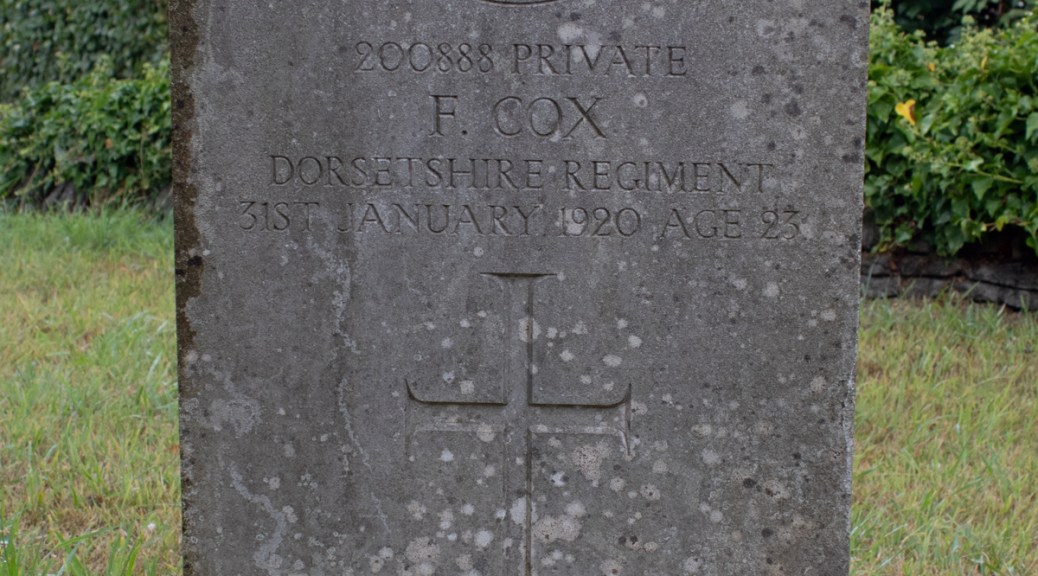
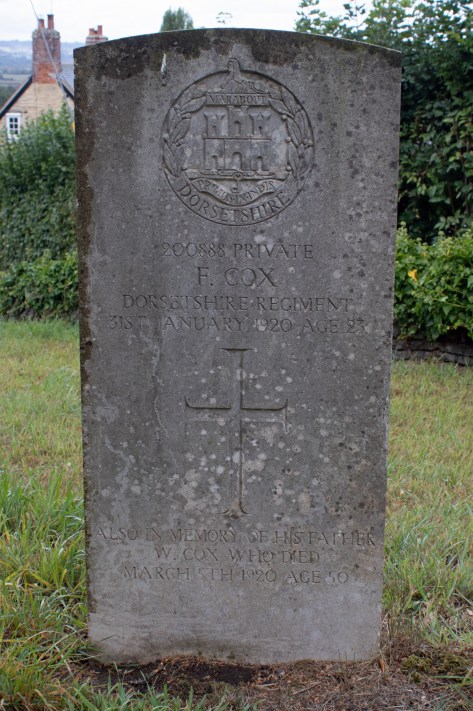
Private Frederick Cox

Private Frederick Cox

Frederick Charles Cox was born in the Dorset village of Kington Magna in the spring of 1897. One of seven children, his parents were agricultural labourer William Cox and his wife, Kate.

When Frederick completed his schooling, he also found work as a farm labourer. However, when war broke out, he was keen to play his part, possibly having seen his older brother, William Jr, also join up.

Unlike his sibling, Frederick enlisted in the Dorsetshire Regiment. His service papers have been lost to time, but it is clear that he took the role of Private, and that he was assigned to the 1st/4th Battalion. His unit began the war in India, but had moved to Basra in February 1916, remaining in Mesopotamia for the remainder of the conflict.

Private Cox survived the war, and had returned home by the end of 1919. His time in the army would impact his health, however, and during the winter of 1919/20, he came down with malaria, a condition which would prove fatal. Frederick passed away in hospital in Shaftesbury, on 31st January 1920: he was 23 years of age.

The body of Frederick Charles Cox was taken back to Kington Magna for burial. He was laid to rest in All Saints’ Churchyard, close to his brother, who had died a few years before.


Read more about Frederick’s brother William here.


Kate had lost two adult sons in a matter of years, and her tragedy was not to end. William Sr passed away less than five weeks after Frederick. He was buried close to his sons.
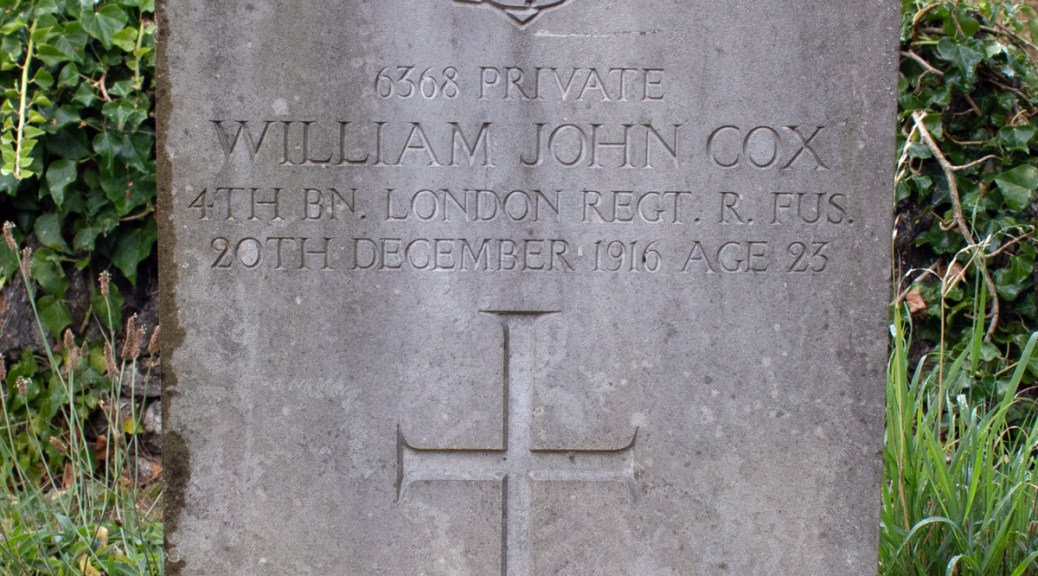
Private William Cox

Private William Cox

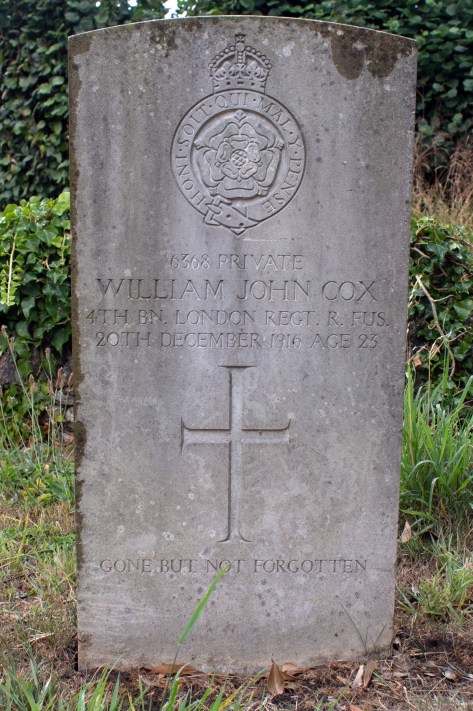
William John Cox was born in the autumn of 1893, and was the second of seven children. His parents – William and Kate Cox – were from Kington Magna, Dorset, and this is where they would raise their family.

William Sr was a farm labourer, and this is work into which his son would follow. By the time of the 1911 census, the family were living in a cottage on Church Street, with William Jr and his younger brother, Frederick, both agricultural workers.

When war came to Europe, William would step up to play his part. Full service details have been lost, but it is clear that he had enlisted in the army by the summer of 1916. As a Private, he was assigned to the 4th Battalion of the London Regiment (Royal Fusiliers).

Private Cox certainly saw action overseas, and would find himself entrenched at the Somme. At some point, he was wounded, and his injuries were bad enough for him to be sent back to Britain for treatment. He was admitted to hospital in Chatham, Kent, but his wounds would prove to be too severe. William passed away on 20th December 1916: he was 23 years of age.

The body of William John Cox was taken back to Dorset for burial. He was laid to rest in the tranquil surrounds of All Saints’ Churchyard in Kington Magna.


William’s younger brother, Frederick, also fought in the First World War. Read his story here.

Corporal Frederick James

Frederick John James was born in Willesden, Middlesex, in the spring of 1890. The oldest of six children, his parents were William and Louisa James. Louisa was William’s second wife, his first, Emily, having died in 1887. Frederick had ten half-siblings from this first marriage.

William was a fishmonger: the 1891 census recorded the family at 159 York Road, Battersea, Surrey. Ten years later, they had moved over the river, and were living to 46 Artizans Dwellings, Hammersmith, Middlesex.

Frederick’s father had passed away by the time of the 1911 census. The document recorded his mother residing at 18 Western Terrace, Notting Hill, Middlesex. She lived with three of her children – Ben, Alice and Grace – and was doing char work to bring in a little money.

Frederick, however, was already carving out a career in the army for himself. The same census recorded him as one of 250 troops billeted in Fyzabad, India, where he was a Private in the 2nf Battalion of the East Yorkshire Regiment.

Private James’ military career lacks some detail, and can only be picked up around the time of his passing. By this point, he had switched regiments, and was a Corporal in the 8th (Service) Battalion of the Somerset Light Infantry. He is also noted as being married to a woman called Frances Esther New: the couple had married in 1913, although there is no other information about her.

In the summer of 1917, Corporal James’ unit was caught up in the fighting at Passchendaele. Frederick was initially reported missing, but was later declared as being killed in action on 4th October 1917. He was 27 years of age.

The body of Frederick John James was laid to rest in the Zandvoorde British Cemetery, Ypres.


Frederick was my great great grand-uncle.

Rifleman Joseph Nicholls

Joseph James Nicholls was born in Battersea, Surrey, on 19th October 1889. There is frustratingly little information about his early life, although what remains legible on his service records confirm his mother’s name was Jenny, and he had five siblings: brothers William and Jack, and sisters Martha, Rose and Sarah.

On 8th May 1911, Joseph married Lavinia Tutte in St Mary’s Church, Battersea. She was the daughter of a boiler cleaner, and their marriage certificate provides a little more insight into the new groom’s background. His father is named as Joseph James Nicholls, a farrier who had died before his son married. Joseph Jr was working as a carman, and the couple were living at 43 Lombard Road. The couple would go on to have two children, daughters Jane and April.

When war broke out, Joseph was quick to step up. He enlisted 14th September 1914, just six weeks or so into the war, giving up his job as a carman to do so. He was 5ft 9ins tall and weighed 133lbs: he had brown hair, brown eyes and a fresh complexion. He was also noted as having a mole on his left arm.

Assigned to the King’s Royal Rifle Corps, he spent the next ten months training at Larkhill Camp, Wiltshire. During this time, he went AWOL (from 5:30pm on 24th May to 6:30pm on 9th June 1915), and forfeited 17 days’ pay. 

On 23rd July 1915, Rifleman Nicholls was dispatched to France with his unit – A Company of the 12th (Service) Battalion. There is little information available about where he served, although his unit landed near Saint Omer, and trained in camps around Fleurbaix. He was admitted to hospital for four days on 19th February 1916 for an undocumented illness, but this was not to impact his readiness for battle.

On 2nd March 1916, Rifleman Nicholls was wounded in the right shoulder, and admitted to the camp hospital. His injuries would prove too severe, however, and he succumbed to them on 4th March 1916. He was 26 years of age.

Joseph James Nicholls was laid to rest in the Essex Farm Cemetery near Ypres, Belgium.


Joseph was the first husband of my maternal great great aunt.


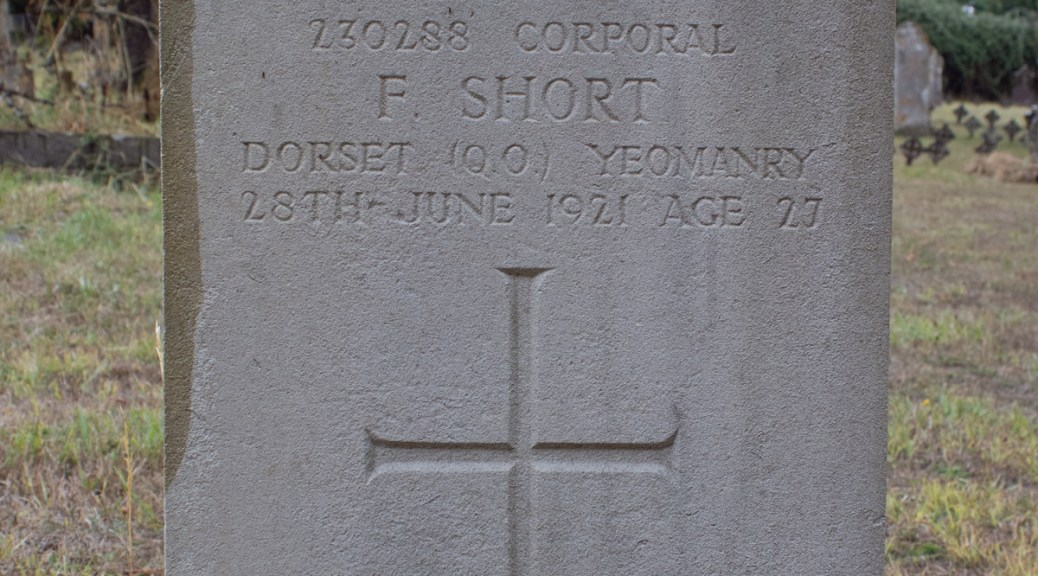
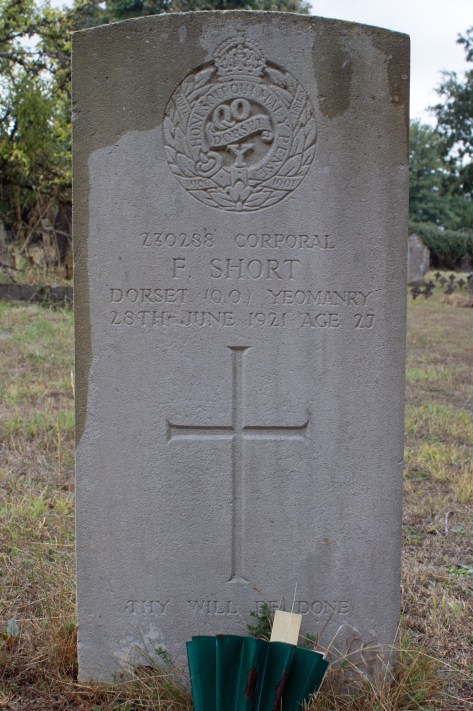
Corporal Frederick Short

Corporal Frederick Short

Frederick Short was born in Sturminster Newton, Dorset, in the spring of 1894. The oldest of five children, he was one of three sons to John and Martha Short. John was the caretaker of the village’s cemetery, and the family lived in a cottage on site.

When Frederick completed his schooling, he found work as a groom and, by the time of the 1911 census, he was boarding with John and Clara Binning in the village of Weare, Somerset.

War came to Europe in the summer of 1914, and Frederick was called upon to play his part. Full details of his military service have been lost to time, but it is clear that he enlisted in the Queen’s Own Dorset Yeomanry. By the end of the conflict, he had risen to the rank of Corporal.

Frederick survived the conflict, and returned home. At the start of 1919, he married Mabel Heritage, a soldier’s daughter from Somerton, Somerset. Her father, George, had died by the time of the 1901 census, and Mabel moved with her mother to Milborne Port, on the Somerset-Dorset border. The 1911 census found her working as a leather glove machinist, in a four-roomed cottage on Paddock Walk, to the north of the town centre.

The war had had a negative impact on Frederick’s health. The 1921 census shows him and Mabel visiting his parents in Sturminster: his occupation was given as unfit (formerly a groom). It was only a matter of weeks later that his condition worsened. Frederick passed away from a combination of malaria and heart disease on 28th June 1921: he was 27 years of age.

The body of Frederick Short was laid to rest in Sturminster Newton Cemetery, close by, and in the care of, his caretaker father, John.


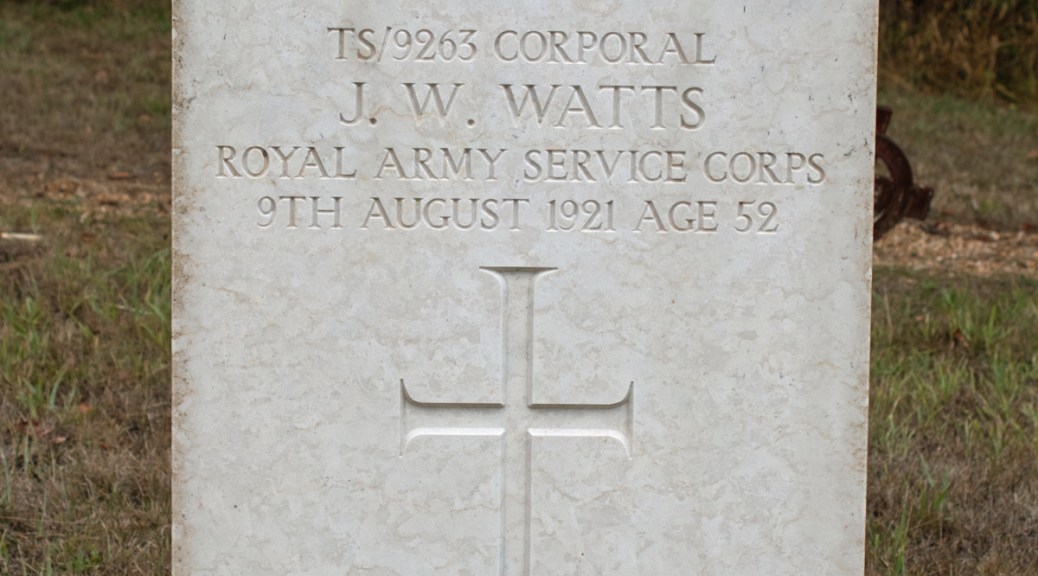
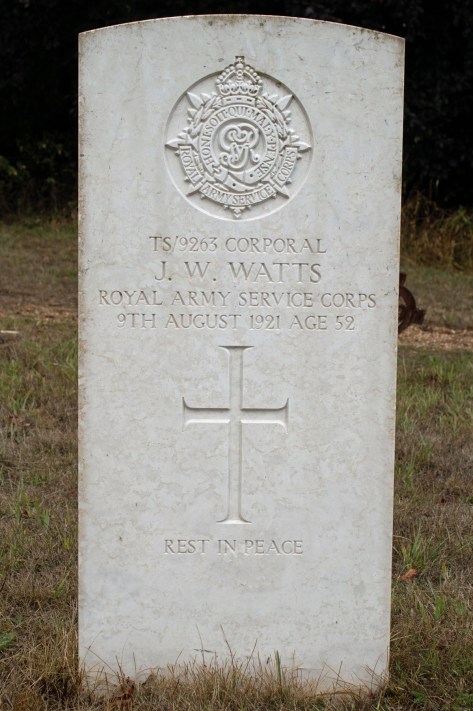
Farrier Corporal John Watts

Farrier Corporal John Watts

John William Watts was born in the summer of 1869, the youngest of six children to Reuben and Maria Watts. Reuben was a sawyer from Haselbury Brian, Dorset, and it was her that the Watts family were born and raised.

John seemed keen to progress himself, and found employment as a police constable. The 1891 census recorded him as living at the station in Blandford Forum. Three years later, he married Elizabeth Hallett, a shoemaker’s daughter from Lyme Regis. The couple would go on to have eight children before Elizabeth’s untimely death in 1912.

By this point, John’s career had taken a sharp turn: in 1901, when the family were living in Sturminster Newton, he was working as a blacksmith. The next return, taken in 1911, found them at 19 Church Street in the village, where John was employed as a journeyman shoeing smith.

With young children to raise, John took a new wife, marrying widow Rose Yeatman on 3rd August 1914. His oldest daughter, Elsie, and her father, Tom Bleathman, acted as witnesses. John and Rose would go on to have a daughter of their own, Muriel, the following year.

When war broke out, John stepped up to play his part. His service papers have been lost to time, but it is clear that he enlisted in the Royal Army Service Corps, and, presumably because of his age and experience, was assigned the rank of Farrier Corporal There is no indication that he served time outside of Britain, and it seems likely that he would have overseen the preparation of horses and training of blacksmiths for the Western Front.

Farrier Corporal Watts survived the conflict, but was medically discharged with malaria on 16th May 1919. The 1921 census found him living with Rose and five of his children and step-children in their Church Street home. He was employed as a bricklayer’s labourer, and was working for builder and contractor Mr J Silverthorne.

John’s health was suffering now, though, and he would only last until the summer. He passed away at home on 9th August 1921: he was 52 years of age.

The body of John William Watts was laid to rest in Sturminster Newton Cemetery, a short distance from his grieving family’s home.


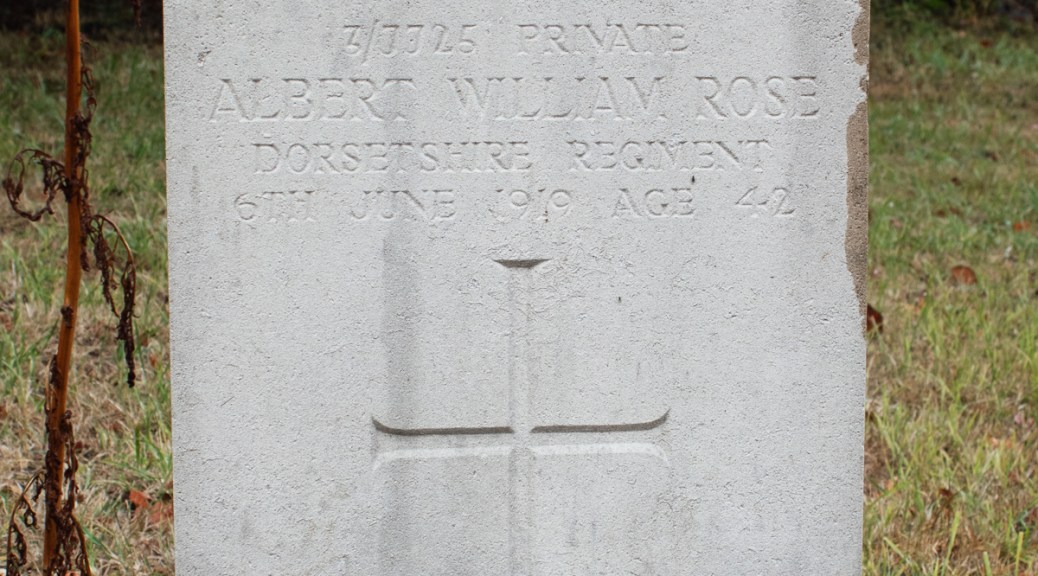
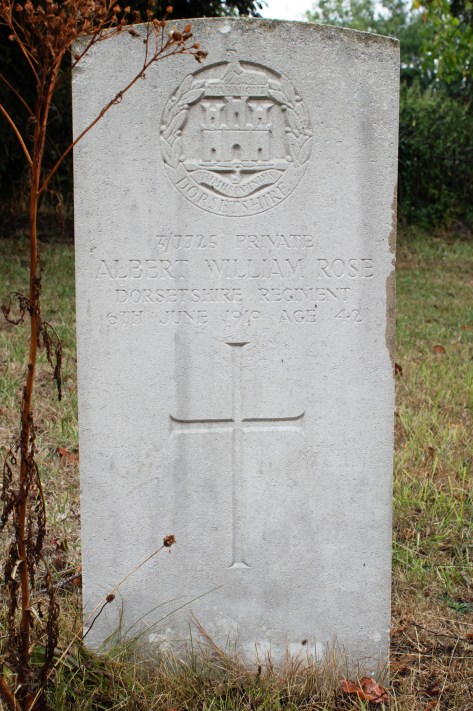
Private Albert Rose

Private Albert Rose

Albert William Rose – who was better known by his middle name – was born in the spring of 1876. One of eight children, his parents were Thomas and Amelia Rose. Thomas was a farm labourer from Sturminster Newton, Dorset, and this is the village in which the Rose family were born and raised.

William followed in his father’s footsteps, and was a farm labourer by the time he turned 14. The 1881, 1891 and 1911 census records all show him living with his parents: in 1901 he was a boarder with the Brown family at The Stables in Bryanstone, Dorset. He was employed as a stable keeper, one of eleven live-in employees at the stud.

Alongside his farm work, William was also an active volunteer in the local militia. When war broke out in the summer of 1914, he was quick to enlist, joining the 3rd Battalion of the Dorsetshire Regiment. His service papers show that he was 5ft 7ins (1.7m) tall and weighed 160lbs (72.6kg). He is recorded as having brown hair and grey eyes.

During the next four months, Private Rose undertook training on home soil. In December 1914, his unit was moved to France, and he would remain on the Western Front through to the Armistice and beyond. His time overseas was not without incident, and his age and health would be against him.

Over the next four years, William would he hospitalised at least a dozen times, for rheumatism, myalgia, a recurring heart condition and, in May 1915, from the effects of a gas attack and subsequent issues with catarrh. In December 1918, he returned to Britain with atherosclerosis, a clogging of the arteries, and was medically discharged from service the following month.

At this point, William’s trail goes cold. It is likely that he returned home, as , when he passed away, his death was registered in Sturminster.

Albert William Rose passed away on 6th June 1919: he was 43 years old. His body was laid to rest in Sturminster Newton Cemetery, not far from his family home.


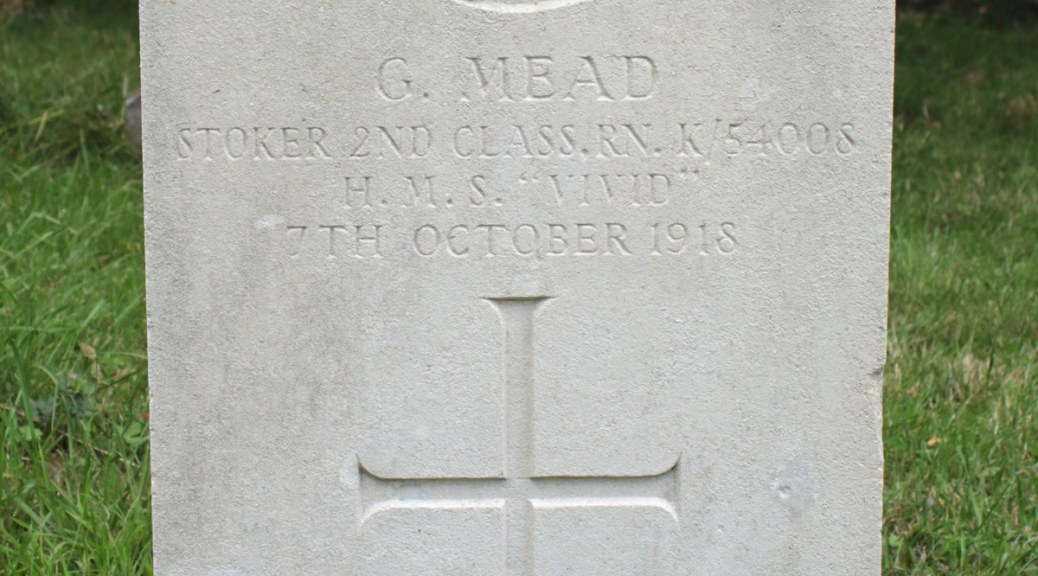
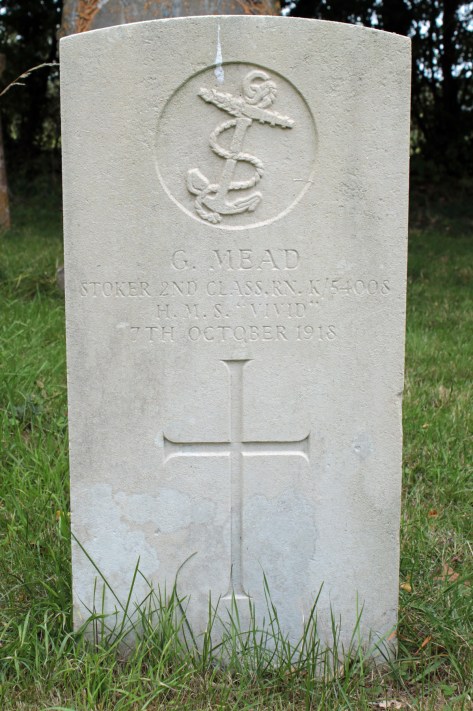
Stoker 2nd Class George Mead

Stoker 2nd Class George Mead

George Mead was born on 18th September 1900 in the Wiltshire village of Semley. The youngest of eleven children, his parents were police sergeant George Mead and his wife, Rebecca.

The 1911 census recorded the Mead family as having moved to Chapmanslade, near Westbury. George Sr and Rebecca were set up in a five-room cottage, Forest View, with George Jr and two of his older sisters – Edith and Margaret – also living there.

Rebecca passed away when her youngest was just sixteen years of age and, on 12th March 1917, George Jr’s older brother Charlie, a Private in the Worcestershire Regiment, was killed in action while fighting in France. It seems that his younger sibling was keen to prove his mettle before peace was declared and, on the day after his eighteenth birthday, he gave up his job as a carter and enlisted in the Royal Navy.

Stoker 2nd Class Mead’s service records show that he was 5ft 10.5ins (1.79m) tall, with brown hair, blue eyes and a fresh complexion. He was sent off to HMS Vivid – the Royal Naval Dockyard in Devonport, Devon – for his training.

Tragically, George Jr’s time in the navy was to be short. He contracted pneumonia and as admitted to the naval hospital in Plymouth. The illness was to prove too severe, and he passed away on 7th October 1918: he was eighteen years of age, and had been in the Royal Navy for just 18 days.

The body of George Mead Jr was taken back to Wiltshire for burial. He was laid to rest in the extension to St Mary’s Church, Corsley, not far from where his grieving father still lived.


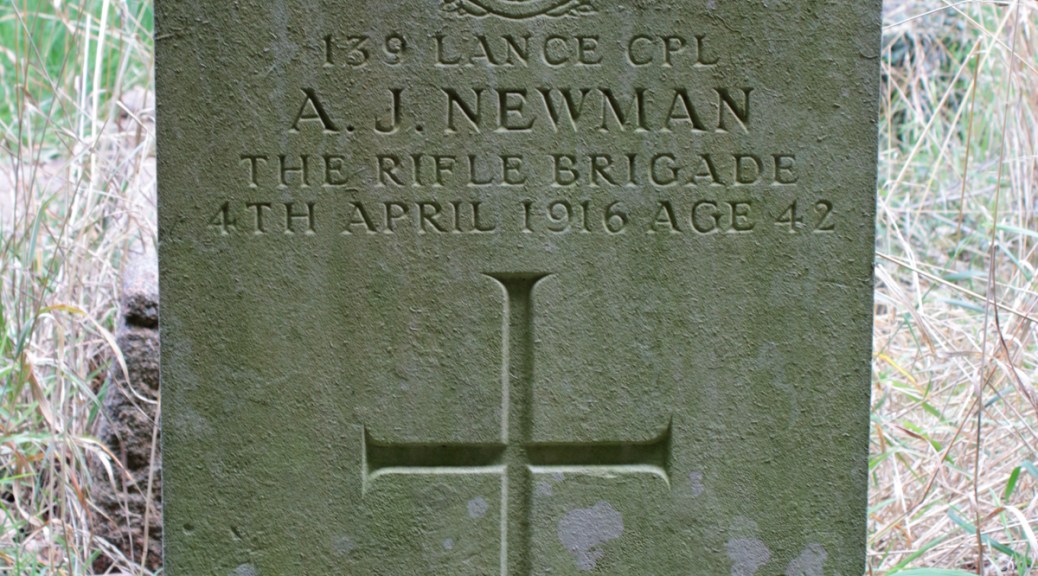
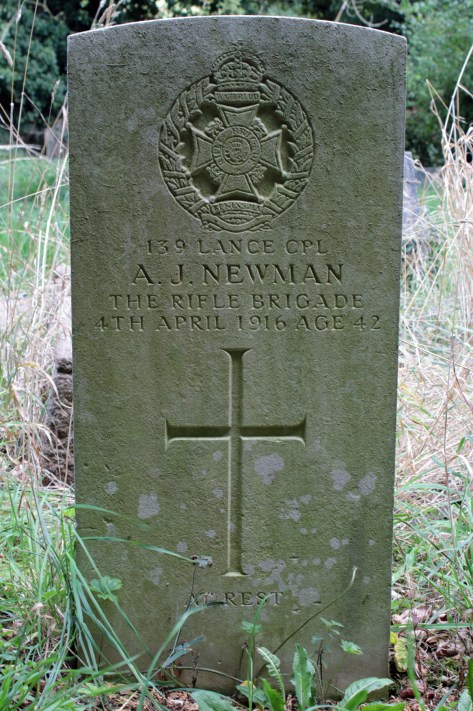
Lance Corporal Alfred Newman

Lance Corporal Alfred Newman

Alfred James Newman was born in around 1874 in Westbury, Wiltshire. One of six children, his parents were coke burner and agricultural labourer James Newman and his wife, Virtue.

Alfred followed his father into farm work, and would remain living with his parents until they were in their seventies. The 1911 census found the family living in Westbury Leigh, to the south of Westbury itself, James and Virtue as pensioners and Alfred as a general farm labourer. Also living with them was adopted child James Ellery, although it isn’t clear who had adopted him, and whether he had any other familial connection to them to the Newmans.

When war broke out, Alfred stepped up to play his part. Full details of his military service have been lost to time, but it is clear that he joined the Wiltshire Regiment, and was attached to the 4th Battalion. He was then transferred to the 22nd (Wessex and Welsh) Battalion of the Rifle Brigade. It is unclear whether he spent time overseas, but, by the spring of 1916, he had been promoted to the rank of Lance Corporal.

On Tuesday last week, Mr James Newman… received a telegram from the military authorities stating that his son, Lance-Corporal Alfred James Newman had died the same day in the 2nd Southern General Hospital at Bristol… He, having obtained leave, went to Bristol to pay a visit to some friends and evidently caught a chill. His death took place on Tuesday morning. He was conveyed to his home on Friday, and the funeral took place on Saturday afternoon.

[Wiltshire News: Friday 14th April 1916]

Alfred’s Pension Ledger Index Card suggests that, rather than a chill, he had, in fact, died following the rupture of an aortic aneurysm. He passed away on 4th April 1916, and was 47 years of age.

The body of Alfred James Newman was laid to rest in the peaceful setting of the Provident Baptist Chapelyard in Penknap, to the south west of Westbury.


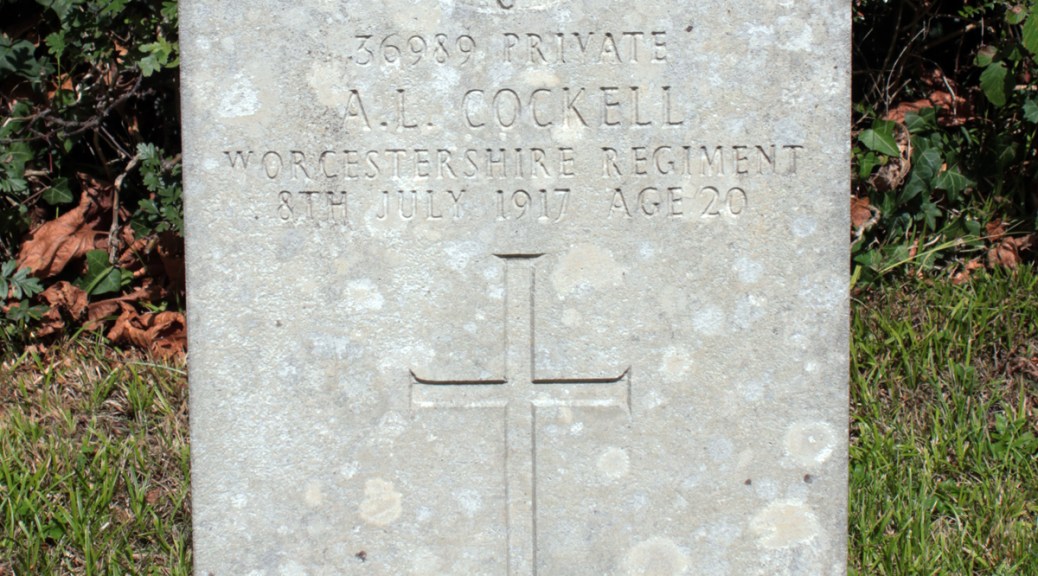
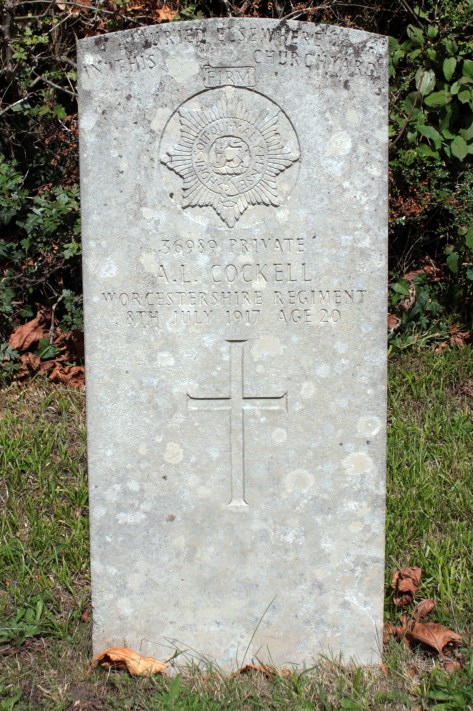
Private Albert Cockell

Private Albert Cockell

Albert Leonard Cockell was born in the spring of 1917, and was the youngest of four children to William and Annie Cockell. William was a plate layer and packer for Great Western Railways, and the family were born and raised in the village of Dilton Marsh, near Westbury, Wiltshire.

Albert finished his schooling early, to help bring in some money. The 1911 census recorded him – at 13 years of age – employed as a glove worker. When he was old enough, though, he followed in his father’s stead and, by the time war broke out, he was working as a porter at Westbury Station.

In the autumn of 1916, Albert stepped up to serve his country. He enlisted in the Worcestershire Regiment, and was assigned to the 4th Battalion. He soon found himself in the thick of things, and, by the spring of 1917, his unit was entrenched near Arras.

Sincere sympathies will be felt for Mr and Mrs William Cockell in the death of their son, Private Albert Leonard Cockell, Worcester Regiment, which took place on July 8th from wounds received while on active service in France. Private Cockell… joined the army about nine months ago, and during fighting on the 23rd April was struck by shrapnel. He was sent back to Dorchester and died on Sunday.

[Warminster & Westbury Journal: Friday 20th July 1917]

Albert Leonard Cockell was wounded on the first day of the Second Battle of the Scarpe. He died from his injuries on 8th July 1917, and his body laid to rest in the graveyard of Holy Trinity Church, Dilton Marsh.