Tag Archives: story

Captain Edward Wakeford

Captain Edward Wakeford

Edward Francis Wakeford was born in Rottingdean, near Brighton, Sussex, in February 1881. He was the younger of two children to curate William Wakeford and his wife, Eliza.

The family home was always a busy one; the 1881 census records one visitor, four boarders and a servant. Ten years later, confirms one boarder and two servants.

By 1901, William had taken up a post in St Peter’s Church, Henfield. This seems to have been a step up: helping look after the family and a visitor were four servants – a gardener, a cook, a housemaid and a kitchenmaid.

In March 1907, Edward married Annie West Thornton; she was the daughter of a well-to-do family – the census records show that her father, William West Thornton, lived by private means, while Annie was sent to Surrey to attend a boarding school.

Edward and Annie couple set up home on the Sussex coast, and, when William passed away in 1912, were soon also living by private means. They went on to have three children: two girls, Olive and Iris, and a boy, who they named William after both of their fathers.

War was coming to Europe by this point. While full details of Edwards military service are not available, he appears to have given a commission in the Royal Sussex Regiment. Initially serving as a Lieutenant, but October 1914, he was promoted to Captain.

Edward was assigned to the 6th (Cyclist) Battalion, and served in East Anglia. It seems that he fell ill while there, and was admitted to the Norfolk and Norwich Military Hospital, suffering with appendicitis. Sadly the condition proved too much, and Captain Wakeford passed away following the operation. He died on 23rd February 1915, not long after his 34th birthday.

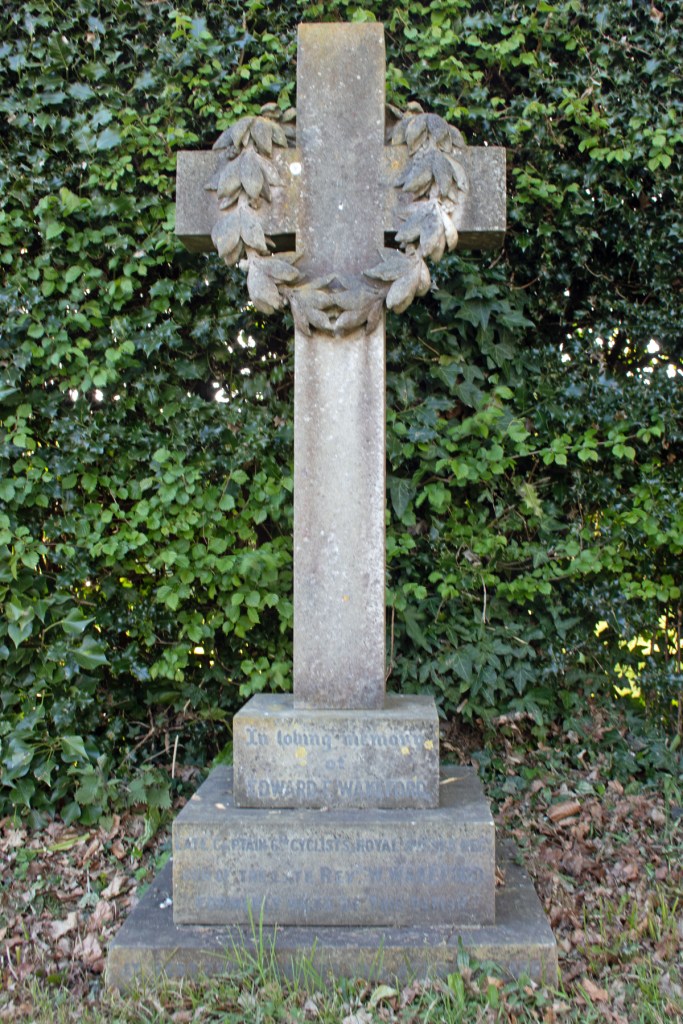
Edward Francis Wakeford’s body was brought back to Sussex. He was laid to rest in Henfield Cemetery, not far from the church where his father had served for so long.
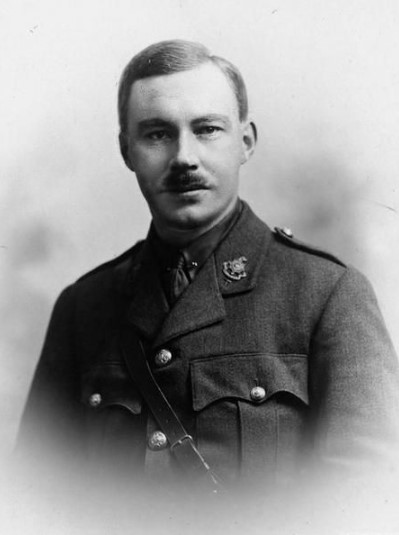

Captain Edward Wakeford
(from findagrave.com)

The now widowed Annie wed again, marrying Reverend John Gurney in October 1917. Tragedy was to strike again, though, when she passed away just a year later, on 20th October 1918. She was laid to rest Henfield Cemetery, in the plot next to her late husband, Edward.

John Gurney went on to live a full live. He never married again, and settled in Buxted, near Uckfield. He passed away in November 1956, at the age of 76 years old. He was also laid to rest in Henfield Cemetery, where he was buried in the same plot as Annie.

Edward and Annie’s children also went on to have full lives, despite the early loss of their parents.

Olive never married, and passed away in Nottingham in 1986, aged 78 years old.

Iris married in Liverpool in 1934, and went on to have two children. When the marriage failed in the 1940s, she got wed again in 1949. She passed away in Cheltenham in 1965, at the age of 54.

William got married in 1940, at which point he was serving as a Lieutenant in the 1st King’s Shropshire Light Infantry. He saw action in Italy towards the end of the war, and was awarded a Military Cross for his service. When peace came to Europe again, he and his wife settled into a normal life, before emigrating to Australia. William passed away in May 1967, at the age of 54 years old.


Gunner William Reeves

Gunner William Reeves

William Reeves was born in the summer of 1896, one of eleven children to James and Ruth Reeves. James was a house painter from Henfield in West Sussex, and it was there that he and Ruth raised their growing family.

When war came to Europe, William was keen to play his part. He enlisted as a Gunner in the Royal Garrison Artillery, and, by October 1915, was in France.

Little information survives about Gunner Reeves’ military service, but by the time he was demobbed, he had earned the Victory and British Medals, the 1915 Star and the Silver War Badge. The latter award was given to those servicemen who had been honourably discharged from service due to wounds or sickness.

William returned to Sussex, but to a quieter home, James having passed away in the spring of 1916. William was also suffering with his health. He had contracted tuberculosis while in the army, and this is the condition to which he finally succumbed. He passed away on 16th December 1919, aged just 23 years old.

William Reeves was laid to rest in Henfield Cemetery, within walking distance of his family home.


Stoker 1st Class William Banfield

Stoker 1st Class William Banfield

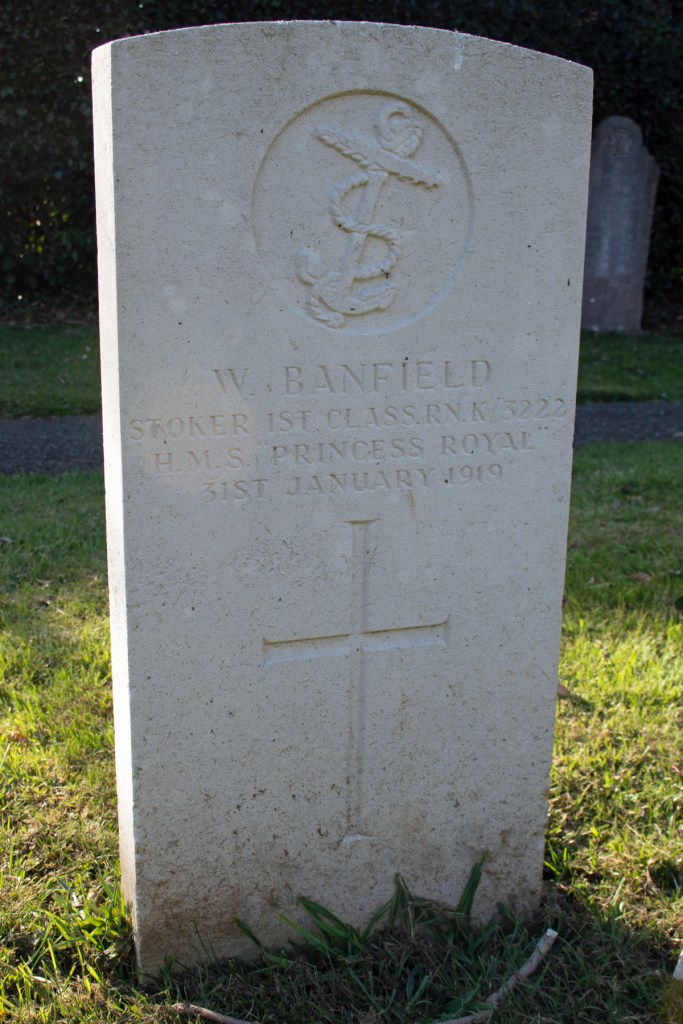
William Banfield was born on 7th November 1890, in Henfield, near Horsham, West Sussex. He was the second youngest of seven children to George and Ellen Benfield. George was a carpenter, and this was a trade his two sons – William and his older brother, George – were initially both to follow as well.

William had a longing for the sea, however, and, on 11th June 1909, he enlisted in the Royal Navy as a Stoker 2nd Class. His service records show that he was 5ft 7.5ins (1.71m) tall, had brown hair, blue eyes and a fair complexion.

Stoker Banfield was based out of HMS Victory, the Royal Naval Dockyard in Portsmouth, Hampshire, but, over the eventual decade of his service, he spent no more than seven months ashore. Instead, he served on a total of nine ships. This included the battleship HMS Exmouth where, during the eighteen months he spent on board, he was promoted to Stoker 1st Class, and also spent 14 days in the brig, for reasons undisclosed.

On 27th September 1915, William was assigned to HMS Princess Royal. He served aboard for nearly three and a half years, patrolling the North Sea, coming under fire during the Battle of Jutland, and providing support during the Second Battle of Heligoland Bight.

Towards the end of January, Stoker 1st Class Benfield fell ill, and was admitted to the Edinburgh City Hospital. Suffering from encephalitis, sadly the condition proved too much for his system to bear and he passed away at the hospital on 31st January 1919. He was 28 years of age.

William Banfield was brought back to Sussex for burial. He was laid to rest in the cemetery of his home town, Henfield.


William’s older brother, George, was also to fall victim to the First World War. He had enlisted in the Royal Navy three years before his younger sibling, and also served as a Stoker 2nd Class (subsequently being promoted to Stoker 1st Class in 1907).

George was also based out of HMS Victory, and, in April 1911, was stood down to the Royal Naval Reserve, having completed an initial five years’ service.

When war broke out, George was called back into service, and was assigned to HMS Good Hope, travelling from English shores to Nova Scotia, before heading to South America and into the Pacific.

Caught up in the Battle of Coronel on 1st November 1914, the Good Hope was sunk by the German cruiser SMS Scharnhost. All souls on board – all 926 of them – were lost; this included Stoker 1st Class George Banfield. He was only 27 years of age.


Private Albert Stockley

Private Albert Stockley

Albert William Stockley was born in the spring of 1897, the youngest of twelve children to Frank and Mary Ann Stockley. Frank was a clay cutter from Dorset, and he and his wife raised their family in the picturesque village of Corfe Castle.

Sadly, much of Albert’s life is lost to time. He would have been 17 years old when war broke out, so it seems likely that he would not have been in the first wave of men to enlist.

Albert joined the Dorsetshire Regiment and, as a Private, was assigned to the 1st/4th Battalion. His troop was based in India for the first part of the war, before moving to Mesopotamia in 1916. There is nothing to confirm, however, whether Private Stockley served abroad, or if he remained as part of a territorial force.

Private Stockley was demobbed on 22nd May 1919, and awarded the Victory and British Medals for his service. He returned to Dorset, but is it at this point that his trail goes cold.

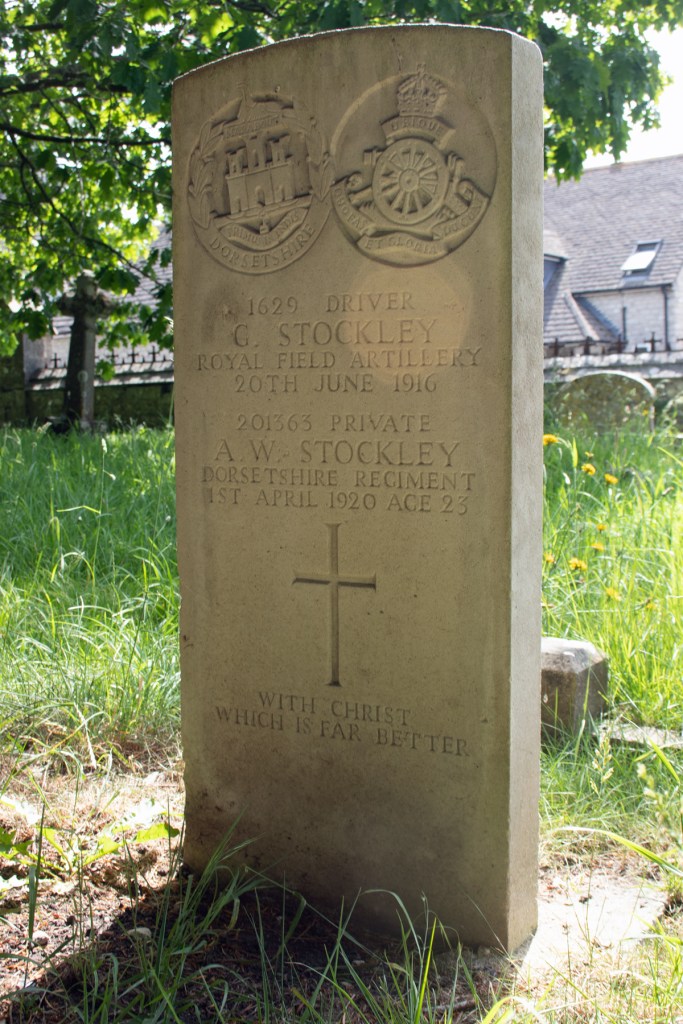
All that is evident is that Albert William Stockley passed away on 1st April 1920, ages just 23 years old. was laid to rest in the Old Church Cemetery in his home town of Corfe Castle.


Albert shares his grave with his older sibling, George Stockley, who died in June 1916. The brothers are commemorated on the same headstone.


Driver George Stockley

Driver George Stockley

George Stockley was born in December 1888, one of twelve children to Frank and Mary Ann Stockley. Frank was a clay cutter from Dorset, and he and his wife raised their family in the picturesque village of Corfe Castle.

When he left school, George found work as a house painter but it seemed this was not to be a career. In March 1913, he married Lillian May Stockley, who had been born in Frome, Somerset, but who was working as a barmaid in nearby Weymouth. Later that year, the couple had a daughter, Georgina, and, by the time he enlisted two years later, George was working as a barman, and the young family were living in Bournemouth.

George had joined up on 10th February 1915, and was assigned to the 3rd/6th Hampshire Battery of the Royal Field Artillery. His service records show that he was 5ft 4ins (1.63m) tall, but they also confirm that, when he had his medical examination on 30th May, he was deemed as medically unfit for military service.

Sadly, there is no further information to confirm why Driver Stockley’s military career was cut so short. His trail goes for a year, until, on 20th June 1916, he passed away, aged just 27 years old. The cause of his passing is also lost to time

George Stockley was laid to rest in the Old Church Cemetery in his home town of Corfe Castle.


George shares his grave with his youngest sibling, Albert William Stockley, who died in April 1920. The brothers are commemorated on the same headstone.


Gunner James Wing

Gunner James Wing

James Joseph Wing was born in Tonbridge, Kent, in the summer of 1876 and was the oldest of six children to Henry and Frances Wing. Henry was a labourer, but when he finished school, James found work as an errand boy for the post office.

This was not a long-term career, however, and by the time of the 1901 census, when James was 25, he was labouring for the railway. His mother had died in 1897, and Henry remarried, to a woman called Frances Stapley.

In the spring of 1902, James also married, to Sussex-born Mary Ann Goacher. The couple wed in Steyning, near Worthing, but settled in Henfield. James seemed to be picking up work where he could – the census of 1911 recorded him as a coal porter, but by the time he enlisted, in June 1916, he gave his trade as a gardener.

James joined the Royal Garrison Artillery as a Gunner, and was initially assigned to the No. 1 Depot in Newhaven. Full details of his service are unclear, but he transferred to No. 2 Depot in Gosport, Hampshire, in the summer of 1918.

Gunner Wing had only been in Gosport for a couple of months, when he was admitted to the 5th Southern General Hospital in nearby Fratton. At 12:15pm on 4th December 1918, he passed away, a post mortem revealing he had succumbed to a cerebral tumour. He was 42 years of age.

James Joseph Wing was brought back to Sussex for burial. He was buried in the cemetery in his adopted home town of Henfield.


Private Walter Chapman

Private Walter Chapman

Walter Stanley Chapman was born in the summer of 1897, the younger of two boys to William and Sarah (known as Annie) Chapman. William was a carter on a farm in North Cadbury, near Yeovil, Somerset, and this is where the young family grew up.

When he left school, Walter became apprenticed to a local carpenter, but war was on the horizon. His older brother Frederick was quick to enlist, joining the Royal Marine Light Infantry as a Private. He served on HMS Hood during the Battle of Jutland in the spring of 1916, and was killed during the fighting. He was buried at sea, and was just 23 years old when he died.

The loss of his brother may have spurred Walter into action. He enlisted as well, joining the 1/4th Battalion of the Somerset Light Infantry as a Private. Details of his service are limited, but his battalion served in Mesopotamia during the conflict, and it is likely that he spent some time in the region.

Private Chapman survived the war, and returned to Somerset on furlough, waiting to be demobbed. Sadly, he passed away during this time, breathing his last on 19th April 1919, at the age of just 21 years old. William and Annie had lost both of their sons because of the conflict.

Walter Stanley Chapman was laid to rest in the graveyard of St Michael’s Church in his home village of North Cadbury. His gravestone also commemorates the passing of his older brother.


Private Alonsa Dixon

Private Alonsa Dixon

Alonsa Dixon was born in Kingston-upon-Hull, Yorkshire, in 1887, the oldest of seven children to Alonsa and Caroline Dixon. Alonsa Sr was a billiard marker, who raised his family in a small house near the city centre.

Alonsa Jr found work as an errand boy for a grocer when he left school, but went on to find work as a jobbing gardener. By the time of the 1911 census, he had moved out of home, and was boarding with cab driver George Gill and his family.

In April 1912, he married Edith Alice Gill. Trixie, as she was also known, was George’s daughter, and it seems likely that romance blossomed after Alonsa moved in. The couple went on to have a son, also called Alonsa, who was born the following year.

War was coming to Europe, and Alonsa was in one of the first waves of men to volunteer for King and Country. He enlisted in the East Yorkshire Regiment, and was assigned to the 13th Battalion. His service records show that he was 5ft 7.5ins (1.71m) tall, and weighed 144lbs (65.3kg). He was noted as being of good physical development.

Initially serving on home soil, Private Dixon was eventually dispatched overseas, arriving in Egypt in December 1915. Having spent just under three months in North Africa, he was moved to France in March the following year.

Alonsa had some health issues by this point, and was suffering from Bright’s Disease, or nephritis (inflammation of the kidneys). He was treated in a field hospital in Abbeville, but subsequently medically evacuated back to England for further care.

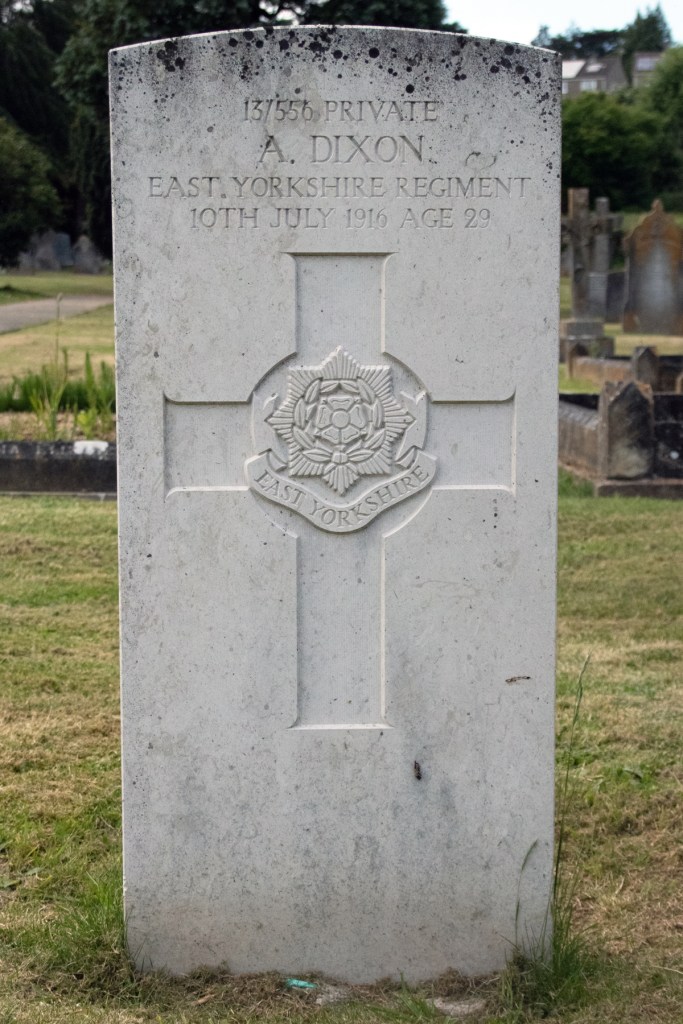
Private Dixon was admitted to the Monastery Hospital in Wincanton, Somerset in April 1916, but his condition proved too severe, and he passed away on 10th July 1916. He was just 29 years of age.

Alonsa Dixon was laid to rest in the cemetery of the town in which he passed away, Wincanton.


Private Alonsa Dixon
(from findagrave.com)

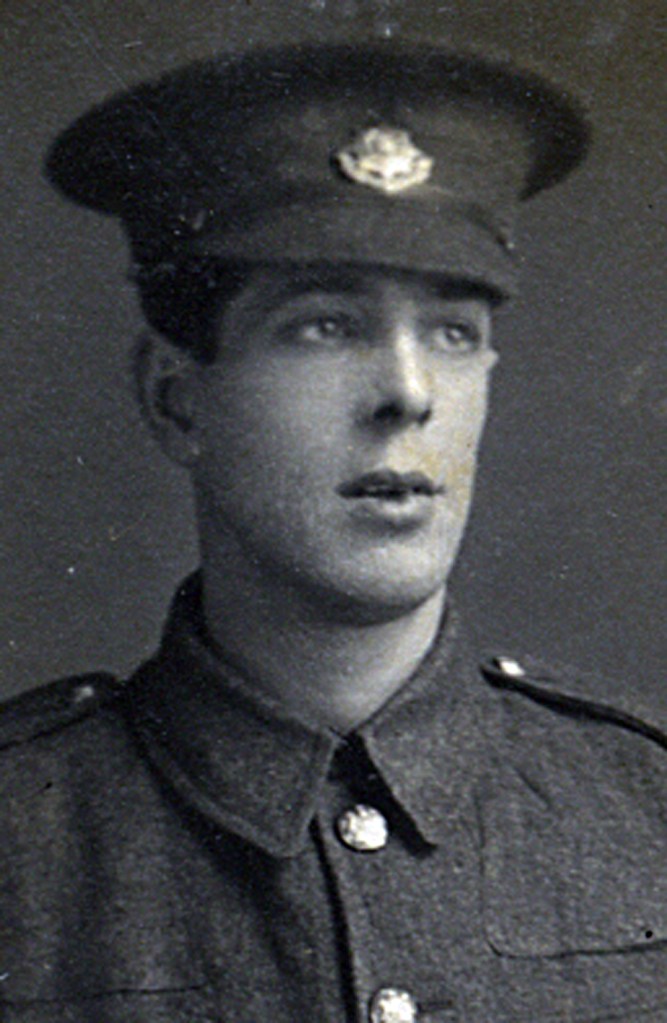
Private Joseph Graham

Private Joseph Graham

Joseph Aitken Graham was born in Kirkmichael, Dumfries, in 1894 and was the son of James and Bella Graham. There is little detail about his early life, but by the time war broke out, he was working with his father as a ploughman.

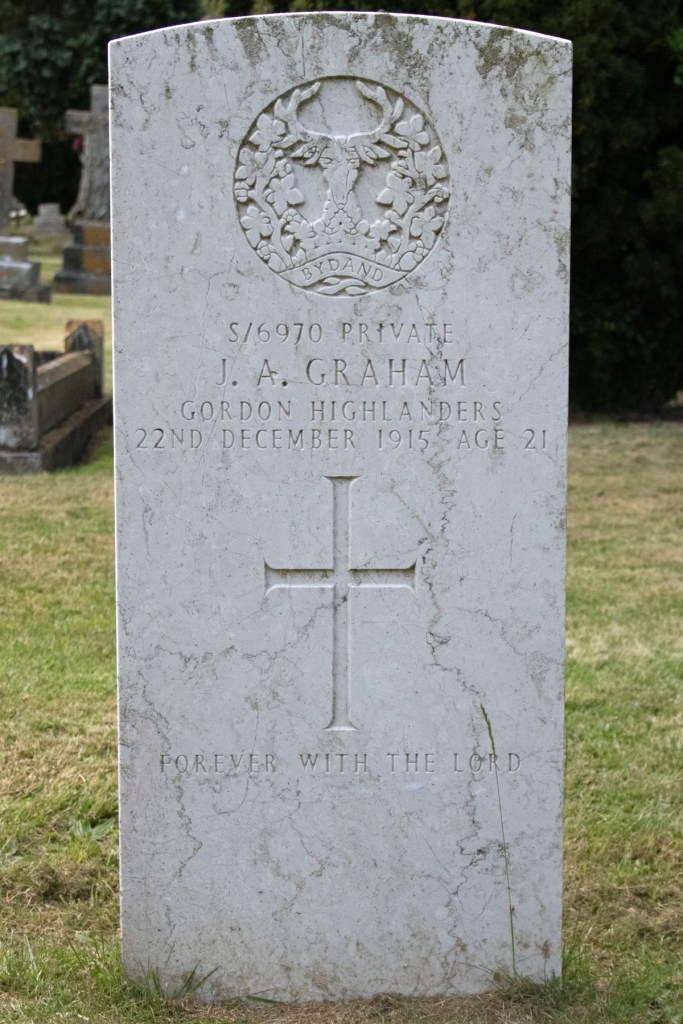
Joseph enlisted in November 1914, joining the 2nd Battalion of the Gordon Highlanders as a Private. His medical report records that he was 5ft 9.5ins (1.77m) tall, weighed 145lbs (65.8kg), had grey eyes, brown hair and a fresh complexion.

After a short period of training, Private Graham was sent to the Western Front, arriving in France on 2nd February 1915. He was involved in the fighting at Neuve Chapelle and Aubers Ridge. It was at Festubert, however, that things took a turn for the young private.

On the first day of the battle, 16th May 1915, Graham was badly injured, receiving gunshot and shrapnel wounds to his head and legs. He was initially treated at nearby Bethune, before being moved to Rouen. He was then evacuated to England in July, to further his recovery, and admitted to hospital in Wincanton, Somerset.

He was making such good progress that he was able to take a short walk each morning, and it was after one of these walks that he was taken ill. In spite of all that medical skill could do his condition became gradually worse, and it was thought advisable to send to Dumfries for his parents, who at once proceeded to Wincanton.

Dumfries and Galloway Standard: Saturday 8th January 1916

Sadly, nothing could be done for Private Graham: he passed away from a suspected brain haemorrhage on 22nd December 1915, at the age of just 21 years old.

Joseph Aitken Graham was laid to rest in the quiet and peaceful Wincanton Cemetery.


Private George Dove

Private George Dove

George Dove was born in Wincanton, Somerset, on 4th December 1883. One of five children, his parents were farm labourer George Dove and his wife, Jane.

George Jr did not follow his father into farm work: the 1901 census found him boarding with a family in Radstock, working in one of the coal mines in the area. Ten years later, he was living back with his family, employed as a groom.

His work with horses stood him in good stead when war was declared. George enlisted early on, and was assigned to the 19th (Queen Alexandra’s Own Royal) Hussars as a Private. By October 1914, he was in France, returning to England with his squadron the following spring.

At some point during the conflict, Private Dove transferred to the Reserve Regiment of Cavalry. He was posted to the 5th Regiment, which trained men for the Northumberland Hussars and Yorkshire Dragoons, amongst others.

Further details of George’s life are scarce; at some point, he married a woman called Emily, although records of the couple’s wedding no longer exist. The only thing that can be confirmed is that George was admitted to the Bermondsey Military Hospital in Surrey, where he passed away on 24th October 1918. He was 34 years old.

The body of George Dove was brought back to Somerset for burial. He lies at rest in the cemetery in his home town, Wincanton.