Tag Archives: tuberculosis

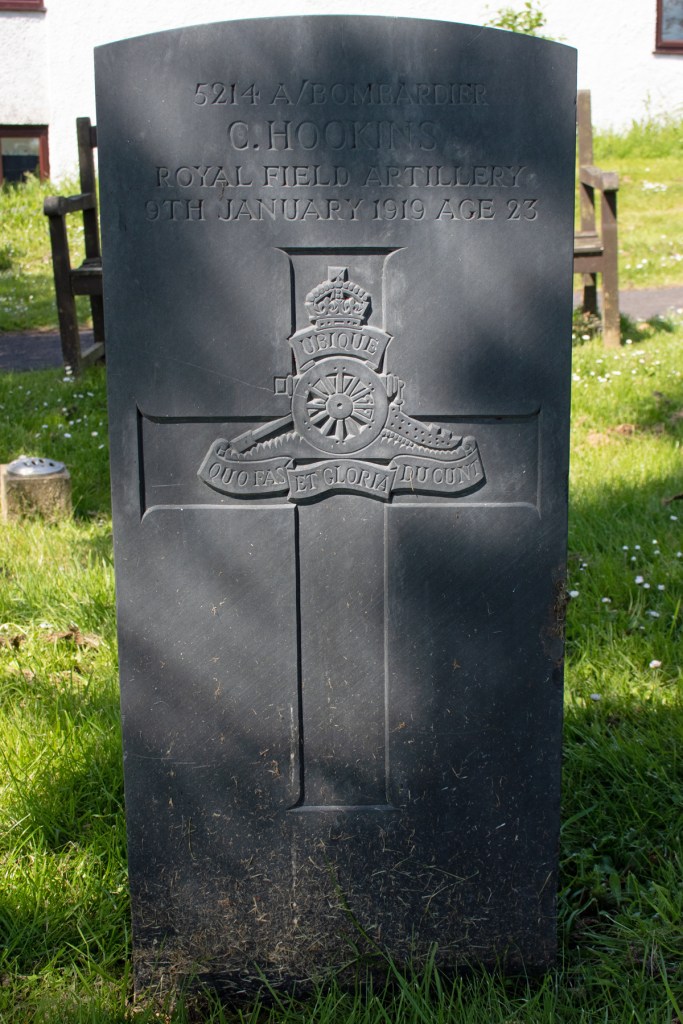
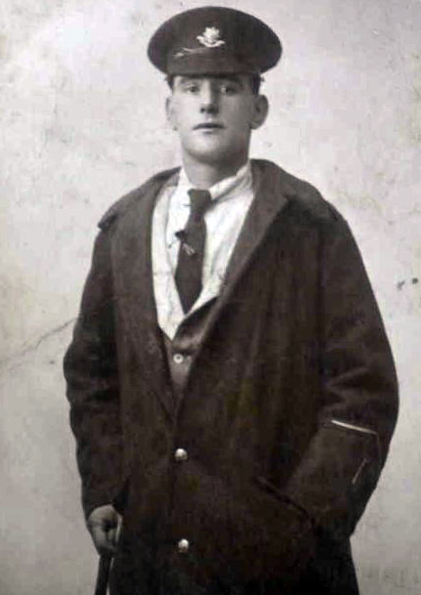
Bombardier Charles Hookins

Bombardier Charles Hookins

Charles Hookins was born on 15th October 1895 in Pawlett, Somerset. The eighth of nine children, his parents were William and Susan Hookins. William was a labourer in a brickyard, but when he finished his schooling, Charles went to work on his cousin’s farm in neighbouring Huntspill.

Farming was not what Charles had in his mind as a career, however, and on 7th April 1913, he joined the Great Western Railway. Initially employed as an engine cleaner, he was sent to work at the Duffryn Yard, South Wales. He soon moved on again, however, and by October 1913, he was living in Tondu, to the north of Bridgend, where he worked as an engine fireman.

War came to Europe in 1914, and, within weeks of hostilities being declared, Charles volunteered for service. He enlisted on 1st September 1914 in Bridgend, joining the Royal Field Artillery. His service records confirm that he was 19 years of age, stood 5ft 7.5ins (1.71m) tall, and weighed 135lbs (61.2kg). He was noted as having brown eyes, brown hair and a fresh complexion.

Gunner Hookins spent most of the next year on home soil training and became attached to the 57th Brigade. On 2nd August 1915 he set off for the Mediterranean, his troop unusually making their way across mainland France, rather than sailing around Spain and Portugal. They left European shores from Marseille on 7th August, and arrived at Suvla Bay on the Gallipoli peninsula just nine days later.

The 57th Brigade remained at Gallipoli for the next five months, and during this time, in November 1915, the now Acting Bombardier Hookins spent a week in the local field ambulance, through causes unknown.

Charles’ health seemed to be suffering by this point. On 17th January 1916, he was moved to Alexandria, Egypt, where he spent another week admitted to a field hospital. After a couple of months’ grace, he was transferred back to France, again disembarking at Marseille. After another week’s admission to hospital, he was invalided back to England, eventually arriving back home at the end of April.

Acting Bombardier Hookins had contracted pulmonary tuberculosis, and the risk to others, as well as his own health, led to him being discharged from military service on 15th July 1916, having served for just under two years.

Charles’ trail goes cold at this point. He returned home, but his medical condition was ultimately to get the better of him. He passed away on 9th January 1919, at the age of just 23 years old.

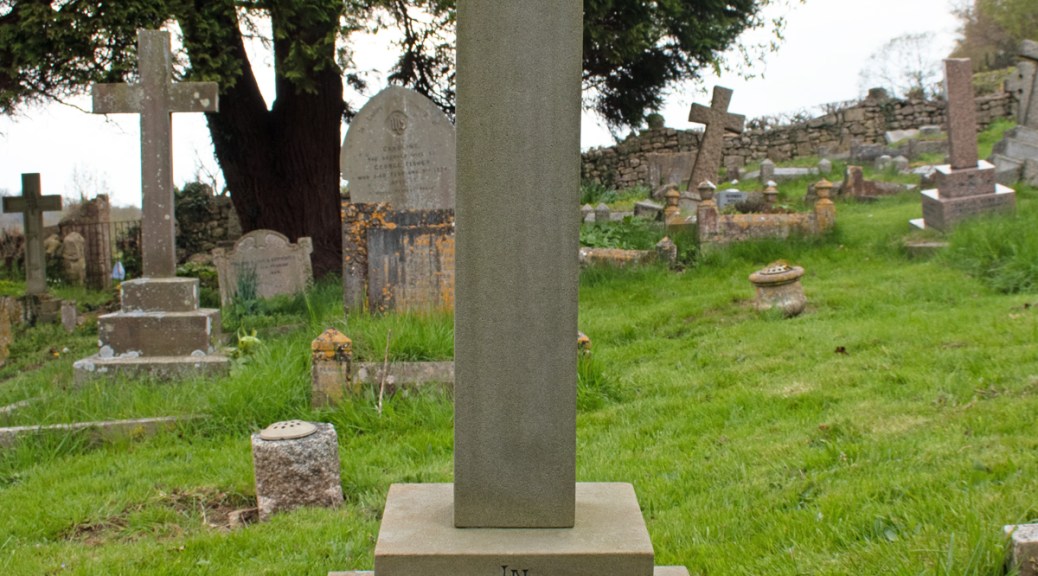
Charles Hookins was laid to rest in the quiet graveyard of St John the Baptist Church in his home village of Pawlett, Somerset.


Bombardier Charles Hookins
(from ancestry.co.uk)

Serjeant Frederick Reid

Serjeant Frederick Reid

Frederick William Reid was born in January 1876 in Liverpool, Lancashire. Little information is available for his early life, and his trail only really becomes traceable when he joined the Royal Irish Regiment at the age of 16 years old.

Frederick’s service records confirm that his mother was called Elizabeth, who lived in Bedminster, near Bristol. He was already volunteering for the regiment when he enlisted, and was working as a musician when he joined up. His papers confirm that he was 5ft 4ins (1.63m) tall, and weighed 112lbs (60.8kg). He had brown hair, hazel eyes and a fresh complexion.

Frederick was given the rank of Drummer when he joined up and was attached to the Royal Irish Regiment’s 3rd Depot. He spent more than seven years on home soil, rising to the rank of Corporal in May 1898. The following January he reverted to the rank of Private at his own request, but his superiors obviously saw something in him, and he was supported in a new role – Lance Corporal – just a month later.

In October 1899, however, Frederick’s life was to take a new turn, when he was sent to India with his troop.

Corporal Reid was based in Lahore, and had found the life that he was seeking. Over the next forty months, he successfully took on a variety of clerical roles. He was promoted to Lance Sergeant in October 1901 and given oversight of the Officers’ Room.

In March 1903, Frederick returned to Britain. With the move came a further promotion, to the rank of full Sergeant, again, overseeing the Officer’s Room. He seems to have been based in Gloucestershire by this point, as, on 18th November 1903, he married Isabella Jane Parke at a Registry Office in Bristol. There is no further record for the young couple, however, so the new Mrs Reid is destined to remain a mystery.

Frederick was destined to return to India, and in January 1905, that is exactly what he did. His regiment returned to Lahore, and he was given the role of Clerk Steward at one of the Lawrence Memorial Asylum. The name is misleading, as the asylums were a series of four military-style boarding schools across India. Sergeant Reid’s records do not confirm which of the four he was attached to, but it would have been Sanawar, Mount Abu, Lovedale or Ghora Gali.

Given his military background, it seems that the role of clerk was something Frederick settled into quite happily. He was recalled back to army service in November 1909, and, within seven months, he requested a discharge from the army. This was granted, as he had, by this point, completed more than eighteen years’ service.

Frederick remained in India, however, and on 28th September 1913, he married Elizabeth Marshall in Lahore. They had two children, Florence, who was born in Quetta on 2nd September 1914, and Lily, who was born on 1st January 1916 in Lahore.

War had come to the world by this point, and in spite of his age – he was 39 by now – Frederick felt it only right to step up and play his part again. On 28th October 1914, he enlisted again, and was assigned to the 1st Battalion of the Duke of Wellington’s (West Riding Regiment). His new medical noted that he was 5ft 7ins (1.7m) tall, and weighed in at 9st (57.2kg). His complexion was recorded as pale, while he had a number of tattoos on his left forearm: the crossed swords, harp and crown of the Royal Irish Regiment, along with the initials VR.

While part of the West Riding Regiment, Sergeant Reid was attached to the 3rd Mule Corps of the Indian Supply & Transport Corps. He was involved in arranging provisions for the various battalions who needed them.

By March 1916, his battalion had been sent to Salonika, and it was here that Frederick contracted tuberculosis. Medically evacuated to Britain, he was admitted to the Southwark Military Hospital. He was confirmed as no longer being medically fit for army service and was discharged on 16th August 1916. His medical report noted that he “is anxious to have sanatorium treatment, but is not an insured man, owing to having been stationed in India.”

On his discharge, Frederick moved to Weston-super-Mare, Somerset, which is where his mother was by now living. His wife and children also came to live in England and, the family settled in Pawlett, near Bridgwater.

After leaving the army, Frederick’s trail goes cold. The next confirmation of his life is that of his passing. He died on 12th October 1919, presumably from his lung condition. He was 43 years of age.

Frederick William Reid, who had been born in Liverpool, who had had two separate careers in the army, and who had lived and married in India, was laid to rest in the peaceful graveyard of St John the Baptist’s Church in Pawlett, Somerset.


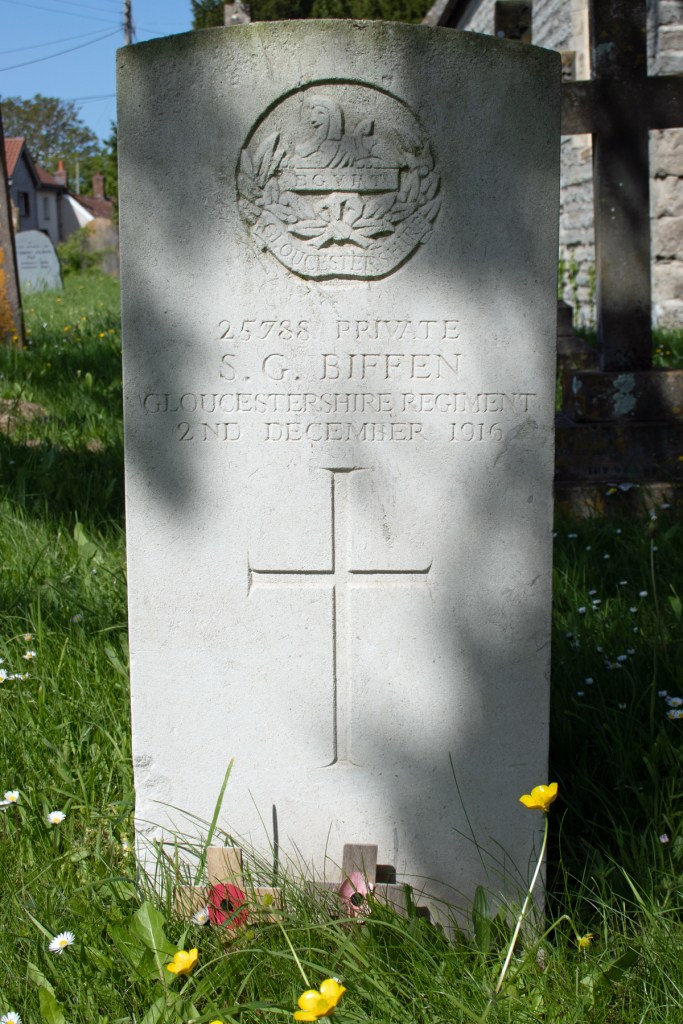
Private Stanley Biffen

Private Stanley Biffen

Stanley George Oliver Biffen was born in the autumn of 1894 in the Somerset village of East Huntspill. He was the second child to Oliver and Fanny Biffen, although his older sibling, sister Florence, had passed away at just three months of age.

Oliver was a carter and farm labourer, and the family went where the work was. The 1901 census found them living in Eastover, Bridgwater, Fanny’s widowed father, George, also living there. Ten years later, the four of them had moved to the village of Stawell. Stanley had finished his schooling, and had also taken up farm work.

When war came, Stanley stepped up to play his part. Full details of his service are lost to time, but he had enlisted in the Army by the spring of 1915. He initially joined the 1st Battalion of the Somerset Light Infantry, and by May that year, was in France.

It is not possible to track Private Biffen’s movements during the conflict, but he did transfer across to the Gloucestershire Regiment at some point. Assigned to the 7th (Service) Battalion, his was a troop that served at Gallipoli and in North Africa, although there is no evidence that Stanley fought in there.

The only other concrete evidence available for Private Biffen relates to his passing. By the autumn of 1916, he had been admitted to the 1st Western General Hospital in Fazakerley, Liverpool. He was suffering from phthitis, or tuberculosis, and this was the condition that was to get the better of him. He passed away on 2nd December 1916, at the age of just 22 years old.

The body of Stanley George Oliver Biffen was brought back to Somerset for burial. He was laid to rest in the quiet graveyard of Stawell Church.


Stanley’s parents had now lost both of their children, and this is likely to have taken a toll on them. Fanny passed away in December 1924, at the age of 64 years old. Oliver died just a year later aged 54 years old.


Gunner Valentine Wilkinson

Gunner Valentine Wilkinson

Valentine Burnett Wilkinson was born early in 1889 in Combe Down, Somerset. One of eight children, his parents were Harry and Eliza Wilkinson, Harry was from nearby Bath and worked as a gardener, and this is the trade into which Valentine also went when he finished school.

In the spring of 1913, Valentine married Florence Moody. She was the daughter of a stone mason and, at the time of the 1911 census, she was employed as a live-in sewing maid at Monkton Combe Junior School.

Gardening seems to have been a footstep to something bigger for Valentine, and he soon found other employment, as a police constable. He and Florence moved to Street, near Glastonbury, and this is where they were living when war broke out.

Keen to play his part, Valentine enlisted in the Royal Garrison Artillery on 11th December 1915. He was placed on reserve, possibly because of his occupation, and was not formally mobilised until the end of June 1917, just six weeks after Florence had given birth to their first and only child, Joan.

Gunner Wilkinson’s service records note that he was 5ft 11ins (1.8m) tall, and had a scar on his right wrist. He spent five months training, split between No. 3 Depot in Plymouth, Devon, 473 Siege Battery and No. 1 Reinforcing Depot in Bexhill-on-Sea, Sussex. On 3rd November 1917, however, he was sent to France, and was attached to the 234th Siege Battery.

Gunner Wilkinson’s time overseas was to be brief, however. He was caught up in a gas attack in December, and evacuated back to Britain for treatment. His health was now impacted and, during the summer of 1918, he was admitted to hospital having contracted pleurisy. After two months in hospital, Valentine was sent to the Military Convalescent Hospital in Ashton-in-Makerfield, near Wigan.

The war was in its closing stages by this point, and in November 1918 Gunner Wilkinson resumed some of his duties, albeit on home soil. His health was still suffering, and he contracted tuberculosis on the lung and throat. He was formally discharged from the army on 27th February 1919, no longer physically fit to serve.

Valentine returned home to Somerset, and it was here, on 1st April 1919, that his body finally succumbed to the lung conditions that had dogged him for nearly eighteen months. He was just 30 years of age.

Valentine Burnett Wilkinson was laid to rest in the quiet graveyard of St Michael’s Church in the parish of his childhood home, Monkton Combe.


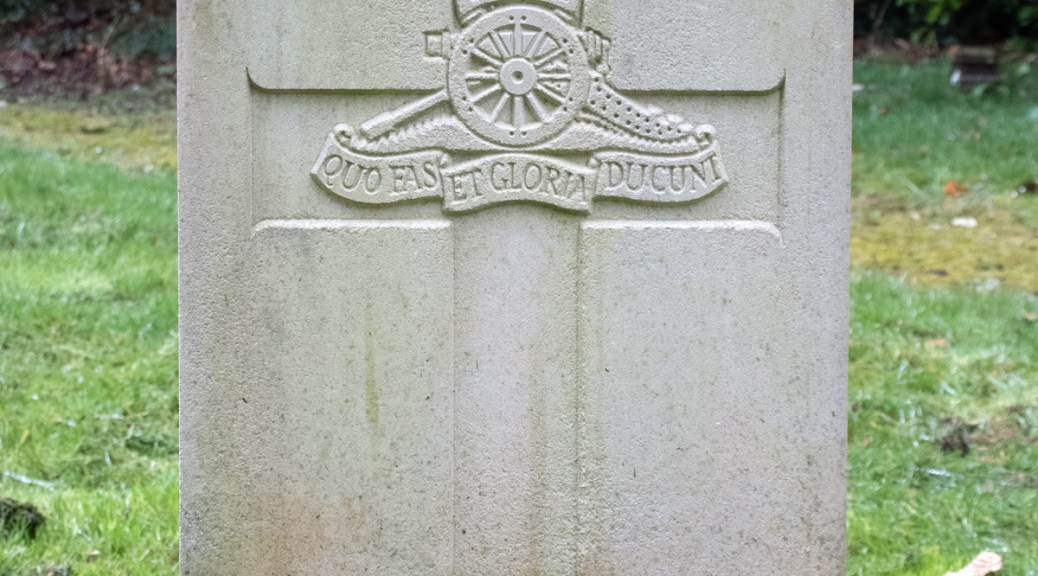
Driver Frederick Coombes

Driver Frederick Coombes

Frederick Walter Coombes was born in 5th July 1891 in Chard, Somerset. He was the oldest of eight children and his parents were mason’s labourer Walter Coombes and his wife, Sarah.

The family moved to nearby Crewkerne and, when he left school, Frederick found work as a weaver. He quickly realised, however, that he needed a career, and the the military could offer one. On 18th October 1909, he enlisted in the the Royal Field Artillery, signing up for three years with the regiment, followed by nine years on reserve.

Frederick’s service record confirms the man he had become. His medical examination gave his height as 5ft 6ins (1.68m) and his weight as 139lbs (63kg). He was noted as having brown hair, hazel eyes and a fresh complexion. He was also recorded as having a tattoo of a man’s head on the back of his right wrist and a small scar on his left hip.

After a year on home soil, Driver Coombes was sent to South Africa. He was to spend a little over two years in the country, the 1911 census recording him at the Roberts Heights Barracks in Transvaal, as part of the 98th Battery.

When his initial three year contract came to an end, Frederick was placed on reserve status and returned home. His trail goes cold for a couple of years, but when war was declared in 1914, he was immediately brought back into active service.

By the middle of August 1914, Driver Coombes was on the Western Front in France. Within a matter of weeks he was caught up in the Retreat from Mons, and was gassed in the process.

He soon recovered and, in December 1915 his troop was moved to Mesopotamia, modern-day Iraq. Within a month, Frederick fell ill again, having contracted malaria. He was treated at the base and, eventually remained in the Middle East for a year.

By December 1916 Frederick was on the move again, this time to India. His lungs had had a battering by this point, however, and he fell ill once more, this time having developed tuberculosis. Initially treated in India, by February 1917 he had been medically evacuated back to Britain. The condition was seen as unlikely to improve, and he was eventually discharged from the army as being no longer fit enough to serve.

Driver Coombes’ medical report confirmed that the condition was fully the result of his army service, and treatment at a sanatorium was recommended. His last day with the Royal Field Artillery was 7th May 1917: his career had lasted 7 years 202 days.

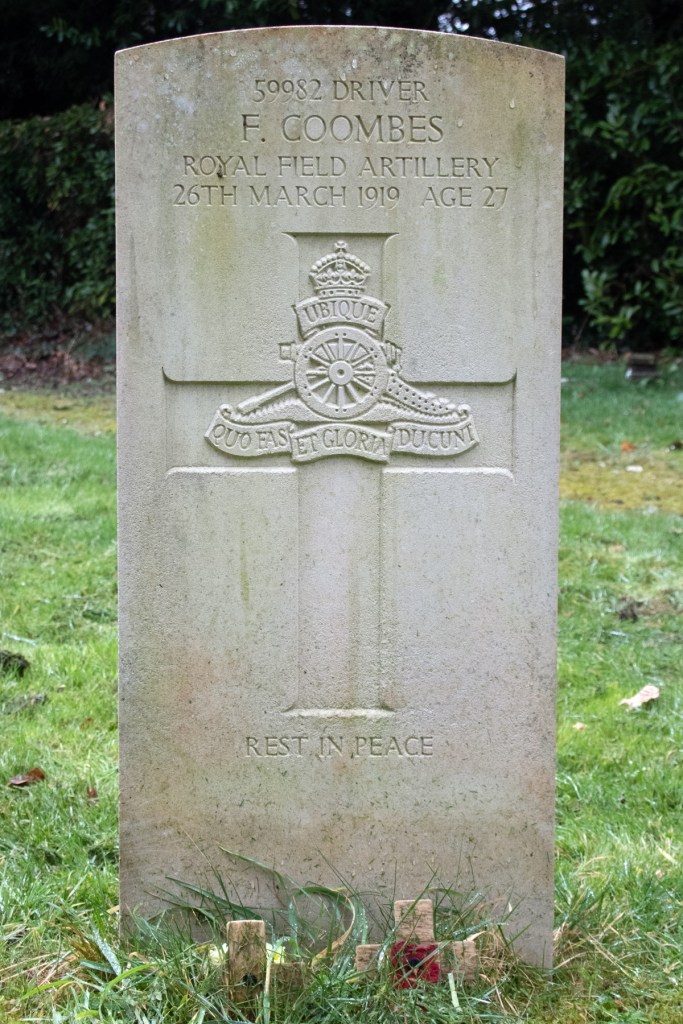
Again, Frederick’s trail goes cold at this point. It seems likely that he would have returned to Somerset and would possibly had been admitted to a medical facility for treatment and recuperation. The next record for him is that of his death, which happened at home on 26th March 1919. He was just 27 years of age.

Frederick Walter Coombes was laid to rest in Crewkerne’s Townsend Cemetery.


Driver Frederick Coombes

Bombardier Ernest Brooke

Bombardier Ernest Brooke

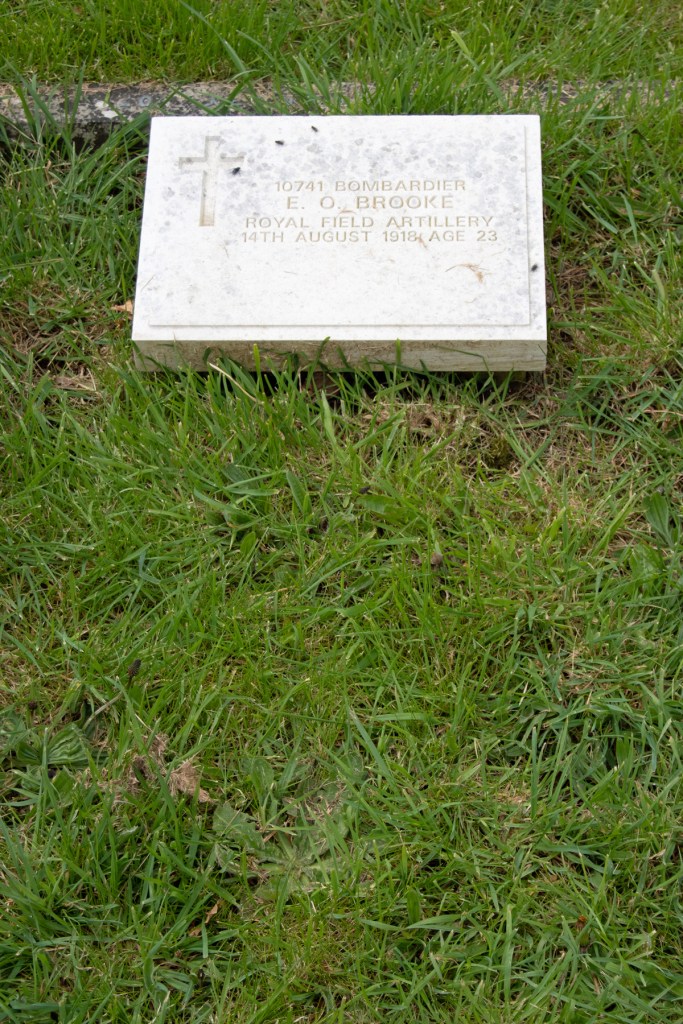
Ernest Oliver Brooke was born in 1895 in Bath, Somerset. The oldest of four children, his parents were tailor Oliver Brooke and his wife, Kate. Ernest did not follow in his father’s footsteps, however, and, by the time of the 1911 census, when the family were living in a Georgian town house in the Lyncombe area of the city, he was noted as being employed as an engine fitter.

Storm clouds were brewing over Europe by this point and, when war was declared, Ernest was one of the first to step up to play his part. He enlisted in 1st September 1914, and was assigned to the Royal Field Artillery.

Gunner Brooke’s service records show that he was 5ft 10ins (1.78m) tall and weighed 138lbs (62.6kg). He had brown hair, grey eyes and a fresh complexion.

Ernest spent ten months on the Home Front, learning and honing his skills. In July 1915 he was sent to the Mediterranean, and found himself in Gallipoli. After nearly a year in Eastern Europe, he was sent to serve on the Western Front in France.

His service records show that the now Bombardier Brooke was wounded on 10th November 1916. Little additional information about this is available, and he was certainly fit enough not to be sent back to Britain for treatment or recuperation.

Things had changed for Ernest, however, and by December 1916, he was transferred back to the UK, to serve on the Home Front once more. While serving in Gallipoli, he had contracted tuberculosis. Over the ensuing months, he had gradually lost weight and developed a distressing cough, which occasionally resulted in haemoptysis, or coughing up blood.

By the summer of 1918, Bombardier Brooke was admitted to a sanitorium. His health led to him being medically discharged from the army on 20th June, and his condition slowly deteriorating. On 14th August 1918 he finally succumbed, aged just 23 years old.

Ernest Oliver Brooke was laid to rest in the family plot in St James’ Cemetery, Bath.


Sapper Henry Tabor

Sapper Henry Tabor

Henry James Tabor was born in 1877, the second of six children to James and Sarah Tabor. Wiltshire-born James was a carpenter and joiner by trade, and the family were raised in Sarah’s home town of Milborne Port, Somerset.

Henry followed in his father’s footsteps when he left school and, by the time of the 1901 census, both were carrying out their trade (along with younger brother, Sidney) from the family home in East Street.

James died in September 1915, at the age of 75, and shortly afterwards, his oldest son stepped up to play his part for King and Country. He enlisted in the spring of 1916, joining the Royal Engineers as a Sapper.

Little information about his military life remains documented, but, according to a later newspaper report, he went to France and fought at both Ypres and the Somme. It was while he was overseas that Sapper Tabor contracted bronchitis, which then developed into tuberculosis. He was medically evacuated to Britain for treatment, but passed away on 28th March 1917, having been admitted to the Military Hospital in Southwark. He was 40 years of age.

The body of Henry James Tabor was brought back to Somerset for burial. He was laid to rest in the family plot in the cemetery of his home town, Milborne Port.


The loss of her husband and oldest son in such a short space of time, may have proved too much for Sarah Tabor. She passed away just two months after Henry, and he was reunited with both parents once again.


Korporaal Paul Vandermersch

Korporaal Paul Vandermersch

The funeral took place on Friday last, at Bath, of Paul Vandermersch, second son of Paul Vandermersch, Divisional Chief, Provincial Administration, Western Flanders. Deceased passed away the previous Tuesday at 86, Shakespeare-avenue, Bath, at the early age of 22. He had served in the Belgian Army, but suffering from phthisis, he was invalided out.

Catholic Times and Catholic Opinion: Friday 14th January 1916

Paul Pierre Arnold Joseph Vandermersch was born on 11th April 1893 in Bruges, Belgium. Details of his early life are scarce, but it is clear that he was the son of Paul and Louise Vandermersch.

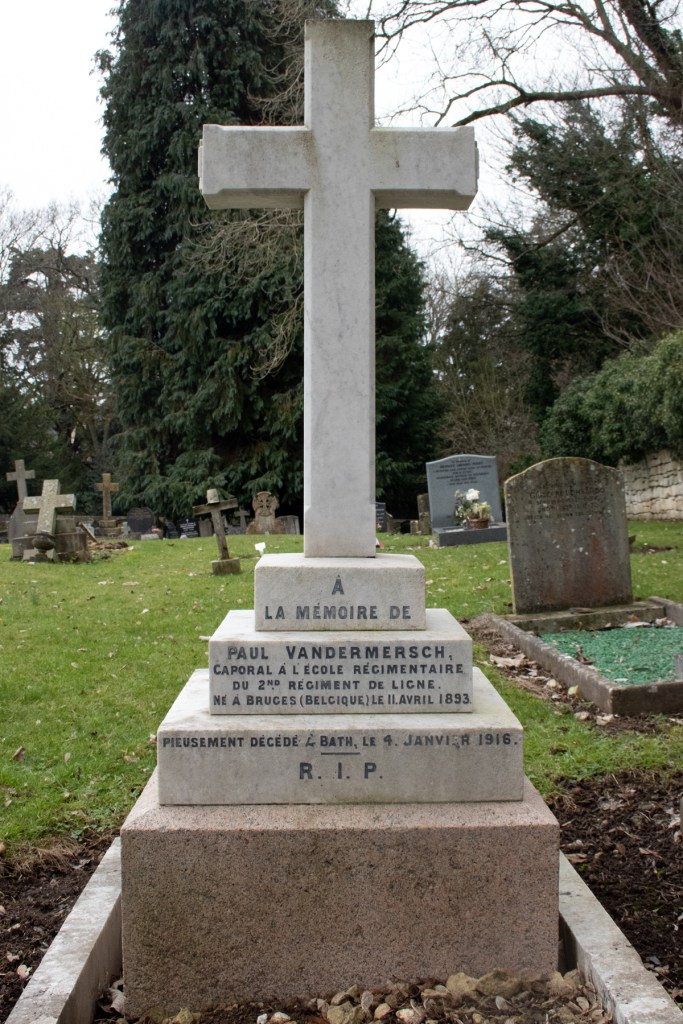
During the First World War, Paul served as a Korporaal (Corporal) in the Belgian Army, and was assigned to the 2 Linie 1/1 (second line). Full service records are not available, but having contracted tuberculosis, and with the influx of Belgian refugees to Britain during the conflict, it is likely that, having been medically discharged from the army, he was sent to Somerset to recuperate.

Korporaal Paul Pierre Arnold Joseph Vandermersch died on 4th January 1916, and was laid to rest in the Roman Catholic Cemetery in Bath.


Private Percy Gerrish

Private Percy Gerrish

Percy Gerrish was born on 22nd August 1890 in Bath, Somerset. The youngest of three children – all boys – his parents were Alfred and Charlotte Gerrish. Alfred was painter and decorator by trade but, by the time of the 1911 census, the family had moved to Batheaston, and he was employed as a school attendance officer.

Alfred and Charlotte had raised their children well: the same census recorded their oldest son, also called Alfred, was employed as a clerk; their middle son, Reginald, was a printer; Percy, then 20 years old, was working as a draughtsman for an engineering company,

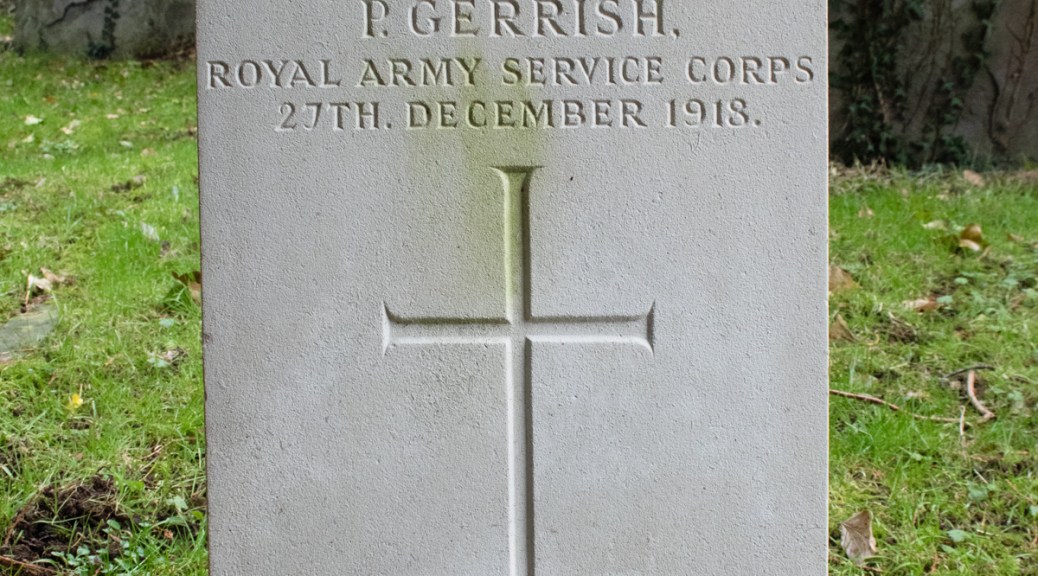
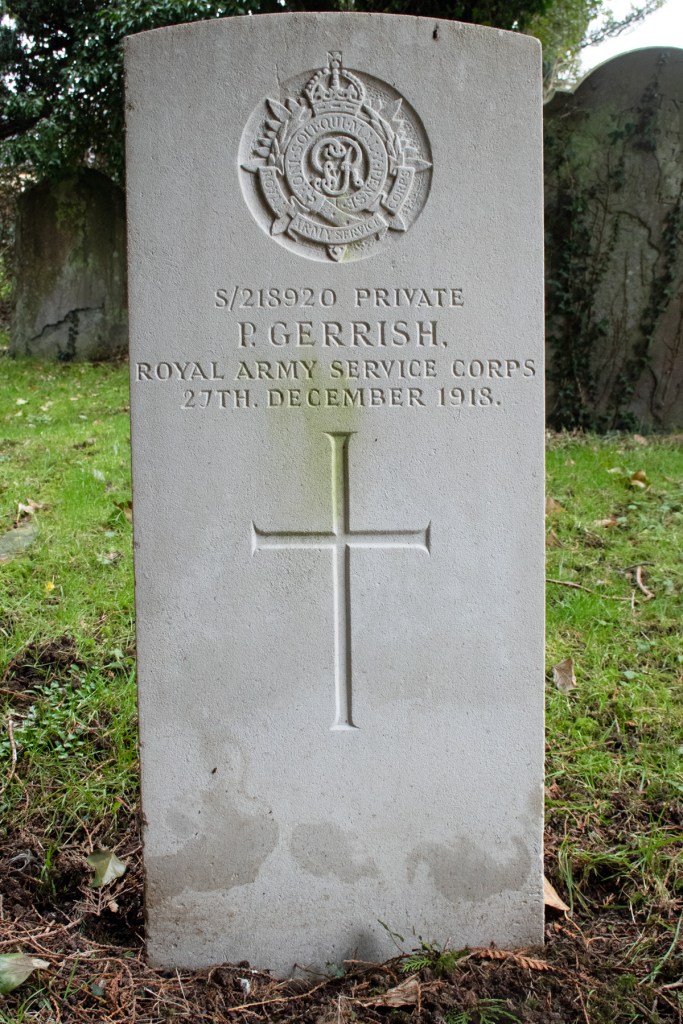
War came to Britain’s shores in 1914, and while he did not join up at once, when the Military Service Act of 1916 came in, Percy found himself conscripted. He enlisted on 24th November 1916 and, while he noted a preference for the Royal Field Artillery or Royal Garrison Artillery, his previous employment made him ideal for work as a clerk in the Army Service Corps.

Private Gerrish’s time in the army was spent on home soil. Full details are not available, but he certainly served in camps around Codford, Wiltshire. This may have been how he met a young woman called Ada Cox, who lived in Bemerton, on the outskirts of Salisbury. On 21st July 1917, the couple married in the new Mrs Gerrish’s local church.

Percy’s army career went well, although during 1918 illness was to dog him. He spent a week in a hospital in Fovant, near Salisbury in June, suffering from influenza, before being readmitted for a month just a week later, having contracted pharyngitis – an inflammation of the pharynx.

By the late summer of 1918, Private Gerrish had been moved to Newport Pagnell, Buckinghamshire. His ongoing health conditions were still an issue, however, and on 23rd October he was admitted to the Tickford Abbey Auxiliary Hospital. He had contracted laryngitis by this point, but, as the weeks in hospital progressed, he was soon also bogged down by tuberculosis.

Sadly, this was to prove Percy’s undoing. He passed away on 27th December 1918, aged just 28 years old.

Percy Gerrish’s body was brought back to Somerset for burial. He was laid to rest in the graveyard of St John the Baptist Church, in a plot next to his father, Alfred, who had died seven months before.


Private Kenneth Harding

Private Kenneth Harding

Kenneth Gordon Harding was born in the autumn of 1896, in the Somerset village of Batheaston. The oldest of nine children, his parents were Lawrence and Fanny Harding. Lawrence was a market gardener when Kenneth was born, but by the time of the 1911 census – and with a growing family to support – he found other employment as a roadman.

When he left school, Kenneth found work as a gardener, but he had his sight set on distant shores. On 25th September 1913 he enlisted in the Royal Marine Light Infantry, determined to see the world. His service records show that he was 5ft 3ins (1.6m) tall, with light hair, blue eyes and a light complexion.

For the duration of his naval career, Private Harding was based out of Plymouth Dockyard, returning there in between each of his voyages. Over the next four years, he served on three different vessels – HMS Heroic, HMS Duke of Edinburgh and HMS Skirmisher. His service records shows that he maintained a satisfactory level of conduct, and that his general character was very good.

By January 1917, Kenneth had fallen ill, and was medically discharged from the army, having contracted tuberculosis. He returned home, but his illness continued to dog him.

On 22nd May 1918, Kenneth’s younger brother, Leonard Harding, who was serving with the Royal Inniskilling Fusiliers, was killed while fighting in France. Private Leonard Harding was just 19 years old. He was laid to rest in the Duhallow ADS Cemetery at Ypres.

With Kenneth’s own health not looking good, his parents must have feared the worst. The worst was to some, sadly, when he breathed his last at home on 29th December 1918. He was just 22 years of age.

Kenneth Gordon Harding was laid to rest in the graveyard of St John the Baptist Church in his home village, Batheaston.