Tag Archives: wounded

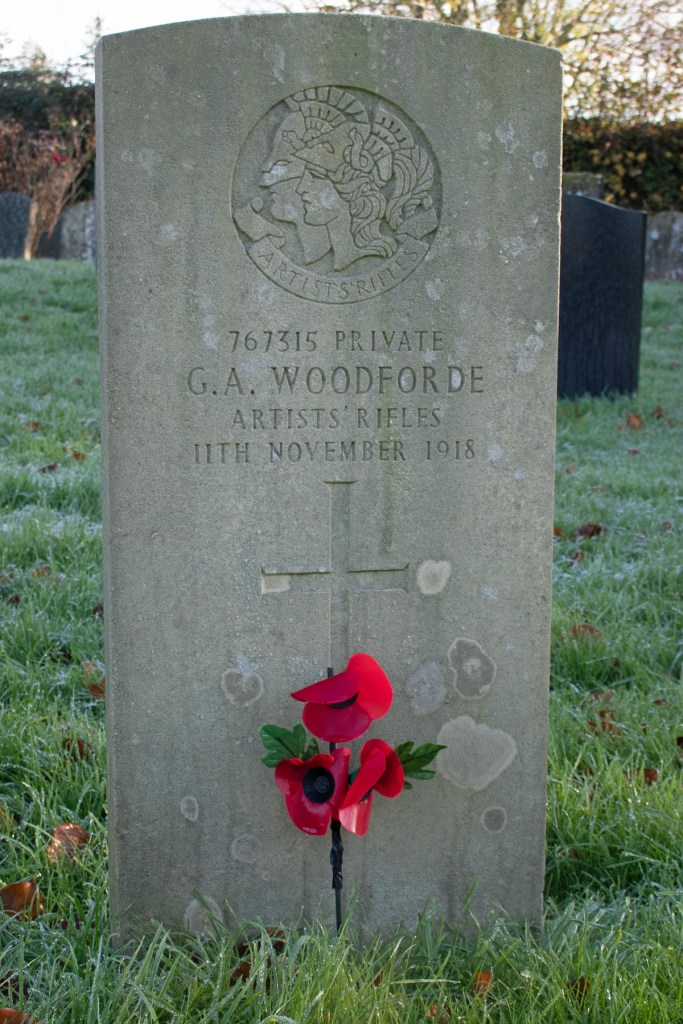
Private George Woodforde

Private George Woodforde

George Augustus Woodforde was born on 21st April 1892 in Leyton, Essex. He was one of six children to George and Harriet Woodforde, although, tragically, George had died shortly before his son was born.

George Sr had been born in Ansford, Castle Cary, Somerset and this is where he was laid to rest. He was a theological student in his twenties and, according to the 1891 census, he was living on his own means. This is something that Harriet was fortunate enough to be able to do once she was widowed.

George Jr studied into his late teens and, by the time war was declared in 1914, he was employed as a schoolmaster. He enlisted in April 1916, but was not mobilised until 17th November 1917. He served as part of the 28th Battalion (Artists’ Rifles) of the London Regiment and his records show that he was 5ft 8ins (1.73m) tall and was of a slight build, weighing in at only 110lbs (50kg).

Private Woodforde soon found himself in France, and fought on the front line for a while. He was caught up in the Battle of the Canal du Nord in late September 1918, and was badly wounded. He was medically evacuated to England, and admitted to the East Leeds War Hospital. He had received gunshot wounds to both thighs and feet, and had fractured the tarsal and metatarsals of his right foot.

Private Woodforde’s left leg became infected, and he then developed double pneumonia. It was this lung condition that he was to succumb to: he passed away at the hospital on 11th November 1918 – Armistice Day. He was just 26 years of age.

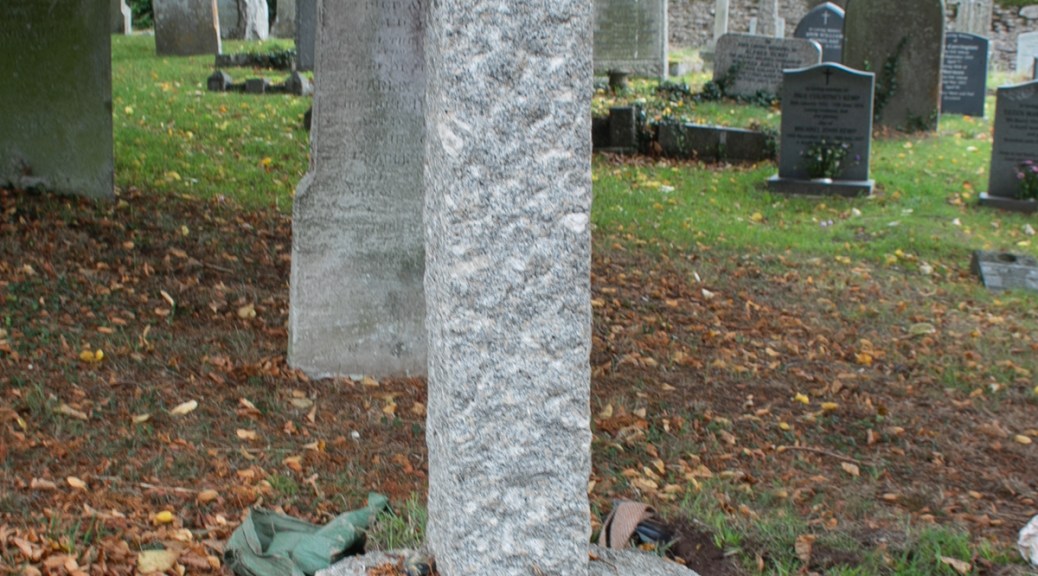
George Augustus Woodforde was laid to rest in the graveyard of St Andrew’s Church in Ansford, Somerset, close to where his father had been buried all those years before.


Corporal John Cudby

Corporal John Cudby

Frederick John Cudby – who was known by his middle name – was born in the summer of 1884 in Farnham, Surrey. The fourth of six children, his parents were William and Caroline Cudby. William was a bricklayer from Essex, while his wife was from Ramsgate in Kent. The family went where his work was, and by the mid-1890s, they had moved to Blaenavon in Monmouthshire.

When he left school, John found employment as a mechanic, working as an engine oiler at a local works. William passed away in 1901, and by the time of the next census, in 1911, John was working as a mason’s labourer. The family were all still living in Blaenavon, helping Caroline by keeping money coming in .

When war came to Europe, John was quick to serve King and Country. He enlisted in the Monmouthshire Regiment and, as a Private, was assigned to the 2nd Battalion. His troop was soon sent to France and, by November 1914, he was entrenched at Ypres, near Ploegsteert Wood.

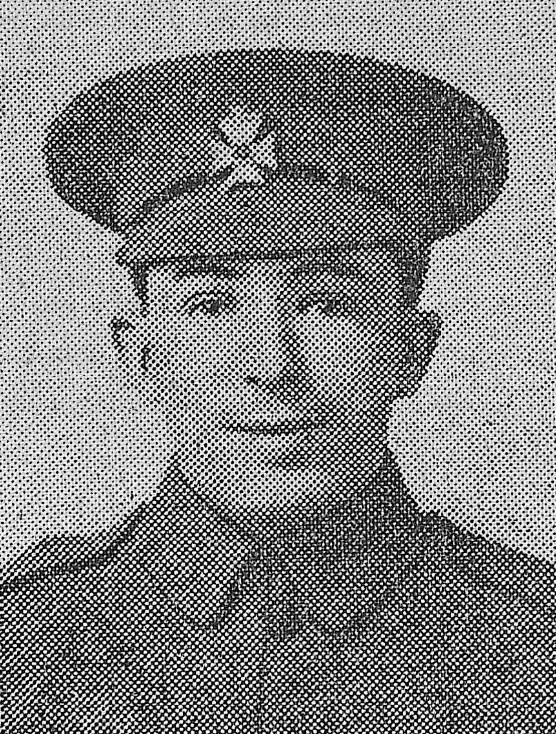
Promoted to Corporal, little of John’s service information survives. It is clear that he was wounded during a skirmish and that he was medically evacuated back to Britain. It seems likely that he was admitted to the Preston Hall Military Hospital in Aylesford, Kent, and that this is where he subsequently succumbed to his injuries.

Corporal Frederick John Cudby died on 6th June 1915, at the age of just 30 years old. He was laid to rest in the graveyard of St Peter and St Paul’s Church in Aylesford, Kent.


While buried in the churchyard, the location of John’s grave is not known. Instead, he is commemorated on a joint headstone in the First World War section of the graveyard.


Rifleman Frederick Avards

Rifleman Frederick Avards

Frederick John Avards was born in Lamberhurst, Kent, in the summer of 1891. The oldest of three children, his parents were Frederick and Lucy Avards. Frederick Sr was a licenced publican and went on to run the Beckingford Arms in Tovil, near Maidstone.

Frederick Jr helped his father with the business, but when war came to Europe, he stepped up to play his part. He enlisted on 1st January 1915, joining the 7th (Service) Battalion of the King’s Royal Rifle Corps.

Rifleman Avards was sent to France on 19th May 1915 and very quickly found himself in the thick of things. Based on the Western Front, his regiment was involved in a number of skirmishes during the Battle of the Somme.

Last week [Rifleman Avards’] parents received a telegram stating that he was lying at the Royal Victoria Hospital, Netley, dangerously wounded. They at once proceeded to Netley but only to find that he had passed away.. Meanwhile his lieutenant, knowing he had been hit and thinking he had been killed on the battlefield, had written a feeling letter to the parents, saying his gallantly he had done his duty and that he had died a true rifleman’s death in the hour of victory, and worthily upheld the name of his regiment.

Kent Messenger & Gravesend Telegraph: Saturday 9th September 1916

Rifleman John Avards had passed away from his injuries on 3rd August 1916: he was just 24 years of age. His body was brought back to Kent for burial and he was laid to rest in the graveyard of St Peter & St Paul’s Church in Aylesford, Kent, not far from the Lower Bell public house, which his parents were then running.


Rifleman Frederick Avards
(from britishnewspaperarchive.co.uk)

While buried in the churchyard, the location of Frederick’s grave is not known. Instead, he is commemorated on a joint headstone in the First World War section of the graveyard.


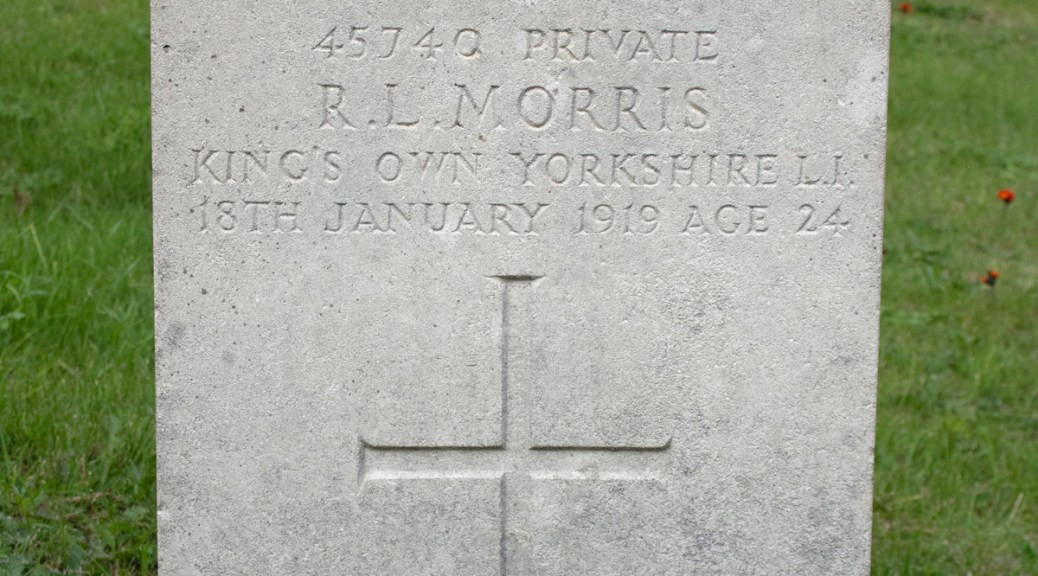
Private Richard Morris

Private Richard Morris

Richard Levi Morris was born in the village of Carno, mid-Wales, in the autumn of 1895. He was the oldest of five children to John and Hannah Morris. John was a tailor who, when Richard was still a babe in arms, moved the family north to the Denbighshire town of Llangollen.

When he left school, Richard found work as baker’s apprentice. He was employed by the Model Bakery on Church Street, Llangollen, a business that would go on to win, according to its subsequent advertising, a bronze medal for both its white and brown bread in both 1912 and 1913 [North Wales Journal: Friday 7th August 1914].

War was coming to Europe, and Richard stepped up to play his part. Full details of his service are sadly lost to time, but he had enlisted in the King’s Own Yorkshire Light Infantry by the summer of 1918. Initially assigned to the 9th (Service) Battalion, Private Morris subsequently transferred to the 2nd/4th Battalion and was attached to one of the regiment’s depots.

What little documentation around Richard’s actual service confirms that he was sent to the Western Front. At some point towards the end of the conflict – possibly during the final advance in Picardy – he was wounded. Medically evacuated to Britain, he was admitted to a cottage hospital in Oswestry, Shropshire.

Sadly, it was here that Private Morris was to breath his last: he succumbed to his injuries on 18th January 1919, at the tender age of just 24 years old.

The body of Richard Levi Morris was brought back to Wales for burial. He was laid to rest in the quiet Fron Cemetery in Llangollen.


Lance Corporal Thomas Roberts

Lance Corporal Thomas Roberts

Thomas Roberts was born in Llangollen, Denbighshire, in 1895. One of seven children, his parents were William and Ellen Roberts. William was a butter merchant, and his wife helped in the business.

When Thomas left school, he found work as a greengrocer’s assistant, but when war was declared he saw an opportunity for glory. While full details of his military service are no longer available, it’s clear that he enlisted in the Royal Welch Fusiliers.

Private Roberts was assigned to the 13th (Service) Battalion (1st North Wales) and on 1st December 1915, found himself in France. For the next eighteen months, he was firmly ensconced on the Western Front, and rose to the rank of Lance Corporal for his service.

In April 1917, Thomas was injured in fighting and was medically evacuated to Britain for treatment to his bullet wounds. Admitted to the Edmonton Military Hospital in North London, his injuries were to prove too severe. Lance Corporal Roberts passed away on 22nd April 1917. He was just 21 years of age.

Brought back to Wales for burial, Thomas Roberts was laid to rest in the family plot in Llangollen’s Fron Cemetery.


Thomas was buried along with his brother David, who had passed away in 1912. They were joined by their father William, who died in 1919, and their sister Elizabeth, who passed away in 1945. The family were finally reunited with Ellen, when she died in 1947, at the age of 86.


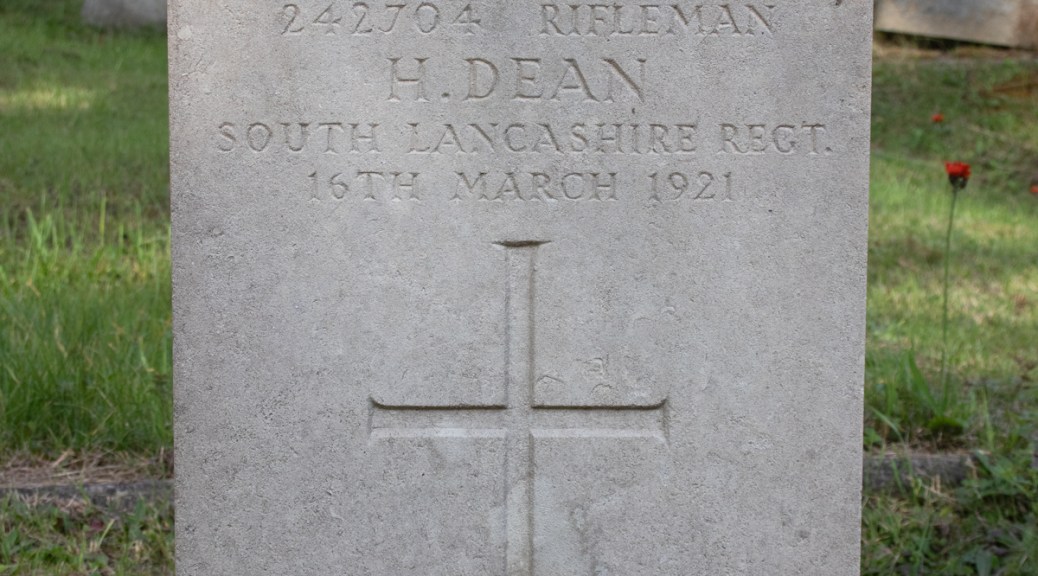
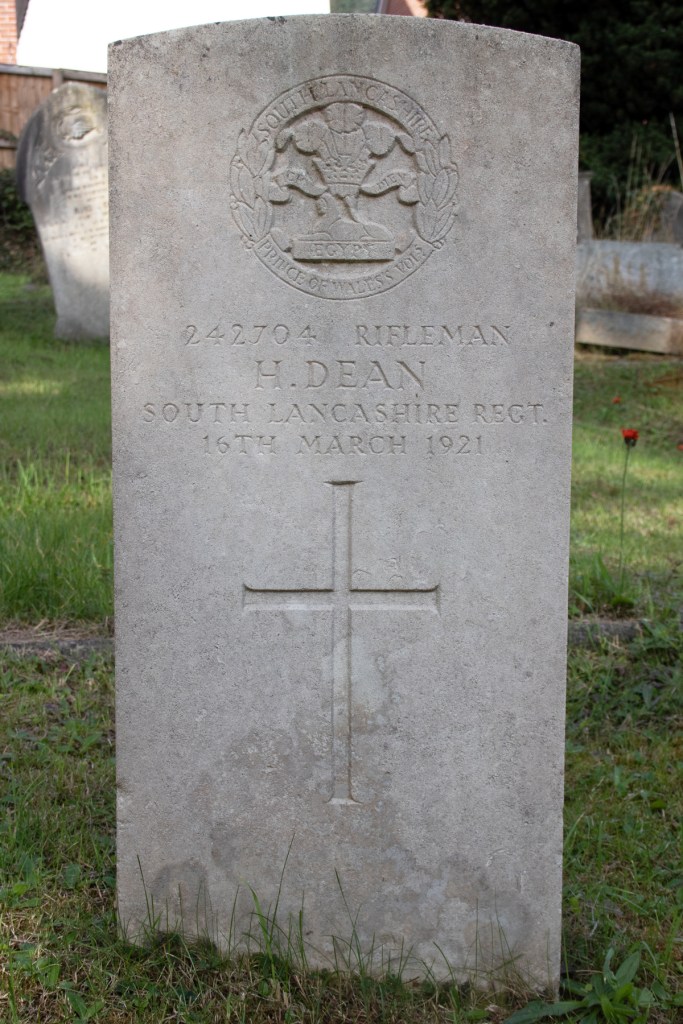
Rifleman Harold Dean

Rifleman Harold Dean

Harold Dean was born in the spring of 1888 in Llangollen, Denbighshire. One of four children to John and Sarah Dean, his father was a waiter at the Hand Hotel in the town until his death in 1905. When Harold left school, he was taken on by the hotel, and, by the time of the 1911 census, was recorded as working as a billiard marker.

War was coming to Europe by this point and, on 24th October 1916, Harold enlisted. He joined the South Lancashire Regiment (also known as The Prince of Wales’s Volunteers) and was assigned to the 2nd/5th Battalion.

After an initial few months’ training, Private Dean was sent to France, and was soon ensconced on the Western Front. Caught up in the fighting, he received a gun shot wound to his left wrist on 7th June 1917 and, after some initial treatment in a camp hospital, he was evacuated to Britain for full recuperation.

Harold remained on home soil for the remainder of the year, He contracted tuberculosis that winter and was medically discharged from the army because of it on 5th December 1917.

At this point, Harold’s trail goes cold. He returned to Llangollen, and remained there after his mother passed away in 1919. It appears that his lung condition continued to dog him, however, and this was probably the cause of his untimely passing. He died on 16th March 1921, at the age of 33 years old.

Harold Dean was laid to rest in Fron Cemetery, in his home town of Llangollen.


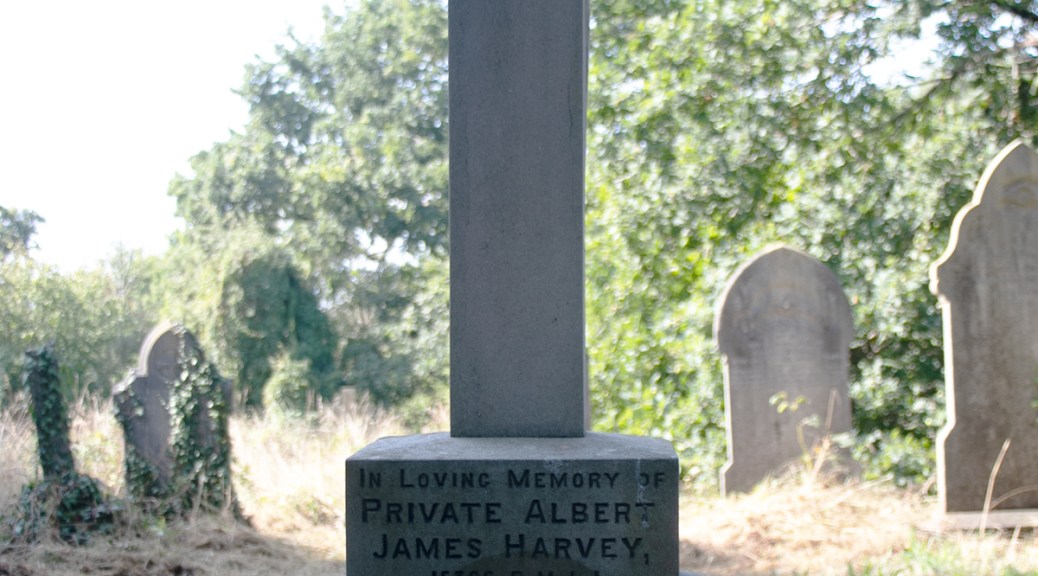
Private Albert Harvey

Private Albert Harvey

Albert James Harvey was born on 23rd May 1894 in the Gloucestershire village of Warmley. One of eleven children, his parents were James and Alice Harvey. James was a bootmaker, and most of Albert’s siblings followed him into shoemaking, but Albert bucked the trend, and found work with a baker when he left school.

He wanted bigger and better things, however, and so, on 26th April 1911, he enlisted in the Royal Marine Light Infantry. His service records record that Private Harvey was 5ft 5.5ins (1.66m) tall, with blue eyes, auburn hair and a fresh complexion. It also suggests that he added a year to his age, to ensure that he was accepted for duty.

After initially enlisting in Deal, Kent, Albert was sent to Plymouth, Devon, where he served for most of 1912. On 18th November that year, he was assigned to the dreadnought battleship HMS Conqueror, on which he was to serve for the nearly five years.

It was during his time on board Conqueror that Albert married Ethel Brewer. The daughter of a pressman, the couple exchanged vows at St Barnabas Church in their shared home village, Warmley.

Private Harvey remained serving throughout the war and, in April 1918, he was involved in the Zeebrugge Raid. This was an attempt by the Royal Navy to block the Belgian port by sinking obsolete ships in the canal entrance. During the operation, more than 200 men were killed and over 300 – including Albert – were wounded.

Private Harvey was medically evacuated to England for treatment, but his injuries were to prove too severe. He passed away in a hospital in Plymouth on 28th June 1918. He was just 24 years old.

Albert James Harvey was brought back to Gloucestershire for burial. He was laid to rest in the graveyard of St Barnabas’ Church, where he has been both baptised and married.


Private George Garrett

Private George Garrett

George Garrett was born in early 1895 in Abbotskerswell, Devon. He was the oldest of five children to George and Annie Garrett. George Sr was a labourer and the family seemed to travel with his work: his and Annie’s younger children were born in Aldershot, Plymouth and London.

When he left school, George Jr found work as an errand boy – the family were back in Devon by this point. War was on the horizon, however, and he would feel compelled to play his part. Full details of his service are not available, but it is known that he enlisted in the Devonshire Regiment, and was assigned to the 2nd Battalion.

Private Garrett arrived in France in December 1915, and was soon entrenched on the Western Front. Hi battalion was caught up in the Battle of the Somme and George was badly injured, having received a gunshot wound to his spine.

Medically evacuated to Britain, his wounds proved too severe for him to return to duty, and he was discharged from the army on 28th December 1916. It is not clear whether he returned home, but it seems likely that he remained in hospital in Exeter. He would never recover from his injuries. He passed away at the hospital on 18th April 1917, at the age of 22 years old.

George Garrett was laid to rest in the graveyard of St Andrew’s Church in Ipplepen, Devon, where his family were, at that point, living.


Private Owen Owen

Private Owen Owen

Owen Jonah Owen was born in 1880, the oldest of eleven children to Jonah and Elizabeth Owen. Jonah was a quarryman at one of the slate mines around Llanberis, Gwynedd, and this is where the family were raised.

Owen followed his father into the slate quarries and, on 26th September 1903, he married Ann Jones, the daughter of another quarry worker. The couple went on to have four children: Richard, Jonah, Delia and Gwyneth.

He was well known and respected in the village, had a passion for singing and “had conducted singing festivals held by the Congregationalists of the district.” [Caernarvon & Denbigh Herald: Friday 24th November 1916]

War was closing in on Europe, and Owen was keen to play his part. Sadly his service records have been lost over time, but it is clear that he had enlisted in the army by May 1916. Private Owen joined the Royal Welch Fusiliers, and was assigned to the 14th Battalion.

Part of the 38th Division, the battalion was to be caught up in some of the fiercest and most desperate fighting of the First World War. In July 1916, Owen would have been entrenched at The Somme and, after the first few horrific days, his battalion was one of those involved in the fighting at Mametz Wood.

Private Owen was badly wounded during the battle and medically evacuated to Britain for treatment. Admitted to a military hospital in Birmingham, he was to remain there for a number of months until, on 12th November 1916, his body finally succumbed to his injuries. He was 36 years of age.

Owen Jonah Owen was brought back to his home village for burial. He was laid to rest in the graveyard of St Peris Church in Llanberis.


Air Mechanic 1st Class Albert Young

Air Mechanic 1st Class Albert Young

Albert Franklin Young was born on 15th August 1899 in Marylebone, London. He was the older of two children – and the only son – to Kathleen (Kate) Young, and her photographer husband, Albert Antonio Young.

Albert Sr seemed to have made a successful of his photography business: Albert Jr attended St Hugh’s School in Chislehurst, Kent, before moving on to Margate College, also in Kent, and Watford Grammar School.

From leaving school, Albert Jr joined the Royal Flying Corps as a wireless operator on 28th September 1915. He was just sixteen years old, but within eight months he was serving with the British Expeditionary Force in France. He was involved in operations at the Somme and continued his flight training.

In November 1915, Albert was promoted to Air Mechanic 1st Class, and remained on the Western Front. On 28th March 1918, a German air raid hit No. 2 Air Depot, where Albert was working: he was badly wounded, and brought back to England for medical treatment.

Admitted to London Hospital in Chelsea, Air Mechanic Young was operated on a number of times, but was to finally succumb to his wounds on 9th June 1918. He was just 18 years of age.

As highlighted in de Ruvigny’s Roll of Honour, one colleague noted “I can assure you he was very greatly esteemed for his fine qualities by all with whom he came into contact, and the news of his death was received by all of us with most profound sorrow. He was a splendid boy.” Another said that the “great courage and coolness he always displayed at most critical moments were on many occasions an incentive to me. He was truly a gallant lad.”

Brought to West Sussex, where his parents were now living, Albert Franklin Young was laid to rest in Cuckfield Cemetery: “The scene… was very solemn and pathetic, yes beautiful and effective, and as all moved forward to the grave, and viewed the fair expanse of the Sussex Weald, the sweet melody of the Choir [was] ringing in our ears.” [Mid Sussex Tomes: Tuesday 18th June 1918]