Category Archives: Royal Field Artillery

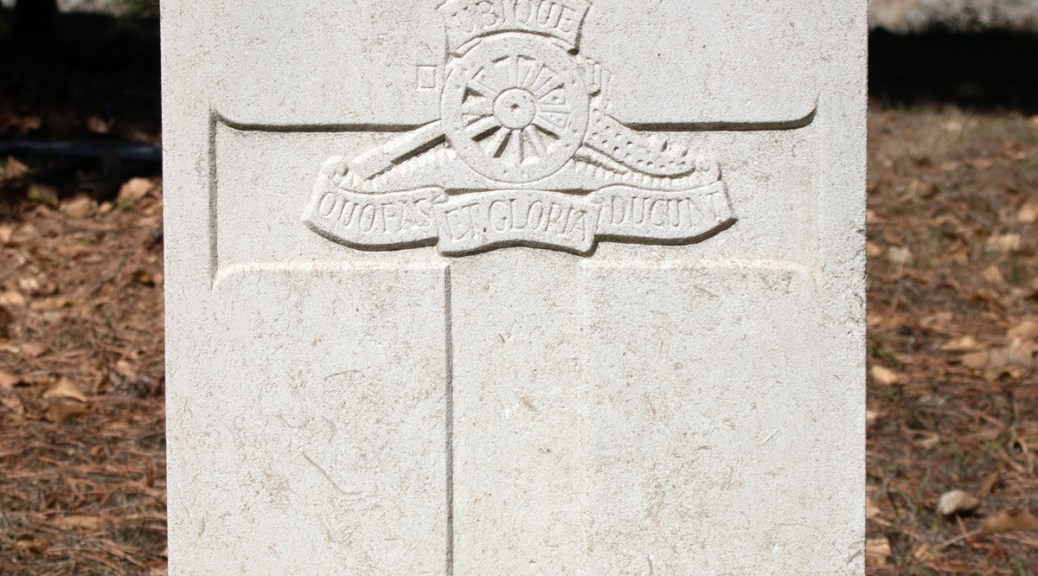
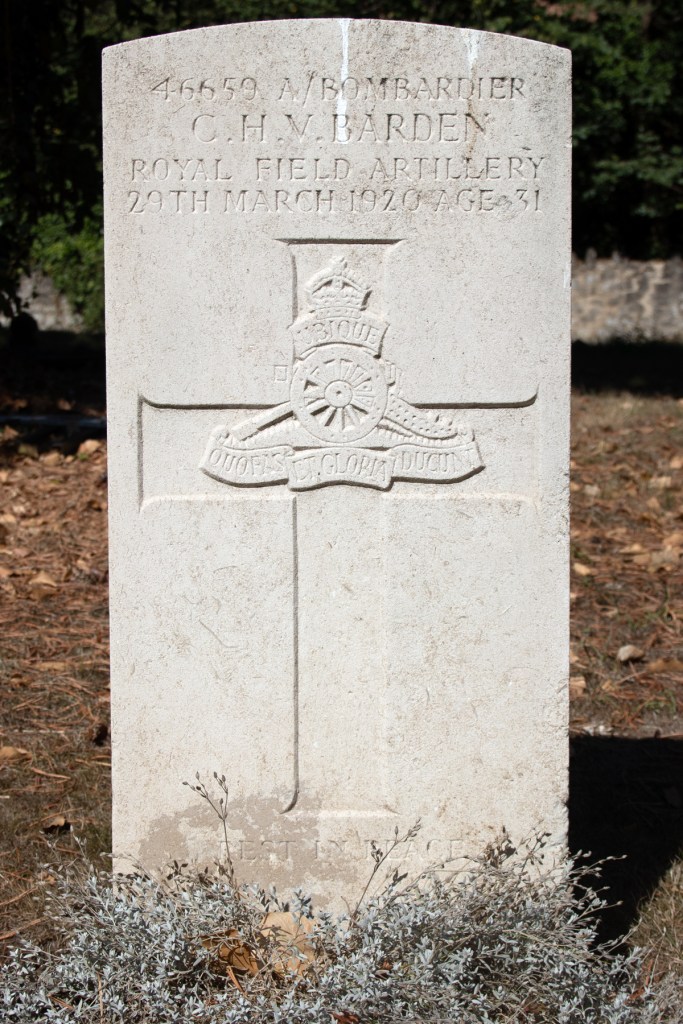
Acting Bombardier Charles Barden

Acting Bombardier Charles Barden

In the First World War section of St Peter and St Paul’s Churchyard, Aylesford, is the grave of Charles Henry Barden. Born in the summer of 1888 he was the sixth of seven children to Isaac and Harriett Barden. Isaac was a stoker at the local cement works, and this was an industry Charles’ brothers went into.

As for Charles, however, his life is more of a mystery, and it is possible to build a picture of him only from the snippets that are left behind. Even his full name is lost to time – his headstone is dedicated to CHV Barden, but what the V stands for is now unclear.

Absent from the 1911 census, what is known is that Charles’ father died in 1914 and that in August that year, Charles enlisted in the Royal Field Artillery. Driver Barden was sent to France within weeks of the declaration of war and, during the conflict he rose to the rank of Acting Bombardier.

In the spring of 1917, Charles married Angelina Pudney, who had been born in Rochford, Essex. The couple had twin daughters – Sarah and Emily – the following year, although tragically Sarah passed away before her first birthday.

It is unclear when or if Charles was demobbed when the Armistice was declared. He passed away at home on 29th March 1920, at the age of just 31 years old.

Charles Henry V Barden was laid to rest in the graveyard of St Peter and St Paul’s in his home village.


Angelina found happiness again after her husband’s death. She married again, to Alfred Hughes, in the spring of 1923.


Charles’ older brother George also fought in the First World War. He enlisted in the 1st Battalion of the Royal West Kent Regiment, and was killed in the fighting at Ypres. He was 36 years old when he died, and is commemorated on the Menin Gate.


Driver James Roberts

Driver James Roberts

James Roberts was born in 1885 in Llangollen, Denbighshire. The youngest of three children, he was the son of Elias and Winifred Roberts. Elias was a builder’s labourer and, while James initially went into this line of work when he left school, by the time of the 1911 census, he was listed as being employed as a gamekeeper.

War broke out across Europe, and James was there to play his part for King and Country. Full details of his military service are not available, but he enlisted in the Royal Field Artillery, and was assigned to C Battery of the 161st Brigade. This was a Howitzer unit, and, as a Driver, James would have been involved in leading the horses pulling the cannons to where they needed to be.

There is no actual confirmation that James served overseas. He was, however, awarded the Victory and British Medals for his service. Driver Roberts survived the war, but again, details of what actually happened to him are lost to time.

What can be confirmed is that, by 1919, James had been admitted to the Wharncliffe War Hospital in Sheffield, and this is where, on 27th November that year, he passed away. He was just 34 years of age.

James Roberts was brought back to Llangollen for burial. He was laid to rest in the town’s Fron Cemetery.


Corporal Ernest Jenkins

Corporal Ernest Jenkins

Ernest Gilbert Jenkins was born on 4th April 1888, the tenth of eleven children to Eli and Julia Jenkins. Eli was a dairyman from Dorset, but the family were born an raised in Marksbury, a village in Somerset. When Eli passed away in 1910, he was laid to rest in the nearby town of Keynsham, and this is where Julia and the family moved.

Ernest tried to make his mark by finding a career in the army and enlisted in the Royal Field Artillery on 22nd June 1908. He gave his trade as a electrician for the National Telephone Company and his records noted that he stood 5ft 7ins (1.70m) tall, with good vision and good physical development.

The 1911 census records the widowed Julia and five of her children living on Charlton Road, Keynsham, in a 12-roomed house, with a domestic servant and three visitors. While not noted as such, it would seem that Julia was running a boarding house, but without any further details, this is impossible to confirm.

Ernest may have completed his initial term of service by this point and he was recorded as living with his mother and working as a salesman of cattle feed. Bombardier Jenkins’ military records show uninterrupted service from 1908 to 1917, so it is likely that, at the time of the 1911 census, he was, in fact, on reserve.

When war broke out in 1914, Ernest was called back into duty. By March 1915, he found himself in France, having been promoted to Acting Corporal. He served on the Western Front until June 1916, when he was sent back home.

Corporal Jenkins seems to have been suffering with his health and, in July 1916 was admitted to hospital with pyrexia (fever). Medically evacuated to England for treatment, a heart murmur was also identified, and after treatment, he was relieved of active duty and placed on reserve in January 1917. The heart condition continued, however, and by the end of the year, he was medically discharged from the army.

At this point, Ernest’s trail goes cold. He returned to Bristol and is noted in the 1919 edition of Kelly’s Directory, as living back in Charlton Road with Julia.

The next record for Ernest confirms his passing. He died on 25th July 1919 in a nursing home in Bristol. He was just 31 years of age.

Ernest Gilbert Jenkins was laid to rest in the family plot in Keynsham Cemetery. When Julia passed away in 1929, at the age of 78, she was buried there as well, finally reunited with her husband and son.


Driver Griffith Williams

Driver Griffith Williams

Griffith Owen Williams was born the autumn of 1876 in Llanberis, Gwynedd. One of nine children, his parents were blacksmith William Williams and his wife, Alice.

Little information remains about Griffith’s teenage years. The 1891 census record that, at 14 years old, he was a scholar, but the next document that can be attributed to him comes fourteen years later.

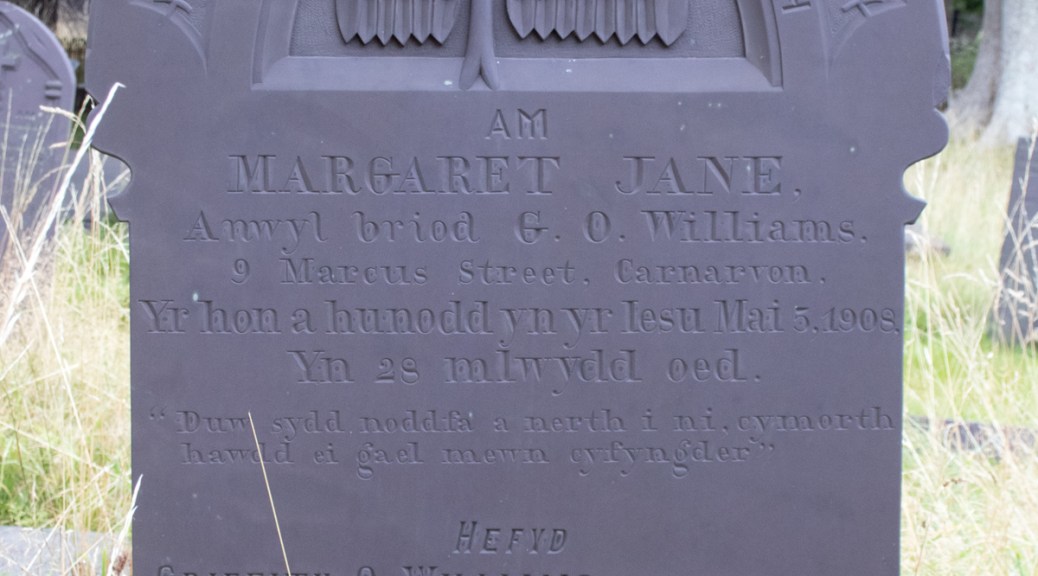
At this point, on 7th March 1905, he married Margaret Jane Williams at the parish church in Llanberis. Margaret was 24 years old, and the daughter of a quarryman: Griffith gave his profession as Post Office official, and he was living in Caernarfon, eight miles away, on the Menai Strait.

The young couple went on to have a daughter, Maggie, in January 1906. Sadly, Margaret died on 5th May 1908, when she was just 27 years of age. While the young family had been living in Caernarfon, she was laid to rest in the graveyard of St Peris Church in Llanberis.

At this point, Griffith’s trail goes cold once more. When war broke out, he enlisted in the Royal Field Artillery, and was assigned as a Driver in the 248th (Howitzer) Brigade. By April 1915, Griffith found himself on the Western Front and, by the next spring he was fighting at the Somme.

During the winter of 1916/17, Driver Williams fell ill. He contracted bronchial pneumonia, and was medically evacuated to Britain to recuperate. Sadly, the condition was to prove too much for his body to take. He passed away on 23rd February 1917, at the age of 46 years old.

Griffith Owen Williams’ was laid to rest with his late wife in St Peris Churchyard, in their home village of Llanberis.


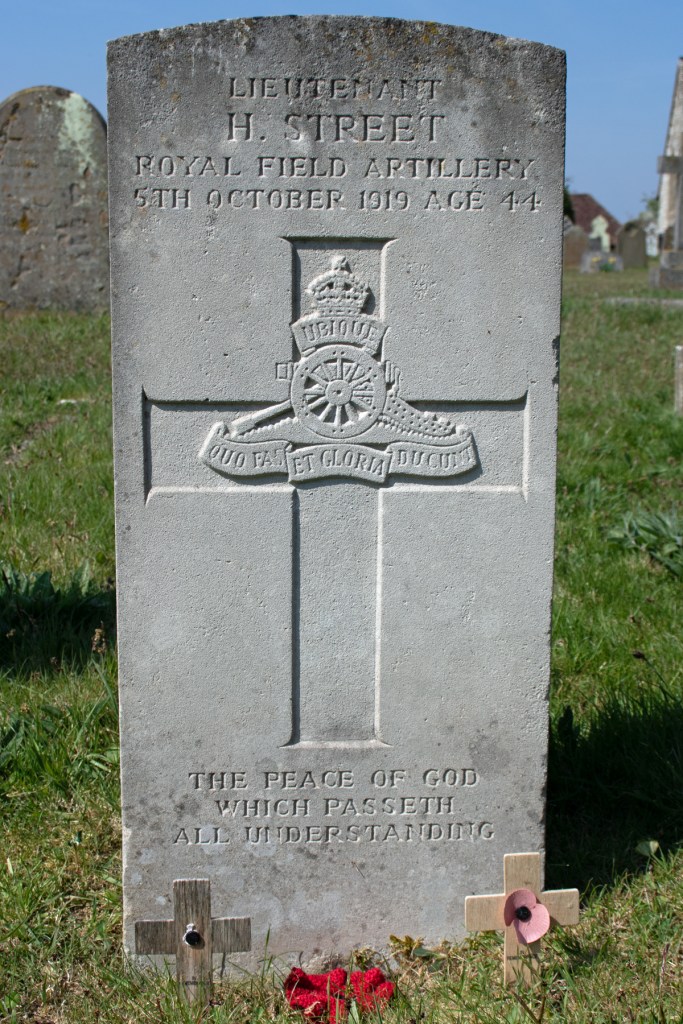
Lieutenant Harry Street

Lieutenant Harry Street

Henry Street – known as Harry – was born on 22nd April 1875 in Oxted, Surrey and was one of thirteen children to Jacob and Emma. Jacob was an agricultural labourer, and this is work Harry initially went into when he left school.

However, it seems that Harry was after more of a career, and looks to have enlisted in the Royal Field Artillery by 1895. His trail goes cold for a while, and it can be assumed that he served abroad, although exact details of his career are lost to time.

By 1906, Harry was back in England, and, on 15th October he married Janette Street at St Peter’s Church in Tandridge, Surrey. The marriage record confirms that Harry was a soldier, while his new wife was the daughter of a labourer. Janette was three years Harry’s junior, and there does not seem to be any close family connection, in spite of their shared surname.

Again, information on Harry’s life at this point is sparse. When war was declared, he was either still serving with the Royal Field Artillery, or was called back in to duty. By December 1914, he had been promoted to Lieutenant: this was to be a rank he would continue to hold until the end of the conflict. He certainly served abroad, and was awarded the Long Service and Good Conduct Medals, in addition to the Victory and British Medals. He was also given the French Medaille Militaire, although reasons for this award are lost to time.

Lieutenant Street survived the war, and by the autumn of 1919, he was living at Bright Farm in Cuckfield, West Sussex. It was here, too, that he passed away, through causes unknown. He died on 5th October 1919, at the age of 44 years old.

Harry Street was laid to rest in Cuckfield Cemetery, in the shadow of the village’s Holy Trinity Church.


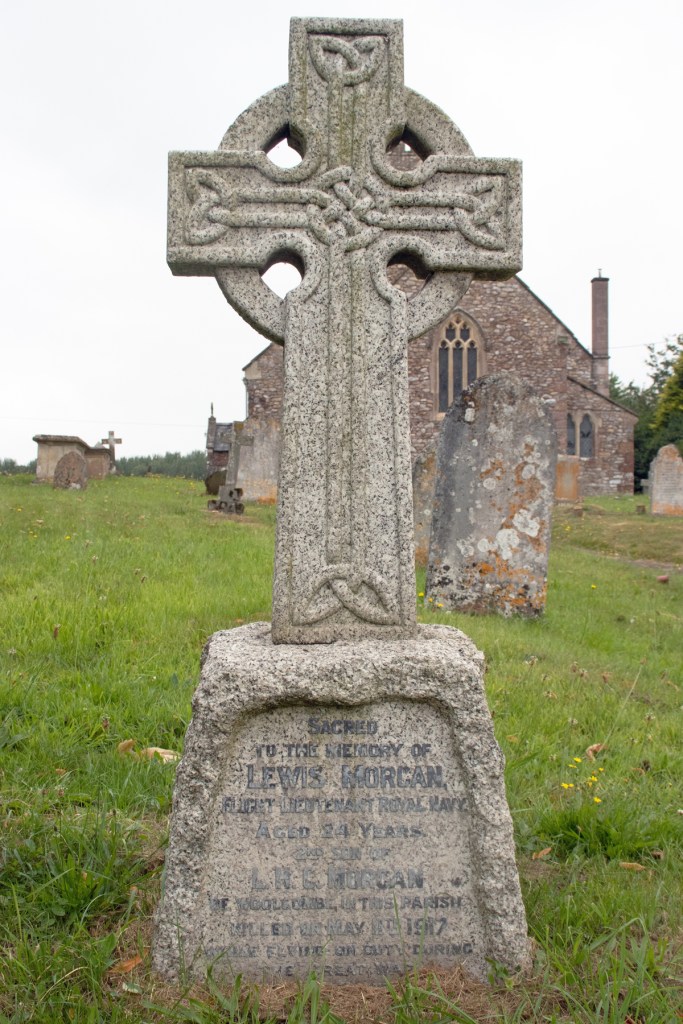
Flight Lieutenant Lewis Morgan

Flight Lieutenant Lewis Morgan

Lewis Morgan was born on 22nd May 1892 in Plymouth, Devon. He was one of six children to former army officer and rector Lewis Harold Gilbert Morgan and his wife, Mary.

Growing up in Plymouth, it seems inevitable that the sea life would take hold in Lewis Jr. He first took up a post in the Merchant Navy, rising to Second Mate in December 1911.

By this point, however, he had set his sights on something more formal and soon enlisted in the Royal Navy. He served on a number of vessels over the years, and was re-engaged when war broke out. By the summer of 1915, he transferred to the Royal Naval Air Service, earning his wings on 5th August that year.

The now Flight Lieutenant Morgan’s service grew as the war continued. The life of air crew at this point in the era of flight was notoriously dangerous, and Lewis was to meet his own fate. On 11th May 1917, he was flying with Probationer Flight Officer Randolph Seed around Edmonton, Middlesex, when an accident occurred. The local newspaper reported on the incident and the subsequent inquest:

Flight-Lieutenant Mitchell gave a graphic account of the accident. He said that about eight o’clock in the evening he was flying at a height of 1,000 feet, and the machine containing the deceased officers was just ahead, but 500 feet higher. The flying conditions were good, and at the time both machines were going steadily. Glancing upwards he notices that the other machine suddenly appeared to collapse, the front extension of the main plane crumpling up. The machine nose-dived, and a black object fell out of it. The machine continued its descent and fell into the Edmonton Sewage Farm… The machine was so entirely broken up that it was impossible to theorise upon the cause of the accident. Morgan was said to have fallen on a concrete path. The deaths were instantaneous.

Taunton Courier and Western Advertiser: Wednesday 23rd May 1917

Lewis Morgan was just 24 years old, and days away from his 25th birthday. His body was brought back to Somerset, and laid to rest in the graveyard of Holy Cross Church in Sampford Arundel. By this point, his parents were living in the nearby Woolcombe House, so their son was, in a way, brought home.


The newspaper article went on to report that Flight Lieutenant Morgan was the third and last son to Lewis and Mary.

Francis Morgan – five years Lewis’ senior – enlisted in the Royal Field Artillery when war broke out. He rose to the rank of Captain, and was mentioned in Despatches for his actions. He was killed in the Dardanelles – potentially at Gallipoli – on 2nd May 1915, at the age of 28 years old.

Walter Morgan was a year younger than Lewis. He also played his part in the First World War, joining the South Lancashire Regiment, and rising to the rank of Second Lieutenant. Walter was also sent to fight in Gallipoli, and this is where he also lost his life. He was killed just three months after Francis, on 9th August 1915. He was just 22 years of age.

The loss of three sons in two years was to take a further toll on the Morgan family. Mary had suffered from poor health for a while, and the deaths of Francis, Walter and Lewis was to prove too much. She passed away at home on 15th July 1917, aged just 56 years old.


Flight Lieutenant Lewis Morgan

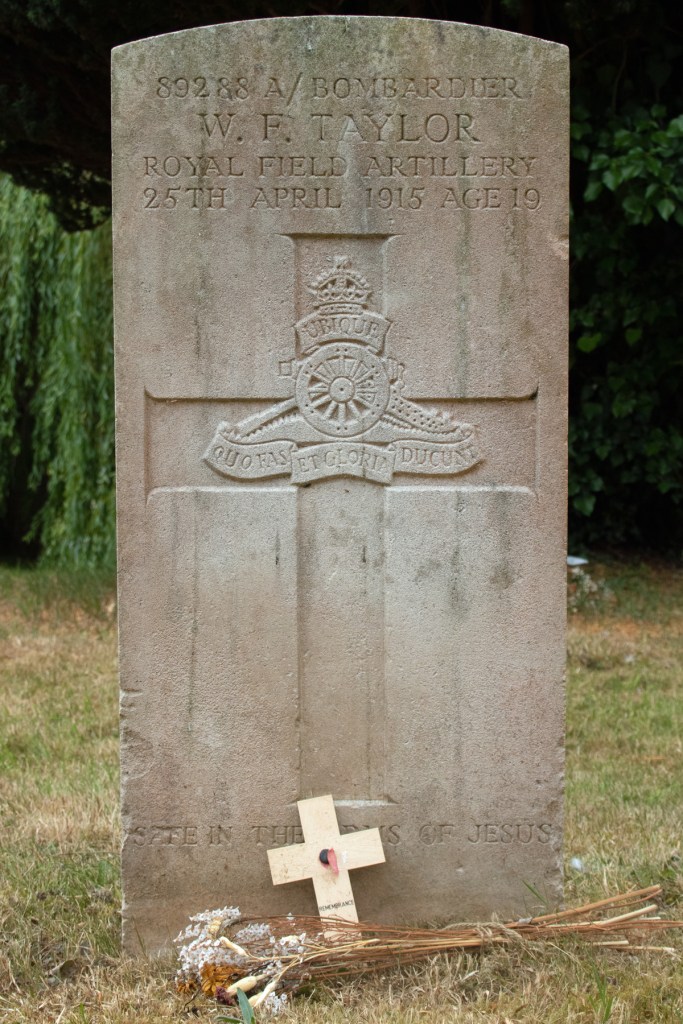
Bombardier Willie Taylor

Bombardier Willie Taylor

Willie Francis Taylor was born early in 1895 and was one of six children to James and Louisa. James worked as a miller in a wool factory in Wellington, Somerset, and this is a job that Willie and his siblings went into when they left school.

At this point, Willie’s trail goes cold. He had enlisted in the Royal Field Artillery by the spring of 1915 – given that he gained the rank of Acting Bombardier, it is likely that he joined up early in the conflict. He never saw active service overseas: Bombardier Taylor’s troop – the 48th Brigade – was sent to France in May 1915, a few weeks after Willie himself passed away.

There are no records pertaining to Willie’s death: all that can be confirmed is that he died at home on 25th April 1915, aged just 19 years old.

Willie Francis Taylor was laid to rest in Wellington Cemetery, close to where his mother, Louisa, had been buried three years earlier, and not far from where James still lived.


Bombardier Willie Taylor
(from findagrave.com)

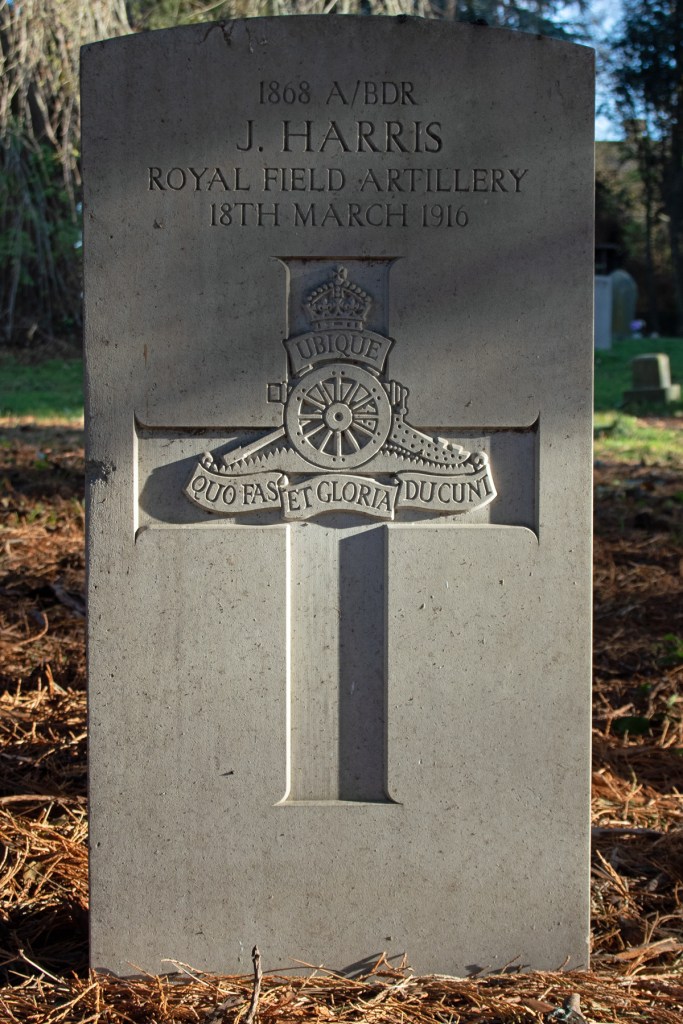
Bombardier John Harris

Bombardier John Harris

Sadly, much of John Harris’ life is lost to time. Born in Liverpool in around 1896, he was one of at least eight children, but, with a name as common as his, there is little to identify who his parents were.

What information remains available, comes from contemporary newspaper reports of his funeral:

Acting Bombardier Harris, of the 13th Battery, 2/3rd West Lancashire, died from double pneumonia at The Mount Hospital [in Faversham, Kent] last Saturday. He was 20 years of age, belonged to Liverpool, and had been in the Brigade about ten months. Deceased had been ill for about a fortnight. Several of the men at The Mount attended the funeral, and one of the nurses there accompanied the deceased’s sister.

Faversham News: Saturday 25th March 1916

From this it is possible to determine that John enlisted in the 2nd/3rd West Lancashire Artillery of the Royal Field Artillery in May 1915. His was a territorial force that was, by the spring of 1916, based in Kent.

It would seem that Acting Bombardier Harris’ parents had passed on by the time that he died at The Mount. His siblings – brothers Alfred and Edward, sisters Edith, Clara, Louise, Alice, Kate and Elizabeth – were all based in Lancashire.

John Harris, therefore, was buried in the town where he passed away, and was laid to rest in Faversham Borough Cemetery.


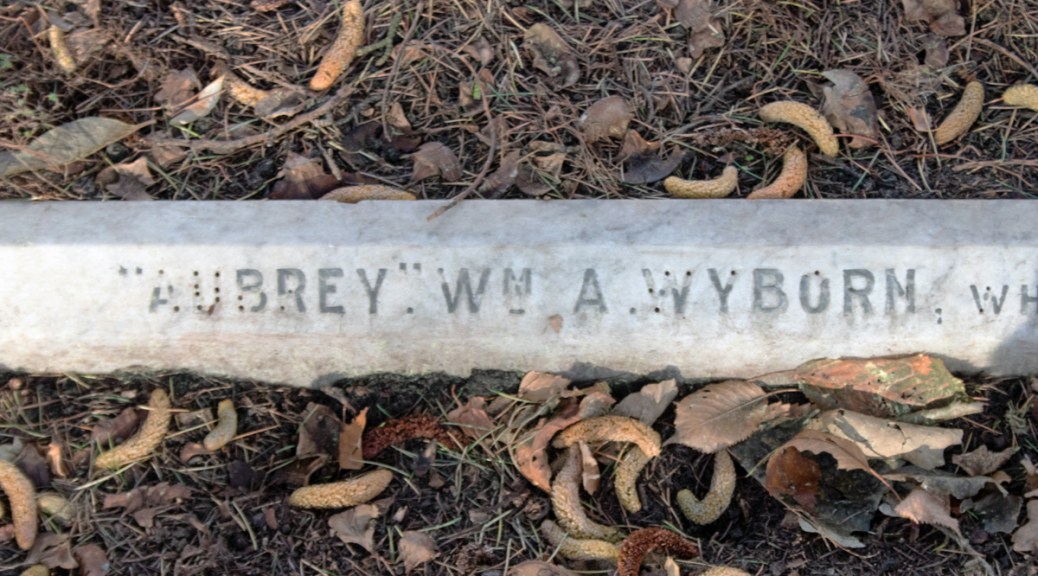
Gunner William Wyborn

Gunner William Wyborn

William Aubrey Wyborn was born on 15th November 1897, the middle of three children to farmer-cum-greengrocer-cum-butcher Henry Wyborn and his wife, Esther. The family lived in the Kent village of Tilmanstone, not far from Deal, but soon moved to Faversham in the north of the county.

William proved to be an astute student. After being a pupil at Faversham District Schools, he gained a scholarship to the towns Grammar School. He spent six years there, and proved to be a studious pupil, gaining a prize for maths. He was then granted a scholarship to the Sheffield School of Engineering, and, while studying for his degree there, war broke out.

William joined the West Lancashire Royal Field Artillery in June 1916 and was sent to Aldershot for training. sadly, Gunner Wyborn’s career was to be cut short – while training, he contracted diphtheria and pneumonia, passing away from a combination of the illnesses on 3rd November 1916. He was just short of his 19th birthday.

William Aubrey Wyborn was brought back to Kent for burial. He lies at rest in the family plot in the Faversham Borough Cemetery.


Driver George Stockley

Driver George Stockley

George Stockley was born in December 1888, one of twelve children to Frank and Mary Ann Stockley. Frank was a clay cutter from Dorset, and he and his wife raised their family in the picturesque village of Corfe Castle.

When he left school, George found work as a house painter but it seemed this was not to be a career. In March 1913, he married Lillian May Stockley, who had been born in Frome, Somerset, but who was working as a barmaid in nearby Weymouth. Later that year, the couple had a daughter, Georgina, and, by the time he enlisted two years later, George was working as a barman, and the young family were living in Bournemouth.

George had joined up on 10th February 1915, and was assigned to the 3rd/6th Hampshire Battery of the Royal Field Artillery. His service records show that he was 5ft 4ins (1.63m) tall, but they also confirm that, when he had his medical examination on 30th May, he was deemed as medically unfit for military service.

Sadly, there is no further information to confirm why Driver Stockley’s military career was cut so short. His trail goes for a year, until, on 20th June 1916, he passed away, aged just 27 years old. The cause of his passing is also lost to time

George Stockley was laid to rest in the Old Church Cemetery in his home town of Corfe Castle.


George shares his grave with his youngest sibling, Albert William Stockley, who died in April 1920. The brothers are commemorated on the same headstone.