Category Archives: Royal Navy

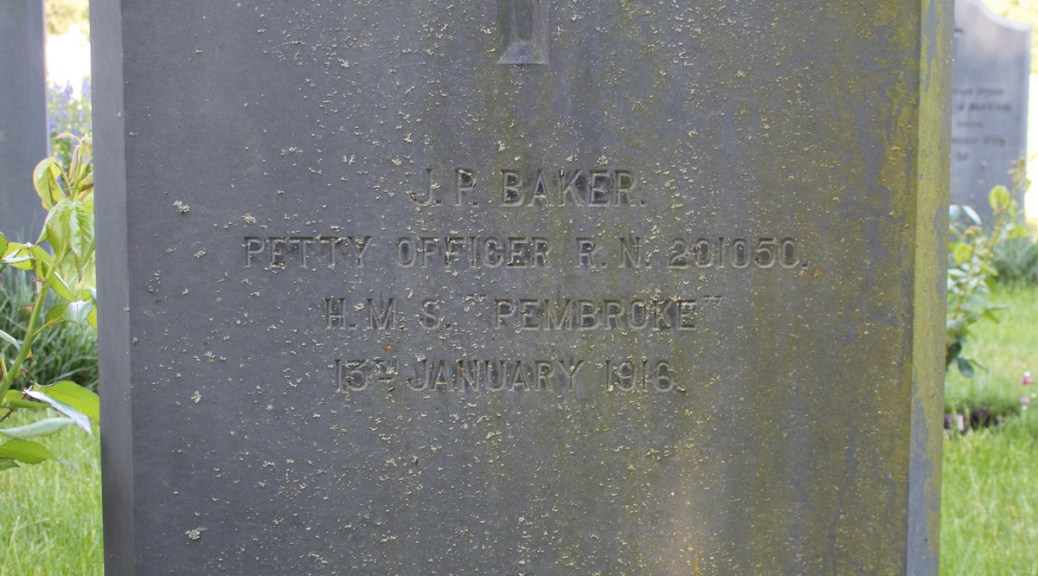
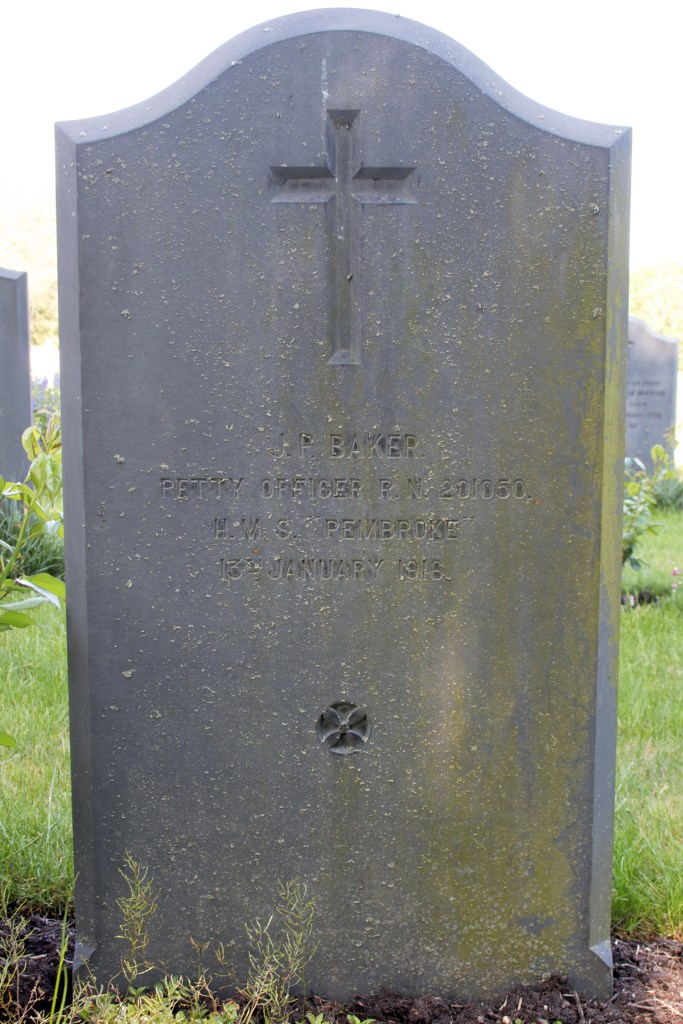
Petty Officer John Baker

Petty Officer John Baker

John Patrick Baker was born on 20th March 1883, the only child to Henry and Mary Baker. Henry was naval pensioner-turned-labourer from Belfast, Ireland, while Mary was born in Queenstown, Ireland. By the time of the John’s birth, however, they had moved to Kent, settling in the village of Cheriton.

John is noticeable by his absence in the coming years. The 1901 census return found his parents living in the same home, but the only other resident was boarder Jesse Fuller.

The 1911 census, however, helps explain this disappearance. The document records John as being one of more than 500 crew on board the cruiser HMS Highflyer. He was notes as being a Leading Seaman and, on the day that the census was taken, the ship was in the Laccadive Sea, off the coast of western India, to the south of Goa.

John is also noted as being married, and it seems that he wed a woman called Adela the previous year. Her entry in the 1911 census noted she was living in a room at 206 Risboro Lane in Cheriton, Kent. The house was also occupied by the Leach family – William, Hannah and daughter Margaret – and a Christina Hawkes, who was also married. Whether they were all related is unclear, but Adela, at 30 years of age, was working as a domestic servant to pay her way.

Adela and John would go on to have two children: John Jr was born on 31st July 1911 – just four months after the census. His younger brother Ernest was born on 21st May 1914, four months before the outbreak of war.

There is little further information available on the Baker Family. John progressed in his naval career, and had risen to the rank of Petty Officer by the end of 1915. That winter he became unwell, although the condition is not readily documented. He was posted at HMS Pembroke, the Royal Naval Dockyard in Chatham, Kent, by this point, and he may well have been admitted to the nearby Naval Hospital.

His illness was to prove fatal, however, and Petty Officer Baker passed away on 13th January 1916. He was 32 years of age.

John Patrick Baker was laid to rest in the Roman Catholic section of the Woodland Cemetery in Gillingham, Kent, not far from the base he had known so well.
Engine Room Artificer James Donnelly

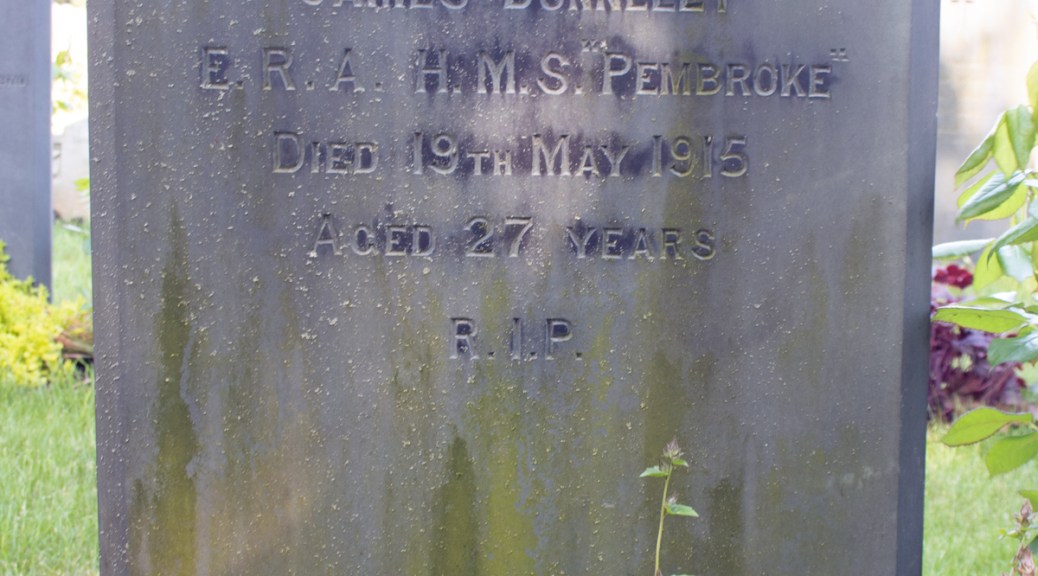
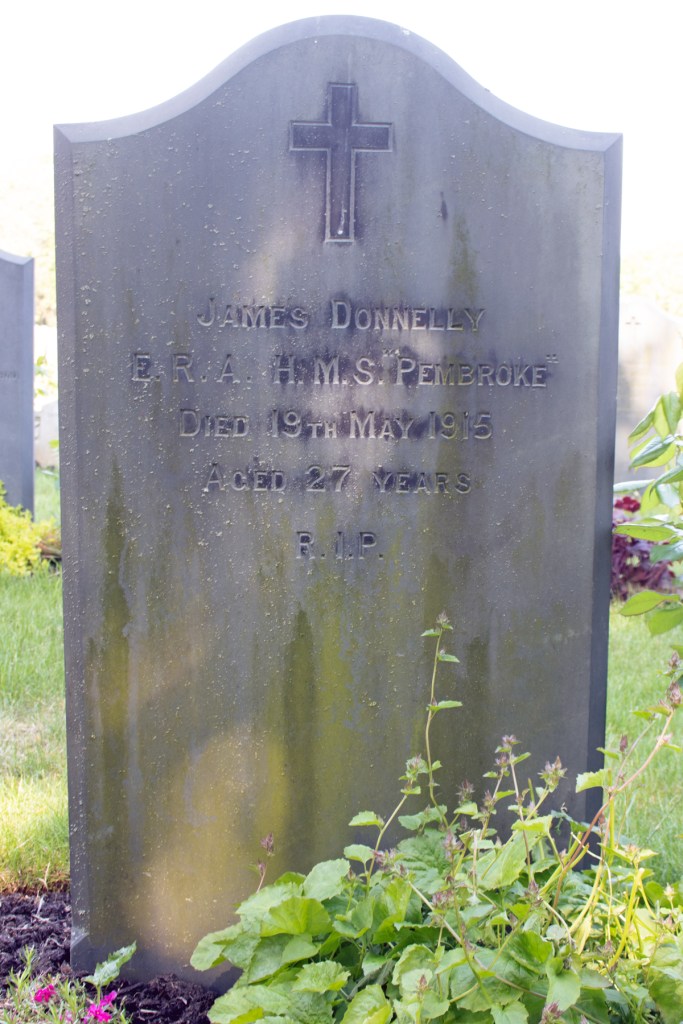
Engine Room Artificer James Donnelly

James Donnelly’s life is a challenging one to pin down. Based on the Commonwealth War Graves Commission information, he was born in 1888 in Cappagh, County Tyrone, Northern Ireland, and was the son of Owen and Mary Donnelly. Unfortunately, there are no baptism or census records to expand on his family background.

Military records are equally sparse. James enlisted in the Royal Navy as an Engine Room Artificer 4th Class. He was assigned to HMS Pembroke, the Royal Naval Dockyard in Chatham, Kent; given how early in the conflict, and his position at the lower end of the ERA rankings, is it likely that he was posted there for training.

James’ time in the military was to be brief. He was admitted to the Royal Naval Hospital in Chatham, suffering from cerebrospinal meningitis. The condition was to prove severe: he succumbed to it on 19th May 1915, at the age of 27 years old.

Finances may have prevented the Donnelly family from bringing their boy back home. Instead, James was laid to rest in the Roman Catholic section of Woodlands Cemetery, Gillingham, not far from the naval base at which he had served.


Engine Room Artificer James Donnelly
(from findagrave.com)

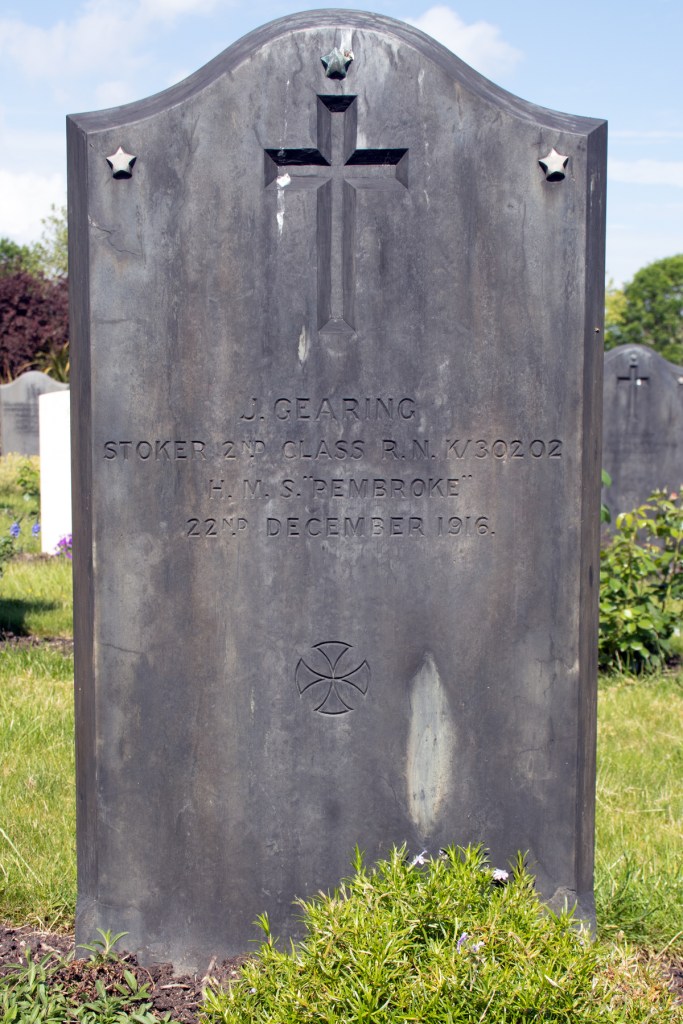
Stoker 2nd Class John Gearing

Stoker 2nd Class John Gearing

John Gearing was born in Paddington, Middlesex, on 12th August 1894. There is little concrete information about his early life, although a later document confirms he was the son of Mrs E Gearing, of 5 York Place, Hammersmith.

John was working as a fireman when war was declared. When he was called upon to serve his King and Country, he chose to enlist in the Royal Navy, joining up on 5th January 1916. His service records show that he was 5ft 9.5ins (1.76m) tall, with brown hair, blue eyes and a fresh complexion.

Stoker 2nd Class Gearing was initially sent to HMS Pembroke, the Royal Naval Dockyard in Chatham, Kent, for his training. He would remain attached to the base, and was assigned to HMS Victorious, the dockyard’s repair ship, from April 1916.

John’s time in the navy was not to be a lengthy one. Transferred back to HMS Pembroke in September, it seems that his health was becoming affected by the work he was doing. He was admitted to the Royal Naval Hospital in Chatham, suffering from what was later identified as carcinoma of the intestines. He passed away from the condition on 22nd December 1916, aged just 22 years old.

John Gearing was laid to rest in the Woodlands Cemetery, Gillingham, not far from the naval base he had come to call home.


Petty Officer Ellis Sayer

Petty Officer Ellis Sayer

Much of the life of Ellis Edward Sayer seems destined to remained shrouded in the mists of time. Born in Attleborough, Norfolk on 31st January 1888, the only census return he appears on dates from 1891. This records him as living with his grandmother, Maria Simons, who was noted as being married and working as a laundress. Ellis’ 16-year-old uncle, William, was also living there and employed as a groom.

Jumping forward a few years and, on 31st December 1907, Ellis enlisted in the Royal Navy. His service records note that he had previously been employed as a messenger, and there seems to have been some previous marine connection. The document shows that he was 5ft 8ins (1.72m), with dark brown hair, blue eyes and a fresh complexion. He was also noted as having tattoos of a dragon, a rose and the word ‘unity’ on his left forearm.

As an Ordinary Seaman, Ellis was initially sent to HMS Pembroke, the Royal Naval Dockyard in Chatham, Kent, for his training. He was only there for a matter of weeks before being assigned to the HMS Cochrane then HMS Natal.

On 7th April 1908, Ordinary Seaman Sayer was attached to the cruiser HMS Lancaster, and he was to remain with her for close to two years. Promoted to Able Seaman on 26th November 1909, his time on board came to a close in May 1910.

Over the next few years, Ellis continued his progress in his naval career. After a year on shore in Chatham, he was assigned to HMS Blonde, and was promoted to Leading Seaman in August 1912. He returned to HMS Pembroke the next month, and remained attached to the dockyard for the next year and a half: his experience likely being used to support newer recruits.

On 6th March 1914, Leading Seaman Sayer was assigned to the battleship HMS Commonwealth. Over the next three years she patrolled the North Sea, from the Norwegian coast and Shetland in the north to Dogger Bank in the south. On 1st August 1915, Ellis receive a further promotion, holding the rank of Petty Officer for the remainder of his time on board Commonwealth.

On 18th February 1917, Ellis’ life came to an abrupt end. There is little information available about his passing, one record stating that he died from an injury to his kidney which was as a result of an accident, while another states ‘rupture of kidney caused through [a] fall’. HMS Commonwealth seems to have been moored in Chatham, however, as he passed away in the town’s Royal Naval Hospital. He was 29 years of age.

Petty Officer Sayer’s next-of-kins were noted as his sister, Mrs J Andrews, who lived in Norwich, and a friend, Mrs Ethel Hampton, who lived in Gillingham, Kent.

Ellis Edward Sayer’s body was laid to rest in the Woodlands Cemetery, Gillingham, not far from the dockyard he had called home for so long.


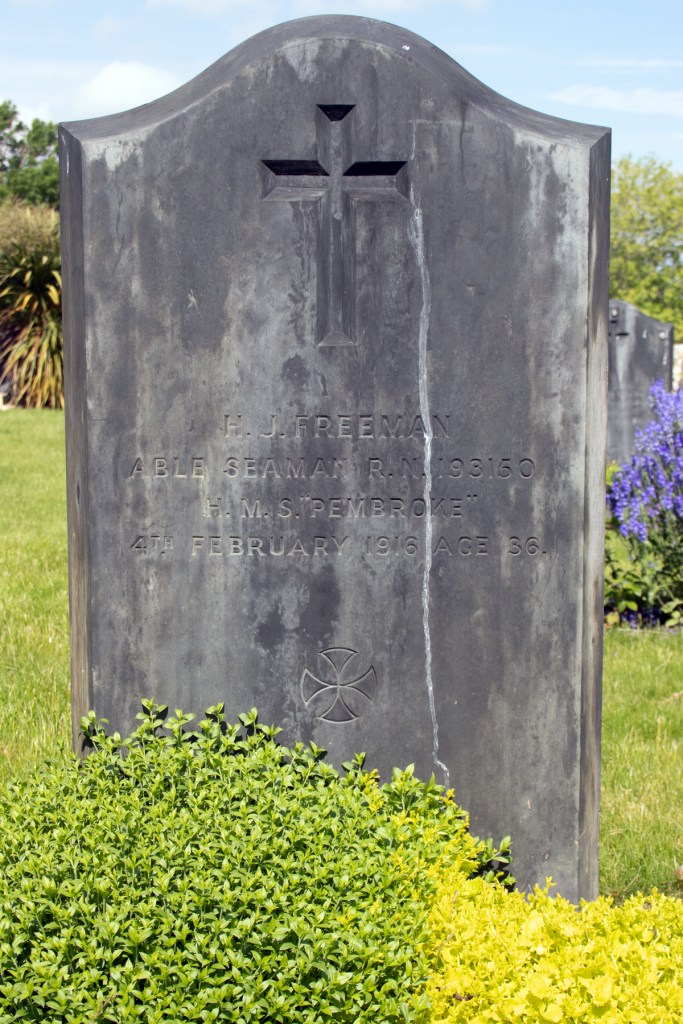
Able Seaman Horace Freeman

Able Seaman Horace Freeman

Horace James Freeman was born in Hackney, East London, on 16th September 1879. The second of five children, his parents were Archibald and Mary Freeman. According to the 1891 census, Archibald was employed as a carman, but the next document had him listed simply as a ‘traveller’.

When he completed his schooling, Horace found work as a baker’s assistant. He sought bigger and better things, however, and, on 13th February 1897, he enlisted in the Royal Navy. His service records show that he was 5ft 5.5ins (1.66m) tall, with brown hair, hazel eyes and a fresh complexion.

A few months under full age, Horace was initially given the rank of Boy 2nd Class. He was sent to the training ship HMS Northampton, and seemingly impressed his superiors, rising to Boy 1st Class within a couple of months. He moved to another training vessel, HMS Calliope, in July 1897, and was serving on board when he came of age that September.

Now formally inducted into the Royal Navy, Ordinary Seaman Freeman began what was to be an eighteen year career at sea. He would become based at HMS Pembroke, the Royal Naval Dockyard in Chatham, Kent, and went on to serve aboard nine ships during his time.

Promoted to the rank of Able Seaman in October 1899, Horace’s time in the navy was not to be without incident. He spent eight separate periods of time in the cells, 158 days in total. Full details of his misdemeanours are lost to time, but at least on at least one occasion he was placed in the brig for refusing orders.

On Christmas Day 1911, Horace married Sarah Byatt. She was a bricklayer’s daughter from Tottenham, and the couple went on to have two children: Clifford, born in 1913, and Leslie, born two years later.

While Sarah was looking after their young family, Horace spent a lot of his time at sea. As time moved on, however, he was based at HMS Pembroke for longer spells, and it was while he was in Chatham early in 1916 that fate befell him.

The body of Horace J Freeman, an able seaman of the RFR, who had been missing from his ship since February 25th, was found floating in South Lock at Chatham Dockyard on Saturday.

[South Eastern Gazette: Tuesday 11th April 1916]

Little additional information is available about Horace’s death, and it is unclear how he had fallen into the lock. He was 36 years of age.

The body of Able Seaman Horace James Freeman was laid to rest in Gillingham’s Woodlands Cemetery, not far from the naval base he had called home for so long.


Able Seaman Charles Dorman

Able Seaman Charles Dorman

Charles Columbus Dorman was born on 21st October 1892, and was the middle of three children to James and Margaret Dorman. Charles’ parents both hailed from Belfast, Country Antrim, but the 1901 census records his and his older sister’s birthplace as America. No baptism documents are available and no later information supports this, so, while his unusual middle name may suggest the place of his birth, it seems destined to remain unclear.

When he left school, Charles found work as a printer’s apprentice. He sought more, however, and was drawn to a life at sea. On 29th November 1910, he enlisted in the Royal Navy as an Ordinary Seaman. His service records confirm that he was 5ft 3.5ins (1.61m) tall, with brown hair, hazel eyes and a fresh complexion.

Charles was sent to HMS Pembroke – the Royal Naval Dockyard in Chatham, Kent – for his training. In January 1911, he was assigned to the ill-fated HMS Bulwark, before moving to the battleship HMS Implacable three months later. He would remain on board until the summer of 1914, gaining a promotion to Able Seaman during his three year stint there.

Charles was serving on Implacable when war was declared. At the beginning of September, after a week back in Chatham, was assigned to the sloop HMS Cormorant. After six months aboard, the cruiser HMS Blenheim became his home, and he spent the next month supporting troops who were being sent to Gallipoli.

By this point, Able Seaman Dorman had become unwell. He had contracted the autoimmune disease pemphigus, resulting in blistering to his skin and body. He returned to HMS Pembroke, and was stood down from the service on medical grounds 9th July 1916.

It is unclear whether or not Charles was admitted to hospital for his condition. Either way, he succumbed to the illness on 31st August 1916. He was just 23 years of age.

Charles Columbus Dorman’s family appear to have been unable to bring their boy back to Ireland for burial. Instead, he was laid to rest in Woodlands Cemetery, Gillingham, not far from the Kent naval base he had come to call home.

Boy 1st Class Sidney White

Boy 1st Class Sidney White

Sidney James White was born on 9th April 1899 in Bath, Somerset. The second of six children – and the oldest son – his parents were Sidney and Ann White. Sidney Sr was a butcher by trade and, by the time of the 1911 census, the family were living in Walcot Buildings in the city.

Sidney Jr was only 15 years of age when war came to Europe. However, he was still keen to do hit bit and, on 13th October 1915, he gave up his job as a fitter’s mate and enlisted in the Royal Navy. As he was underage, he was given the rank of Boy 2nd Class, his service records showing that he was 5ft 7.5ins (1.61m) tall, with brown hair, blue eyes and a fresh complexion.

Boy 2nd Class White was dispatched to the ship HMS Impregnable for his initial service. Moored in Devon, she was a training vessel, used to school young recruits in the art of seamanship. In May 1916, Sidney was promoted to the rank of Boy 1st Class, but his time in the Royal Navy was to be cut tragically short.

Holed up in cramped billets, disease often ran rife in military barracks, and Sidney was not to be immune. He contracted meningitis, and was admitted to the Royal Naval Hospital in Plymouth. While initially appearing to recover, the condition was to prove too severe, and his young body succumbed on 18th June 1916: he was just 17 years of age.

Sidney James White’s body was brought back to Somerset for burial. He was laid to rest in a shady spot in Bath’s sweeping Locksbrook Cemetery.


Ordinary Telegraphist Thomas Morris

Ordinary Telegraphist Thomas Morris

Thomas Henry Morris was born in Bridgwater, Somerset, on 7th September 1898. The oldest of five children, his parents were Christopher and Jemima Morris. Initially a viceman for a carriage works, by the time of the 1911 census, Christopher had moved the family to the Weston area of Bath, where he was employed as an engineer’s fitter for a printing firm.

When Thomas – who was better knows as Harry – finished his schooling, he found work at a printer’s – Messrs. Goodalls in Westgate Buildings, Bath. In the summer of 1915, he enlisted in the Royal Navy as an Signaller.

He was then appointed to HMS Valiant, and was serving in this ship at the Battle of Jutland. As a result he was the victim of shell-shock, and totally unfitted for further active service. By this time he had passed his exams and had qualified as a telegraphist. After recovering he was put on the staff of the Admiral commanding the Orkney Island base, but nominally attached to HMS Cyclops…

[Bath Chronicle and Weekly Gazette: Saturday 1st March 1919]

It was while Ordinary Telegraphist Morris was serving on board Cyclops, he fell ill, contracting a combination of influenza and pneumonia. He was transferred to the Hospital Ship Agadir, but succumbed to the conditions on 21st February 1919. He was just 20 years of age.

Thomas Henry – Harry – Morris, was brought back to Somerset for burial. He was laid to rest in the sweeping grounds of Bath’s Locksbrook Cemetery.


Ordinary Telegraphist Harry Morris
(from britishnewspaperarchive.co.uk)

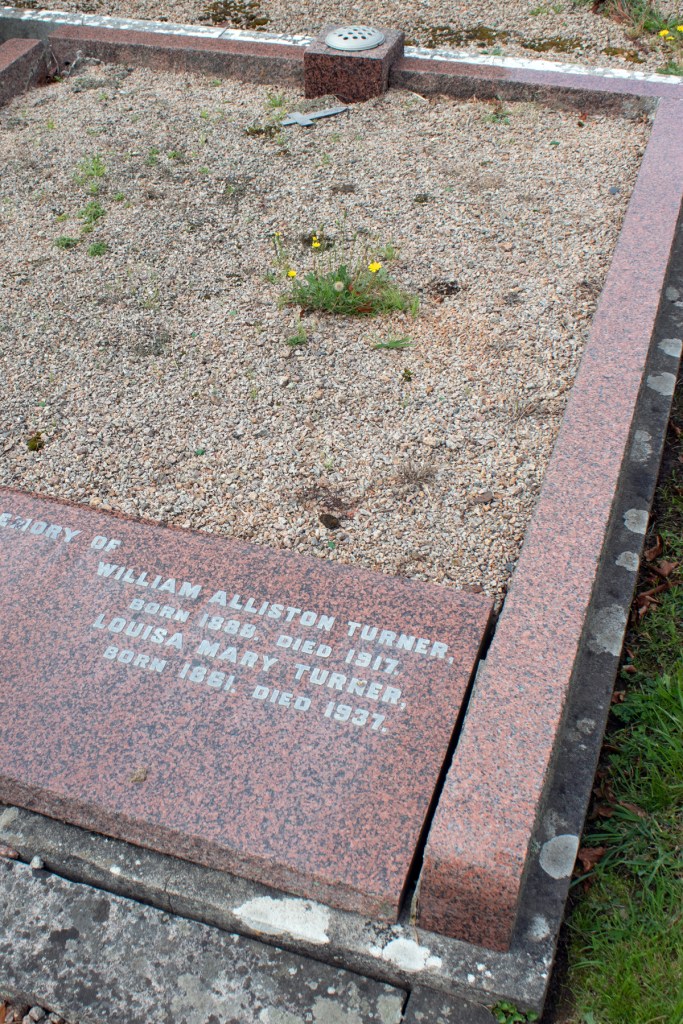
Able Seaman William Turner

Able Seaman William Turner

Details of William Alliston Turner’s life are a challenge to track down. According to later military records, he was born on 28th February 1888 in St Helier, Jersey. While there are a couple of census returns that may be connected to him, there is nothing to definitively confirm his early life.

William enlisted in the Royal Navy on 9th January 1904. He was just shy of his 14th birthday, and so was given the rank of Boy 2nd Class. Over the next fifteen months, he was attached to the training ship HMS St Vincent, moored at Haslar in Hampshire. In August 1902, he was promoted to Boy 1st Class, and was given his first posting, on board the cruiser HMS Edgar, in May 1905.

After a short spell at HMS Victory, the Royal Naval Dockyard in Portsmouth, William was assigned to HMS Powerful, a protected cruiser, and he would spend two years on board. During this time, he came of age, and was given the rank of Ordinary Seaman. His service records at the time confirm that he was 5ft 5.5ins (1.66m) tall, with dark hair, brown eyes and a fresh complexion. He was also noted as having two tattoos – a heart on the back of his right hand, and the letter T on the back of his left.

William seemed to have taken to his life at sea with some ease. On 1st January 1907 he was promoted to the rank of Able Seaman, and over the next eight years, he served on twelve different vessels, returning to Portsmouth between each voyage.

What had become a good career for Able Seaman Turner, began to take a bit of a downturn. He spent six separate periods of time in the brig between 1908 and 1914, totalling 121 days in total. On 19th March 1915, William was medically discharged from naval service, suffering from neurasthenia, or PTSD as it is now known.

At this point, William’s trail goes cold. He returned to the Channel Islands, and passed away on 13th April 1917: he was 29 years of age.

William Alliston Turner was laid to rest in the quiet graveyard of St Lawrence Church in Jersey.


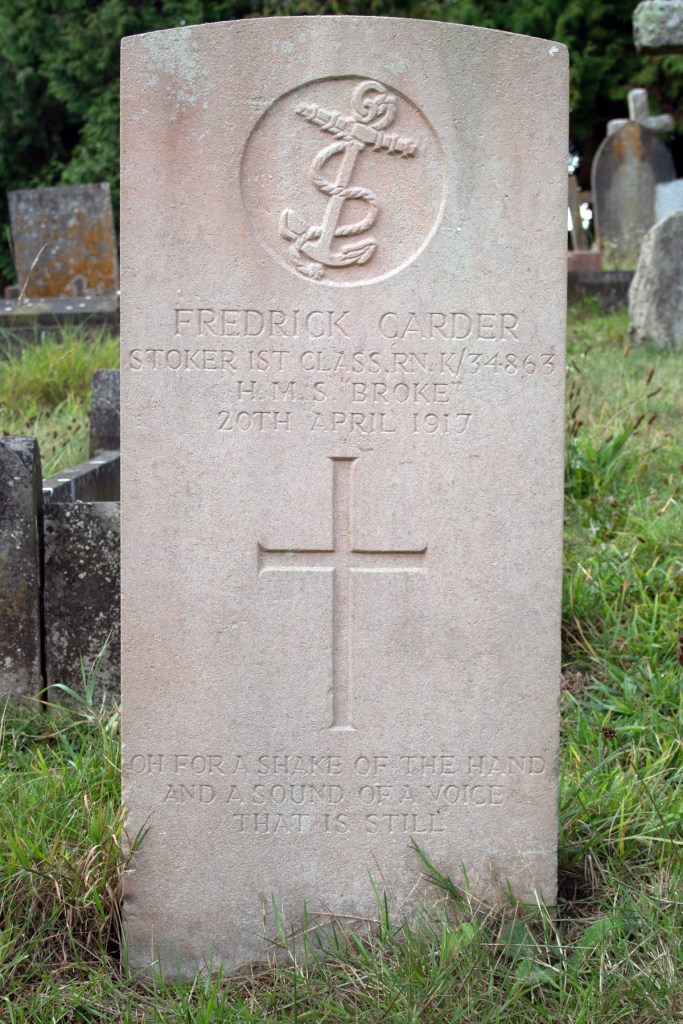
Stoker 1st Class Frederick Carder

Stoker 1st Class Frederick Carder

Frederick Albert Carder was born on 2nd March 1893 in Dartmouth, Devon. The youngest of ten children, his parents were shipwright Samuel Carder and his wife, Julia. Frederick lost both of his parents in 1909, when he was just 14 years of age. He was taken in by his older brother, Ernest – who was better known as James – and his family and, by the time of the 1911 census was working as a porter for the local Co-operative Stores.

War came to Europe in the summer of 1914, and, two years later, Frederick stepped up to play his part. He enlisted in the Royal Navy on 4th July 1916, and was given the rank of Stoker 2nd Class. He was sent to HMS Victory – the Royal Naval Dockyard in Portsmouth, Hampshire – for his initial training.

By the end of August, Stoker Carder was assigned to HMS Broke, a destroyer that formed part of the Dover Patrol, monitoring the waters off the Kent coast. He remained attached to the patrol and was promoted to Stoker 1st Class in January 1917.

On 20th April 1917, the Broke and another ship, HMS Swift, took on six German torpedo boats who were attacking the Dover Barrage – a network of nets and mines in the English Channel, designed to stop U-boats. The Broke rammed the torpedo boat SMS G42, and the two ships became locked together. Enemy sailors boarded the Broke, and hand-to-hand combat ensued. Eventually Broke managed to break free, and the G42 sank.

HMS Broke was towed back to shore, but 21 of her crew had died in the Battle of Dover Strait, including Stoker 1st Class Carder. He was 23 years of age.

The body of Frederick Albert Carder was taken back to Devon for burial. He was laid to rest in Paignton Cemetery, close to his brother, James, who had died in the summer of 1916. Read more about him by clicking here.