Category Archives: Artificer

Chief Artificer Engineer Alfred Ward

Chief Artificer Engineer Alfred Ward

The life of Alfred Ernest Ward is a challenge to unpick. He lies at rest in Paignton’s sweeping cemetery in Devon, his headstone confirming that he was Chief Artificer Engineer on board the destroyer HMS Magic.

Alfred’s Pension Index Card confirms his beneficiary as his father, also called Alfred Ernest Ward, who lived at 41 Crown Hill Park in Torquay. Another document, the Naval Officer Casualty Docket, states that he died of pneumonia on 12th February 1919, while he was admitted to the Wallasey Cottage Hospital in Birkenhead on the Wirral.

There is a navy service record for an Alfred Ernest Ward, and, while there is nothing to definitively connect this to the man buried in Paignton, it seems likely that they are the same person. This Alfred was born in Huntingdon, Huntingdonshire, on 30th September 1876, and was working as a fitter and turner when he enlisted on 11th October 1897.

Over the eight years that the document records, Alfred rose from his initial rank of Engine Room Artificer 4th Class to Engine Room Artificer 2nd Class. His service details end on 5th December 1905, when he seems to have transferred to the Officer’s Section.

There are census records for the late 1800s for Ernest Ward (presumably forsaking Alfred to avoid confusion with his father). Alfred Sr working as a rope and marquee rick cloth maker. Married to Eliza Ward, the couple had three children, of whom Ernest was the oldest. By 1901, Engine Room Artificer Ward was assigned to HMS Furious, a cruiser based at Sheerness in Kent.

There are no further details for Chief Artificer Engineer Alfred Ernest Ward between 1905 and 1919, and his life during this time is destined to remain lost to time.

Engine Room Artificer 3rd Class Gerald Bowerman

Engine Room Artificer 3rd Class Gerald Bowerman

A distressing fatality, involving the death of a member of the crew of HM destroyer “Rifleman”, and injury to two others, occurred at the harbour where his ship was on Saturday night. A party of four – one civilian and three Navy men – were on a motor cycle and side-car on their way to Provost Matthews’ Quay, from which the sailors were to join their ship. The cyclist, who was controlling the machine in the darkness of the night, failed to observe that the bridge at the dock gates was open to allow a vessel to pass out to sea. The motor cycle collided with the obstruction, with the result that the machine and side-car swerves round, and plunged headlong into the well from which the bridge swings.

The result of the accident was that Gerald Bowerman (25), engine-room artificer, fractured his skull, while his two ship-mates, Charles Morrice, chief engine-room artificer, and James Fulthorpe, engine-room artificer, were somewhat severely injured. Deceased belonged to Buckfastleigh, his residence being the Mechanics’ Arms.

[Western Times: Friday 25th September 1914]

Gerald Bowerman was born in Buckfastleigh, Devon, on 30th October 1888. The youngest of four children, his parents were James and Augusta Bowerman. James was a jack-of-all-trades, with the 1891 census noting that he worked as a grocer, coal dealer and cab proprietor, with his wife assisting in the business.

James seemed to seek out new opportunities, and, by the time of the next census, taken in 1901, the family had moved to Exeter, and were running the Red Cow Inn at the foot of St David’s Hill.

Gerald’s older brother, Harold, joined the navy in 1906, and his sibling was not to be outdone. By 1910, James and Augusta had moved back to Buckfastleigh, and were running the Mechanic’s Arms. Gerald, however, was drawn to the sea and gave up his employment as a fitter and turner to enlisted in the Royal Navy on 14th September 1910. His service records show that he was 5ft 6ins (1.68m) tall, with brown hair, brown eyes and a fresh complexion.

Engine Room Artificer 4th Class Bowerman was first sent to HMS Vivid, the Royal Naval Dockyard in Devonport, for his training. He joined the battleship HMS Bellerophon in February 1911, and she would be his home for the next two years.

After another short spell in Devonport, Gerald transferred to HMS Caesar, then to the depot ship HMS Blake, to which he was assigned on 30th August 1913. The following month he was promoted to Engine Room Artificer 3rd Class, and would remain on board Blake through to the outbreak of war the following year.

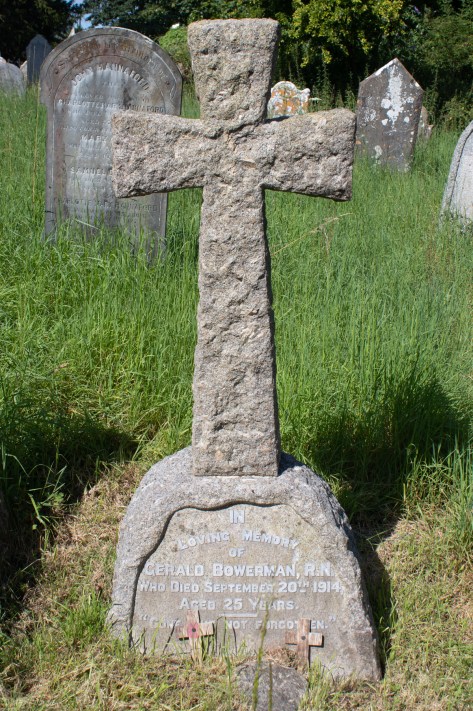
Engine Room Artificer Bowerman’s ship was based in Aberdeen when the motorcycle accident occurred. He was just 25 years of age when he died, on 20th September 1914.

Gerald Bowerman’s body was taken back to Devon for burial. He was laid to rest in the graveyard of Holy Trinity Church in his home town of Buckfastleigh.


Engine Room Artificer 4th Class Leonard Bentley

Engine Room Artificer 4th Class Leonard Bentley

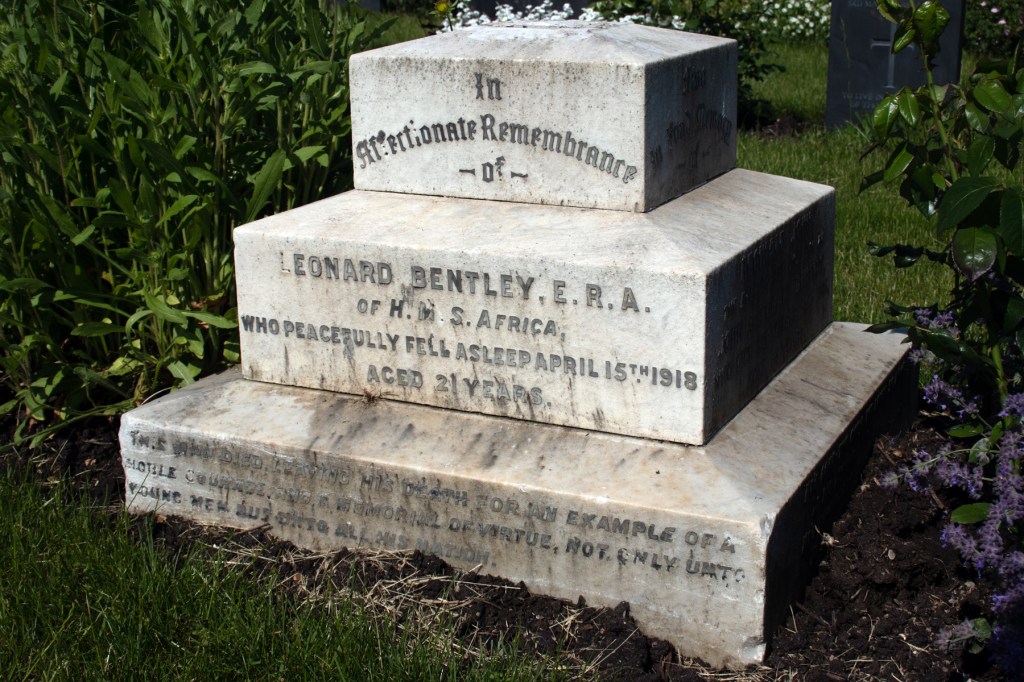
Leonard Bentley was born in Strood, Kent, on 6th December 1896. One of six children, his parents were John and Emma Bentley. John was a barge captain, transporting ship-loads of cement from the local works to where it was needed.

The 1911 census found an extended Bentley family living at 85 Cliffe Road in Strood. John and Emma shared their home with Leonard, his older brother Arthur, and Arthur’s wife and son. Eleven years younger than Arthur, who was his next oldest sibling, Leonard was still at school by this point.

Education was obviously important to Leonard, and by the end of the year, he had enrolled in the Royal Navy as a Boy Artificer. He would spend the next few years at HMS Fisgard, the training establishment in Woolwich, Kent, learning his trade.

When he came of age in December 1914, Leonard was officially inducted into the Royal Navy, taking on the rank of Engine Room Artificer 5th Class. He remained at Fisgard until January 1916, when he transferred to HMS Victory, the Royal Naval Dockyard in Portsmouth.

This was a temporary move, however, and on 11th April Leonard was assigned to HMS Africa, and a few weeks later, he was promoted to Engine Room Artificer 4th Class. A battleship, the Africa would become his home for the next eighteen months and he would travel with to the Mediterranean and Adriatic Seas.

In January 1918, Engine Room Artificer Bentley would return to solid ground. He transferred to HMS Pembroke, the Royal Navy’s base in Chatham, Kent. The reason for his move appears to have been health related, and he was soon moved the the town’s Naval Hospital, suffering from pulmonary tuberculosis. The condition was to prove fatal. Leonard died on 15th April 1918: he was 21 years of age.

Leonard Bentley was laid to rest in the naval section of Woodlands Cemetery, Gillingham, Kent, not far from his family home, or his final naval base.


Engine Room Artificer James Donnelly

Engine Room Artificer James Donnelly

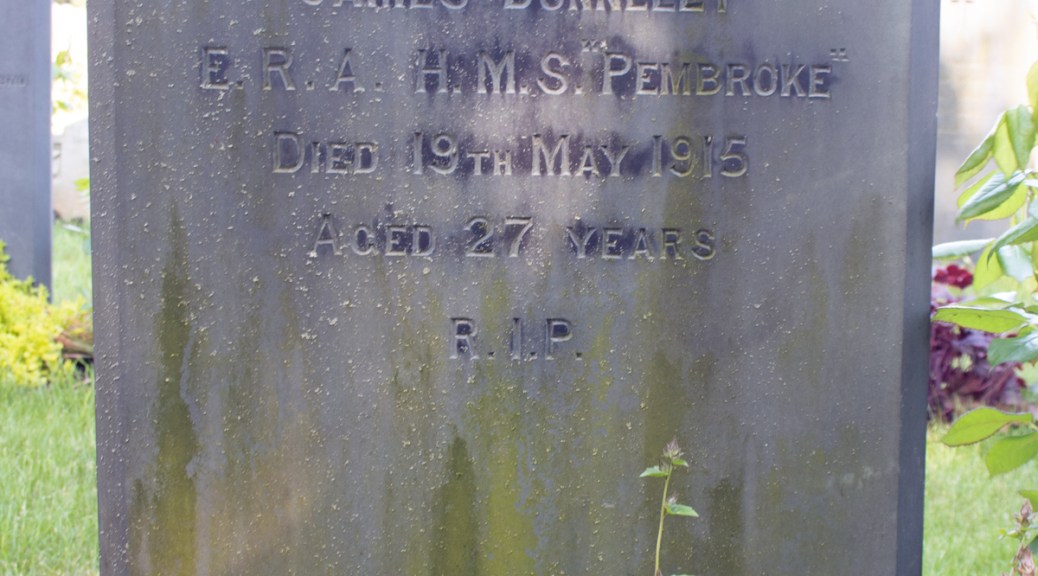
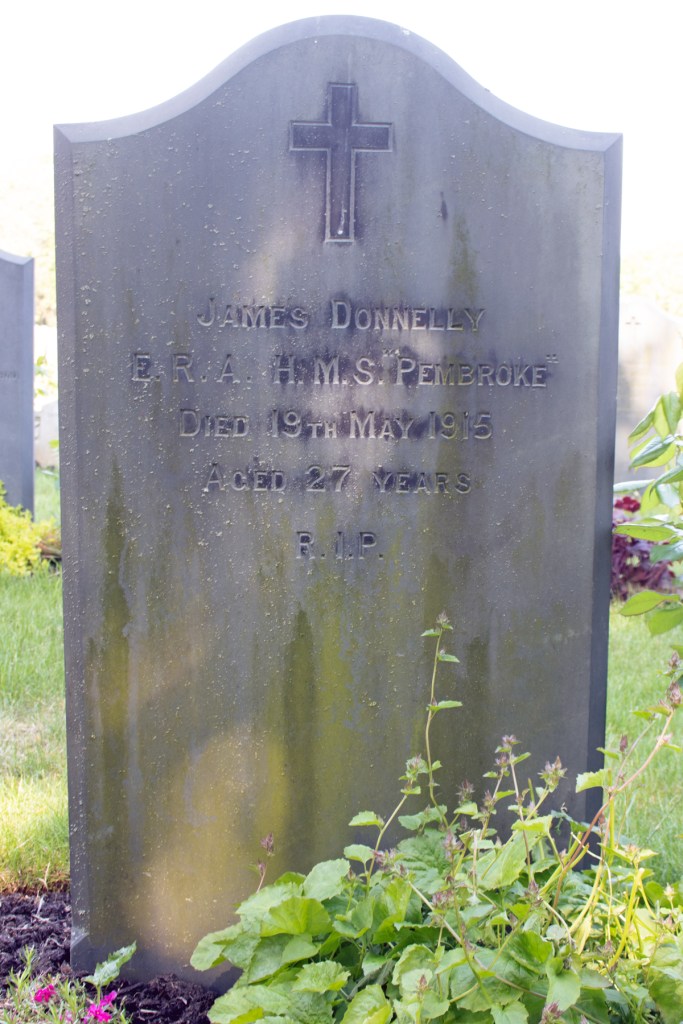
James Donnelly’s life is a challenging one to pin down. Based on the Commonwealth War Graves Commission information, he was born in 1888 in Cappagh, County Tyrone, Northern Ireland, and was the son of Owen and Mary Donnelly. Unfortunately, there are no baptism or census records to expand on his family background.

Military records are equally sparse. James enlisted in the Royal Navy as an Engine Room Artificer 4th Class. He was assigned to HMS Pembroke, the Royal Naval Dockyard in Chatham, Kent; given how early in the conflict, and his position at the lower end of the ERA rankings, is it likely that he was posted there for training.

James’ time in the military was to be brief. He was admitted to the Royal Naval Hospital in Chatham, suffering from cerebrospinal meningitis. The condition was to prove severe: he succumbed to it on 19th May 1915, at the age of 27 years old.

Finances may have prevented the Donnelly family from bringing their boy back home. Instead, James was laid to rest in the Roman Catholic section of Woodlands Cemetery, Gillingham, not far from the naval base at which he had served.


Engine Room Artificer James Donnelly
(from findagrave.com)

Artificer 4th Class Claud McIntyre

Artificer 4th Class Claud McIntyre

Claud Millar McIntyre was born on 3rd June 1895, and was the youngest of three children to Alexander and Margaret McIntyre. Both of Claud’s parents – and his two older siblings – were born in Scotland, but the family moved to London in the early 1890s, and it was in Plaistow that Claud was born.

Alexander worked as an engineer at the Thames docks, and, when Claud left school, he followed his father into the same line of work. War was coming to Europe, however, and Claud was very keen on playing his part.

On 22nd December 1914, he enlisted in the Royal Navy. His boiler work obviously stood him in good stead, as he was employed as an Engine Room Artificer (ERA) 4th Class. Claud’s service records confirm that he stood 5ft 8ins (1.72m) tall, had dark brown hair, blue eyes and a fresh complexion. The document also gives his year of birth as 1893, which suggests that he may have lied about his age to get into the action.

The same record gives an indication of the harshness of the work Claud has been doing before joining up. Under Wounds, Scars or Marks, it was noted that he had a scar on the outside right thigh and on his right little finger. He also had lost the fingertip of his right hand.

ERA McIntyre’s training took place at HMS Pembroke, the Royal Naval Dockyard in Chatham, Kent. He was soon given a posting, however, and served at HMS Acteon, the shore-based establishment in Sheerness, for just over a year.

In August 1916, after a brief return to HMS Pembroke, ERA McIntyre was given a second posting, this time on board Q12, one of a number of the war’s most closely guarded naval secrets. The Q-boats (a code name referring to their home port of Queenstown in Ireland) were vessels designed to look like an easy target, but which actually carried hidden armaments. Understandably, little is known about the ship on which Claud served, or his time aboard; all that is documented is that he was assigned to her from 28th August 1916 to 30th April 1917, at which point he returned to HMS Pembroke.

Chatham Dockyard was particularly busy that summer, and the large number of extra servicemen meant that Claud was billeted in temporary accommodation in Chatham Drill Hall.

On the 3rd September 1917, the first night air raid carried out by the German Air Force bombarded the town, and scored a direct hit on the Drill Hall; ERA was injured that night, but died of his wounds the following day at the Fort Pitt Military Hospital. He was just 22 years of age.

Claud Millar McIntyre was laid to rest, along with the other victims of the Chatham Air Raid, in the Woodlands Cemetery, Gillingham.


Engine Room Artificer Archibald Callon

Engine Room Artificer Archibald Callon

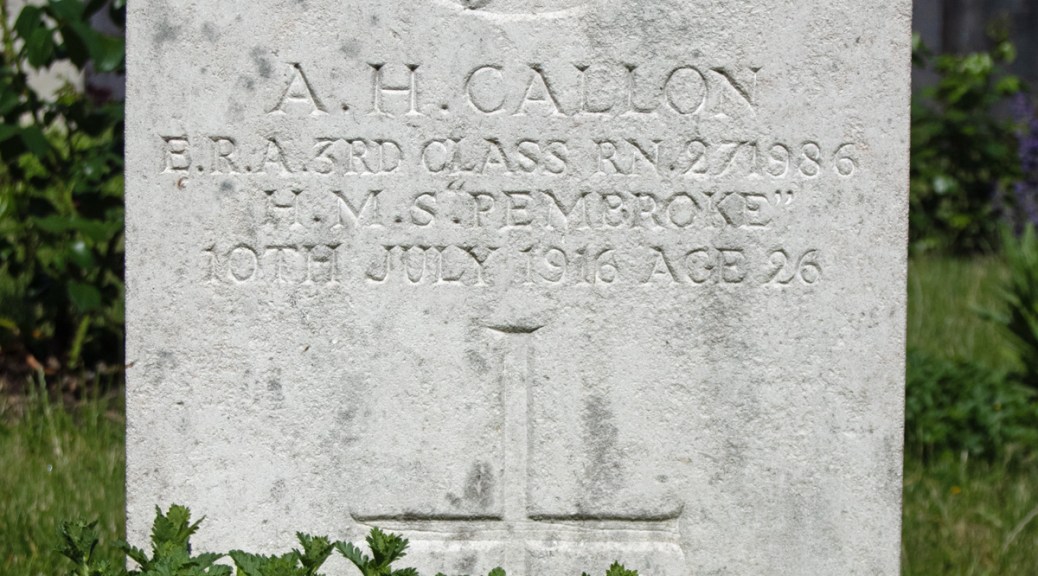
Archibald Hubert Callon – also known as Archie – was born on 2nd January 1890 in Pembroke Dock, South Wales. One of eight children, his parents were shipwright Michael Callon and his wife, Mary. Soon after Archie was born, Michael moved the family to Gillingham, Kent, presumably as work at the nearby Naval Dockyard was plentiful.

The sea was clearly in his blood as, in 1905, Archie joined the Royal Navy, initially as a Boy Artificer, before taking on full employment there once he reached the age of 18. The 1911 census found him working as an Engine Room Artificer 4th Class, one of a crew of 57 aboard the torpedo destroyer HMS Swale, moored in Grimsby.

Archie slowly rose through the ranks and, by 1913, had become Engine Room Artificer 3rd Class, while serving on HMS Clio. He remained on this vessel through to April 1916, before returning to HMS Pembroke, the shore-based naval establishment in Chatham, Kent.

Sadly, Archie’s time back home was short. The next record for him is stark; it is noted that on 10th July 1916, he committed suicide, during temporary insanity. I have been unable to uncover anything further about his passing. He was just 26 years old.

Archibald Hubert Callon was laid to rest in the Woodlands Cemetery in Gillingham, Kent, not far from where his family lived.


Engine Room Artificer Newman Bailey

Engine Room Artificer 4th Class Newman Bailey

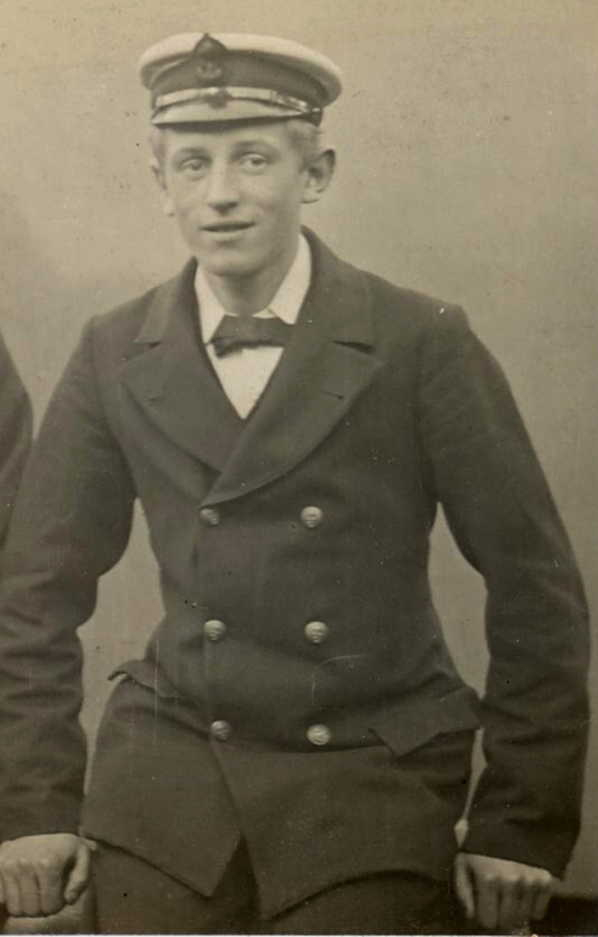
Newman Joynt Bailey was born on 1st August 1887, the eldest of five children to Newman Bailey and his wife Anna (née Joynt). Newman Sr worked as a switchman and signalman for Great Western Railway and had been born in Bath. He married Anna (whose maiden name was Joynt, and who had been born in Ireland) in 1885 and, after a short stint living across the county border in Devon – where Newman Jr was born – he settled his young family in Taunton.

When Newman Jr left school, he became an office boy, but he soon found himself following in his father’s footsteps. He became a fitter for the railways and, by 1910, was living with spitting distance of the GWR depot in the town.

It was here, in William Street, that he set up home with his new wife, Lily Gill, who he had married on 31t July 1910. Lily was the daughter of a Taunton lamplighter, and, to help make ends meet, worked as an ironer at the town’s collar factory.

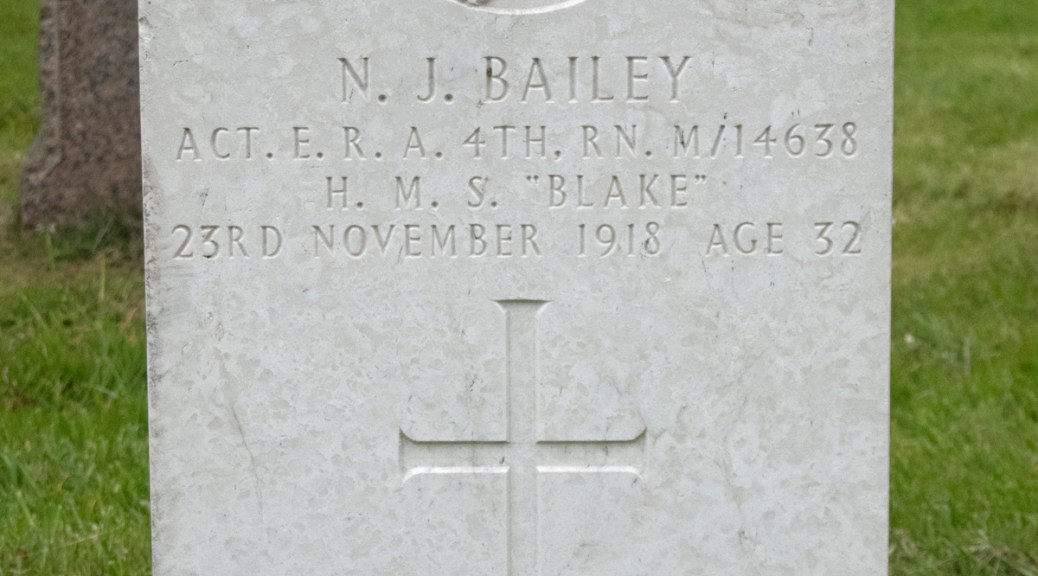
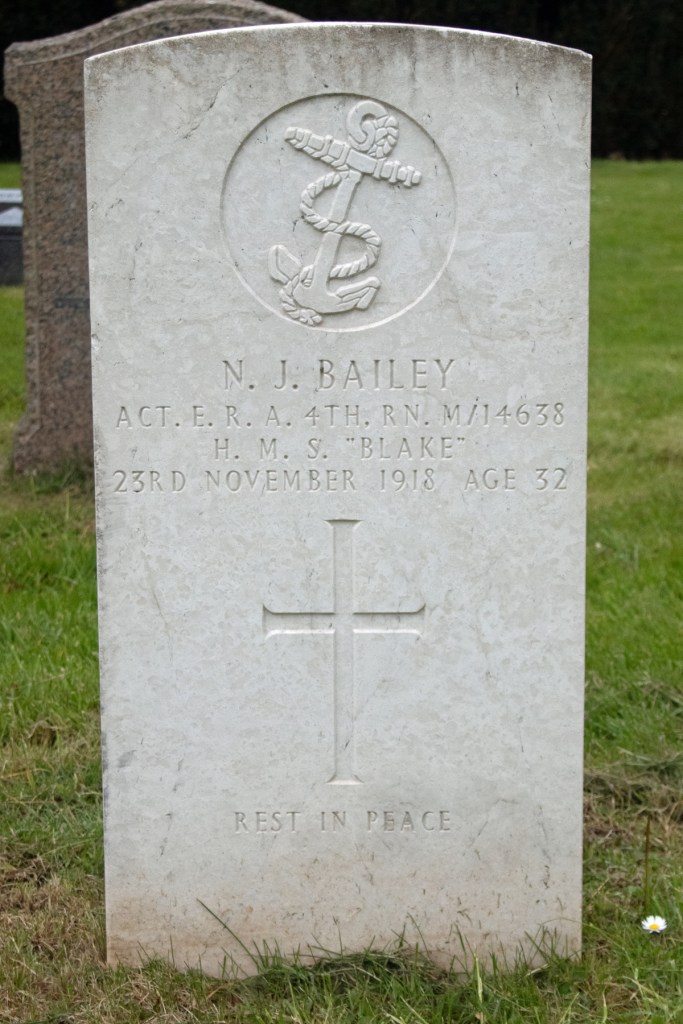
War was on the way, and in July 1915, Newman enlisted in the Royal Navy. After initial training aboard Vivid II, the shore establishment in Devonport, he was deployed on HMS Blake as an Engine Room Artificer.

HMS Blake was an auxiliary ship designed to provide maintenance support to a flotilla of destroyers or other small warships. With his experience with steam engines at GWR, his knowledge of mechanics would have made him ideally suited to this type of role.

While he survived the war, Artificer Bailey was to be struck down with something much closer to home. In the immediate post-war period, the Spanish Flu pandemic swept the globe, and Newman was to fall victim to it. Admitted to the Royal Naval Hospital in South Queensferry, near Edinburgh, he passed away from the lung condition on 23rd November 1918. He was just 32 years old.

Brought back home, Newman Joynt Bailey was laid to rest in St James Cemetery in his home town of Taunton.


Chief Artificer James Davidson

Chief Artificer James Davidson

There are some lives that just don’t want to be discovered, that just hide tantalisingly out of reach. James Davidson’s was one of those lives.

The main two research websites I use – cwgc.org and findagrave.com – only have his initial and surname, which is understandable, as this is what is inscribed on his headstone. Unfortunately, that doesn’t act as a good base on which to carry out further research.

HMS Gunner was the wartime moniker for Granton Harbour, near Edinburgh. A naval history website managed to identify Chief Artificer Davidson’s first name – James – but again, with no other information to go on, this is still too common a name – particularly in Scotland – to narrow down any real results.

Sadly, then, the story behind James Davidson is destined to remain a mystery. All that can be confirmed for certain is that he passed away on 23rd January 1919, though the cause of his passing is lost to time, as is his age.

James Davidson lies at rest in the Woodlands Cemetery in Gillingham, Kent.


Chief Engine Room Artificer 2nd Class Arthur Herring

Artificer Arthur Herring

Arthur Herring was born on 5th December 1877, the third of five children to William and Constance Herring. William was a sign writer at the Naval Dockyard in Chatham, Kent, and the family lived in neighbouring Gillingham.

Arthur joined the Royal Navy in September 1899, just short of his 22nd birthday. He worked as an Engine Room Artificer (ERA), and over the twelve years of his initial service, he crewed on board ten different ships. This was in addition to his service at HMS Pembroke, the shore vessel in his home town of Chatham.

Arthur was evidently a hard worker, and he rose through the ranks from ERA 5th Class to ERA 1st Class during this time.

In September 1912, Arthur married Angela Beck; she was also born in Chatham, and was the daughter of a naval Sergeant. The couple didn’t go on to have any children.

War was looming by the time Arthur completed his twelve years’ service. Arthur was recommissioned, serving as Chief Engine Room Artificer 2nd Class on HMS Aquarius and HMS Tyne during the conflict.

In February 1917, Artificer Herring transferred to HMS Torrent. This was a naval destroyer, part of the Harwich Force, patrolling the North Sea.

One of the duties of the Harwich Force was manning the “Beef Run”; the convoys between England and the Netherlands. It was on one of these runs that tragedy struck HMS Torrent.

At about 2am on 23rd December, the convoy, including HMS Torrent, ran into a German minefield, and Torrent struck a German mine. Two of the other ships in the convoy, HMS Surprise and HMS Tornado went to rescue Torrent’s crew, but Torrent struck a second mine and quickly sank. In an attempt to rescue survivors, Surprise and Tornado also struck mines and sank.

Only the fourth convoy ship, HMS Radiant was undamaged and picked up the survivors from the three ships. In total, 12 officers and 240 other ranks were killed from the three ships. On HMS Torrent, only three of the crew survived; sixty-eight others perished that night. This included Artificer Herring, although his body was rescued from the water; he was 40 years old.

Arthur Herring lies at peace in the Woodlands Cemetery in his home town of Gillingham, Kent.


Chief Engine Room Artificer 2nd Class Charles Miller

Artificer Charles Miller

Charles Frederick Caleb Miller was born on 12th December 1887 in Gillingham, Kent. His parents were Charles and Harriet Miller, and he had two younger siblings, Mabel and Harriet.

Tragically, Charles Jr’s mother died when he was only three years old; his father went on to marry again – to his widow’s younger sister, Jane – and the couple had two further children – Jane and Beatrice – who were Charles Jr’s half-sisters.

Charles Sr worked as a ship’s rigger in the Military Dockyard in Chatham, and naval life obviously caught his son’s eye. In 1903, having left school, he enlisted in the Royal Navy, started as a ‘boy artificer’, working in the engine and boiler rooms of ships.

His initial service was for twelve years, and he worked on a number of vessels, as well as being assigned to HMS Pembroke, the shore base in Chatham. He worked his way through the ranks to Engine Room Artificer 2nd Class by 1915.

In June of that year, Charles married Ellen Holden. the daughter of a dairyman from Chelsea. The couple went on to have a daughter, Joan, who was born in 1918. At the time of their wedding, Charles was based on HMS Lance, and his military service was to continue.

His period of service extended until the end of the war, Charles served on a number of other vessels, including HMS Surprise, Blenheim and Prince George and rose to Chief Engine Room Artificer 2nd Class.

It was while he was assigned to HMS Ganges in January 1920 that he became unwell, however. He had contracted bronchial pneumonia, and died of a combination of that and heart failure on 9th February 1920. He was 32 years old.

Charles Frederick Caleb Miller lies at rest in Woodlands Cemetery in his home town of Gillingham, Kent.


Charles Miller (from ancestry.co.uk)