Tag Archives: 1916

Sapper Joseph Yeoman

Sapper Joseph Yeoman

Joseph Frederick Yeoman was born on 28th December 1880, the sixth of eight children to John and Eliza. John was a brewer’s drayman from Harbertonford in Devon, but it was on the coast in Paignton that the Yeoman family were born and raised.

When he finished school, Joseph found work as a mason’s apprentice. The 1901 census found the family of seven living in a small terrace cottage on Hill Park Terrace, to the south of Paignton town centre, with all but Eliza bringing in a wage.

In 1906, Joseph married Lydia Gill. She was the daughter of a general labourer from Chudleigh, Devon, who was working as a domestic servant for an architectural surveyor and his wife. The couple went on to have two children – Joseph Jr, who was born the following year, and Lilian, who was born in 1910, but who died when just a babe-in-arms.

The 1911 census found Joseph and Lydia living at 20 Nuneham Terrace, Joseph Jr is missing from the document, and it seems likely that, with his sister’s death, he had been taken in by another relative to allow his grieving parents some space.

When war broke out, Joseph stepped up to play his part. Full details of his military service have been lost to time, and a clear chronology is a challenge to piece together. Lydia passed away in January 1915, but it is not clear whether Joseph had enlisted by this point. His entry in the Army Register of Soldiers’ Effects confirms that he had joined up by September 1915 at the latest, and that he was in the Royal Engineers.

Sapper Yeoman was assigned to the 1st/3rd (Wessex) Field Company. It is unclear from his records whether he served overseas, but by the spring of 1916, he was in Kent.

The news will be received with deep regret of the death of Sapper JF Yeoman… which took place on Sunday from enteric fever at Nackington Hospital, Canterbury. Deseased was in the employ of Mr WF Pearce before joining up, and frequently assisted the old Rugby Football Club.

South Devon Weekly Express: Friday 10th March 1916

Joseph Frederick Yeoman was 35 years of age when he died on 5th March. His body was brought back to Devon for burial, and he was laid to rest in Paignton Cemetery.


Joseph Yeoman Jr was just nine years old when his father, and had lost both of his parents within a space of just over a year. Emma Augusta Gill, possibly Lydia’s sister-in-law, was given guardianship of him, and he moved to East Brent, Somerset, for a new life.


Private Sidney Powell

Private Sydney Powell

Sidney Powell was born in the Walcot area of Bath, Somerset, in the spring of 1892. One of five children, his parents were corporation gardener Albert Powell, and his wife, Mary. The family lived at 2 Hedgemead Terrace for at least fifteen years, presumably as it was close to the park where Albert worked.

By the time of the 1911 census, Sidney had completed his schooling, and was employed as a draper’s porter. His was one of four wages being brought into the household: his father was gardening, his younger brother Frank was a law clerk, while his older step-brother, Mary’s son William, also worked as a draper’s porter.

When war came to Europe, Sidney stepped up to play his part. Sadly, details of his service have been lost to the mists of time, but it would appear that he enlisted in the Somerset Light Infantry no later than April 1916. Private Powell soon moved to the Machine Gun Corps, although documents do not confirm whether he spent any time overseas.

In the autumn of 1916, Private Powell was admitted to Birmingham War Hospital, having contracted pneumonia. The condition was to prove his undoing: he died while still admitted on 30th October. He was 24 years of age.

The body of Sidney Powell was taken back to Somerset for burial. He was laid to rest in the majestic grounds of the Bath’s Locksbrook Cemetery.


Lance Corporal Alfred King

Lance Corporal Alfred King

Alfred Frederick King was born at the start of 1897, and was the oldest of two children to Alfred and Mary. Alfred Sr was an army pensioner-turned-carman, and both he and his wife were born in Bath, Somerset. By the time of the 1911 census, the family of four were living at 31 Avondale Road, in the Walcot area of the city.

Alfred Jr had completed his schooling by this point, and was working as an errand boy. War was not far off, however, and it would result in the ultimate sacrifice for the King family.

Alfred Sr enlisted in the Somerset Light Infantry in September 1914, but was deemed not fit for service, as he was suffering from chronic stomach issues. This may have prompted his son to join up, and he did so in October 1915.

Sadly, Alfred Jr’s full service details no longer remain, but from what is left, it is clear that he joined the Somerset Light Infantry, and was assigned to the 8th (Service) Battalion. His unit was sent to France, and he would spend the rest of the year on the Western Front.

Private King was involved in a number of skirmishes in the coming months, and soon gained a promotion to the rank of Lance Corporal. In late January or early February 1916, he was wounded, and medically evacuated to Britain. He was admitted to the East Suffolk Hospital in Ipswich, but his injuries would prove too great: he passed away on 22nd February 1916, at the age of just 19 years old.

Alfred Frederick King’s body was taken back to Somerset for burial. He was laid to rest in the sweeping grounds of Bath’s Locksbrook Cemetery.


Alfred Sr would be buried alongside his son. You can read more about his life here.


Private Francis Chick

Private Francis Chick

Francis Frederick Chick was born in the spring of 1886 in Axminster, Devon. One of eight children, his parents were brickmaker Edwin (or Edward) Chick and his wife, Elizabeth.

When he completed his schooling, Francis found work as a sawyer’s apprentice. However, he wanted bigger and better things and, on 19th November 1900, he enlisted in the army. At 14 years of age, he was just short of 5ft (1.52m) in height, and had fair hair, blue eyes and a fresh complexion.

Initially enlisting in the Royal Marine Light Infantry, Boy Chick was to serve three years in the naval division. The 1901 census found him based at the East Stonehouse Barracks in Devonport, Devon, where he was a Bugler.

In September 1903, Francis transferred across to the Devonshire Regiment, remaining within the band structure. He came of age in March 1904, and, as a Private, he took on the role of Drummer. By the start of 1909, his unit had moved overseas, and the next census, taken in 1911, found Private Chick billeted in St George’s Barracks in Malta.

Francis remained in Malta for three years, and moved to Egypt with his unit in January 1912. By this point, having completed nearly twelve years’ service, he elected to stay on and renewed his contract. While serving in North Africa, he completed his induction into the Camel Corps, although by the end of the year, he was back on home soil after nearly four years abroad.

At this point, Francis seems to fall off the radar. It is unclear whether his move back to Britain was because he had been placed on reserve status, or due to medical reasons. To add to the mystery, when war broke out, he did not re-join the Devonshire Regiment, but enlisted in the London Regiment instead. He was assigned to the 22nd (County of London) Battalion, but later records note a connection to the 22nd (Wessex and Welsh) Battalion of the Rifle Brigade.

Private Chick was in Buckinghamshire by the winter of 1915/16, and it was here that he became unwell. Admitted to hospital in Aylesbury, he died of pneumonia on 4th January 1916: he was 29 years of age.

The body of Francis Frederick Chick was taken back to Devon for burial. He was laid to rest in the cemetery of his home town, Axminster.


Able Seaman William Comley

Able Seaman William Comley

Charles William Comley was born on 10th May 1882 in the Somerset city of Bath. One of sixteen siblings – only seven of whom survived childhood – his parents were Charles and Mary. Charles Sr was a stonemason, and to avoid any confusions with their names, his son quickly became known by his middle name, William.

When he completed his schooling, young William found work with a baker. However he had his sights on bigger and better things, and on 1st August 1899 he enlisted in the Royal Navy. Being too young to formally enlist, he was given the rank of Boy 2nd Class, and was sent to HMS Northampton, a training ship, to start learning the skills he would later rely on.

After jut a couple of months Boy Comley was given his first assignment, on board HMS Curacoa, a cruiser which served as a training ship. He would spend the next six months on board, visiting the Atlantic coastal ports in Madeira, Las Palmas and Cape Verde. By the time William completed his time on Curacoa, he had been promoted to Boy 1st Class.

Returning to Britain, William was sent to HMS Vivid, the Royal Naval Dockyard in Devonport, Devon. He would only be based there for a matter of weeks, but during that time he turned 18, and was now of an age to be inducted into the navy proper. Now given the rank of Ordinary Seaman, his service records show that he was 5ft 3ins (1.6m) tall, with light brown hair, hazel eyes and a dark complexion. He was also noted as having a scar on the first finger of his left hand.

In June 1900, Ordinary Seaman Comley was assigned to the battleship HMS Magnificent, and from this point on, his naval career was set. Over the next sixteen years, he would serve on a total of seven ships, with HMS Vivid remaining his home base in between voyages. His service records continually note his very good character, and, from September 1903, he held the rank of Able Seaman.

When William’s initial twelve-year contract came to an end in the spring of 1912, he immediately re-enlisted. He had grown to 5ft 7.5ins (1.71cm) in height, and his records show that, while retaining his light brown hair and eyes, he now had a light complexion.

War broke out in the summer of 1914, and Able Seaman Comley was assigned to the newly launched HMS Tiger. He would remain part of the battleship’s crew for close to two years, and was involved in the Battle of Dogger Bank in January 1915.

On 3rd April 1916, William was medically disembarked in Scotland, suffering from pneumonia. He was admitted to the Royal Naval Hospital in Queensferry, but his condition turned septic. He passed away on 12th April 1916, a month short of this 34th birthday.

The body of William Charles Comley was taken back to Somerset for burial. He was laid to rest in the city’s majestic Locksbrook Cemetery.


Able Seaman William Comley
(from ancestry.co.uk)

Pioneer Wilfred Ansfield

Pioneer Wilfred Ansfield

Wilfred Clarence Ansfield was born in the spring of 1899, and was the youngest of eleven children to Frederick and Frances Ashfield. Frederick was an innkeeper from West Tarring in Sussex, and the family were living in the public house he ran – possible the Vine Brewery on the Hight Street.

Frederick died at the start of 1904, and by the time of the next census, taken seven years later, Frances had moved the family to Salvington. They settled at 1 Beaconsfield Terrace, with six of the Ansfield children sharing the home with their mother. Three of Wilfred’s brothers were employed as gardeners – possibly at one of the many nurseries in the area – while he was still at school.

When war came to Europe, Wilfred was keen to serve his King and Country. Full service details have been lost to time, but it is clear that he enlisted in the Royal Engineers and, as a Pioneer, was assigned to the 3rd Provisional Company (later renamed the 642nd (London) Field Company). This was a territorial force, and it is unlikely that Wilfred saw any action overseas.

The only other document that can definitely connected to Pioneer Ansfield is the record of who his pension was assigned to. This confirmed Frances’ name and address, but also gives the cause of her son’s death, noted as ‘acute paralysis’. This could have been as a result of a tetanus infection, but nothing remains to confirm either way. Wilfred died on 25th June 1916: he was just 17 years of age.

Wilfred Clarence Ansfield was laid to rest in the graveyard of St Andrew’s Church in West Tarring, He was buried alongside Frederick, father and son reunited after twelve years.


Ship’s Corporal Thomas Berry

Ship’s Corporal Thomas Berry

Details of the civilian life of Thomas Joseph Berry are a challenge to piece together. He is not recognisable in any census returns, and baptism records don’t tally either.

The main resource for building a picture of Thomas’ life is the service record for his time in the Royal Navy. This provides his date of birth – 6th May 1882 – and suggests that he was born in Hornsey, Middlesex. He was working as a cabinet maker when he enlisted, the document also confirming that he was 5ft 4ins (1.62m) tall, with brown hair, brown eyes and a fresh complexion.

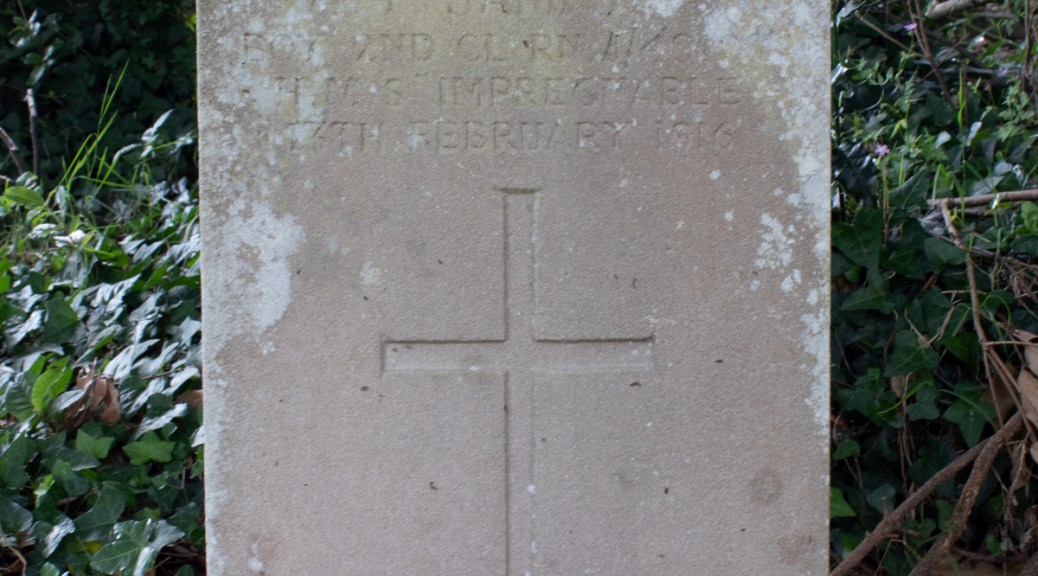
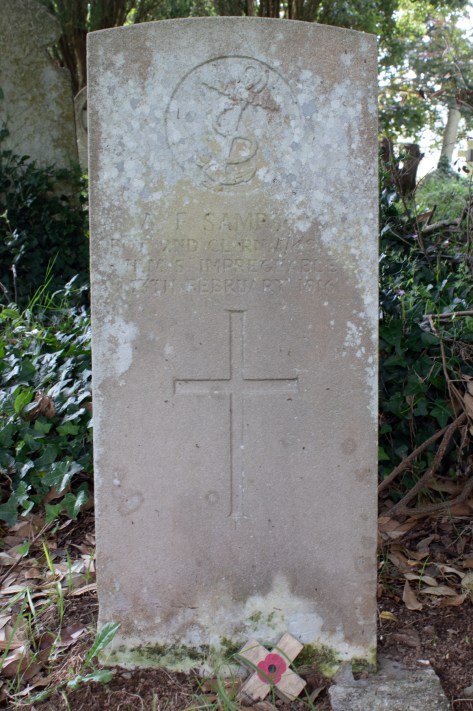
Thomas began his naval career on 29th July 1898. Below the age to formally enlist, he was given the rank of Boy 2nd Class. Over the next eighteen months, his time was split between two training ships based in Devonport, Devon, HMS Impregnable and HMS Lion. In April 1899 he was promoted to Boy 1st Class.

In February 1900, Thomas moved to HMS Vivid, the Royal Naval Dockyard in Devonport. On 6th May he came of age, and was formally enrolled in the navy, receiving the rank of Ordinary Seaman. From this point his career took off and, over the next sixteen years, he would go on to serve on board fifteen ships, seeing the world.

At his annual reports, Thomas’ conduct was regularly identified as Very Good, and his commitment was reflected in the progress he made through the ranks. By June 1901, he had been promoted to Able Seaman Berry. The summer of 1907 saw him move up to Leading Seaman, and three years later, Thomas was a Petty Officer. In November 1911 he was made Ship’s Corporal 2nd Class, and by the following spring he had been promoted again, this time to Ship’s Corporal 1st Class.

Away from the Royal Navy, Thomas’ personal life was developing. Again there is little documentation to provide any specifics, but he married a woman called Albertine Elizabeth in the early 1910s. The couple went on to have a son, Bernard, who was born on 15th January 1913, and the family seemed to settle down in Paignton, Devon – a later record giving Albertine’s address as 3 Alma Terrace, Well Street.

When war broke out in the summer of 1914, Ship’s Corporal Berry was serving on board the protected cruiser HMS Blake. In February 1916, he was assigned to the battleship HMS Revenge which served in the English Channel.

By this point, Thomas’ health seemed to be taking a downturn. He was posted back to HMS Vivid on 7th March, but was then transferred to Devon County Asylum in Exminster, suffering from “general paralysis of the insane“. His condition worsened and he passed away on 29th April 1916: he was days away from his 34th birthday.

Thomas Joseph Berry’s body was brought back to Paignton for burial. He was laid to rest in the town’s cemetery.


Gunner Henry Morris

Gunner Henry Morris

The early life of Henry Morris is difficult to pin down although later records suggest that his parents were William and Elizabeth from Bath, Somerset. A baptism record from December 1882 shows Henry Morris, with a mother called Elizabeth, but no father is noted, so there is no way to confirm any connection.

The first concrete information for Henry is the 1911 census: this records Henry Morris living with his wife, Eliza, their son, Henry Jr, and Eliza’s mother, Emma Derrick. He was working as a poulterer, employed by a fishmonger’s, with Eliza also working as a fish hawker. Henry and Eliza – who had married in 1905 – would go on to have a second child, Emma, who was born in November 1911.

When war broke out, Henry stepped up to serve his King and Country. Full service records are lost to time, but it is clear that he had enlisted by the spring of 1916, joining the Royal Field Artillery as a Gunner. Documents suggest two different units in which he served: the 26th Division Ammunition Column and the 5th (Reserve) Brigade.

By the autumn of 1916, Henry was suffering from nephritis. He was admitted to the military hospital on Endell Street, London, but his condition was to prove fatal. He passed away on 24th November 1916: he was 32 years of age. With a few discrepancies, a newspaper article gave a little more information about his life:

Henry Morris, RFA, 67 Avon Street, died this morning… He was invalided home from Salonika, and arrived in London nine weeks ago, He was married, and leaves a widow and two children… For eleven years Driver Brooks worked for Mr Broadhurst, fishmonger, York Buildings, Bath, and joined the army sixteen months ago.

[Bath Chronicle and Weekly Gazette: Saturday 25th November 1916]

Henry Morris was taken back to Somerset for burial. He was laid to rest in Bath’s sweeping Locksbrook Cemetery.


Gunner Henry Morris
(from findagrave.com)

Petty Officer John Baker

Petty Officer John Baker

John Patrick Baker was born on 20th March 1883, the only child to Henry and Mary Baker. Henry was naval pensioner-turned-labourer from Belfast, Ireland, while Mary was born in Queenstown, Ireland. By the time of the John’s birth, however, they had moved to Kent, settling in the village of Cheriton.

John is noticeable by his absence in the coming years. The 1901 census return found his parents living in the same home, but the only other resident was boarder Jesse Fuller.

The 1911 census, however, helps explain this disappearance. The document records John as being one of more than 500 crew on board the cruiser HMS Highflyer. He was notes as being a Leading Seaman and, on the day that the census was taken, the ship was in the Laccadive Sea, off the coast of western India, to the south of Goa.

John is also noted as being married, and it seems that he wed a woman called Adela the previous year. Her entry in the 1911 census noted she was living in a room at 206 Risboro Lane in Cheriton, Kent. The house was also occupied by the Leach family – William, Hannah and daughter Margaret – and a Christina Hawkes, who was also married. Whether they were all related is unclear, but Adela, at 30 years of age, was working as a domestic servant to pay her way.

Adela and John would go on to have two children: John Jr was born on 31st July 1911 – just four months after the census. His younger brother Ernest was born on 21st May 1914, four months before the outbreak of war.

There is little further information available on the Baker Family. John progressed in his naval career, and had risen to the rank of Petty Officer by the end of 1915. That winter he became unwell, although the condition is not readily documented. He was posted at HMS Pembroke, the Royal Naval Dockyard in Chatham, Kent, by this point, and he may well have been admitted to the nearby Naval Hospital.

His illness was to prove fatal, however, and Petty Officer Baker passed away on 13th January 1916. He was 32 years of age.

John Patrick Baker was laid to rest in the Roman Catholic section of the Woodland Cemetery in Gillingham, Kent, not far from the base he had known so well.


Private Harry Edwards

Private Harry Edwards

Harry Edwards was born early in 1855 in South London. One of eleven children, his parents were John and Sarah Edwards. John was a carpenter, and the family were raised in Bermondsey, first in a small terrace in Chapel Place, then sharing a slightly larger house in Grange Walk.

Much of Harry’s life is lost to time. He married Mary Ellerington on 27th July 1879: she was a tailor’s daughter from Southwark, and the couple set up home at 29 Newington Causeway. The marriage certificate confirmed that Harry was employed as a warehouseman at the time, and their daughter, Amelia, was born the following spring.

A later document suggests that Harry went on to join the army, fighting as part of the South Africa Campaign. Sadly, however, his service records are lost to time, and so it is not possible to confirm when and for how long he served. Certainly, there is no mention of the family in the census returns from 1881 to 1911, so he may well have been overseas.

The next records available for Harry are those relating to his military service during the First World War. He enlisted early in 1915, joining the Royal Army Veterinary Corps. He found himself in France by mid-April, and was awarded the British and Victory Medals and the 1915 Star for his service.

Private Edwards came down with bronchitis in the spring of 1916: he was medically evacuated to Britain for treatment, and was admitted to the Bath War Hospital in Somerset. It seems that Harry’s age was against him: he passed away from the condition on 17th July 1916, at the age of 61 years old.

Harry Edwards’ family may have been unable to afford the cost of bring him back to London for burial. Instead, he was laid to rest in the sweeping Locksbrook Cemetery, not far from the hospital in which he had breathed his last.