Tag Archives: 1917

Private Ernest Richards

Private Ernest Richards

Ernest Richards was born in Bath, Somerset, 1886, and was the youngest of four children to Emma Richards. Emma was widowed when Ernest was an infant, and no baptism records remain to confirm who he was.

The fate of the Richards family is outlined through the consecutive census records. The 1891 document shows Emma and her children living at 4 Camden Row, to the north of the city centre. Emma was employed as a needlewoman, while Ernest’s oldest brother, Herbert, was working as an errand boy. The family shared their home with widowed laundress Emily Clarke, helping with the bills.

By the time of the 1901 census, the family had moved to 1 Claremont Row. A bit further out of the centre of the city, this offered more space for the growing children. Emma was still working as a needlewoman, but three of the children were gainfully employed: Ernest as a printer’s errand boy, Herbert as a grocer’s carter, and their brother William as a book shop porter.

The 1911 census found Emma still living at 1 Claremont Row. She was 53 by this point, and no longer working, but three of her children were still living there, and bringing in an income. William was a milkman, Ernest a porter, and her youngest child, daughter Gladys, was a machinist.

War was closing in on Europe by this point, but from here on in, Ernest’s trail gets a bit sketchy. Later records confirm that he had enlisted by the summer of 1916, and they he had joined the Coldstream Guards. Attached to the 5th (Reserve) Battalion, Private Richards appears to have been based on home soil.

Ernest seems to have been hospitalised in February 1917. Sadly, there is little additional information about his condition. While his regiment was based in Windsor, Berkshire, there is no evidence to confirm whether his barracks where also there, so it isn’t clear to which hospital he was admitted.

Private Richard would succumb to his ailment. He passed away, while in hospital, on 10th February 1917: he was 30 years of age.

Ernest Richards’ body was taken back to Somerset for burial. He was laid to rest in Bath’s majestic Locksbrook Cemetery, not far from his family home.


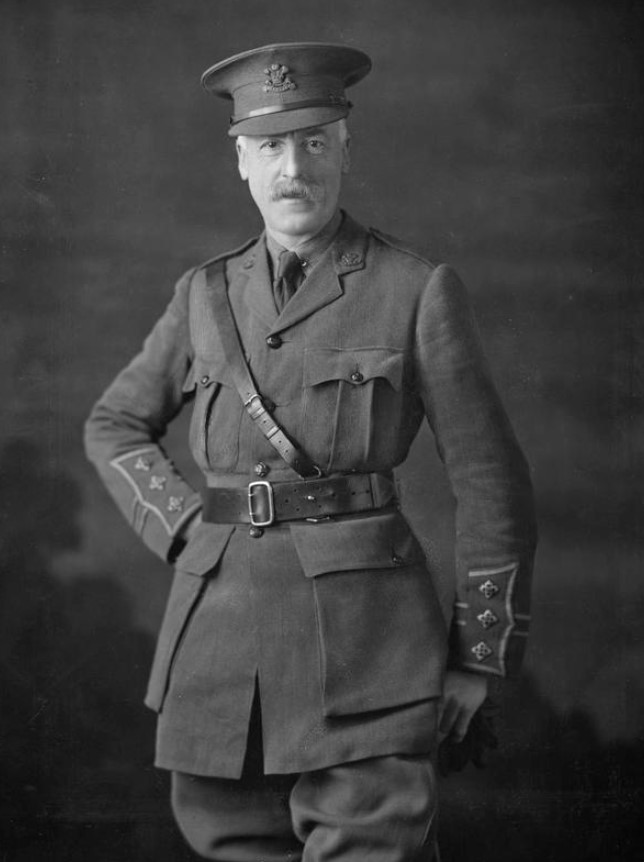
Second Lieutenant Algernon O’Donoghue

Second Lieutenant Algernon O’Donoghue

Algernon Leopold O’Donoghue was born on 4th June 1869 in Plymouth, Devon. The youngest of five children, his parents were Charles and Frances O’Donoghue. Charles had worked for the East India Company and the family travelled a lot while the children were growing up. He was in India when, in the spring of 1872, he passed away.

By the time of the 1881 census, Frances had moved the family to the Walcot area of Bath, Somerset. She was working as an assistant, and employed a servant of her own to help support the four children.

Over the next few years, Algernon’s trail goes cold. In 1900, he married Janette Hay, the daughter of a Justice of the Peace, who had been born in Ceylon. It seems likely that they met overseas: the 1911 census return records that she had been born in Ceylon, while he was a retired forest manager whose job had taken him to Burma (now Myanmar).

The census document found the couple living in a seven-room villa in Combe Down, on the outskirts of Bath. The had had a son by this point, with Algernon Jr making up the family.

Algernon was working for the Bombay Trading Company, and back out in India, when war broke out. He returned home, and stepped up to serve his King and Empire. While his service records have been lost to time, Private O’Donoghue joined the Royal Defence Corps, and quickly rose through the ranks: by the spring of 1917, he was a Second Lieutenant.

It was while serving in the north west of Britain that he fell ill: “[he got] wet while out in heavy rain, pneumonia following, and then double pneumonia.” [Bath Chronicle and Weekly Gazette: Saturday 26th May 1917] Second Lieutenant O’Donoghue was admitted to the Whitman Military Hospital in Manchester, but his condition was too severe. He passed away on 22nd May 1917, two weeks before his 48th birthday.

The body of Algernon Leopold O’Donoghue was taken back to Somerset for burial. He was laid in the family plot in Bath’s panoramic Locksbrook Cemetery, reunited with his mother, Frances, who had died a decade before.


Second Lieutenant Algernon O’Donoghue
(from findagrave.com)

Private John Sheppard

Private John Sheppard

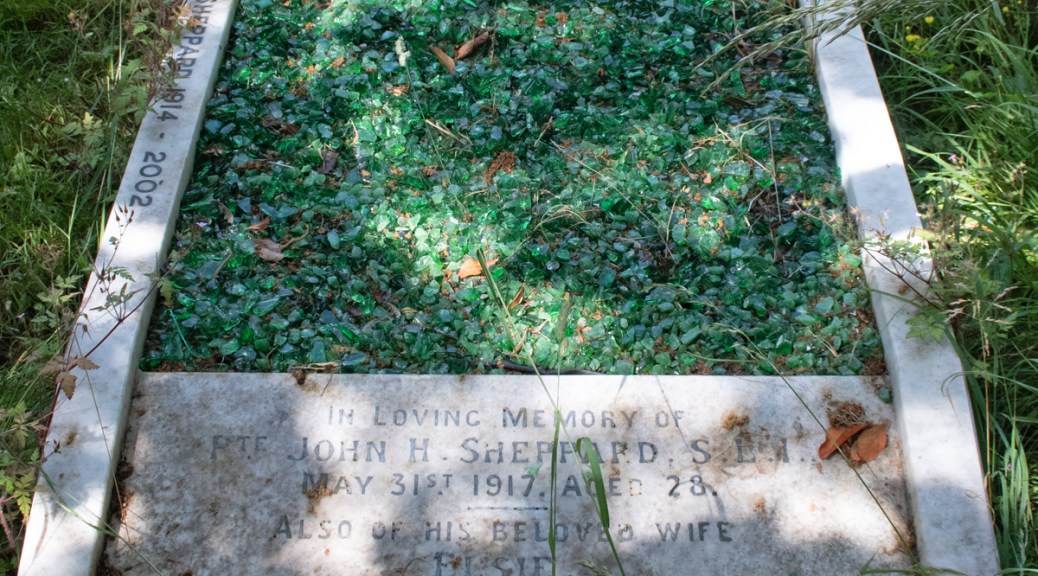
John Henry Sheppard was born in the autumn of 1889, the older of two children to John and Ellen. John Sr was a general labourer from the Weston area of Bath, Somerset, and when he died, Ellen found work as a laundress to bring in some money.

From the census returns of 1891, 1901 and 1911, it seems that John remained living on Church Street, Bath. The earliest record noted him living with his parents and younger brother, Charles. By 1901, his father had died, and Charles was also noticeable in his absence, so it may be that he had also passed away.

The 1911 census adds a little mystery to the Sheppard line. Although signed off by Ellen, she is not listed as being at the house on the day the return was taken. There are three occupants: John, working as a farm labourer; eight year old Nellie, whose relationship is listed as daughter; and Charles Crane, a 73 year old retired gardener.

On 27th September 1913, John married Elsie Holbrow. The daughter of a gardener, she was working as a domestic servant and he was a groom when the couple exchanged vows. They went on to have a son, Albert, who was born in October 1914.

When war came to Europe, John stepped up to play his part. Full details are lost to time, but it is clear that he had enlisted by the autumn of 1916, initially joining the North Somerset Yeomanry, before transferring across to the Somerset Light Infantry. Private Sheppard was attached to the 1st Battalion and soon found himself on the Western Front.

There is little concrete information about his service, but is appears that he was wounded at Arras in the spring of 1917. He was medically evacuated to Britain for treatment, and was admitted to the 3rd Northern General Hospital in Sheffield, Yorkshire.

Private Sheppard’s wounds were to prove too severe however, and he succumbed to them on 31st May 1917. He was 27 years of age.

John Henry Sheppard’s body was taken back to Somerset for burial. He was laid to rest in the family plot in Bath’s sweeping Locksbrook Cemetery. He was reunited with Elsie when she passed away in December 1949: husband and wife together again after more than three decades.


Private Reginald Loader

Private Reginald Loader

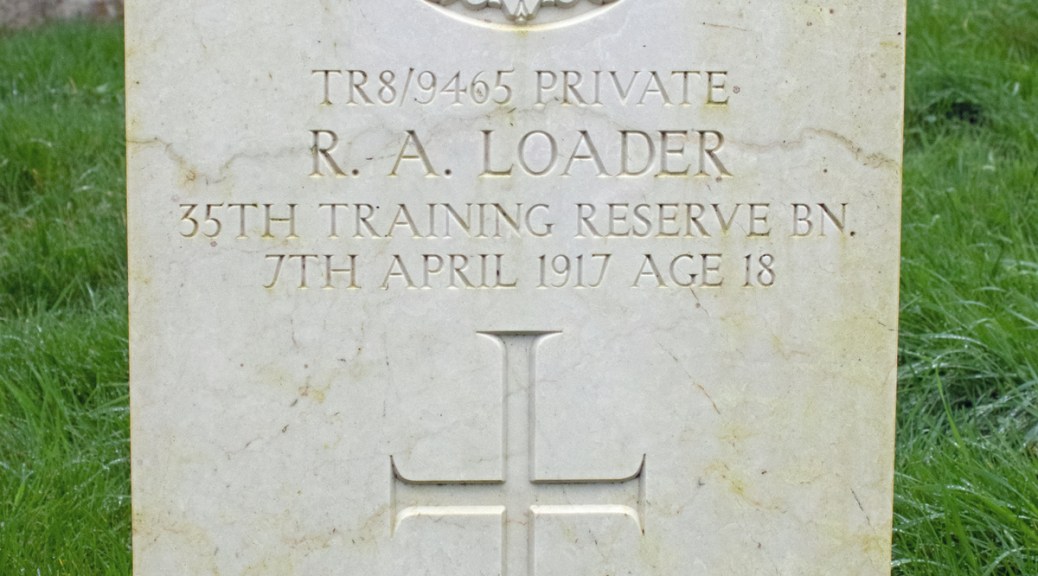
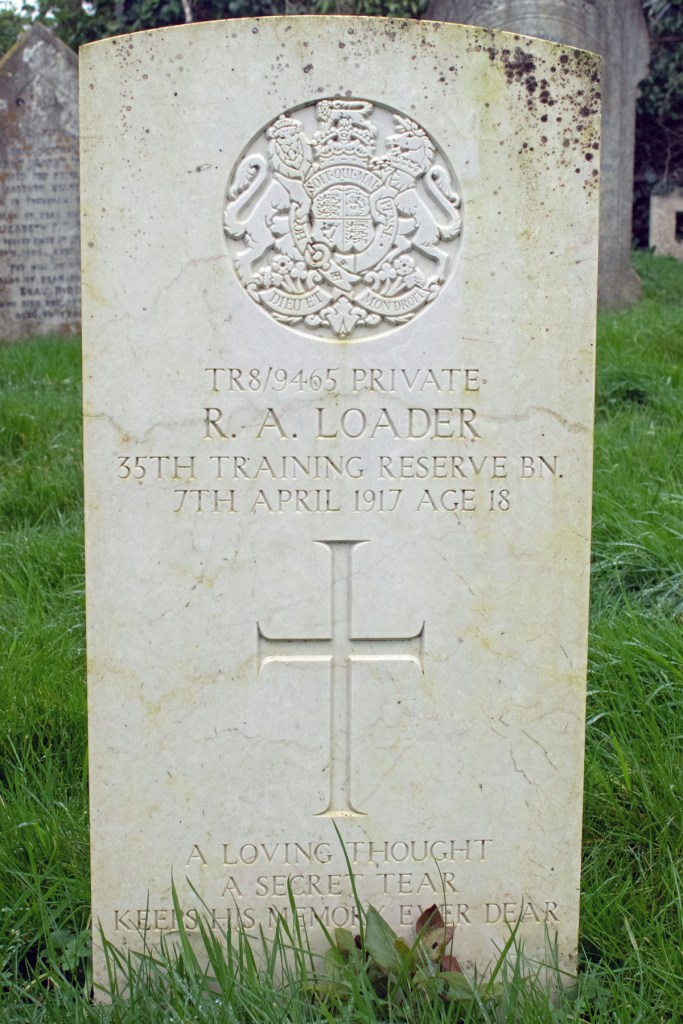
Reginald Alfred Loader was born in the autumn of 1898, and was the eighth of nine children. His parents – Robert and Amelia – both came from the Dorset village of Lillington, and this is where they raised their family.

Sadly, there is little specific information on Reginald’s life. When war broke out, he stepped up to play his part, and enlisted in the Training Reserve Battalion at some point after October 1916. His unit, the 35th Battalion, was based in Wool, Dorset, but there is no further information about his time there.

The only other concrete information about Private Loader confirms his passing. He died in hospital – through causes unknown – on 7th April 1913. He was just 18 years of age.

Reginald Alfred Loader’s body was taken back to Lillington for burial. He was laid to rest in the graveyard of St Martin’s Church in the village.


Private Charles Gregory

Private Charles Gregory

Charles Gregory was born in Buckfastleigh, Devon, early in 1879, the son of John and Mary Gregory. There is next to no information about his early life and, in fact, there is very little documentation for him at all.

Most of the details for Charles come from his First World War service records. These confirm that he was living in Australia, having emigrated there with his parents. His father had died by the time Charles joined up, but Mary was living in Welshpool, to the east of Perth.

Charles was 37 years old when he joined up in March 1916: his records show that he was 5ft 3.5ins (1.61m) tall and weighed 160lbs (72.5kg). He had light brown hair, grey eyes and a dark complexion, possibly from the time he spent outside, working as a groom.

As part of the Australian Imperial Force, Private Gregory sailed from Fremantle on 13th October 1916. He arrived in Plymouth, Devon, exactly two months later, and was assigned to the 4th Battalion of the Australian Infantry. He was sent to France on 8th February 1917 and, over the next few months, transferred between the 14th and 16th Battalions.

On 22nd September, Private Gregory was caught up in a bomb attack and badly injured. After initially receiving treatment to his shattered left ankle and lower ribs, he was medically evacuated to Britain for further medical intervention.

Charles was admitted to the Bath War Hospital in Somerset, but his injuries were to prove too severe. He died from tetanus on 29th October 1917, at the age of 38 years old.

With his family in Australia, the body of Charles Gregory was instead laid to rest in the military section of Bath’s sweeping Locksbrook Cemetery, next to where the war memorial would be constructed.


Private Charles Gregory
(from findagrave.com)

Lieutenant William Karslake

Lieutenant William Karslake

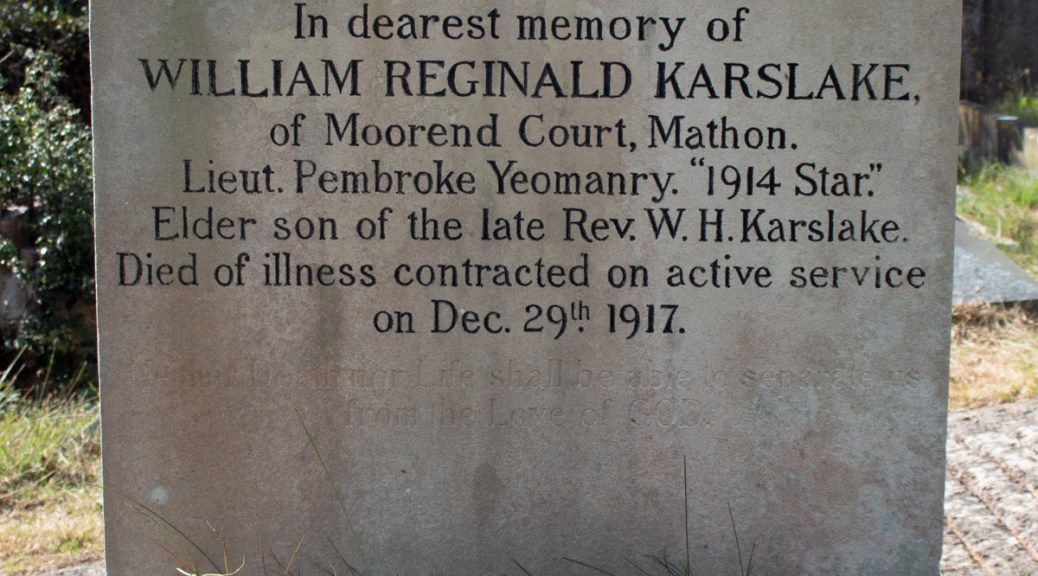
William Reginald Karslake was born in the spring of 1867 in the Surrey village of Westcott. The oldest of three children, his parents were William and Annie Karslake. William Sr was the vicar of the village’s Holy Trinity Church, and the family had a retinue of five servants to look after the household.

By the time of the 1891 census, the Karslakes had moved to Eastbourne in East Sussex. Their house, on the corner of Carlisle and Granville Roads, was a grand affair, and, while William Jr’s siblings, Henry and Mary, were 22 and 19 years old, there was still a live-in retinue of four staff to support them. William Jr is absent from this record, and he may well have been studying in Oxford at the time.

In the autumn of 1896, William Jr married Laura McKenzie. She was an admiral’s daughter who had been born in Glasgow, but their couple exchanged vows in Faringdon, Berkshire. The 1911 census found the family living in the 19-room Moorend Court in the Herefordshire village of Mathon. The couple had two children – Sam and Bridget – by this point and had a governess, parlourmaid, two housemaids, a kitchen maid and a cook to keep them in the right lifestyle.

The census recorded William’s employment as ‘formerly resident land agent’, which suggests he may have spent time overseas before marrying. His father had passed away by this point, and his brother Henry had taken up holy orders.

When war was declared, William was quick to volunteer his services. Initially acting as a driver for the British Red Cross, he found himself in France within weeks of the conflict starting. By January 1915, Lieutenant Karslake was moved to the Balkans, and at this point seems to have transferred to the Pembroke Yeomanry.

Little additional information is available to William. He passed away following an illness on 29th December 1917: he was 50 years of age.

It would seem that William Reginald Karslake was either hospitalised in Devon, or that there are additional family connections in the area. He was laid to rest in Paignton Cemetery, far from his substantial Herefordshire home.


Lieutenant William Karslake
(from findagrave.com)

Petty Officer Ellis Sayer

Petty Officer Ellis Sayer

Much of the life of Ellis Edward Sayer seems destined to remained shrouded in the mists of time. Born in Attleborough, Norfolk on 31st January 1888, the only census return he appears on dates from 1891. This records him as living with his grandmother, Maria Simons, who was noted as being married and working as a laundress. Ellis’ 16-year-old uncle, William, was also living there and employed as a groom.

Jumping forward a few years and, on 31st December 1907, Ellis enlisted in the Royal Navy. His service records note that he had previously been employed as a messenger, and there seems to have been some previous marine connection. The document shows that he was 5ft 8ins (1.72m), with dark brown hair, blue eyes and a fresh complexion. He was also noted as having tattoos of a dragon, a rose and the word ‘unity’ on his left forearm.

As an Ordinary Seaman, Ellis was initially sent to HMS Pembroke, the Royal Naval Dockyard in Chatham, Kent, for his training. He was only there for a matter of weeks before being assigned to the HMS Cochrane then HMS Natal.

On 7th April 1908, Ordinary Seaman Sayer was attached to the cruiser HMS Lancaster, and he was to remain with her for close to two years. Promoted to Able Seaman on 26th November 1909, his time on board came to a close in May 1910.

Over the next few years, Ellis continued his progress in his naval career. After a year on shore in Chatham, he was assigned to HMS Blonde, and was promoted to Leading Seaman in August 1912. He returned to HMS Pembroke the next month, and remained attached to the dockyard for the next year and a half: his experience likely being used to support newer recruits.

On 6th March 1914, Leading Seaman Sayer was assigned to the battleship HMS Commonwealth. Over the next three years she patrolled the North Sea, from the Norwegian coast and Shetland in the north to Dogger Bank in the south. On 1st August 1915, Ellis receive a further promotion, holding the rank of Petty Officer for the remainder of his time on board Commonwealth.

On 18th February 1917, Ellis’ life came to an abrupt end. There is little information available about his passing, one record stating that he died from an injury to his kidney which was as a result of an accident, while another states ‘rupture of kidney caused through [a] fall’. HMS Commonwealth seems to have been moored in Chatham, however, as he passed away in the town’s Royal Naval Hospital. He was 29 years of age.

Petty Officer Sayer’s next-of-kins were noted as his sister, Mrs J Andrews, who lived in Norwich, and a friend, Mrs Ethel Hampton, who lived in Gillingham, Kent.

Ellis Edward Sayer’s body was laid to rest in the Woodlands Cemetery, Gillingham, not far from the dockyard he had called home for so long.


Second Aircraftman Albert Jenner

Second Aircraftman Albert Jenner

Albert Jenner was born on 27th April 1887 in the Kent village of Hollingbourne. He was one of nine children to scaffolder and builder’s labourer Thomas Jenner and his wife, Emma.

By the time of the 1911 census, Albert was living with his parents and three of his siblings in a house on Well Street in Loose, near Maidstone. He was employed as a bricklayer’s labourer, while his brothers and father were all doing farm work.

At this point, Albert’s trail goes cold. It is clear that, when war was declared, he enlisted in the Royal Naval Air Service, although the specific dates are unknown. His younger brother Private Arthur Jenner, of the 6th Battalion of the Queen’s Own (Royal West Kent) Regiment died in northern France in July 1916, but it is unclear whether Albert had already stepped up to serve by this point.

Second Aircraftman Jenner was based at the Kingsnorth Air Base, on the Hoo Peninsula in Kent. This was a Royal Naval Air Service training station, which also experimented with air ships. There is little to document Albert’s time there, however, and, given his rank, it is likely that he was not there for very long.

The only other document directly connected to Albert confirms his passing. He died at the base on 3rd April 1917, having contracted measles, which escalated into pyaemia, or sepsis. He was a few days away from his 30th birthday.

Albert Jenner was laid to rest in the Woodlands Cemetery, in Gillingham, Kent.


Private John Merritt

Private John Merritt

John Merritt was born on 17th August 1880 in Shoreditch, London, and was the youngest of three children to James and Emily Merritt. James was a dock labourer, who passed away when his son was just four years old. Emily remarried the following year, having a child with her new husband, George Wise, in 1888.

When he completed his schooling, John found work as a stoker. However, he sought bigger and better things and, on 21st February 1898, he enlisted in the Royal Marine Light Infantry. Not yet eighteen years old, his service records show that he was 5ft 5.5ins (1.64m) tall, with grey eyes, brown hair and a fresh complexion. His service records also record a couple of tattoos: an anchor on his left forearm, and a crossed heart on his right.

Over the next two decades, Private Merritt sailed and saw the world. Primarily based out of the Royal Naval Dockyard in Chatham, Kent, he served on ten ships in all. His superiors obviously thought highly of him, as his records note his character and ability as very good throughout his service.

On 3rd July 1909, John married Harriett Wise. She was a lighterman’s daughter from East London, who was working as a cork cutter when the couple exchanged their vows. They went on to have two children: Florence, who was born in 1910, and Reginald, who came along six years later.

By the time war was declared in the summer of 1914, John seems to have been mainly shore-based, his time being split between Chatham and Portsmouth, Hampshire.

On 7th March 1917, Private Merritt was on board the gunboat HMS Spey, which was carrying out diving operations in the Thames Estuary. At 4 o’clock in the afternoon, in “bitterly cold and boisterous conditions” [Whitstable Times and Herne Bay Herald: Saturday 24th March 1917], the ship lost an anchor, and the decision was made to return to base at Sheerness, Kent. Another vessel, the HMS Belvedere, was close by and turned towards the Spey, and, despite trying to avoid a collision, the smaller ship was struck a glancing blow.

The Spey was 40 years old, and the impact sheered numerous rivets from the side. Water gushed in, and the gunboat sunk beneath the Thames within a matter of minutes. Some of the crew had managed to escape on a life raft, but it was not fitted with lights or flags. The boat drifted and was not found until five hours later, partially submerged: all on board had died.

In total, twenty of the thirty-seven crew perished on that March afternoon, including Private Merritt. He was 36 years of age.

It would seem that Harriett was unable to cover the cost of bringing her late husband’s body back to London for burial. Instead, John Merritt was laid to rest in Woodlands Cemetery in Gillingham, Kent, not far from the naval base in Chatham which he had called home for so long.


Officer’s Steward Thomas Ounan

Officer’s Steward Thomas Ounan

Thomas Peter Ounan was born on 21st July 1894 in St Helier, Jersey. The oldest of three children, his parents were Thomas and Augustine Ounan. Thomas Sr was a groom from England, who had married his Jersey-born wife and settled on the island to raise their family.

There is, in fact, little documented information about young Thomas’ life. From his military service records, it would seem that he found employment as a steward when he left school. When war broke out, he was called upon to play his part and, on 10th June 1916, he enlisted in the Royal Navy as an Officer’s Steward 3rd Class.

Thomas was initially sent to HMS Victory – the Royal Naval Dockyard in Portsmouth, Hampshire – for training. After a month he was assigned to the steam ship HMS Lucia, spending the next few months on board. At this point, he became unwell, having contracted tuberculosis. and was admitted to hospital in Portsmouth for treatment.

On 30th August 1916, Officer’s Steward Ounan was medically discharge from naval duty due to the condition. He returned to Jersey, remaining in the family home for the next year.

Thomas’ condition was to get the better of him, though. He passed away from tuberculosis at home on 6th October 1917: he was 23 years of age.

Thomas Peter Ounan was laid to rest in the peaceful La Croix Cemetery in Grouville.